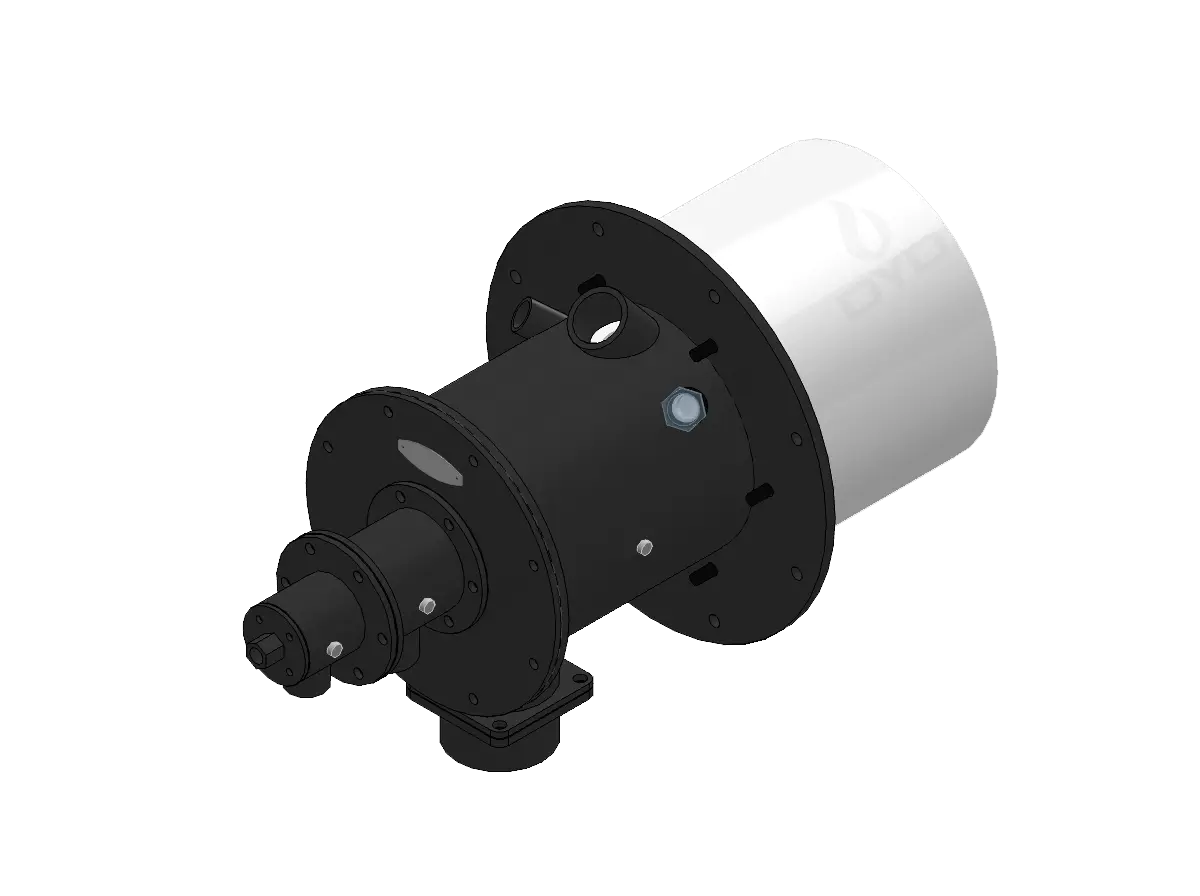
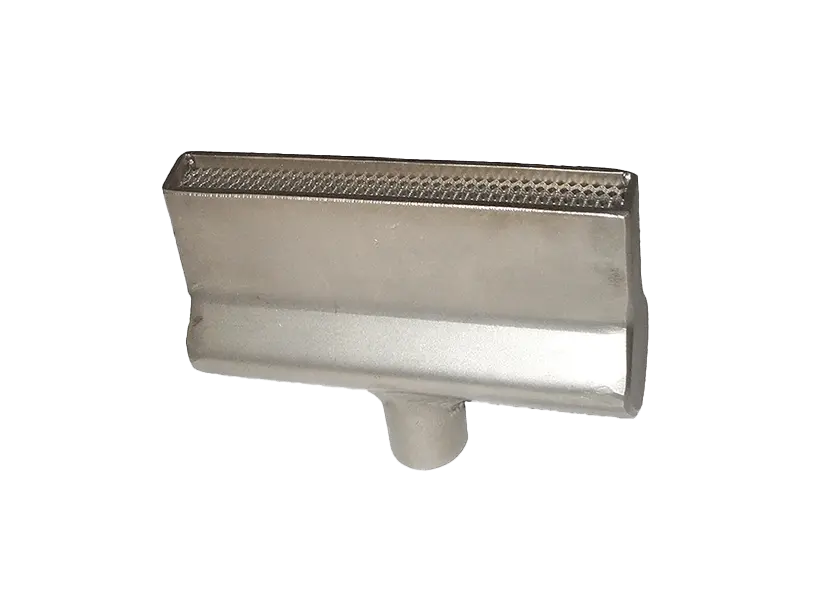
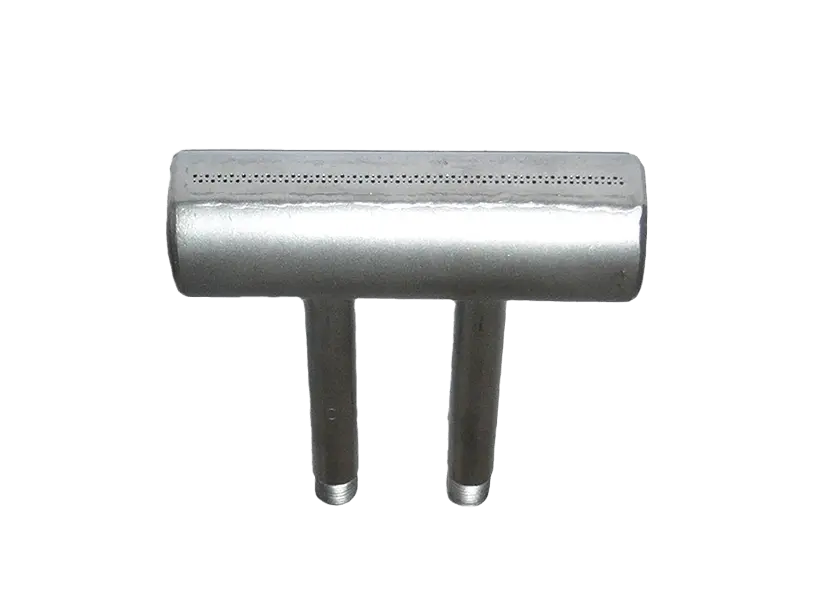
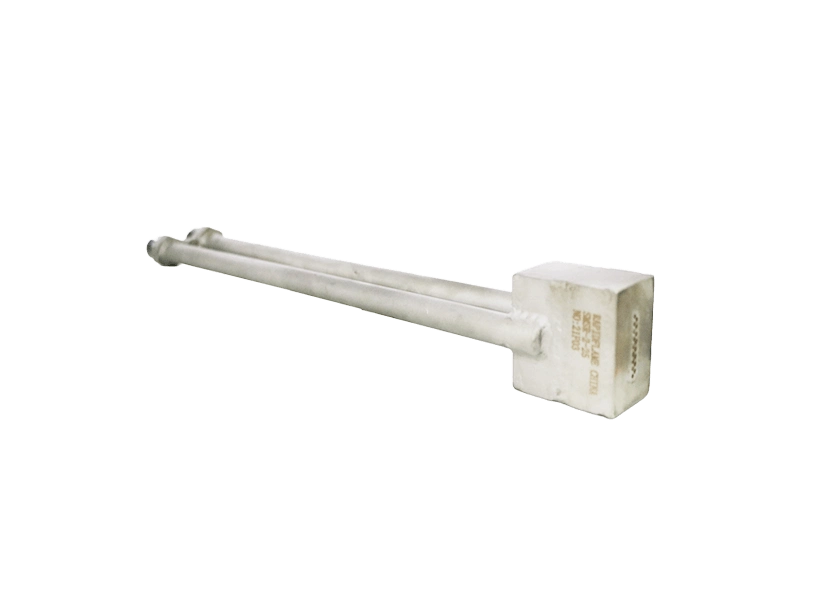
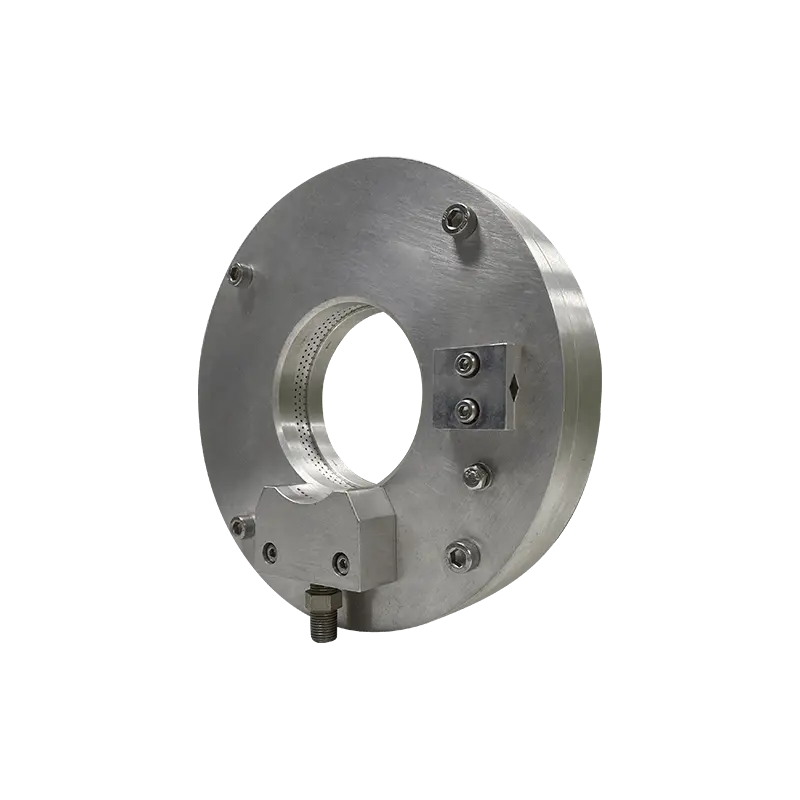
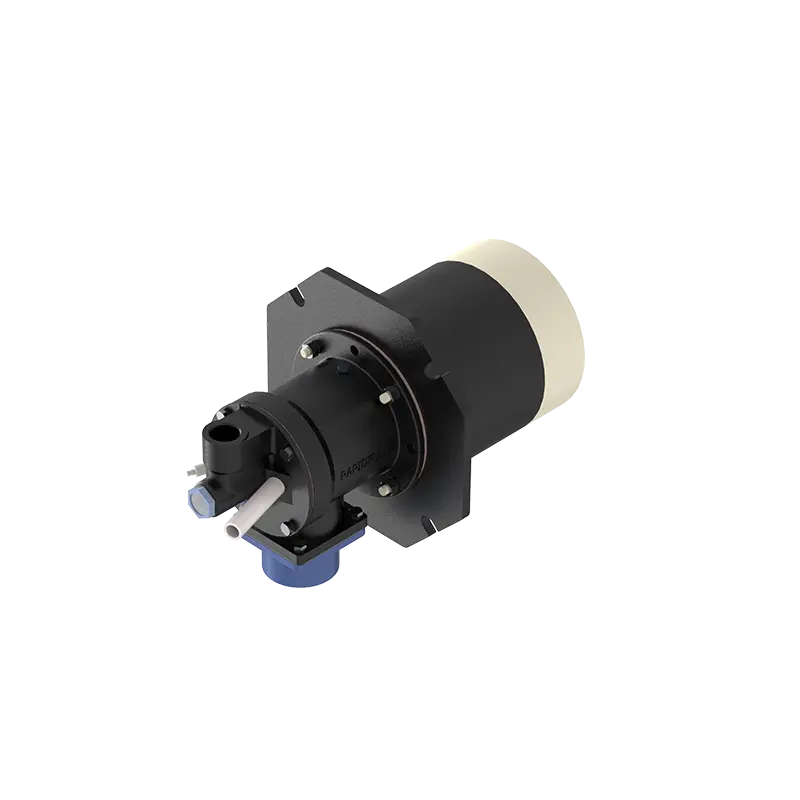
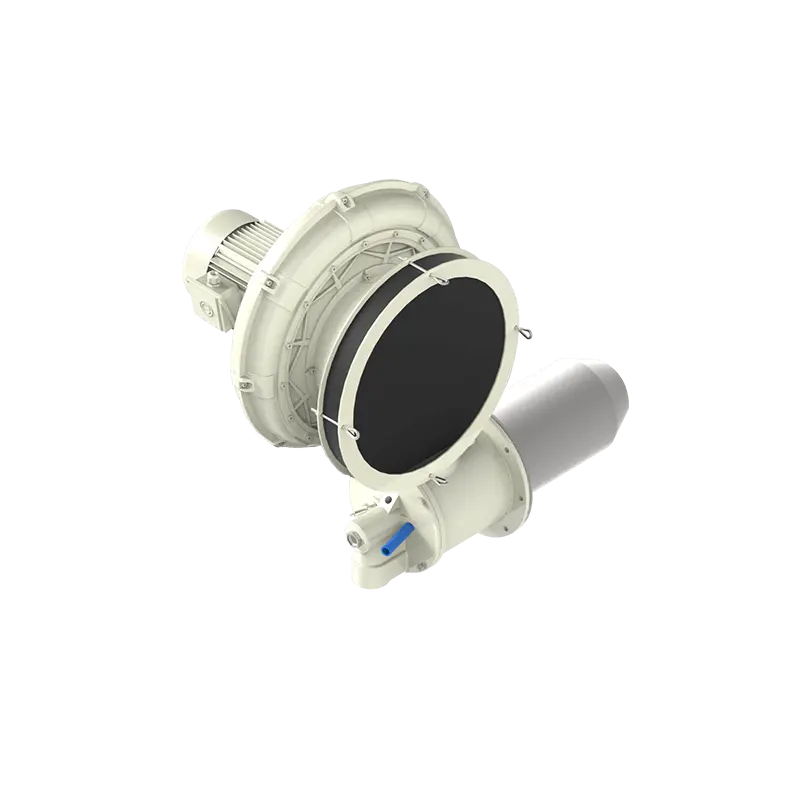
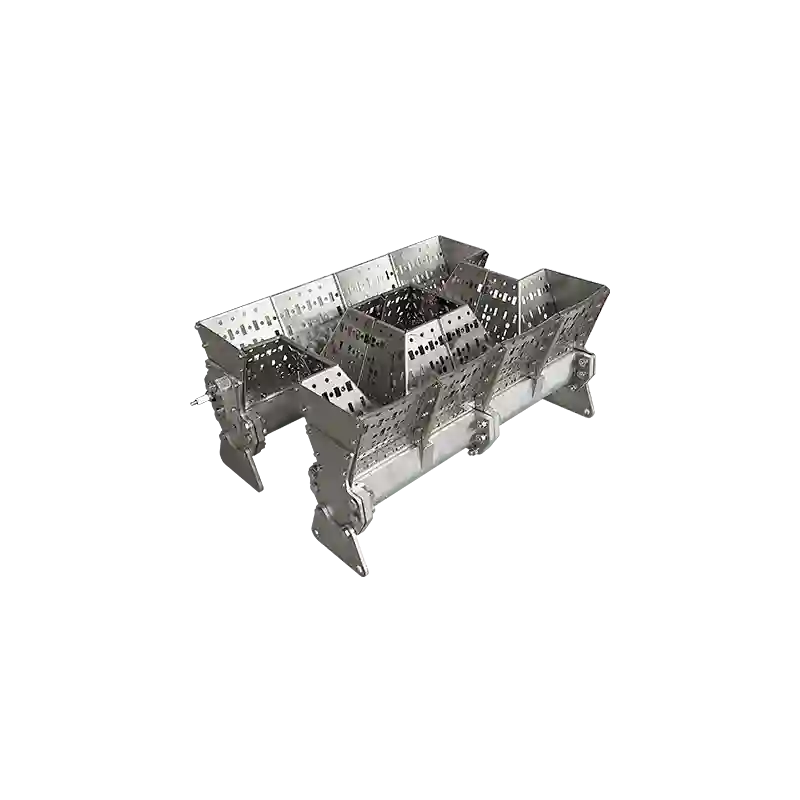
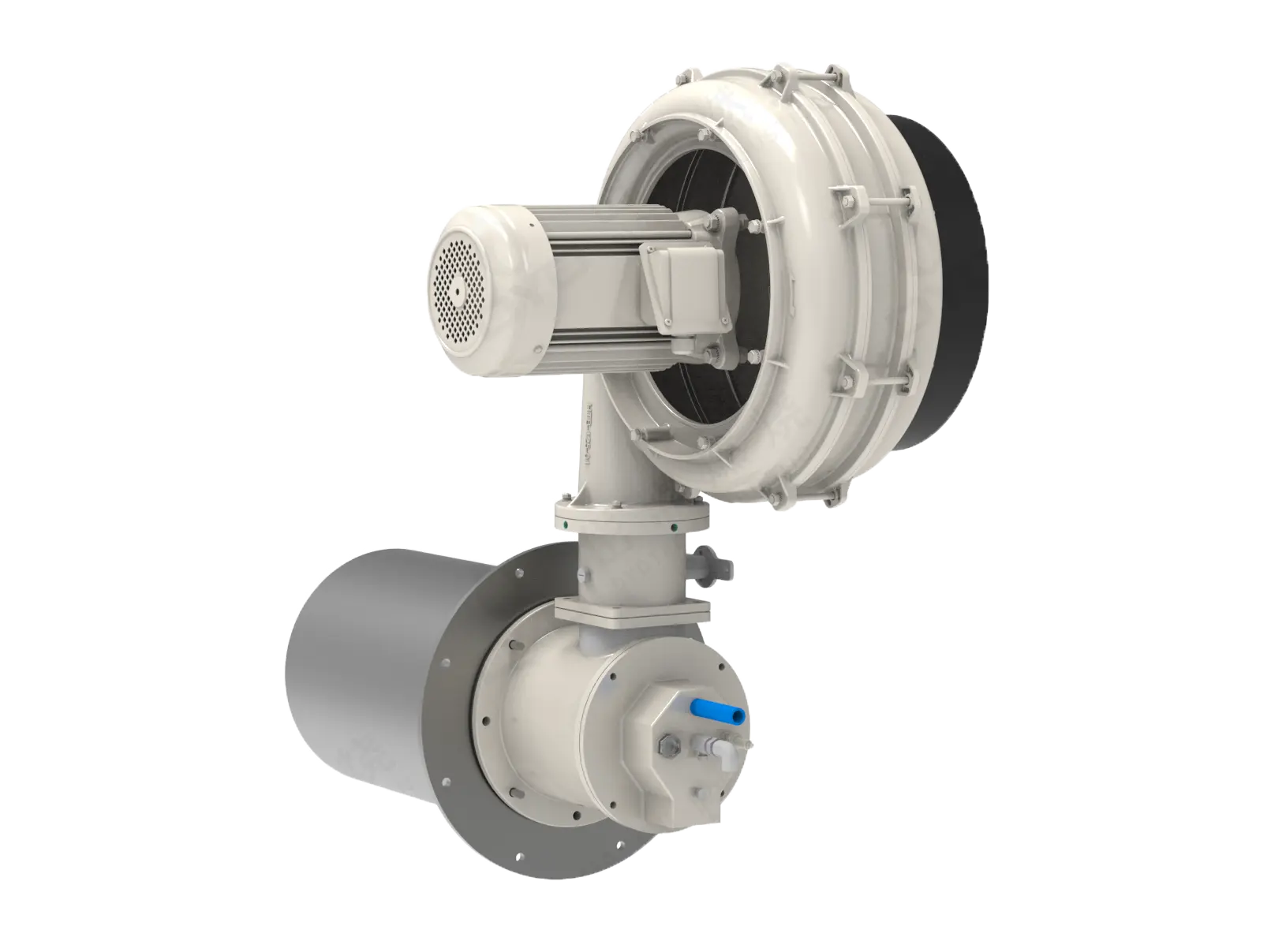
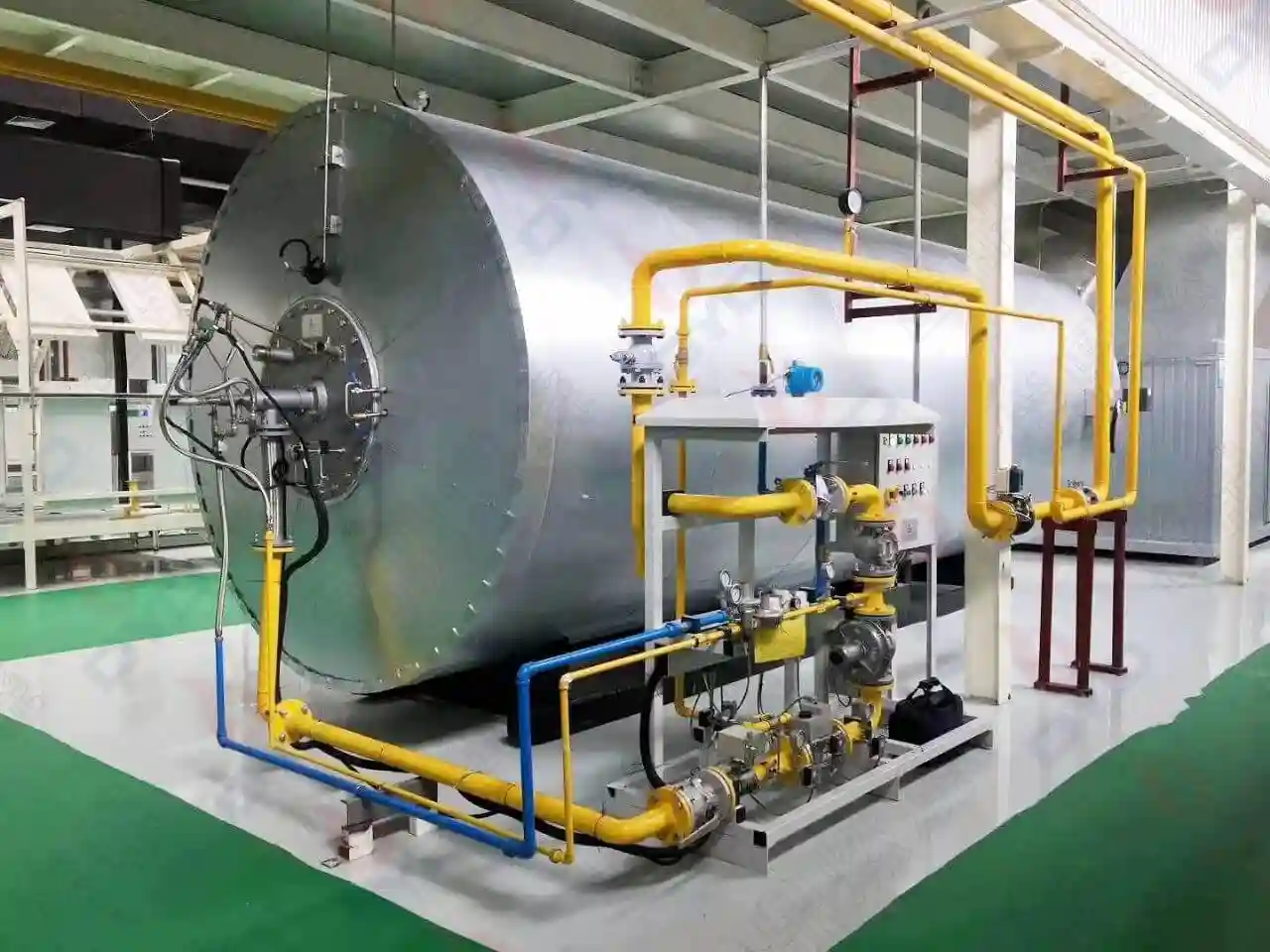
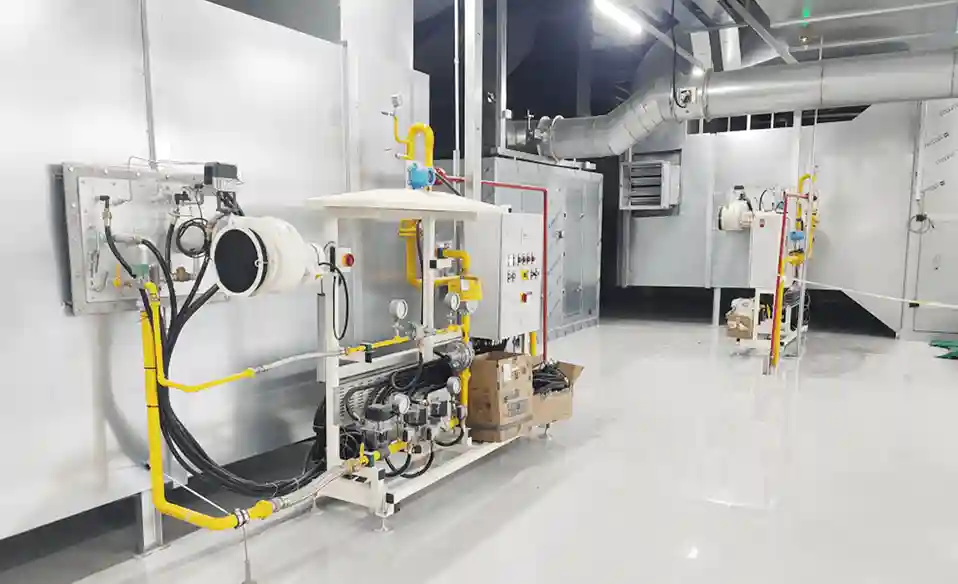
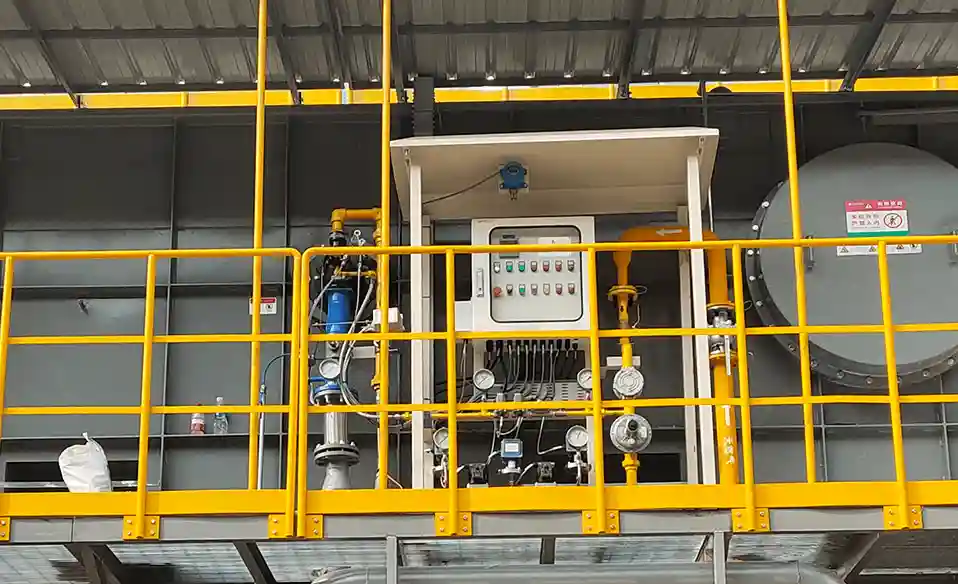
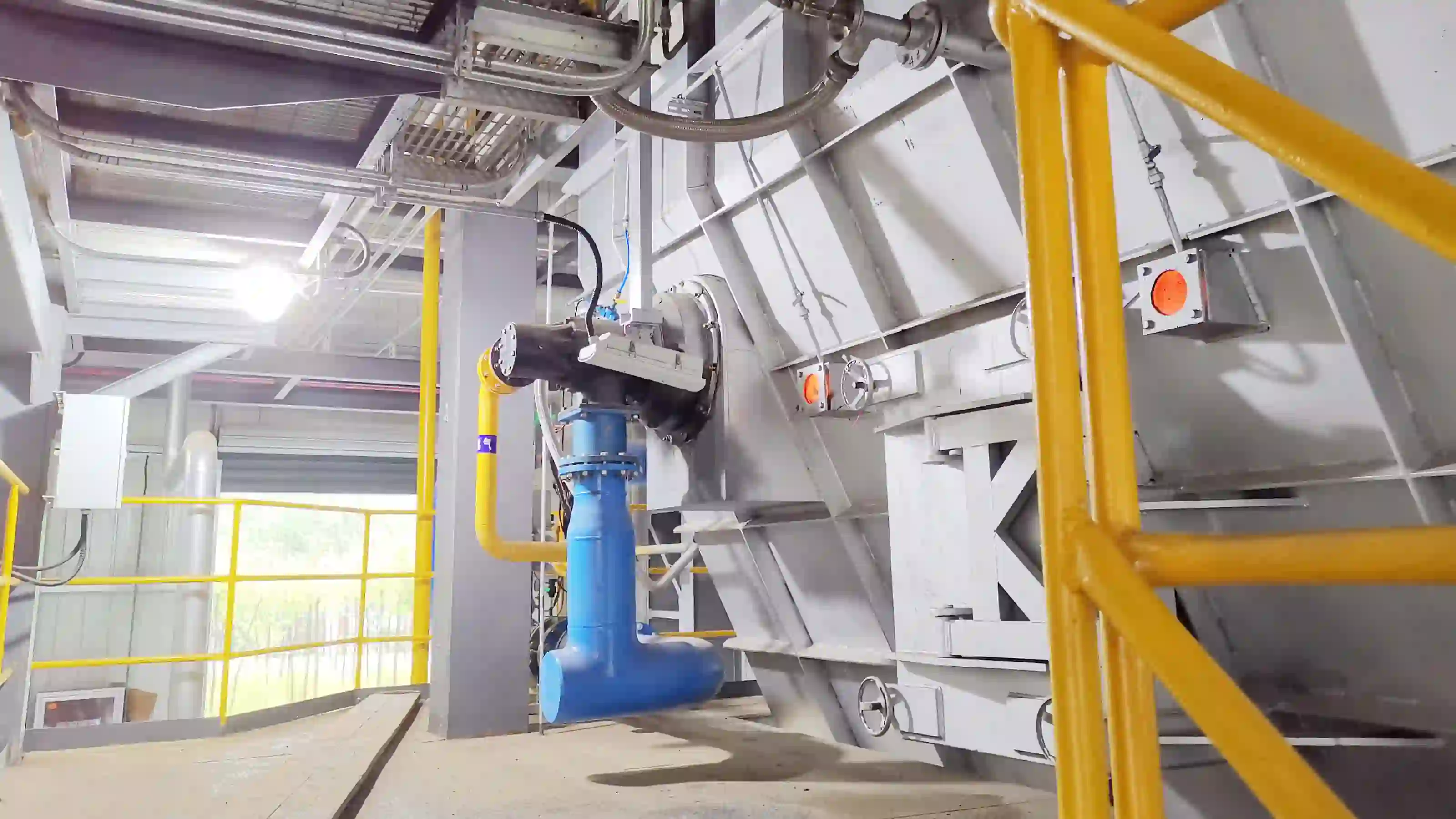
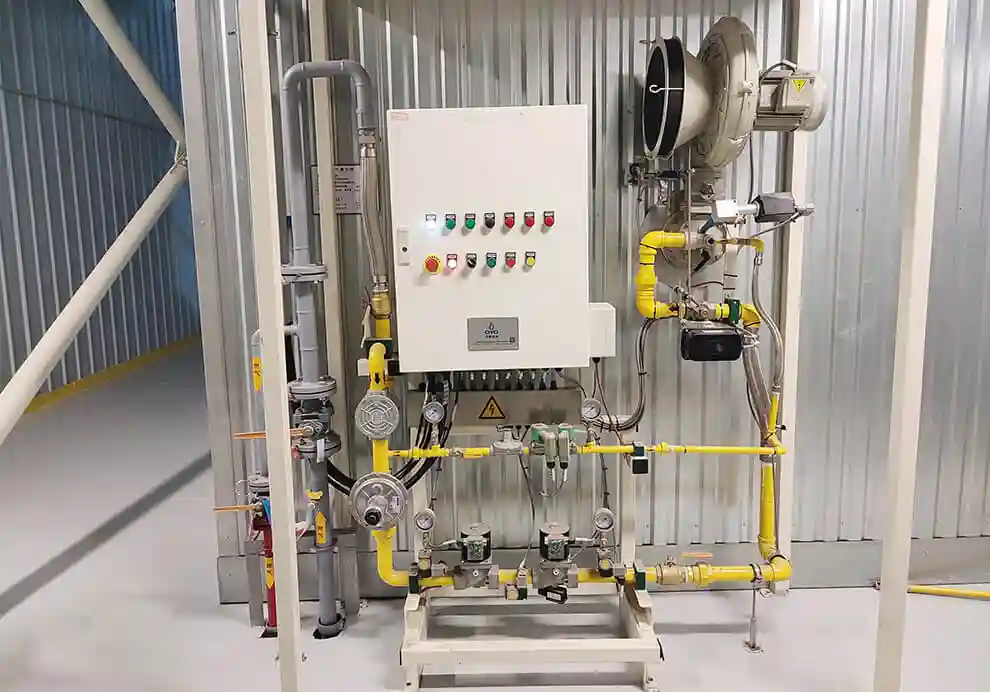
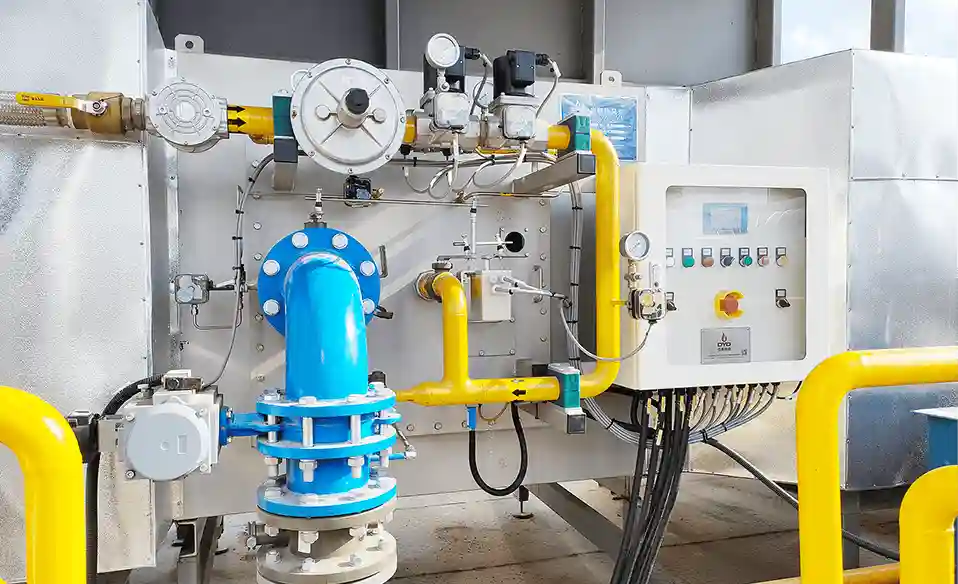
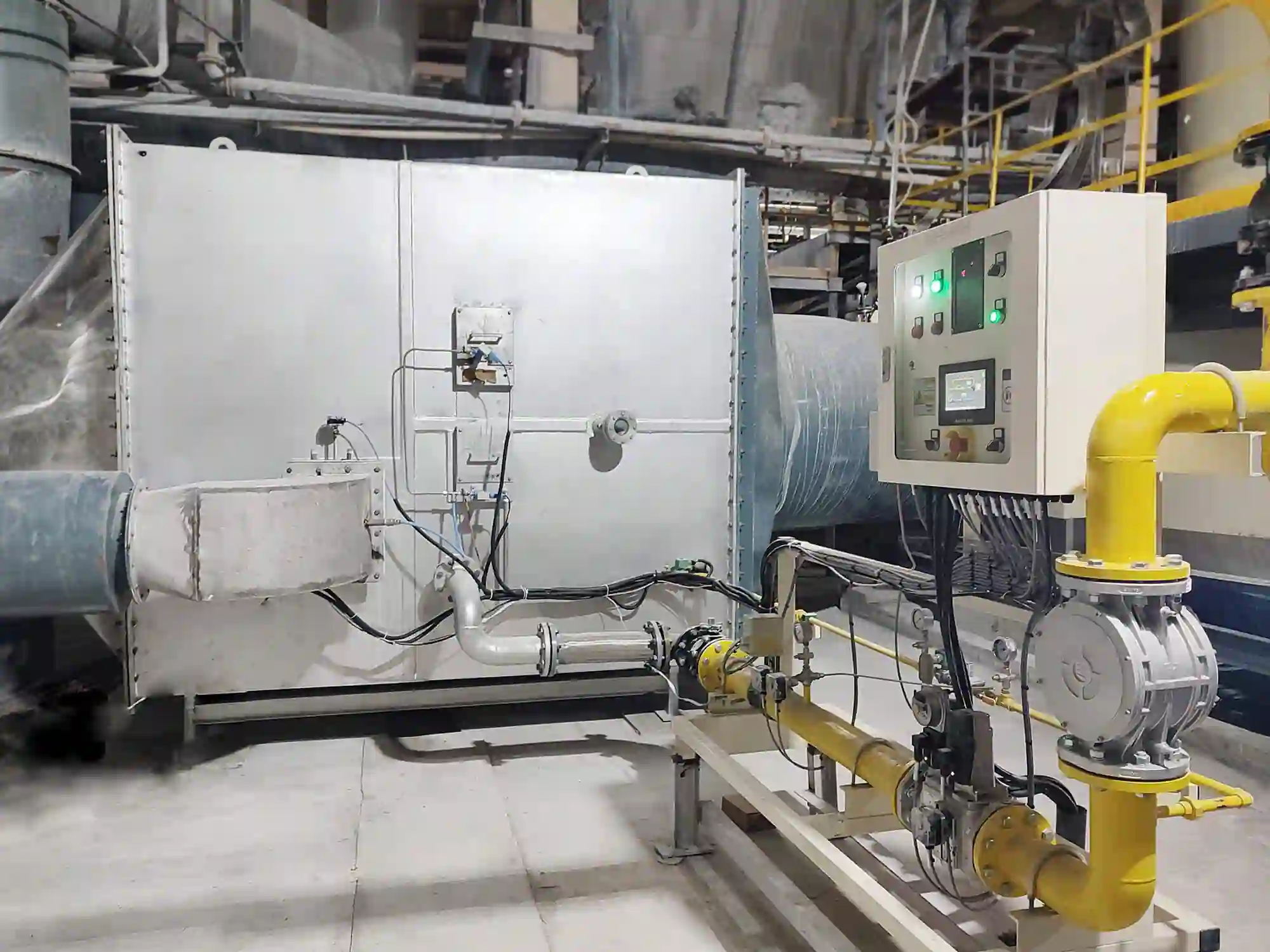
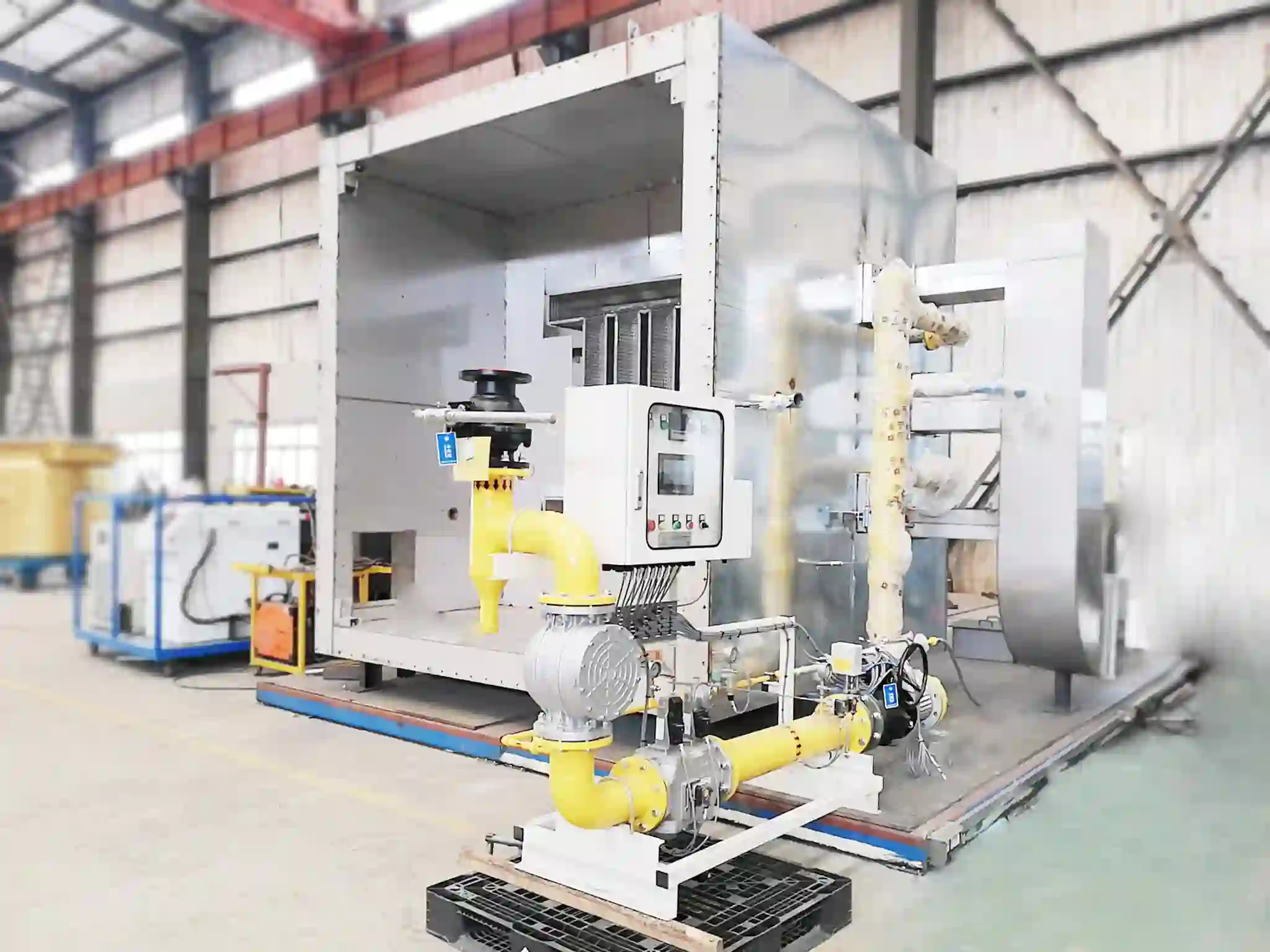
Industrial burners can reduce NOx emissions by controlling the combustion conditions that promote nitrogen oxide formation while maintaining stable combustion and the heat required by the process.
For many natural-gas-fired industrial systems, thermal NOx is strongly influenced by:
Local flame temperature
Oxygen concentration
Residence time
Fuel-air mixing
Flame structure
Combustion staging
Flue-gas recirculation
Therefore, reducing NOx is not simply a matter of reducing fuel consumption or lowering the furnace temperature.
The basic approach is:
Control Combustion Conditions
↓
Reduce Excessive Local Flame Temperature
↓
Control Oxygen and Mixing
↓
Reduce NOx Formation
↓
Maintain Stable and Complete Combustion
Combustion air contains a large amount of nitrogen.
At high temperatures, nitrogen and oxygen can react to form nitrogen oxides. This mechanism is commonly referred to as thermal NOx.
The potential for thermal NOx increases when combustion creates:
Very high local flame temperatures
Sufficient oxygen
Long residence time at elevated temperature
This is why burner design has a direct influence on NOx emissions.
The burner determines how fuel and air enter the furnace, how quickly they mix, where combustion occurs, and how heat is released.
Industrial burners can reduce NOx through several approaches:
Staged combustion
Flue-gas recirculation
Controlled fuel-air mixing
Premixed combustion
Distributed heat release
Flame-temperature control
Optimized excess-air operation
These technologies are not necessarily used independently. A burner may combine several approaches to achieve the required emissions and combustion performance.
Staged combustion is one of the common approaches to NOx reduction.
Instead of allowing all fuel and combustion air to react immediately in one concentrated flame, the combustion process is divided into stages.
A simplified process is:
Primary Combustion
↓
Controlled-Oxygen Region
↓
Secondary Air / Fuel
↓
Combustion Completion
The purpose is to control where and when fuel and oxygen react.
By avoiding an extremely hot, oxygen-rich combustion zone, the burner can reduce the conditions favorable to thermal NOx formation.
Air staging controls the timing and location of oxygen addition.
During the initial stage, the combustion zone can operate with limited oxygen availability.
Additional combustion air is then introduced downstream to complete the combustion process.
This changes the flame's:
Temperature distribution
Oxygen concentration
Heat-release pattern
The objective is to reduce peak temperature while still achieving complete combustion.
Fuel staging distributes fuel injection across different combustion zones.
Instead of releasing all fuel at one location, part of the fuel can be introduced at different stages.
This can help distribute heat release and reduce localized high-temperature regions.
Fuel staging can also influence:
Flame length
Flame shape
Mixing
Recirculation
Temperature distribution
Flue Gas Recirculation (FGR) is another important NOx-reduction technology.
Part of the combustion exhaust is returned to the combustion process.
The recirculated gas acts as a diluent and increases the effective heat capacity of the combustion mixture.
This can reduce peak flame temperature.
The basic principle is:
Combustion Exhaust
↓
FGR
↓
Combustion Mixture Dilution
↓
Lower Peak Flame Temperature
↓
Reduced Thermal NOx Formation
Internal FGR uses the burner's aerodynamic design to bring furnace gases back into the flame.
The burner may create recirculation through:
Air velocity
Burner geometry
Swirl
Jet interaction
Pressure differences
The recirculated furnace gases mix with the combustion flow and help moderate the flame.
Because the recirculation effect is incorporated into the burner, a separate external FGR system may not be necessary.
External FGR uses a separate system to return exhaust gas to the burner.
A simplified configuration is:
Furnace Exhaust
↓
FGR Duct / System
↓
Combustion-Air System
↓
Burner
↓
Combustion
External FGR provides another way to control oxygen concentration and flame temperature.
However, it can also increase system complexity because additional equipment, ducting, controls, and operating parameters may be required.
Fuel-air mixing has a major influence on NOx formation.
Rapid mixing can create concentrated combustion zones with very high local temperatures.
Controlled mixing can distribute combustion more gradually.
The burner can control:
Fuel velocity
Air velocity
Injection direction
Mixing location
Swirl
Recirculation
The goal is to create a flame structure that avoids excessive local temperature peaks.
The burner head determines how fuel and air are introduced into the furnace.
Its geometry affects:
Mixing
Flame stabilization
Flame shape
Flame length
Recirculation
Heat-release distribution
For Low NOx applications, burner-head design therefore becomes a key part of the emissions-control strategy.
Premixed combustion combines fuel and combustion air before the primary combustion zone.
The purpose is to create a more uniform mixture.
A uniform mixture can help reduce localized high-temperature regions.
However, premixed combustion requires careful burner design.
Excessive premixing can create risks such as:
Flashback
Flame instability
Ignition difficulties
Therefore, premixed Low NOx combustion must be designed around the fuel, air conditions, burner geometry, and operating range.
Another approach is to distribute combustion over a larger region.
Instead of concentrating all heat release in a small flame core, the burner can create a more distributed combustion environment.
This can reduce localized temperature peaks.
The concept is:
Concentrated Heat Release
→ Higher Local Temperature
versus
Distributed Heat Release
→ More Controlled Temperature Distribution
The appropriate flame structure depends on the furnace and process.
Flame temperature is particularly important for thermal NOx formation.
However, the objective is not to make the flame as cool as possible.
A flame that is excessively diluted or cooled can lead to:
Poor ignition
Flame instability
Incomplete combustion
Higher CO
Insufficient heat release
The practical goal is:
Control Peak Flame Temperature
while maintaining:
Stable + Complete Combustion
It can, but this is often not a practical solution.
Industrial processes may require a specific temperature for:
Heat treatment
Forging
Drying
Melting
Ceramic processing
Glass processing
Other thermal processes
Instead of lowering the process temperature, a Low NOx burner can control the local combustion temperature.
This allows the furnace to maintain its required process temperature while reducing excessive flame-temperature peaks.
Excess air also affects NOx emissions.
Too much combustion air can increase oxygen availability and exhaust losses.
Too little air can cause:
Incomplete combustion
Higher CO
Flame instability
Unburned fuel
Therefore, excess air needs to be optimized rather than simply minimized.
A practical combustion system needs to balance:
NOx
CO
Combustion Efficiency
Flame Stability
Heat Output
NOx and CO are formed through different combustion mechanisms.
A strategy that strongly suppresses NOx can sometimes make complete combustion more difficult.
For example, excessive dilution or oxygen limitation may reduce flame temperature but increase CO.
Therefore, a Low NOx burner should not be evaluated by NOx alone.
A better evaluation considers:
| Performance Factor | Why It Matters |
|---|---|
| NOx | Emissions performance |
| CO | Combustion completeness |
| Flame stability | Reliable operation |
| Heat output | Process requirements |
| Turndown | Operating flexibility |
| Fuel consumption | Thermal efficiency |
| Temperature uniformity | Product quality |
A burner does not operate independently of the furnace.
Furnace geometry affects:
Flame development
Gas circulation
Heat transfer
Residence time
Local temperature
Exhaust flow
Important parameters include:
Furnace volume
Chamber dimensions
Burner position
Burner angle
Exhaust location
Product position
Furnace pressure
A Low NOx burner should therefore be matched to the furnace in which it will operate.
Multiple burners can interact with one another.
If their flames overlap excessively, they can create localized high-temperature regions.
Poor burner arrangement can also cause:
Uneven heat distribution
Flame interference
Local hot spots
Excessive wall temperatures
Burner spacing, angle, number, and firing strategy should therefore be considered together.
Flame length determines where heat is released inside the furnace.
A very short, concentrated flame can create high local temperatures.
A properly distributed flame can spread heat release over a larger region.
However, a longer flame does not automatically mean lower NOx.
The appropriate flame length depends on:
Burner capacity
Furnace dimensions
Fuel
Air conditions
Burner location
Process requirements
Yes.
Low NOx combustion is not limited to low-temperature applications.
Depending on the design, Low NOx burners can be used in:
Heat-treatment furnaces
Forging furnaces
Aluminum furnaces
Ceramic kilns
Glass furnaces
Industrial ovens
Drying systems
Thermal processing equipment
The key is matching the burner technology to the specific process and furnace environment.
A practical selection process starts with the process rather than the burner model.
Determine:
Process temperature
Heat load
Heating rate
Temperature uniformity
Operating cycle
Determine:
Fuel type
Fuel pressure
Fuel composition
Determine:
Furnace dimensions
Burner position
Burner angle
Exhaust position
Furnace pressure
Determine:
Required NOx level
Measurement conditions
CO requirements
Applicable emissions requirements
Consider:
Staged combustion
Internal FGR
External FGR
Premixed combustion
Distributed combustion
Combined technologies
Check performance at:
Maximum firing rate
Normal firing rate
Low firing rate
Startup
Load transitions
For an OEM combustion project, useful information includes:
Furnace dimensions
Chamber volume
Burner mounting location
Exhaust location
Operating temperature
Furnace pressure
Required heat load
Heating rate
Temperature uniformity
Operating range
Product requirements
Fuel type
Fuel pressure
Fuel composition
Combustion-air pressure
Air temperature
Available airflow
NOx requirement
CO requirement
Measurement basis
Applicable emissions limits
The more accurately these parameters are defined, the easier it is to select an appropriate combustion strategy.
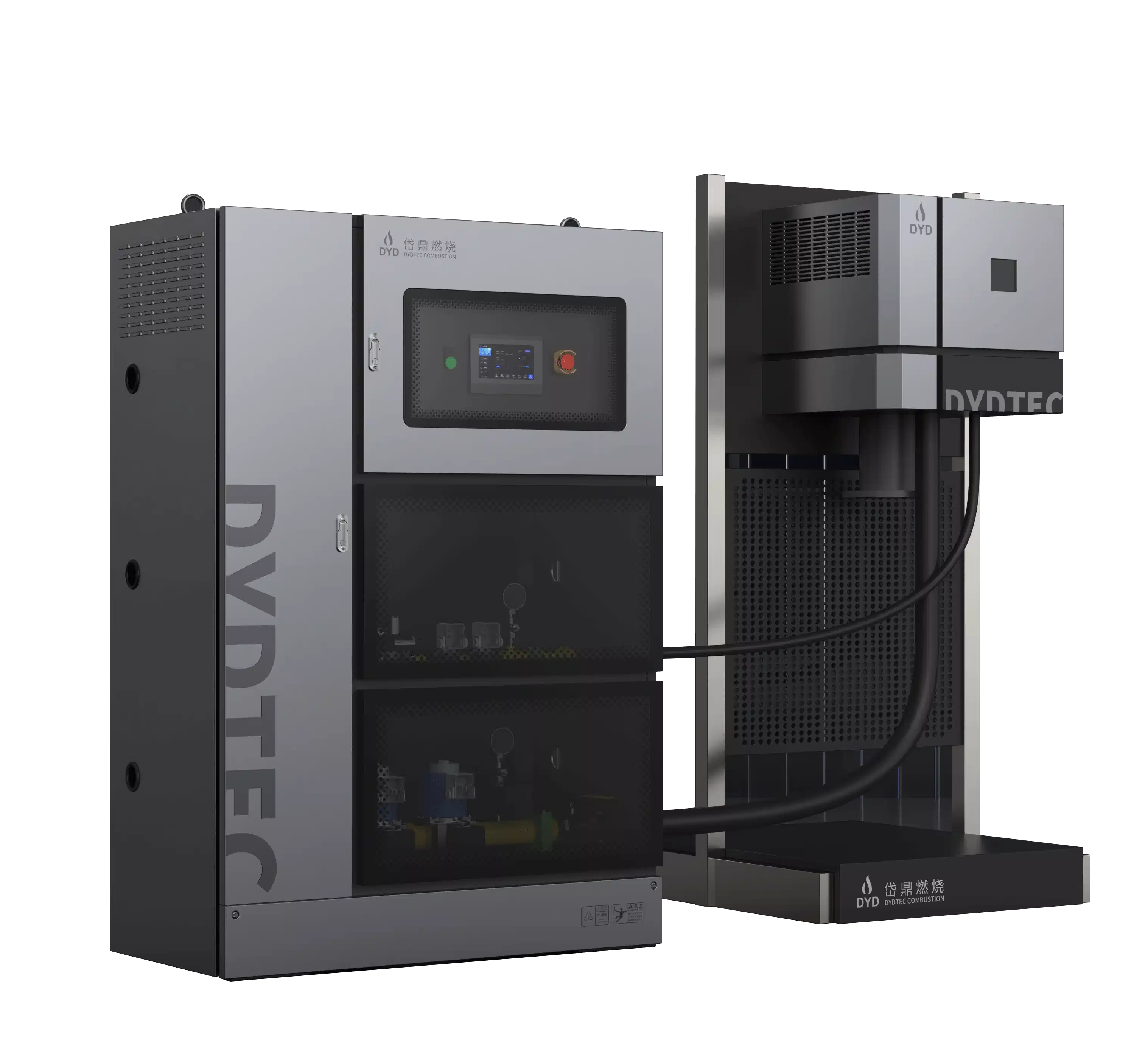
DYDTEC Combustion develops industrial burners, Low NOx burners, linear burners, thermal air furnaces, and combustion-system integration solutions.
Its approach considers NOx reduction together with the overall combustion process, including:
Fuel-air mixing
Burner-head design
Flame structure
Combustion-air distribution
Heat load
Furnace geometry
Temperature distribution
Emissions requirements
DYDTEC Combustion was established in 2012 and has R&D and manufacturing bases in Shanghai and Yangzhou.
The company has developed 100+ burner models covering 200+ application scenarios, supporting different combustion configurations for industrial heating applications.
For OEM equipment, this makes it possible to consider the burner as part of the complete system rather than treating NOx control as an isolated burner specification.
An industrial burner can reduce NOx by controlling peak flame temperature, oxygen availability, fuel-air mixing, combustion staging, and flue-gas recirculation.
Common methods include staged combustion, FGR, controlled mixing, premixed combustion, and distributed heat release.
Generally, reducing excessive local flame temperatures can reduce thermal NOx formation. However, excessive cooling can cause instability or incomplete combustion.
Yes. FGR can dilute the combustion mixture and reduce peak flame temperature, thereby reducing thermal NOx formation.
Yes. Staged combustion controls where and when fuel and oxygen react, helping avoid concentrated high-temperature zones.
Yes. Low NOx burner technologies are designed to control local combustion conditions while maintaining the process temperature required by the furnace.
The effect depends on the combustion system. Excess air changes oxygen availability and flame temperature, so the relationship is not simply linear.
If combustion becomes excessively diluted or oxygen-limited, combustion may become incomplete, causing CO to increase.
No. Flame length must be matched to the furnace geometry, heat load, fuel, air conditions, and required heat distribution.
There is no universal best burner. The appropriate solution depends on the furnace, fuel, heat load, temperature, emissions requirements, operating range, and combustion-air conditions.
Industrial burners can reduce NOx emissions by controlling the combustion conditions that generate nitrogen oxides.
The major approaches are:
Staged Combustion
Flue Gas Recirculation
Controlled Fuel-Air Mixing
Premixed Combustion
Distributed Heat Release
Flame-Temperature Control
The objective is not simply to produce the lowest possible flame temperature.
A successful Low NOx combustion system needs to achieve a balance between:
Low NOx + Low CO + Stable Combustion + Required Heat Output + Efficient Operation
This is why NOx reduction should be considered during the early stages of furnace and OEM equipment design.
The most effective way to reduce NOx is to control the combustion environment at its source—particularly peak flame temperature, oxygen distribution, fuel-air mixing, and heat-release patterns—while maintaining the stable and complete combustion required by the industrial process.