Furnace insulation has a direct and often underestimated effect on burner efficiency. A burner may be correctly selected, properly tuned, and operating with excellent combustion quality, yet the furnace can still consume excessive fuel if heat escapes through walls, roofs, doors, and openings. In industrial heating systems, burner efficiency is not only about how completely the fuel burns. It is also about how much of the released heat is retained and transferred to the process.
Poor insulation increases heat loss from the furnace. To maintain the required temperature, the burner must supply more heat. This means higher fuel input, longer firing times, more frequent cycling, or operation at a higher firing rate. Over time, these effects reduce overall thermal efficiency, increase operating costs, and may shorten equipment life.
In short: better furnace insulation reduces heat loss, which reduces the heat load on the burner, which lowers fuel consumption and improves overall burner efficiency.
Furnace insulation refers to the materials and structures used to reduce heat loss from a furnace to the surrounding environment. It typically includes:
Refractory brick or castable linings
Ceramic fiber blankets or modules
Insulating firebrick
Back-up insulation layers
Microporous or aerogel insulation
Seals, gaskets, and door insulation
Radiant barriers and coatings
The insulation system serves several purposes:
Contain heat inside the furnace
Protect the outer steel shell from high temperatures
Reduce heat loss to the surroundings
Maintain stable internal temperature
Improve worker safety by lowering surface temperatures
Reduce fuel consumption and operating costs
A well-designed insulation system is not just a single layer. It often combines a hot-face refractory for chemical and thermal resistance with one or more insulating layers behind it to reduce heat transfer.
Burner efficiency is often misunderstood. There are two related but distinct concepts:
Combustion efficiency describes how completely the fuel is burned. A burner with high combustion efficiency produces very little unburned fuel, low CO, and a stable flame.
Thermal efficiency describes how much of the released heat is actually used by the process. It accounts for all heat losses, including exhaust losses, wall losses, opening losses, and cooling losses.
Furnace insulation primarily affects thermal efficiency, not combustion efficiency. A burner can have excellent combustion efficiency but still deliver poor overall performance if the furnace loses large amounts of heat through its walls.
Therefore:
Burner efficiency in practice = combustion efficiency + heat retention + heat transfer effectiveness
Insulation improves heat retention. Without good insulation, even a high-quality burner must work harder to compensate for continuous heat loss.
Heat always flows from a hotter region to a cooler region. In a furnace, the hot interior is surrounded by a cooler external environment. Heat escapes through the furnace walls by three mechanisms:
Conduction through the refractory and insulation layers
Convection from the outer surface to the surrounding air
Radiation from the outer surface to nearby surfaces
The rate of heat loss depends on:
Furnace internal temperature
Insulation thermal conductivity
Insulation thickness
Surface area
Outer shell temperature
Ambient conditions
Air movement around the furnace
If the insulation is thin, damaged, or moisture-laden, its thermal conductivity increases, and heat loss rises. The burner must then burn more fuel to maintain the same internal temperature.
A simplified heat balance illustrates this:
Fuel input = useful process heat + exhaust losses + wall losses + opening losses + other losses
Poor insulation increases the wall-loss term. Since the useful process heat requirement is fixed by production, the fuel input must increase.
When insulation performance declines, the furnace loses more heat to the surroundings. The control system senses a drop in temperature and responds by increasing burner output. This can happen in several ways:
The burner fires at a higher rate
The burner stays on for longer periods
The burner cycles on and off more frequently
Additional burners are brought online
The furnace takes longer to reach the setpoint
Each of these responses increases fuel consumption. In severe cases, the burner may operate near its maximum capacity continuously, leaving no margin for process variations. This can also reduce equipment life and increase maintenance requirements.
Insulation is not always uniform. Damage, missing sections, or thermal bridging can create localized areas of high heat loss. These areas become cold zones inside the furnace.
To ensure that the coldest zone reaches the required process temperature, operators may increase the overall furnace temperature. This practice is sometimes called “overheating to compensate for poor distribution.” It increases fuel consumption across the entire furnace and may overheat other zones, causing product quality problems.
Better insulation helps maintain a more uniform temperature field. This allows the furnace to operate at a lower average temperature while still meeting the process requirement. Lower average temperature reduces heat losses further, creating a positive efficiency cycle.
Damaged insulation often accompanies damaged seals, cracks, and openings. When a furnace operates under negative pressure, cold ambient air can be drawn in through these paths. This infiltration air must be heated to the furnace temperature, adding to the heat load.
The relationship is:
Poor insulation and sealing → more infiltration → more heat demand → higher fuel consumption
Insulation upgrades should therefore be combined with pressure control and sealing improvements. Maintaining a slightly positive furnace pressure helps prevent cold-air ingress and keeps hot gases inside the furnace.
Poor insulation increases standby heat loss. During holding periods, when the furnace does not need much process heat, the burner must still fire periodically to replace lost heat. This leads to frequent cycling.
Frequent cycling has several negative effects:
Purge losses between cycles
Wear on ignition components and valves
Thermal stress on refractory
Reduced temperature stability
Lower effective turndown utilization
With better insulation, the standby heat loss decreases. The burner can remain off for longer periods or operate at a lower firing rate. This improves the effectiveness of burner turndown and reduces fuel consumption.
For batch furnaces and intermittent processes, insulation affects both heat-up and cool-down behavior.
Good insulation reduces heat loss during heating, allowing the furnace to reach temperature faster and with less fuel. It also helps retain heat during short interruptions, reducing the need to reheat from a lower temperature.
However, insulation also has thermal mass. Dense refractory materials store a significant amount of heat. In some cases, low-thermal-mass insulation can reduce start-up energy because less heat is absorbed by the lining itself. The best choice depends on the process cycle and operating pattern.
Different furnace applications require different insulation strategies. Common materials include:
Refractory brick – durable, high-temperature resistance, but high thermal mass
Ceramic fiber – low thermal mass, good insulation, but can be susceptible to abrasion and chemical attack
Insulating firebrick – lower density than dense firebrick, good for backup insulation
Castable refractories – good for complex shapes, but may have higher thermal conductivity
Microporous insulation – very low thermal conductivity, often used in thin spaces
Aerogel blankets – excellent insulation performance, lightweight, but higher cost
The choice depends on:
Maximum operating temperature
Furnace atmosphere
Mechanical abuse
Thermal cycling
Chemical exposure
Space limitations
Budget
A well-designed system often uses multiple layers, with a hot-face material selected for durability and an insulating layer selected for thermal performance.
Several indicators suggest that insulation problems are increasing fuel consumption:
High outer shell temperature
Hot spots on the furnace exterior
Discolored or warped steel shell
Increased fuel consumption per unit of production
Longer heat-up times
Difficulty maintaining temperature
Frequent burner cycling
Uneven product heating
High exhaust temperature
Visible cracks, gaps, or missing insulation
Thermal imaging cameras are useful for identifying insulation defects. They can reveal areas where heat is escaping and help prioritize repairs.
Improving insulation is often one of the most cost-effective ways to reduce fuel consumption. Practical steps include:
Inspect the furnace lining – Look for cracks, spalling, missing bricks, and damaged fiber modules.
Use thermal imaging – Identify hot spots and areas of high heat loss.
Repair damaged areas – Replace or patch insulation as needed.
Add insulation where possible – Increase thickness or add a low-conductivity layer.
Seal openings and doors – Reduce infiltration and radiation losses.
Consider low-thermal-mass materials – For batch furnaces, reduce heat storage losses.
Maintain pressure control – Prevent cold-air ingress and hot-gas escape.
Retune the burner after insulation upgrades – The reduced heat load may require adjustments to air-fuel ratio, firing rate, and control settings.
After improving insulation, the burner may no longer need to operate at its previous firing rate. The control system should be reviewed and adjusted to take advantage of the reduced heat demand.
Insulation alone can significantly improve thermal efficiency, but it cannot compensate for poor combustion, excessive excess air, or poor heat distribution. The best results come from a system-level approach:
Good insulation + optimized combustion + effective heat transfer + accurate control = lower fuel consumption
Insulation reduces heat loss. Combustion optimization ensures that fuel is burned completely. Heat transfer ensures that the released heat reaches the product. Control ensures that the system responds correctly to changing demand.
If insulation is improved but the burner remains poorly tuned, the savings will be smaller than expected. Conversely, if the burner is well tuned but insulation is poor, much of the heat will still be lost through the walls.
The potential savings depend on the original condition of the furnace. In a poorly insulated furnace, wall losses can account for 10–30% of total fuel input. Improving insulation can reduce these losses substantially, often saving 5–20% of fuel. In some cases, the savings are even higher, especially for high-temperature furnaces operating continuously.
The payback period for insulation upgrades is often short, particularly when fuel costs are high. A simple payback calculation considers:
Cost of insulation materials and installation
Annual fuel savings
Reduced maintenance costs
Improved product quality
Longer equipment life
For many industrial furnaces, insulation improvements pay for themselves within one to three years.
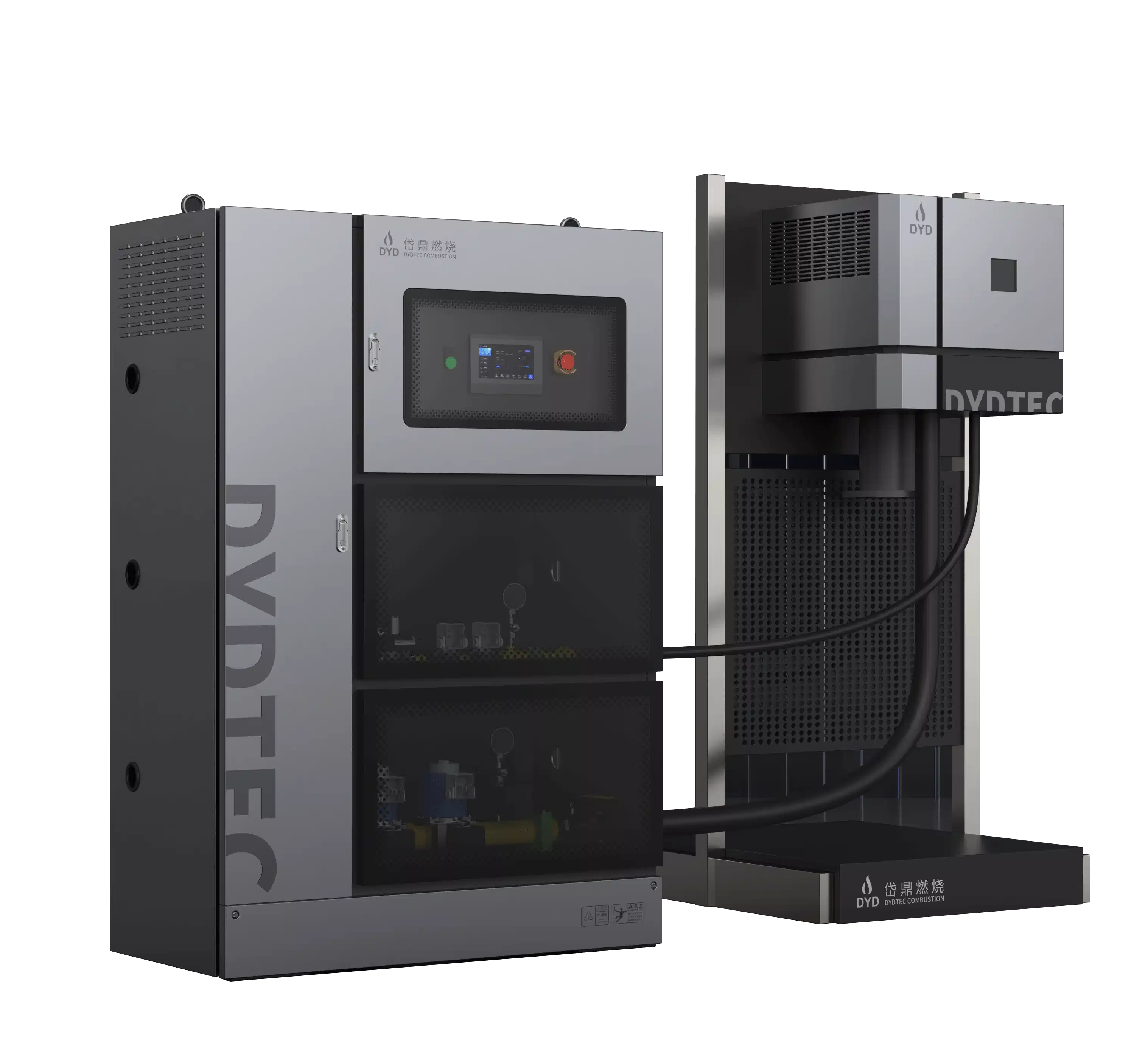
DYDTEC Combustion develops industrial burners and integrated combustion solutions for furnaces, kilns, ovens, dryers, thermal air systems, and other industrial heating applications. With more than 100 burner models covering more than 200 application scenarios, DYDTEC Combustion considers burner selection together with heat load, furnace geometry, insulation condition, fuel conditions, combustion-air requirements, flame characteristics, and control requirements.
For OEM equipment manufacturers, this integrated approach is important because burner efficiency is not determined by the burner alone. The furnace insulation, exhaust system, pressure control, and process operation all interact with the burner. DYDTEC Combustion has production and R&D bases in Shanghai and Yangzhou and serves customers across more than 50 countries and regions.
Yes. Poor insulation increases heat loss, forcing the burner to supply more heat to maintain the required temperature. This raises fuel consumption and reduces overall thermal efficiency.
Combustion efficiency describes how completely fuel is burned. Thermal efficiency describes how much of the released heat is used by the process. Insulation mainly affects thermal efficiency.
Insulation reduces heat loss through furnace walls, roofs, and openings. With less heat escaping, the burner needs to provide less heat to maintain the process temperature.
High outer shell temperature, hot spots, longer heat-up times, increased fuel consumption, frequent burner cycling, and uneven product heating are common signs.
You can improve combustion efficiency through tuning and maintenance, but thermal efficiency will remain limited if heat loss through the furnace walls is high. Insulation is a key part of overall efficiency.
Insulation affects the heat balance and burner firing rate. Lower heat loss may reduce the required firing rate, which can indirectly affect NOx formation. However, NOx control depends mainly on burner design and combustion conditions.
Both should be considered together. Insulation reduces the heat load, and the burner should be retuned afterward to match the new conditions. A system-level approach gives the best results.
Inspection frequency depends on the process. High-temperature or continuously operating furnaces should be inspected at least annually. Furnaces with thermal cycling or aggressive atmospheres may need more frequent checks.
Furnace insulation affects burner efficiency because it controls how much heat is retained inside the furnace. Poor insulation allows heat to escape through walls, roofs, doors, and openings. The burner must then burn more fuel to compensate. This increases operating costs and reduces overall thermal efficiency.
The relationship can be summarized as:
Poor insulation → higher wall heat loss → higher burner load → higher fuel consumption
Better insulation → lower wall heat loss → lower burner load → lower fuel consumption
For industrial furnaces, kilns, ovens, dryers, and thermal equipment, improving insulation is one of the most effective ways to reduce fuel consumption and improve burner performance. However, insulation works best when combined with optimized combustion, proper pressure control, effective heat distribution, and accurate temperature control. A system-level approach ensures that every part of the heating process contributes to lower energy use and more reliable operation.