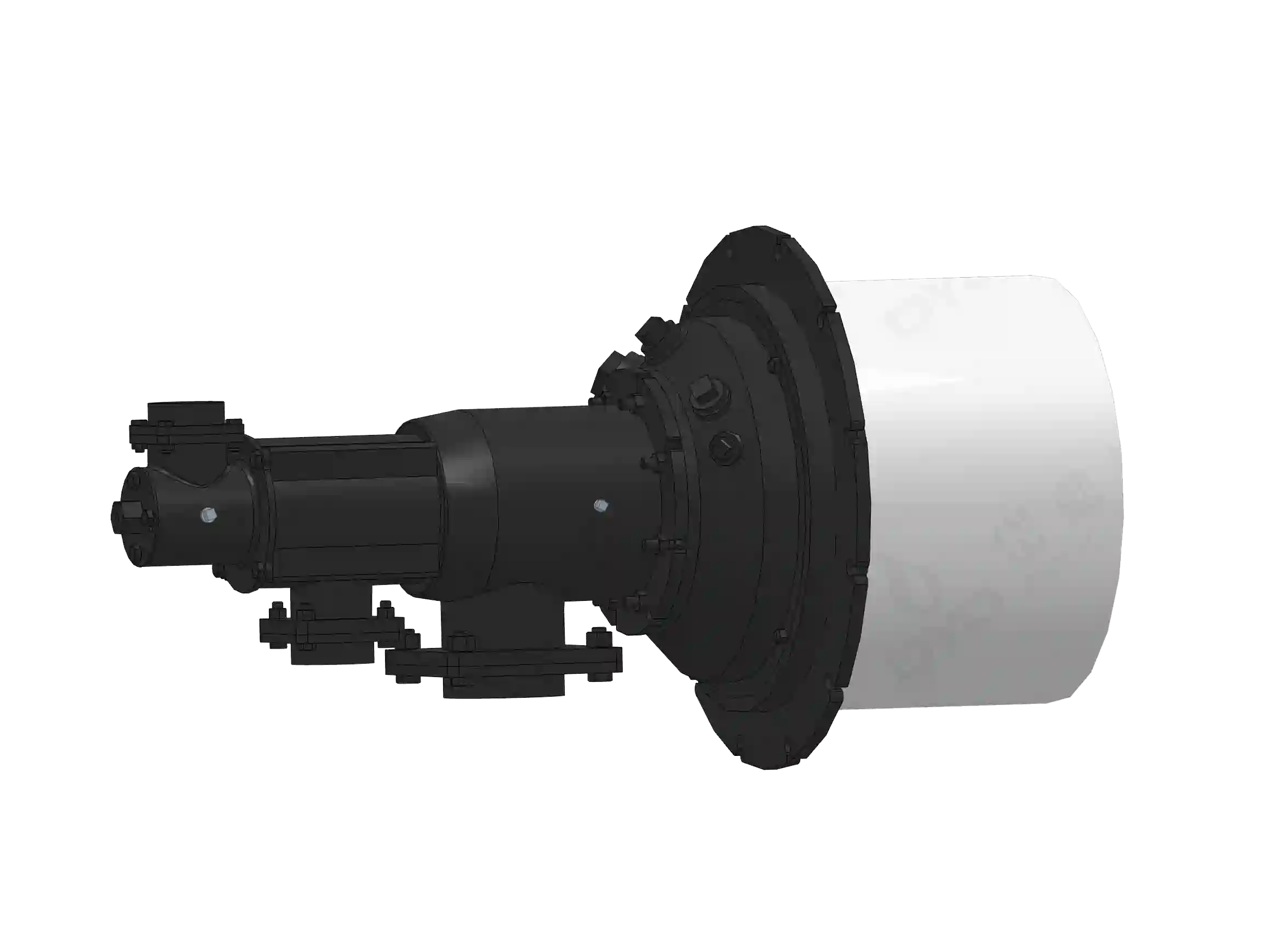
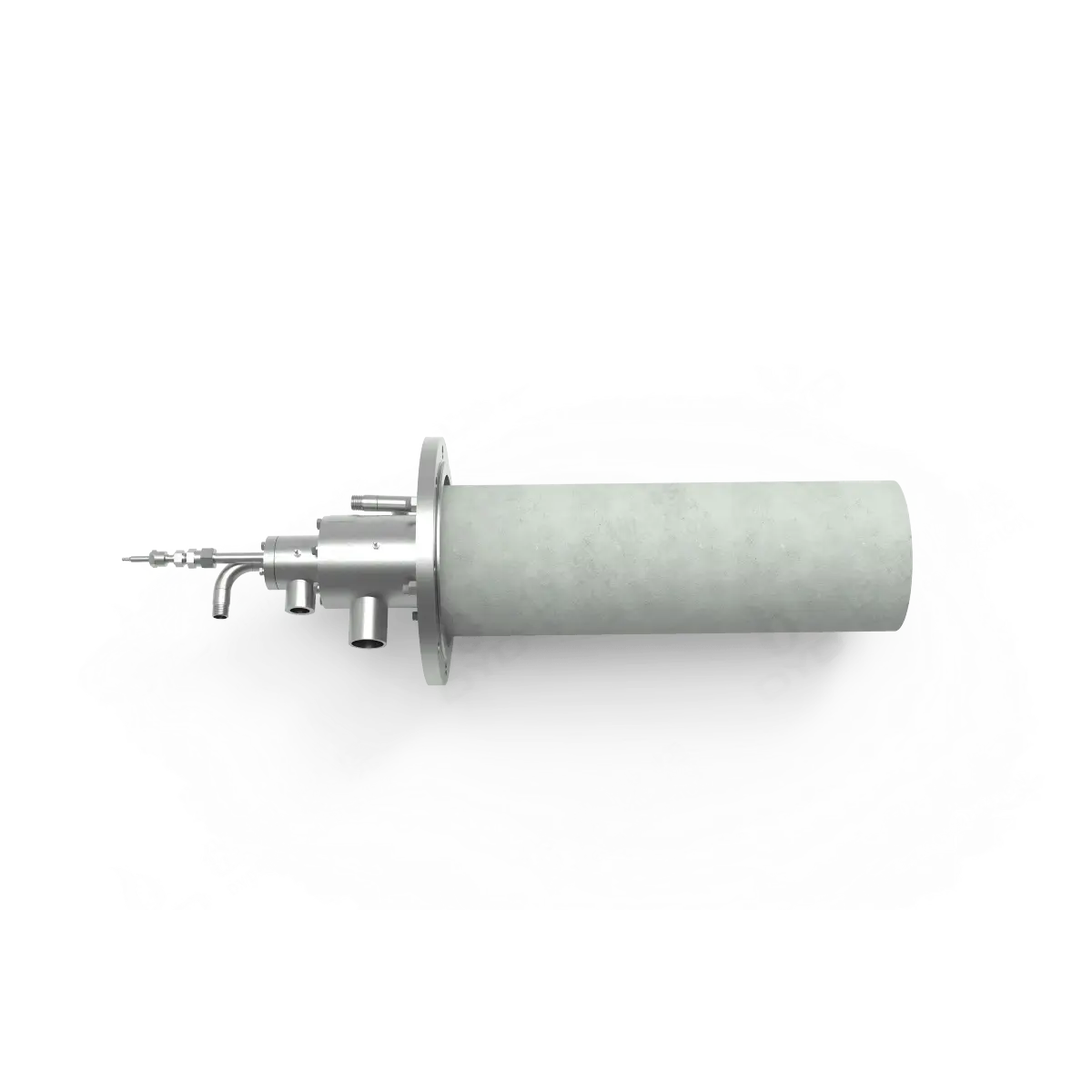
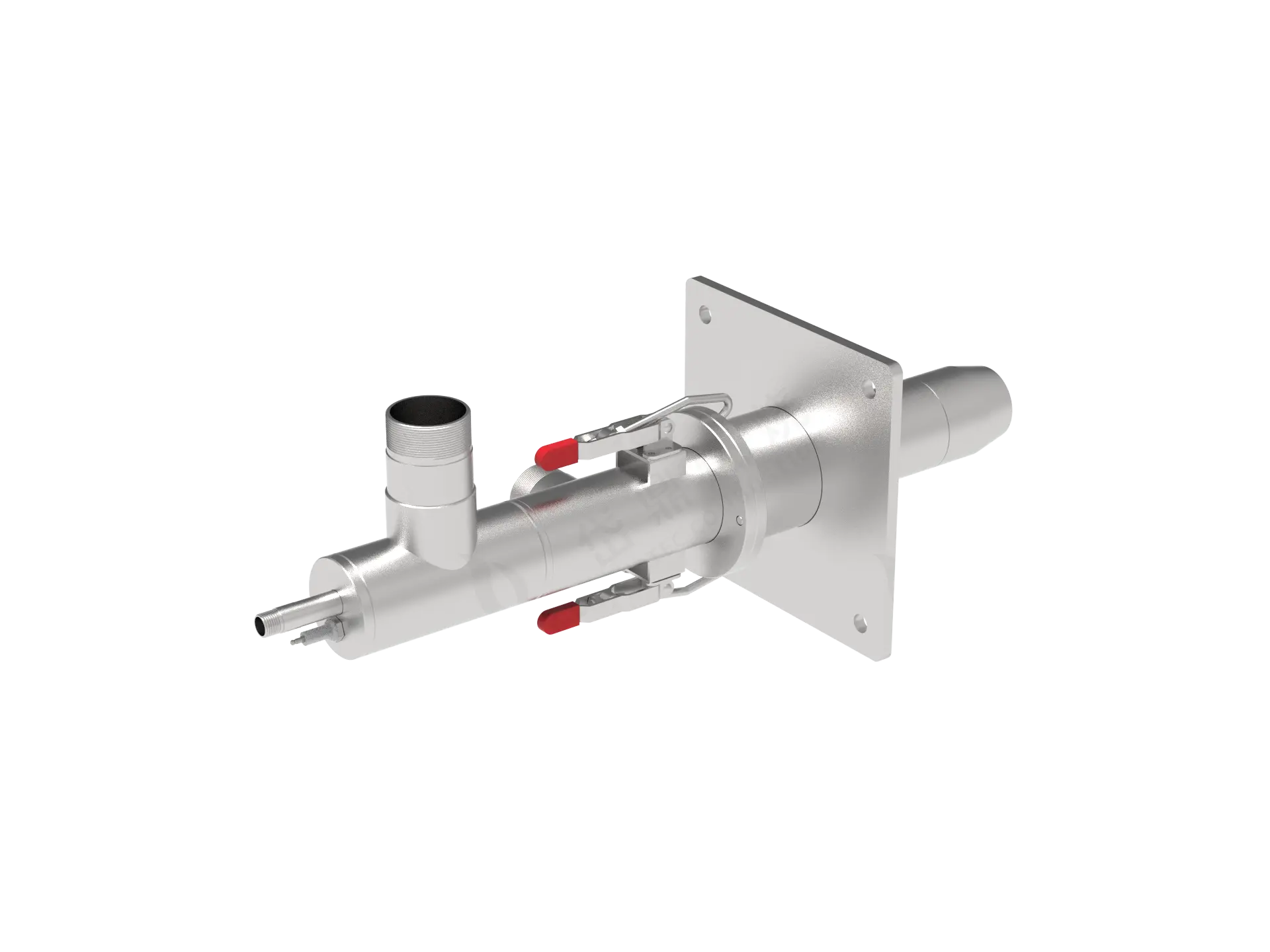
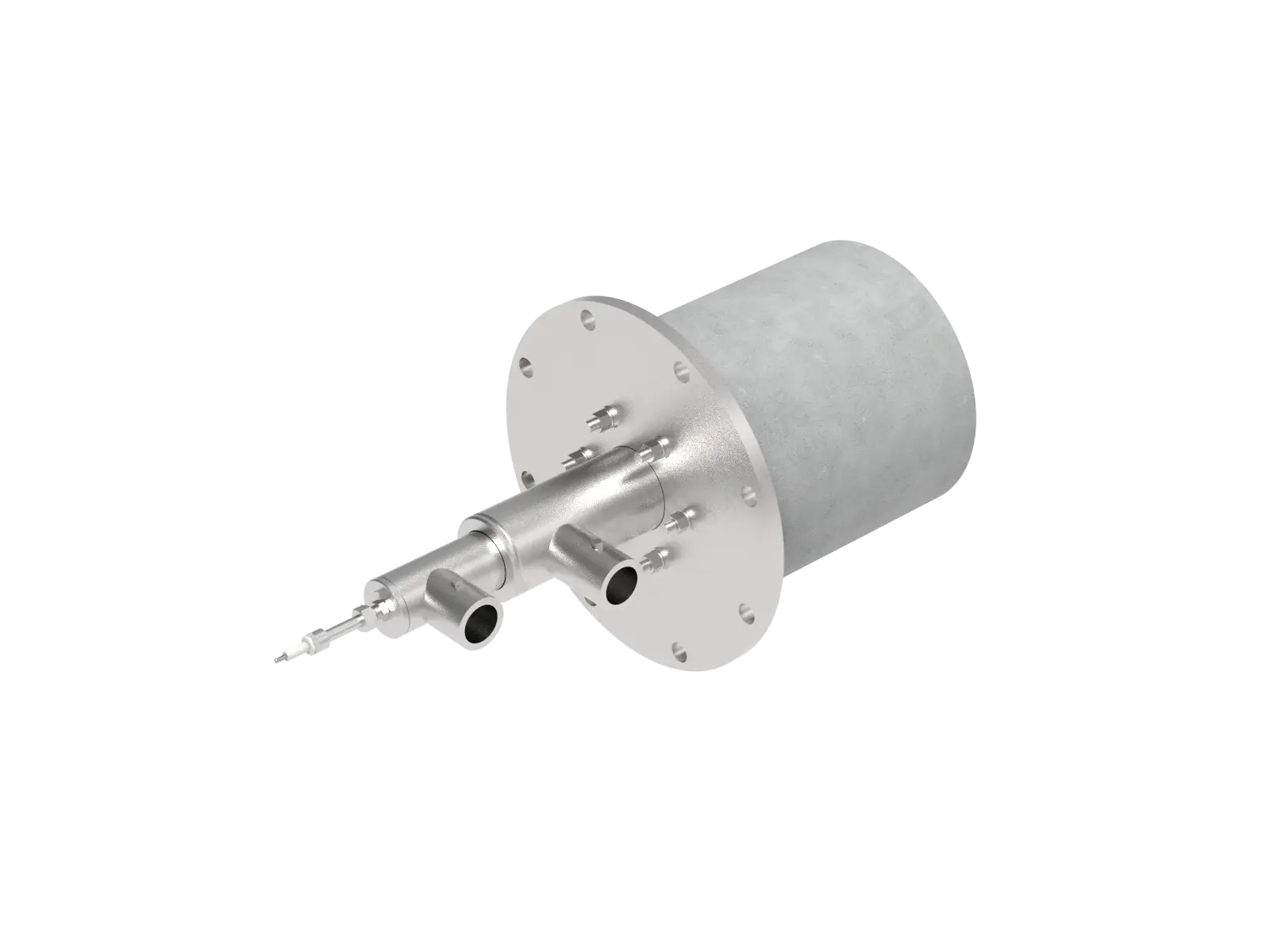
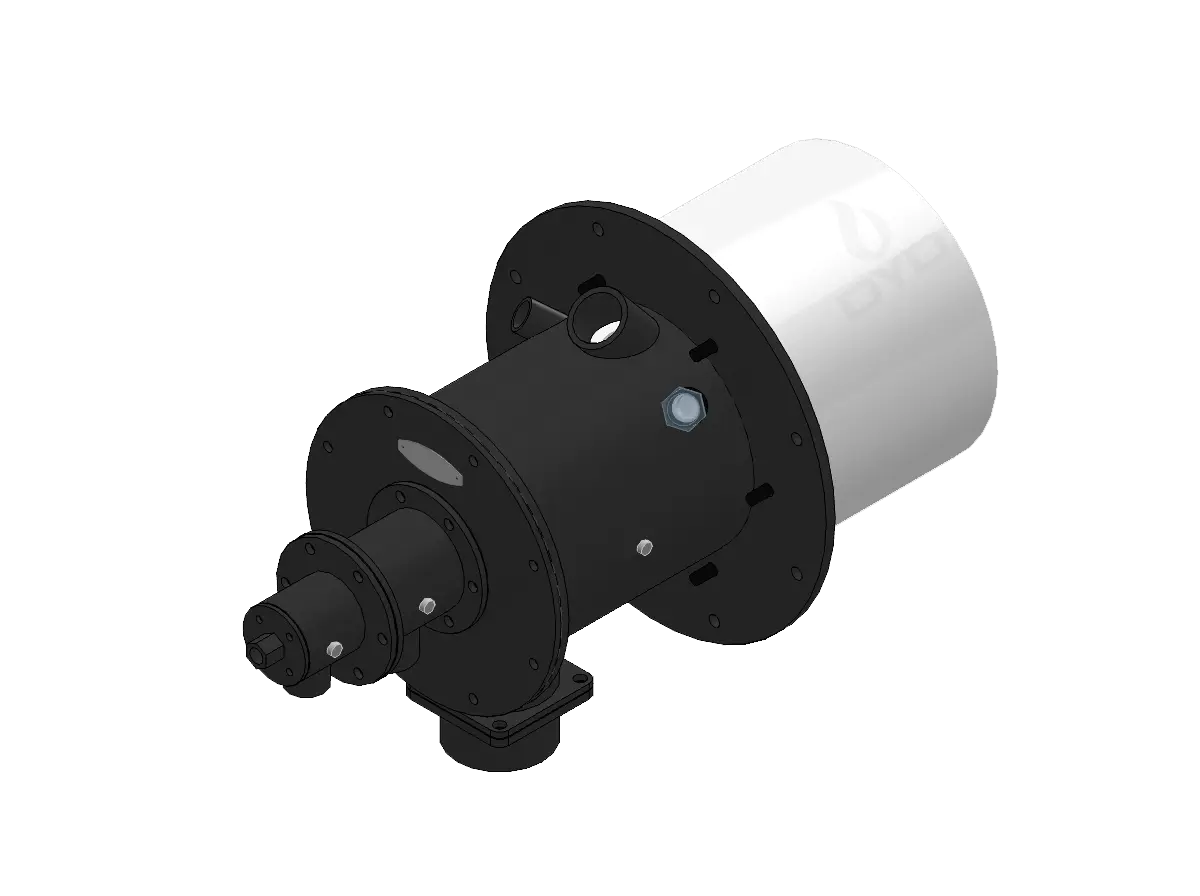
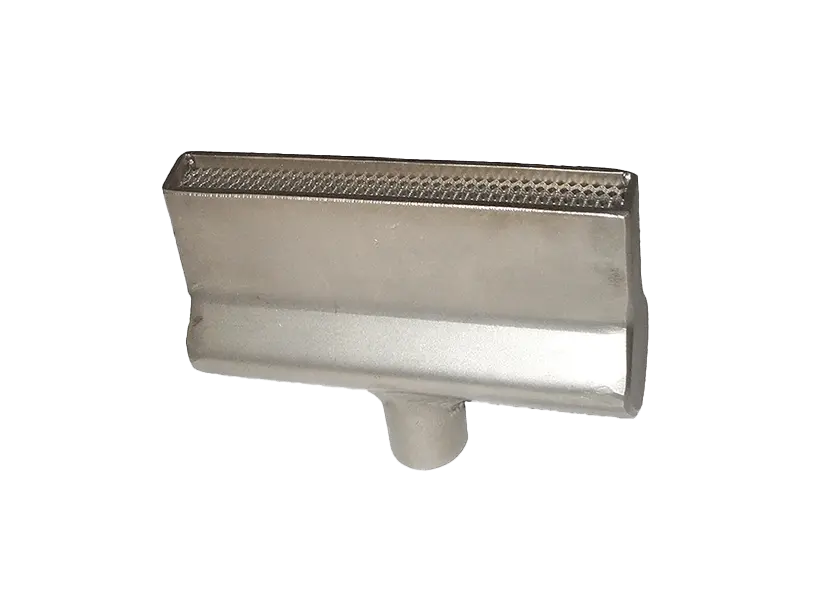
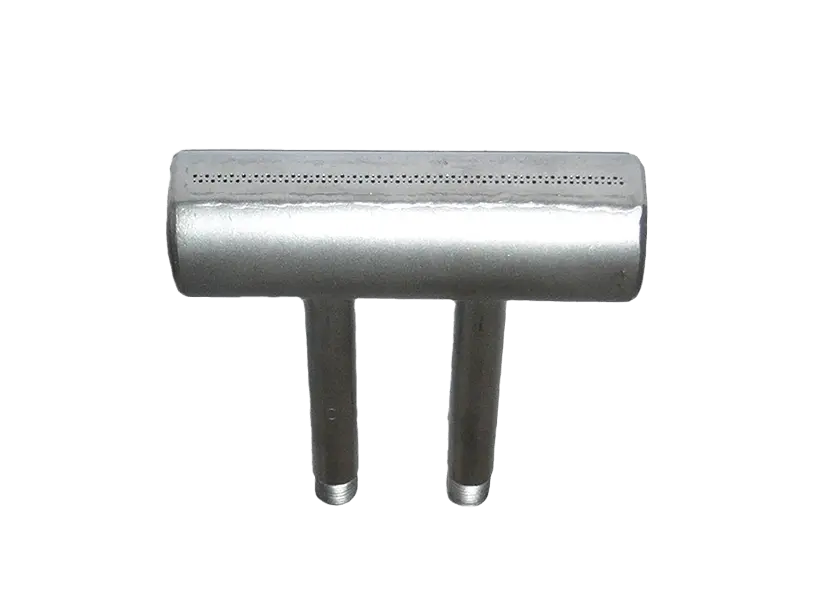
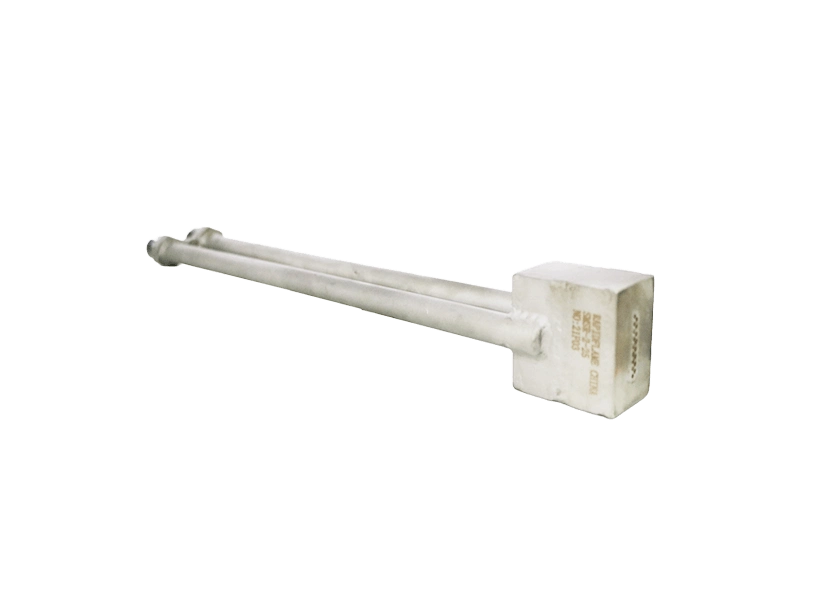
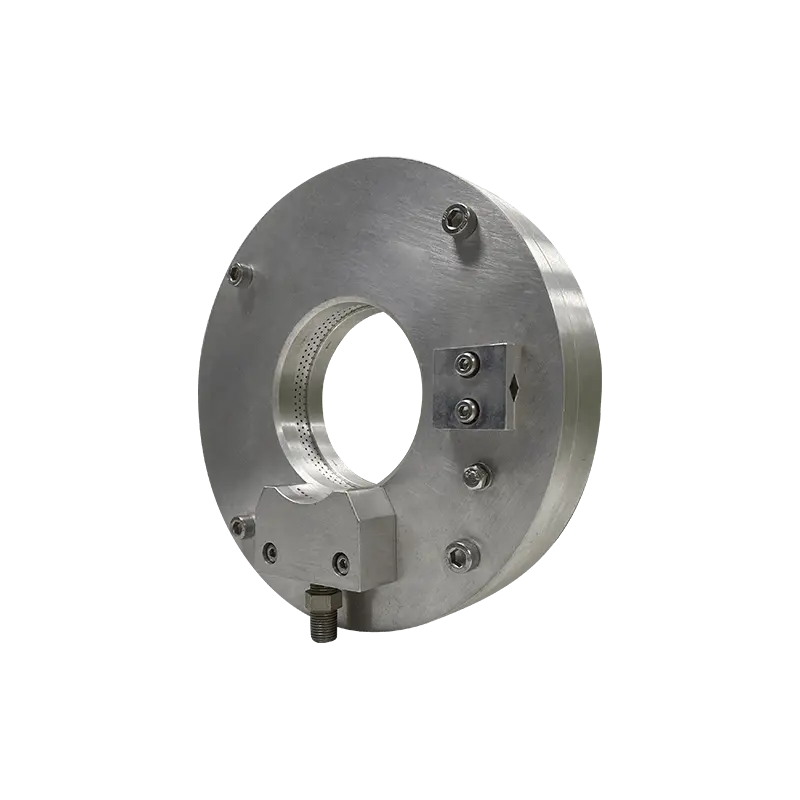
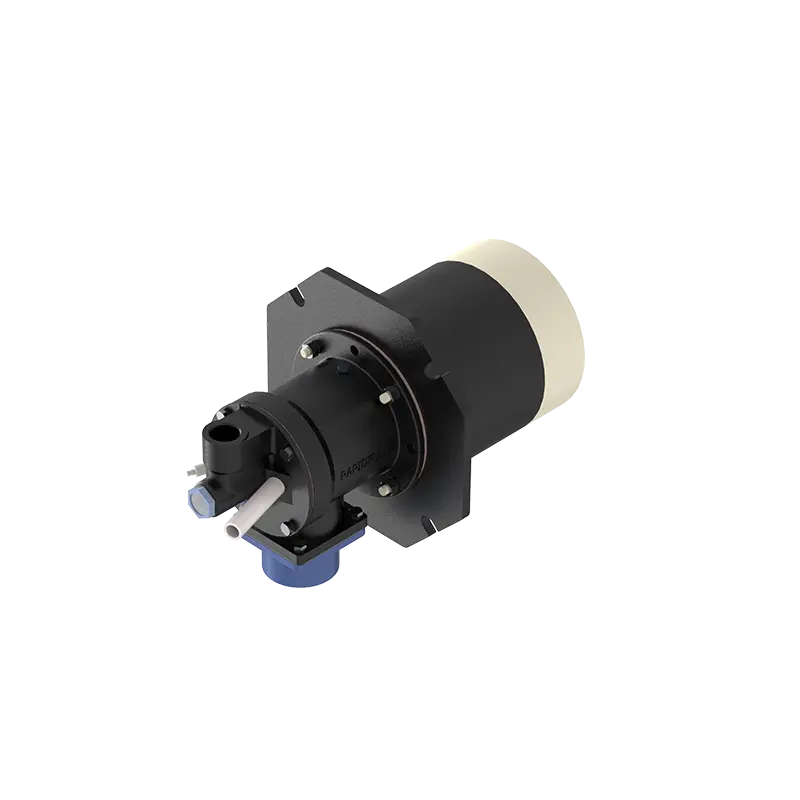
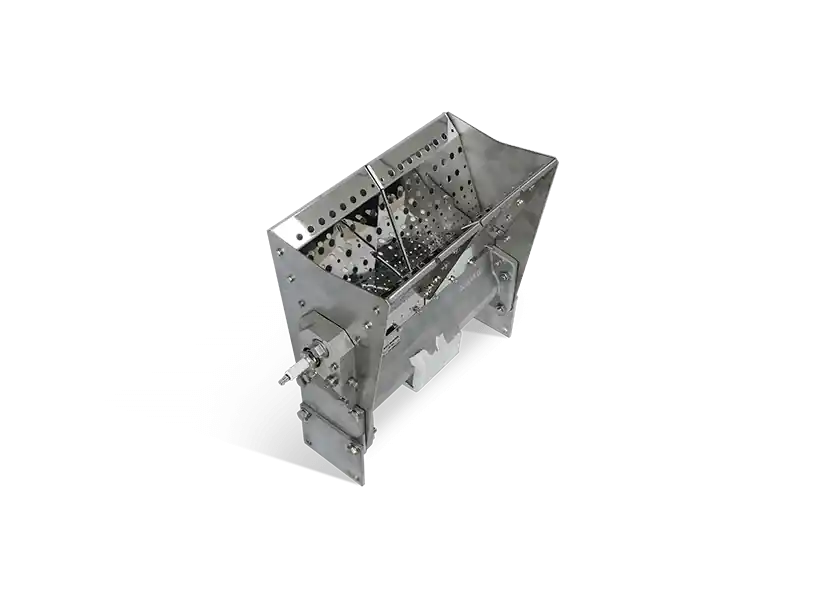
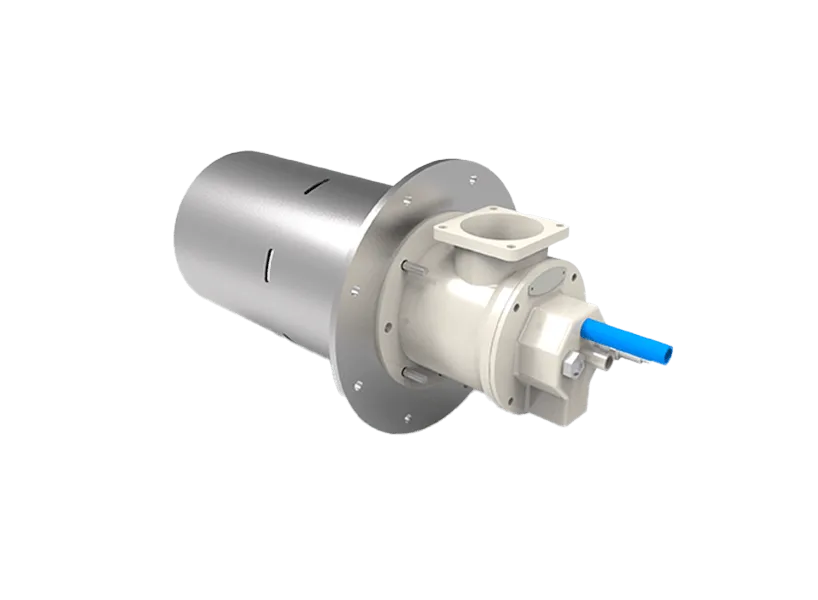
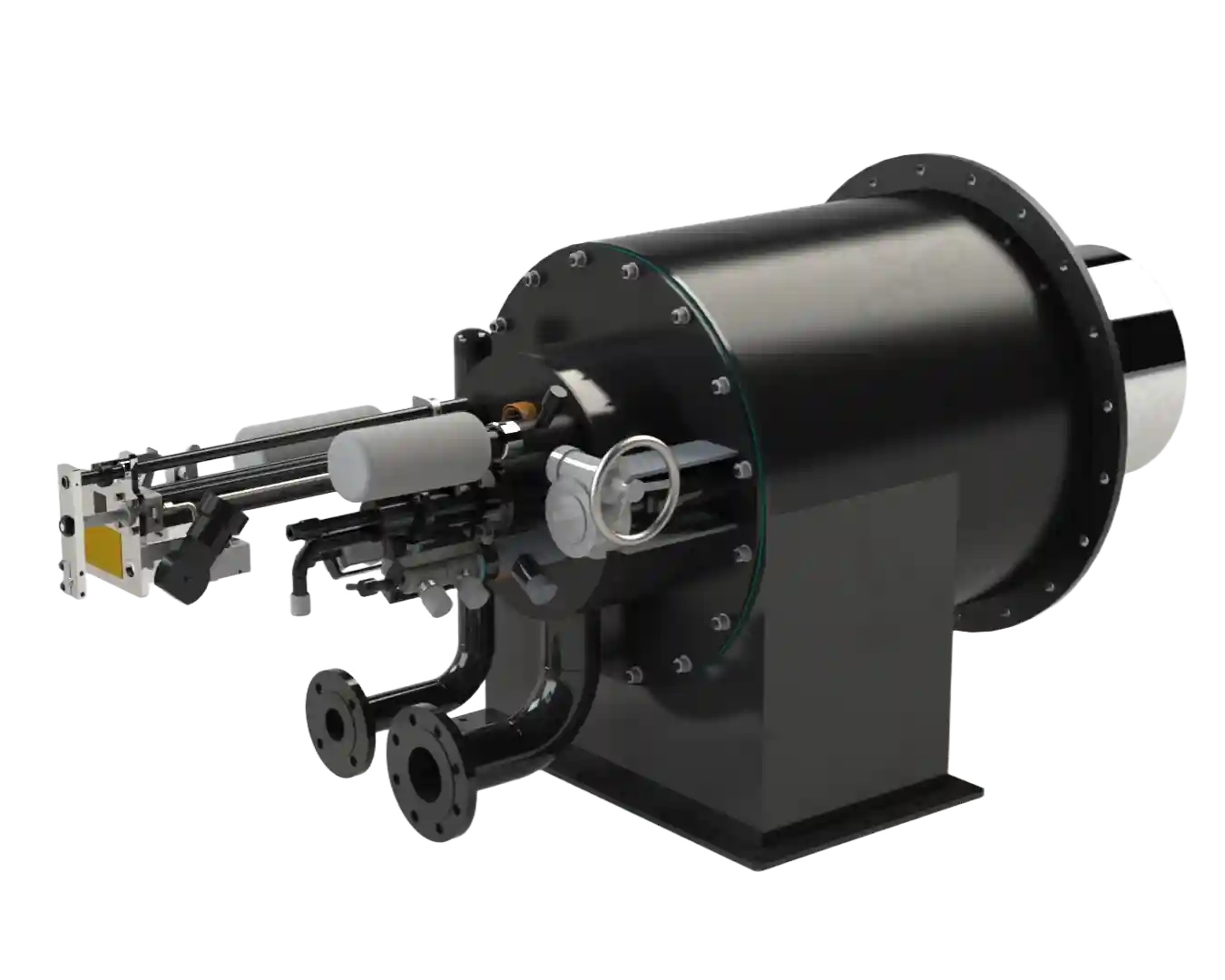
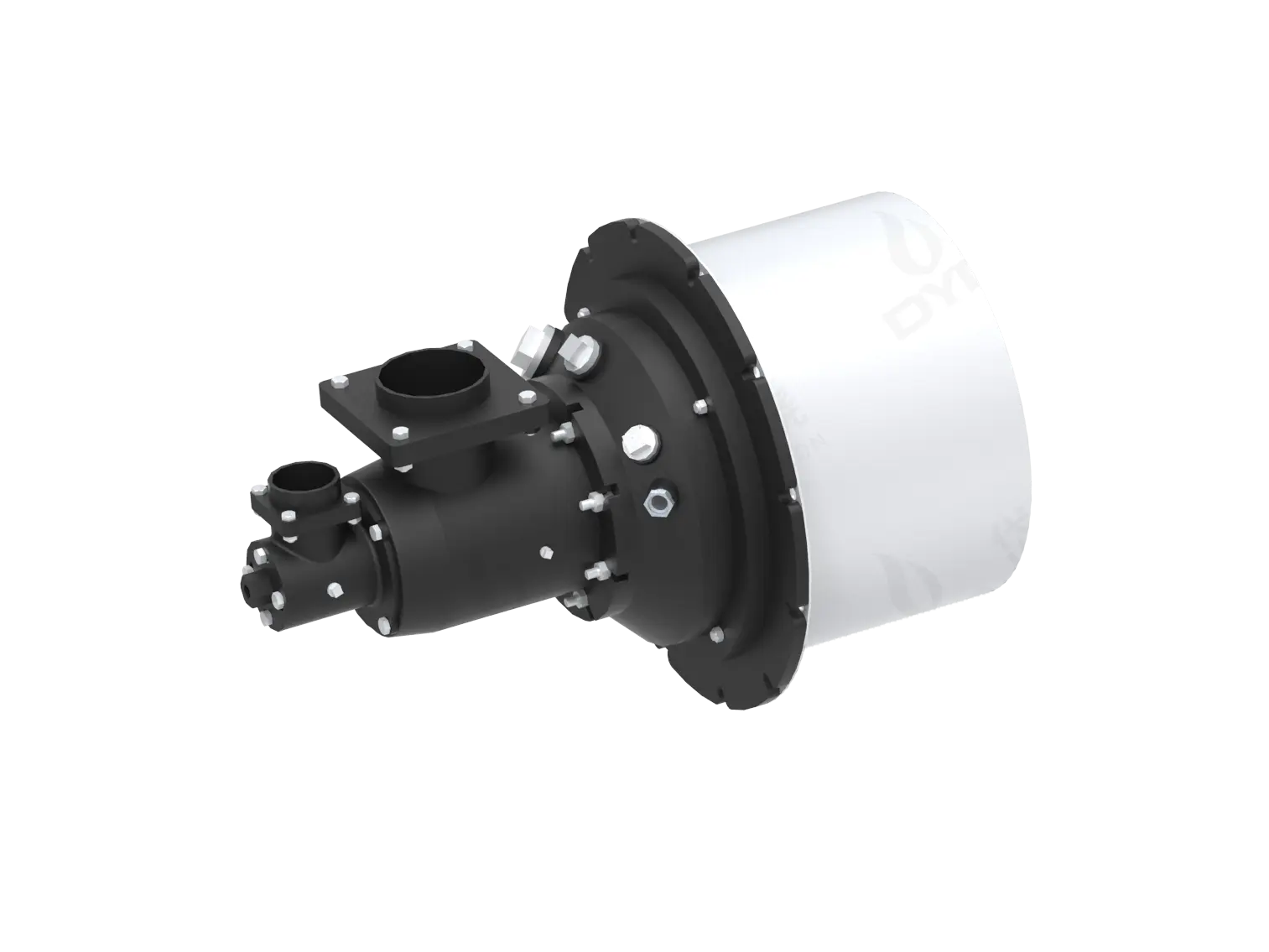
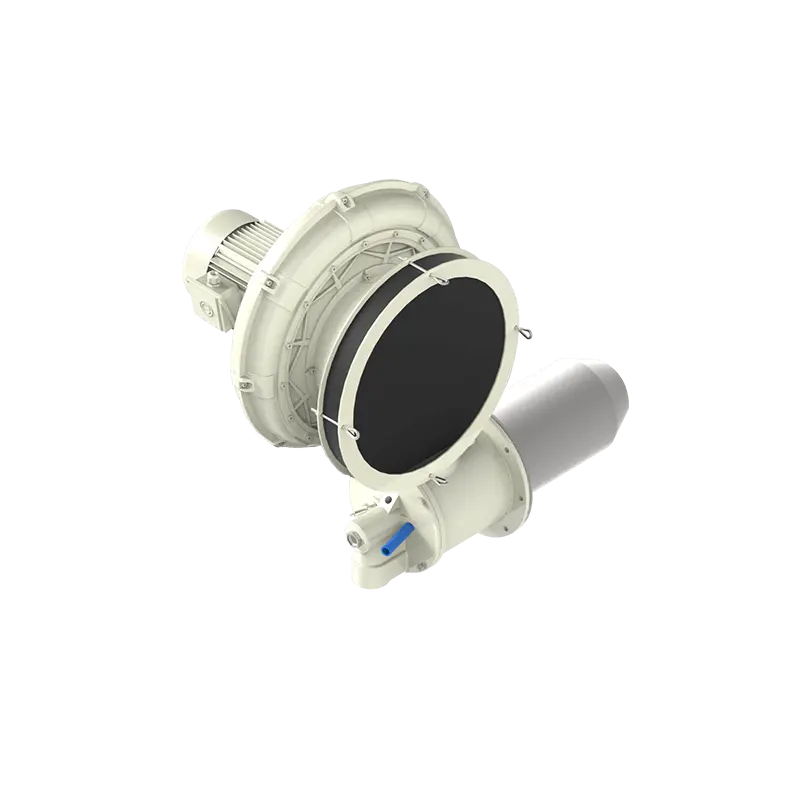
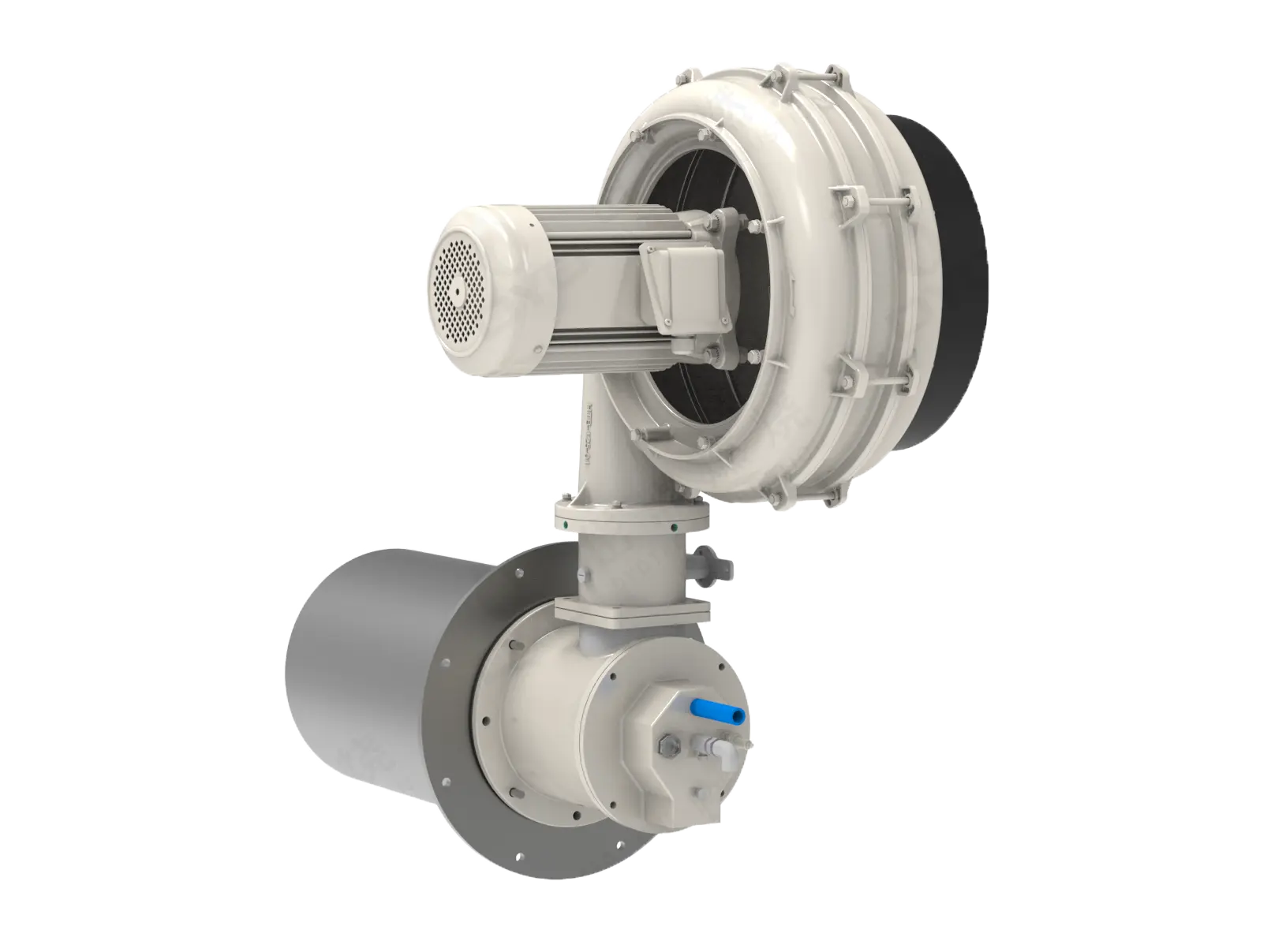
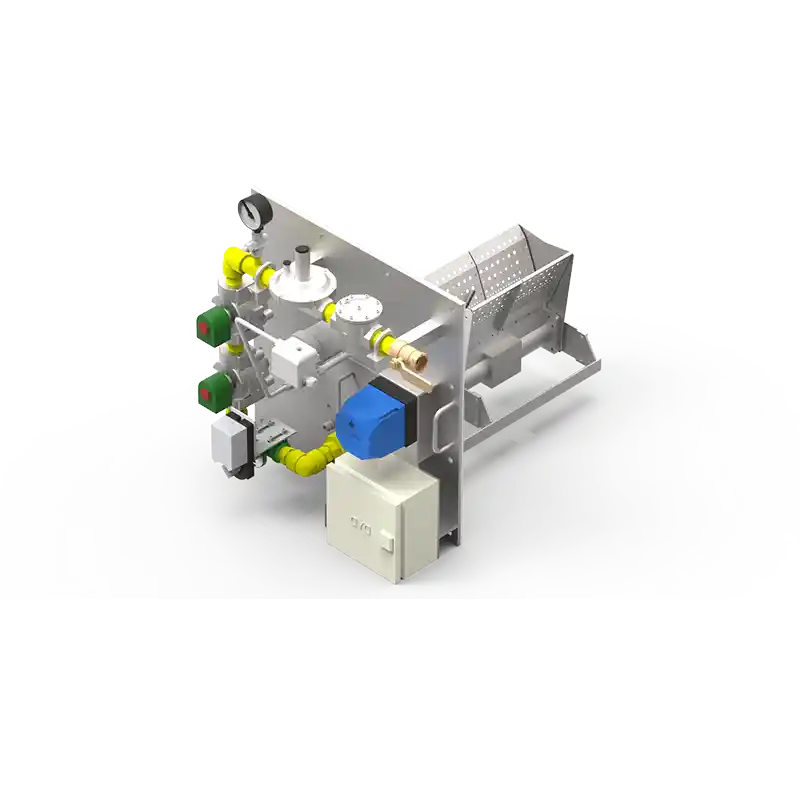
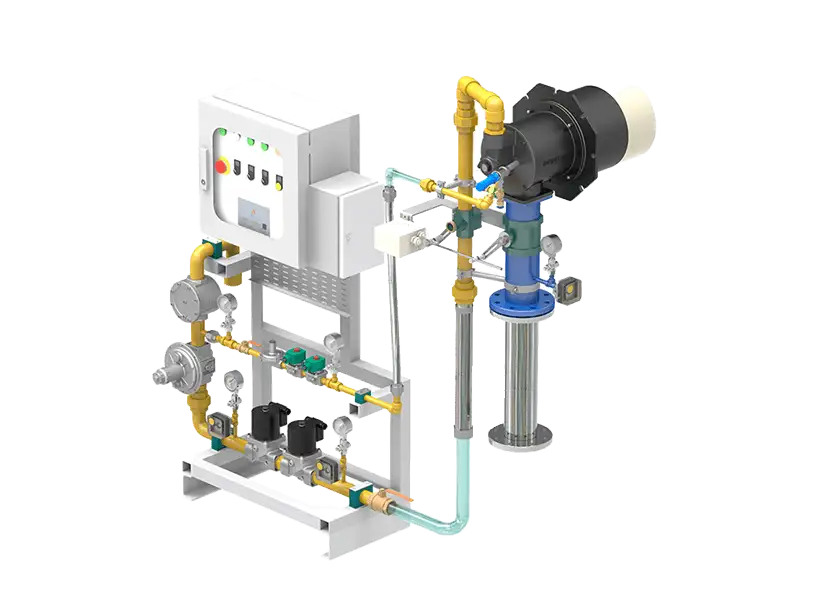
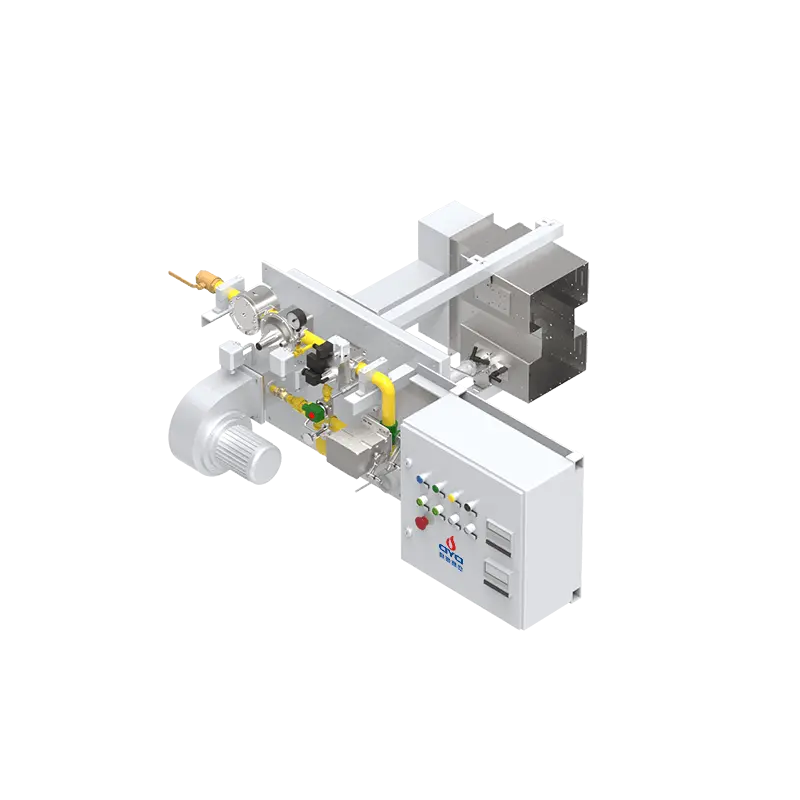
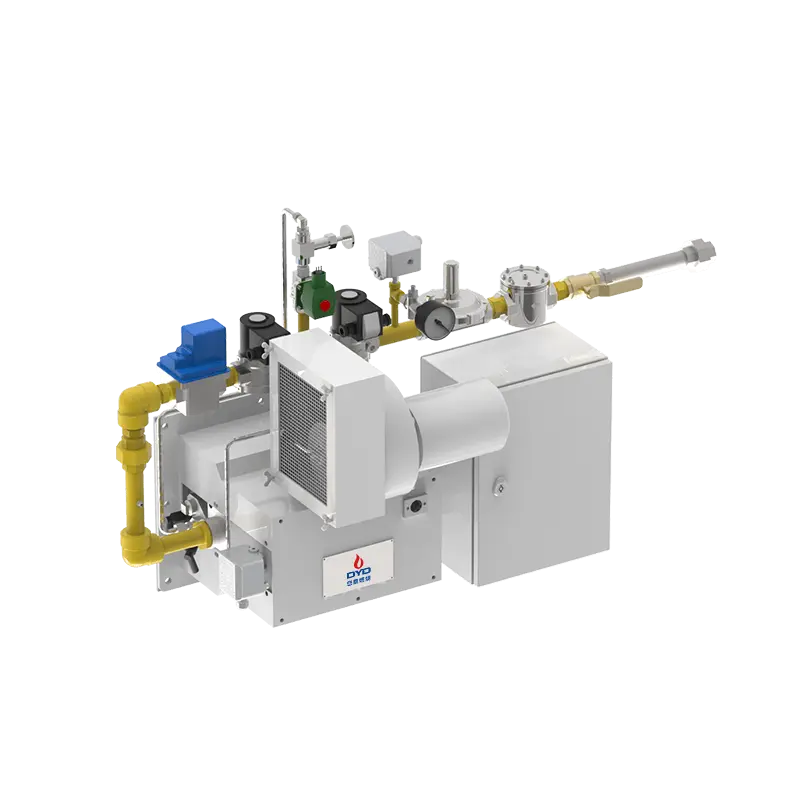
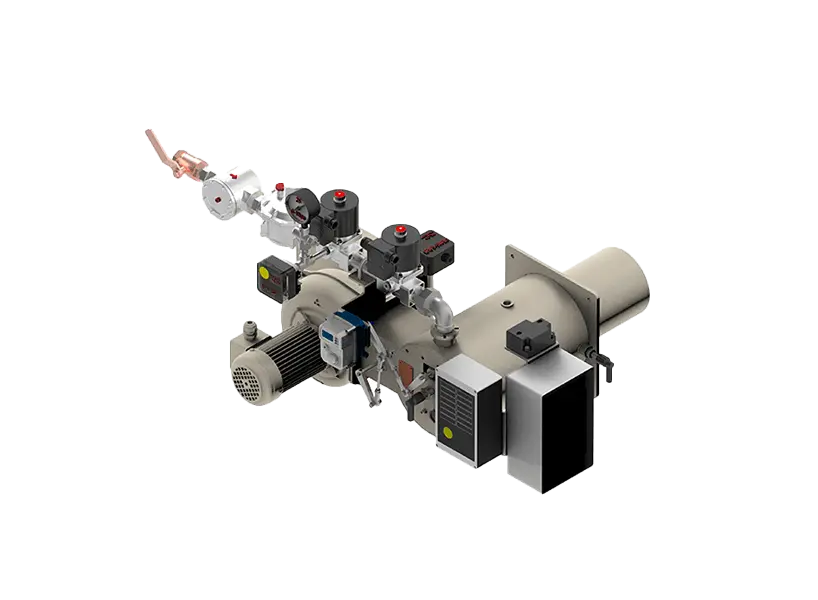
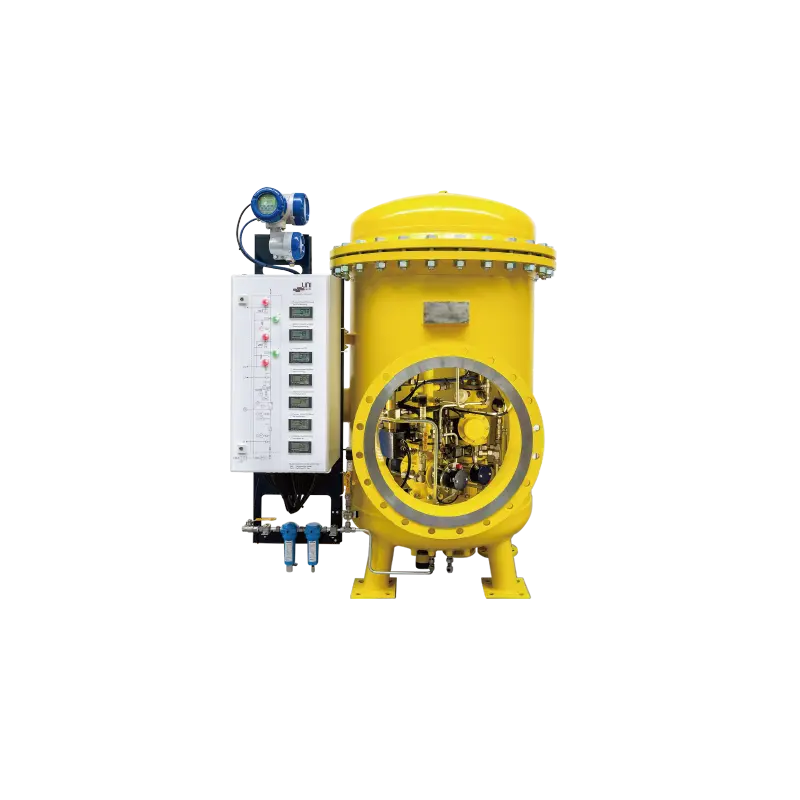
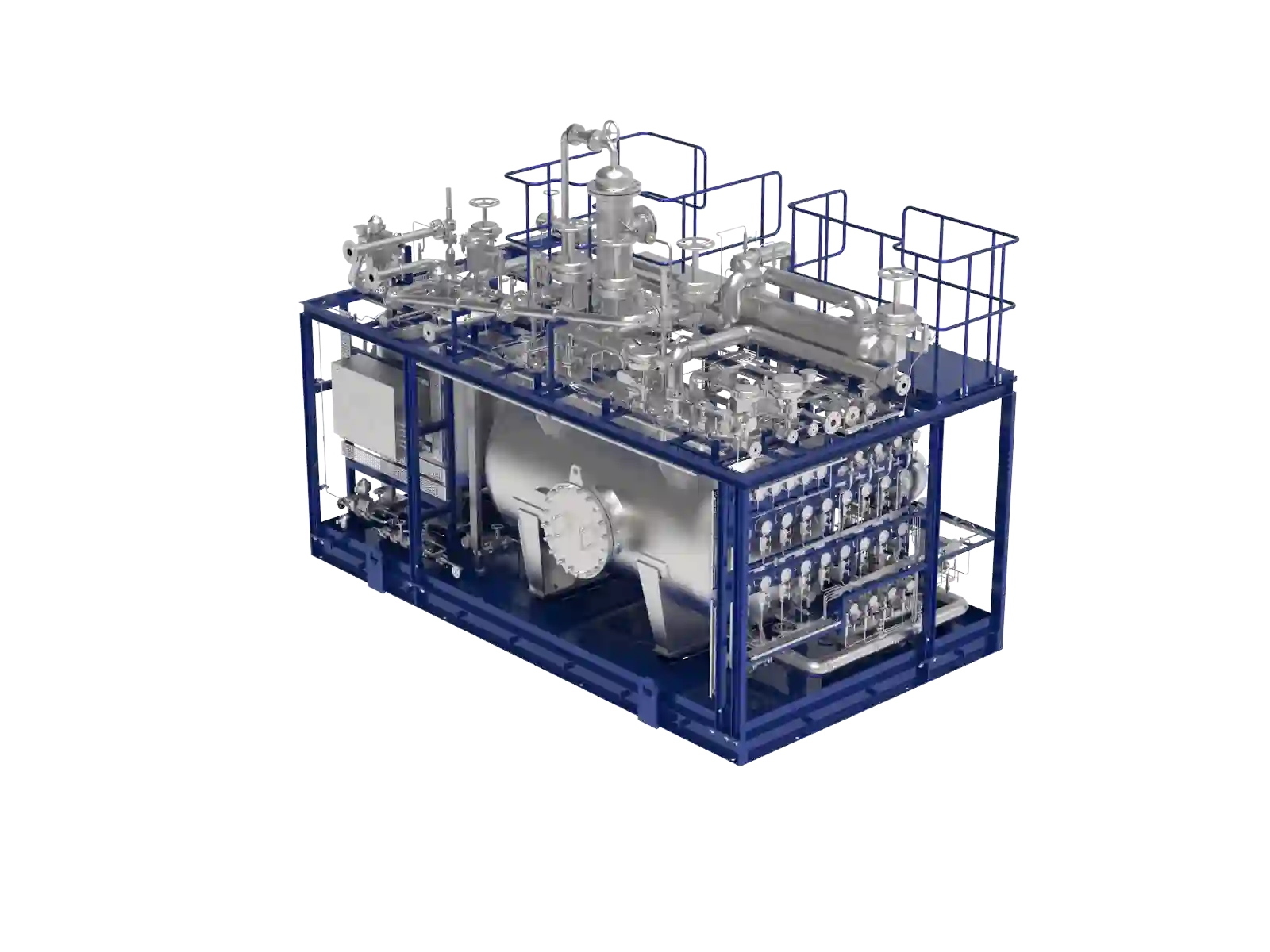
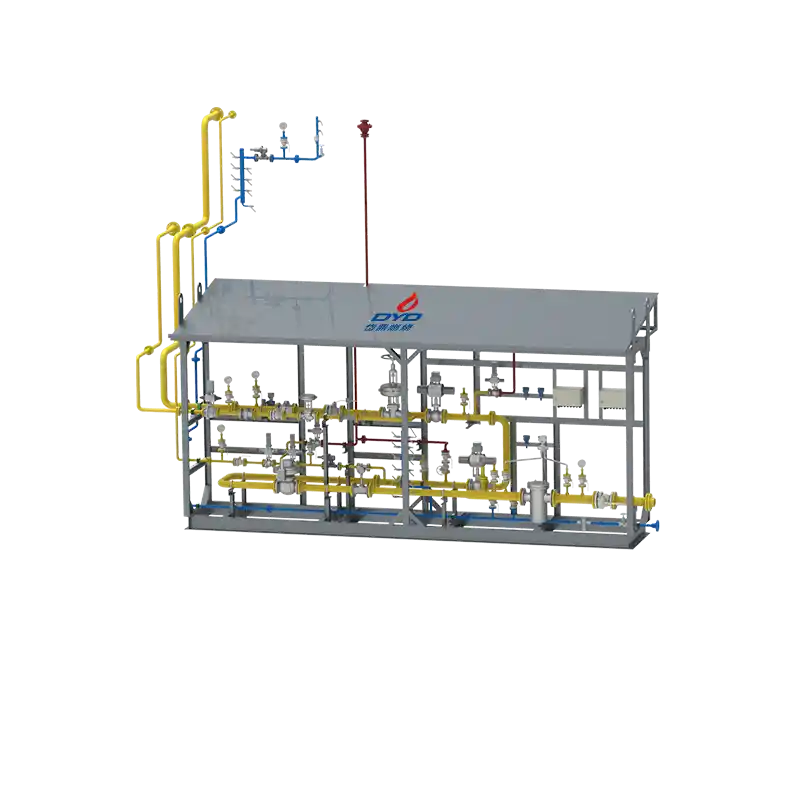
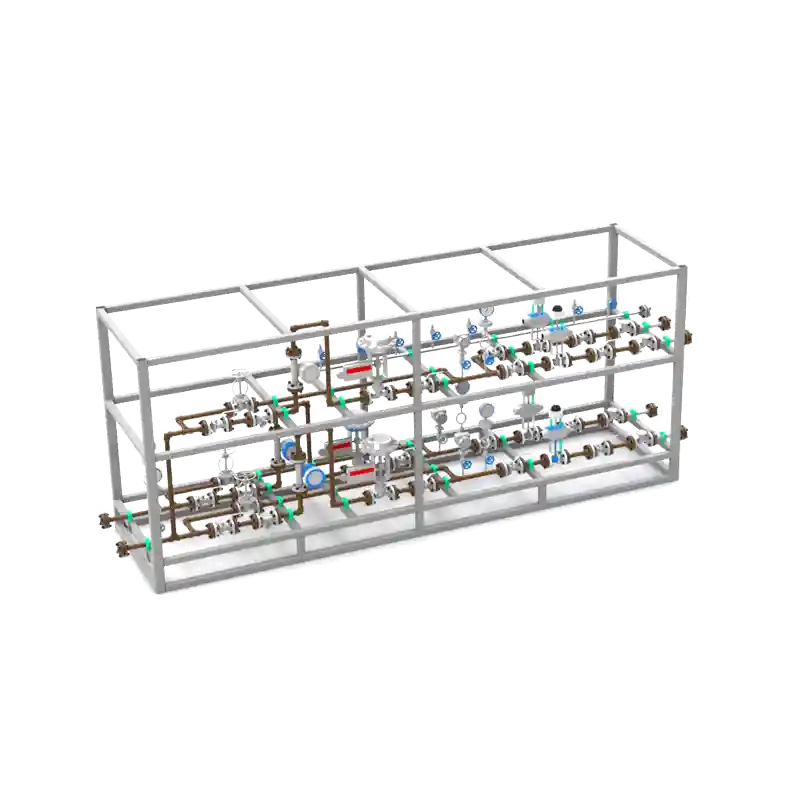
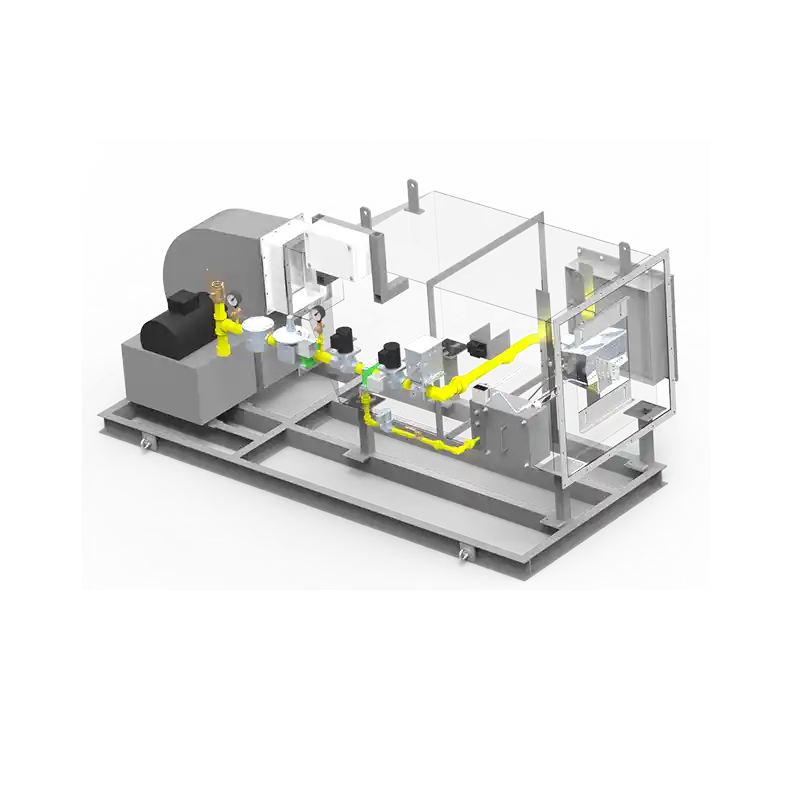
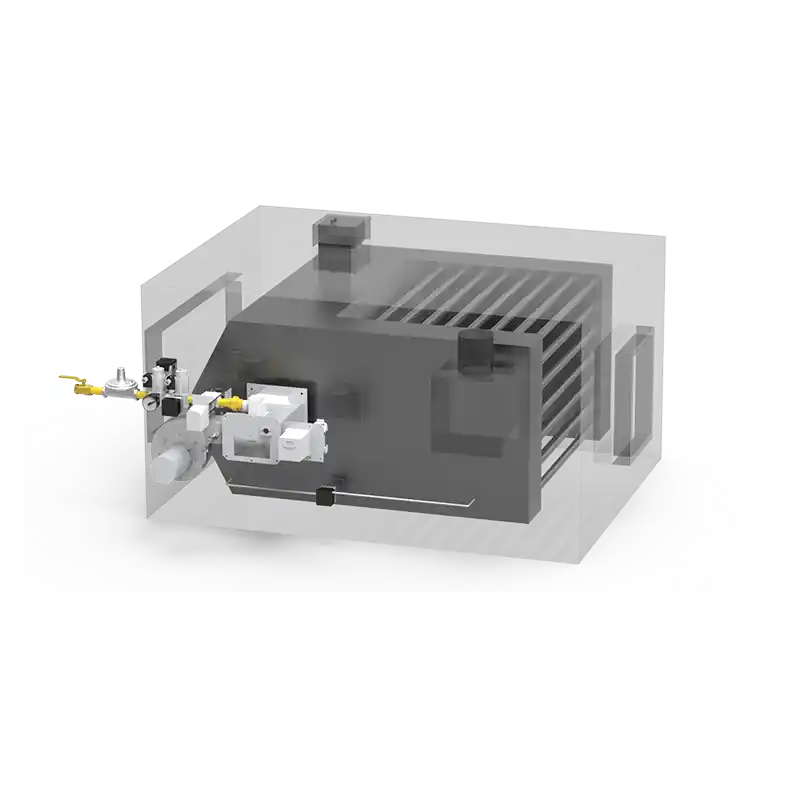
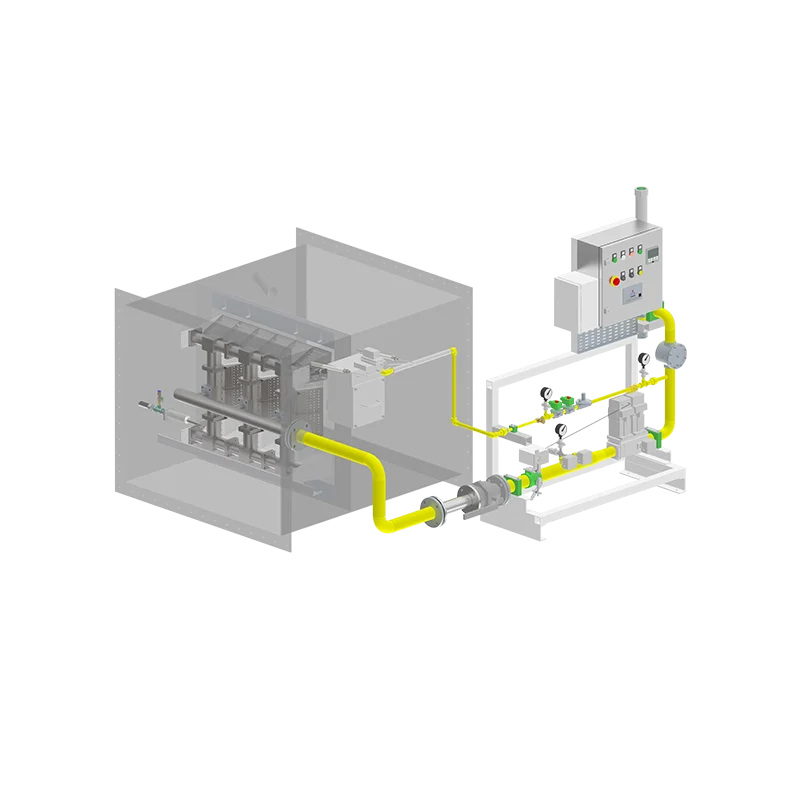
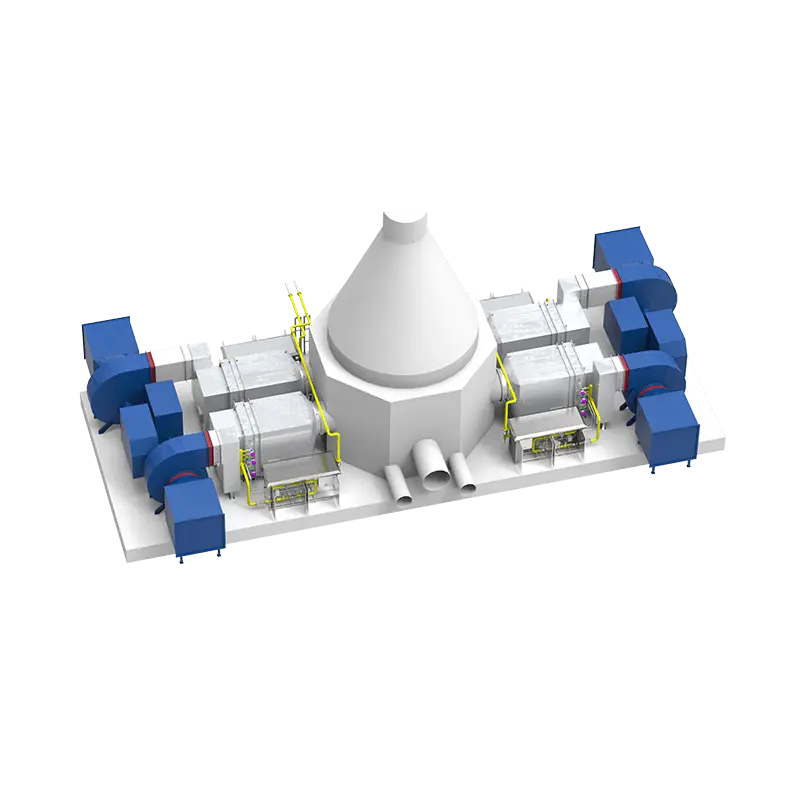
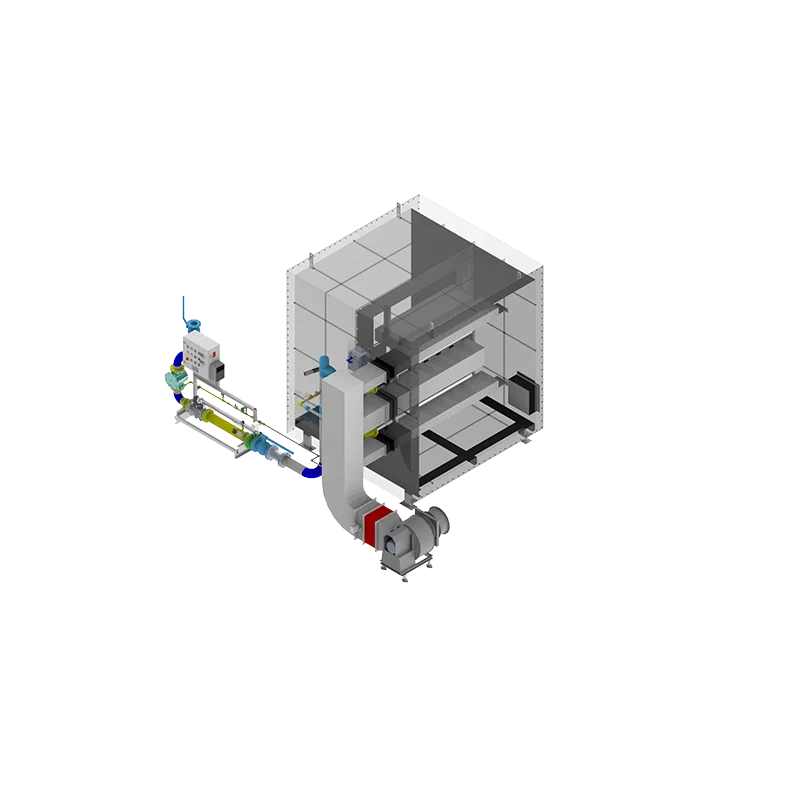
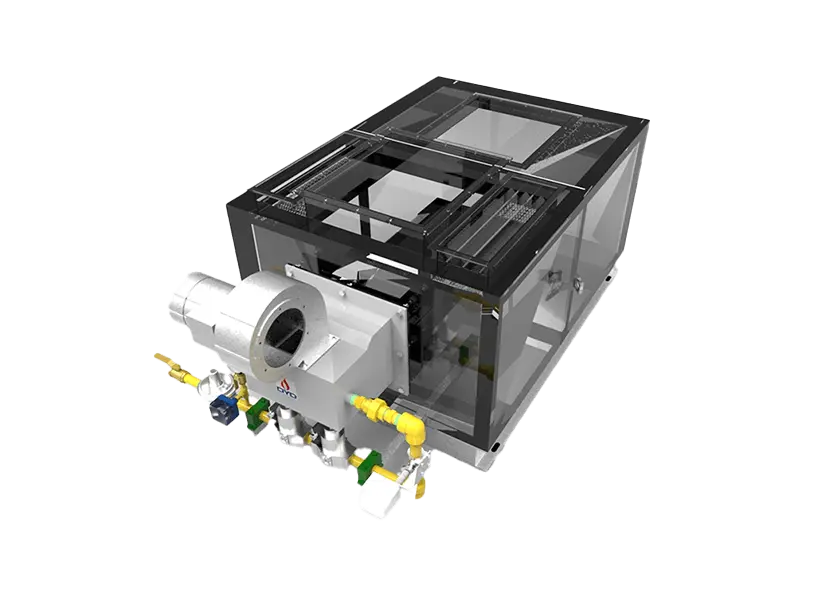
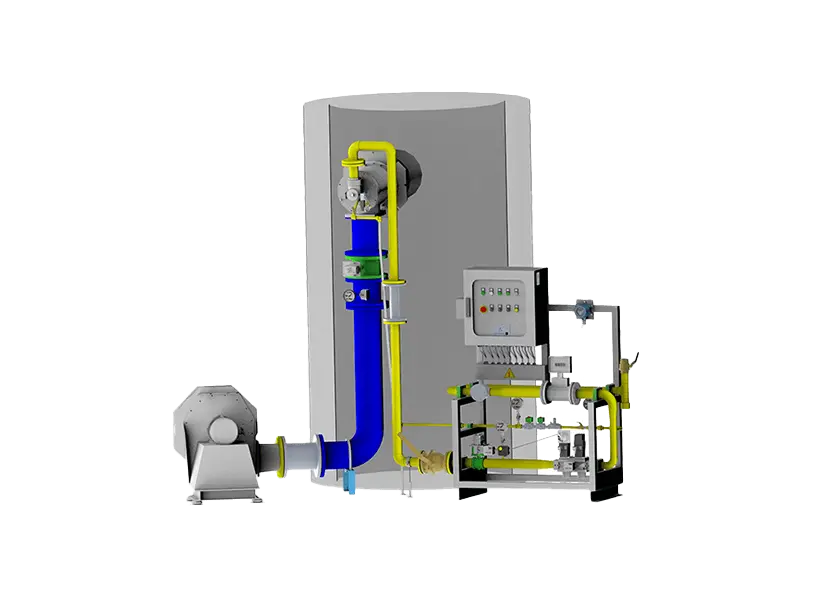
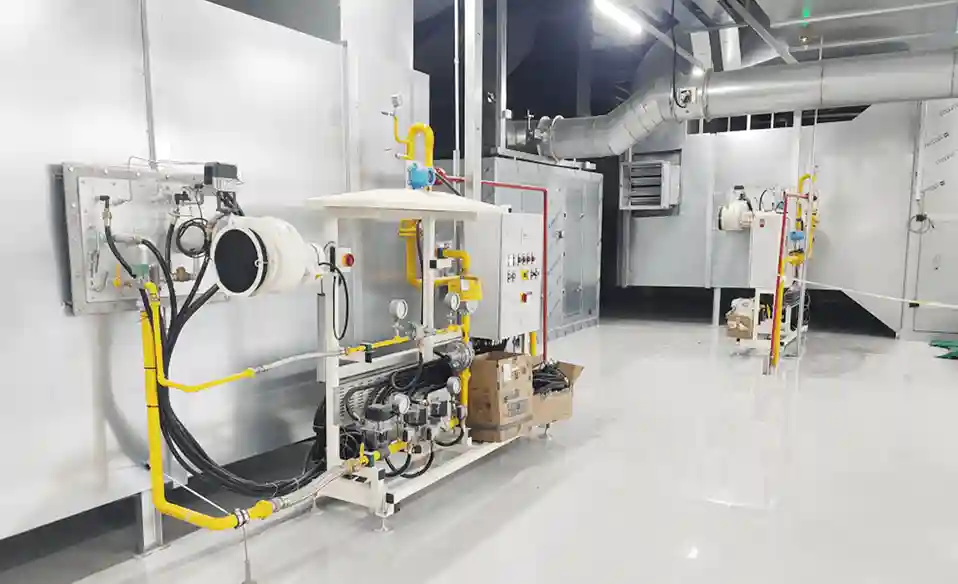
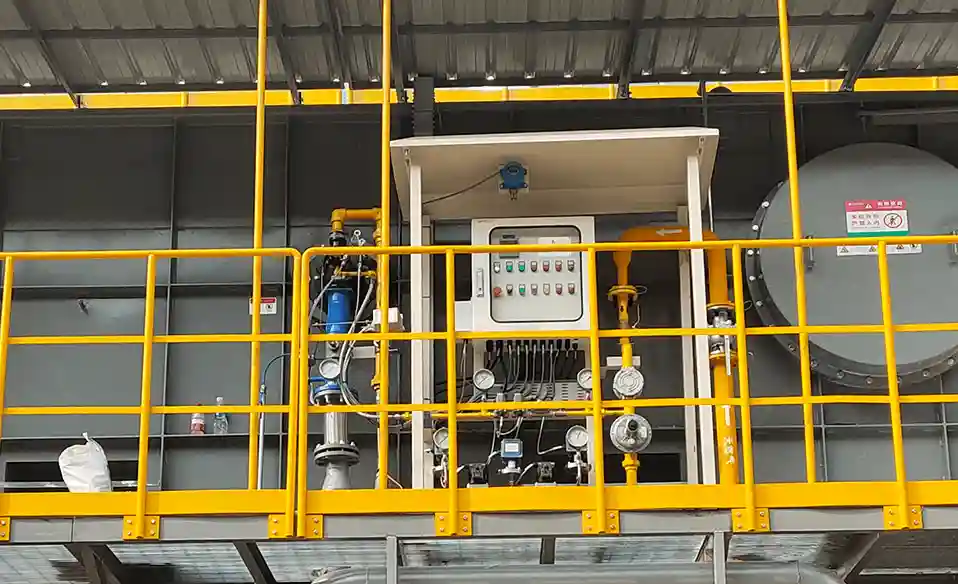
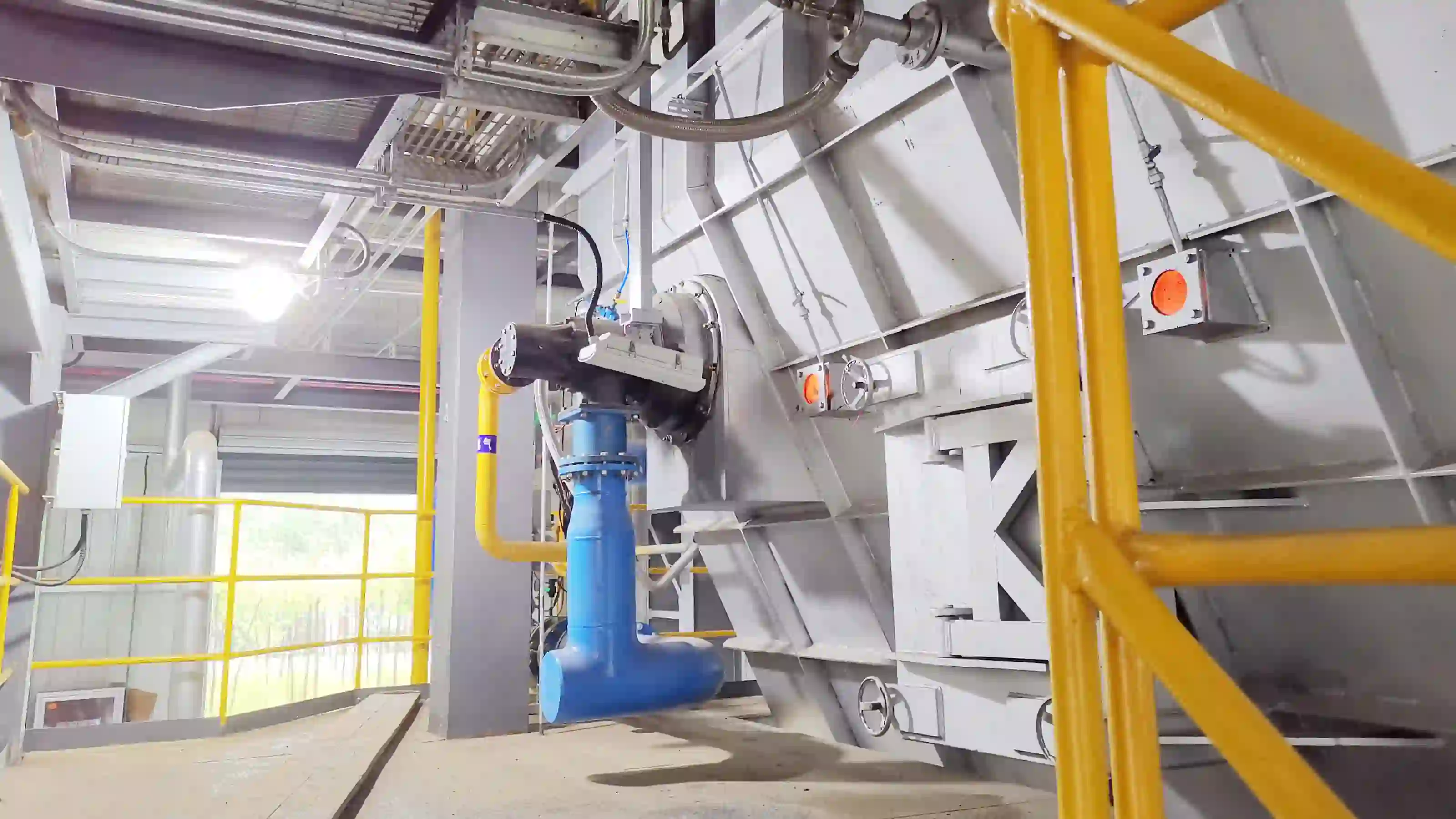
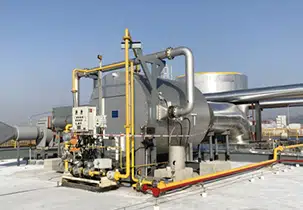
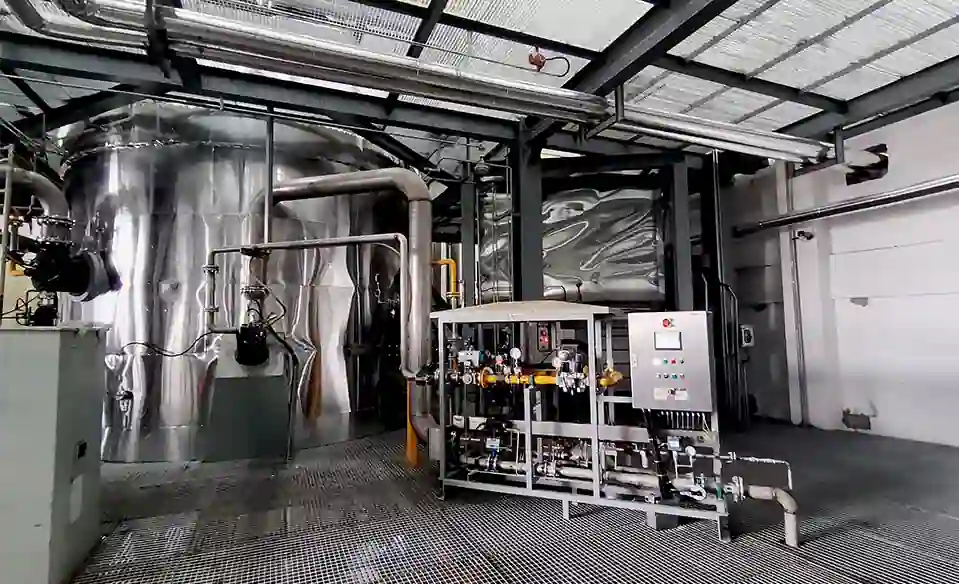
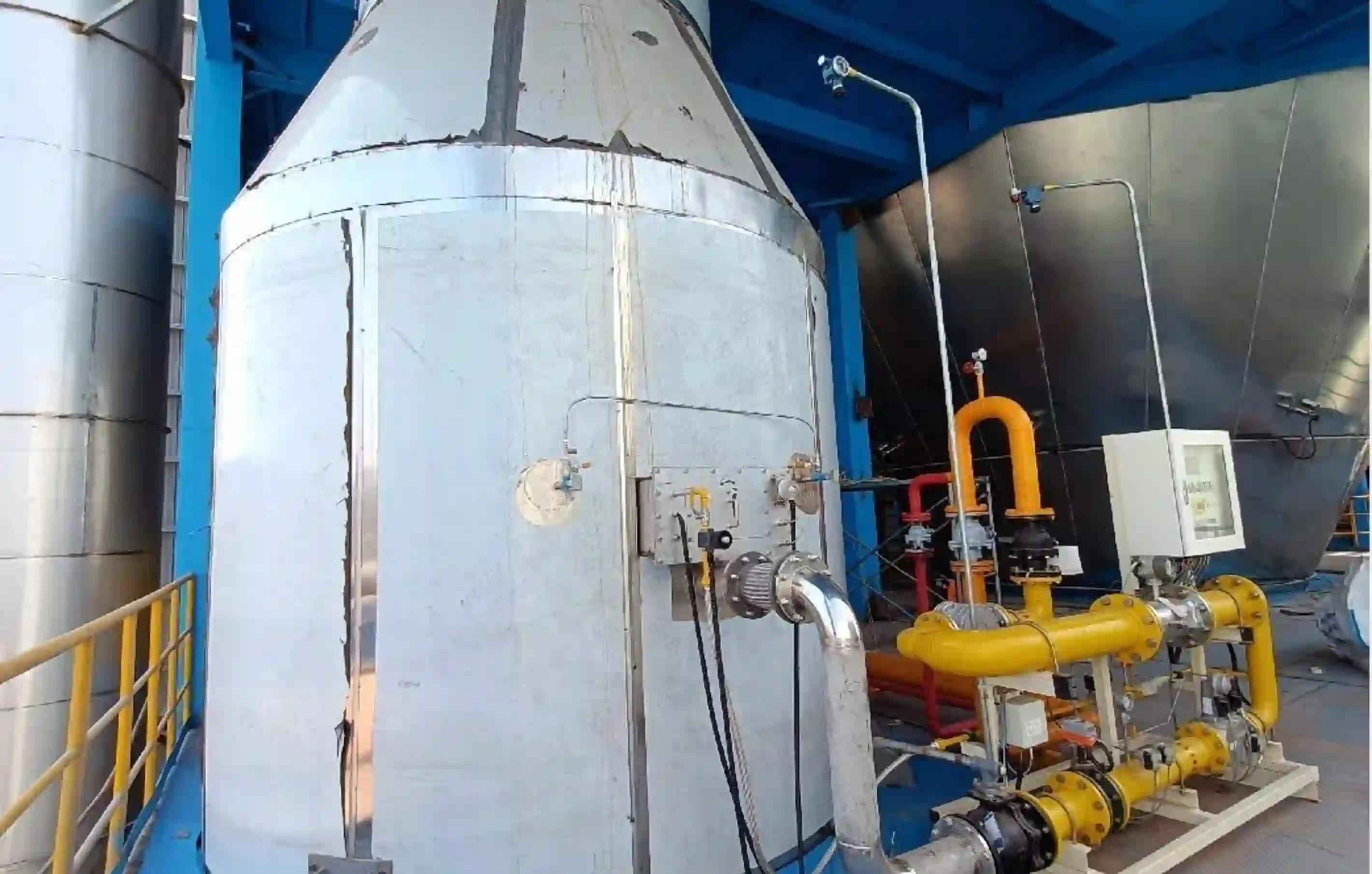
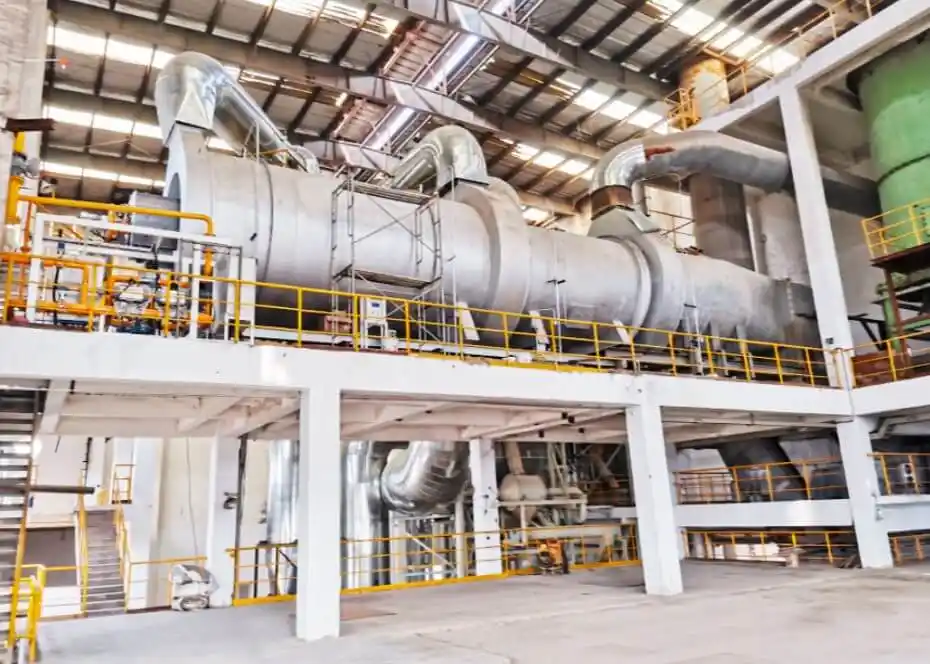
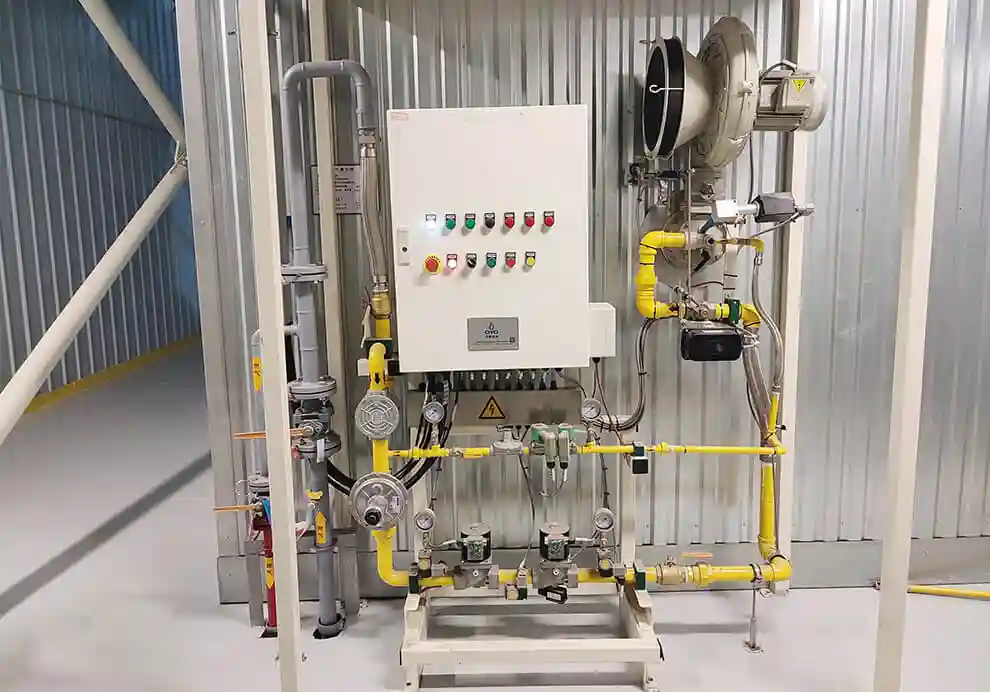
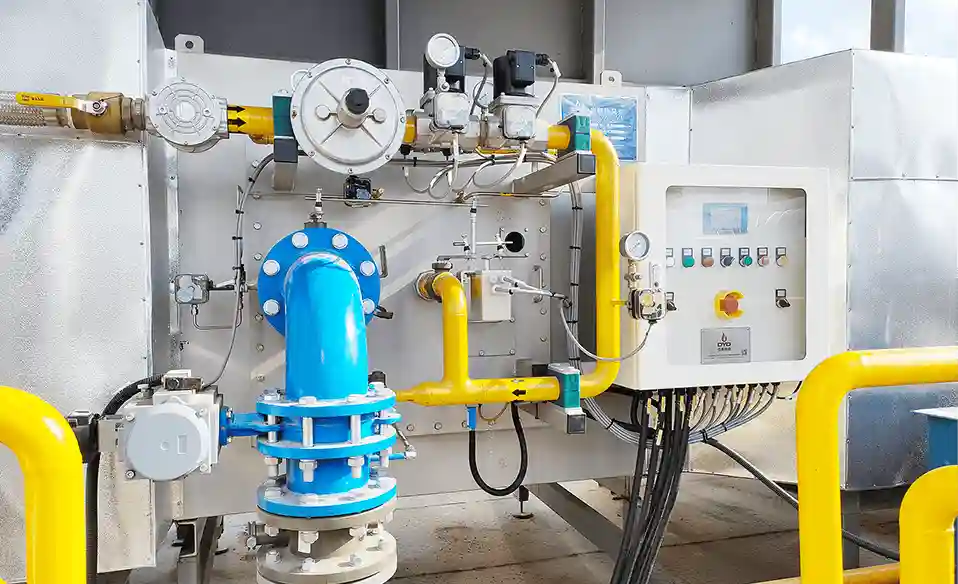
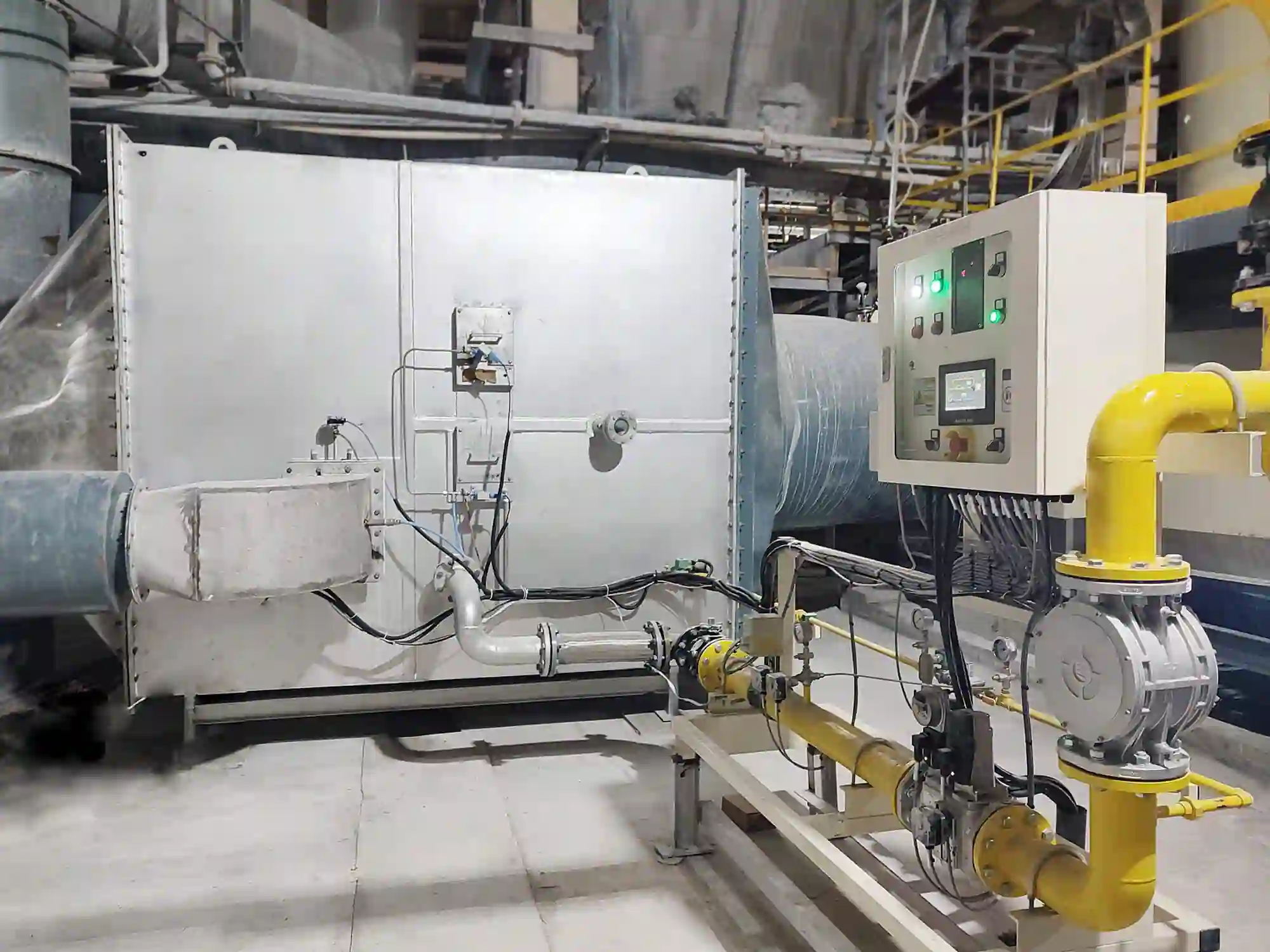
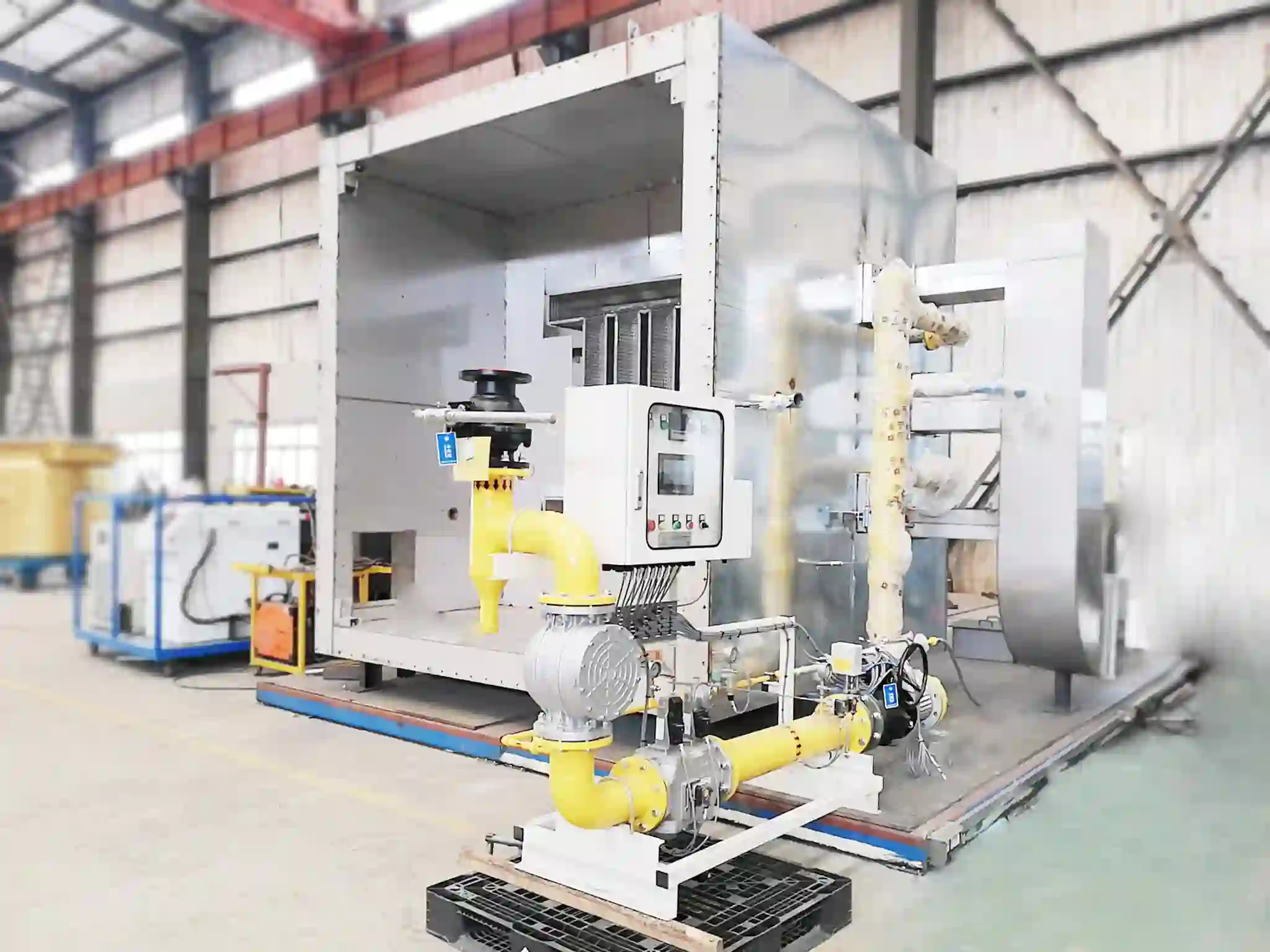
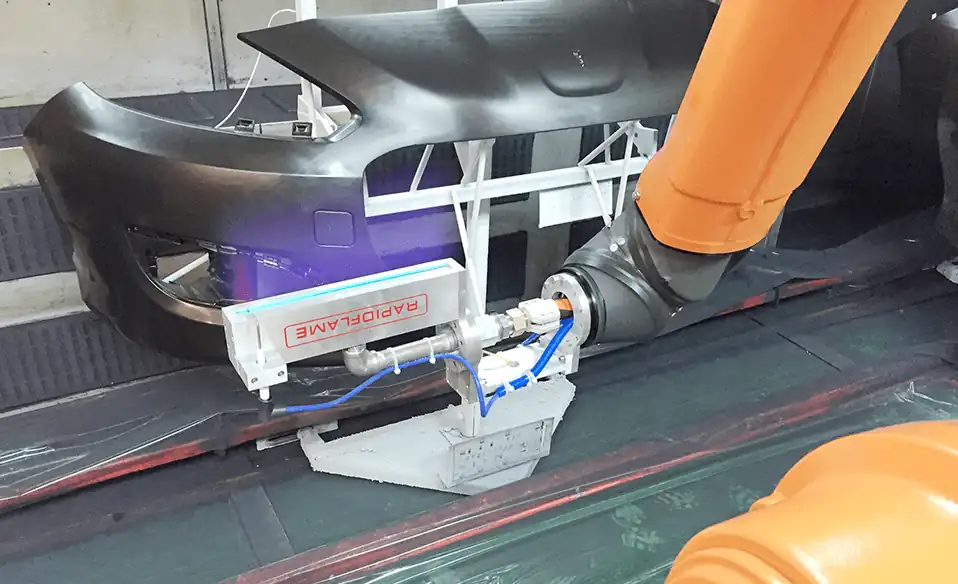
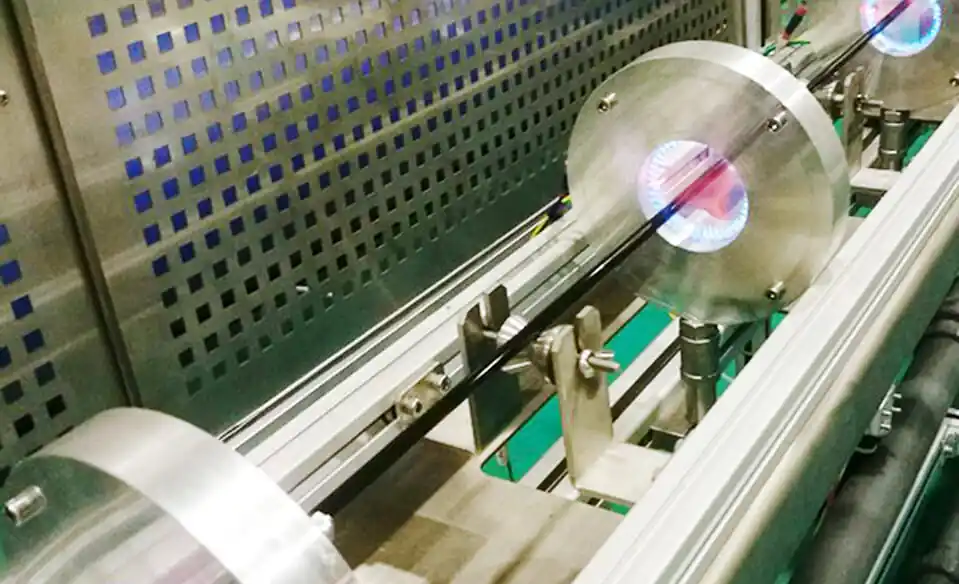
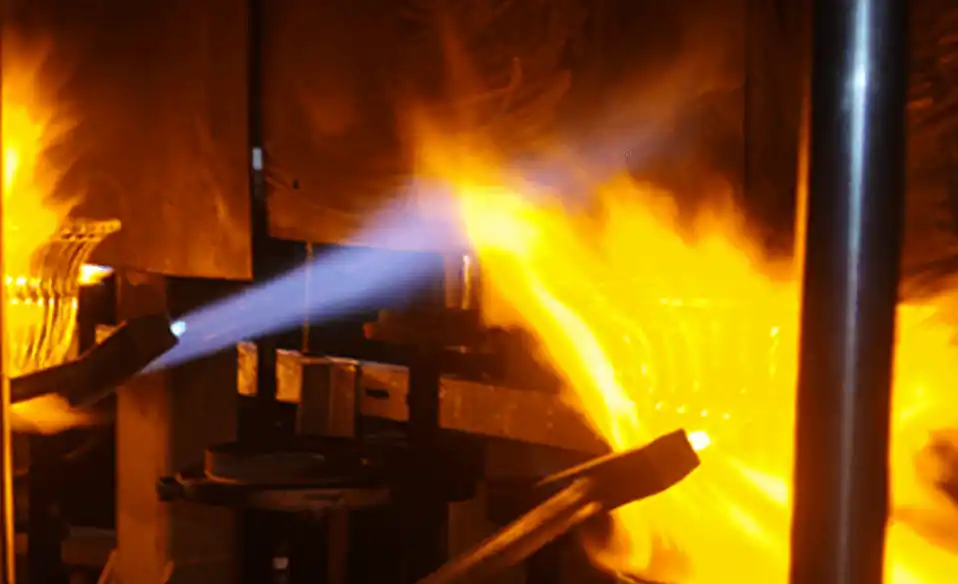
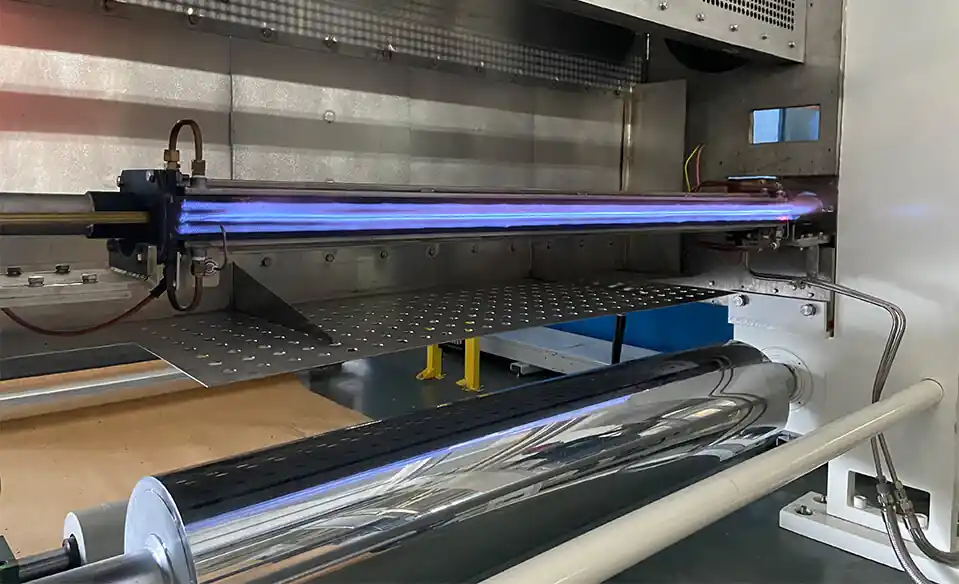
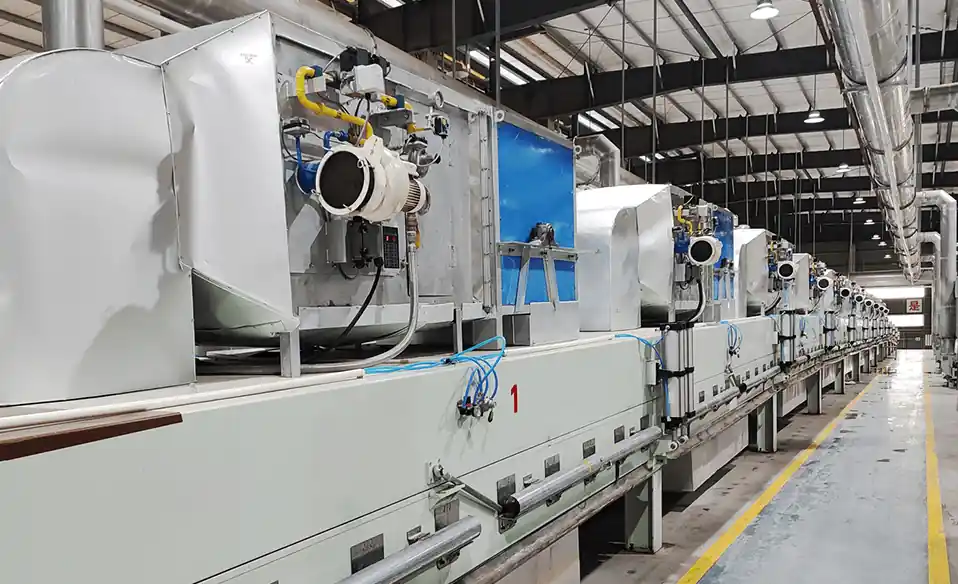
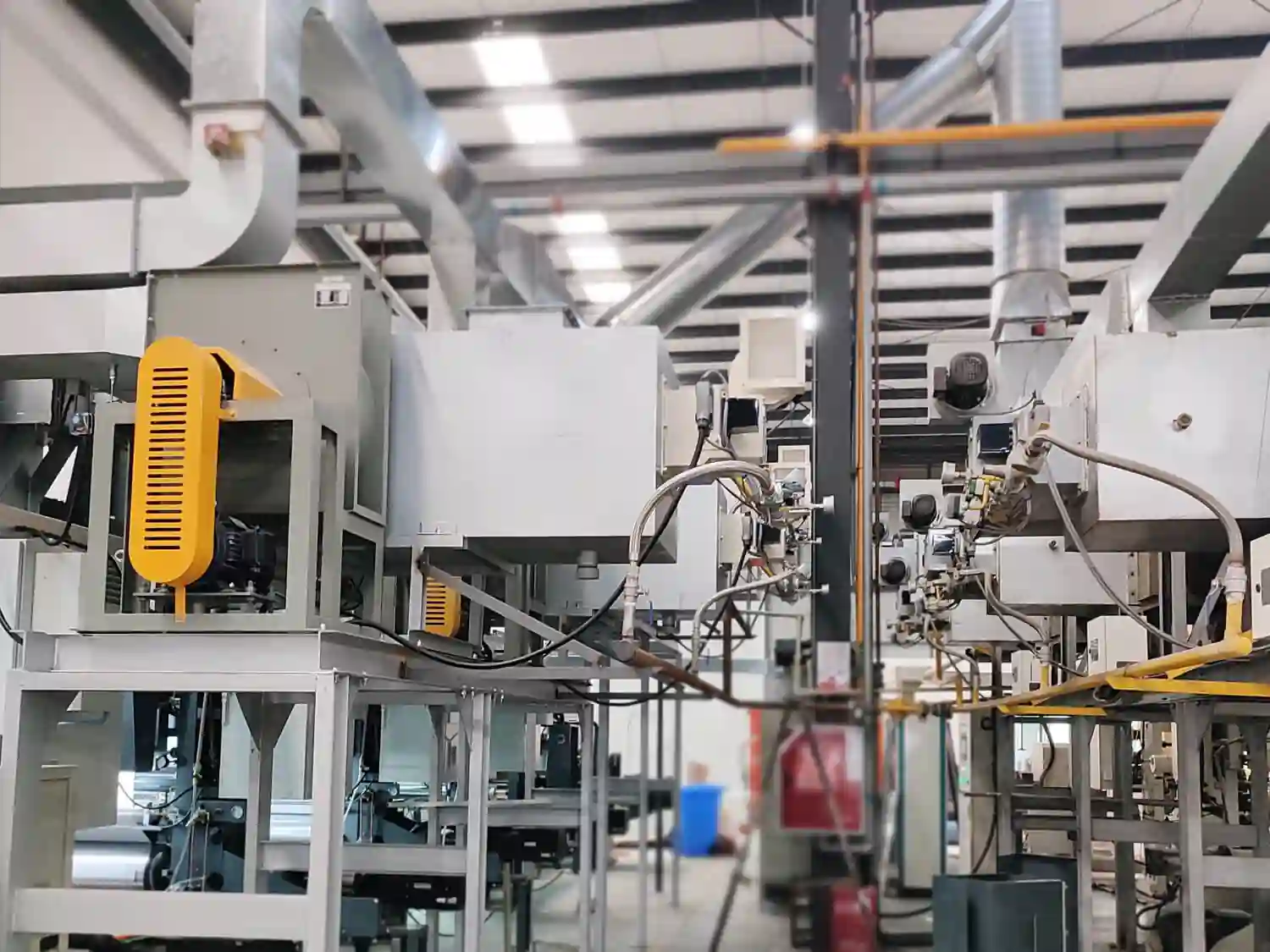
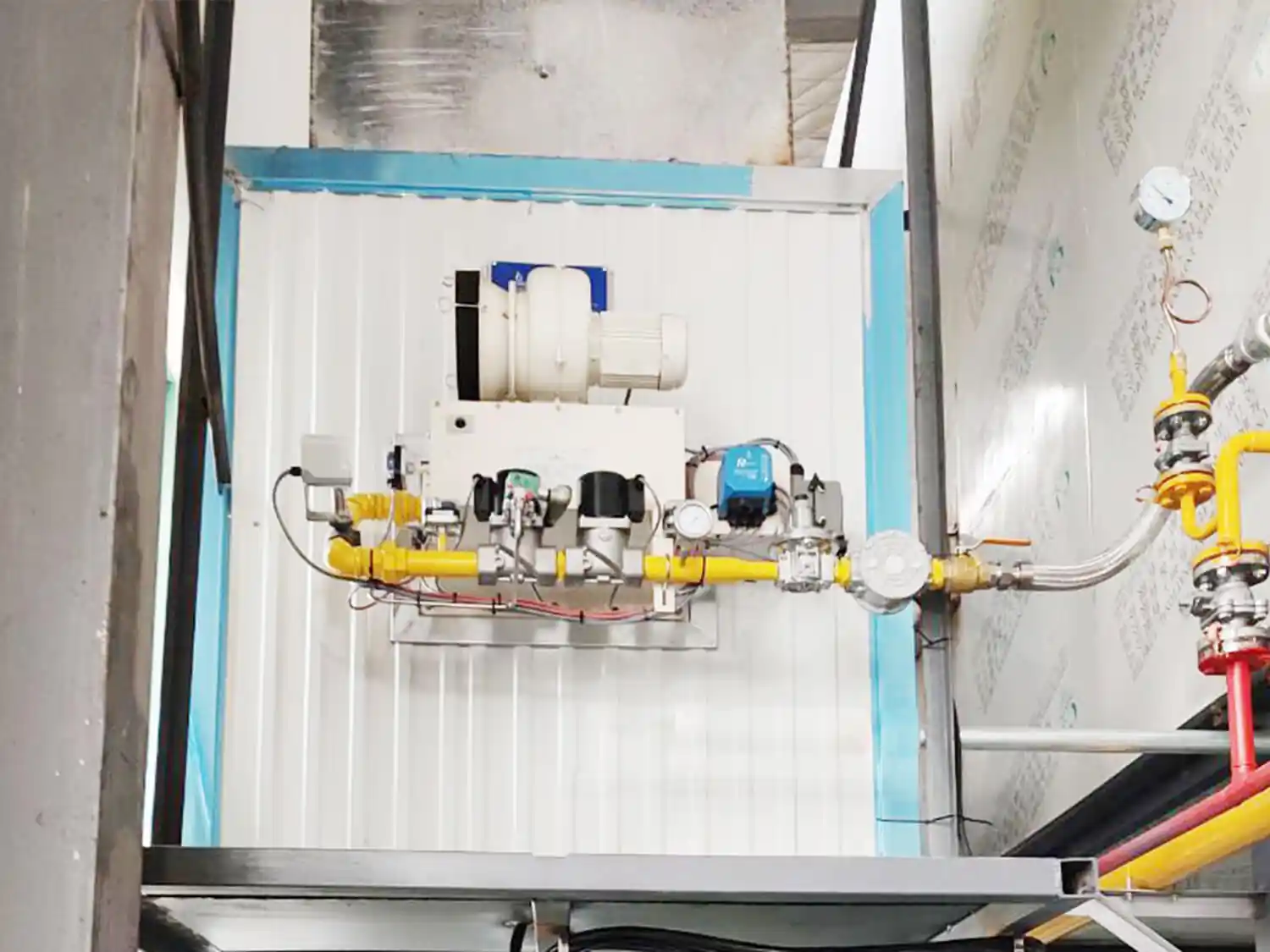
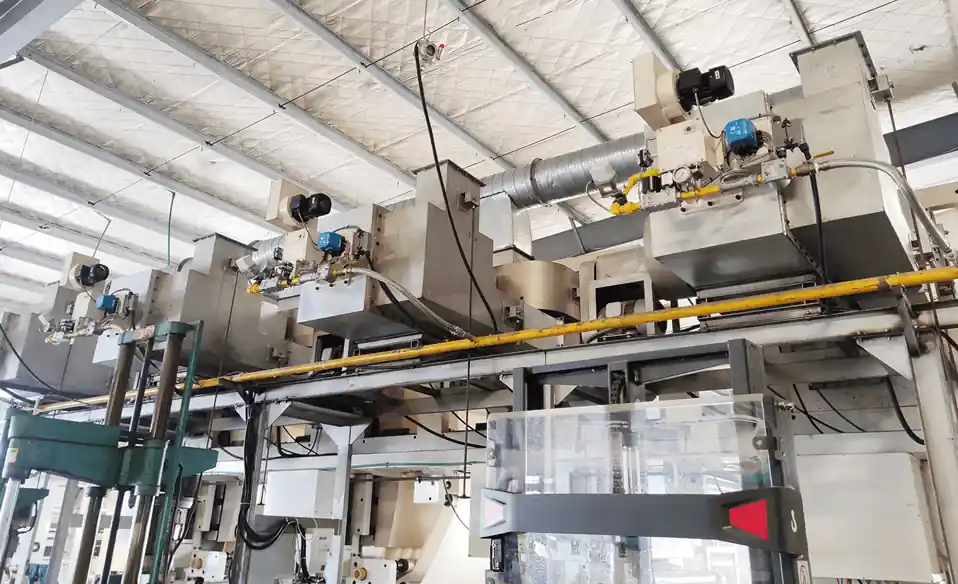
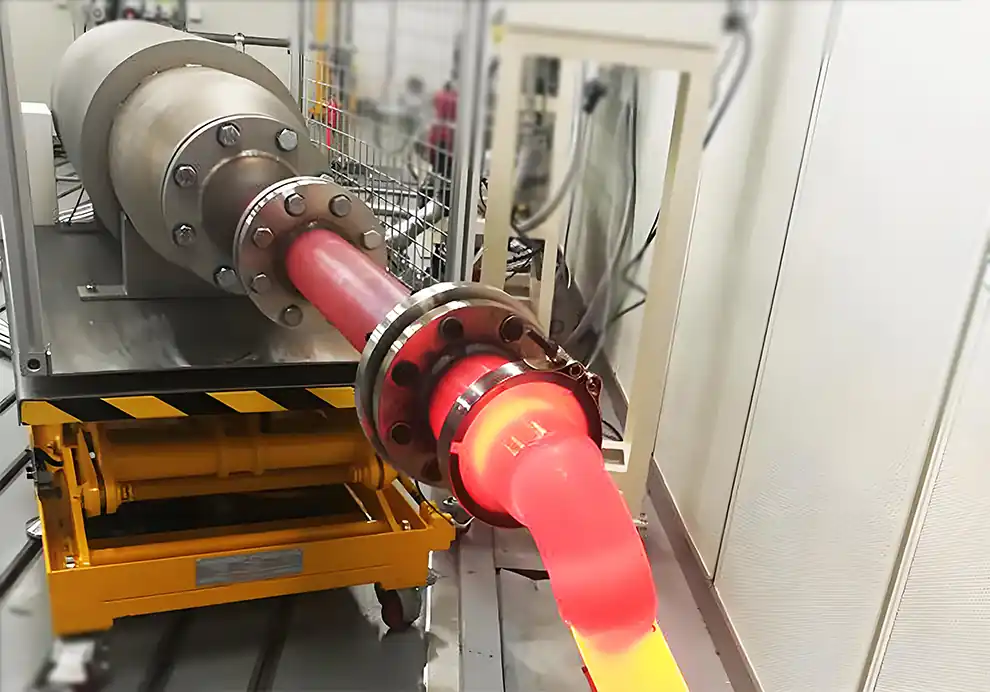
A duct burner is a specialized combustion system installed within the transition duct between a gas turbine and a Heat Recovery Steam Generator (HRSG) to provide supplementary firing. By injecting and igniting additional fuel into the oxygen-rich gas turbine exhaust, it actively elevates flue gas temperatures to enhance steam production and enable thermal-electrical decoupling.
Although gas turbine exhaust gas enters the duct at high temperatures (typically around 500°C), it still contains a significant concentration of oxygen—ranging from 14% to 18%. This high oxygen content is a deliberate result of gas turbine design, where massive excess air is introduced to control primary combustion temperatures and protect the turbine blades. The duct burner capitalizes on this specific "residual oxygen" as its primary oxidant for secondary combustion.
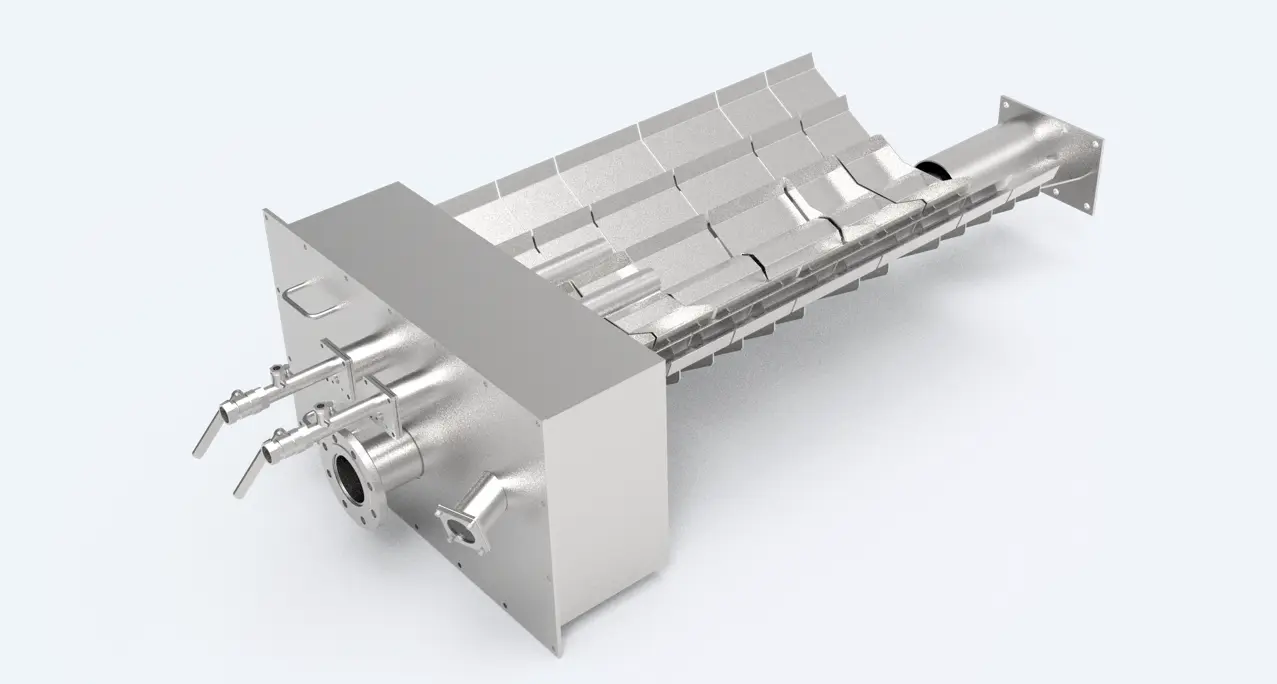
(HRSG Duct Burner)
Fuel Nozzles: These components precisely inject fuel (predominantly natural gas) into the high-velocity, high-temperature turbine exhaust stream, ensuring rapid and uniform fuel-gas mixing.
Flame Stabilizers: The core function of the stabilizer is to anchor the flame and prevent it from being extinguished by the high-velocity exhaust flow. It achieves this by generating a localized, low-velocity recirculation zone. This zone acts as a thermal shield or "safe haven," effectively securing the root of the flame and ensuring continuous, stable combustion.
This elevated thermal energy then enters the HRSG. According to fundamental heat transfer principles, a wider temperature gradient between the flue gas and the internal water/steam tubes drastically accelerates the heat transfer rate. Consequently, the HRSG produces a significantly higher volume of high-parameter steam at a much faster rate, pushing the downstream steam turbine to its maximum output.
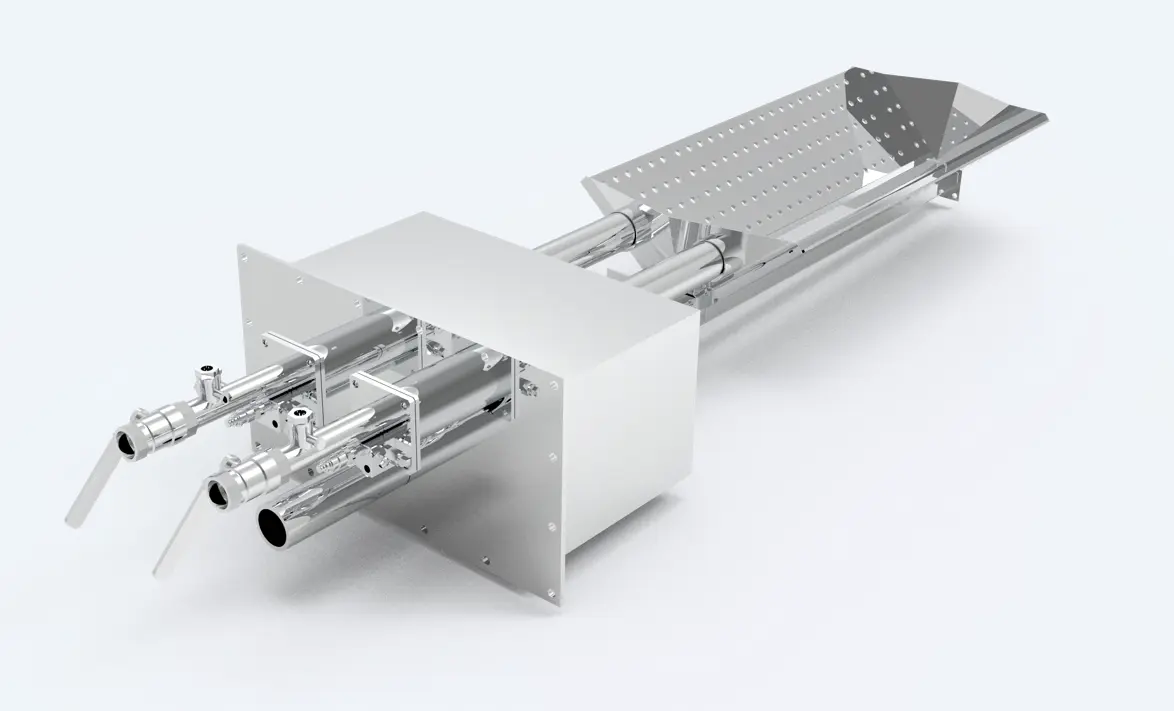
(HRSG Duct Burner)
During power grid peak shaving, the gas turbine may be forced to drop its load due to decreased electrical demand. However, the duct burner can independently scale up its firing rate to maintain high steam production. This operational capability sustains a high output on the steam turbine side, achieving what industry engineers call "thermal-electrical decoupling" or "heat-match-power operation."
Minimum Oxygen Threshold: The exhaust gas must maintain a sufficient oxygen concentration. If the oxygen level drops below 12%, combustion stability degrades sharply, which can result in incomplete combustion or heavy smoke emissions.
Emissions and NOx Mitigation: The elevated combustion temperatures inevitably accelerate the formation of thermal nitrogen oxides (NOx). To comply with environmental standards, the system must incorporate advanced staged combustion burners or be paired with a downstream SCR (Selective Catalytic Reduction) denitrification system.
Material Thermal Limits: Due to localized extreme temperatures within the transition duct, standard stainless steels cannot withstand the thermal stress. Components located within this high-temperature zone must be upgraded to specialized, high-nickel heat-resistant alloys.
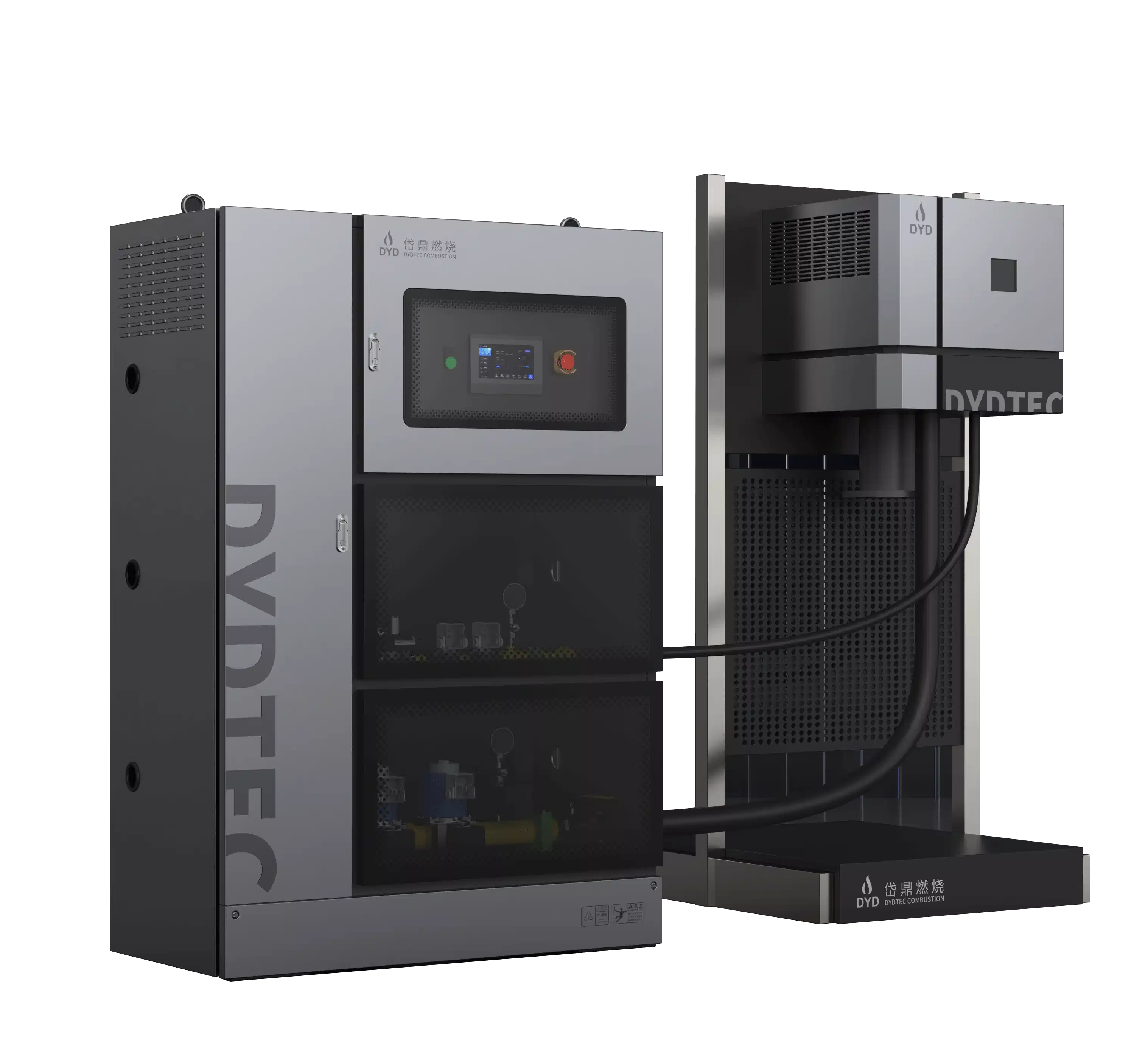
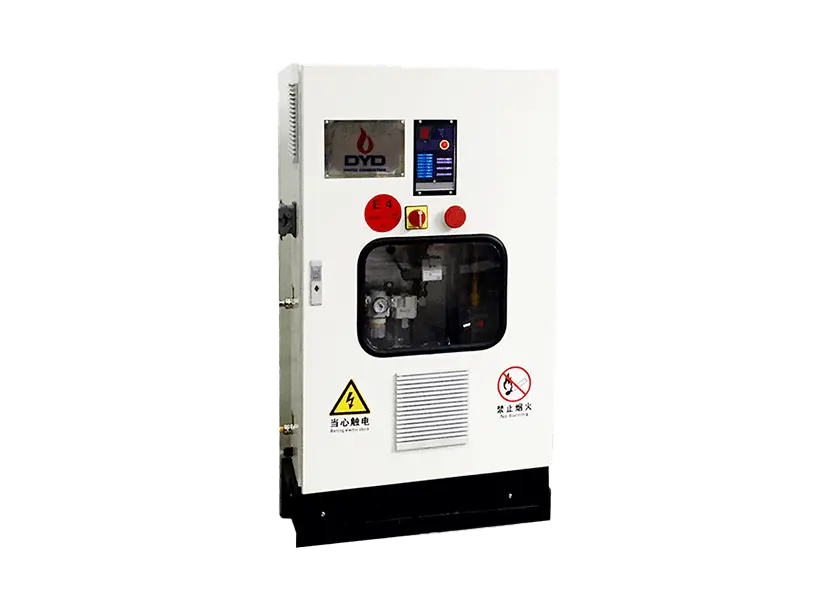
(HRSG Duct Burner Manufacturer)