Excess air is the amount of combustion air supplied beyond the theoretical (stoichiometric) air required to completely burn a fuel. The stoichiometric air requirement for natural gas is approximately 9.5–10.5 m³ of air per m³ of gas; if a burner supplies 11.5 m³ of air per m³ of gas, the excess air is about 15%. In industrial combustion systems, a certain amount of excess air—typically 5–15% for natural gas—is essential to ensure complete combustion, stable flames, and safe operation. However, too little excess air leads to incomplete combustion with CO and soot formation, while too much excess air wastes energy by carrying useful heat out of the exhaust. For every 1% excess air above the optimum level, combustion efficiency drops by approximately 0.1–0.15%, which for a 1 MW burner translates to 1–1.5 kW of heat loss per percentage point.
Finding the optimal excess air level is one of the most important factors in maximizing burner efficiency and minimizing emissions. It is a balancing act: enough air to ensure complete combustion, but not so much that heat is wasted heating unnecessary nitrogen and oxygen that then exit through the stack.
Every fuel requires a specific amount of oxygen to burn completely. This minimum amount is known as the stoichiometric air requirement (also called theoretical air). At this precise ratio, every carbon atom in the fuel combines with oxygen to form CO₂, and every hydrogen atom forms H₂O, with no oxygen left over.
For example:
If a burner requires 100 units of air to burn natural gas completely,
But the combustion system supplies 110 units of air,
Then:
Theoretical Air = 100 units
Actual Air = 110 units
Excess Air = 10%
The extra air ensures that every fuel molecule has enough oxygen to complete combustion, even in areas of the flame where mixing is not perfectly uniform. This is expressed mathematically as:
Excess Air (%) = [(Actual Air – Stoichiometric Air) / Stoichiometric Air] × 100
Excess air is often also expressed indirectly by the oxygen (O₂) concentration in the dry flue gas. The relationship depends on the fuel, but for natural gas, approximate conversions are:
| Flue Gas O₂ (dry) | Approximate Excess Air |
|---|---|
| 0% | 0% (stoichiometric, not safe for industrial operation) |
| 2% | ~10–12% |
| 3% | ~15–17% |
| 4% | ~22–24% |
| 5% | ~30–32% |
Engineers typically monitor O₂ rather than directly measuring excess air, as oxygen analyzers are reliable, fast-responding, and cost-effective.
In theory, combustion at exactly the stoichiometric air level would provide the highest flame temperature and, in principle, the highest efficiency. In practice, however, perfect mixing between fuel and air is impossible inside a burner of finite size and residence time. The fuel and air streams have momentum, velocity gradients, and turbulence patterns that inevitably leave some fuel-rich pockets and some air-rich pockets within the flame.
Industrial burners operate with excess air because it helps compensate for:
Uneven fuel-air mixing – local fuel-rich zones need extra oxygen to burn completely.
Changes in fuel pressure – supply variations can momentarily increase fuel flow without a corresponding air increase.
Variations in combustion air flow – temperature changes, filter loading, and damper hysteresis affect air delivery.
Load fluctuations – as the burner modulates, the air-fuel ratio may drift if controls are not perfectly linear.
Environmental conditions – ambient temperature and humidity affect air density and oxygen content.
Burner manufacturing tolerances – slight variations in component geometry affect mixing efficiency.
Without excess air, parts of the flame may become oxygen-deficient, leading to incomplete combustion. The result is a flame that contains CO, unburned hydrocarbons, and soot particles—all of which represent wasted fuel and potential safety hazards.
Insufficient excess air creates an oxygen shortage within the flame zone. When the actual air supply falls below the stoichiometric requirement—or when it is only marginally above it without adequate mixing—the combustion process becomes incomplete.
As a result:
Carbon monoxide (CO) increases – CO levels can rise from under 10 ppm to several hundred or even thousands of ppm, indicating significant chemical energy loss.
Unburned hydrocarbons (UHC) increase – these are both a fuel waste and an environmental pollutant.
Soot and smoke may form – visible black smoke indicates severe incomplete combustion and carbon particle formation.
Flame stability decreases – fuel-rich flames tend to be longer, softer, and more prone to lift-off or flicker.
Burner safety is reduced – unburned fuel can accumulate in the furnace, creating an explosion hazard if reignited.
Fuel is wasted – the energy that should have been released remains locked in CO and soot, rather than being converted to useful heat.
Common symptoms include:
Yellow or lazy flames – instead of a sharp blue flame, the flame appears orange, yellow, or smoky.
Carbon deposits – black buildup on the burner head, refractory, or furnace floor.
High CO readings – confirmed by a flue gas analyzer or combustion tuning instrument.
Smoke from the stack – visible emissions that violate air quality permits and indicate poor combustion.
Dirty furnace interiors – soot accumulation on product surfaces or furnace walls.
These conditions reduce combustion efficiency and may create safety hazards. In severe cases, incomplete combustion can lead to carbon monoxide poisoning risks or explosive gas accumulation.
Many operators assume that "more air is always safer." This is a common misconception. In reality, excessive air can significantly reduce system efficiency and increase operating costs.
Extra air does not contribute to combustion—it absorbs heat inside the furnace and carries it away through the exhaust. The additional nitrogen and oxygen are heated from ambient temperature to the exhaust gas temperature (often 200–600°C or higher), and that heat is lost to the atmosphere. This is the single largest controllable loss in many industrial heating systems.
The result is:
Lower flame temperature – because some of the heat is used to warm the excess nitrogen and oxygen, reducing radiative and convective heat transfer.
Higher stack losses – the extra air volume carries more heat out of the exhaust; each 1% increase in excess air can reduce efficiency by 0.1–0.15%.
Increased fuel consumption – to maintain the same process temperature, more fuel must be fired, directly increasing costs.
Reduced thermal efficiency – the furnace becomes less economical, even though combustion may appear clean.
Longer heating times – lower flame temperature reduces heating rates, lengthening batch cycles.
Higher fan power consumption – more air requires more electrical energy to move, increasing auxiliary power costs.
Potential NOx impact – while excess air reduces thermal NOx by cooling the flame, very high excess air can promote NOx in some fuel-bound or prompt NOx mechanisms.
Even though combustion may remain clean, the process becomes less economical. For a large industrial furnace, operating at 20% excess air instead of 10% can increase fuel consumption by 1–2%, which over a year can amount to many thousands of dollars in wasted energy.
Combustion efficiency depends heavily on maintaining the correct air-to-fuel ratio. The relationship can be summarized as follows:
| Excess Air Level | Combustion Result |
|---|---|
| Too Low | Incomplete combustion, high CO, soot, unstable flame, fuel waste |
| Optimal | Complete combustion, high efficiency, stable flame, low emissions |
| Too High | Increased exhaust heat loss, lower efficiency, higher fuel consumption, longer heating times |
The goal is not the lowest possible excess air, but the lowest level that still ensures complete and stable combustion under all operating conditions. This "optimal" point is typically found just above the threshold where CO starts to rise. As excess air decreases, CO remains low until a critical point is reached, at which CO rises sharply; the optimal setting is just above that knee point.
In practice, the optimal excess air also depends on the burner design, furnace pressure, and load. A well-designed burner with good mixing can operate at 5–8% excess air at high fire, while a simpler design may require 12–15%. At low fire, excess air often needs to be higher (20–30%) to maintain flame stability due to lower flow velocities.
Engineers often monitor oxygen concentration in the exhaust to estimate excess air. Oxygen measurement is preferred because O₂ analyzers are reliable, inexpensive, and provide a continuous signal for control systems.
General trends include:
| Flue Gas O₂ (dry basis) | Approximate Excess Air (Natural Gas) | Typical Interpretation |
|---|---|---|
| 0% | 0% | Stoichiometric—unsafe for continuous operation; no margin for imperfect mixing |
| 1–2% | 5–10% | Very low excess air; achievable only with high-performance burners and precise controls |
| 2.5–3.5% | 12–18% | Typical range for many well-tuned industrial natural gas burners at high fire |
| 4–6% | 20–35% | Elevated excess air; often indicates need for tuning or control upgrades |
| Above 6% | Above 35% | Usually indicates excessive air and significant energy loss; immediate attention recommended |
The ideal oxygen level depends on:
Fuel type – lighter fuels like natural gas can operate at lower O₂ than heavy oils or solid fuels.
Burner design – advanced burners with better mixing achieve lower O₂.
Furnace type – radiant furnaces may tolerate lower O₂ than convective dryers.
Process requirements – some processes require oxidizing or reducing atmospheres for product quality.
Emission limits – NOx regulations may influence the operating point.
Note that O₂ readings should be taken at a representative point in the flue, and air in-leakage (from furnace openings or ductwork) can artificially raise O₂ readings, misleading operators into thinking the burner is running with excess air when it is actually furnace infiltration.
The answer is not always. NOx formation depends on several factors, including flame temperature, oxygen concentration, residence time, and burner design. Thermal NOx increases exponentially with temperature, so any measure that reduces peak flame temperature—such as adding excess air—will generally reduce thermal NOx. However, the relationship is not linear.
Increasing excess air may reduce flame temperature, which can lower thermal NOx. However, excessive oxygen may also promote NOx formation in certain combustion conditions, and the cooling effect can be offset if the burner operates at a higher firing rate to compensate for the efficiency loss. Moreover, high excess air can increase CO and unburned hydrocarbons, which are undesirable for both emissions and efficiency.
Modern low-NOx burners use advanced combustion techniques—such as staged combustion (introducing air in multiple steps), internal flue gas recirculation (FGR) to recirculate cooled combustion products back into the flame, and optimized flame shaping to reduce peak temperatures—to reduce emissions without relying on excessive air. These burners can achieve NOx levels below 30 ppm (at 3% O₂) while maintaining excess air at 10–15%, which is far more efficient than using 30–40% excess air to achieve the same NOx reduction.
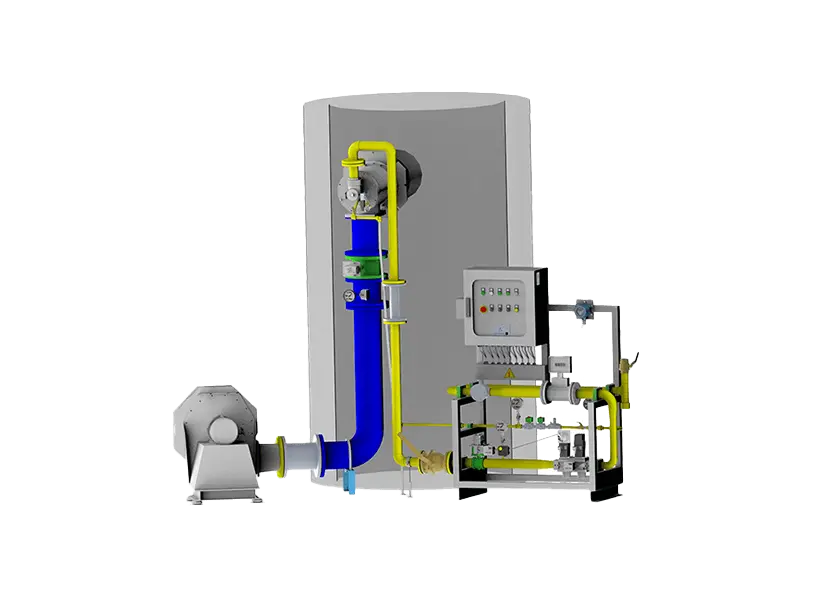
Modern industrial combustion systems continuously regulate the air-fuel ratio using advanced controls. The control system must maintain the correct ratio not only at full fire but across the entire turndown range—from 100% down to 10% or lower.
Common technologies include:
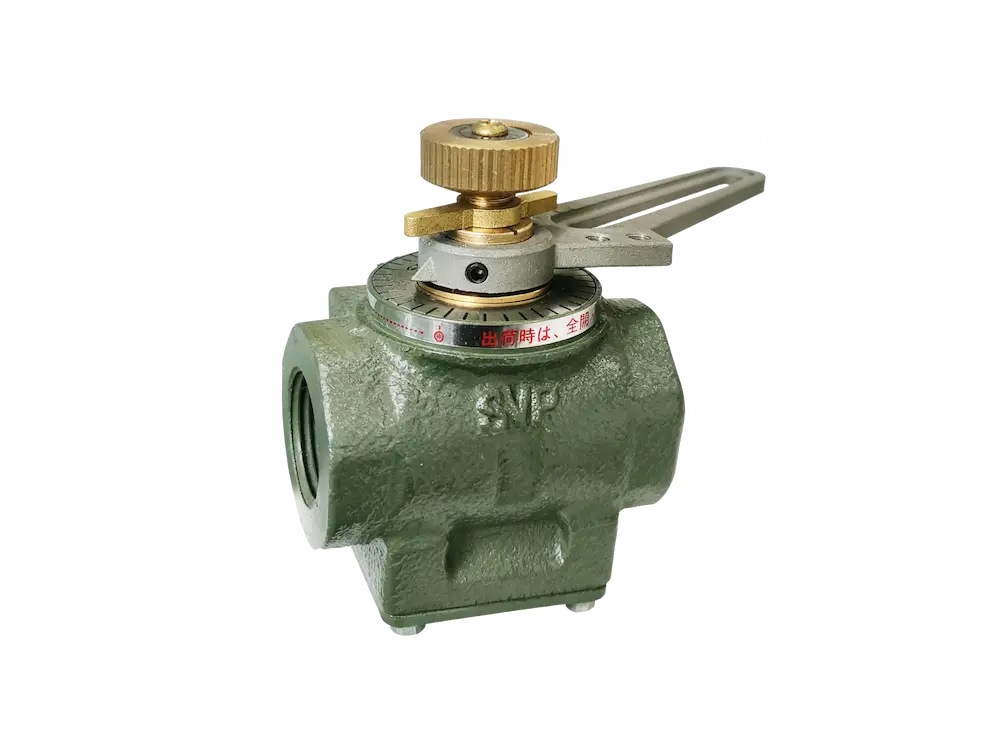
Fuel and combustion air are adjusted simultaneously throughout the firing range, typically using a cam-linked mechanism or an electronic ratio control system. As the firing rate changes, a servo motor moves both the gas valve and the air damper in a coordinated manner, maintaining the desired excess air setting.
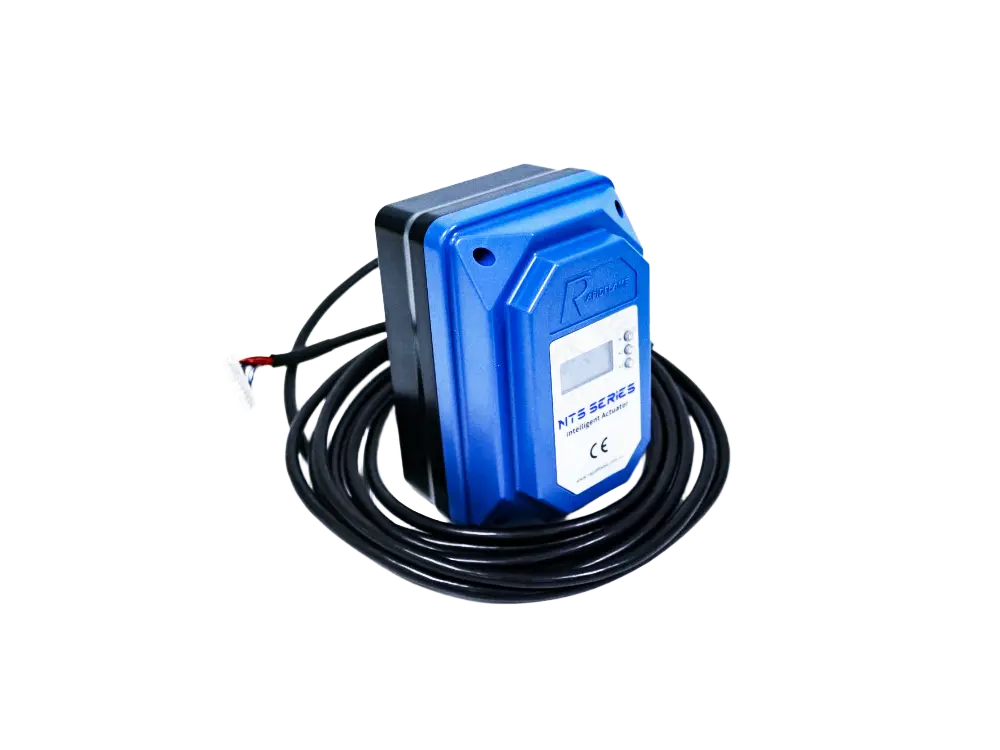
Electronic servo motors precisely position air dampers, providing accurate airflow control at each firing point. Position feedback ensures that the damper opens exactly to the target angle, compensating for mechanical wear or backlash.
Fan speed adjusts automatically to match burner load, improving efficiency and reducing electrical consumption. A VFD on the combustion air fan can reduce fan energy consumption by up to 30–50% at low fire, compared to a fixed-speed fan with damper throttling. VFDs also provide smoother air delivery, reducing pressure fluctuations that could destabilize the flame.
Oxygen analyzers continuously measure flue gas O₂ and automatically fine-tune combustion air. These systems provide closed-loop control that compensates for:
Changes in ambient temperature and humidity (which affect air density)
Variations in fuel heating value or composition
Drift in mechanical linkages over time
Filter loading or damper hysteresis
Benefits include:
Improved fuel economy – typically 1–3% savings over open-loop control
Stable combustion – consistent excess air under all conditions
Lower emissions – reduced CO spikes and more consistent NOx
Reduced operator intervention – automatic adjustment reduces the need for manual tuning
Actual values vary depending on burner design and process requirements.
| Fuel | Typical Excess Air | Notes |
|---|---|---|
| Natural Gas | 5–15% | Can operate at very low excess air due to clean, gaseous fuel |
| LPG (Propane/Butane) | 10–20% | Slightly higher due to higher flame speed and different mixing characteristics |
| Light Fuel Oil | 10–20% | Requires atomization and good mixing; higher excess air helps compensate for droplet size variation |
| Heavy Fuel Oil | 15–30% | Higher viscosity and carbon content require more air to complete combustion |
| Biogas | Often 15–25% | Variable methane concentration (40–70%) makes ratio control more challenging; higher excess air provides margin |
| Hydrogen Blends | 10–20% | Hydrogen has high flame speed; burner design must match the fuel to avoid flashback |
Proper combustion tuning is essential for determining the optimal setting for each application. The ideal setting is found by adjusting the air supply while monitoring flue gas O₂ and CO: the optimal point is just above the minimum O₂ level at which CO remains below 50 ppm.
Improving combustion efficiency does not mean eliminating excess air altogether. Instead, engineers should focus on maintaining the lowest safe level that still ensures complete combustion, flame stability, and safe operation.
Recommended practices include:
Performing regular combustion tuning – using a portable flue gas analyzer to check O₂ and CO at multiple firing points, and adjusting the ratio curve accordingly. This should be done at least annually or whenever fuel composition changes.
Calibrating air and fuel controls – verifying that damper position, valve position, and actuator feedback accurately represent the actual flow rates.
Maintaining burner components – cleaning burner heads, inspecting flame retention rings, and ensuring nozzles are free of carbon or debris.
Inspecting dampers and actuators – checking for mechanical wear, backlash, or sticking that could cause airflow to deviate from the set point.
Monitoring flue gas oxygen – installing a continuous O₂ analyzer with a display for operators, and logging data to track long-term trends.
Installing oxygen trim systems where appropriate – for larger or continuously operating furnaces, closed-loop O₂ control pays for itself through fuel savings.
Preventing air leakage into furnaces and ductwork – even with the correct burner excess air, in-leakage through doors, peepholes, or cracks dilutes the flue gas and raises measured O₂, misleading the controls and increasing heat loss.
These practices help reduce fuel consumption while maintaining reliable combustion. A systematic approach to excess air optimization typically yields fuel savings of 2–5%, with payback periods of less than 12 months for many industrial applications.
Yes. Nearly all industrial combustion systems require some excess air to ensure complete combustion and stable burner operation under varying operating conditions. The only exception would be a perfectly controlled, premix system with ideal mixing and constant fuel quality—which is not practically achievable in industrial environments. A small margin of excess air is considered standard practice for safety and reliability.
There is no universal value. The optimum level depends on fuel type, burner design, furnace application, emission requirements, and process stability. The objective is to use the minimum excess air that still guarantees safe and complete combustion, which for most well-designed natural gas systems is in the range of 5–15% at high fire. The specific setting should be determined through combustion tuning with flue gas analysis.
Absolutely. Excess air absorbs heat and carries it out of the stack, increasing fuel consumption and reducing thermal efficiency. For a typical furnace operating 8,000 hours per year, even 1% excess air above the optimum can add thousands of dollars to annual fuel costs. Reducing excess air from 20% to 10% can improve combustion efficiency by 1–1.5%, which is a meaningful saving for large systems.
It is usually estimated by measuring oxygen concentration in the flue gas using a combustion analyzer or a continuous oxygen monitoring system. The relationship between O₂ and excess air is calculated using fuel-specific formulas, and most modern analyzers provide an instant readout of both O₂ and calculated excess air. Alternatively, direct measurement of actual and theoretical air flows can be used, but this is less common in field practice.
Yes. Excess air influences carbon monoxide, soot formation, combustion stability, and NOx emissions. Proper air-fuel ratio control is essential for achieving both high efficiency and low emissions. Too little excess air causes CO and soot; too much increases heat loss and may affect NOx. The optimal point balances all of these factors to meet efficiency and environmental targets simultaneously.
Excess air is a fundamental concept in industrial combustion. While additional air is necessary to ensure complete fuel combustion and safe burner operation, supplying more air than necessary can significantly reduce efficiency by increasing exhaust heat losses.
The most efficient combustion systems maintain the lowest safe excess air level through accurate burner design, precise air-fuel ratio control, regular combustion tuning, and continuous oxygen monitoring. Optimizing excess air not only reduces fuel costs but also improves flame stability, lowers emissions, and extends equipment life. Understanding and controlling excess air is one of the most cost-effective ways to improve the performance of any industrial heating system.
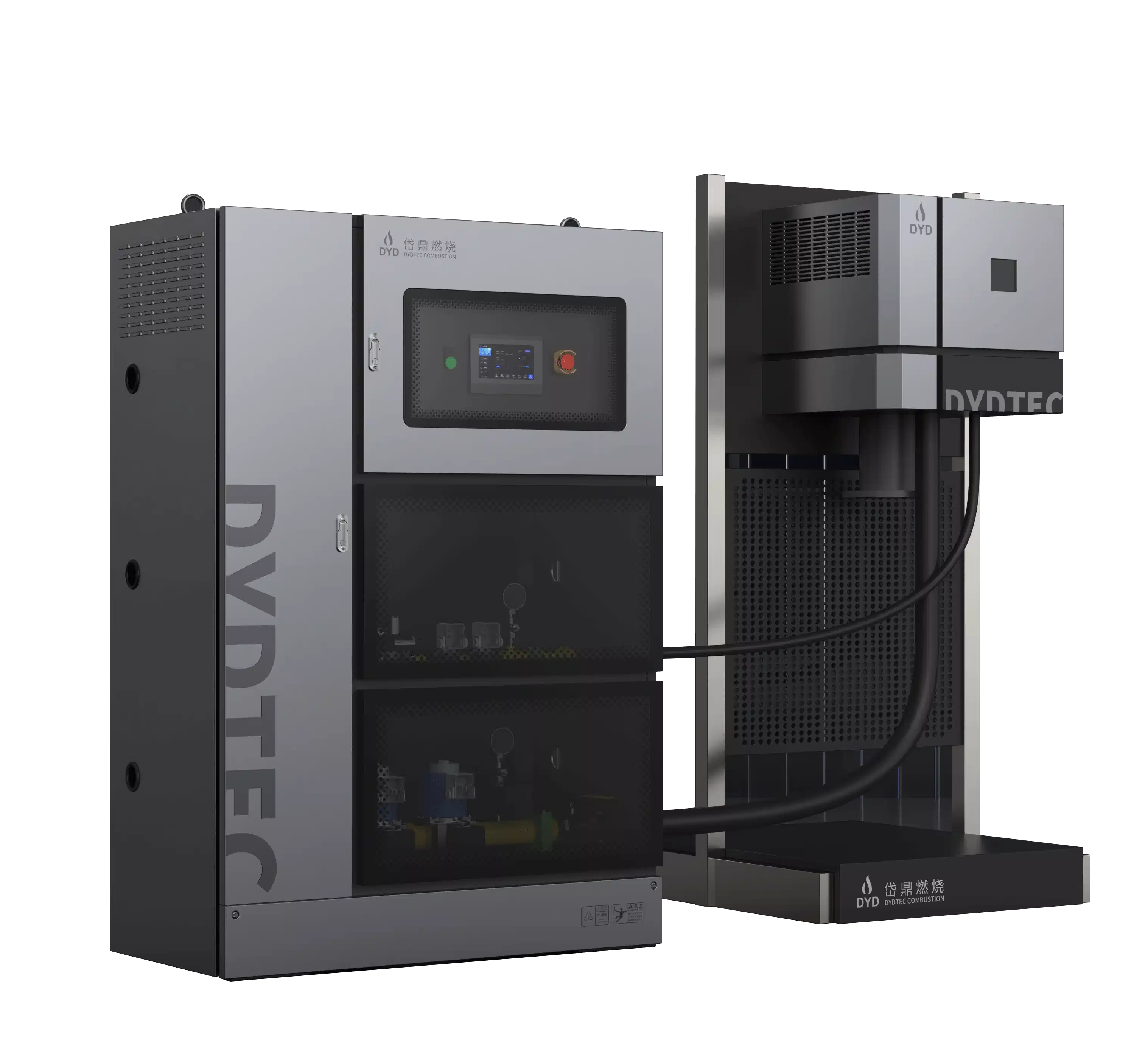
DYDTEC Combustion is a professional manufacturer of industrial combustion systems and advanced burner solutions. The company specializes in high-efficiency gas burners, low-NOx combustion technology, intelligent combustion control systems, and customized heating solutions for industrial furnaces, aluminum melting, heat treatment, drying equipment, RTO systems, and other thermal processing applications. With a strong focus on combustion optimization, energy efficiency, and reliable process control, DYDTEC helps furnace manufacturers and industrial users reduce fuel consumption, improve combustion performance, and meet increasingly demanding environmental standards.