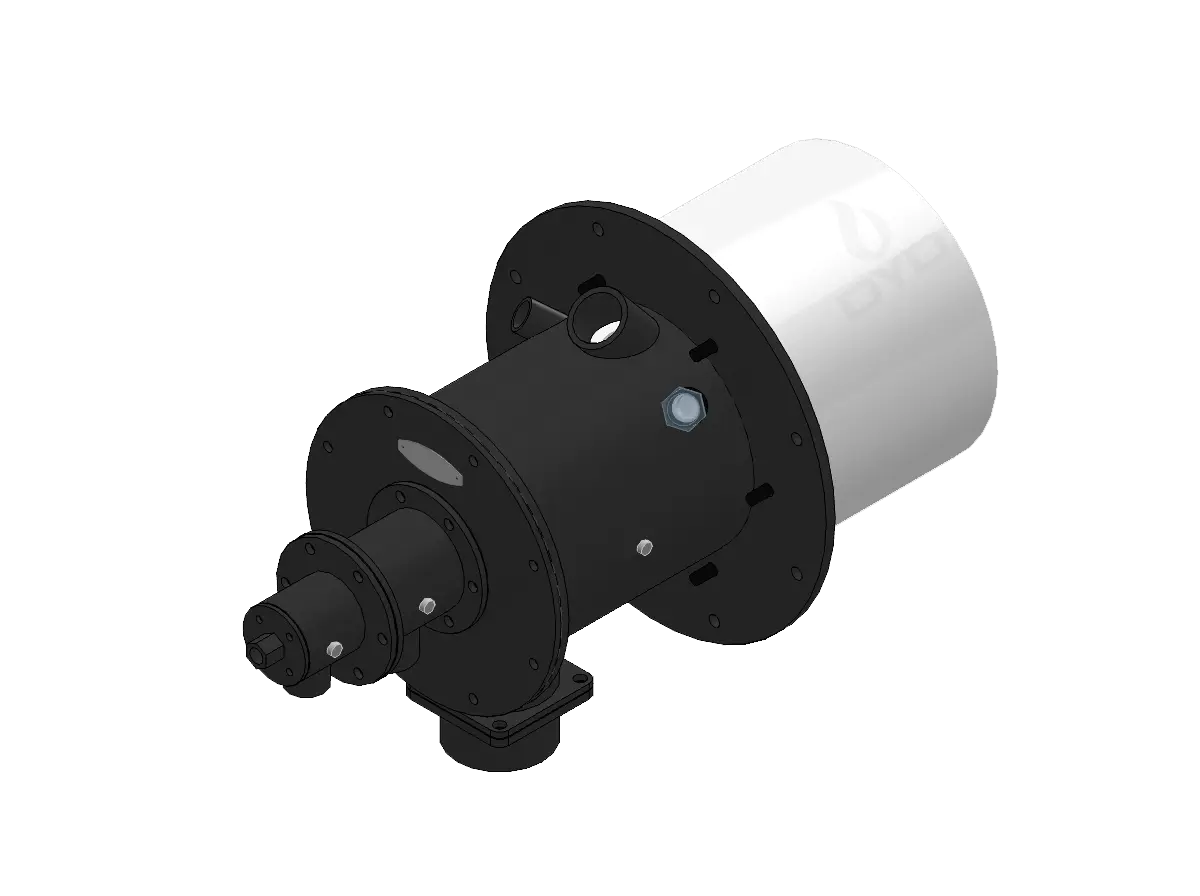
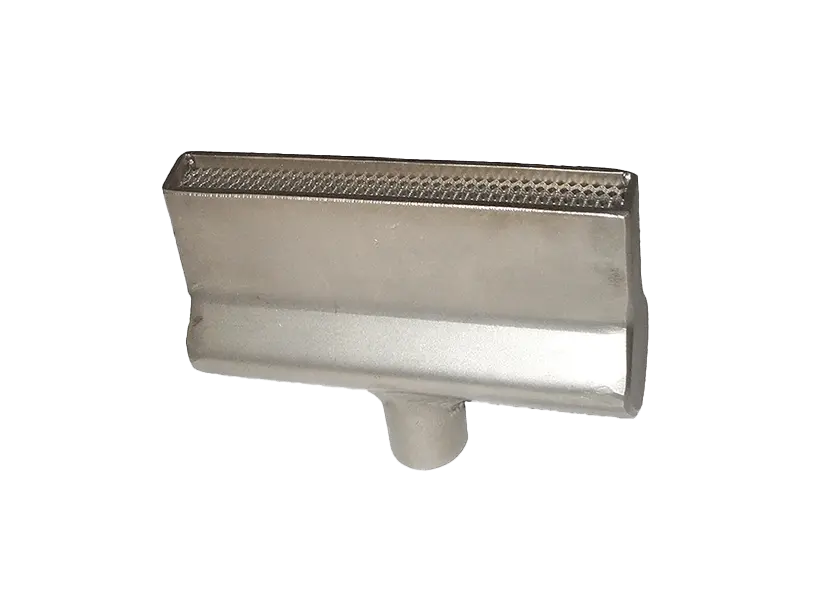
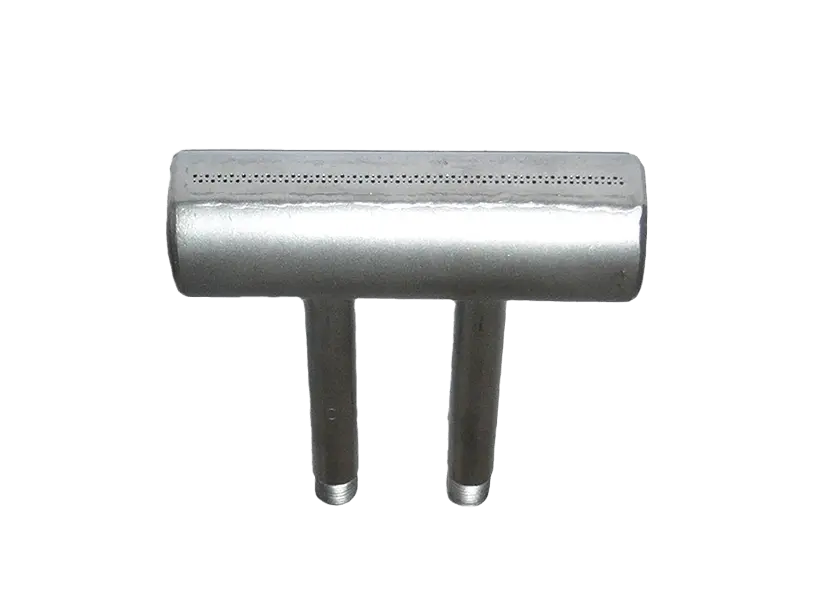
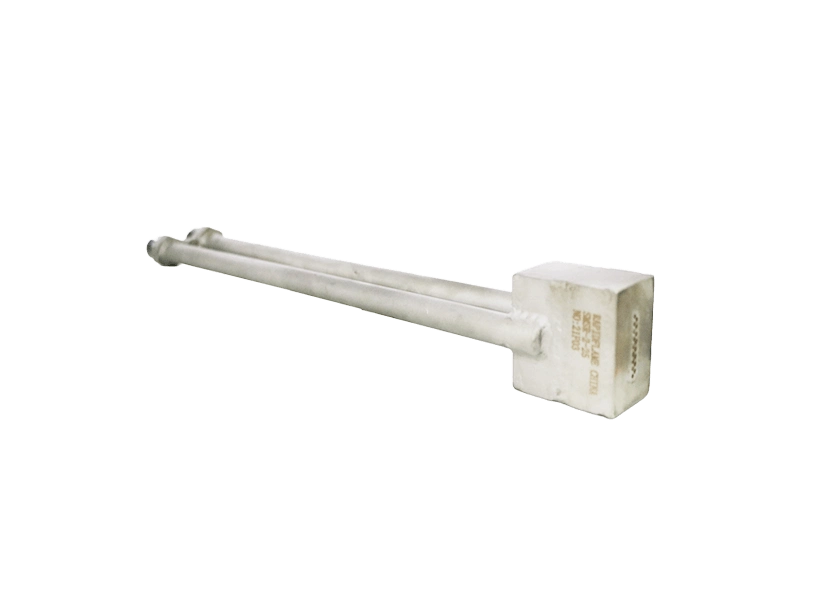
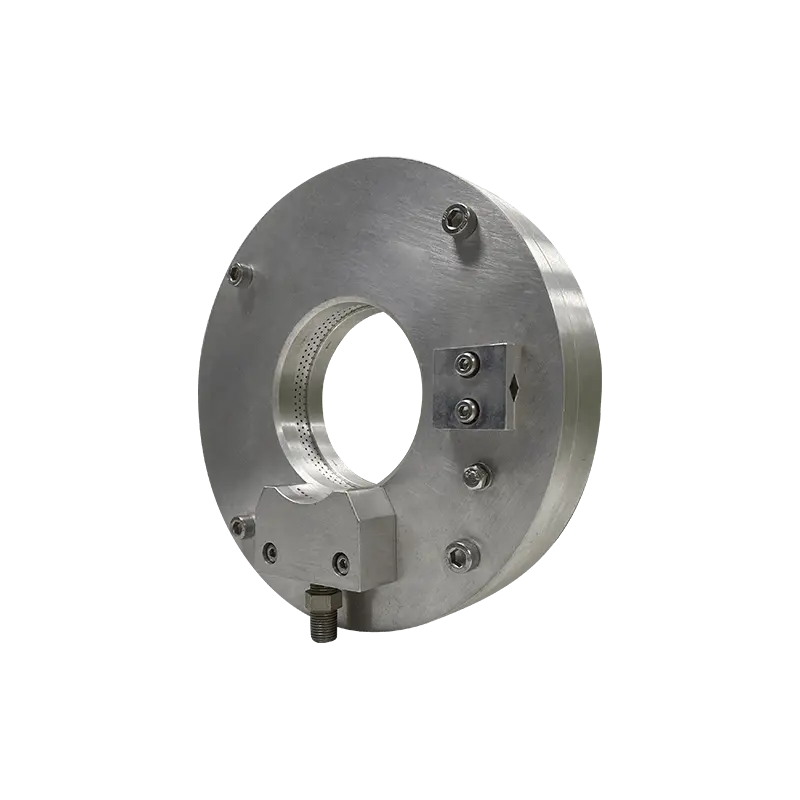
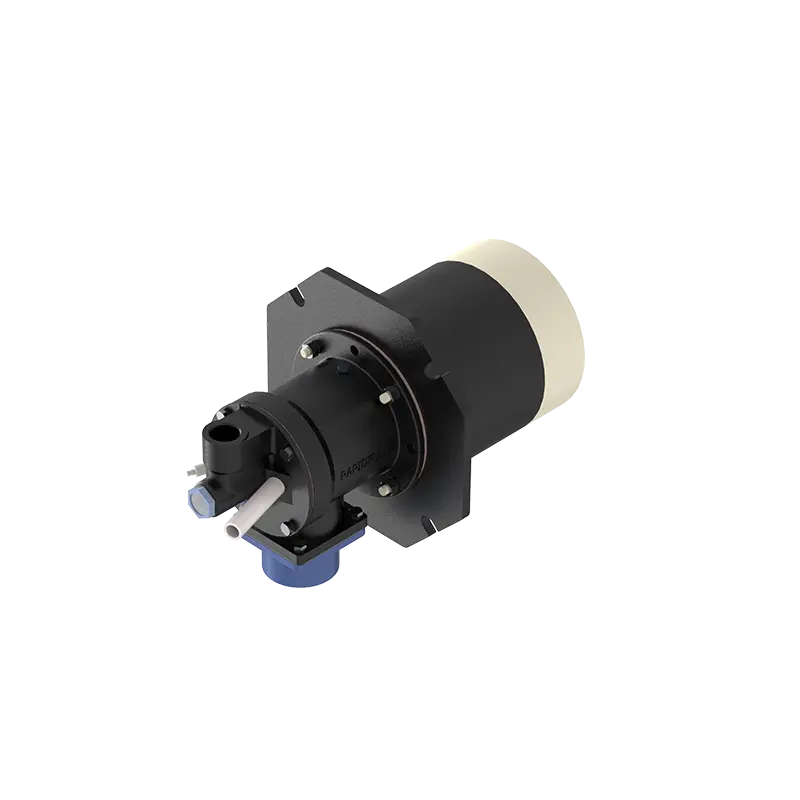
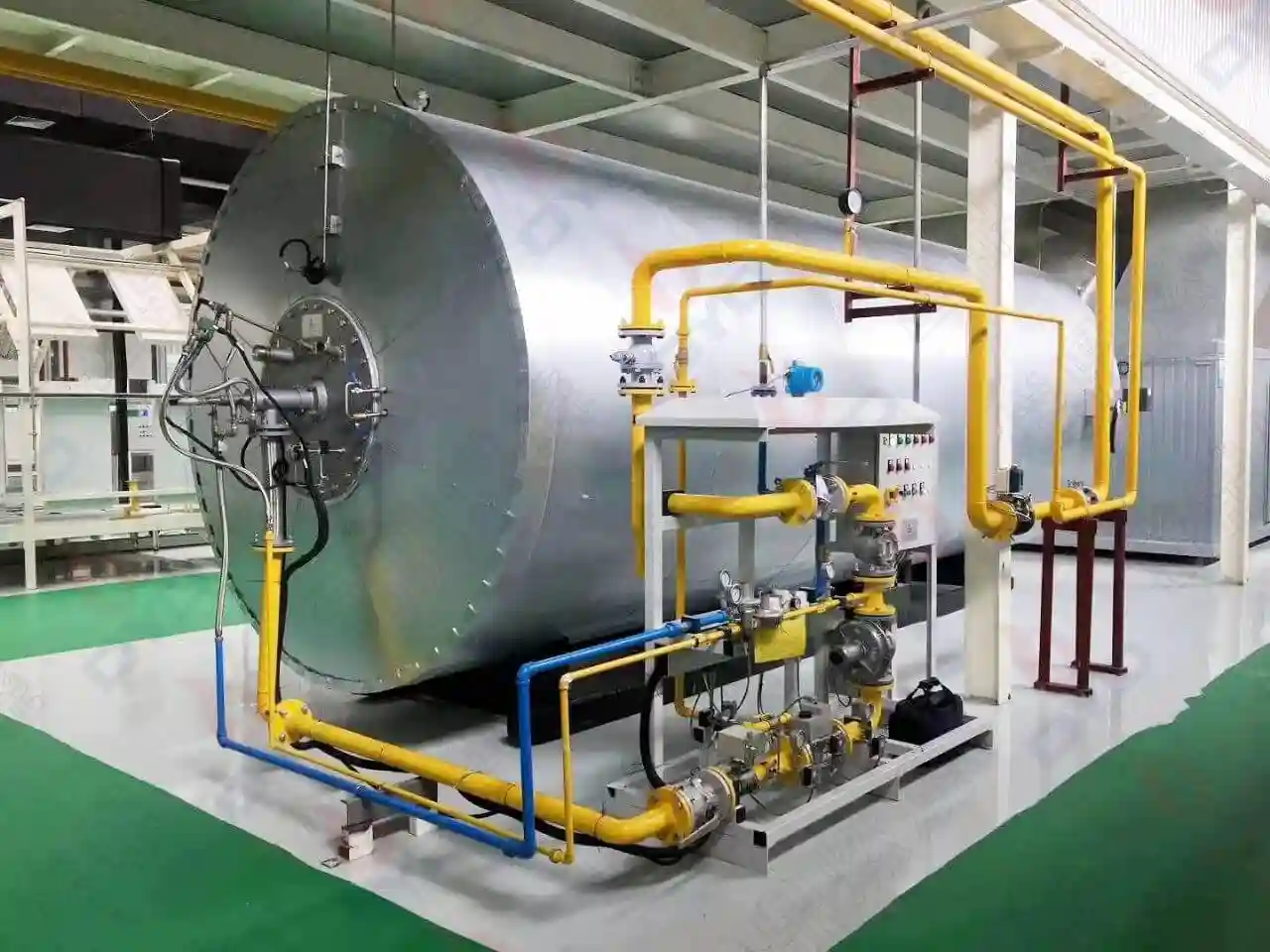
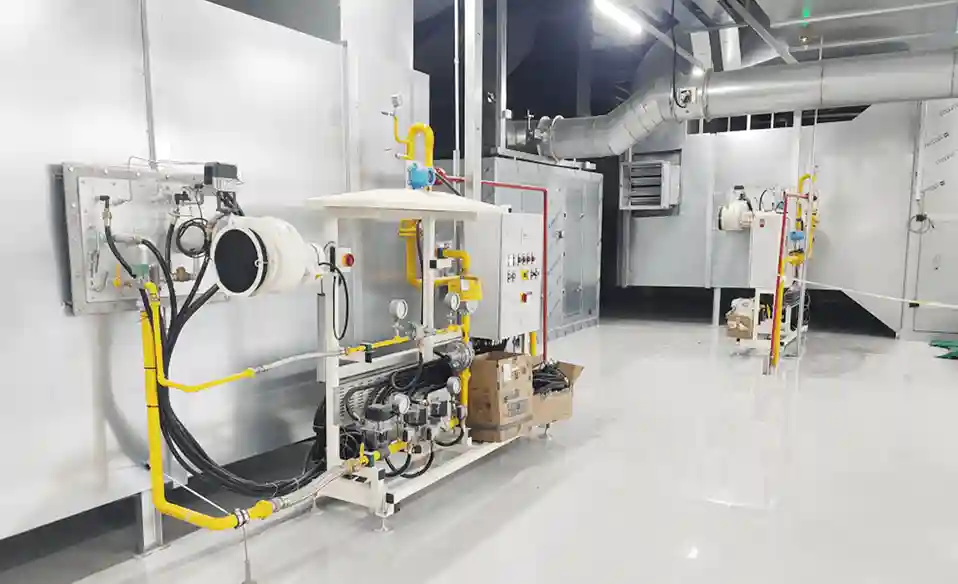
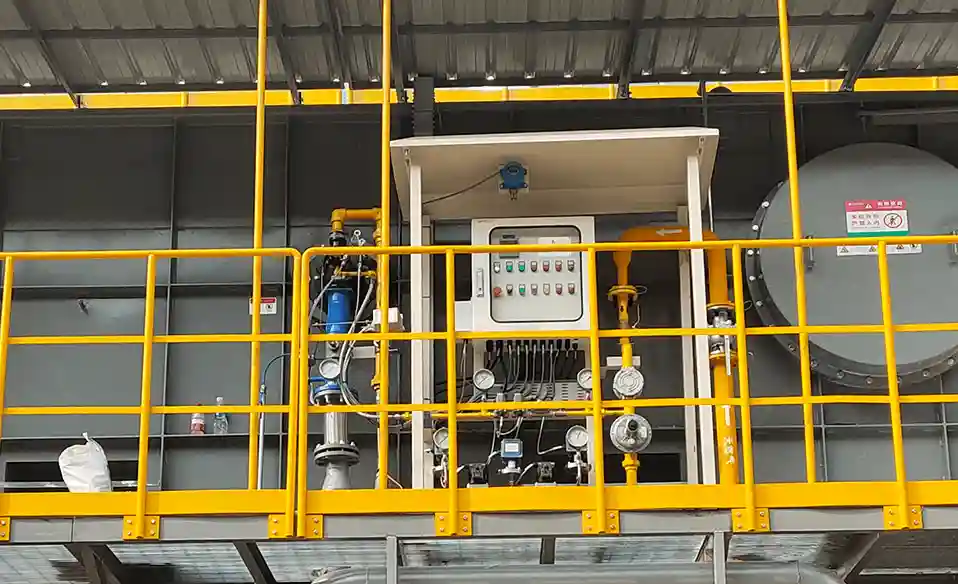
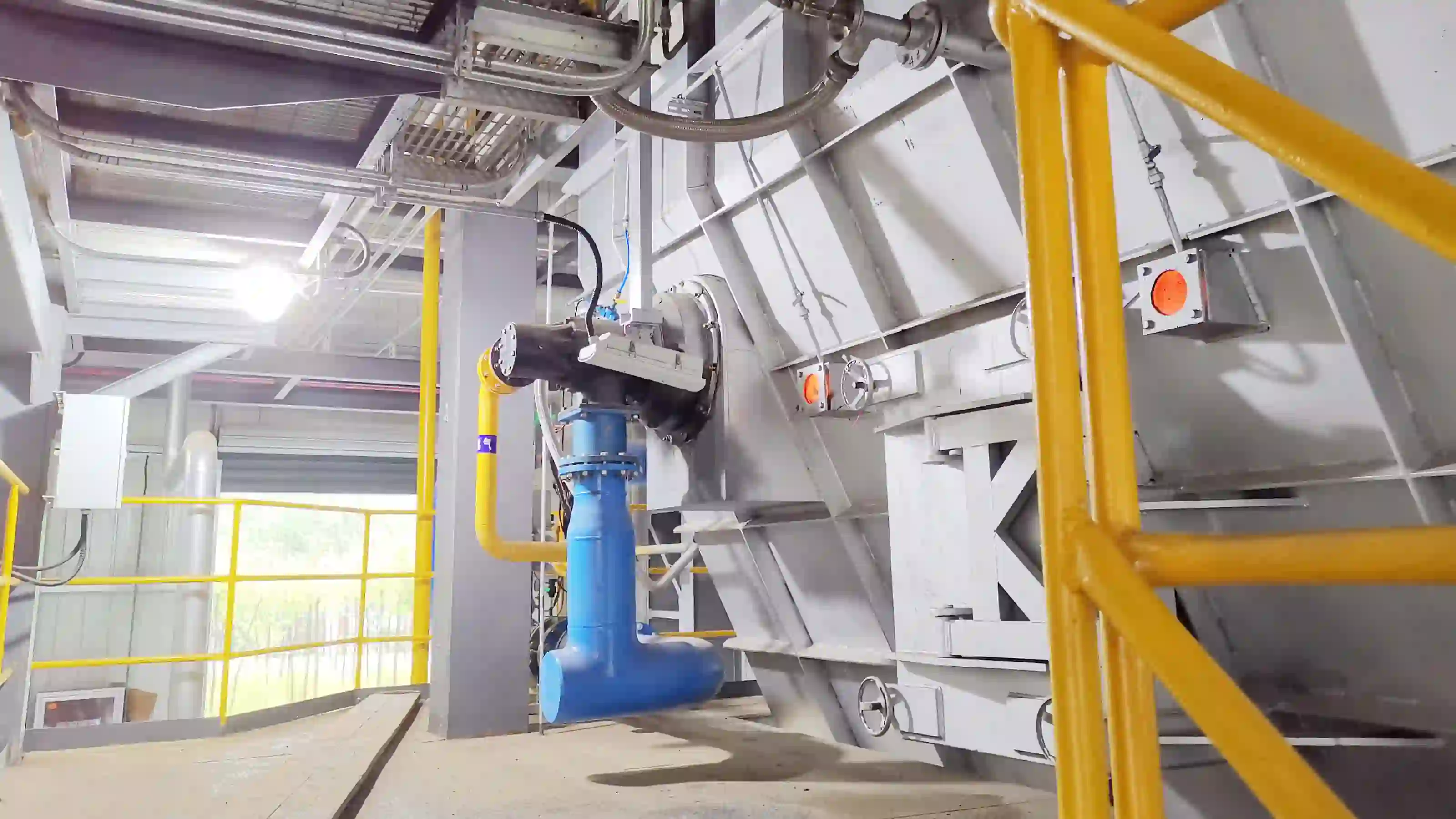
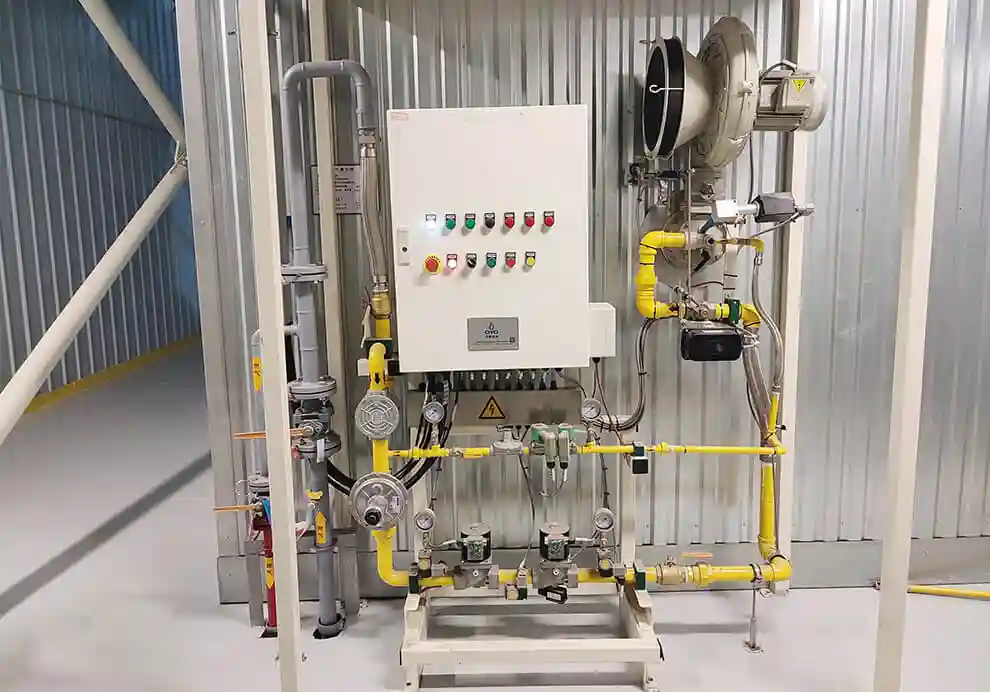
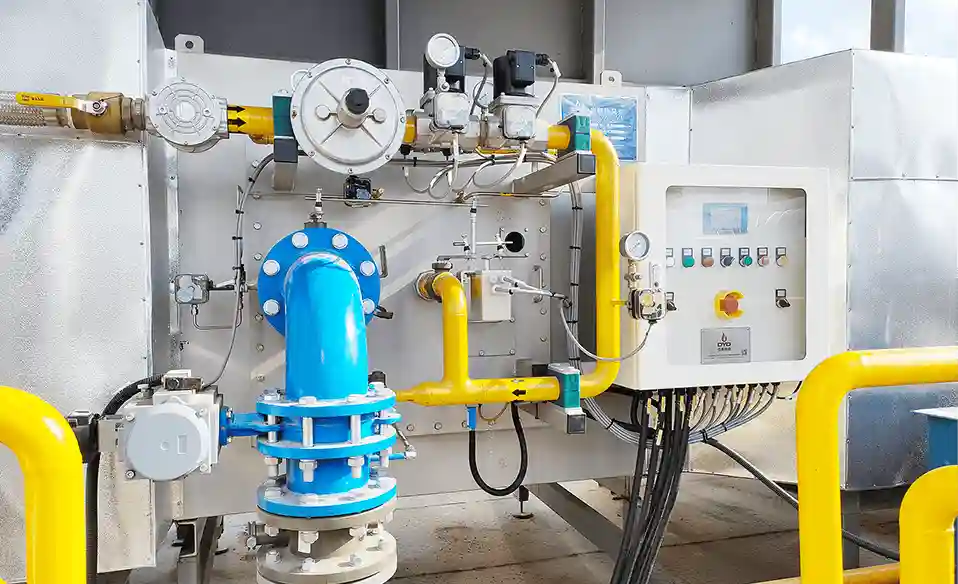
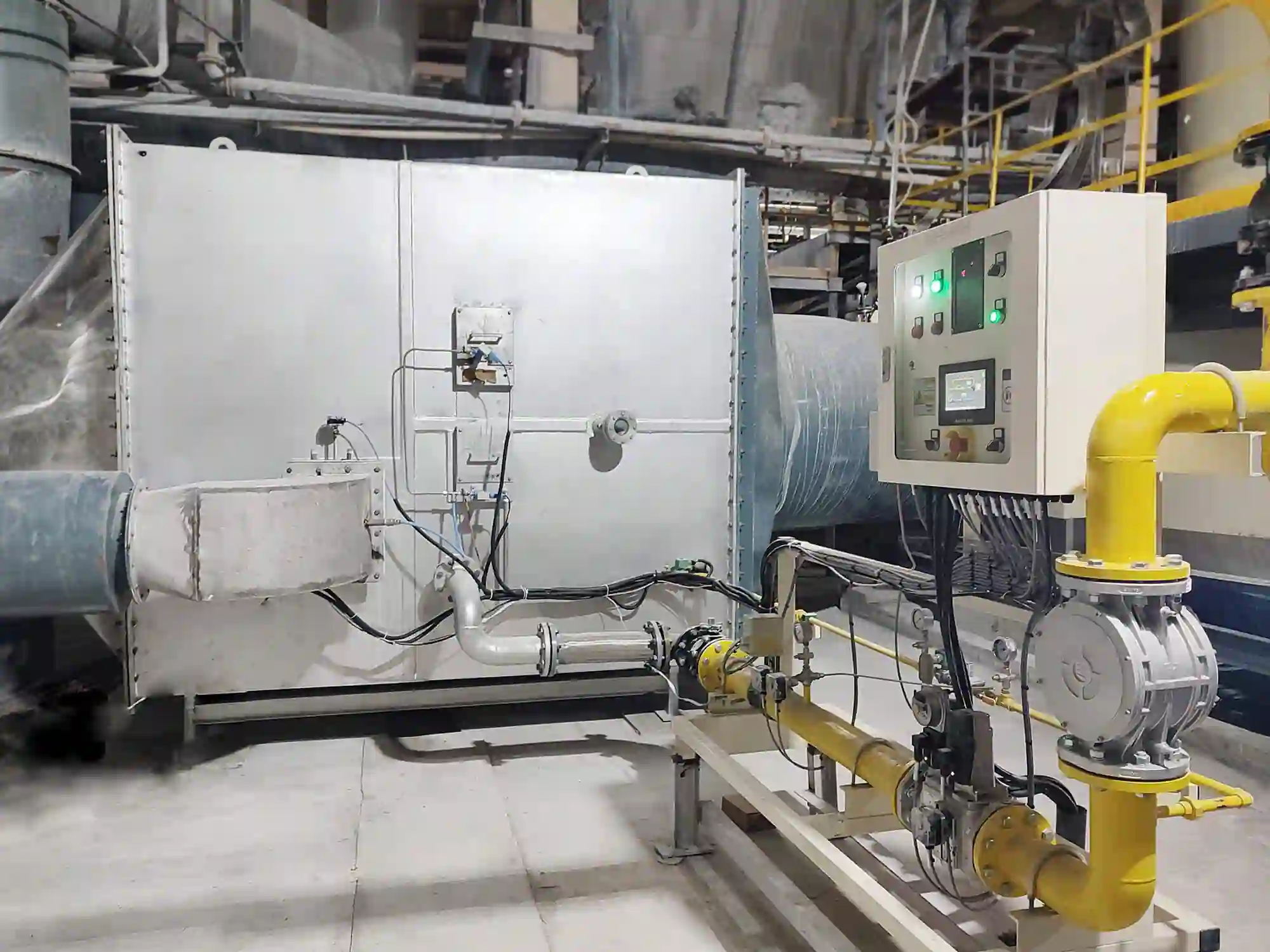
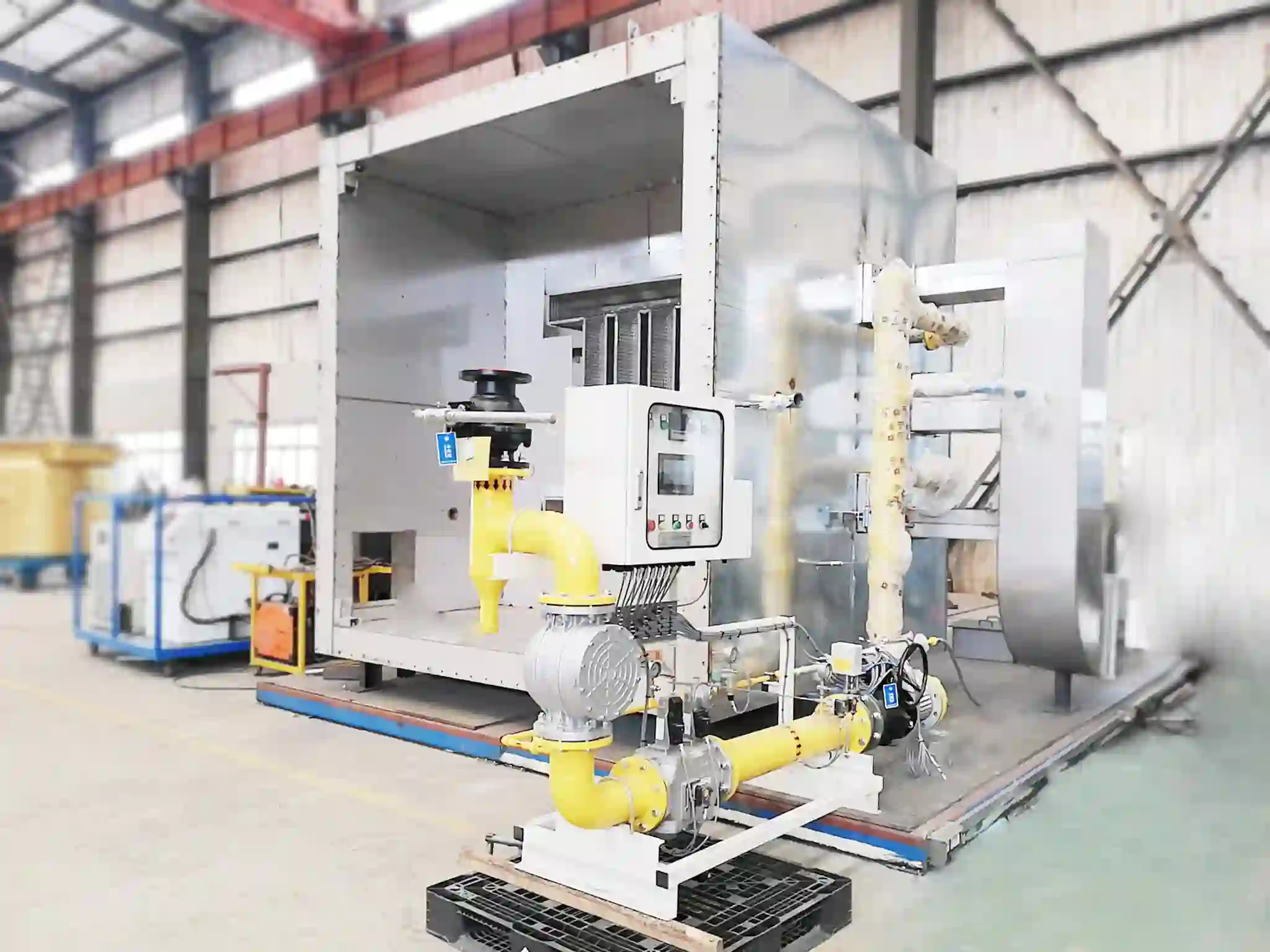
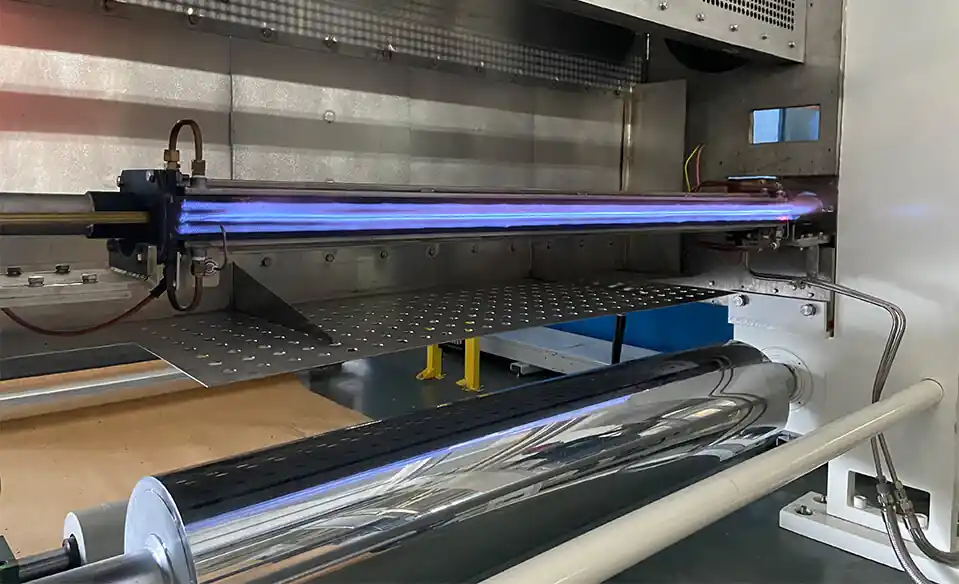
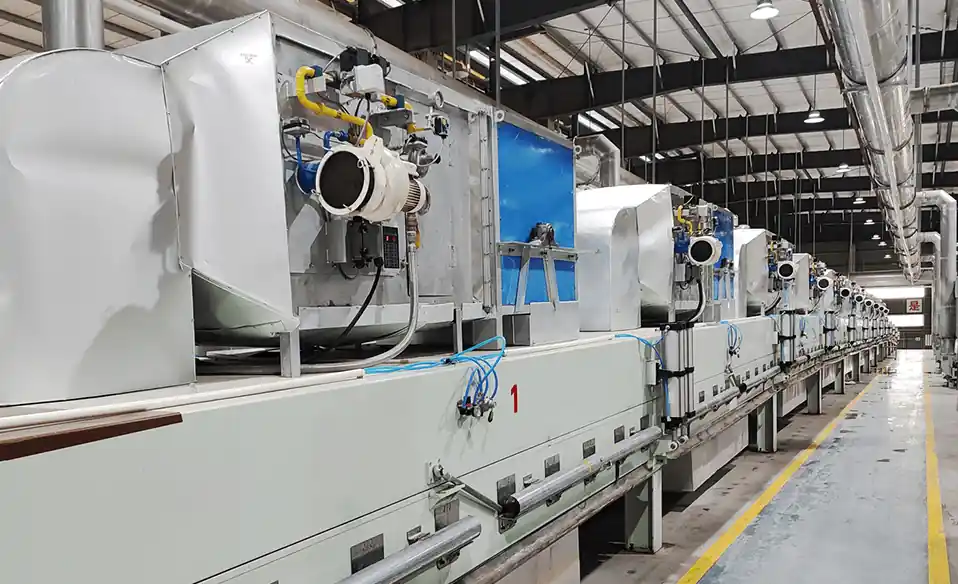
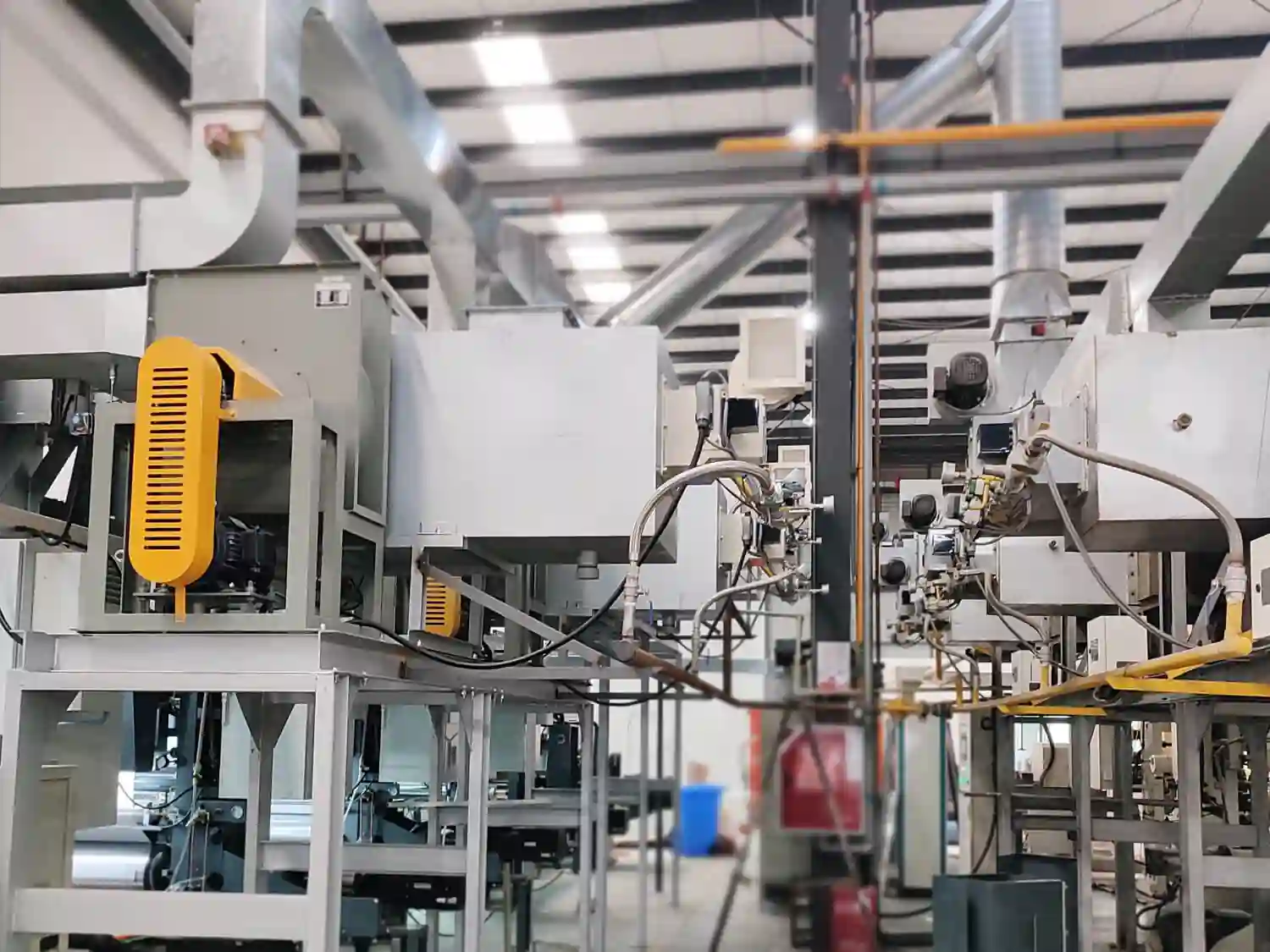
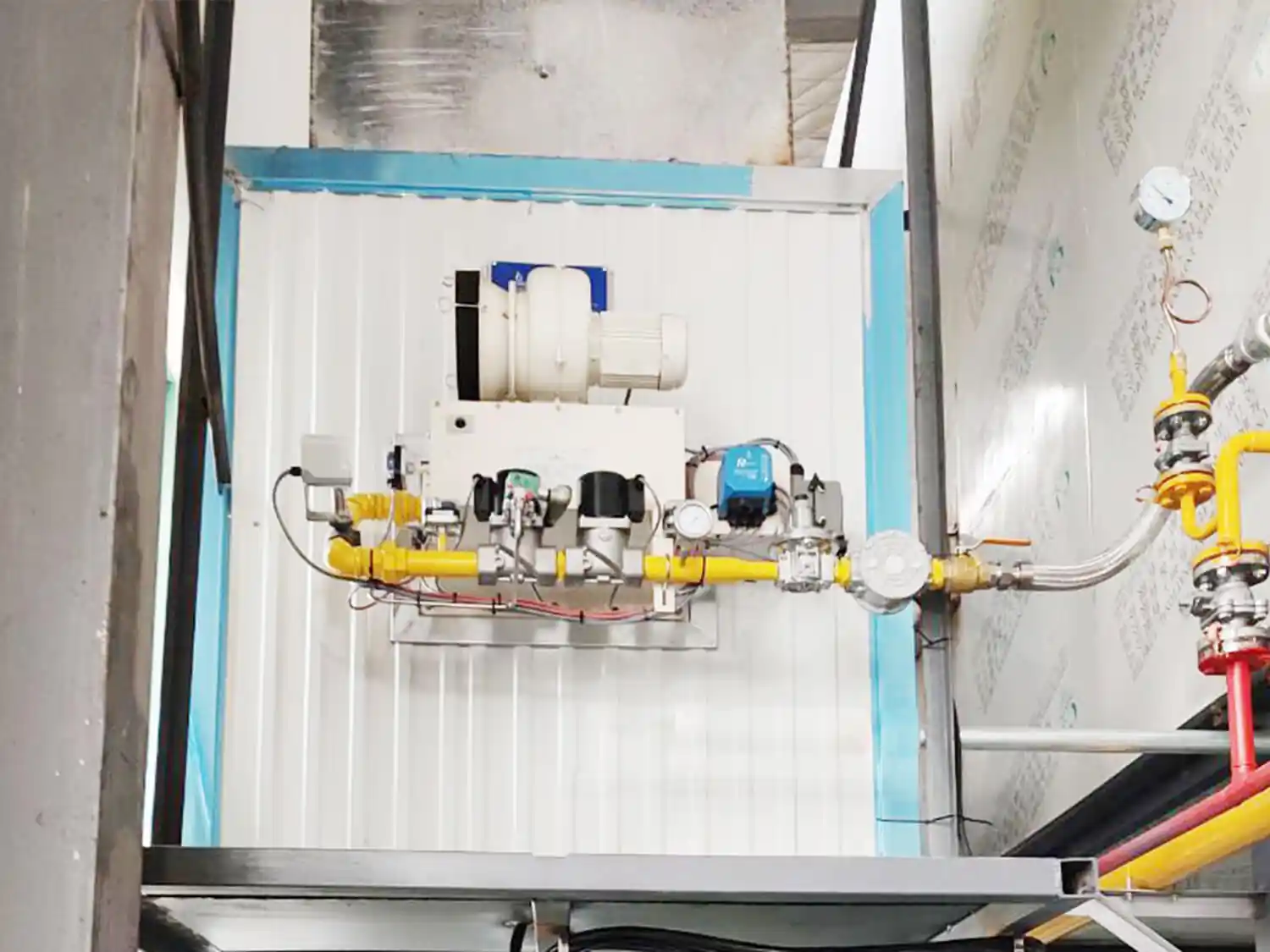
Industrial combustion systems are widely used in metallurgy, glass, ceramics, heat treatment, environmental protection, new energy, chemicals, food processing, and other industries. They are critical equipment for achieving thermal energy conversion in industrial production processes. As manufacturing moves toward higher efficiency, low-carbon operation, and intelligence, the burner has evolved from a simple heating device into a critical technical system that affects product quality, energy utilization, equipment safety, and production efficiency.
However, in actual procurement processes, many companies still treat burners as standardized products, using price or brand as the primary decision-making criterion, while overlooking factors such as combustion system design, process matching, control strategy, and on-site commissioning. This often leads to problems after commissioning, including high energy consumption, insufficient temperature uniformity, unstable combustion, and increased maintenance costs.
This white paper focuses on the core question—"How to choose a professional burner manufacturer?"—and systematically reviews industry development trends, the core capabilities of burner manufacturers, cooperation models with OEM equipment manufacturers, application characteristics across different industries, common procurement misconceptions, and supplier evaluation methods. The goal is to provide industrial enterprises, OEM equipment manufacturers, design institutes, and engineering professionals with a more scientific and systematic reference for burner selection.
The full text includes the following main content:
Analysis of industrial combustion technology trends and the changing role of burner manufacturers;
Establishment of a comprehensive evaluation system for burner manufacturers to help companies scientifically screen suppliers;
Analysis of the importance of collaborative combustion system R&D from the perspective of OEM equipment manufacturers;
Examination of key combustion system requirements for typical industries including aluminum processing, glass, heat treatment, industrial drying, environmental protection, and new energy;
Summary of the ten most common pitfalls in burner procurement with targeted recommendations;
Discussion of the capabilities required for long-term cooperative combustion technology partnerships, with industry practice examples;
Provision of frequently asked questions (FAQ) and a burner manufacturer procurement checklist to help companies establish standardized procurement processes.
This white paper is compiled based on publicly available industry data, international standards, and the extensive practical experience of DYDTEC in industrial combustion projects. The views presented are technology- and application-oriented, aiming to balance professionalism, practicality, and reference value. It is hoped that this document will provide valuable reference for industrial enterprises to optimize combustion systems, reduce energy consumption, improve equipment performance, and promote green, low-carbon development in manufacturing.
Keywords: burner manufacturer, industrial burner, combustion system, OEM equipment manufacturer, low-NOx combustion, natural gas burner, industrial hot air furnace, industrial kiln, combustion system integration, industrial energy saving
Different roles have different concerns. We recommend that you prioritize reading the chapters most relevant to your position in order to quickly obtain the information you need.
| If you are... | Suggested chapters to focus on | Your key questions |
|---|---|---|
| Industrial procurement manager | Chapters 2, 5, 7, 8 | How to choose a reliable burner manufacturer? How to reduce procurement risk? |
| OEM equipment manufacturer | Chapters 2, 3, 6, 8 | How to find a long-term combustion system supplier? |
| Process engineer | Chapters 1, 2, 4, 7 | How to improve combustion efficiency? How to match process requirements? |
| Equipment engineer | Chapters 2, 4, 5, 8 | How to select a burner? How to avoid operational failures? |
| Business manager | Executive Summary, Chapters 5, 6, 8 | How to reduce total lifecycle cost? How to enhance equipment competitiveness? |
| First-time burner purchaser | Full text | Establish a complete combustion system selection framework. |
Industrial burners exist in nearly all industrial production processes that require thermal energy. From metal melting to glass manufacturing, from lithium battery materials to food drying, from environmental treatment to new material production, combustion systems directly affect product quality, energy consumption, equipment safety, and production efficiency. As manufacturing upgrades toward higher efficiency, lower carbon, and greater intelligence, the focus of companies when choosing burner manufacturers is also changing. In the past, the core question buyers asked was "How much does a burner cost?" Today, more and more companies are asking "What value can this combustion system bring to my production line?" This shift in questioning reflects a profound evolution in the industry's value logic.
For modern industrial enterprises, the burner is no longer an independent piece of equipment, but an important component of the entire industrial combustion system. Choosing a professional burner manufacturer is essentially choosing a partner with combustion technology R&D, system design, process optimization, and long-term service capabilities. This means the company purchases not just a device that produces a flame, but a complete set of technical capabilities and service guarantees built around the heating process.
An industrial burner is an industrial device that mixes fuel and combustion air in a preset proportion, burns stably, and efficiently converts chemical energy into thermal energy. It is not only responsible for ignition and combustion, but also directly affects the equipment's heating efficiency, temperature uniformity, fuel consumption, safety performance, and pollutant emissions. From a thermodynamic perspective, the burner is a key link in the energy conversion chain—it releases the chemical energy stored in fuel and transfers it to the heated material or medium through radiation, convection, and conduction. The efficiency of this conversion directly determines the economics of the entire thermal system.
Unlike domestic combustion equipment, industrial burners typically need to operate continuously and stably, while meeting different process requirements for flame shape, combustion intensity, temperature control, and emission indicators. A household gas stove only needs to ignite stably at a fixed power, while an industrial burner may need precise modulation over a wide load range and adaptation to complex pressure fluctuations and atmosphere changes within the furnace. Therefore, different industries have significantly different design requirements for burners. These differences are not just about power ratings, but are reflected in flame organization, combustion head structural design, and control system response logic.
For example:
Aluminum melting focuses on melting efficiency, metal loss rate, and furnace temperature uniformity—the flame needs to form uniform thermal radiation in a large space while avoiding local overheating that could aggravate aluminum oxidation.
The glass industry focuses on flame coverage and heat load distribution—glass melting requires large-area flame coverage over the batch surface, and radiation heat transfer efficiency directly affects melting quality and energy consumption.
Heat treatment focuses on temperature control accuracy and furnace temperature field consistency—workpiece hardness, metallographic structure, and residual stress distribution all depend on the uniformity of the furnace temperature field and precise execution of heating and cooling curves.
Industrial drying equipment focuses on hot air uniformity and energy utilization efficiency—even small deviations in hot air temperature or velocity can lead to uneven product moisture content.
Environmental protection equipment (RTO, TO) focuses on combustion stability and safety interlocks—the burner acts as a "safety torch" for waste gas oxidation, and its reliability directly determines whether VOCs treatment meets standards.
Because process requirements differ, industrial burners have evolved from standardized products into specialized equipment deeply integrated with processes. A single burner manufacturer's product catalog may simultaneously include high-velocity burners, flat-flame burners, radiant tube burners, submerged combustion burners, and many other types, each with dozens of configuration options based on specific process needs.
Industrial combustion technology covers nearly all manufacturing sectors that require thermal energy. It is no exaggeration to say that wherever industrial production requires temperatures above ambient, combustion systems play a vital role.
Typical applications include:
| Industry | Typical Applications |
|---|---|
| Metallurgy | Aluminum melting, steel billet heating, heat treatment, aging furnaces |
| Glass | Glass melting furnaces, tempering furnaces, fire polishing |
| Ceramics | Shuttle kilns, roller kilns, tunnel kilns |
| Industrial Drying | Ovens, drying tunnels, drying furnaces, paint curing |
| Environmental Protection | RTO, TO, incinerators, hazardous waste treatment |
| New Energy | Lithium battery materials, separators, anode materials, electronic materials |
| Chemical Industry | Reaction heating, catalyst drying, waste liquid evaporation |
| Food Industry | Baking, grain drying, fruit and vegetable dehydration |
| Automotive Manufacturing | Paint drying, flame treatment, part preheating |
| Packaging & Printing | Flame treatment, paper drying, film processing |
As manufacturing continues to upgrade, more and more new industrial scenarios are adopting specialized combustion technologies. Examples include hydrogen utilization, oxy-fuel combustion, high-temperature hot air systems, and low-calorific-value fuel utilization—all of which place higher demands on burner manufacturers. These emerging applications often have no ready-made standardized products available, requiring burner manufacturers to work closely with users to jointly explore combustion solutions suited to new processes.
Many people believe that a burner manufacturer is simply a company that produces burners or burners. This understanding was accurate twenty or thirty years ago—at that time, burner manufacturers indeed focused on equipment manufacturing as their core business.
In fact, this is the traditional definition of the industrial combustion industry.
Modern burner manufacturers bear responsibilities far beyond product manufacturing. They provide complete combustion solutions around industrial heating processes, including:
Burner R&D and manufacturing—covering the full process from product design, material selection, prototype manufacturing, to performance testing.
Combustion system solution design—overall thermal planning based on furnace structure, process requirements, and fuel conditions.
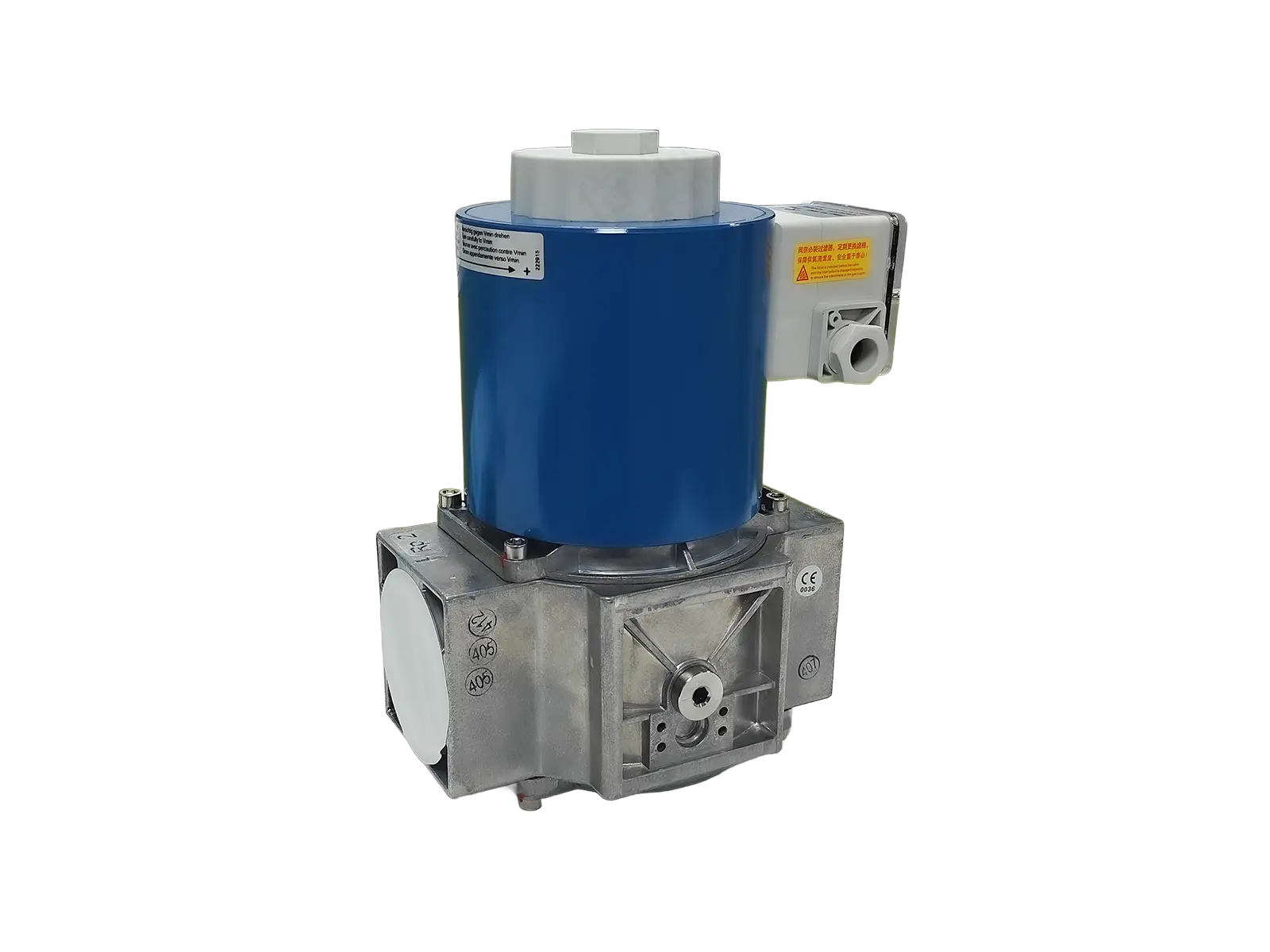
Gas valve train and control system integration—integrating burners, valves, controllers, and sensors into a coordinated operating system.
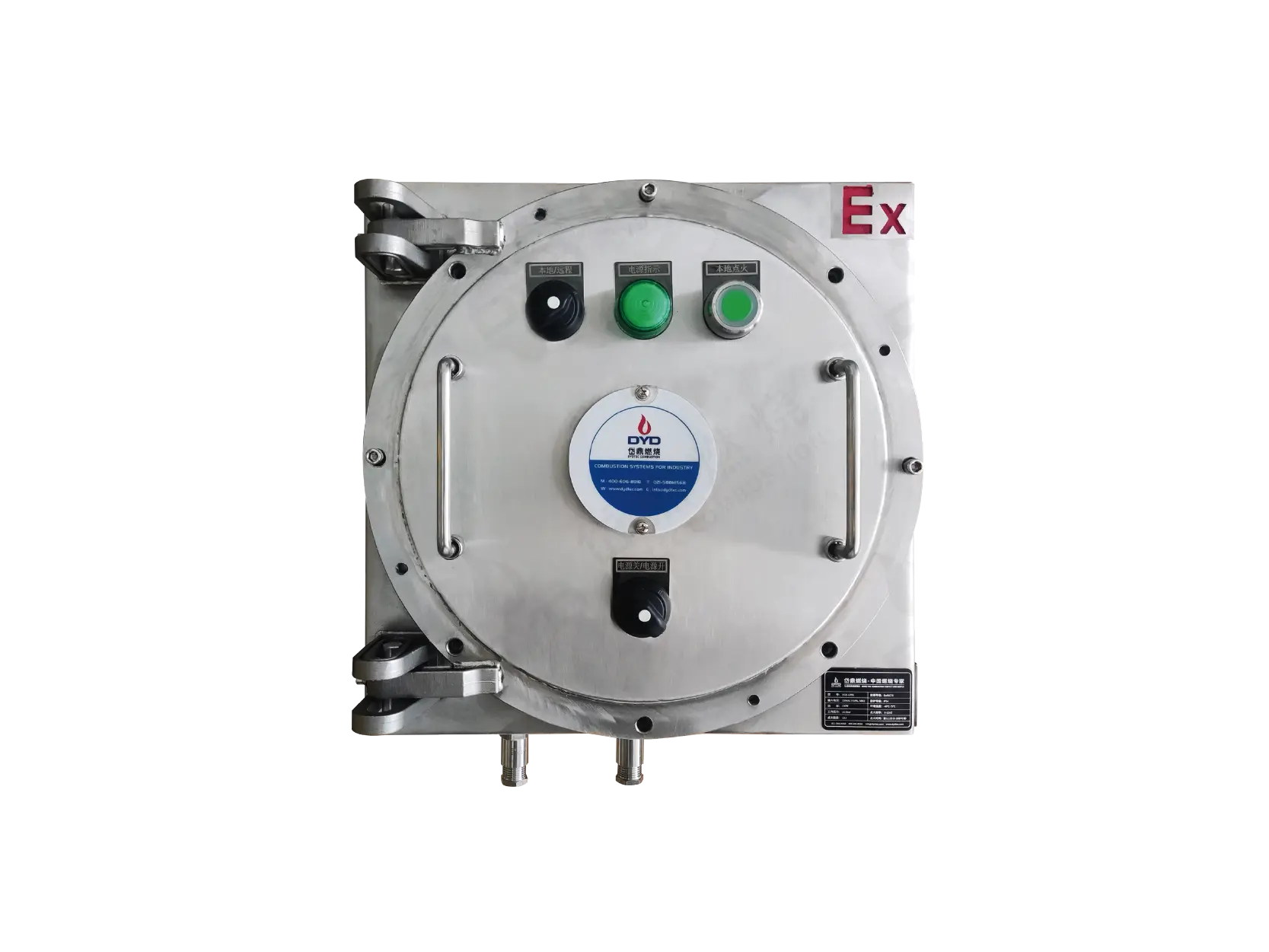
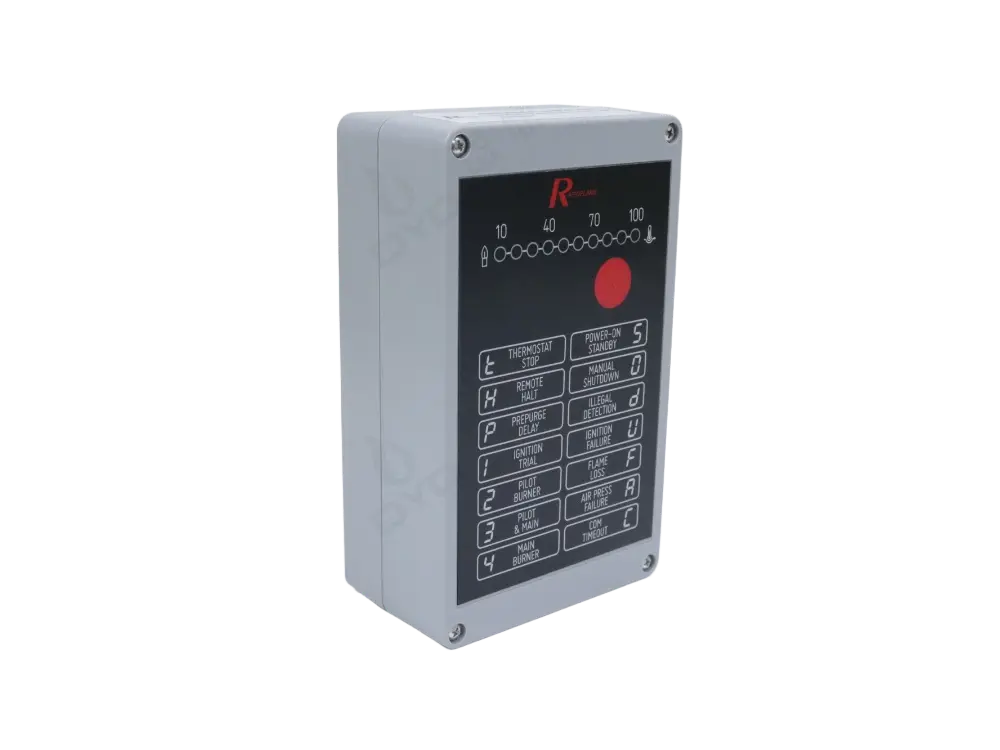
Combustion safety system design—establishing a full-cycle safety interlock system from pre-purge to flame failure protection.
Custom combustion equipment development—tailored design for special furnace types, special fuels, or special processes.
On-site commissioning and technical services—ensuring the equipment achieves design performance under actual site conditions.
Energy-saving optimization and low-NOx retrofits—upgrading existing systems to meet new efficiency and environmental requirements.
In other words, a professional burner manufacturer needs to understand both combustion principles and the customer's production process. Only by integrating combustion technology with process requirements can a combustion system be designed that truly fits the user's operating conditions.
For OEM equipment manufacturers, burner manufacturers are often important partners in the whole-machine R&D process, not just component suppliers. The value of this partnership lies in the fact that while the equipment is still at the drawing stage, the burner manufacturer can provide optimization suggestions from a thermal engineering perspective, avoiding later design changes due to combustion matching issues.
Over the past decade or more, the industrial combustion industry has undergone a transformation from "meeting combustion needs" to "optimizing combustion." Behind this shift is a change in the competitive logic of manufacturing—cost competition no longer relies solely on economies of scale, but increasingly on refined metrics such as unit energy consumption, product yield, and environmental compliance.
The questions companies ask when purchasing burners have also changed significantly.
Past concerns:
Will it ignite? — basic reliability
Is the power sufficient? — whether it meets capacity needs
What is the product price? — one-time procurement cost
Today's concerns:
Can it reduce natural gas consumption? — long-term operating costs
Does it meet low-NOx emission requirements? — environmental compliance risk
Can it improve product consistency? — impact of heating quality on yield
Does it support intelligent control? — automation level and future upgrade potential
Is it compatible with future energy sources? — adaptability to alternative fuels like hydrogen
Is it easy to maintain and upgrade? — lifecycle maintenance costs
This means industrial combustion is no longer just an equipment issue, but a significant factor affecting production efficiency, product quality, energy costs, and environmental performance. When companies purchase burners, they are essentially making decisions about these long-term metrics, not just completing a one-time equipment purchase.
At the same time, competition among burner manufacturers is gradually shifting from product competition to technology competition and system capability competition. Relying solely on price advantage is no longer sufficient to build sustainable competitiveness in the market. Manufacturers with independent R&D capabilities, system integration capabilities, and industry application experience are gaining recognition from an increasing number of quality customers.
Many companies have had similar experiences:
With the same natural gas burner, operational results after installation by different manufacturers can vary significantly.
Some equipment has stable flames, fast heating, and low gas consumption—reaching expected performance immediately after commissioning and maintaining stable indicators after months of operation.
Other equipment suffers from uneven temperature, incomplete combustion, frequent flameouts, or long commissioning periods—requiring repeated scheme revisions and multiple site visits, with production start-up delayed repeatedly.
The reason is that the burner is only one component of the entire system. Equating burner performance with the overall combustion system effectiveness is a common cognitive bias.
Factors affecting final operational results include:
Is the furnace structure reasonable? — Whether the furnace depth, width, and volume heat intensity match the flame characteristics.
Is the burner installation position appropriate? — Whether the burner distance from the furnace wall and workpiece has been optimized.
Does the flame length match the furnace type? — Whether the choice of long flame, short flame, or flat flame is coordinated with the furnace geometry.
Is air-fuel ratio control accurate? — Whether the proportional regulation precision and response speed meet process requirements.
Is combustion air distribution reasonable? — Whether duct routing and air pressure stability have been systematically designed.
Does the control program comply with process requirements? — Whether temperature curves and load regulation logic are synchronized with the production rhythm.
Are safety interlocks complete? — Whether pre-purge, flame failure protection, over-temperature protection, etc., are fully implemented.
Is on-site commissioning thorough? — Whether sufficient time has been allocated for parameter optimization across the full load range.
Therefore, more and more companies are focusing on the overall combustion system design capability, not just the burner body performance. This shift in focus means that when evaluating suppliers, companies are no longer just looking at product samples and price lists, but are beginning to examine the supplier's system design capability, commissioning experience, and after-sales service level.
For OEM equipment manufacturers, the combustion system has become an important part of equipment performance. The heating effectiveness, energy consumption level, emission indicators, and operational stability of a kiln or oven largely depend on the design quality and matching of the combustion system.
An excellent combustion system not only helps end customers reduce operating costs, but also enhances overall machine competitiveness, reduces after-sales issues, and strengthens product differentiation. In equipment tenders, those devices labeled with "low-NOx combustion system," "proportional control," "intelligent temperature control," and similar features often receive higher evaluations than comparable equipment without these features.
Therefore, more and more equipment manufacturers expect burner manufacturers to participate in projects from the product R&D stage, jointly completing:
Thermal solution design—determining the overall combustion system architecture based on furnace dimensions and process parameters.
Burner selection—matching the most suitable burner type and power rating.
Control system design—defining control logic, sensor configuration, and human-machine interface scheme.
Safety interlock design—establishing a safety protection system covering all operating conditions.
Custom burner development—tailored design for special furnace types and special processes.
On-site commissioning and optimization—ensuring the equipment achieves optimal operation at the customer's site.
This cooperation model is also driving burner manufacturers to gradually transform from product suppliers to technology partners. The relationship shifts from "transactional" to "collaborative," with the burner manufacturer's engineers becoming involved in the OEM's design process at an early stage, jointly creating value for end users.
In the coming years, the industrial combustion industry will continue to develop in the following directions:
High efficiency and energy saving. Improving combustion efficiency and reducing unit energy consumption remain important goals for industrial enterprises. Against the backdrop of high energy prices and rising carbon trading costs, every unit of fuel saved brings dual benefits—both reducing direct energy expenditure and decreasing carbon allowance purchases. Burner manufacturers will continue to invest in combustion control precision, waste heat recovery, and overall system optimization.
Low carbon and emission reduction. Low-NOx combustion, oxy-fuel combustion, oxygen-enriched combustion, and low-calorific-value fuel utilization technologies will continue to drive the green development of industrial combustion. As the hydrogen energy industry chain matures, hydrogen burners will also move from demonstration applications to large-scale deployment, becoming an important path for decarbonizing industrial heating.
Intelligent control. Combustion control systems will become smarter, achieving automatic air-fuel ratio optimization, fault diagnosis, remote monitoring, and predictive maintenance. By incorporating industrial IoT and artificial intelligence algorithms, combustion systems will be able to automatically adjust operating parameters based on fuel fluctuations, environmental changes, and equipment aging, always maintaining optimal conditions.
Multi-fuel compatibility. As the energy mix adjusts, the demand for mixed utilization of natural gas, LPG, hydrogen, biomass gas, blast furnace gas, and other fuels is increasing, placing higher demands on burner design. Burner products that can flexibly switch between multiple fuels on a single system will gain greater competitive advantages in the future market.
System integration. Companies will increasingly prefer partners capable of providing complete combustion system solutions including burners, control systems, hot air furnaces, flame treatment equipment, and overall system integration, rather than purchasing multiple individual items separately. This "one-stop" cooperation model not only simplifies supply chain management but also ensures compatibility and matching among subsystems, reducing on-site coordination workload.
Industrial burners have evolved from traditional heating devices into critical technical equipment that affects industrial production efficiency, product quality, energy utilization, and environmental performance. Their role has shifted from "tools that generate heat" to "the core of the entire thermal system," and their value positioning has expanded from the performance of a single device to the comprehensive performance of the entire system.
For industrial enterprises and OEM equipment manufacturers, choosing a burner manufacturer should not be based solely on product parameters or purchase price, but on whether the manufacturer possesses combustion system R&D capability, industry application experience, custom design capability, and ongoing technical service capability. The degree of fit between the combustion system and the production process determines the overall operational performance of the equipment in practice.
This is also the direction of development for the modern industrial combustion industry: from selling a burner to delivering a combustion solution truly suited to process requirements. For companies, choosing a burner manufacturer with system capability is choosing reliable assurance for the long-term stable operation of their production line and sustained cost reduction and efficiency improvement.
Whether it's an industrial enterprise purchasing a burner or an OEM equipment manufacturer seeking a long-term partner, they all face the same question: there are many burner manufacturers on the market—how do you determine which one is truly professional?
Many people compare brands, prices, delivery times, or even just burner parameters. But for industrial combustion, these are only reference factors. What truly determines project success is often the manufacturer's comprehensive strength in combustion technology, system design, industry experience, and service capability. A burner may perform perfectly on a laboratory test bench, but when installed in a real furnace, subject to site conditions, installation constraints, and commissioning quality, the final results can vary widely—this is the essential difference between system engineering capability and mere product manufacturing.
This chapter establishes a scientific, actionable evaluation system for burner manufacturers from the perspective of corporate procurement. This system is applicable not only to end-user equipment procurement, but also to OEM equipment manufacturers screening long-term technical partners.
An excellent burner manufacturer not only manufactures burners, but also possesses capabilities in product R&D, combustion system design, process matching, custom engineering, safety control, on-site commissioning, and continuous optimization. Companies should evaluate the manufacturer's overall technical capability comprehensively, rather than comparing only product prices.
Many companies, when purchasing burners, send the same technical specifications to several manufacturers and request quotes.
For example:
Natural gas
500 kW
Furnace temperature 850°C
Proportional control
One set
The quotes from different manufacturers often vary widely. Some may quote far below competitors, while others are significantly higher.
Many procurement staff assume: with the same product parameters, the lower-priced one offers better value for money. In the logic of standard component procurement, this reasoning is fine—for the same specification bolts and bearings, the lower price indeed offers better value.
In fact, this procurement approach carries significant risks. It contains a fundamental erroneous assumption: that burners are standardized products, and that identical parameters mean identical performance.
Because the burner is only one component of the combustion system. A complete burner body may include the burner head, valve train, fan, controller, and other components, but how these components are matched, how they interact with the furnace, and how they adapt to site condition changes—these are what determine the final results.
What truly affects equipment performance also includes:
Furnace structure—whether the flame development space is adequate
Flame organization method—the heat distribution path within the furnace
Air-fuel ratio control—proportional regulation precision and response speed
Combustion air design—whether air volume, pressure, and airflow distribution are reasonable
Valve train configuration—whether valve sizing, response time, and safety ratings are matched
Ignition program—whether purge time, ignition energy, and flame establishment timing are safe
Safety interlocks—whether flame failure protection, pressure protection, and over-temperature protection logic are complete
PLC control logic—whether temperature curves and load regulation are synchronized with the process
On-site commissioning capability—whether the engineer has the experience to translate design parameters into actual operational performance
Therefore, two combustion systems both rated at 500 kW can have significantly different operational results. One may heat quickly, consume less gas, and run smoothly; the other may have large temperature fluctuations, frequent alarms, and a prolonged commissioning period. The core difference lies not in the burner body, but in the completeness and precision of the combustion system design.
Many burner manufacturers only have a few standard models. When faced with special processes, they can only ask customers to adapt to their products—either accepting an imperfect match or abandoning the collaboration.
Professional manufacturers typically have a complete product matrix that can match different processes. The richer the product portfolio, the greater the selection flexibility and the stronger the adaptability to specific operating conditions.
For example:
| Process Requirement | Recommended Product Direction |
|---|---|
| General industrial heating | Industrial gas burners |
| Energy saving and efficiency | High-velocity burners, regenerative combustion systems |
| Low NOx emissions | Low-NOx burners |
| High-temperature melting | Oxy-fuel / oxygen-enriched burners |
| Industrial hot air | Linear burners, hot air furnaces |
| Flame surface treatment | Flame treatment burners |
| Multi-fuel switching | Combination burners |
| Blast furnace gas, biomass gas, etc. | Low-calorific-value burners |
The richer the product portfolio, the better the selection can be based on process requirements, rather than relying on a few standard products to cover all scenarios. For an OEM equipment manufacturer, cooperating with a burner manufacturer that has a comprehensive product portfolio means that when developing new products, they are not limited by the burner's application range, giving greater design freedom.
Taking DYDTEC as an example, it has formed nine major product series covering industrial gas burners, linear burners, low-NOx burners, oxy-fuel burners, hydrogen burners, oil burners, low-calorific-value burners, combination burners, and flame treatment burners, with over 100 models and more than 200 industrial application scenarios. This product breadth allows, when facing different industries and process requirements, the most suitable starting point to be found within the product library, rather than starting from scratch or forcing an inappropriate match.
In recent years, more and more OEM equipment manufacturers have started asking: does this company sell burners, or combustion systems?
The two appear to differ by only a few words, but they actually represent completely different technical capabilities.
A burner manufacturer provides combustion equipment, and its capability boundary typically stops at the performance parameters of the burner body. A combustion system manufacturer, on the other hand, needs to comprehensively consider:
Furnace dimensions—whether flame length and jet velocity match
Heating target—thermal properties, dimensions, and arrangement of the material
Heat load calculation—accurate calculation of maximum, normal, and minimum thermal power
Fuel characteristics—calorific value, density, pressure fluctuation range effects on combustion
Fan selection—air volume, air pressure, and fan curve matching with the system
Valve train design—comprehensive consideration of sizing, response time, and safety levels
Automatic control—integration of temperature control strategy, load regulation logic, and safety interlocks
Safety interlocks—full-cycle protection from pre-purge to abnormal shutdown
Temperature control strategy—application of PID tuning, feedforward control, and adaptive algorithms
Energy utilization efficiency—comprehensive optimization of flue gas heat loss, furnace heat loss, and waste heat recovery
In other words, the burner is a "product," while the combustion system is an "engineering project." Products can be mass-produced; engineering must be adapted to local conditions.
Truly professional manufacturers are often able to start from process requirements and optimize the entire system design, rather than simply selling a piece of equipment. They get involved early in the project, working with customers to confirm furnace structure, burner placement, piping routing, and control schemes, ensuring that every step has undergone thermal calculation and engineering validation.
Industrial combustion projects are almost never identical. Even for the same furnace type, completely different solutions may be required due to differences in:
Furnace dimensions—even small changes in length, width, and height affect flame matching
Insulation structure—different refractory materials have significantly different thermal conductivity and heat storage
Workpiece size—the geometry of the heated object determines heat penetration requirements
Heating curves—different processes have different heating and cooling rate requirements
Temperature uniformity requirements—the system design difficulty for ±5°C vs. ±15°C is vastly different
Emission requirements—the technical route for conventional emissions vs. ultra-low NOx is significantly different
Installation space—constrained spaces may require redesign of burner外形
Fuel used—different fuels have different requirements for nozzles, valve trains, and control systems
Therefore, truly excellent burner manufacturers all possess strong custom R&D capabilities. They can tailor designs based on standard products according to customer-specific requirements, or even develop entirely new burner structures from scratch.
For example:
Custom flame length—adapting to the different requirements of deep or shallow furnace chambers.
Custom burner installation method—flexible adaptation for top, side, or bottom mounting.
Custom mixing structure—optimizing fuel-air mixing for special fuels.
Custom ignition method—adapting to harsh ignition conditions such as high humidity or high negative pressure.
Custom control logic—deep integration with the OEM equipment's main control system.
Custom multi-fuel switching schemes—achieving flexible switching between multiple fuels on the same system.
For OEM equipment manufacturers, custom capability means being able to better meet the process requirements of different customers and enhance equipment competitiveness. When competitors can only offer standard configurations, OEMs with custom design capability can win orders through differentiated combustion system designs.
Industrial combustion has strong industry-specific characteristics. Different industries have vastly different heating processes and consequently different requirements for combustion systems.
For example:
Aluminum melting needs to control metal loss rate—furnace atmosphere and flame organization directly affect aluminum oxidation.
The glass industry needs to control flame coverage—flame spread range and radiation intensity directly affect melting quality.
Heat treatment pays more attention to furnace temperature uniformity—workpiece hardness consistency depends on the uniformity of the temperature field.
RTO focuses on safety interlocks—when exhaust gas concentration fluctuates, the burner must respond quickly and shut off safely.
Industrial drying focuses on hot air uniformity—hot air temperature and velocity distribution directly affect product moisture content.
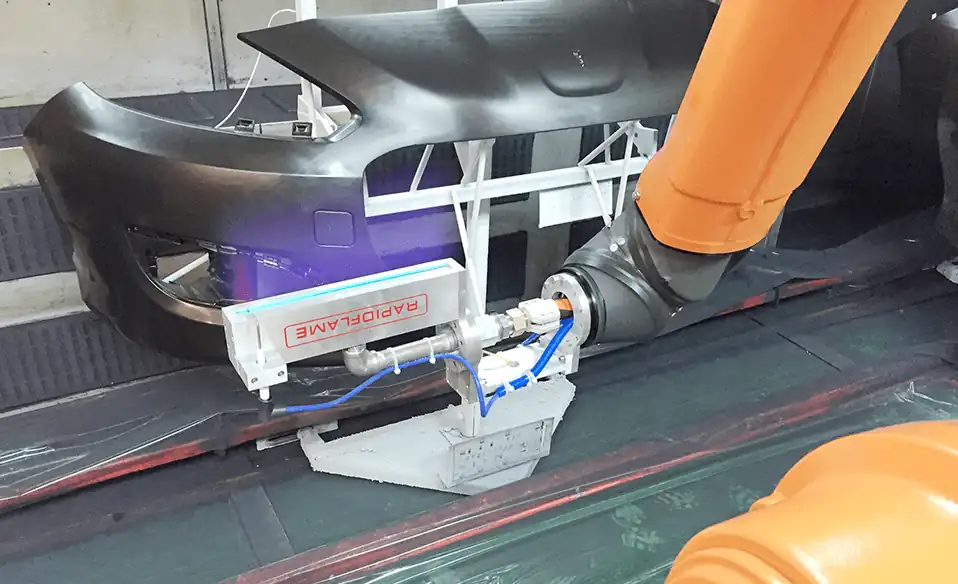
Flame treatment focuses on surface activation effect—flame oxidation intensity and uniformity determine treatment effectiveness.
If a manufacturer has long served the relevant industry, it is easier to understand the customer's real concerns and quickly provide mature solutions. The value of industry experience lies in knowing which designs have been validated in that industry, which solutions have had problems in the past and should be avoided, and which details customers pay most attention to during acceptance.
Compared with exploring the process from scratch, this industry experience can significantly shorten R&D and commissioning cycles. For OEM equipment manufacturers, choosing a burner manufacturer familiar with their own industry is equivalent to adding an experienced technical advisor to their product development.
Industrial combustion is first and foremost a safety engineering discipline. If a burner has low combustion efficiency, the company bears economic losses; but if the safety design has flaws, the company may face significant risks to personnel and equipment.
Therefore, when evaluating a burner manufacturer, special attention should be paid to its safety design capability.
A mature combustion system typically includes:
Furnace purging—forcibly removing residual combustible gases from the furnace before ignition.
Ignition sequence control—sequentially starting the fan, ignition transformer, and fuel valve according to a set sequence.
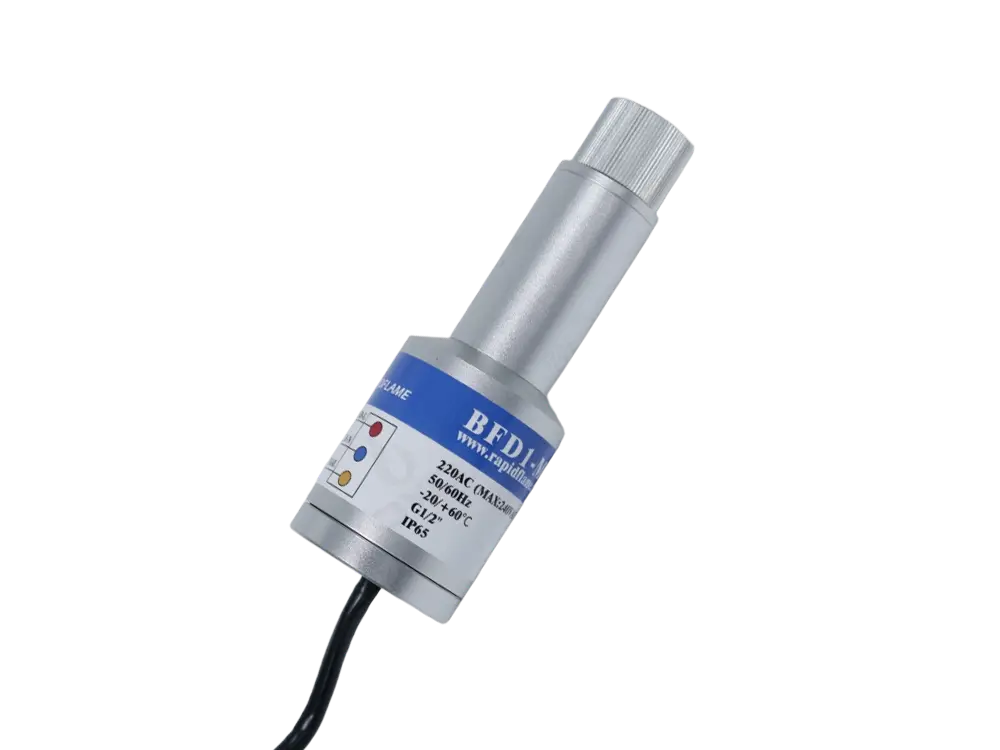
Flame detection—ionization or UV probes continuously monitoring flame presence.
Flame failure protection—rapidly cutting off fuel supply if the flame is unexpectedly extinguished.
Gas pressure detection—high and low pressure switches providing dual protection.
Air pressure detection—ensuring sufficient combustion air before ignition.
Dual shut-off valves—two independent valves in series for redundant design to reduce leakage risk.
Automatic venting—automatically discharging residual gas in the piping upon abnormal shutdown.
Interlock protection—automatic interlock shutdown when key parameters such as temperature, pressure, or flow exceed limits.
Fault alarm—real-time alerts for abnormal conditions, facilitating rapid fault location.
These functions may go unnoticed during normal operation, but under abnormal conditions, they are directly related to equipment and personnel safety. The safety value of a combustion system lies not in how many hours it operates normally, but in whether it acts reliably when abnormalities occur.
Excellent manufacturers incorporate safety design as an integral part of the system solution, rather than as an afterthought. Safety logic is embedded from the beginning of system architecture design, rather than adding safety accessories after equipment manufacturing is complete.
Many companies believe that energy saving means choosing a more efficient burner. In reality, the improvement potential of a single burner's efficiency is limited—most modern burners already operate at high combustion efficiency levels, and the room for further improvement is small.
The real energy-saving potential lies in the synergistic optimization of the entire combustion system, not the performance improvement of a single component.
Energy saving in industrial combustion systems involves multiple aspects, including:
Air-fuel ratio optimization—precisely controlling the fuel-air ratio across the full load range.
Flame matching—coordinating flame shape with furnace dimensions to reduce heat short-circuiting.
Furnace structure optimization—improving flue gas circulation paths to extend heat residence time.
Flue gas waste heat utilization—recovering sensible and latent heat from exhaust.
Automatic proportional modulation—supplying heat on demand, avoiding frequent start-stop and over-heating.
Combustion control optimization—real-time correction of air-fuel ratio based on exhaust oxygen content.
Process parameter optimization—working with customers to optimize heating curves and holding strategies.
Therefore, when selecting a burner manufacturer, focus on whether it has energy-saving analysis and system optimization capabilities. A manufacturer that can conduct full-system energy diagnostics and propose improvement plans for customers is far more capable of helping companies achieve long-term energy-saving goals than one that simply sells high-efficiency burners.
As industrial combustion technology continues to develop, more and more companies are paying attention to manufacturers' R&D capabilities. This is not an optional bonus, but a core indicator of whether a company can continue to provide value in long-term cooperation.
R&D capability can be assessed from the following dimensions:
Does it own independent intellectual property? — Number and scope of patents reflect technological originality.
Does it continuously develop new products? — Product iteration speed reflects technological vitality.
Does it have CFD thermal simulation capability? — Can combustion effects be verified at the design stage?
Has it established a digital design platform? — Whether product development is parameterized and modularized.
Is it conducting research on intelligent combustion control? — Whether it is positioning for future automated combustion technologies.
Can it support future multi-fuel applications? — Adaptability to new energy sources such as hydrogen and biomass fuels.
Continuous R&D not only means technological innovation, but also represents the company's ability to adapt to future industrial upgrading needs. A manufacturer that continuously invests in R&D is more likely to provide effective technical support when customers encounter new processes, new fuels, or new emission standards.
Taking DYDTEC as an example, public information shows that in recent years it has been continuously advancing technologies such as combustion digital twins, CFD thermal simulation, and thermal energy IoT, while maintaining a high proportion of independently developed products. This R&D investment enables the company to quickly launch targeted solutions for emerging application scenarios such as hydrogen combustion and oxy-fuel combustion.
After industrial combustion equipment is put into operation, site conditions may change, for example:
Fuel pressure fluctuations—changes in pipeline conditions affect combustion stability.
Product changes—different heating targets require readjustment of combustion parameters.
Process adjustments—changes in temperature curves or production rhythm require corresponding modifications to control logic.
Ambient temperature changes—seasonal changes affect combustion air density and combustion efficiency.
These factors can all affect combustion performance. A static burner product cannot cope with dynamic operating condition changes, so ongoing technical service becomes a necessary condition for ensuring long-term efficient equipment operation.
Therefore, an excellent burner manufacturer not only provides after-sales repair, but also offers:
Parameter optimization—recalibrating air-fuel ratio and control parameters according to changing conditions.
Process upgrade recommendations—proposing equipment improvement directions based on industry development trends.
Energy diagnostics—evaluating existing system energy performance and identifying saving opportunities.
Control program adjustments—modifying PLC logic to meet new process requirements.
System retrofits—performing partial upgrades to existing systems to improve performance or meet new standards.
Technical training—helping customer operators gain a deeper understanding of the combustion system and improve daily management.
This ongoing technical service helps customers continuously improve equipment operation. For OEM equipment manufacturers, the technical service capability of the burner manufacturer is actually part of the OEM's own after-sales service capability—the faster the burner manufacturer responds and the more accurate the diagnosis, the less pressure the OEM faces when dealing with end-user issues.
To more objectively evaluate a burner manufacturer, it is recommended to use the following assessment table. This evaluation system covers multiple dimensions from basic strength to technical depth, helping companies systematically compare the comprehensive capabilities of different manufacturers.
| Evaluation Item | Key Focus Areas |
|---|---|
| Company Strength | Establishment date, R&D team size, manufacturing and testing capabilities |
| Product Portfolio | Whether product types are complete and cover target process requirements |
| Industry Experience | Whether there are successful project cases in the same industry |
| System Capability | Whether the manufacturer can provide complete combustion system design, not just equipment |
| Custom R&D | Whether it supports process-based customization and has rapid response capability |
| Safety Capability | Whether it has comprehensive safety interlock design and safety certification systems |
| Energy-Saving Capability | Whether it can provide system-level energy-saving optimization solutions and energy diagnostics |
| Technical Service | Whether it provides on-site commissioning, technical training, and ongoing optimization support |
| R&D Investment | Whether it continuously invests in new technology development and simulation capabilities |
It is recommended not to use price as the sole decision-making criterion, but rather to evaluate the manufacturer's comprehensive capabilities based on project requirements. The operating and maintenance costs of a combustion system over the equipment's full lifecycle often far exceed the initial purchase price difference. From this perspective, choosing a manufacturer with stronger comprehensive capabilities is essentially an investment in long-term economy and reliability.
Industrial burner procurement may seem like choosing a product, but it is actually choosing a technical partner that can support long-term equipment operation and process upgrades.
For industrial enterprises, product performance is certainly important, but the manufacturer's R&D capability, system design capability, industry experience, and service capability are even more critical. For OEM equipment manufacturers, these capabilities are even more directly related to overall machine performance, delivery cycles, and market competitiveness.
Therefore, a burner manufacturer truly worthy of long-term cooperation should be able to extend from product supply to combustion system design, from equipment manufacturing to process optimization, from project delivery to ongoing technical service, creating long-term value for customers rather than just completing a single equipment sale. Evaluating whether a burner manufacturer is professional is not about how精美 its samples are or how fast it quotes, but about whether it truly understands the user's process requirements and can provide systematic solutions around those requirements.
In the industrial equipment manufacturing sector, the combustion system has evolved from a "supporting component" in the past to an important part affecting overall machine performance. For OEM equipment manufacturers of kilns, hot air furnaces, ovens, RTOs, HRSGs, glass equipment, aluminum processing equipment, lithium battery equipment, and others, the combustion system is not only about whether the equipment can operate normally, but also directly affects customer evaluation of the overall machine performance. Whether the equipment is gas-saving, stable, environmentally friendly, and easy to operate—these issues that end users care about most—largely depend on the design quality and matching of the combustion system.
Therefore, more and more OEM companies are rethinking a question: do we need a burner supplier, or a combustion technology partner that can jointly develop products? The answer to this question determines the OEM's decision-making logic when selecting a combustion system—whether to choose based on price or technical matching; whether to purchase after equipment design is finalized or to introduce combustion technology resources at the solution design stage.
Excellent OEM equipment manufacturers purchase not just burners, but combustion technology capability. A truly competitive burner manufacturer can participate from the equipment R&D stage, providing OEMs with combustion system design, process optimization, control integration, and ongoing technical support to jointly enhance overall machine competitiveness.
In the past, the industrial equipment market competed more on mechanical structure, machining precision, and manufacturing cost. Whether a furnace was good depended mainly on whether the steel was sufficient, whether the welders were skilled, and whether assembly precision was high—these are certainly important, but they are essentially competition at the manufacturing level and relatively easy to imitate and catch up with.
Today, as user demands for energy saving, safety, environmental protection, and intelligence continue to rise, more and more equipment is competing on overall performance. When purchasing equipment, end users are no longer satisfied with "usable," but require "good to use, economical to use, and durable." This demand upgrade has expanded the competitive dimensions of equipment from manufacturing capability to system integration capability and thermal engineering capability.
For example, for an industrial furnace, customers are no longer concerned only with whether it can reach the set temperature, but:
Whether heating speed is faster—affects production efficiency and capacity
Whether temperature is more uniform—directly affects product yield and consistency
Whether natural gas consumption is lower—relates to long-term operating costs
Whether NOx emissions meet local environmental requirements—determines whether the equipment can pass EIA acceptance
Whether the control system is intelligent—affects operational convenience and management efficiency
Whether maintenance is convenient—relates to the equipment's full-lifecycle availability
These indicators are all closely related to the combustion system. A furnace with excellent mechanical design but improper combustion system matching may perform far worse than a furnace with ordinary structure but a finely optimized combustion system.
Therefore, for OEM equipment manufacturers, the combustion system has become an important component of overall machine competitiveness, not a standard configuration purchased later. In today's increasingly competitive equipment market, the technical level of the combustion system is becoming a key lever for OEMs to achieve differentiated competition.
In many traditional projects, after the equipment structure design is completed, the OEM starts to select the burner. This process may have been feasible in times of low technical complexity, but in today's market competition, this approach is exposing more and more drawbacks.
This approach tends to create several problems:
Furnace space is already fixed, restricting burner installation position—burner dimensions and access space may become constrained because they were not considered during design.
Flame length does not match furnace dimensions—furnace design did not account for the flame characteristics of a specific burner, leading to the discovery that no suitable flame shape is available.
Combustion air distribution is unreasonable—duct routing, fan position, and air pressure design were not planned synchronously with burner requirements.
Furnace temperature uniformity is difficult to achieve—burner quantity, spacing, and arrangement were not optimized during furnace design.
Commissioning cycle is long, affecting delivery—mismatch between furnace and burner requires extensive remedial adjustment on site.
In contrast, more and more OEM companies are inviting burner manufacturers to participate in solution design at the early stage of equipment R&D. The benefits of this practice have been repeatedly validated in engineering practice.
Combustion engineers can perform synchronous design of the combustion system based on equipment purpose, heat load, furnace structure, and process requirements, reducing later adjustments and rework from the source. Finding and solving problems at the drawing stage is the lowest cost and highest efficiency; discovering problems after equipment manufacturing is complete means any modification costs time and money.
This collaborative R&D model has become a development trend in the high-end equipment manufacturing sector. Especially in sub-sectors with high combustion performance requirements, such as aluminum processing, heat treatment, lithium battery materials, and environmental protection equipment, more and more OEM companies are advancing the involvement of combustion system partners to the project initiation stage.
Many end users believe that equipment performance is determined by mechanical design. This perception is basically correct for non-thermal equipment, but for thermal equipment such as industrial kilns, ovens, and hot air furnaces, the combustion system often determines the equipment's core indicators. The mechanical structure determines the equipment's "skeleton," while the combustion system determines the equipment's "cardiopulmonary function"—the latter has a more direct impact on operational performance.
Specifically:
Heating efficiency
Flame shape, combustion speed, and heat exchange method all affect heat utilization. A well-optimized combustion system can maximize the transfer of heat released from fuel to the heated object, rather than losing it through the chimney and furnace walls.
Temperature uniformity
Burner arrangement, flame coverage range, and flue gas circulation inside the furnace all affect furnace temperature distribution. For processes requiring high temperature uniformity (such as heat treatment and precision drying), the refinement of combustion system design directly determines product yield.
Energy consumption
Air-fuel ratio control, proportional regulation precision, and control algorithm response speed all affect unit product energy consumption. An equipment with crude combustion control may consume significantly more fuel over time without the user being aware.
Product quality
Stable combustion improves process consistency and reduces product defects caused by temperature fluctuations. On continuous production lines, the stability of the combustion system directly determines product consistency.
Safety
A comprehensive combustion safety control system reduces the risk of abnormal shutdowns and safety accidents. For OEM equipment manufacturers, the safety and reliability of the combustion system are related not only to the equipment itself, but also to the OEM's brand reputation and legal liability.
Therefore, for OEM equipment manufacturers, the combustion system has become an important technical module determining overall equipment quality. The final performance of a piece of equipment at the customer site largely depends on whether the combustion system design is refined, whether matching is reasonable, and whether control is precise.
Standard burners can meet some application requirements, but as industries continue to segment, more and more equipment is adopting custom designs. Behind this trend is the end user's increasing demand for process customization—standardized "universal solutions" are increasingly unable to meet the precise requirements of differentiated processes.
For example:
Even for industrial drying equipment, different industries have completely different requirements for hot air. The food industry focuses on clean hot air, requiring complete isolation of hot air from flue gas to avoid any cross-contamination. Lithium battery materials focus on temperature consistency, requiring uniform heating throughout the drying process with minimal temperature differences. Electronic materials focus on low-contamination combustion, with strict limits on impurities in combustion products. Automotive painting focuses on hot air uniformity, requiring highly consistent hot air temperature and velocity at every point in the drying tunnel.
Even for aluminum processing equipment, different companies have significant differences in furnace dimensions, capacity, fuel conditions, and process flows. Even for the same type of melting furnace, due to different production rhythms, charging methods, and operating habits, the combustion system requirements can vary greatly.
Therefore, OEMs increasingly want combustion systems to be customized according to their equipment characteristics, rather than simply using standard products. The value of custom combustion systems lies in not making the equipment adapt to the burner, but making the burner serve the equipment, so that the entire system achieves optimal matching.
This also requires burner manufacturers to have strong custom R&D and system design capabilities. Only when the burner manufacturer's design team can deeply understand the OEM's process requirements and translate them into targeted combustion system solutions can "customization on demand" be truly achieved.
For many equipment manufacturers, an excellent burner manufacturer should be able to participate in whole-machine R&D, rather than providing products only after the drawings are completed. This is a reflection of the depth of the cooperation relationship—upgrading from a "buyer-seller" relationship to a "co-creation" relationship.
During the project development process, both parties typically need to jointly complete:
Thermal calculations—determining the total thermal power required by the equipment and power distribution across zones.
Burner selection—selecting the most suitable burner type and specification from the product matrix for the process.
Heat load calculation—accurately calculating maximum, normal, and minimum heat loads to provide the basis for turndown ratio.
Furnace matching—confirming coordination between flame characteristics and furnace geometry.
CFD thermal analysis (if required by the project)—validating temperature and flow field distribution in the furnace through simulation.
Control logic design—determining temperature control strategy, load regulation method, and human-machine interaction scheme.
Safety interlock design—establishing a full-cycle safety system covering ignition, operation, and abnormal shutdown.
On-site commissioning plan—planning commissioning steps, verification criteria, and acceptance procedures.
This cooperation model effectively shortens the R&D cycle and improves the first-time commissioning success rate. Many problems that would otherwise be discovered during on-site commissioning are identified and resolved during the joint design phase, significantly reducing commissioning time.
For OEM companies, this technical collaboration is often more valuable than the product itself. What the burner manufacturer brings is not just hardware, but long-accumulated combustion technology knowledge and industry application experience—resources that OEMs cannot easily build on their own in a short time.
With the development of Industry 4.0, more and more equipment is being upgraded toward digitalization and intelligence. This trend places new demands on combustion systems and also creates new value growth points for OEM equipment.
For combustion systems, this means not only achieving stable combustion, but also having data acquisition, operational monitoring, remote diagnostics, and continuous optimization capabilities. End users increasingly want to see furnace temperature, gas flow, and operating trends on their phones, and want to receive early equipment anomaly alerts rather than waiting for a fault to occur before calling for repair.
In recent years, some burner manufacturers have begun to introduce:
CFD thermal simulation—validating combustion solution effectiveness at the design stage.
Digital twins—real-time mapping of the physical equipment's operational state in virtual space.
Industrial IoT (IIoT)—remote acquisition and centralized management of operational data.
Intelligent control algorithms—automatically optimizing combustion parameters based on changing conditions.
Energy consumption analysis platforms—helping users identify energy-saving potential and quantify optimization results.
These technologies help OEMs verify solutions during R&D and continuously optimize combustion performance during equipment operation. For OEMs, combustion systems with digital capabilities not only increase the equipment's technological content but also provide customers with differentiated value—extending from selling a piece of equipment to offering data-driven operational optimization services.
Taking DYDTEC as an example, public information shows that in recent years the company has been continuously building a combustion digital twin simulation platform, CFD thermal simulation capability, and a thermal energy IoT platform, providing more scientific design and optimization support for complex projects. This digital capability is becoming an increasingly important factor for OEMs when choosing a combustion partner.
OEMs choose combustion partners not just to complete one project, but to establish a long-term cooperative relationship. The value of this relationship needs to be measured from multiple dimensions, not just the delivery quality of a single project.
A mature burner manufacturer should be able to continuously create the following value:
Enhance equipment performance
Continuously optimize combustion solutions based on customer feedback to improve overall machine competitiveness. As process requirements and market conditions evolve, combustion solutions also need to iterate and upgrade synchronously.
Shorten R&D cycles
Rely on mature experience to reduce trial-and-error costs and accelerate new product development. An experienced combustion partner can avoid common matching issues at the design stage, preventing "detours."
Reduce after-sales risk
Improve equipment operational stability through reasonable design and thorough commissioning. When equipment runs stably at the customer site, the OEM's after-sales service burden is reduced, and brand reputation is enhanced.
Support product upgrades
Continuously provide technical upgrade solutions as environmental policies, energy structures, and customer requirements change. When emission standards tighten or fuel types change, the combustion partner should be able to provide compatible upgrade solutions.
Support international markets
Provide technical support for export equipment, familiar with safety, emission, and control requirements of different markets. Different countries and regions have different certification standards, voltage levels, and control specifications; a combustion partner with international experience can help OEMs reduce export technical barriers.
Long-term cooperation not only helps OEMs build a stable supply chain, but also allows both parties to jointly accumulate industry experience and application cases. As cooperation time extends, the tacit understanding between the two teams continues to grow, and communication costs and project risks continue to decline.
DYDTEC's development positioning is not just to supply industrial burner products, but to provide complete combustion system solutions covering R&D, design, manufacturing, commissioning, and optimization based on the actual needs of OEM equipment manufacturers.
Leveraging independent R&D capabilities and continuous technical investment, DYDTEC has formed a product portfolio covering industrial burners, industrial hot air furnaces, flame treatment equipment, and combustion system integration, serving multiple industrial application scenarios and supporting custom design according to project requirements. This product breadth allows, when facing OEM customers in different industries, the most suitable matching starting point to be found within the mature product system, with customization then developed on that basis.
The company continues to invest in CFD thermal simulation, digital twins, and thermal energy IoT technologies, providing OEM equipment manufacturers with full-process technical support from early solution validation to post-operation optimization. During the project design phase, DYDTEC engineers can assist OEMs with thermal calculations and furnace matching; during equipment manufacturing and installation, they provide on-site technical guidance and commissioning support; after equipment commissioning, they continuously monitor operational data through the IoT platform and provide remote diagnostics and optimization recommendations.
For OEM companies, this means cooperation is not limited to equipment procurement, but establishes technical collaboration covering the entire product lifecycle. The core value of this cooperation model is that OEMs do not need to become combustion technology experts themselves; instead, by choosing a combustion partner with comprehensive technical capabilities, they gain ongoing combustion technology support.
As industrial equipment moves toward high performance, low energy consumption, and intelligence, the combustion system has become an important factor affecting overall machine competitiveness. The heating efficiency, temperature uniformity, energy consumption level, and environmental performance of equipment in actual operation increasingly depend on the combustion system's design quality and matching precision.
For OEM equipment manufacturers, burner manufacturers are no longer just component suppliers, but important participants in product R&D. The earlier they become involved in the project, the more they can leverage the combustion system's value in thermal efficiency, temperature uniformity, safety control, and energy-saving optimization. Bringing combustion system planning forward to the equipment solution design stage is essentially replacing "remedial modifications" with "preventive design"—an effective strategy for reducing project risk, shortening delivery cycles, and improving final product quality.
Therefore, establishing a long-term, stable, technically collaborative relationship is becoming the choice of more and more OEM companies. When selecting a combustion partner, in addition to evaluating product performance and price, OEMs should also focus on the manufacturer's R&D capability, system design experience, custom design capability, and ongoing technical service capability—these are the core elements that determine whether the partnership can create long-term value.
There is no "universal solution" in industrial combustion. Even for a natural gas burner, the design philosophy for an aluminum melting furnace, a glass melting furnace, a heat treatment furnace, an RTO, or a hot air furnace can be completely different. Aluminum melting requires a high-temperature concentrated flame to quickly penetrate metal charge piles; glass melting requires a broadly spreading flame to cover the batch surface; heat treatment requires precise, controllable temperature profiles to ensure metallurgical structures; RTO requires extremely reliable flame stability to serve as a safety torch. These differences mean that the combustion system design logic must vary by industry.
Therefore, when choosing a burner manufacturer, one should not simply compare brands or product models, but should focus on whether the manufacturer truly understands the industry process and can provide combustion system solutions that match the process. A manufacturer with rich experience in a specific industry often has a far better understanding of process pain points and more mature solutions than a larger manufacturer that lacks deep engagement in that industry.
This chapter, combined with typical industries, analyzes the technical requirements of different application scenarios for combustion systems and the core capabilities companies should focus on when choosing a burner manufacturer.
There is no best burner, only the combustion system best suited to the process. A truly excellent burner manufacturer should be able to deeply understand industry processes and design different combustion solutions for different production flows, rather than using one product to meet all industry needs.
Aluminum processing is one of the important application areas for industrial burners, including:
Aluminum melting furnaces
Holding furnaces
Soaking furnaces
Aging furnaces
Heating furnaces
Aluminum billet heating furnaces
For the aluminum industry, customers are usually not concerned about the burner itself, but about the following metrics:
Is melting speed faster? — directly affects shift output and production cycle.
Is natural gas consumption per ton of aluminum lower? — relates to production cost and energy utilization.
Is the aluminum melt loss rate reduced? — metal oxidation loss directly determines yield and profit margin.
Is furnace temperature uniform? — affects aluminum melt quality and bath stability.
Is local overheating likely? — may accelerate furnace lining damage and increase hydrogen absorption risk.
Therefore, combustion system design needs to comprehensively consider:
Flame length—determines the longitudinal distribution of heat in the furnace.
Flame rigidity—affects penetration and stirring effect of high-temperature flue gas on the melt pool.
Furnace flue gas circulation—determines heat diffusion range and temperature field uniformity.
Burner arrangement—single-side, double-side, or roof-mounted directly affects temperature distribution pattern.
Air-fuel ratio control—relates to combustion efficiency and aluminum surface oxidation.
Proportional modulation strategy—affects heat supply matching at different melting stages.
If the combustion system is improperly designed, even with good burner performance, melting efficiency may decline, energy consumption may increase, or aluminum oxidation loss may rise. Especially for secondary aluminum melting, each percentage point increase in melt loss can represent significant annual profit loss—and this indicator largely depends on the combustion system's design and commissioning quality.
Selection suggestion:
Prioritize manufacturers with experience in aluminum processing projects and the ability to provide overall combustion system design and energy-saving optimization. Experience in the aluminum industry is not only reflected in burner selection, but also in a deep understanding of melting processes, furnace atmosphere control, and aluminum temperature management.
Glass production has very high requirements for flame characteristics. Glass melting is a high-temperature, continuous, large-scale thermal process; the shape and distribution of the flame directly determine the melting rate of the batch and the quality of the glass melt.
Different processes, such as:
Glass melting furnaces
Tempering furnaces
Fire polishing
Fiberglass
Electronic glass
have different requirements for flame length, combustion speed, flame direction, and temperature field distribution. Cross-fired furnaces require uniform flame spread across the furnace width, while oxy-fuel furnaces require precise coordination of high-temperature concentrated flames and radiation heat transfer.
If flame organization is unreasonable, it may lead to:
Reduced melting efficiency—batch cannot be fully melted, limiting glass melt output.
Uneven temperature distribution—excessive temperature differences in the furnace, affecting glass melt homogenization.
Product quality fluctuations—increased defects such as bubbles, streaks, and stones.
Increased energy consumption—heat not effectively transferred to the batch, with large amounts of heat lost with flue gas.
Therefore, the glass industry pays more attention to whether the burner manufacturer has furnace thermal analysis capability, not just burner manufacturing capability. Comprehensive optimization of flame coverage area, radiation heat transfer efficiency between flame and batch, and furnace pressure control is the core issue in combustion system design for glass furnaces.
Heat treatment equipment includes:
Quenching furnaces
Tempering furnaces
Annealing furnaces
Normalizing furnaces
Carburizing furnaces
Such equipment typically requires:
Small temperature fluctuations—temperature deviations directly affect metallographic structure and mechanical properties.
Stable heating curves—process curves need to be highly repeatable across batches.
Furnace temperature uniformity—temperature differences across different zones of the furnace should be within allowable limits.
Long continuous operation—heat treatment cycles often last hours or even tens of hours.
For the combustion system, the importance of the control system is even higher than the burner itself. No matter how stable the burner is, if the control system's regulation precision is insufficient or its response is lagging, the strict temperature curve requirements of heat treatment processes cannot be met.
Therefore, when choosing a burner manufacturer, companies should focus on:
Temperature control algorithms—PID tuning, feedforward control capability.
Proportional regulation precision—actuator resolution and response speed.
Multi-zone combustion control capability—independent adjustment and coordination of multiple burners in large furnaces.
Automatic control system stability—ability to maintain control precision over long-term operation.
Industrial drying equipment is widely used in:
Paint curing
Ovens
Drying tunnels
Printing
Packaging
Wood drying
Food processing
Many companies believe that as long as the hot air temperature meets the requirement, it's sufficient. In fact, drying processes require much more from hot air than just "reaching temperature."
More important are:
Whether hot air distribution is uniform—whether duct design and outlet arrangement are reasonable.
Whether air volume is appropriate—comprehensive matching of air velocity and temperature.
Whether local overheating exists—may cause product surface charring or uneven internal moisture.
Whether it can quickly respond to temperature changes—dynamic temperature control capability during drying.
Therefore, the burner, fan, heat exchanger, ducting, and control system need to be designed as an integrated system. The hot air system is a multi-variable coupled system; hot air temperature, air volume, air pressure, and material residence time have complex interactions and need to be optimized at the system level.
For such projects, burner manufacturers with industrial hot air system experience typically have advantages. They better understand the effect of duct resistance on burner back pressure, are more familiar with the matching between heat exchanger selection and burner power, and have more experience handling dynamic temperature control issues in hot air systems.
RTO (Regenerative Thermal Oxidizer) and TO (Thermal Oxidizer) are mainly used for exhaust gas treatment. The core task of these equipment is to ensure that VOCs are fully oxidized and decomposed at sufficiently high temperatures. The burner plays a dual role as a "safety torch" and a "heat supplement."
The biggest characteristic of such equipment is not continuous heating, but the need for long-term, safe, and stable operation. RTOs and TOs typically run 24/7; the burner, as a critical safety device, means any abnormal shutdown can result in untreated exhaust gas being directly emitted, posing environmental compliance risks.
Therefore, the combustion system needs to focus on:
Automatic ignition—fully automated, no manual intervention required.
Flame detection—reliable detection of flame presence and extinction.
Gas safety interlocks—multiple protections, redundant design.
Temperature protection—preventing combustion chamber overtemperature.
Flame failure protection—rapid cut-off and alarm upon abnormal flameout.
Fault alarm—real-time notification of abnormal conditions.
Interlock shutdown—automatic entry into safe state upon fault.
Since equipment typically operates around the clock, high reliability of the control system is required. Burner selection and design for RTOs must prioritize safety and reliability above all else, followed by combustion efficiency.
Therefore, companies should focus on the manufacturer's application experience in the environmental industry and its safety control capability. Problems with combustion systems in environmental equipment often involve not only equipment failure but also potential administrative penalties for environmental violations.
Industrial hot air furnaces are widely used in:
Building materials
Chemicals
Grain
Feed
New materials
Textiles
Compared with direct combustion equipment, hot air furnaces pay more attention to:
Stable outlet air temperature—hot air temperature fluctuations directly affect material drying quality.
Thermal efficiency—fuel consumption accounts for a prominent share of operating costs.
Hot air cleanliness—critical for some industries (e.g., food, electronics).
Long-term operational reliability—hot air furnaces are often the core continuous heat supply for production lines.
Therefore, the combustion system must be co-designed with the heat exchanger, ducting, and control system, rather than simply configuring a burner. Heat exchanger selection (tube or plate type, material, heat exchange area) directly affects hot air temperature and thermal efficiency; duct routing and cross-section design determine the temperature and velocity distribution of hot air when it reaches the point of use.
The new energy industry has developed rapidly in recent years, placing new demands on combustion systems.
For example:
Lithium battery cathode and anode materials—high-temperature calcination processes have extremely strict temperature curve requirements.
Separators—temperature uniformity during heat setting determines separator performance consistency.
Photovoltaic materials—processes such as diffusion and coating have high requirements for hot air cleanliness.
Electronic materials—trace impurities can affect product electrical performance.
These industries typically require:
More precise temperature control—deviations beyond allowable ranges can produce rejects.
Clean hot air—trace components in flue gas may contaminate materials.
High product consistency—batch-to-batch quality variation must be controlled within a very narrow range.
High automation—reducing human intervention to ensure repeatability.
Therefore, manufacturers need not only to provide combustion equipment, but also to have strong automatic control and system integration capabilities. Sintering processes for lithium battery materials often involve precise multi-zone, multi-atmosphere control; the combustion system must be able to interface with the entire production line's MES system to achieve full-process automated management.
For processes such as optical fiber drawing and electronic glass fabric production, the combustion system directly affects product quality. These products are high-value and have stringent performance requirements; any minor flame abnormality can cause significant quality losses.
For example:
Flame stability—temperature fluctuations during drawing affect optical fiber performance.
Temperature fluctuations—temperature deviations during electronic glass fabric heat treatment affect fabric flatness.
Flame purity—impurities in combustion products may contaminate high-purity materials.
Response speed—rapidity of temperature adjustment during process switching.
Any minor fluctuation can affect product performance. The flame stability requirement for optical fiber drawing is extremely high; even small temperature drifts can cause fiber attenuation indicators to exceed specifications.
Therefore, such industries require long-term deep engagement from burner manufacturers in solution design, rather than simply purchasing standard equipment. Combustion system selection and commissioning in high-end manufacturing often require deep collaboration between the burner manufacturer's senior engineers and the user's process engineers to jointly determine the optimal flame parameters and control strategy.
When evaluating manufacturers, companies can focus on the following aspects:
Does it have project cases in the same industry?
Cases not only represent experience, but also indicate that the manufacturer understands the industry process. The more cases in the same industry, the deeper the manufacturer's understanding of common problems, acceptance criteria, and pain points in that industry.
Does it understand industry pain points?
Excellent manufacturers can typically proactively discuss issues such as energy consumption, product quality, temperature uniformity, and safety control, rather than just introducing product parameters. Manufacturers that can engage in deep discussions on these issues with users generally have more solid industry accumulation.
Can it provide process recommendations?
Manufacturers with true technical capability can often propose optimization suggestions based on the process, rather than just supplying according to drawings. They will actively point out potential design risks and improvement opportunities during solution discussions.
Can it perform custom design?
For most industrial projects, standard products are only the foundation; what truly demonstrates capability is custom design based on process requirements. Manufacturers with custom capability can provide targeted solutions for special furnace types, special processes, or special emission requirements.
After years of technical accumulation, DYDTEC has built combustion application experience covering multiple industrial fields, with products widely used in aluminum processing, iron and steel metallurgy, glass, ceramics, industrial drying, environmental treatment, automotive manufacturing, food processing, chemicals, new materials, and new energy.
For different process requirements, DYDTEC can provide industrial burners, industrial hot air furnaces, flame treatment equipment, and combustion system integration, combined with thermal calculations, control system design, custom R&D, and on-site commissioning, to deliver combustion solutions better suited to actual operating conditions. Its product series covers technical routes from conventional natural gas combustion to oxy-fuel combustion, hydrogen combustion, and low-calorific-value fuel utilization, flexibly matching the energy conditions and environmental requirements of different industries.
This technology accumulation based on industry applications means combustion system design goes beyond the equipment level and deeply integrates with customer production processes to achieve comprehensive optimization of efficiency, energy consumption, and product quality. For each industry's specific processes, DYDTEC's engineering team performs targeted system design based on furnace structure, heating target, and operation mode, rather than directly applying a generic solution.
Different industries have vastly different requirements for combustion systems; no single burner can fit all operating conditions. Aluminum processing values melting speed and metal loss, glass values flame coverage and radiation heat transfer, heat treatment values temperature control accuracy and field consistency, environmental equipment values safety and reliability, and high-end manufacturing values flame quality—these differences determine that combustion systems must vary by industry and by process.
When choosing a burner manufacturer, companies should focus on whether it has relevant industry experience, understands the production process, and possesses combustion system overall design and custom R&D capabilities, rather than just product models or prices. Industry experience requires time and accumulation through numerous project practices; this is an important basis for distinguishing whether a burner manufacturer is a "general supplier" or an "industry expert."
For OEM equipment manufacturers, choosing a combustion technology partner familiar with industry applications not only shortens R&D cycles but also helps improve overall machine performance and market competitiveness. A combustion partner with deep understanding of the target industry's processes can provide valuable process recommendations during equipment design, helping OEMs reduce design risks and accelerate product time-to-market.
In the industrial combustion field, the success of a project often comes not from choosing the "most expensive" or "most well-known" burner, but from choosing a combustion system that truly suits the process requirements. The price of a burner is obvious at the time of purchase, but its impact on long-term equipment performance gradually reveals itself over years or even decades of use.
Based on extensive industrial project experience, many problems such as high energy consumption, uneven temperature, frequent faults, and prolonged commissioning that appear later in projects are often not due to poor burner quality, but to decision-making deviations at the procurement stage. These problems are often seeded before the equipment even starts production—every "good enough" decision at the procurement stage translates into a "not nearly good enough" actual loss at the operation stage. Some deviations are not apparent at product delivery and only emerge after months of operation, at which point the cost of correction far exceeds the amount saved in procurement.
This chapter summarizes the ten most common pitfalls in burner procurement, hoping to help industrial enterprises and OEM equipment manufacturers establish more scientific procurement thinking. These pitfalls appear not only in companies new to combustion technology, but even experienced users sometimes repeat them—because industrial combustion technology itself is continuously evolving, and past experience may no longer apply under new environmental requirements, fuel conditions, and automation levels.
The value of an industrial combustion system is not determined by the price of a single burner, but by whether it truly fits the process requirements. A wrong decision at the procurement stage is often amplified throughout the equipment's entire lifecycle, ultimately resulting in operating costs that are several times or even tens of times higher than the purchase price difference.
This is the most common and costliest mistake.
Many companies, when purchasing, first ask suppliers for quotes and then directly compare prices. This procurement logic works for standard components or general consumables—for the same bolts and bearings, a lower price means lower cost. But the situation for burners is completely different, because burners with the same nominal parameters can have vastly different actual operating energy consumption, service life, and maintenance requirements.
But industrial burners are a one-time purchase, while the equipment may run for 10 or even 20 years. The purchase price is a sunk cost, while energy consumption and maintenance costs are ongoing operating expenses, and the latter typically accounts for a much larger share of the equipment's total lifecycle cost.
What really needs attention is:
What is the natural gas consumption? — Unit product energy consumption directly determines operating costs.
Are maintenance costs high? — Replacement frequency and cost of wear parts.
How long is the life of wearing parts? — e.g., ignition electrodes, flame detectors, valve train seals.
Is the commissioning time too long? — Gas consumption and labor costs during commissioning.
Does it shut down frequently? — Production losses from unplanned downtime may far exceed the equipment's value.
Is it easy to upgrade later? — Does the system have room for retrofitting when future emission standards tighten or fuel changes?
A simple example: if a combustion system is 50,000 yuan cheaper in purchase price but consumes 5% more natural gas each year, the increased fuel cost over several years may far exceed the savings at procurement. For a medium-sized equipment with annual gas costs in the hundreds of thousands of yuan, 5% extra consumption means tens of thousands of yuan in hidden costs each year—exceeding the purchase price difference in just two or three years, with every subsequent year being a net loss.
Procurement advice:
Incorporate purchase cost, energy cost, maintenance cost, downtime loss, and equipment life into a comprehensive evaluation, rather than just comparing quotes. Ask suppliers to provide a lifecycle cost analysis, including estimated annual gas consumption, key component replacement cycles and costs, and typical maintenance frequency data.
Some companies, concerned about future capacity expansion, choose larger power burners. This "leaving margin" thinking may work in mechanical design—structural components can have appropriate safety factors—but burner selection logic is completely different.
In fact, a larger burner is not always better.
Oversizing can lead to:
Increased low-fire operation — burner operates at low load for extended periods, reducing regulation accuracy.
Insufficient turndown range — minimum stable output may exceed actual minimum heat demand, causing frequent start-stops.
Reduced combustion efficiency — air-fuel ratio control and flame stability are both affected at low loads.
Lower temperature control precision — the minimum heat output of an oversized burner may already exceed the process's allowable fluctuation range.
Energy waste — purge heat losses and repeated ignition consumption from frequent start-stops.
The correct approach is to calculate based on equipment heat load, production rhythm, and future planning, then determine a reasonable power range. It is generally recommended to leave a moderate margin above the maximum process heat load; excessive oversizing only brings dual problems of insufficient turndown and reduced low-load efficiency.
Procurement advice:
Do not estimate power by experience; request the manufacturer to perform heat load calculations and selection analysis. A complete thermal calculation report should include key data such as furnace volume heat intensity, heat consumption per unit product, and estimates of various heat losses—this is the basis for scientific selection.
Standard products and custom projects are two completely different domains. Standard products have undergone long-term market testing and iterative optimization, fully validated for general conditions, and their reliability and consistency can be assured through mass production. Custom projects are completely different—they face a specific combination of furnace, process, and operating conditions, with no ready-made template to apply.
Standard burners are suitable for mature conditions, with their design boundaries and performance parameters fixed at the factory. Actual industrial projects often have:
Special furnaces—non-standard dimensions, irregular shapes, or special materials.
Special fuels—low-calorific-value gas, gas with impurities, or new fuels such as hydrogen.
Special installation spaces—compact layouts or non-standard interfaces in confined spaces.
Special flame requirements—specific length, specific angle, or specific shape of flame.
Special heating curves—rapid heating, staged heating, or extremely slow heating.
If the manufacturer lacks R&D capability and can only勉强 adapt standard products, it is often difficult to achieve ideal results. This "forcing a square peg into a round hole" approach may勉強 cope in the early stages of operation, but in the long run it is often accompanied by unstable combustion, insufficient turndown, or excessive emissions.
Procurement advice:
Focus on whether the manufacturer has its own R&D team, custom design experience, and similar project cases. Ask the manufacturer to provide design drawings, test reports, and user feedback from custom projects to assess the maturity of its custom design capability.
Many procurement personnel believe: the burner is the combustion system. This understanding may have been勉強 acceptable for simple heating equipment twenty or thirty years ago—at that time, a burner connected to gas and power could work, and system complexity was indeed low. But today's industrial combustion technology is far beyond that.
In fact, the two are completely different.
The burner is only the core component that performs combustion—it is responsible for mixing fuel and air in proportion and burning stably; it is the system's "execution terminal." But to make this terminal perform properly in a specific furnace, a complete supporting system is needed.
A combustion system also includes:
Gas valve train—responsible for shut-off, pressure regulation, filtration, and flow control of gas.
Combustion air system—provides stable, adequate, and properly pressured combustion air.
Automatic control—closed-loop regulation of temperature acquisition, load calculation, and actuator drive.
Flame detection—real-time confirmation of flame presence, ensuring rapid fuel cut-off after flameout.
Safety interlocks—coordination and redundant design of multiple protection logic.
Temperature control—PID regulation, feedforward control, and independent multi-zone regulation.
Piping design—gas piping and duct routing, diameter, and supports.
Thermal matching—coordination between flame characteristics and furnace dimensions.
In many projects, poor combustion results are not due to the burner, but to unreasonable system design. The burner is like the engine, and the system is like the whole vehicle—an excellent engine installed in an ill-fitting chassis cannot perform.
Procurement advice:
Prioritize manufacturers that can provide overall combustion system design capability. When evaluating, do not just look at the burner sample provided by the manufacturer, but also understand whether it can produce a complete system design document, including piping layout, control logic diagrams, and safety interlock plans.
The same burner installed in different furnaces can produce completely different results. Burners are typically performance-validated in standard test furnaces before delivery, with standardized dimensions, refractory materials, and heat exchange conditions. But actual user furnaces vary widely; excellent performance in a test furnace does not guarantee equally excellent performance in an actual furnace.
For example:
Furnace dimensions—affect flame development space and heat distribution range.
Furnace door position—may cause cold air ingress or hot gas short-circuiting.
Exhaust position—determines flue gas residence time and flow path in the furnace.
Insulation structure—affects actual furnace temperature and heat loss.
Workpiece arrangement—changes heat absorption location and path.
all affect flame development, flue gas circulation, temperature uniformity, and thermal efficiency. A combustion system well-matched to the furnace structure allows the burner to fully perform; conversely, even with excellent burner performance, improper installation position or mismatched flame shape may result in mediocre performance.
Procurement advice:
Invite combustion engineers to participate at the equipment design stage, rather than waiting until after equipment manufacturing is complete to determine the combustion solution. Having combustion engineers involved during the furnace drawing stage allows optimal solutions for opening positions, flame direction, and burner spacing to be reached in advance.
Imported brands typically have mature product systems and long-term technical accumulation, giving advantages in many standardized projects. European and Japanese combustion technologies developed earlier and indeed have long-term accumulation in product consistency, certification systems, and application databases, which is a clear advantage for mass-produced standardized equipment.
But for the large number of custom equipment in China, what truly determines project outcomes is often not the brand, but whether the manufacturer understands the process requirements. Domestic industrial furnace types are diverse, fuel conditions are complex, emission standards vary widely, and standardization is far lower than in European and American markets, meaning "generic solutions" often cannot meet the unique requirements of specific processes.
For example:
Does it support special installation methods? — imported standard products typically only offer a few fixed installation configurations.
Can it modify designs quickly? — domestic project delivery cycles are often much shorter than foreign manufacturers' standard lead times.
Can it perform on-site commissioning? — imported product commissioning services often require appointments and scheduling, with limited response speed.
Can it respond quickly to after-sales needs? — imported spare parts procurement and shipping may take weeks.
Therefore, brand recognition cannot replace project matching. A domestic brand with rich experience in a specific industry may be better able to meet the complex needs of a particular project than a general-purpose international brand.
Procurement advice:
Make a comprehensive evaluation based on industry experience, technical capability, service response, and project requirements, rather than simply choosing by brand. For projects with tight delivery schedules, high customization, and frequent technical communication, localized technical support and rapid response capability may be more important than brand.
In recent years, low-NOx combustion has become an industry hot topic. Against the backdrop of continuously tightening environmental policies, the application scope of low-NOx burners continues to expand, and many companies are proactively requesting low-NOx solutions.
Many companies believe: low-NOx = energy saving. This is a common cognitive bias, perhaps equating "technologically advanced" with "efficient."
In fact, these are two different concepts. The main goal of low-NOx combustion is to reduce NOx emissions. To achieve lower emissions, some conditions may require:
Increased flue gas recirculation—introducing low-temperature flue gas lowers NOx but also reduces flame temperature.
Adjusted flame structure—dispersing the combustion zone may affect heat transfer concentration.
Changed air-fuel ratio—some low-NOx solutions require increased excess air to reduce peak temperature.
These measures, while reducing NOx, may have some impact on thermal efficiency. Therefore, whether it is energy-saving needs to be analyzed comprehensively in the context of the specific process. A low-NOx burner may have excellent NOx indicators, but if combustion efficiency is sacrificed for NOx reduction, the company will pay a higher energy bill.
An excellent combustion system should balance environmental protection, thermal efficiency, and process requirements, rather than pushing any single indicator to the extreme.
Procurement advice:
Do not focus only on NOx indicators; also evaluate combustion efficiency, product quality, and operating costs comprehensively. Ask the manufacturer to provide thermal efficiency data for the low-NOx solution at different loads, as well as the technical measures used to achieve the target NOx value and the corresponding efficiency impact.
Many companies believe: once equipment installation is complete, the project is finished. This thinking may be reasonable for purely mechanical equipment procurement—structural components function as designed once installed. But for combustion systems, installation is only the first step; true performance realization depends on thorough commissioning.
In fact, for combustion systems, what truly determines final results is on-site commissioning. A well-designed combustion system, if poorly commissioned, may perform far worse than an average system that has been meticulously commissioned.
For example:
Air-fuel ratio adjustment—finding the optimal fuel/air ratio curve across the full load range.
Ignition program optimization—purge time, pilot flame establishment time, main flame cut-in timing, etc., need to be set on site.
Proportional control optimization—servo motor response speed and positioning accuracy need on-site calibration.
Furnace temperature correction—thermocouple position and temperature deviation need on-site compensation.
Control parameter optimization—PID tuning requires repeated testing on site.
The same equipment, with different commissioning levels, can have significantly different final operating results. An excellent commissioning engineer can not only tune the system to design conditions but also identify and correct issues not foreseen at the design stage.
Procurement advice:
Understand whether the manufacturer has a professional commissioning team and can provide on-site technical support and subsequent optimization services. The experience and size of the commissioning team are often important indicators of a burner manufacturer's service capability.
Industrial equipment typically operates for many years. A kiln or oven may have a service life of over ten years, and during that decade, the external environment it faces will continuously change.
Future challenges may include:
Environmental standard upgrades—NOx emission limits may tighten further.
Energy structure adjustments—natural gas may be blended with hydrogen or biomass gas.
Fuel changes—switching from single fuel to multi-fuel.
Automation upgrades—from local control to centralized monitoring and remote management.
Digital transformation—introduction of data acquisition, energy consumption analysis, and predictive maintenance.
If the system design does not reserve upgrade space, later retrofitting costs may be high. At that time, it may be necessary to replace burners, retrofit valve trains, upgrade control systems, or even modify furnace structures—costs that often far exceed the additional expense of choosing a more forward-looking solution initially.
Procurement advice:
Prioritize manufacturers with continuous R&D capability and system upgrade capability, reserving technical space for future equipment upgrades. Ask about the manufacturer's R&D progress on new fuels (e.g., hydrogen), new emission standards, and new control technologies to assess the technical sustainability of its products.
This is the biggest change many OEM companies have made in recent years. Under the traditional procurement model, burner manufacturers were managed as component suppliers—procurement complete, acceptance passed, payment settled, and the relationship ended. But in today's technical environment, this model is being abandoned by more and more OEMs.
Past:
Procurement ends, cooperation ends—one-time transaction relationship.
Now:
Joint R&D—introduce combustion technology resources at the equipment solution stage.
Joint commissioning—the combustion system and whole-machine coordination require collaboration.
Joint optimization—continuously improve combustion solutions based on end-user feedback.
Joint upgrades—technical collaboration when facing new processes and new standards.
More and more equipment manufacturers are establishing long-term partnerships, allowing combustion manufacturers to continuously participate in product upgrades and technological innovation. This cooperation model not only improves overall machine competitiveness but also helps end customers continuously reduce operating costs.
Procurement advice:
Prioritize technology partners willing to participate long-term in R&D, commissioning, and optimization, rather than suppliers that only complete a single equipment delivery. When choosing a partner, check whether the manufacturer has a dedicated OEM technical support team and whether it has customized service processes for OEM customers.
To reduce project risk, it is recommended that companies communicate the following key points before finalizing a manufacturer:
| Core Question | Why It Matters |
|---|---|
| Have you done similar industry projects? | Assesses industry experience alignment and whether the manufacturer understands common process pain points and acceptance criteria |
| Do you provide complete combustion system design? | Assesses system capability and whether it can provide overall solutions from furnace matching to control systems |
| Do you support custom R&D? | Meets special process requirements; handles conditions not covered by standard products |
| Can you participate in equipment R&D? | Shortens development cycles; avoids combustion system matching issues at the design stage |
| Do you provide on-site commissioning? | Affects final operating results; commissioning quality often determines performance ceiling |
| Do you have energy-saving optimization capability? | Reduces long-term operating costs; reflects the manufacturer's thermal engineering depth |
| Do you have comprehensive safety control solutions? | Improves operational safety; protects personnel and equipment from combustion accidents |
| Can you support future upgrades? | Meets long-term development needs; addresses future environmental standards and fuel structure changes |
| Do you have independent R&D capability? | Improves project adaptability; reflects core technical competitiveness and technological forward-looking ability |
| Do you have a long-term technical service team? | Ensures continuous stable operation; guarantees after-sales response speed and technical support continuity |
Rather than addressing these issues during project implementation, it is better to fully understand them during the supplier selection stage. Discovering late in the project that the partner's technical capability or service model does not match is often too late to change, forcing acceptance of compromises.
In its long-term service to industrial enterprises and OEM equipment manufacturers, DYDTEC has found that customers are increasingly concerned not with "which burner," but with "how to improve overall equipment performance through the combustion system." This shift in questioning reflects a deepening understanding of combustion systems—from "buying a product" to "buying a solution."
Therefore, beyond product R&D, the company places more emphasis on combustion system design, custom development, on-site commissioning, and continuous optimization. It provides complete solutions covering industrial burners, control systems, industrial hot air furnaces, flame treatment equipment, and combustion system integration for different process requirements, and continues to invest in CFD thermal simulation, digital twins, and thermal energy IoT technologies to provide customers with technical support throughout the equipment lifecycle. This comprehensive "product + system + service" capability enables DYDTEC to provide corresponding technical support at every stage—design, manufacturing, installation, commissioning, and operation—when serving OEM customers.
Purchasing a burner is essentially not buying a piece of equipment, but choosing a long-term stable, safe, and efficient combustion solution. The purchase price of a burner is fixed at contract signing, but its value is realized gradually over the long operational period after commissioning—this value can be positive or negative, depending on whether the selection decision is scientific, whether system matching is appropriate, whether commissioning is thorough, and whether service is continuous.
For industrial enterprises, procurement decisions affect not only whether the equipment can be successfully commissioned, but also energy costs, product quality, maintenance costs, and market competitiveness for years to come. Discovering after commissioning that the combustion system was improperly selected often entails correction costs and effort far exceeding the investment of making the right decision at the procurement stage.
Avoiding the ten pitfalls above helps companies establish more scientific procurement systems and makes it easier to find combustion technology partners truly suited to their process requirements. Rather than paying for energy bills, worrying about emissions, and suffering from downtime after commissioning, it is better to think through these issues clearly, ask thoroughly, and select carefully at the procurement stage—this is what truly responsible investment decisions look like.
The previous five chapters introduced the development trends of industrial combustion, the core capabilities of burner manufacturers, OEM cooperation models, application characteristics across different industries, and common procurement pitfalls. For industrial enterprises, the ultimate question still needs to be answered:
What kind of burner manufacturer is worth establishing a long-term cooperative relationship with?
The answer is not a simple ranking of brand recognition, nor a judgment based on one or two successful transactions. Long-term cooperation means the partner can not only complete the current project, but also continuously provide technical support as equipment is upgraded, processes are optimized, and market demands change, at different stages of the enterprise's development.
The value of long-term cooperation lies in: when your equipment needs upgrading, the partner's technical reserve can keep pace; when your customer raises new emission requirements, the partner has ready-made solutions to deploy; when your product is exported to a new country, the partner understands local certification standards and safety regulations—these are things that a one-time transaction supplier cannot provide.
This chapter uses DYDTEC's development practice as an example to analyze the core capabilities a modern industrial combustion company should possess. These capabilities are not only the focus of DYDTEC's own development, but also provide a reference framework for industrial enterprises and OEMs to evaluate potential partners.
A burner manufacturer worthy of long-term cooperation is not just a product supplier, but should possess continuous R&D capability, industry application experience, system integration capability, global service capability, and long-term technical service capability, capable of growing together with its customers.
Industrial equipment typically has a service life of over 10 years. This means the combustion system purchased today not only needs to meet current production needs, but also must continuously respond to various changes over the next decade.
Over this lifecycle, the company may experience:
New product development—new product lines require different temperature curves and heating methods; the combustion system may need rematching.
Process upgrades—to improve product quality or reduce costs, adjustments to heating processes often require combustion system optimization.
Energy structure adjustments—changes in natural gas composition, hydrogen blending, or fuel switching all require the burner to have corresponding adaptability.
Environmental standard improvements—NOx emission limits may tighten further, requiring synchronized low-NOx solution upgrades.
Automation retrofits—upgrading from manual operation to centralized control requires control system matching.
Overseas market expansion—export equipment must meet certification standards and safety regulations of different countries and regions.
If every upgrade requires finding a new supplier, not only do communication costs increase, but equipment stability may also be affected. Each supplier change means a new磨合 period—from technical specification alignment to on-site commissioning coordination, requiring重新 building tacit understanding, during which communication errors and project delays are hidden costs.
Therefore, more and more industrial enterprises and OEM equipment manufacturers are choosing combustion technology partners for long-term cooperation, rather than simply purchasing a burner. The advantage of a long-term partner is that they understand your equipment characteristics, are familiar with your process requirements, know your technical preferences, and when new challenges arise, they can directly enter technical discussions without starting from zero.
Industrial combustion technology is always evolving. The forces driving these changes come from multiple directions: environmental policies require lower emissions, energy price fluctuations drive companies to pursue higher efficiency, the rise of new energy brings hydrogen and other new fuels, and the digital transformation of manufacturing places higher demands on combustion control intelligence.
In recent years, industry development directions have mainly focused on:
High efficiency and energy saving—optimizing combustion control and waste heat utilization to reduce unit product energy consumption.
Low-NOx emissions—meeting tightening NOx emission limits.
Oxygen-enriched and oxy-fuel combustion—increasing flame temperature and thermal efficiency, reducing flue gas volume.
Hydrogen utilization—adapting to combustion characteristics of hydrogen and hydrogen-blended fuels.
Intelligent control—data-driven adaptive combustion optimization.
Digital design—application of CFD simulation and digital twins in combustion system design.
Multi-fuel compatibility—flexible switching between multiple fuels on the same system.
For burner manufacturers, relying solely on traditional products is no longer sufficient to meet market demands. Companies that cling to existing product lines and have long-unchanged technology routes often reveal insufficient technical reserves when faced with new demands such as hydrogen combustion, ultra-low NOx, and oxy-fuel combustion.
Continuous R&D investment and ongoing improvement of product and technology systems have become important sources of long-term competitiveness for enterprises. The value of R&D investment is reflected not only in the speed of launching new products, but also in whether the manufacturer can provide technically feasible solutions within a reasonable time when customers have new requirements.
Public information shows that DYDTEC adheres to independent R&D, with a high proportion of self-developed products, and continues to advance combustion technology innovation, investing in CFD thermal simulation, digital twins, and thermal energy IoT to provide more scientific design and optimization support for complex operating conditions. This sustained R&D investment enables DYDTEC to respond quickly and output solutions for new fuels, new processes, and new emission standards, rather than passively following after external technologies mature.
Industrial enterprises face widely varying operating conditions. Even for natural gas combustion, an aluminum melting furnace requires a high-power-density large flame, a hot air furnace requires stable hot air output, an RTO requires an extremely reliable safety flame, and electronic material sintering requires clean combustion and precise temperature control—these differences require burner manufacturers to have product capabilities that match different conditions.
If a manufacturer can only offer a few standard products, it is difficult to cover complex applications. When customer needs exceed the standard product range, the manufacturer may only suggest modifying the design to fit existing products, rather than providing the optimal solution for the customer's needs.
Therefore, a complete product portfolio is an important foundation for long-term cooperation. The richer the product portfolio, the greater the freedom in selection for different processes, and the closer the solution can be to actual needs.
At present, DYDTEC has built a product portfolio including industrial gas burners, low-NOx burners, linear burners, oxy-fuel burners, hydrogen burners, low-calorific-value burners, flame treatment burners, and industrial hot air furnaces, covering multiple industrial application scenarios and supporting custom design according to project requirements. These nine major product series cover a wide range of needs from conventional natural gas combustion to specialty fuel combustion, allowing DYDTEC, when facing different industries and processes, to find the most suitable matching starting point from the mature product system.
The more complete the product portfolio, the better it can provide targeted solutions for different processes, rather than relying on a single product to handle all scenarios. For partners, this means that when developing new products or upgrading processes, they do not need to adjust equipment design due to limitations of the combustion system.
The core of industrial combustion is not "combustion," but "process." The meaning of this statement is that a combustion engineer's value lies not only in understanding the physicochemical principles of flames and combustion, but also in understanding the application scenarios of flames in specific industries—how heat is transferred to materials in specific forms, how flue gas flow is organized in specific furnaces, and how the quality requirements of specific products are met.
Combustion occurs within the furnace, and the furnace belongs to a specific industrial device serving a specific production process. Without understanding the process, one cannot judge what flame shape is most suitable for the furnace, or what control strategy best meets the process requirements.
For example:
Aluminum processing focuses on metal loss rate—flame rigidity and furnace atmosphere directly affect aluminum surface oxidation.
Glass industry focuses on temperature field uniformity—flame coverage and radiation intensity distribution determine glass melt quality.
RTO focuses on safety interlocks—can the burner respond quickly and cut off reliably when exhaust gas concentration fluctuates?
Hot air furnace focuses on thermal efficiency—heat exchange efficiency and air temperature stability determine operating economy.
Electronic materials focus on clean combustion—purity of combustion products directly affects material electrical performance.
Only by deeply understanding industry processes can one truly help customers solve practical production problems. An excellent combustion engineer, when facing a project in a new industry, will first ask not "what power is needed," but "what special temperature requirements does your process have," "what is the current biggest production bottleneck," and "what pain points did the previous heating method have"—only after understanding these can a truly suitable combustion solution be designed.
After years of accumulation, DYDTEC has formed application experience in multiple industries including metallurgy, glass, ceramics, environmental protection, automotive manufacturing, food processing, chemicals, new materials, and new energy, and can provide more targeted combustion solutions for different process characteristics. This experience accumulation is not completed in laboratories, but gradually沉淀 through numerous actual projects and solving specific customer problems.
The development direction of modern industrial combustion is system integration. In the past, burner manufacturers delivered a piece of equipment—customers received the burner and installed, piped, and commissioned it themselves, with the manufacturer having little intervention or responsibility for the final operational results. Today, users increasingly want to receive "a complete usable system," not a pile of components they need to assemble and debug themselves.
For customers, what truly matters is:
Can it run stably? — rather than how impressive the burner's technical parameters are.
Is it energy-saving? — fuel consumption is a long-term operating expense.
Is it safe? — the consequences of a combustion accident far exceed the value of the equipment itself.
Is it easy to maintain? — ease of maintenance means less downtime and lower maintenance costs.
Can it be continuously upgraded? — does the system have room for retrofitting when future needs change?
Therefore, more and more burner manufacturers are beginning to provide integrated services covering solution design, product manufacturing, control integration, on-site commissioning, and operational optimization. From the start of system architecture design, they ensure the matching and compatibility among subsystems including the burner, valve train, control system, and safety interlocks, rather than selecting each independently and then assembling them.
This service model helps reduce coordination costs during project implementation and improve overall delivery efficiency. For customers, having a single interface to interface with and a single team responsible for the entire combustion system is far more efficient than separately interfacing with burner, valve train, controller, and other suppliers.
As more and more OEM equipment is exported overseas, combustion systems not only need to meet domestic market demands but also adapt to the technical standards, energy conditions, and usage environments of different countries and regions.
The complexity of international projects lies in the need to address not only combustion technology itself, but also diverse certification systems, gas source conditions, and usage habits across countries. Different certification standards may require different safety configurations and testing procedures; different gas source conditions may require the burner to have different adaptability; different operating habits may require localization adaptation of human-machine interfaces and alarm logic.
For partners, international project experience means:
More mature product systems—able to adapt to energy standards and certification requirements of different countries.
Better quality management—product consistency and reliability have been more rigorously verified.
Richer project experience—operational data accumulated under a wide variety of conditions and environments.
Stronger technical adaptability—able to quickly adjust solutions based on different gas source conditions and site environments.
According to public information, DYDTEC has served over 12,600 customers, with business covering more than 50 countries and regions, accumulating extensive domestic and international project experience in the industrial combustion field. This cross-region, cross-standard project experience enables DYDTEC, when supporting combustion systems for export equipment, to help OEM customers reduce extra workload caused by certification and standard differences.
For OEM equipment manufacturers, an excellent combustion partner can not only complete the current project, but also continuously participate in:
New equipment R&D—providing thermal solution recommendations at the new product inception stage.
Product upgrades—optimizing combustion systems based on market feedback and process changes.
Energy-saving retrofits—identifying efficiency improvement opportunities on existing equipment.
Overseas project support—providing local standard adaptation and technical documentation for export equipment.
Technical training—helping OEM teams improve their understanding and maintenance capability of combustion systems.
Process optimization—assisting end users in improving heating processes and product quality.
This long-term partnership allows both parties to continuously accumulate experience, improve R&D efficiency, and jointly enhance market competitiveness. As cooperation time extends, mutual understanding and trust between the engineering teams grow, communication costs continue to decline, and project delivery efficiency and quality continue to improve.
The depth and breadth of cooperation also expand year by year—from selection coordination for a single project, gradually extending to joint R&D, technology co-development, and strategic collaboration. It is this deepening from "transactional relationship" to "collaborative relationship" that makes the value of long-term cooperation exceed the gains or losses of any single project.
DYDTEC was established in 2012, focusing on the industrial combustion field. Based on the needs of industrial enterprises and OEM equipment manufacturers, it provides industrial burners, industrial hot air furnaces, flame treatment equipment, and complete combustion system solutions.
The company has approximately 11,000 square meters of manufacturing facilities, has developed a product portfolio covering over 100 burner models and more than 200 industrial application scenarios, has served over 12,600 customers, and has business covering more than 50 countries and regions. Leveraging sustained R&D investment, the company continues to enhance its technical capabilities in independent R&D, CFD thermal simulation, digital twins, and thermal energy IoT, committed to helping customers achieve more efficient, safer, and smarter industrial combustion applications.
It should be emphasized that DYDTEC's development positioning is not as a pure burner manufacturer, but as a company centered on industrial combustion technology, providing solution design, system integration, on-site commissioning, and continuous optimization around customer process requirements, and hoping to establish long-term, stable technical cooperative relationships with customers. This positioning determines that DYDTEC's organizational capabilities and resource allocation are oriented toward "system delivery" and "continuous service," rather than merely pursuing growth in equipment sales volume.
For industrial enterprises, choosing a burner manufacturer should not be limited to a one-time equipment purchase, but should comprehensively evaluate the manufacturer's R&D capability, product portfolio, industry experience, system integration capability, and long-term service capability. These capabilities determine whether the burner manufacturer can continuously provide technical support throughout the equipment lifecycle, whether it can respond quickly during product iteration and process upgrades, and whether it can provide adaptation solutions under new standards and new energy requirements.
A company truly worthy of long-term cooperation can continuously optimize combustion systems as the customer's process develops, creating sustained value throughout the equipment lifecycle. This value may manifest as professional advice during solution validation for a critical project, as help solving certification issues when exporting equipment, or as optimization proposals when end users report high energy consumption—they are not one-time deliveries, but continuous outputs throughout the cooperation.
This is also the development direction of the modern industrial combustion industry, moving from "product supply" to "technical collaboration." For OEM equipment manufacturers and industrial enterprises, choosing a combustion system partner is essentially choosing a long-term support force for the company's thermal engineering needs over the next decade—the impact of this choice is far more profound than the price difference of a single purchase.
When purchasing industrial burners or looking for burner manufacturers, companies typically have questions about products, technology, services, prices, delivery, and long-term cooperation. These questions may seem basic, but they are often where cognitive biases most easily arise—many companies take detours in selection and procurement because their understanding of certain basic concepts is not accurate enough.
This chapter combines common inquiries from industrial enterprises and OEM equipment manufacturers to provide centralized answers to representative questions in the industry, helping companies quickly establish an overall understanding of burner manufacturers. These questions cover everything from basic concepts to selection methods, from technical evaluation to cooperation models, including both introductory explanations for first-time combustion technology users and in-depth analysis for experienced procurement professionals.
A burner manufacturer is an enterprise that specializes in the R&D, manufacturing, combustion system integration, and technical services of industrial burners. In the modern industrial system, burner manufacturers are no longer just equipment makers, but providers of thermal engineering technology solutions.
Modern burner manufacturers not only supply burner products but can also provide combustion system design, control system integration, on-site commissioning, energy-saving optimization, and after-sales technical support according to different process requirements. The value of these additional services is often no less than that of the burner itself—a combustion system that is well-designed and finely commissioned can have significantly different actual operating results compared to a product that only provides hardware without system services.
For industrial enterprises, choosing a burner manufacturer is essentially choosing a partner with combustion technology capability, not just purchasing a piece of equipment. During the long operating cycle after equipment commissioning, the manufacturer's technical support capability and response speed will directly affect the equipment's energy consumption performance, stability, and service life.
A burner manufacturer mainly provides burner products. They focus on the design and manufacturing of the burner body, with product performance boundaries fixed at the factory.
A combustion system manufacturer can provide a more complete range of services:
Burner—core execution component
Valve train system—gas supply and safety shut-off
Combustion air system—precise supply of air volume and pressure
PLC control—program logic and closed-loop regulation
Flame detection—real-time flame status monitoring
Safety interlocks—redundant design of multiple protection logic
On-site commissioning—translating design parameters into actual operational performance
Energy-saving optimization—continuously improving energy consumption performance
The essential difference between the two is that a burner manufacturer delivers a "component," while a combustion system manufacturer delivers "functionality." Components can have uniform standards, but functionality must be realized for a specific furnace and process. In equipment operation, what affects final results is often the coordinated cooperation of the entire system, not the performance of a single component.
As industrial equipment continues to upgrade, more and more companies prefer manufacturers that can provide complete combustion system solutions, because this model reduces the complexity of multi-supplier coordination, improves project implementation efficiency, and ensures compatibility among subsystems.
It is recommended to focus on the following aspects:
Does it have independent R&D capability? — can design independently rather than relying on external technology licenses.
Does it have a complete product portfolio? — can cover different process needs rather than relying on a few general-purpose models.
Does it have custom design capability? — can quickly output customized solutions for special conditions.
Does it have cases in the same industry? — successful applications and user reputation in your industry.
Can it provide combustion system design? — has complete capability from furnace matching to system integration.
Does it have on-site commissioning capability? — experience and size of the commissioning team.
Can it provide long-term technical support? — can continuously respond to technical needs after equipment commissioning.
Comprehensive company capability is usually more important than single product parameters. No matter how good a burner's performance data, if the manufacturer lacks system design capability and commissioning experience, mismatching or poor operation may still occur in actual projects.
In recent years, the R&D capability of domestic burner manufacturers has continued to improve, and in many industrial applications, domestic products can already meet process requirements. From basic structural design to combustion control algorithms, from low-NOx technology to hydrogen combustion, domestic burner manufacturers have made significant progress in multiple technical directions.
Whether to choose domestic or imported should be considered comprehensively based on:
Process requirements—is it standard heating or unconventional special process?
Industry experience—is the manufacturer familiar with the process characteristics of your industry?
Technical support—service response speed and localized support capability.
Service response—spare parts supply cycle and timeliness of on-site support.
Total lifecycle cost—including purchase, operation, maintenance, and upgrade costs.
For standardized projects and special process projects, the suitable solution may differ and should be evaluated based on the specific application. In some standardized mass-production equipment, imported brands' standardized products may have maturity advantages; while in many custom-matched industrial furnace projects, domestic brands with custom capability often have greater flexibility and cost-effectiveness.
No.
Power selection should be determined based on heat load calculation results. Heat load calculation needs to comprehensively consider furnace dimensions, insulation performance, heating requirements, heat loss, and capacity planning, among other factors; it cannot be estimated by experience or simply enlarged.
Oversizing can lead to:
Extended low-load operation—burner operates below minimum stable load for long periods, frequent start-stops.
Reduced regulation accuracy—control valve regulation resolution insufficient at low loads.
Energy waste—purge heat losses and re-ignition consumption from frequent start-stops.
Reduced control stability—burner operates outside design conditions, stability difficult to guarantee.
Reasonable selection is usually more important than simply increasing power. In power selection, a moderate margin is reasonable, but excessive margin often brings more complex operational problems than insufficient power.
Factors affecting natural gas consumption are not limited to the burner itself, but also include:
Furnace design—flue gas circulation path and heat distribution efficiency.
Air-fuel ratio control—proportional regulation precision and response speed.
Flame organization—matching of flame shape with furnace geometry.
Insulation structure—magnitude of furnace heat loss.
Process parameters—reasonableness of heating curves and holding strategies.
Control system—quality of temperature control and load regulation algorithms.
Therefore, burners with the same power can have significantly different actual energy consumption on different equipment. Burner efficiency data are typically obtained under standard test conditions, and actual site conditions often deviate from test conditions. What ultimately determines energy consumption level is the comprehensive design quality of the entire thermal system, not the efficiency indicator of a single device.
Manufacturers with R&D capability generally can.
For example:
Special furnace types—non-standard dimensions or irregularly shaped furnaces.
Special fuels—low-calorific-value gas, hydrogen, or gas with impurities.
Special installation spaces—compact layouts in confined spaces.
Special flame shapes—specific length, angle, or spread range.
Special control requirements—deep integration with the whole-machine control system.
For OEM equipment manufacturers, custom R&D capability is often more important than standard products. Because the core competitiveness of OEMs lies in differentiated equipment design, and standard burners can only meet general needs, not reflect the equipment's process features.
It is recommended to understand:
Does it have an R&D team? — size and professional composition of R&D personnel.
Does it own independent intellectual property? — patent types and technology fields covered.
Does it continuously launch new products? — product iteration speed and direction.
Can it complete custom designs? — response speed and solution quality for special needs.
Does it use CFD simulation and other design tools? — means and accuracy of design validation.
Does it have complete testing platforms? — facilities and capability for product validation.
These reflect the company's continuous R&D capability. R&D capability is not proven by one or two patents or a press release, but needs to be continuously verified through product portfolio, technical reserve, and response capability over long-term cooperation.
OEM equipment typically involves continuous new product development. Each new product development involves rematching furnace structure, temperature requirements, and control logic, all requiring collaborative coordination with combustion system technology.
Long-term cooperation helps both parties:
Shorten R&D cycles—saving time for re-communication and rebuilding trust for each collaboration.
Improve overall machine performance—introducing combustion technology optimization recommendations at the equipment design stage.
Reduce after-sales risk—matching between combustion system and furnace has been fully validated.
Continuously optimize processes—as cooperation deepens, mutual understanding between the parties deepens.
Therefore, more and more OEM companies are choosing to establish long-term technical cooperative relationships, rather than selecting a new supplier for each project. The tacit understanding and trust accumulated in long-term relationships are intangible assets that no single purchase can replace.
Service scope varies among manufacturers.
Professional burner manufacturers typically provide according to contract:
Installation guidance—ensuring correct installation of the burner and supporting equipment.
Ignition and commissioning—first ignition and parameter setting from cold start to normal operation.
Parameter optimization—optimizing air-fuel ratio and control parameters across the full load range.
Operator training—helping site operators master daily operation and maintenance essentials.
Subsequent technical support—technical consultation and problem diagnosis during operation.
On-site commissioning has a significant impact on the final operational results of the combustion system. A well-designed combustion system, if poorly commissioned, may perform far below design expectations; conversely, a finely commissioned system can fully release design potential.
Not necessarily.
The main goal of low-NOx combustion is to reduce nitrogen oxide emissions. To suppress NOx formation, low-NOx burners typically need to adopt staged combustion, flue gas recirculation, or flame temperature control measures. While reducing NOx, these measures may have some impact on thermal efficiency.
Whether it is energy-saving also requires comprehensive consideration of:
Thermal efficiency—utilization of heat from combustion products.
Process requirements—different processes have different temperature curve needs.
Control method—proportional regulation precision and response speed.
Combustion organization—matching of flame shape with furnace.
Companies should select based on environmental requirements and production needs. Low-NOx and energy saving can be balanced, but require coordinated optimization at the system design level, rather than equating "low-NOx" with "energy saving."
Generally, they cannot be directly interchanged.
Natural gas and LPG have differences in calorific value, supply pressure, combustion speed, and other parameters; therefore, the burner nozzle, control parameters, and commissioning methods typically need corresponding adjustments. Switching directly from one fuel to another may cause unstable flames, incomplete combustion, or flashback.
Whether compatibility is possible should be confirmed by the manufacturer based on the specific model and operating conditions. Some dual-fuel burners support switching between natural gas and LPG, but typically also require corresponding hardware adjustments and parameter resetting during switching.
Burners do not have a fixed service life. Their life mainly depends on the combined effect of the following factors:
Product quality—design level and manufacturing processes.
Usage environment—furnace temperature, dust, corrosive atmosphere, etc.
Operating hours—annual operating hours and start-stop frequency.
Daily maintenance—regular cleaning, inspection, and replacement of wearing parts.
Replacement of wearing parts—whether ignition electrodes, flame detectors, seals, etc., are replaced in time.
Regular maintenance and periodic inspection help extend equipment service life. Even if the burner body structure is intact, some wearing parts need to be replaced regularly to ensure system reliability and safety.
It is recommended to evaluate in the following order:
Process matching—can the combustion system meet the specific process's temperature, uniformity, and control requirements?
Manufacturer technical capability—does it have independent R&D and system design capability?
Industry experience—are there successful application cases in the same industry?
System design capability—can it provide a complete combustion system design plan?
Safety control capability—are safety interlocks and abnormal protection logic complete?
Technical service capability—commissioning support and subsequent technical response capability?
Comprehensive cost—total lifecycle cost assessment.
Do not use purchase price as the only criterion. Purchase price is a one-time investment, while operating costs, maintenance costs, and production losses from downtime are ongoing long-term expenses, and the cumulative effect of the latter often far exceeds the former.
Because modern industrial equipment increasingly emphasizes:
Energy saving—reducing fuel consumption per unit product.
Safety—comprehensive safety interlocks and abnormal protection.
Intelligent control—automated operation and data-based management.
Long-term stable operation—reducing the risk of unplanned downtime.
Complete solutions improve system matching, reduce on-site coordination, and improve project implementation efficiency. A single burner with separately purchased valve train, fan, and controller, even if each component is of good quality, may suffer performance loss or safety hazards due to mismatches; complete solutions have already incorporated these coordination issues into unified design considerations before delivery.
According to public information, DYDTEC has long served aluminum processing, iron and steel metallurgy, glass, ceramics, industrial drying, environmental treatment, automotive manufacturing, food processing, chemicals, new materials, and new energy industries, providing industrial burners, industrial hot air furnaces, flame treatment equipment, and complete combustion system solutions, with support for custom design and on-site technical services. This cross-industry service experience gives DYDTEC a broader perspective and richer solution reserve when facing different process requirements.
DYDTEC continuously focuses its product R&D and system design around the needs of OEM equipment manufacturers, having built a product portfolio covering industrial burners, control systems, industrial hot air furnaces, and combustion system integration, and continues to invest in CFD thermal simulation, digital twins, and thermal energy IoT, providing customers with full-process technical support from solution design to operational optimization. For OEM equipment manufacturers, DYDTEC not only provides combustion equipment, but also serves as a technical partner offering professional support in product development, system integration, and continuous optimization, helping OEMs improve overall equipment performance and market competitiveness.
When companies search for keywords such as "burner manufacturer," "industrial burner manufacturer," "low-NOx burner manufacturer," "natural gas burner manufacturer," what they truly care about is not just the product itself, but finding a partner that can solve actual process problems. These questions cover multiple levels from basic understanding to deep cooperation, serving both as necessary homework before procurement decisions and as a reference framework for evaluating potential partners' technical and service capabilities.
For industrial enterprises and OEM equipment manufacturers, a professional burner manufacturer should possess comprehensive capabilities including product R&D, system design, industry application, custom engineering, on-site commissioning, and ongoing service. Establishing long-term cooperative relationships helps improve equipment performance, reduce operating costs, and enhance product competitiveness. Procurement decisions should not remain at the level of product parameters and price, but should focus on whether the partner's comprehensive capabilities can support the company's technical needs and market development over the coming years.
Industrial burner procurement is not just equipment procurement, but is related to equipment performance, energy consumption, safe operation, and later maintenance. The impact of a procurement decision extends throughout the equipment's entire lifecycle—the combustion system's energy consumption level, stability, and maintenance convenience are all seeded at the procurement stage.
For industrial enterprises and OEM equipment manufacturers, establishing a standardized supplier evaluation process can effectively reduce procurement risk and improve project success rates. A standardized evaluation process means each procurement is judged using the same logical framework, rather than relying on individual experience or intuition, which is particularly important for large and medium-sized enterprises and projects involving multi-department decisions.
This chapter provides a practical "Industrial Burner Manufacturer Procurement Checklist" that can be directly used for procurement, tendering, and supplier evaluation, helping companies complete supplier selection more scientifically. This checklist is suitable both for companies purchasing burners for the first time and for experienced procurement teams seeking more systematic evaluation methods.
An excellent burner manufacturer may not have the lowest quote, but can definitely create higher comprehensive value for the company throughout the equipment's lifecycle. Procurement should comprehensively evaluate six dimensions: technology, product, system, service, R&D, and long-term cooperation.
Many procurement project failures are not due to insufficient supplier capability, but to unclear definition of the company's own needs. When suppliers provide solutions based on incomplete information, they can only design based on assumptions, which may deviate from actual conditions—the greater the deviation, the higher the risk of later changes and rework.
Before requesting quotes, it is recommended to clarify the following:
① What is the heating target?
For example:
Aluminum liquid
Steel
Glass
Ceramics
Air
Exhaust gas
New materials
Different media require different combustion solutions. The thermal properties, geometry, arrangement, and chemical characteristics of the heating target all affect the design logic of the combustion system. Even for "heating to high temperature," melting aluminum and firing ceramics require completely different flame characteristics and temperature control strategies.
② What fuel is used?
For example:
Natural gas
LPG
Hydrogen
Coke oven gas
Blast furnace gas
Biomass gas
Mixed fuel
Different fuels result in different burner structures and control methods. Parameters such as calorific value, density, supply pressure, combustion speed, and impurity content all affect nozzle design, valve train configuration, and control system. If there is a plan to switch fuels in the future, this should also be clarified before procurement.
③ What are the process requirements?
For example:
Heating speed—rapid or gradual
Holding accuracy—allowable temperature fluctuation range
Temperature uniformity—maximum temperature difference across furnace zones
Continuous operation—year-round or shift-based
Intermittent operation—frequent hot-cold cycles or low utilization
Clean combustion—purity requirements for hot air
Low-NOx emissions—emission limits to be met
These requirements affect combustion system design. The more specific the process requirements, the more targeted the combustion system solution, and the more basis there is for procurement, commissioning, and acceptance.
④ Does the equipment need future upgrades?
Consider in advance:
Possible capacity expansion? — does the combustion system have reserved power upgrade capacity?
Need for export? — does it meet certification standards of target export markets?
Need for remote monitoring? — does the control system support networking and data acquisition?
Possible fuel switching? — are interfaces and logic reserved for fuel switching?
Reserving upgrade space helps reduce future retrofitting costs. Adding configuration reserves at the design stage is often cheap; but adding new functions after equipment finalization may require replacing the entire control system or re-piping, with costs and time multiplying.
⑤ What services do you expect the manufacturer to provide?
For example:
Solution design
Thermal calculations
Control system design
Commissioning training
Energy-saving optimization
Long-term technical support
Clarifying the service scope can reduce communication costs during project implementation. Different cooperation models correspond to different price structures and service depths; clarifying expected service content before procurement can avoid later disagreements about service scope.
Companies can establish the following scoring system to quantitatively evaluate different suppliers.
| Evaluation Dimension | Weight | Key Focus Areas |
|---|---|---|
| Product Capability | 20% | Whether the product range is complete and covers project needs |
| Technology & R&D | 20% | Independent R&D, custom design, innovation capability |
| System Integration | 20% | Whether it can provide a complete combustion system solution |
| Industry Experience | 15% | Whether it has cases in similar industries |
| Technical Service | 15% | Commissioning capability, training capability, after-sales response |
| Company Strength | 10% | Manufacturing capability, quality management, sustainable operation capability |
Scoring instructions: Each dimension can be scored on a 1-10 scale, weighted to obtain a comprehensive score. It is recommended that technical, procurement, production, and other departments score independently and then aggregate, reducing individual subjective bias. During scoring, request the supplier to provide corresponding supporting materials (such as case lists, certification certificates, commissioning reports) to avoid scoring based solely on impressions.
Recommendation: Do not use price as a separate scoring item; instead, after completing the above capability assessment, compare total lifecycle costs comprehensively. Setting price as a separate high-weight scoring item can easily lead to procurement decisions dominated by one-time investment cost, while ignoring long-term energy and maintenance expenditures.
At the project initiation stage, it is recommended to confirm the following key content:
Basic Parameters
Heat load—power requirements for maximum, normal, and minimum conditions.
Fuel type—current fuel and possible future switching plans.
Fuel pressure—on-site gas supply pipe network pressure range and fluctuation.
Environmental conditions—altitude, ambient temperature, ventilation, explosion-proof requirements.
Operating temperature—maximum process temperature and normal temperature range.
Process Parameters
Heating curve—time requirements from cold start to working temperature and ramp rates for each stage.
Holding requirements—temperature stability and duration during holding phase.
Temperature uniformity—allowable temperature difference across furnace zones.
Continuous or intermittent operation—annual operating hours and start-stop frequency.
Exhaust method—chimney position, negative or positive pressure exhaust, waste heat recovery requirements.
System Design
Burner model—preliminary model and configuration.
Modulation method—on-off control, proportional regulation, or fully automatic closed-loop.
Air-fuel ratio control—manual, mechanical proportional, or electronic proportional.
Flame detection—ionization or UV type, whether self-test function is required.
Safety interlocks—purge time, pressure protection, flame failure protection logic.
Service Content
Are drawings provided? — outline drawings, installation drawings, piping drawings, electrical schematics.
Is participation in design included? — design review of furnace and piping solutions.
Is commissioning included? — qualifications of commissioning personnel and duration of on-site support.
Is training provided? — content and duration of operation and maintenance training.
Is subsequent upgrade support available? — control program modifications, spare parts supply, retrofit support.
The more complete this information, the more accurate the subsequent solution. It is recommended to compile the above information into a technical specification document before requesting quotes and send it uniformly to all potential suppliers, ensuring that the received solutions are based on the same input conditions for horizontal comparison.
Compared with end users, OEM equipment manufacturers pay more attention to whether the supplier has long-term collaborative R&D capability. Because for OEMs, the burner supplier's capability directly affects the OEM's own new product development speed and equipment upgrade capability.
It is recommended to focus on:
✔ Whether custom development is supported — can it respond quickly to custom needs for special furnace types, special fuels, or special processes?
✔ Whether it participates in equipment R&D — can it get involved early and provide thermal solution recommendations at the OEM's new product inception stage?
✔ Whether it has thermal calculation capability — can it perform accurate heat load and thermal efficiency calculations based on furnace dimensions and process requirements?
✔ Whether it can provide CFD analysis — for complex furnace types or high-requirement projects, does it have flow and temperature field simulation capability?
✔ Whether it has control system development experience — can it customize combustion control logic and communication protocols according to the OEM's control architecture?
✔ Whether it supports export projects — does it understand certification standards and safety regulations of major export markets?
✔ Whether it can respond quickly to project needs — speed of delivery, technical issue resolution, and on-site support response.
✔ Whether it has a stable R&D team — team size and personnel stability directly affect long-term cooperation reliability.
If the above capabilities are strong, the manufacturer is usually more suitable as a long-term partner. The depth of cooperation between OEMs and burner manufacturers is often proportional to the matching of these capabilities.
Based on the previous content, an excellent burner manufacturer typically possesses the following characteristics:
Complete product portfolio—can cover multiple process needs, not rely on a few standard models.
Independent R&D and continuous innovation capability—products and technologies continuously iterate, adapting to new market demands.
Can provide complete combustion system solutions—system delivery capability from burner to control system, from valve train to safety interlocks.
Deep understanding of different industry processes—can design adaptation solutions for the process characteristics of different industries.
Supports custom design and system integration—has rapid customization capability for special needs.
Values safety control and energy-saving optimization—treats safety and energy saving as basic requirements of system design, not optional add-ons.
Provides on-site commissioning and long-term technical support—cares about equipment lifecycle operational performance, not just one-time delivery.
Can jointly develop and continuously improve products with customers—upgrading from transaction relationship to collaborative relationship.
Companies can use these capabilities as important references for long-term cooperation when evaluating suppliers. The more of these characteristics a manufacturer meets, the more worthy it is of establishing a long-term cooperative relationship.
Industrial combustion equipment typically operates for many years; its value is reflected not only at the procurement stage, but throughout the entire service life. The purchase price is fixed at contract signing, but operating costs, maintenance costs, and potential downtime losses continue over the coming years.
Therefore, procurement decisions should comprehensively consider:
Initial investment—one-time costs of equipment purchase, installation, and commissioning.
Energy costs—ongoing annual fuel consumption expenditure.
Maintenance costs—spare parts replacement, regular maintenance, and technical support expenditure.
Downtime risk—production losses from unplanned downtime.
Technical upgrade capability—convenience and cost of future retrofits and upgrades.
Service response speed—timeliness of supplier support when faults occur.
Cooperation stability—whether the supplier has long-term business viability and continuous service capability.
A truly professional burner manufacturer can not only provide products that meet current needs, but also continuously optimize the combustion system as processes upgrade, creating long-term value for the company. Using a "long-term value" perspective instead of "lowest bidder" thinking in procurement is key to reducing total lifecycle cost.
As a company focused on the industrial combustion field, DYDTEC always centers on customer process requirements, providing industrial enterprises and OEM equipment manufacturers with industrial burners, industrial hot air furnaces, flame treatment equipment, and complete combustion system solutions.
The company has built a product portfolio covering over 100 product models and multiple industrial application scenarios, has served over 12,600 customers, with business covering more than 50 countries and regions, and continues to invest in R&D for CFD thermal simulation, digital twins, and thermal energy IoT technologies, providing customers with full lifecycle technical support from solution design, system integration, on-site commissioning, to continuous optimization.
For industrial enterprises and OEM equipment manufacturers seeking to improve equipment performance, reduce energy consumption, and enhance market competitiveness, choosing a combustion technology partner capable of long-term collaborative innovation is more valuable than simply purchasing a burner.
Industrial combustion is moving toward high efficiency, low carbon, intelligence, and system integration. When choosing a burner manufacturer, companies should comprehensively evaluate multiple dimensions including products, technology, systems, services, and long-term cooperation capability, rather than only comparing product price or brand recognition. The value contribution of a combustion system over the equipment's lifecycle far exceeds its purchase price. Using a scientific evaluation system instead of intuitive procurement judgments is an effective way to reduce project risk and enhance equipment competitiveness.
It is hoped that the 2026 Industrial Burner Manufacturer Selection White Paper can provide industrial enterprises, design institutes, and OEM equipment manufacturers with a valuable reference framework for selection thinking, helping more companies establish scientific combustion system procurement systems and achieve safe, efficient, and energy-saving industrial heating. Combustion technology progress never stops; choosing the right partner and establishing a scientific procurement system are key to sustained benefits.
[1] International Energy Agency (IEA) – Energy Efficiency, World Energy Outlook, Tracking Industry, and other public reports and energy databases.
[2] ISO 13579 – Energy balance and efficiency calculation methods for industrial furnaces.
[3] U.S. Environmental Protection Agency (U.S. EPA) – Compilation of Air Pollutant Emissions Factors (AP-42).
[4] National Bureau of Statistics of China – China Statistical Yearbook, Statistical Bulletin of National Economic and Social Development, and other public data.
[5] National Energy Administration of China – Annual Energy Development Report, Natural Gas Development Report, and related policy documents.