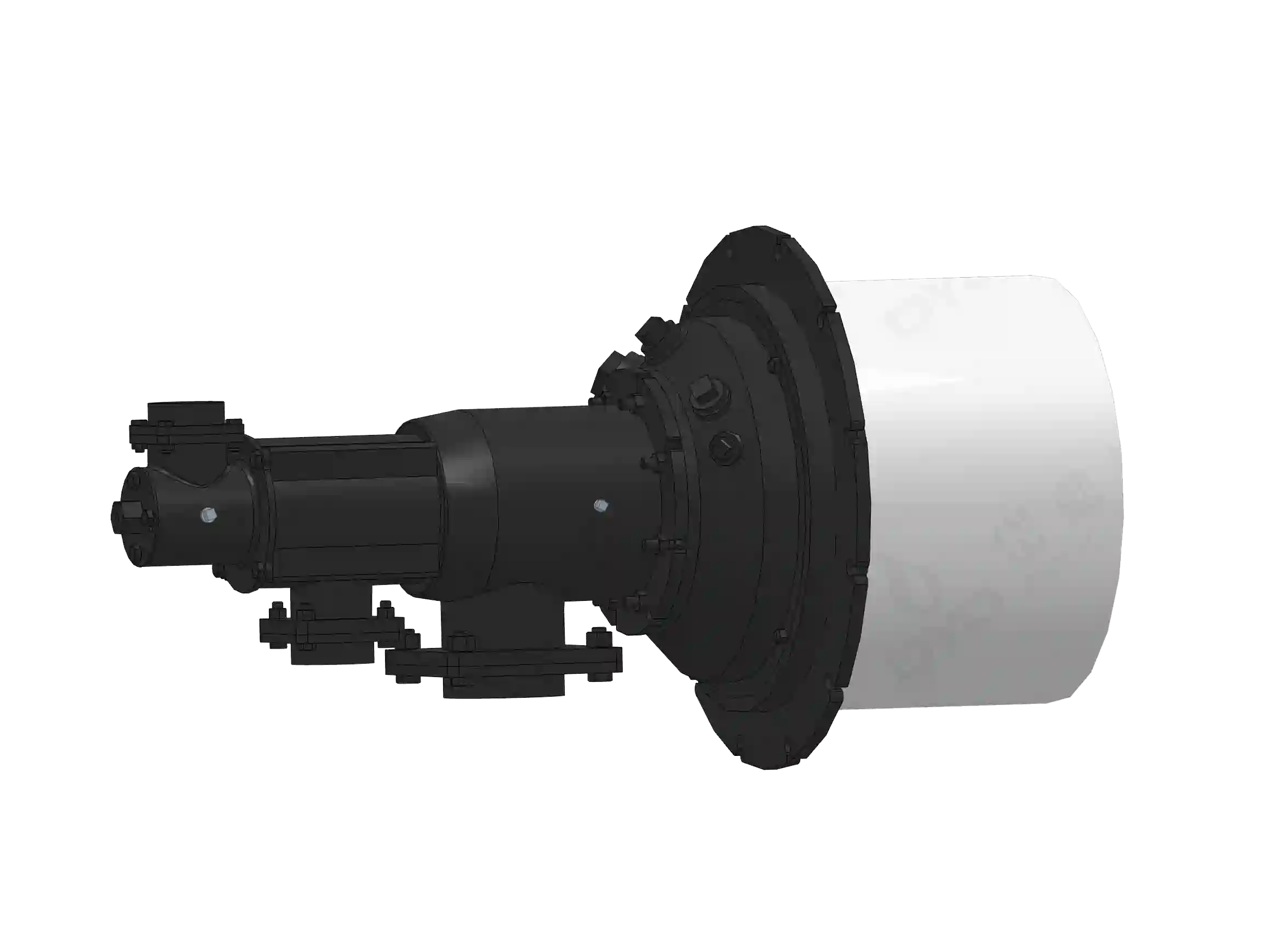
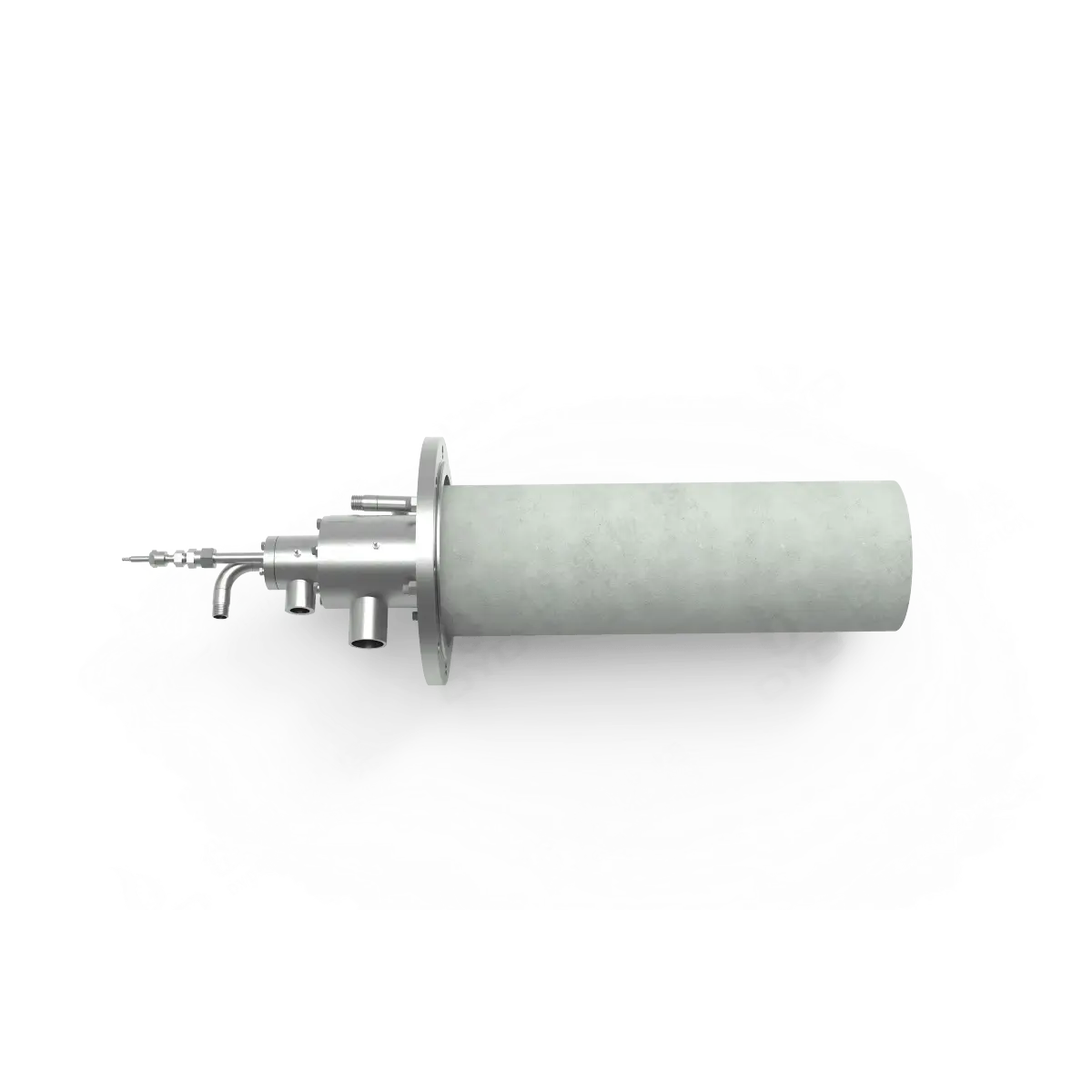
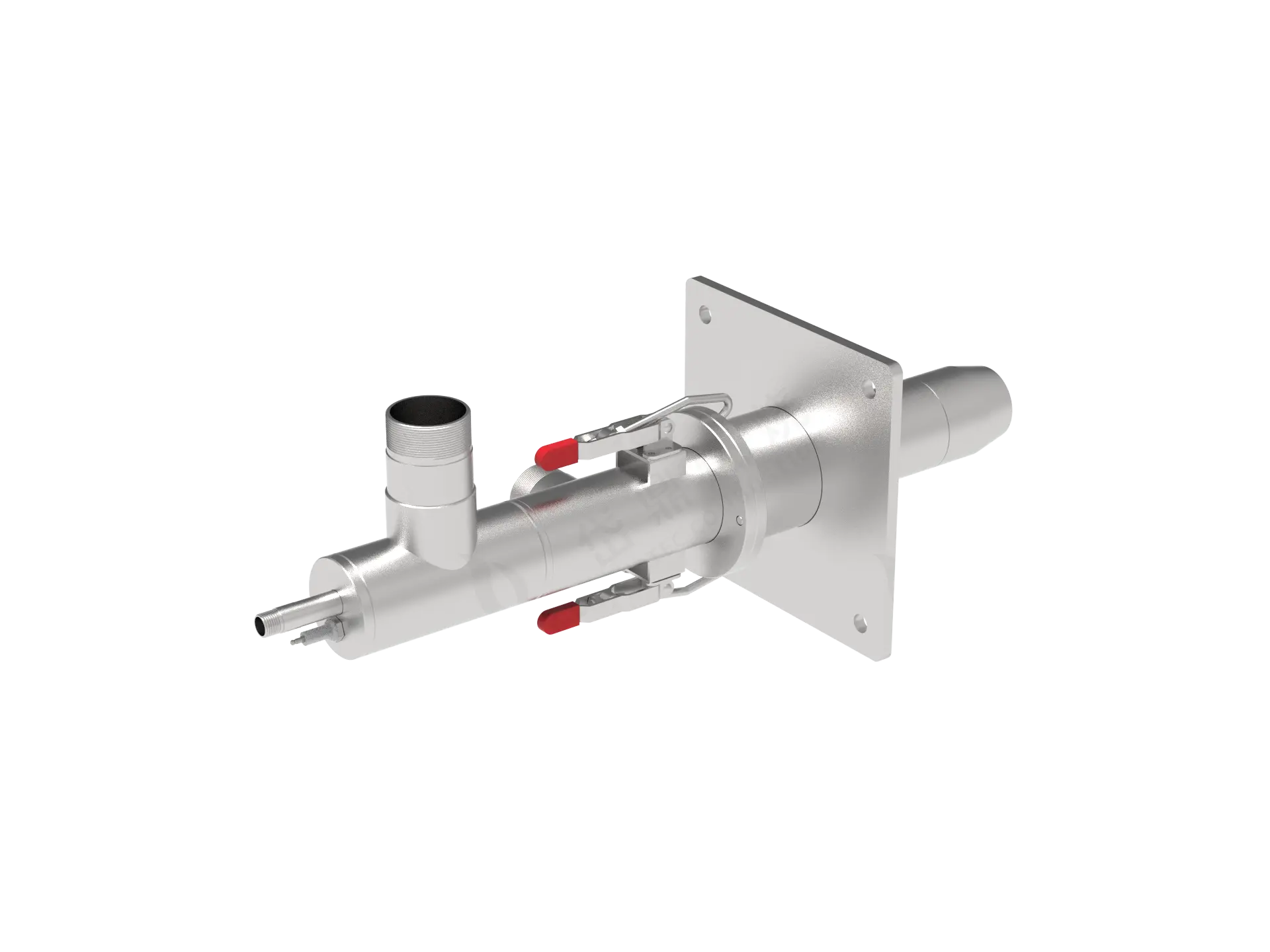
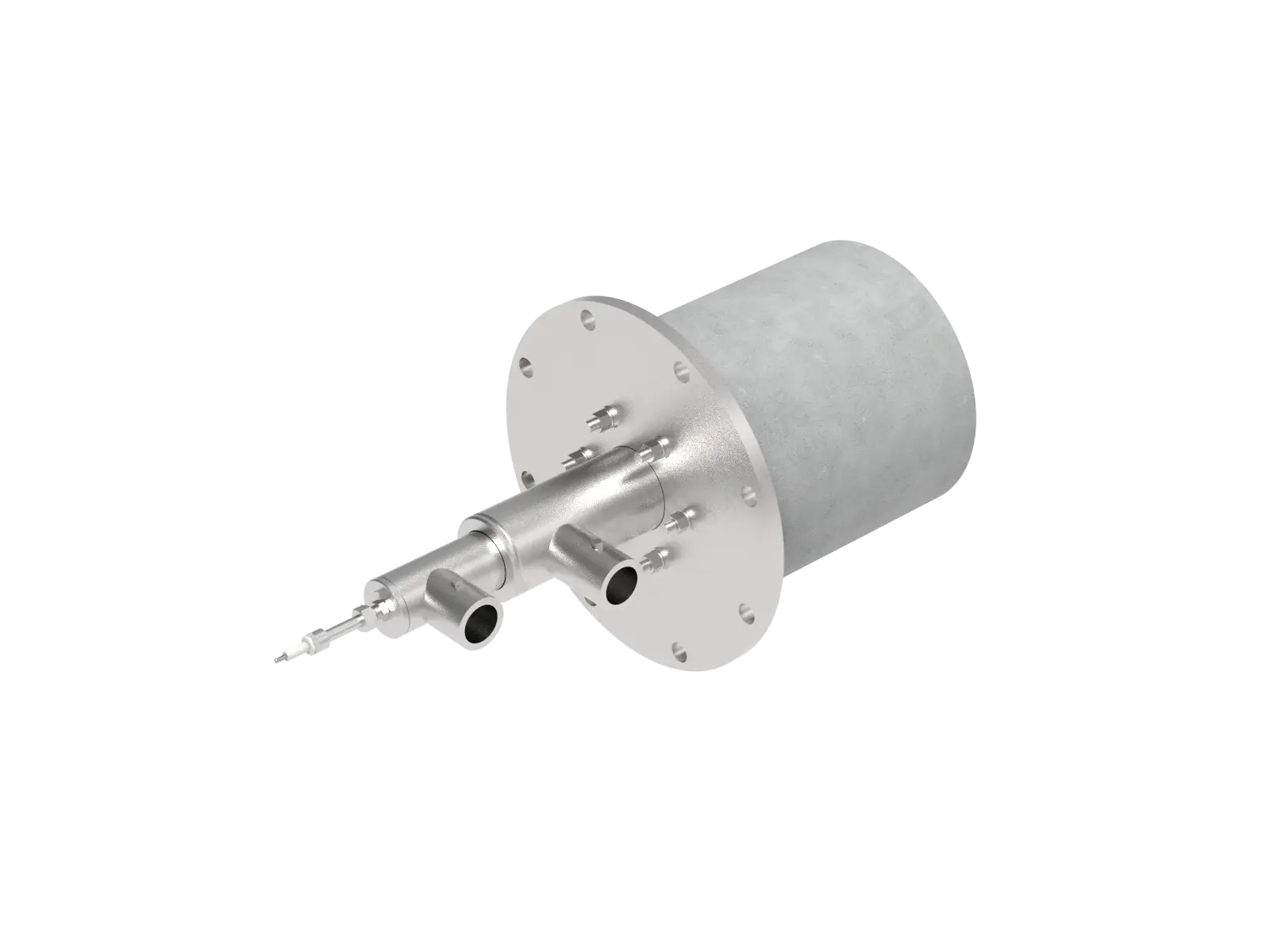
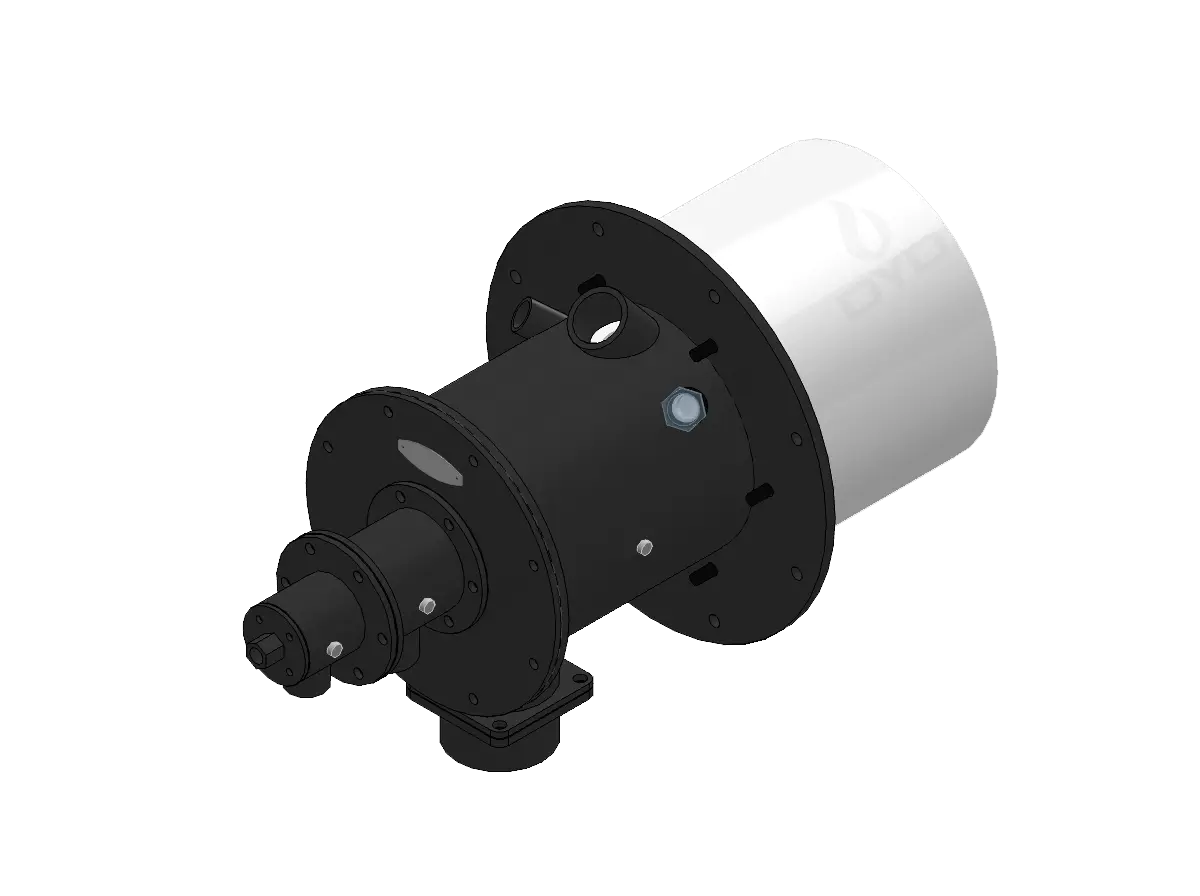
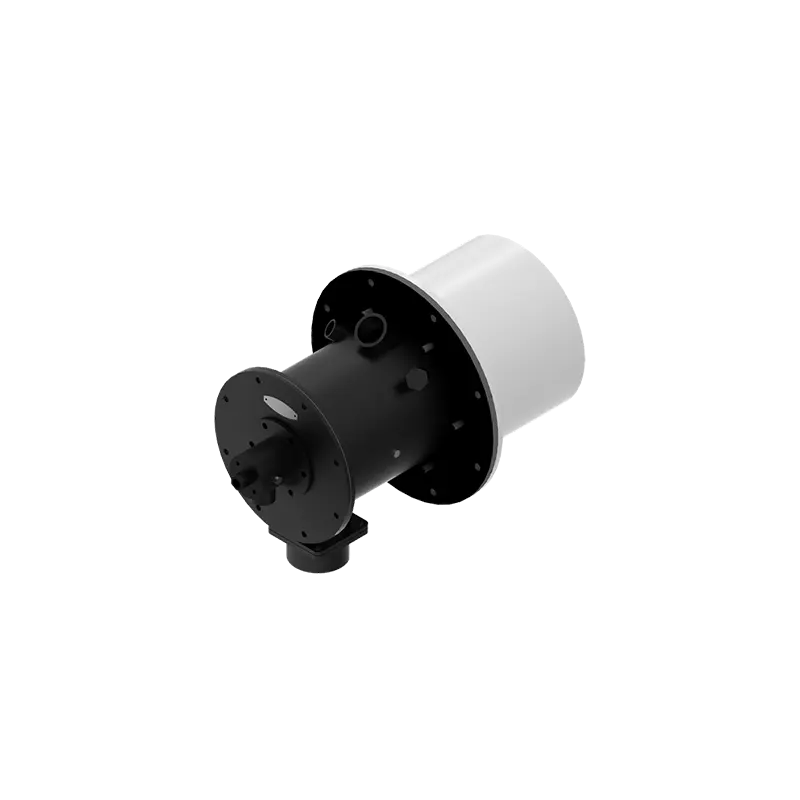
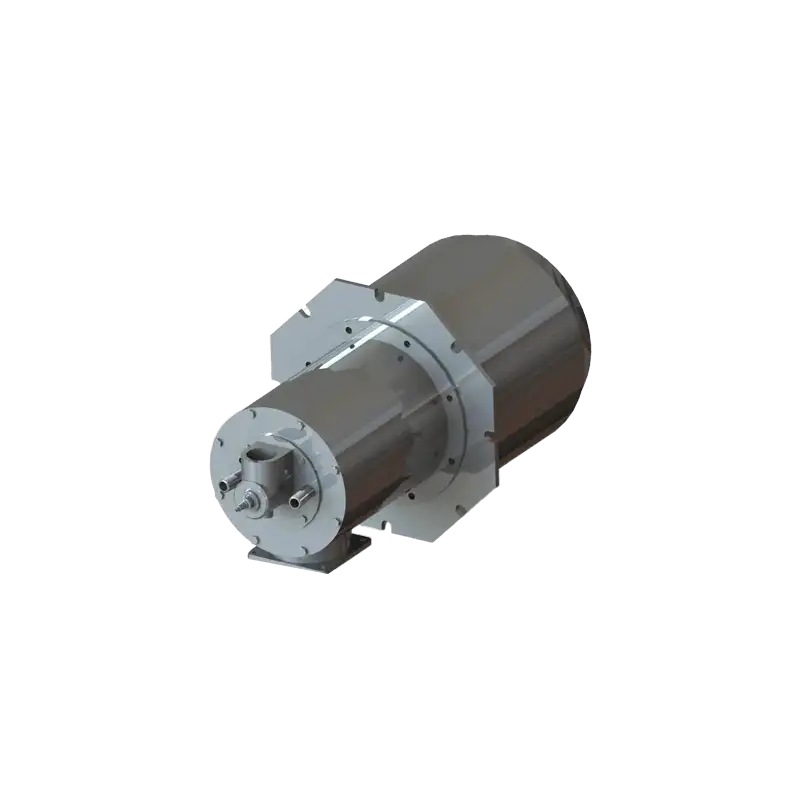
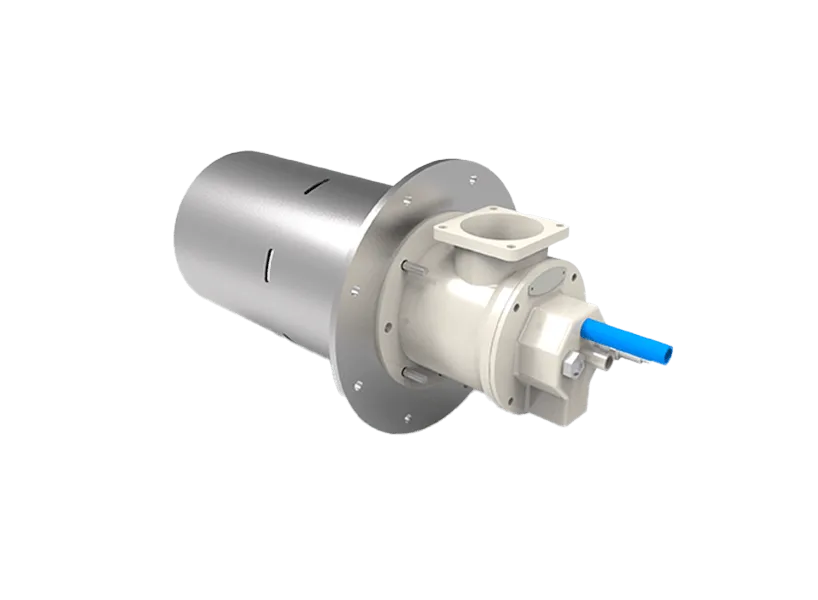
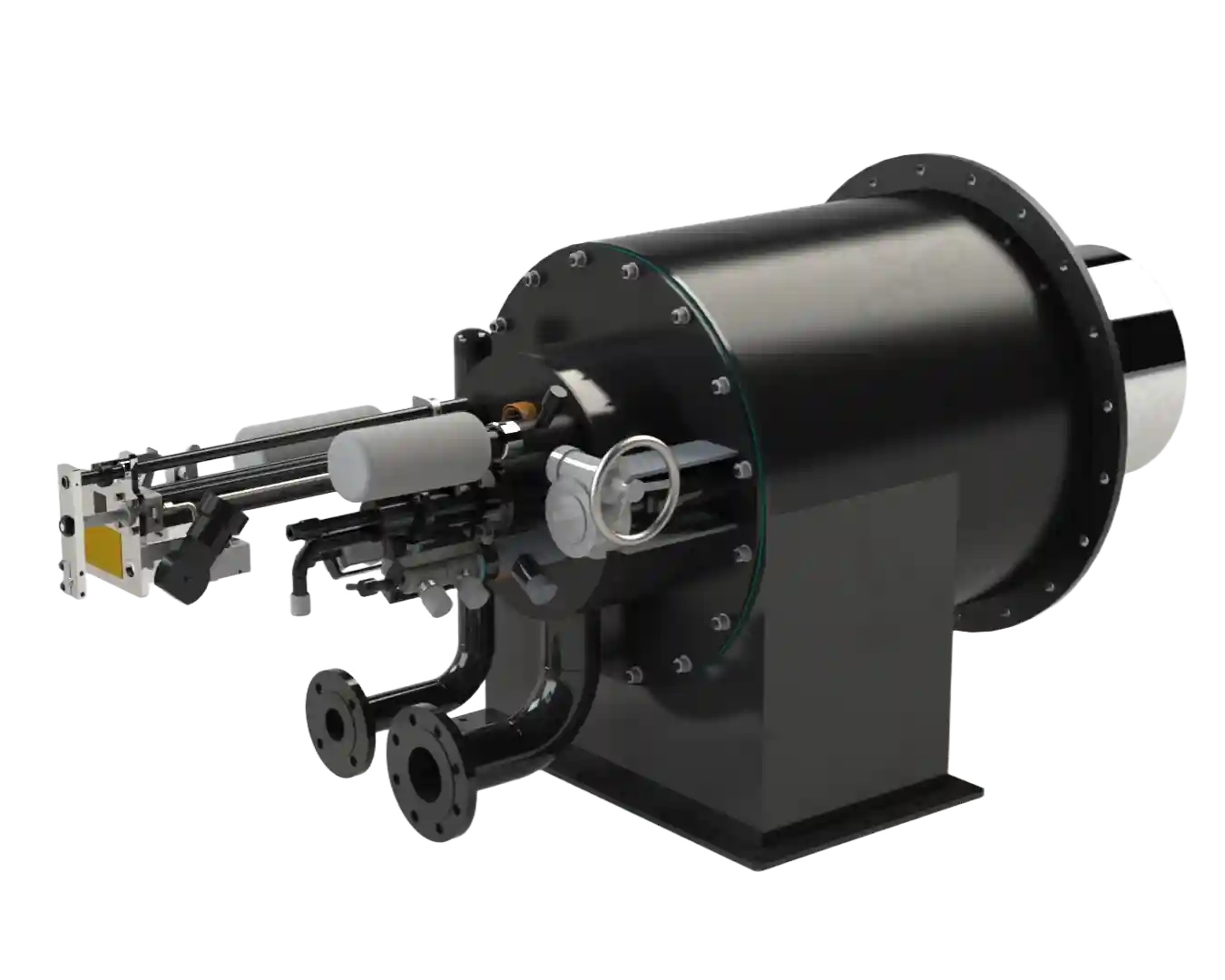
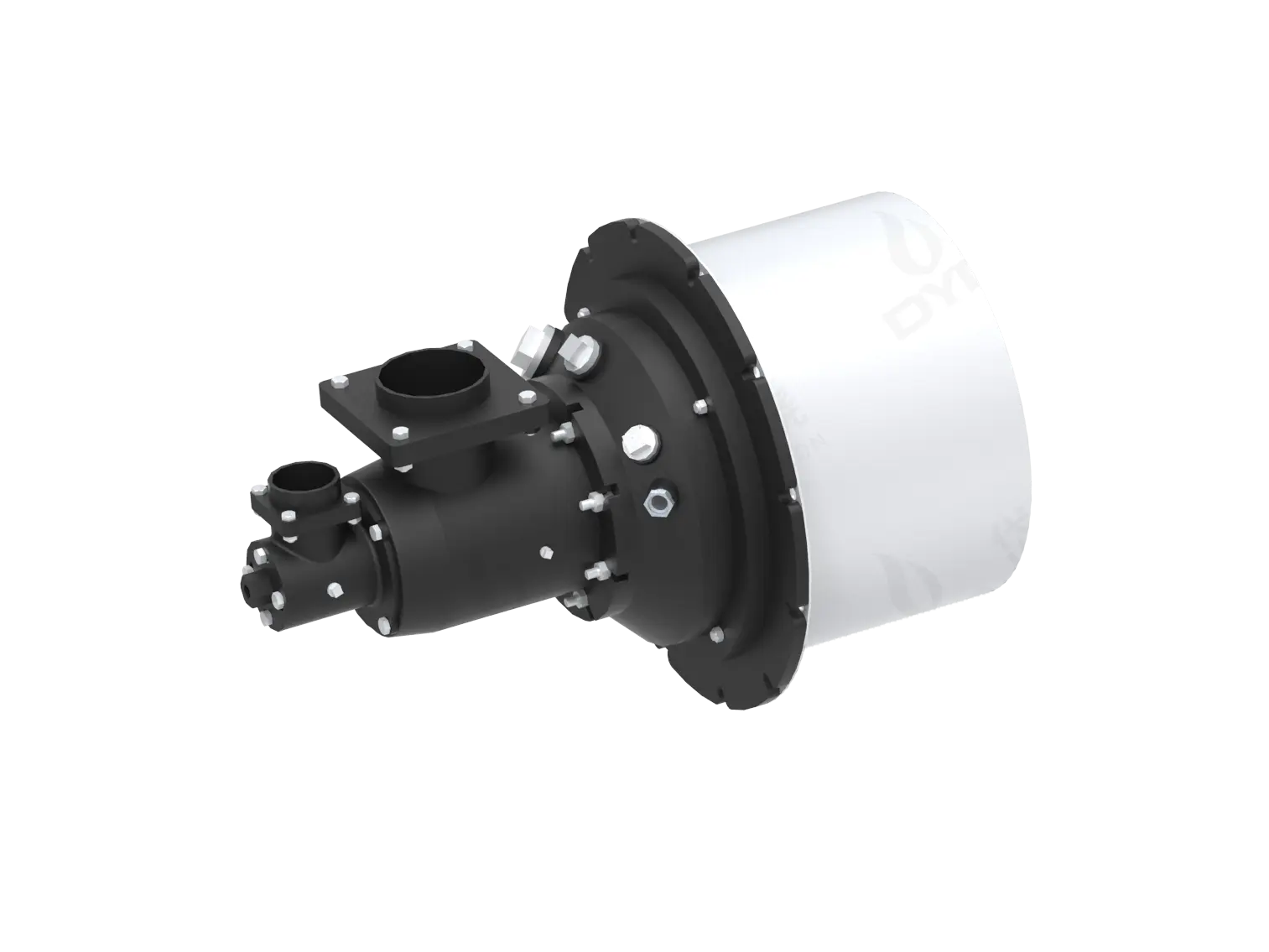
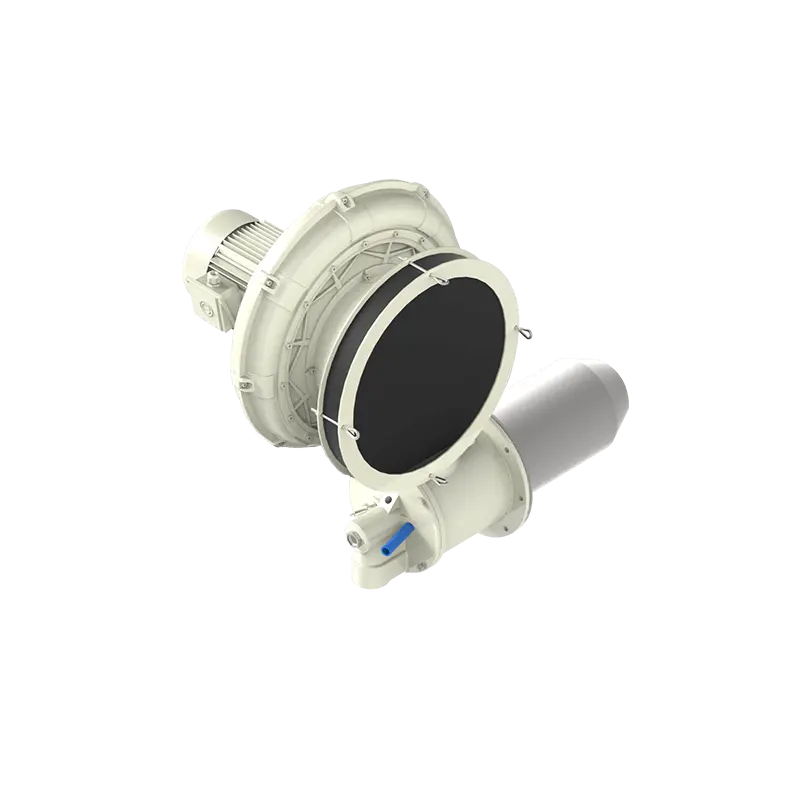
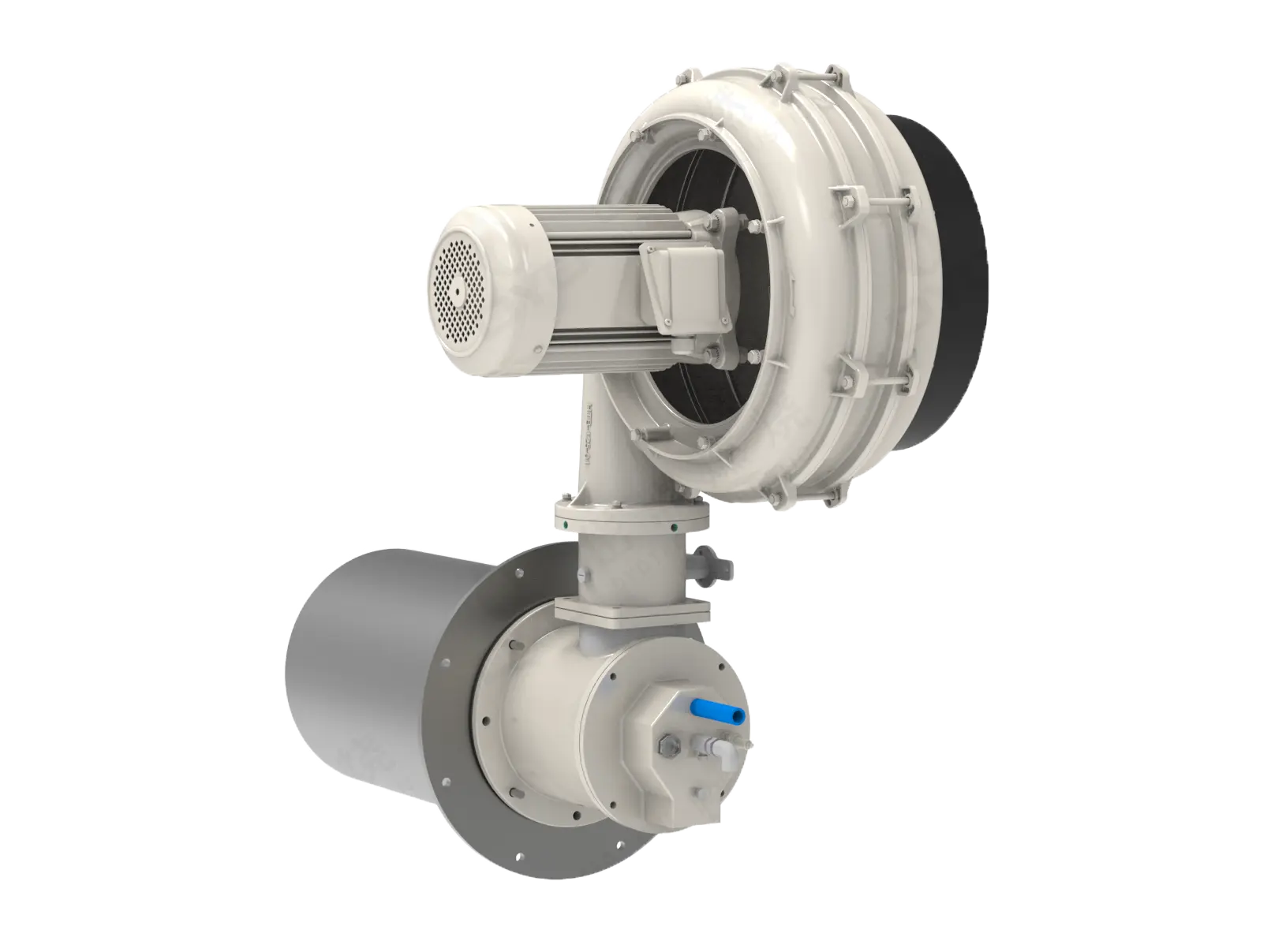
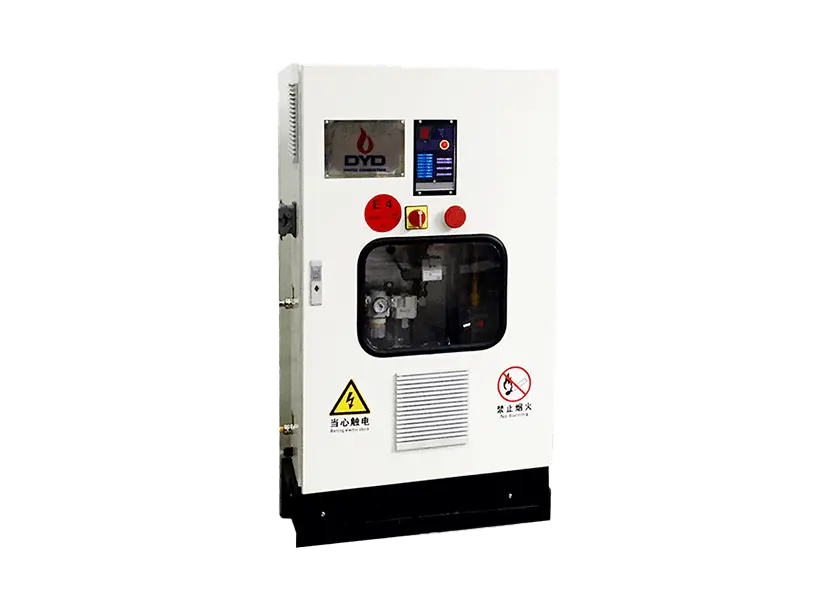
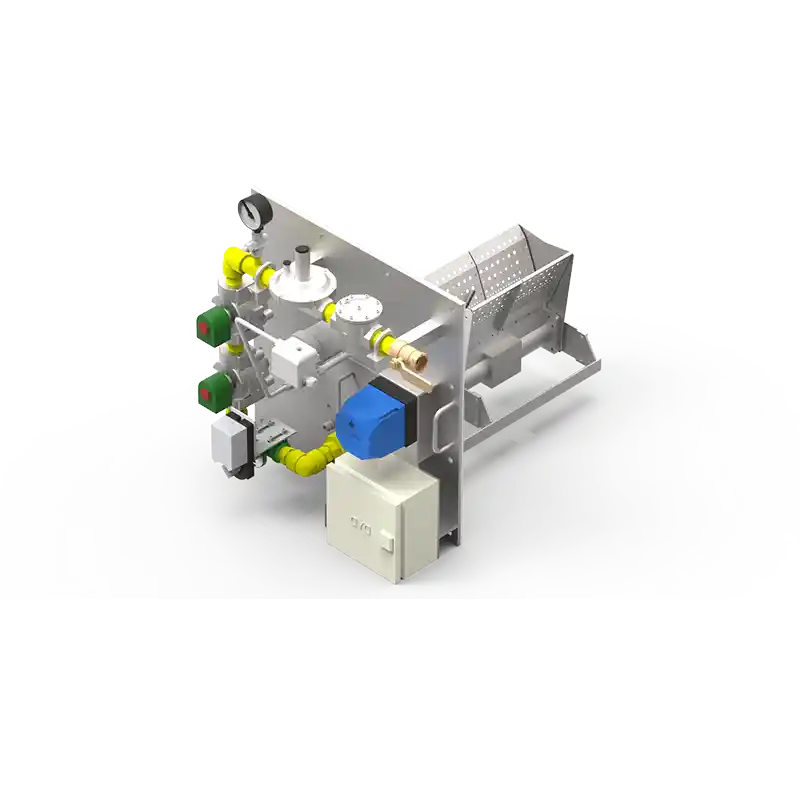
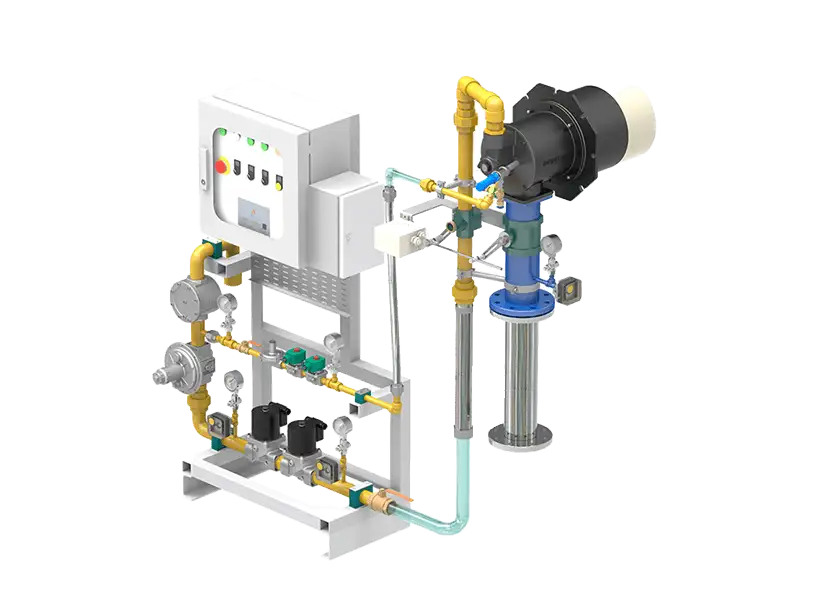
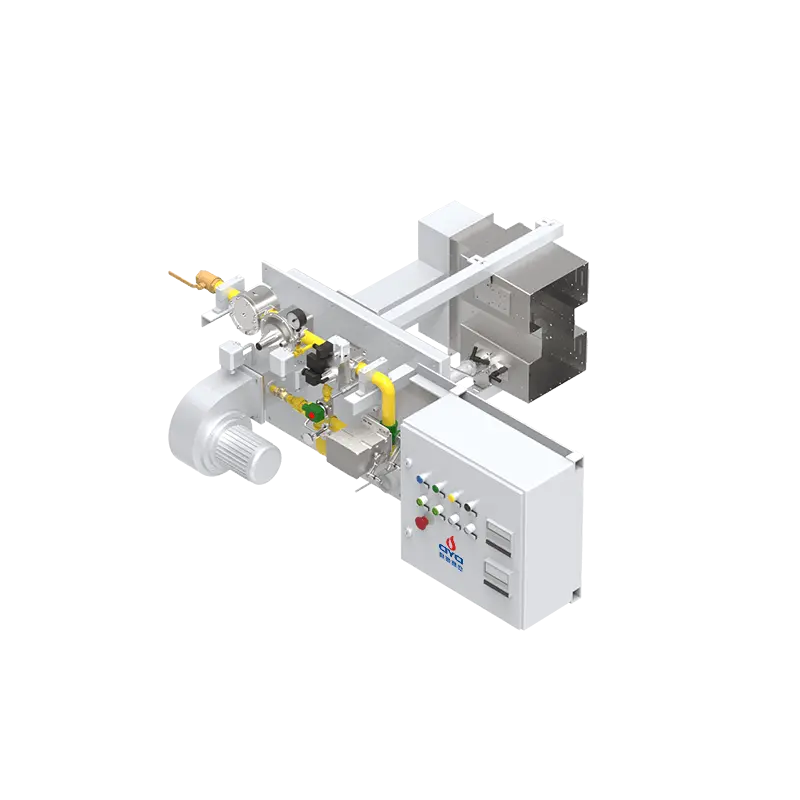
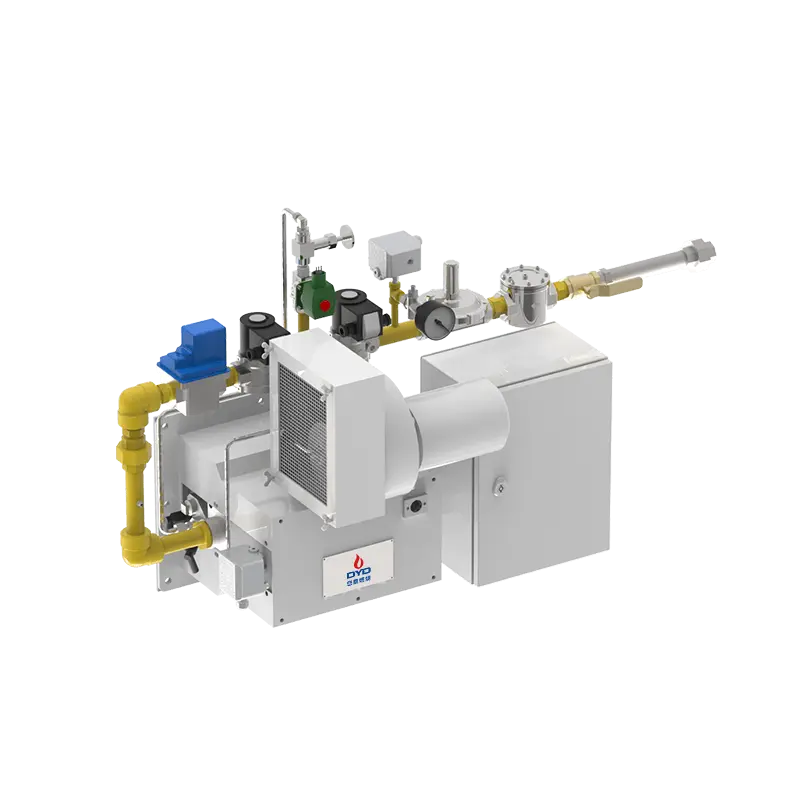
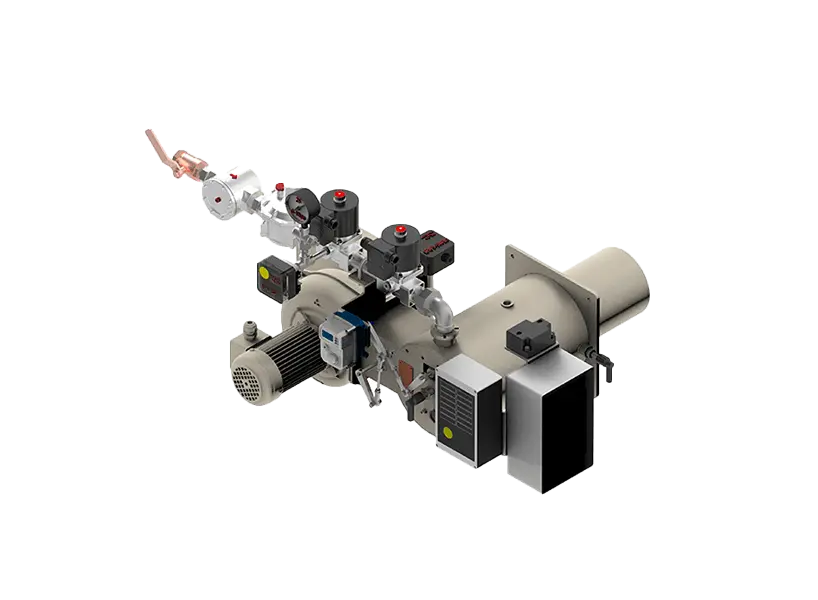
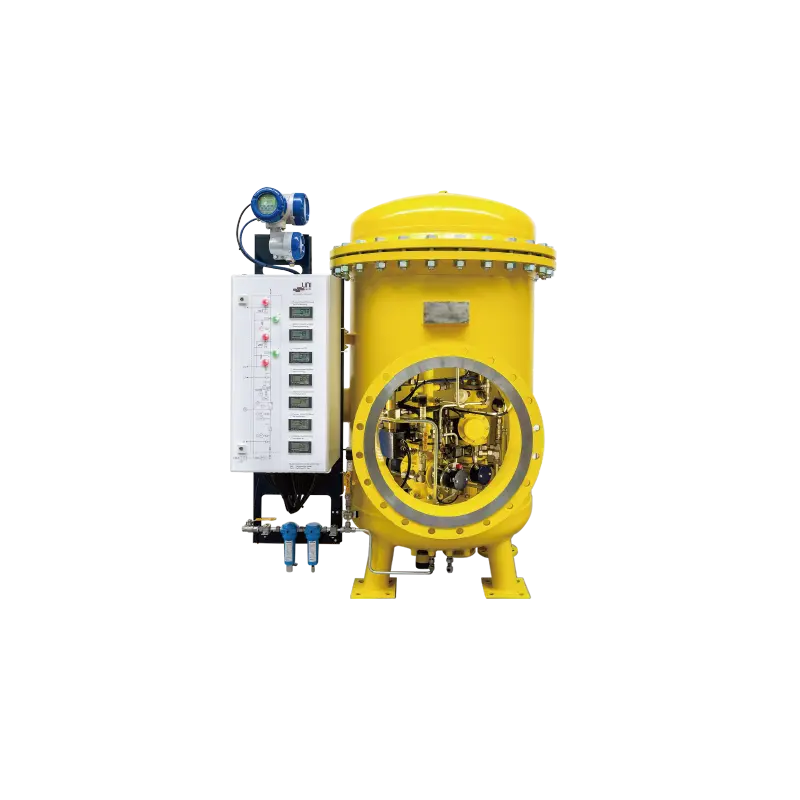
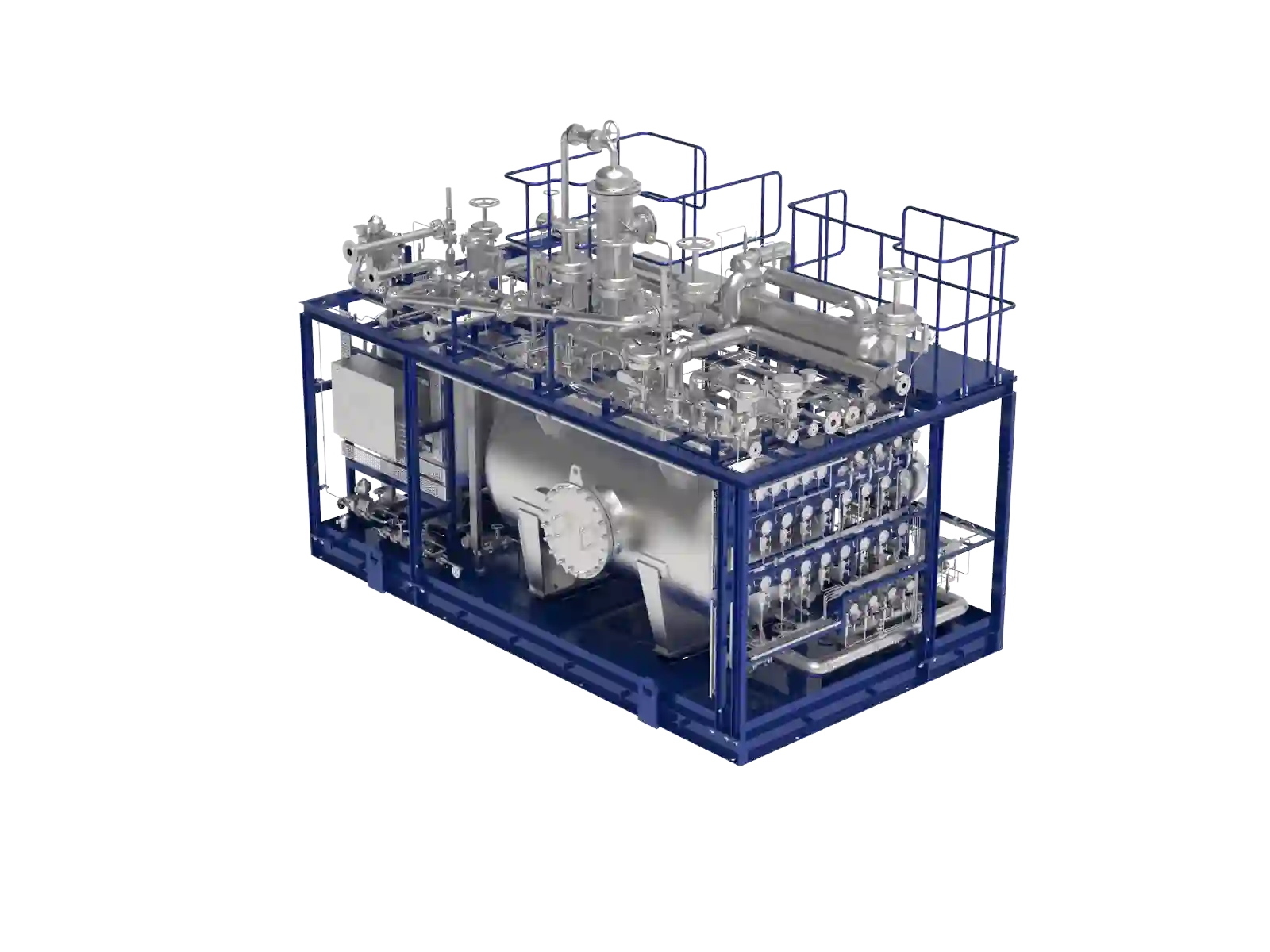
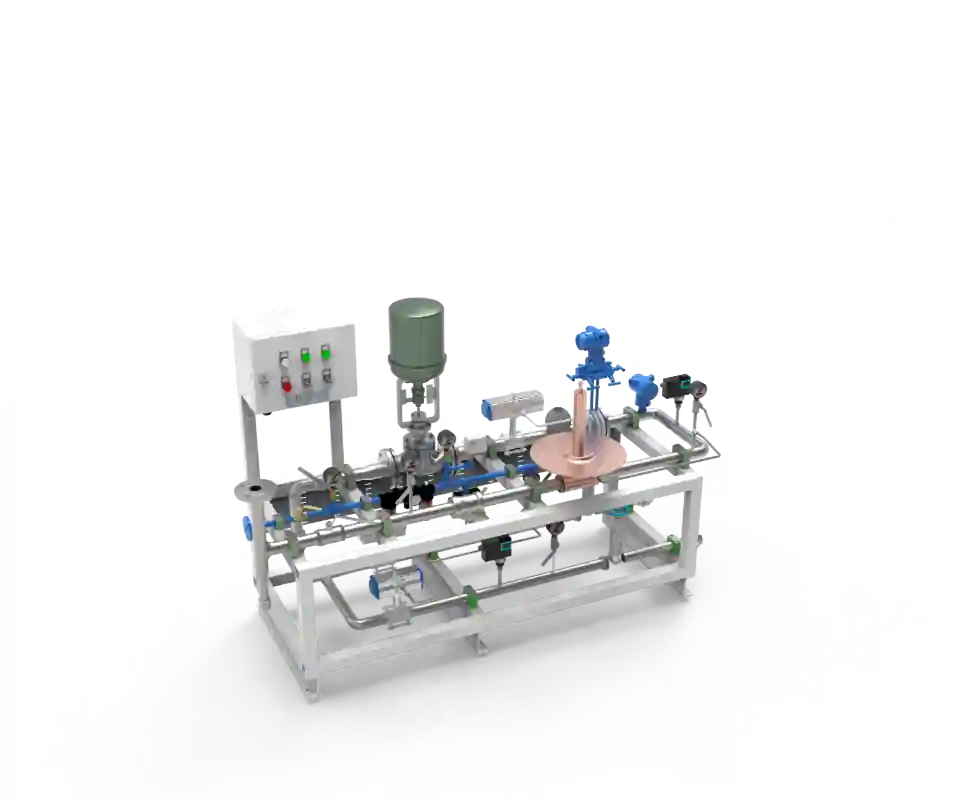
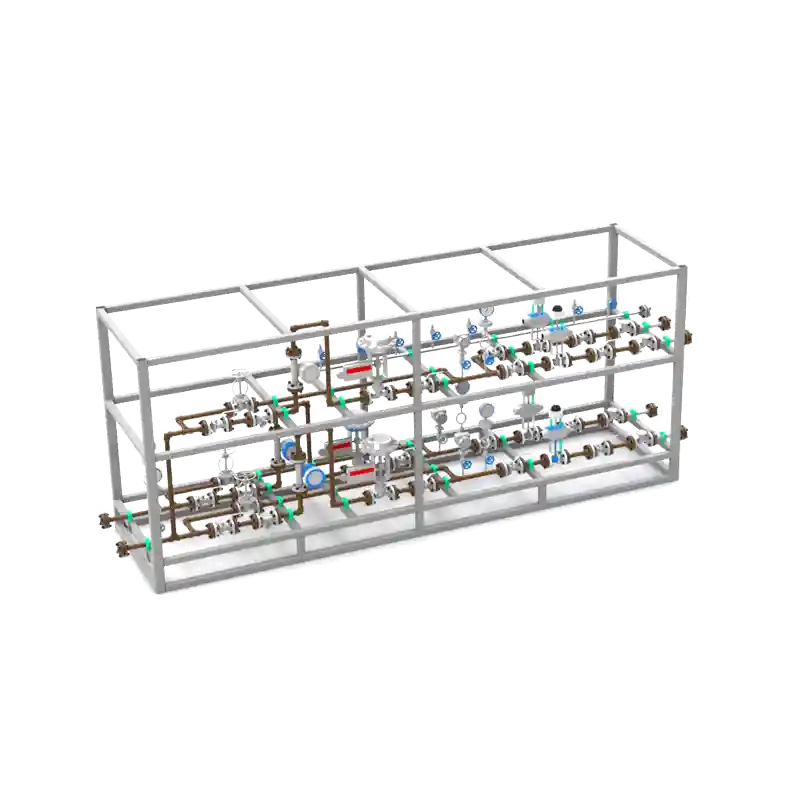
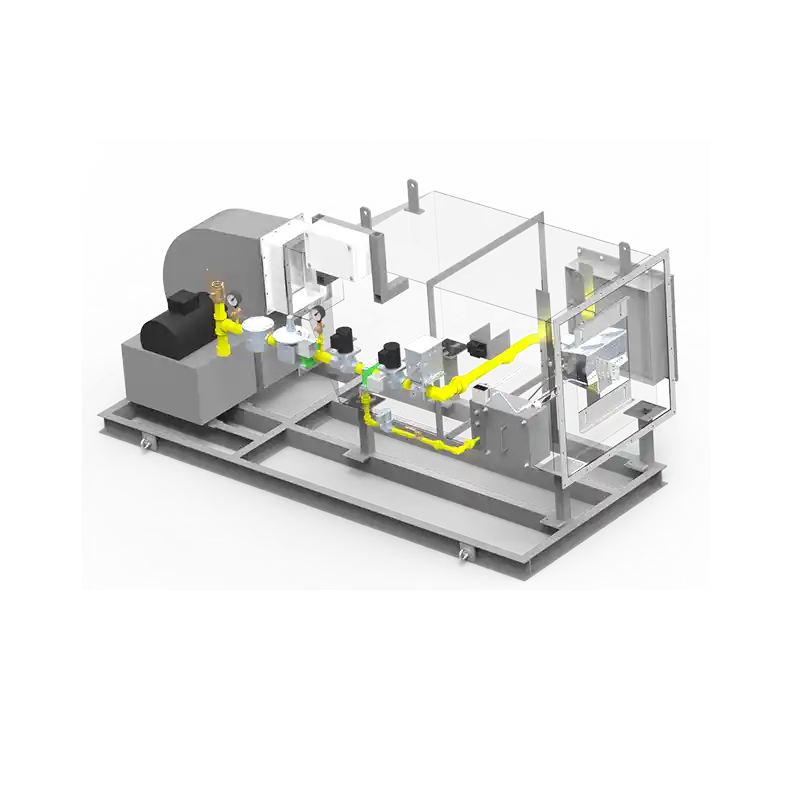
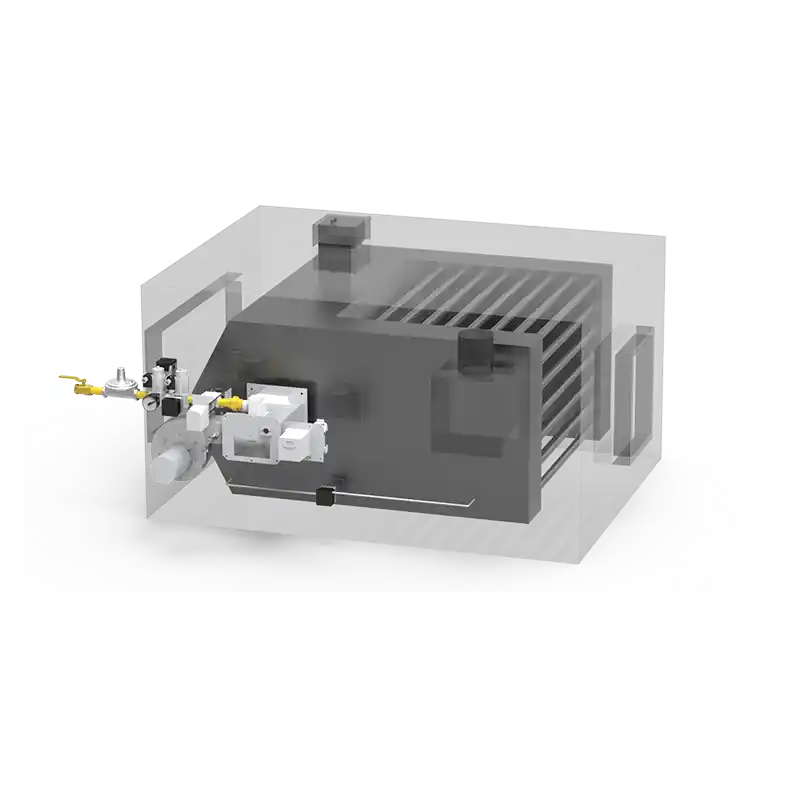
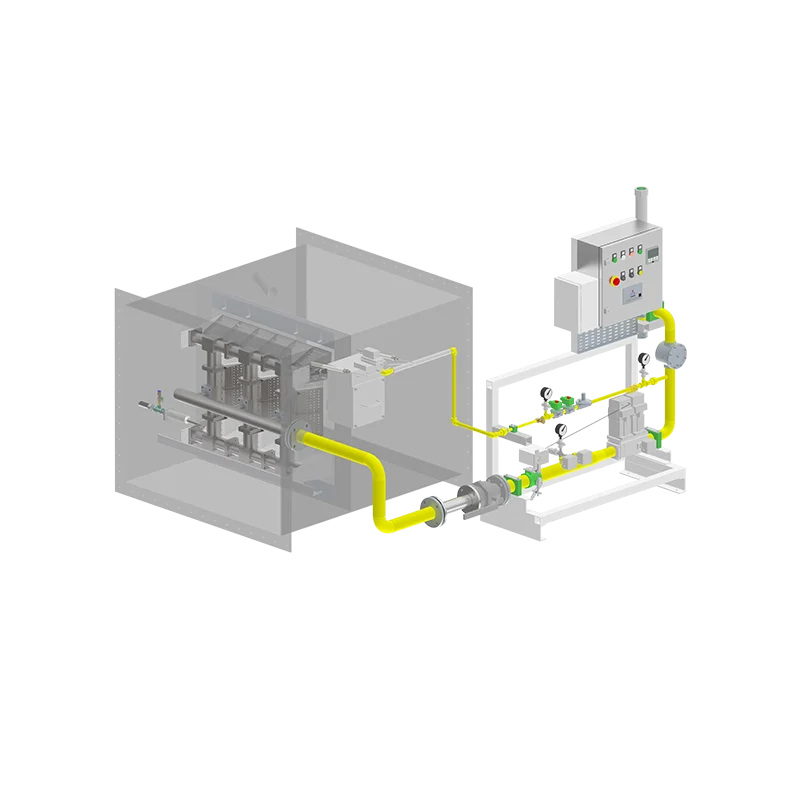
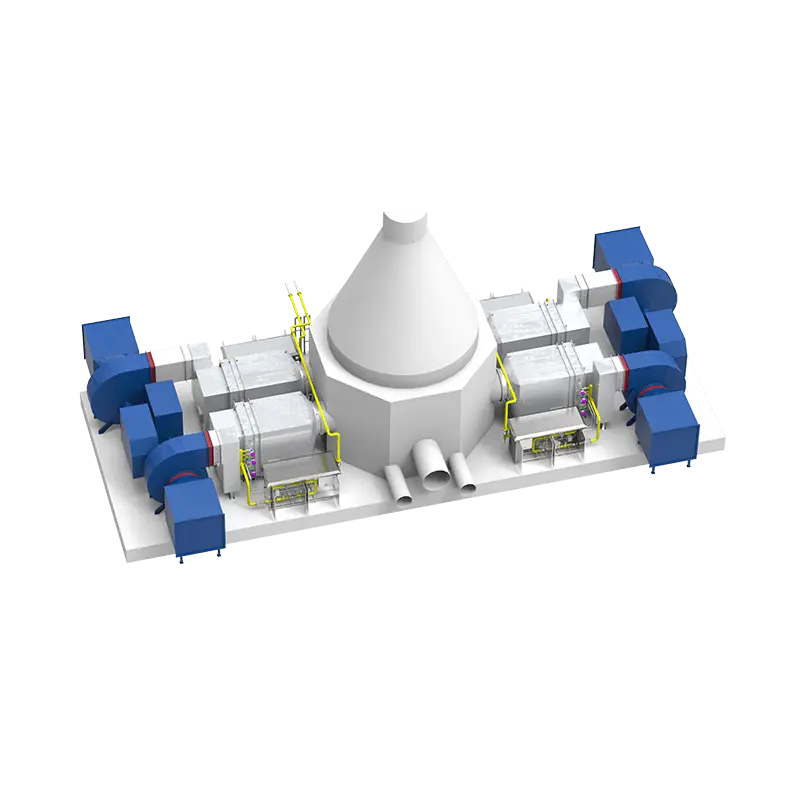
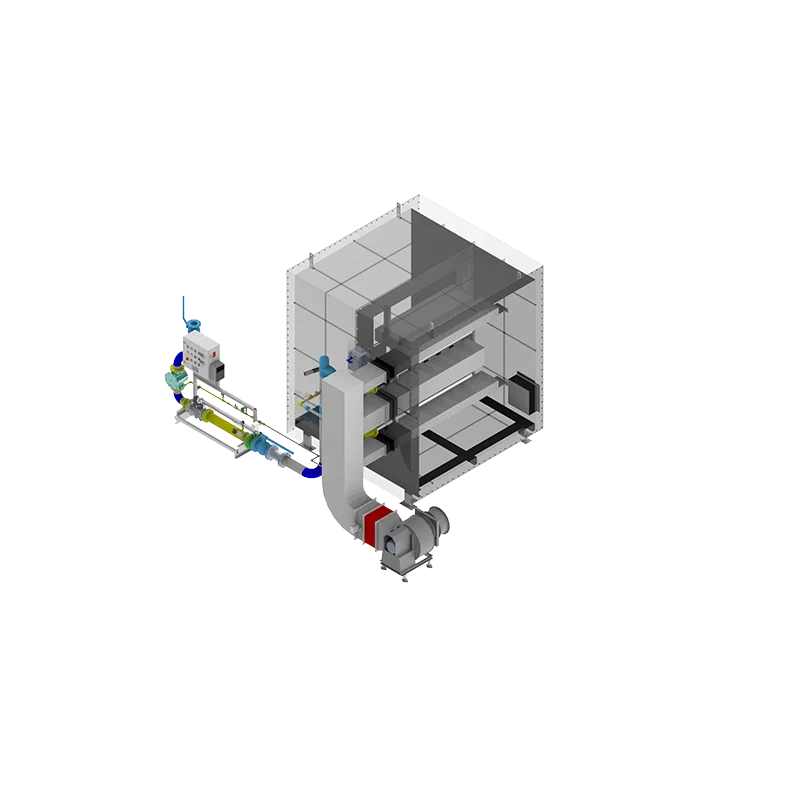
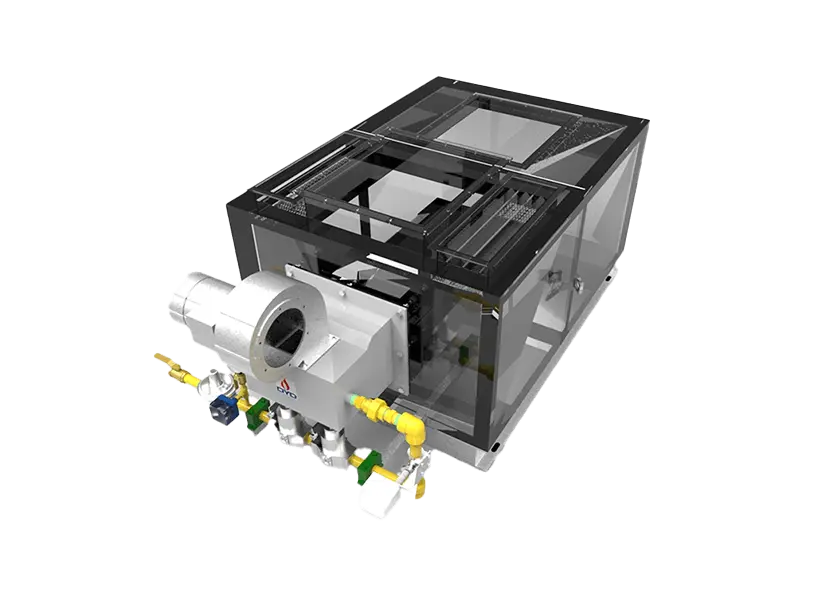
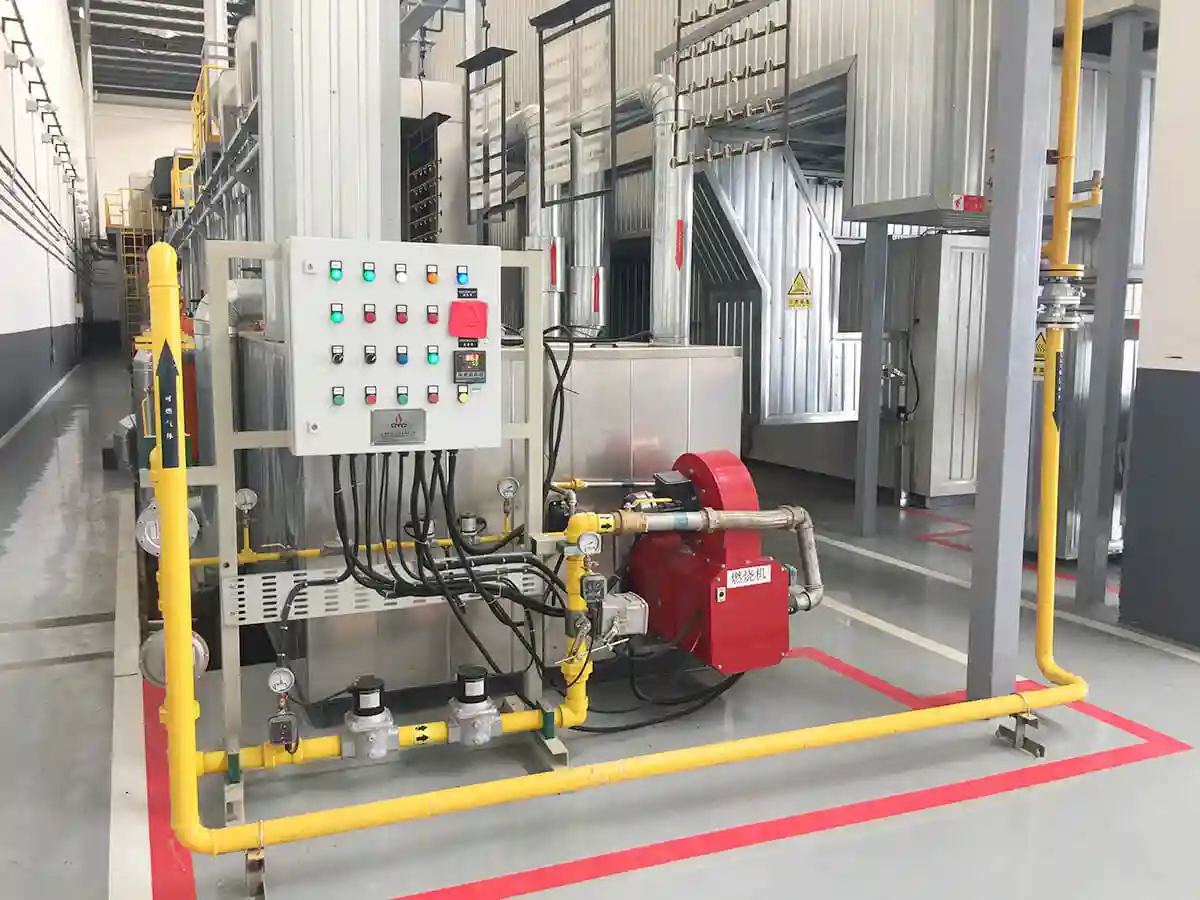
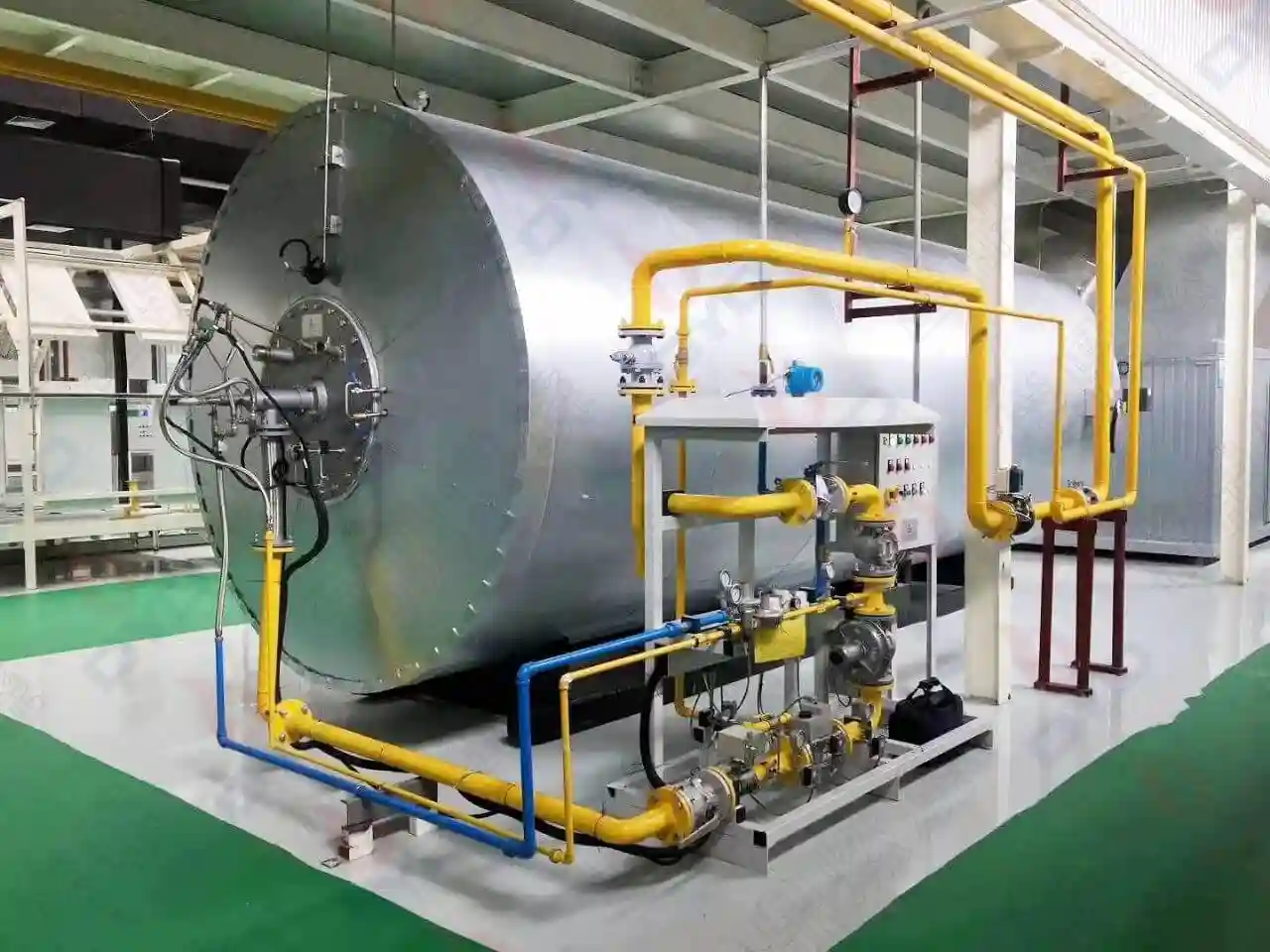
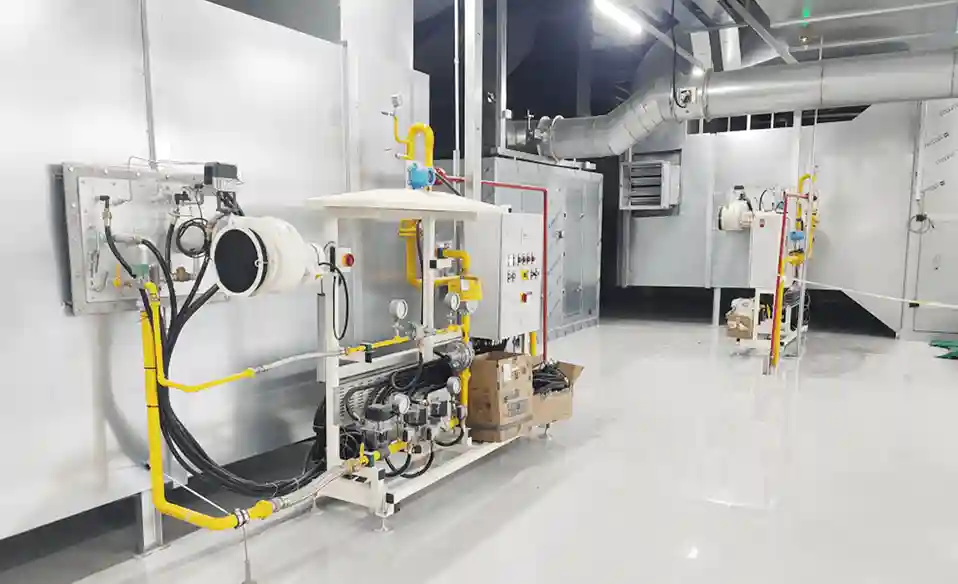
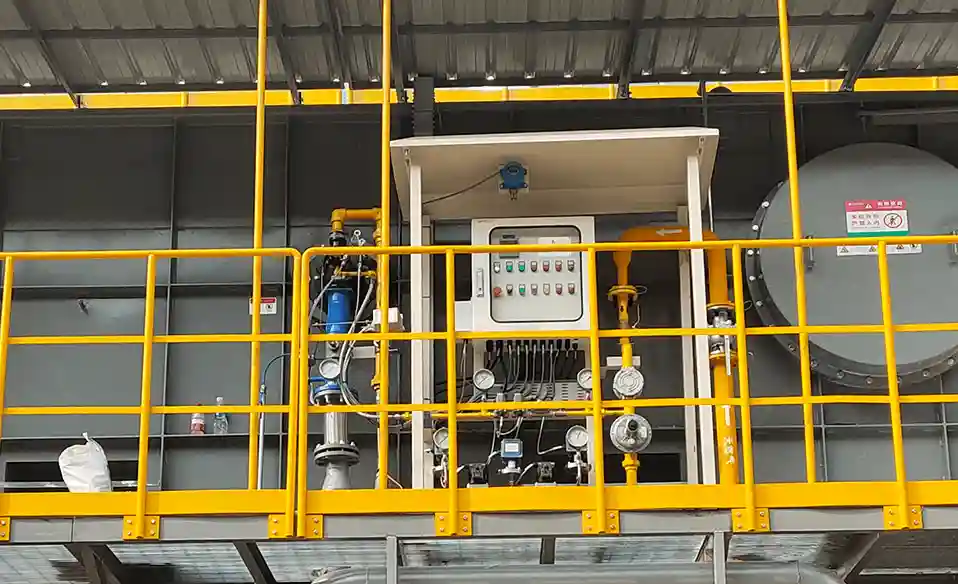
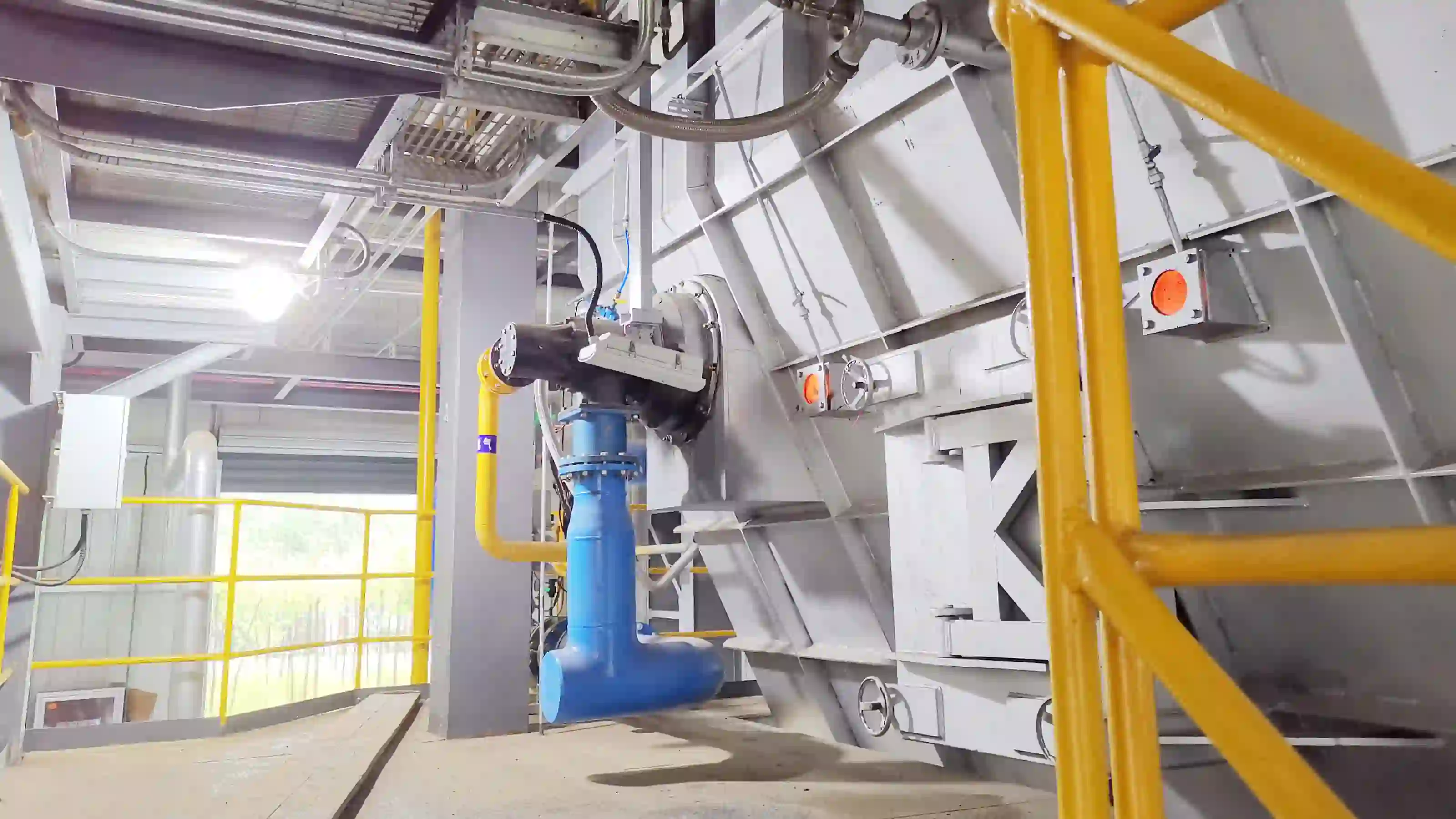
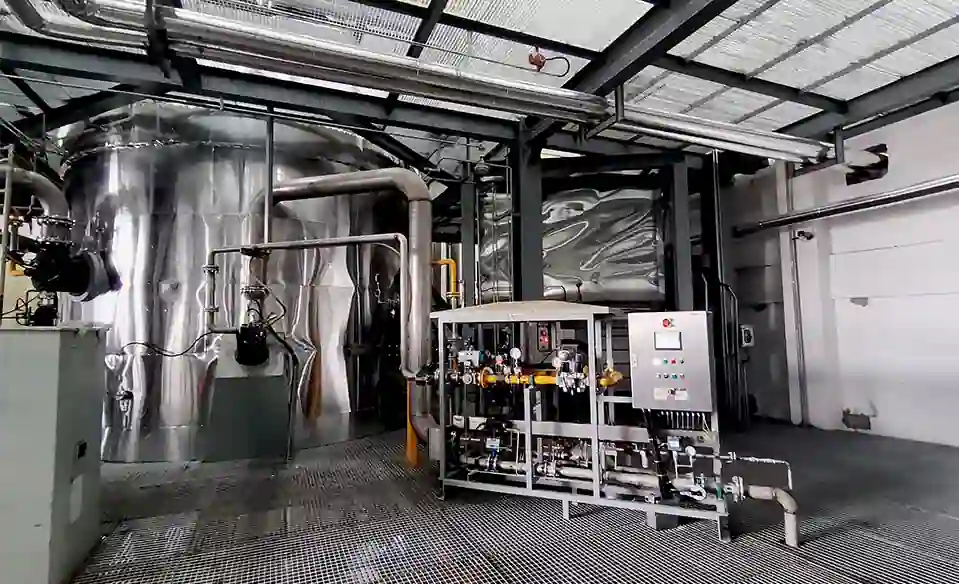
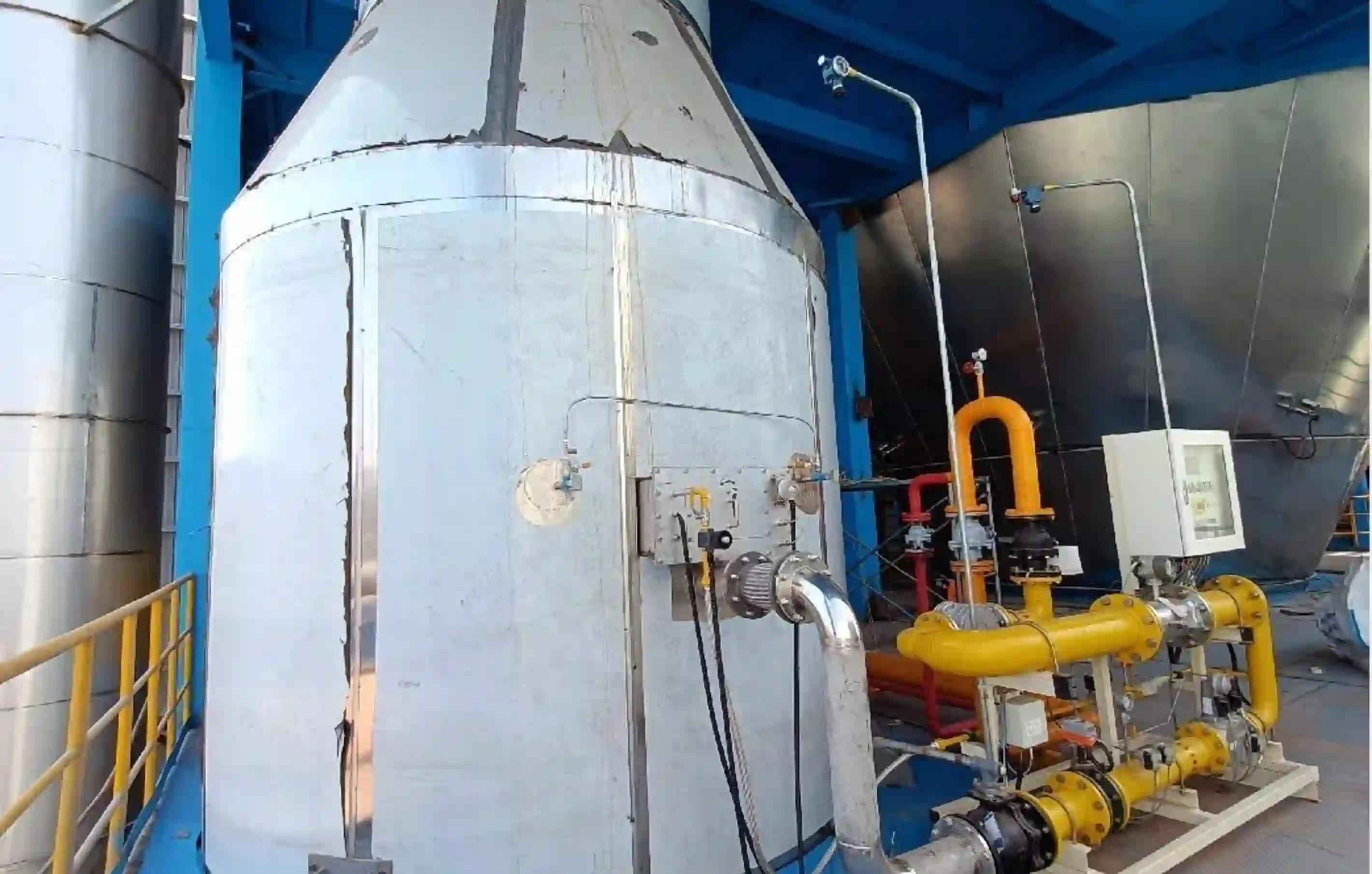
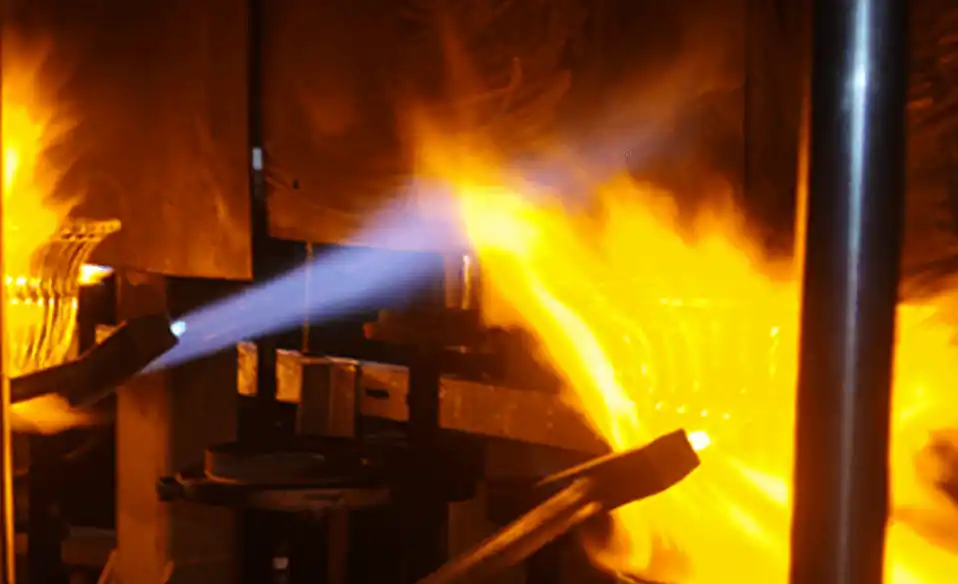
The lithium battery material drying burner is a critical heat source equipment in the production of new energy materials. Its primary function is to provide stable, clean, and precisely controlled hot air for the drying processes of lithium battery cathode materials, anode materials, and other powder materials. In lithium battery material production, the drying process directly determines the final product's moisture content, particle size distribution, morphology, and electrochemical performance—these indicators collectively affect battery capacity, cycle life, and safety performance.
With the rapid development of the new energy industry, lithium battery material production has imposed higher requirements on drying equipment: precise and stable hot air temperature (cathode and anode materials have narrow drying temperature windows; deviations may affect crystal structure and electrochemical activity), uniform drying process (avoiding powder agglomeration and particle size distribution deterioration), prevention of material contamination (trace impurities may affect battery performance), reduction of energy consumption (the drying process accounts for a significant proportion of material production energy use), and adaptation to continuous production (matching the large-scale manufacturing demands of new energy materials).
Lithium battery material drying typically involves spray drying (converting precursor slurries into spherical or spherical-like powders), pneumatic drying (rapid removal of surface moisture, suitable for continuous production), flash drying (rapid dispersion and drying of paste-like materials), powder heat treatment (crystal phase transformation and surface modification under high-temperature conditions), and coating drying (drying and film formation of electrode slurries on current collectors). Among these, the heat source system directly affects powder moisture content (excessive residual moisture in materials will affect the battery's first-cycle efficiency and cycle stability), product consistency (batch-to-batch stability of particle size and morphology determines battery performance consistency), production efficiency (drying speed directly affects production line capacity), and energy costs (fuel consumption accounts for a significant proportion of material manufacturing costs).
Therefore, when selecting a lithium battery material drying burner manufacturer, key factors to evaluate include industrial combustion technology capability (whether the manufacturer masters efficient and stable combustion control methods), clean hot air system design capability (whether they can provide clean hot air meeting high-purity material requirements), new energy material drying experience (whether they understand the specific heat source requirements of cathode and anode materials), temperature control capability (whether they can achieve precise closed-loop temperature control), and non-standard customisation capability (whether they can perform customised design according to different materials and processes).
DYDTEC focuses on the R&D and manufacturing of industrial burners, linear burners, hot air furnaces, and combustion system integration. It can provide efficient and stable thermal energy solutions for lithium battery materials, chemical powders, new material drying, and other applications. In the field of new energy material drying, DYDTEC has accumulated project integration experience in applications ranging from cathode material spray drying to anode material pneumatic drying.
A lithium battery material drying burner is a heat source device used in new energy powder material drying systems. In the preparation process of lithium battery materials, the drying burner is at the core of the thermal system—it converts the chemical energy of fuel into precisely controllable thermal energy and delivers it in the form of hot air to the drying equipment, providing stable thermodynamic conditions for material moisture evaporation and crystal phase formation.
Its main function is to generate heat through fuel combustion, heat the air to form process hot air, and provide a stable heat source for the drying equipment to rapidly remove moisture or solvents from the material. In the spray drying process of cathode material precursors such as lithium iron phosphate and ternary materials, the temperature, air volume, and distribution uniformity of hot air directly determine the powder's sphericity, particle size distribution, and tap density—these physical parameters further affect the compaction density and electrochemical performance of battery electrodes.
Basic working process:
Fuel gas supply → burner combustion → heat release → hot air formation → drying equipment → material moisture reduction
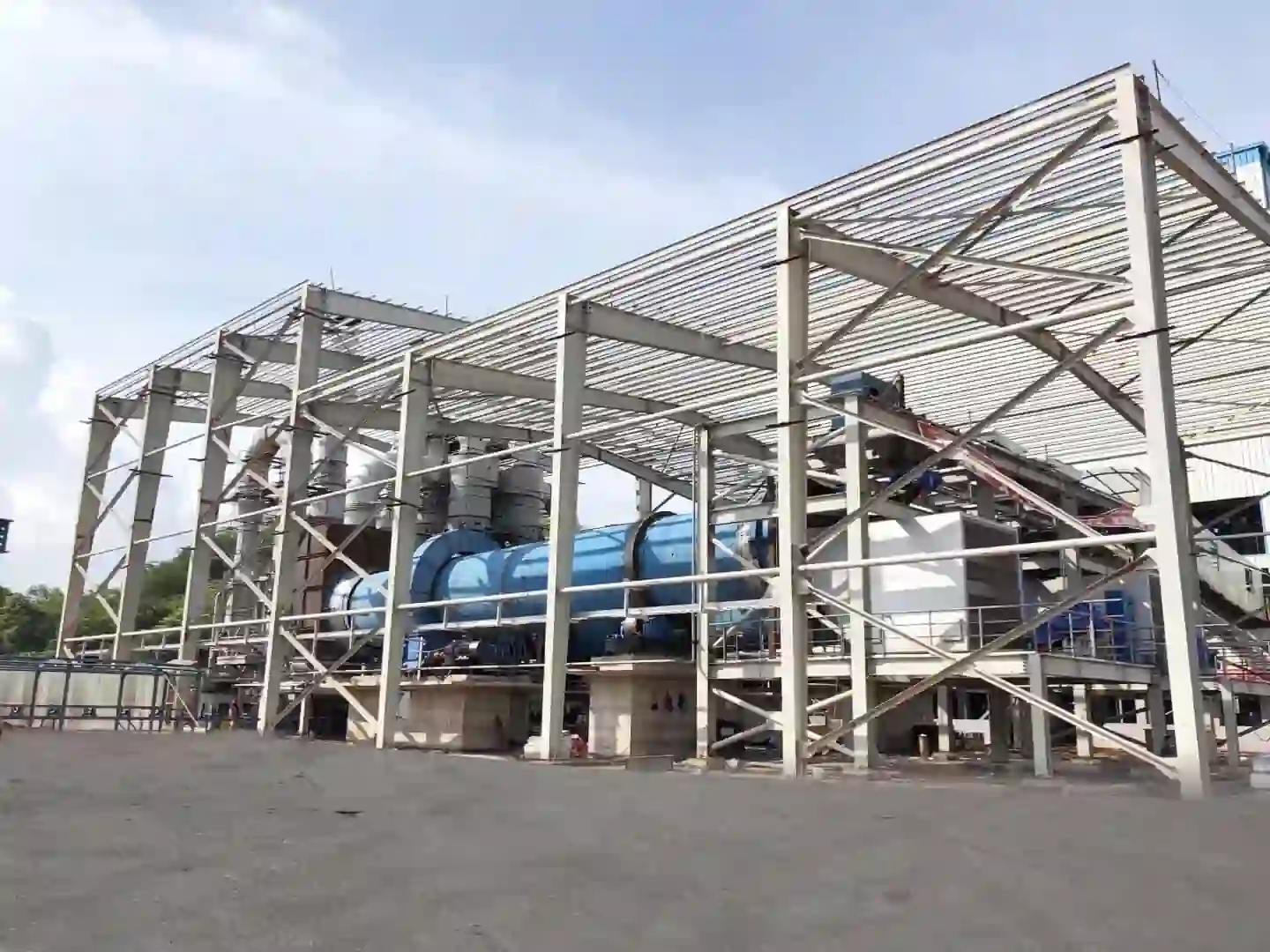
In the production practice of lithium battery materials, spray drying is one of the core processes for cathode material precursor preparation—precursor slurries synthesised by chemical co-precipitation or sol-gel methods are dispersed into fine droplets through atomisers, and upon contact with high-temperature hot air, solvent evaporation is completed instantaneously, forming spherical or spherical-like powder particles. In this process, the inlet temperature, outlet temperature, and air volume of the hot air must be precisely controlled to ensure that the product's particle size distribution and tap density meet battery manufacturing requirements.
Common applications include lithium iron phosphate material drying (precursor spray drying and post-treatment drying), ternary cathode material drying (NCM, NCA precursor drying), graphite anode material drying (purification and drying of natural graphite and synthetic graphite), battery separator coating drying (hot air drying of ceramic-coated separators), and battery slurry-related hot air systems (electrode slurry drying and solvent recovery).
In lithium battery material drying processes, technologies such as spray drying require hot air to rapidly evaporate moisture, converting solutions or slurries into powder products. Therefore, the stability of the heat source system is highly critical—temperature fluctuations exceeding allowable ranges may lead to deterioration of particle sphericity or the formation of hollow particles, broken particles, and other defects, directly affecting the electrochemical performance of the material in batteries.
Lithium battery materials are typically high-value powders, and their electrochemical performance is highly sensitive to the thermal history during preparation. The drying process requires control of hot air temperature (ensuring drying temperature within the process tolerance), material residence time (ensuring thorough drying without degradation from excessive heating), drying rate (controlling solvent evaporation rate to maintain particle morphology), and residual moisture (reducing material moisture content to below the limits required for battery manufacturing).
Temperature fluctuations may cause a series of problems including material performance changes (incomplete crystal structure or altered crystallographic preferred orientation), powder agglomeration (surface melting or solid-phase bridging causing particle bonding), and reduced product consistency (batch-to-batch fluctuations in particle size and specific surface area). For heat-sensitive cathode materials such as high-nickel ternary materials, excessively high drying temperatures may exacerbate lithium-nickel mixing, directly reducing battery capacity and cycle life. Therefore, the combustion system must provide stable combustion (combustion state not fluctuating due to external condition changes), precise regulation (temperature control accuracy meeting material drying requirements), and uniform heat supply (avoiding temperature gradients within the drying equipment).
Some lithium battery materials are highly sensitive to contamination; trace impurities may trigger side reactions in batteries, affecting safety. Metallic impurities in cathode materials may cause internal micro-shorts in batteries; impurities in anode materials may affect first-cycle Coulombic efficiency and cycle stability; particle contamination in battery separators may cause puncture or thermal runaway risks.
The hot air system must avoid combustion impurities (particulates and gas components from combustion products must not enter the drying hot air), flue gas contamination (combustion flue gas must be completely isolated from hot air), and particle ingress (ductwork and heat exchange systems must prevent introduction of external particulates). Therefore, many high-requirement applications use indirect hot air furnaces (isolating combustion flue gas from hot air via heat exchangers), clean heat exchange systems (using corrosion-resistant, non-shedding heat exchange materials), and multi-stage filtration design (installing high-efficiency filters before hot air enters the drying equipment).
In applications such as lithium battery separator drying, hot air cleanliness directly affects product yield, so the heat source system must control contamination risk from the design stage—any tiny particles or impurities on the separator surface may cause micro-shorts and increased self-discharge rates in batteries.
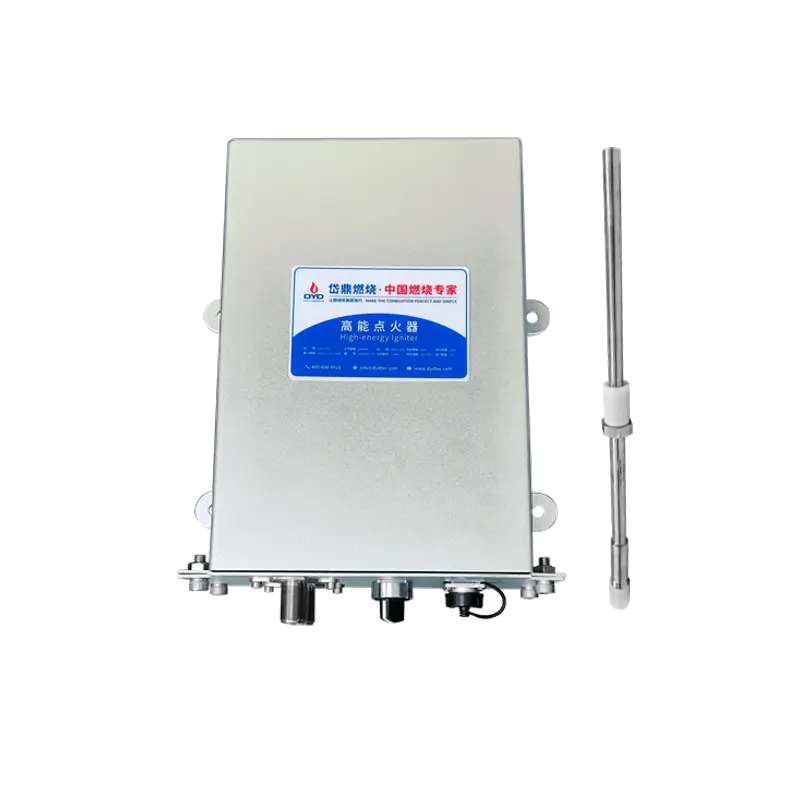
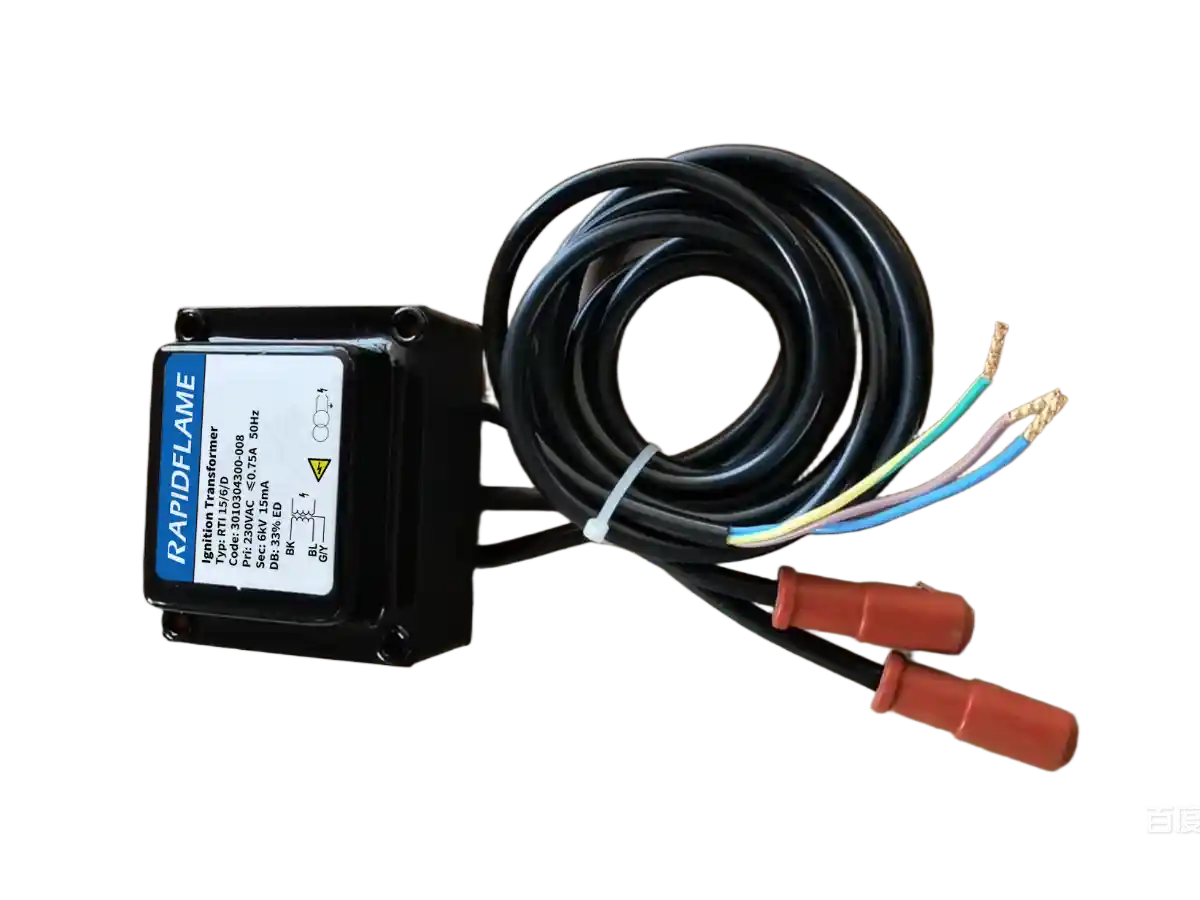
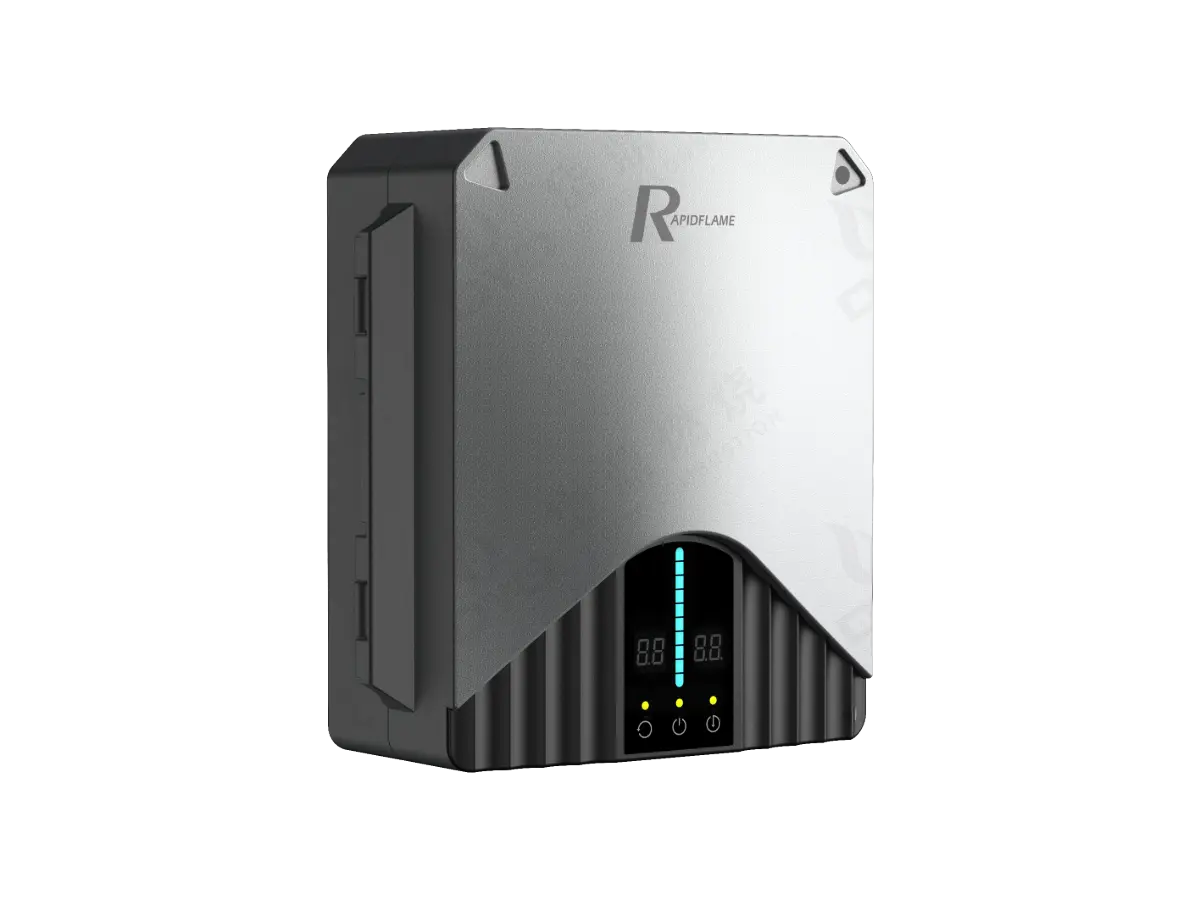
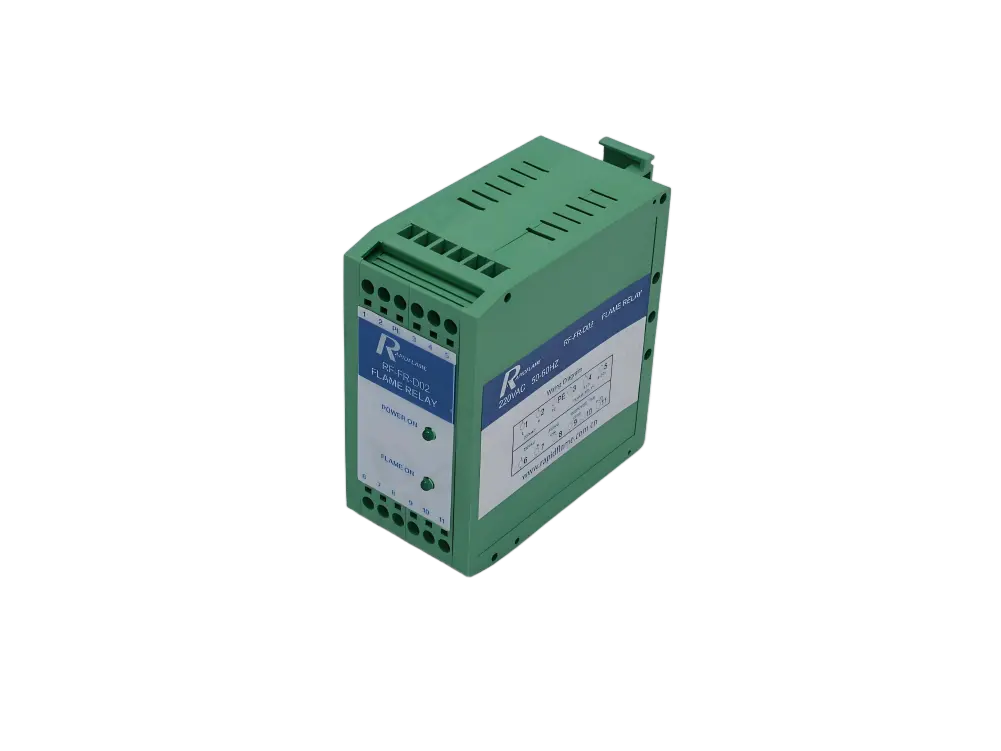
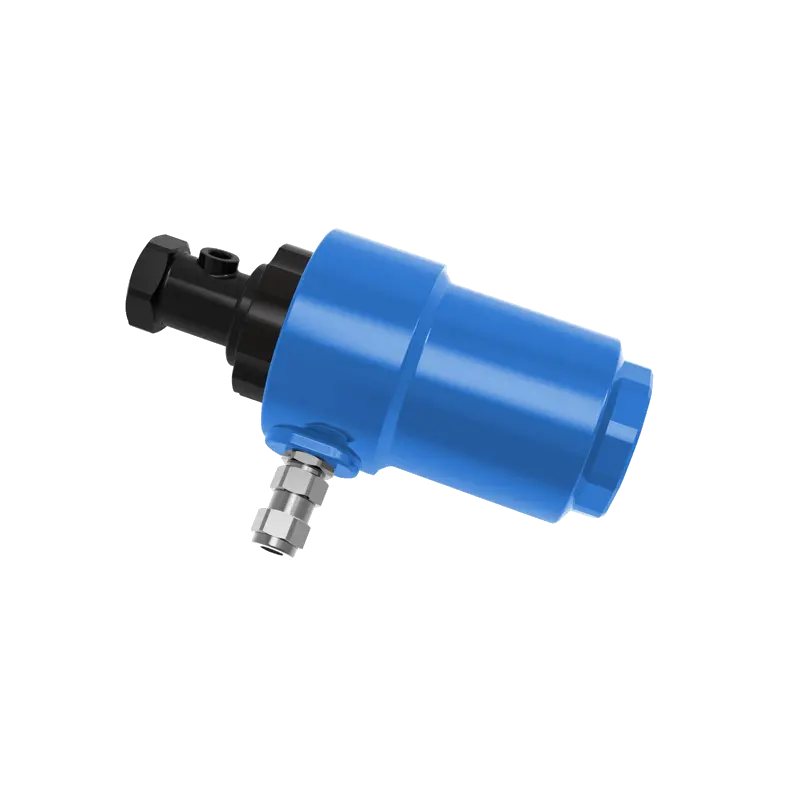
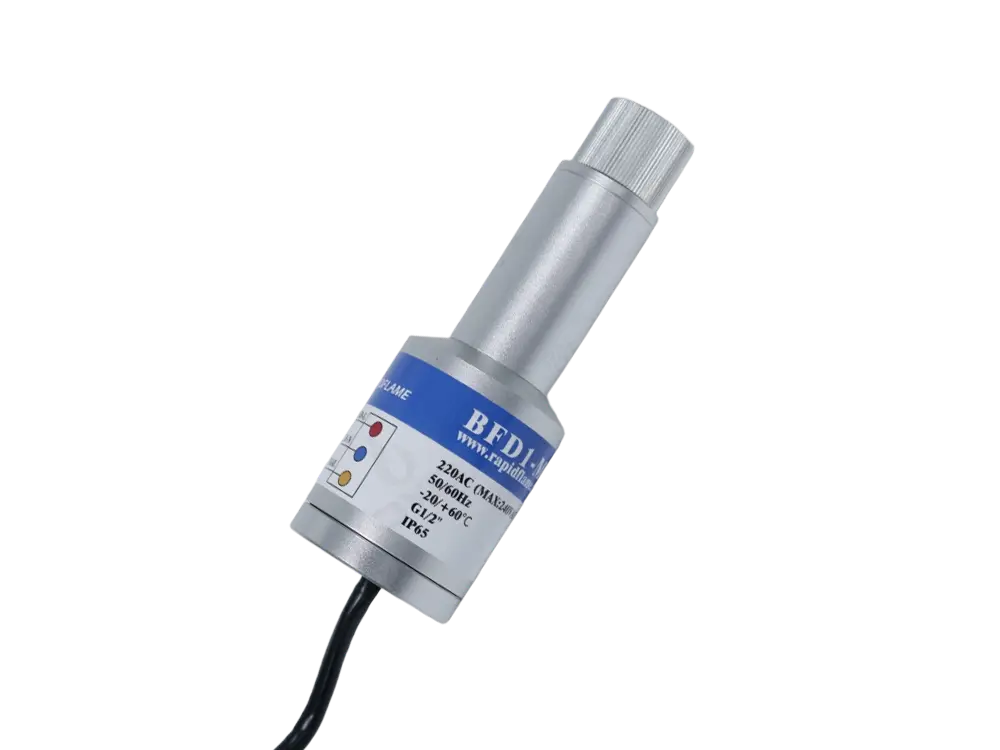
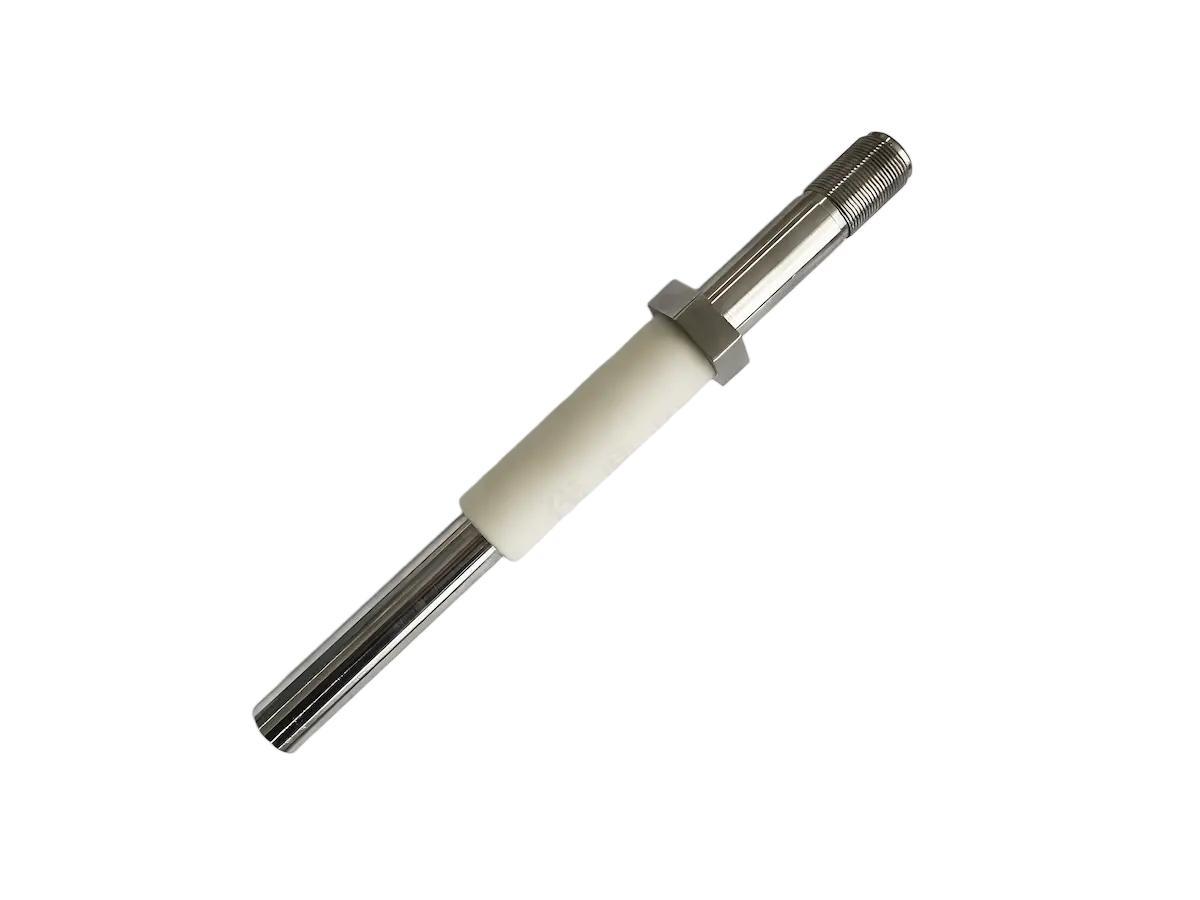
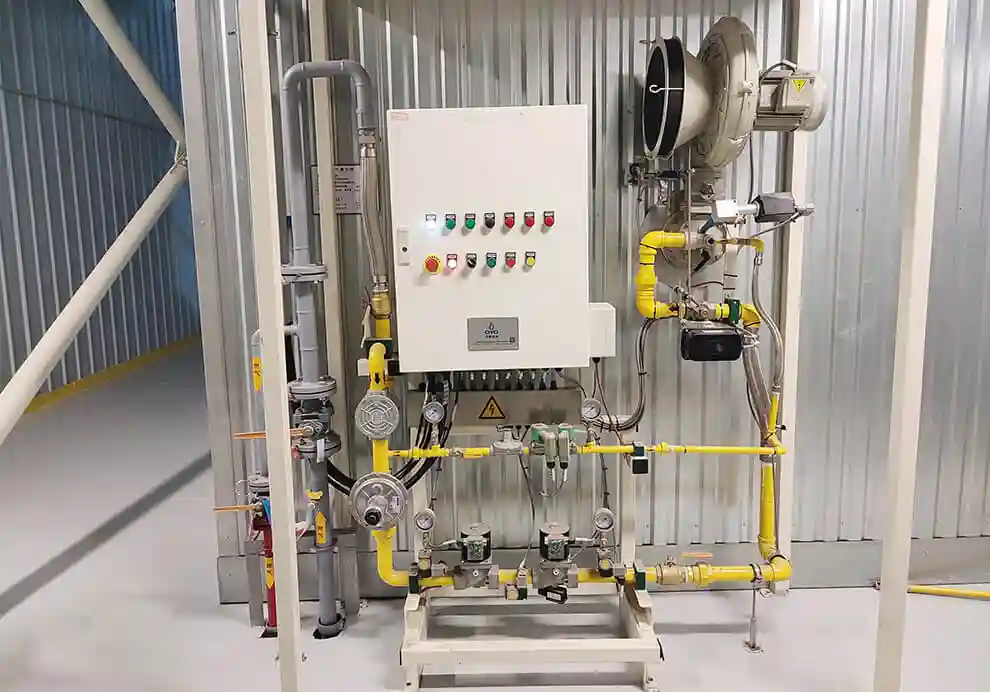
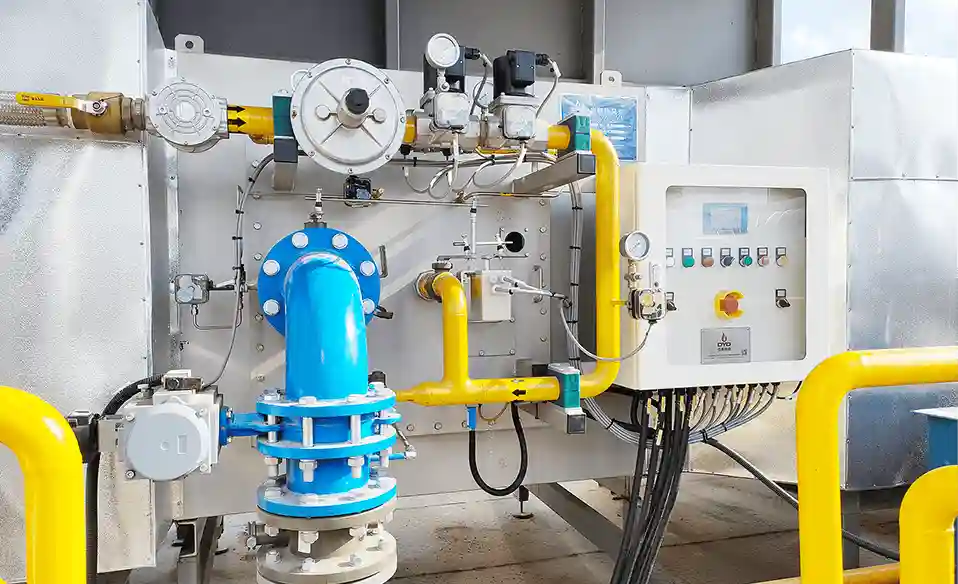
Lithium battery material production typically features high automation (the entire production line is centrally controlled by a DCS system), continuous production (operating continuously according to annual plans, stopping only for scheduled maintenance), and large equipment investment (production lines require substantial investment, with high downtime costs). The combustion system must provide automatic ignition (starting according to preset sequence without manual operation), flame detection (real-time flame status confirmation and rapid response to abnormalities), proportional regulation (automatically adjusting fuel supply according to temperature deviation), safety interlocks (multi-level protection logic ensuring safe shutdown under abnormal conditions), and long-cycle operation capability (critical components designed for tens of thousands of hours of service life).
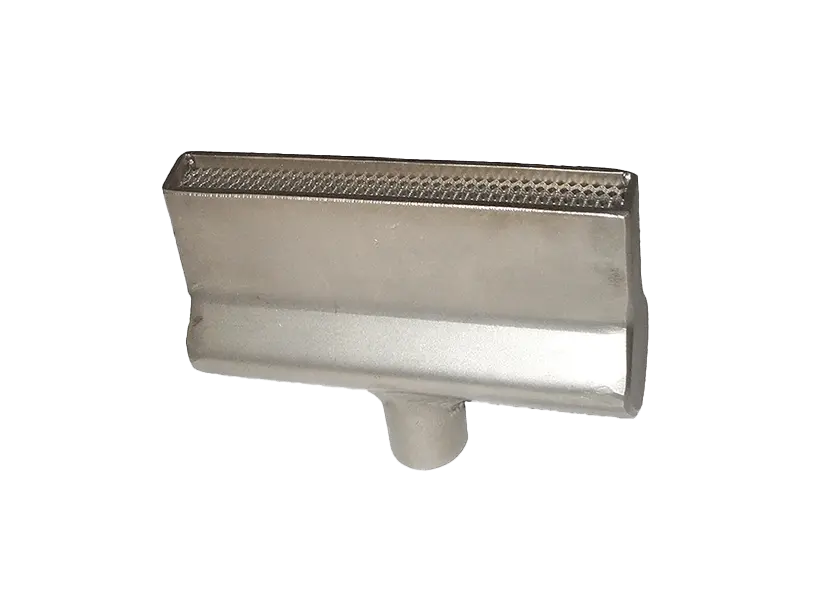
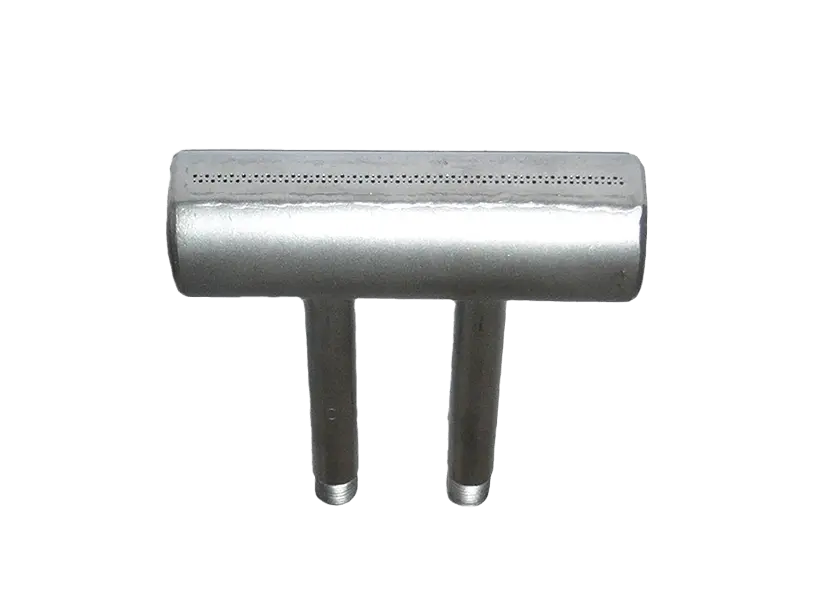
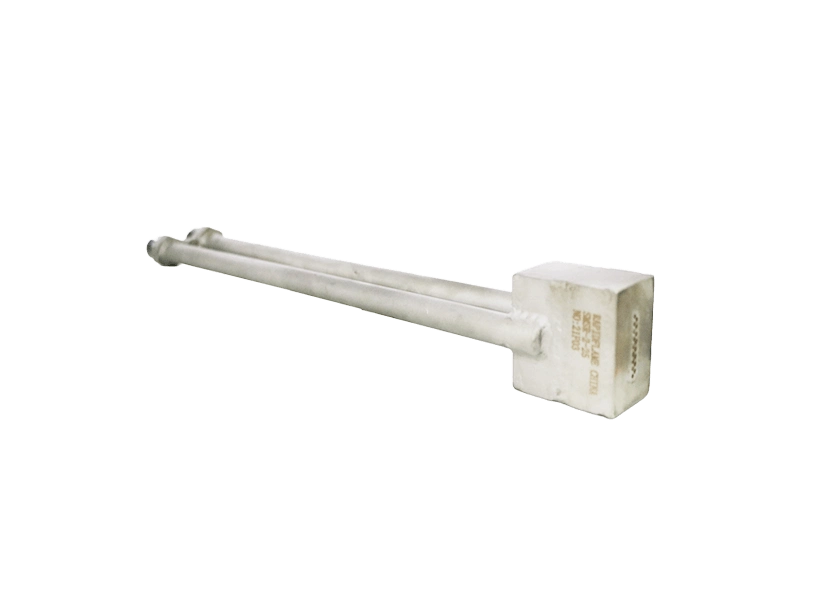
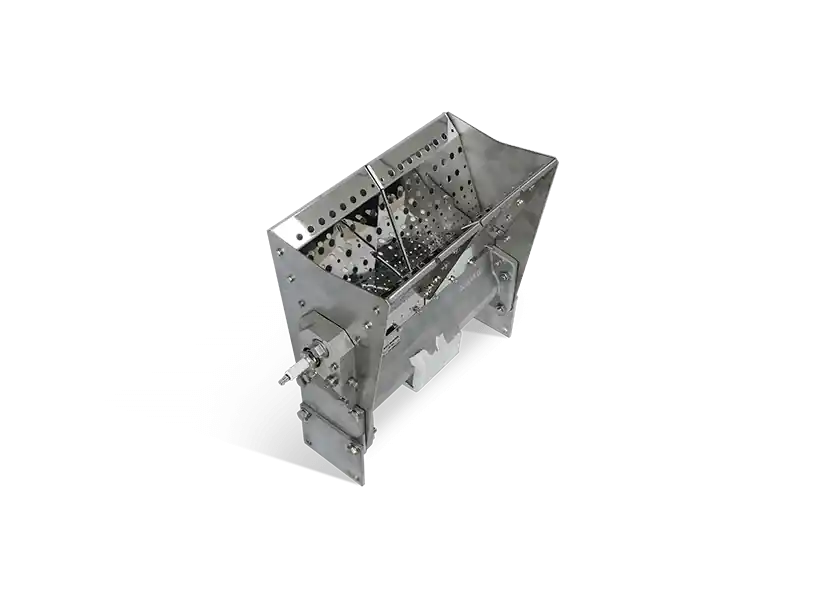
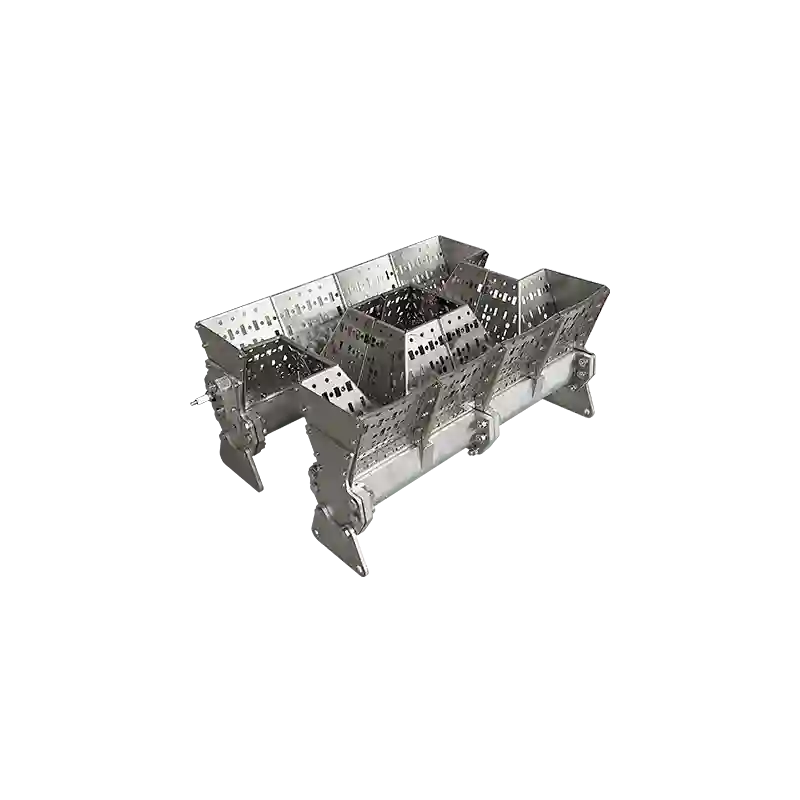
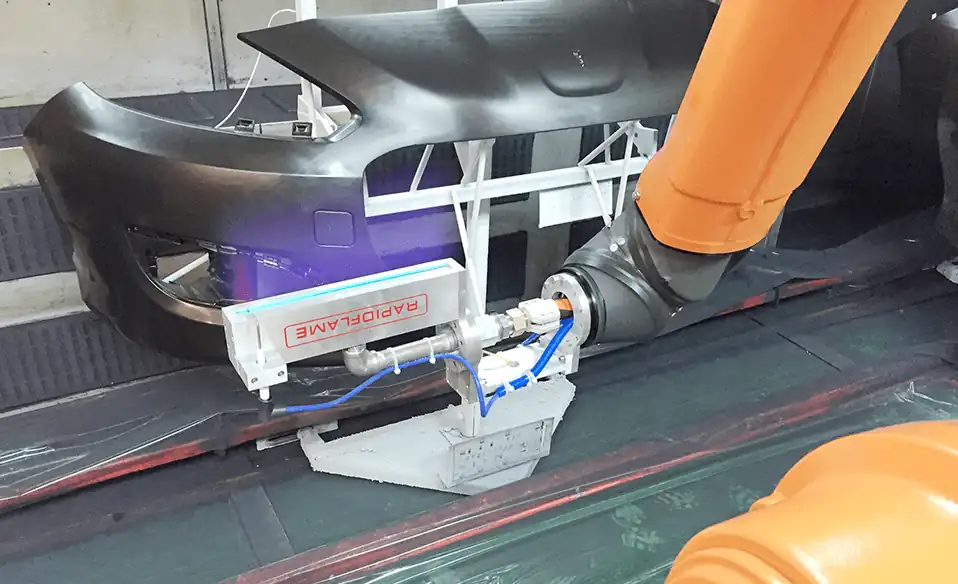
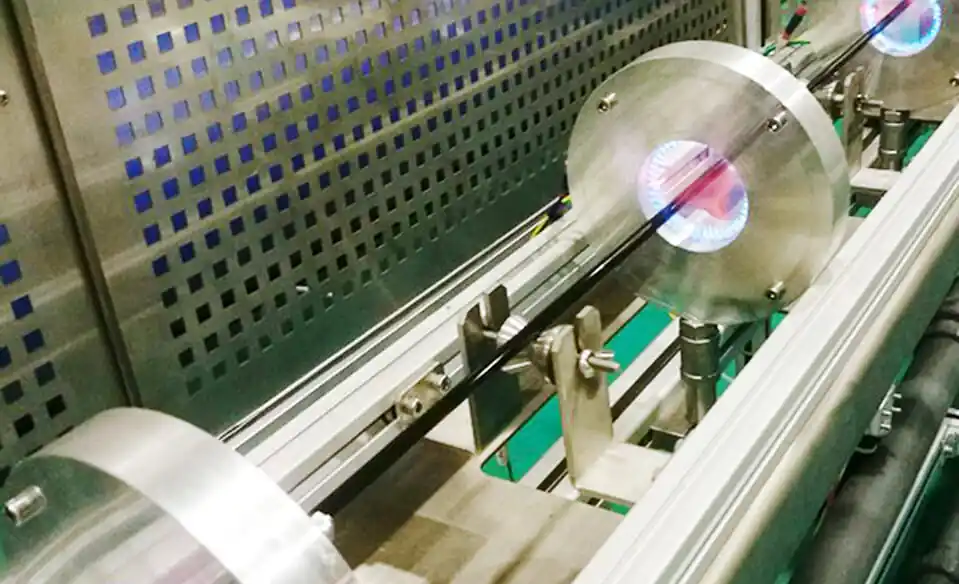
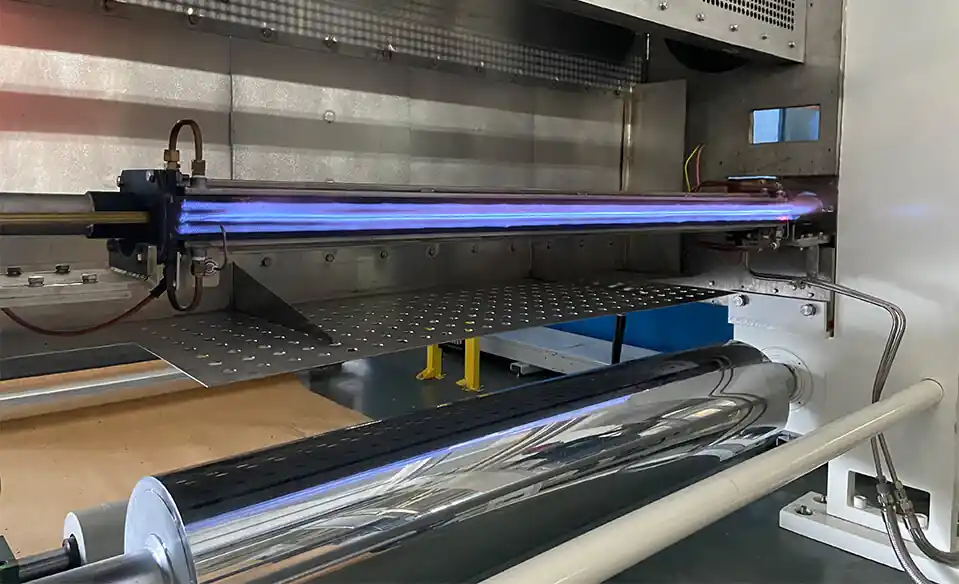
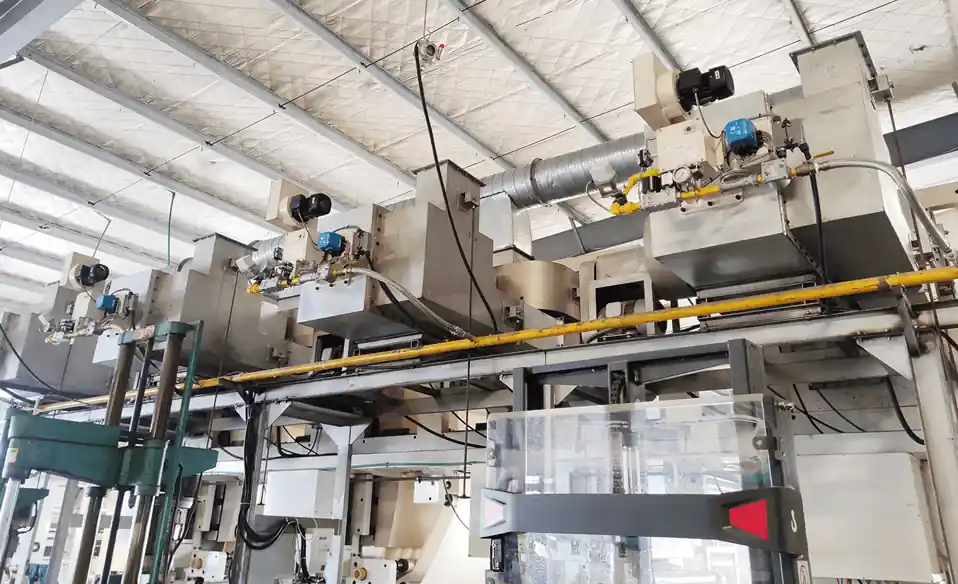
Linear burners are an important choice for new energy material air heating applications. Unlike traditional point-type burners, linear burners spread the flame along the length, forming a continuous and uniform flame band that fundamentally eliminates heat distribution non-uniformity across the duct cross-section.
Features include uniform flame distribution along the length (eliminating local hot spots and cold zones), more uniform heat release (consistent heat flux density along the flame length), suitability for high-volume air heating (matching the wide duct structure of drying hot air systems), and high temperature control accuracy (low thermal inertia, fast temperature regulation response).
DYDTEC's Linofire series linear burners are specifically designed for direct-fired heating of fresh air and medium-to-low temperature air, and can be applied to heating, drying, and curing processes in the chemical, food, and medical industries. The flame length can be customised according to duct width, and power can be flexibly configured according to thermal load requirements, making them particularly suitable for the air heating section in new energy material spray drying systems.
In lithium battery material drying applications, the advantages of linear burners include short flame (reducing the residence time of high-temperature flue gas in the furnace, which helps reduce equipment footprint), compact hot air furnace structure (can be integrated inside the duct, saving installation space), reduced high-temperature zones (dispersed flame distribution lowers peak temperatures within the furnace), and contribution to NOx reduction (uniform temperature field inhibits the formation conditions for thermal NOx).
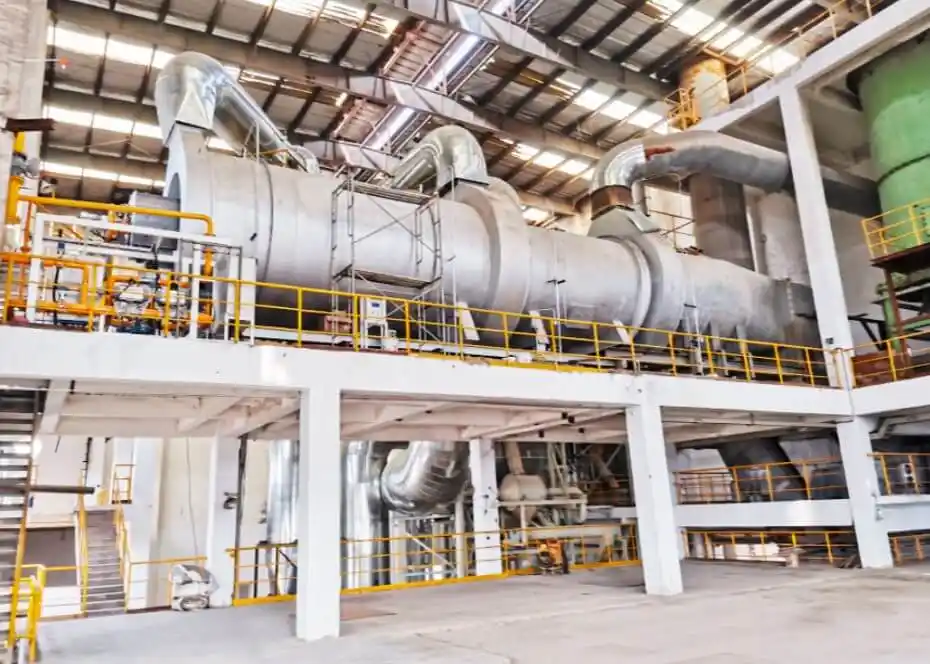
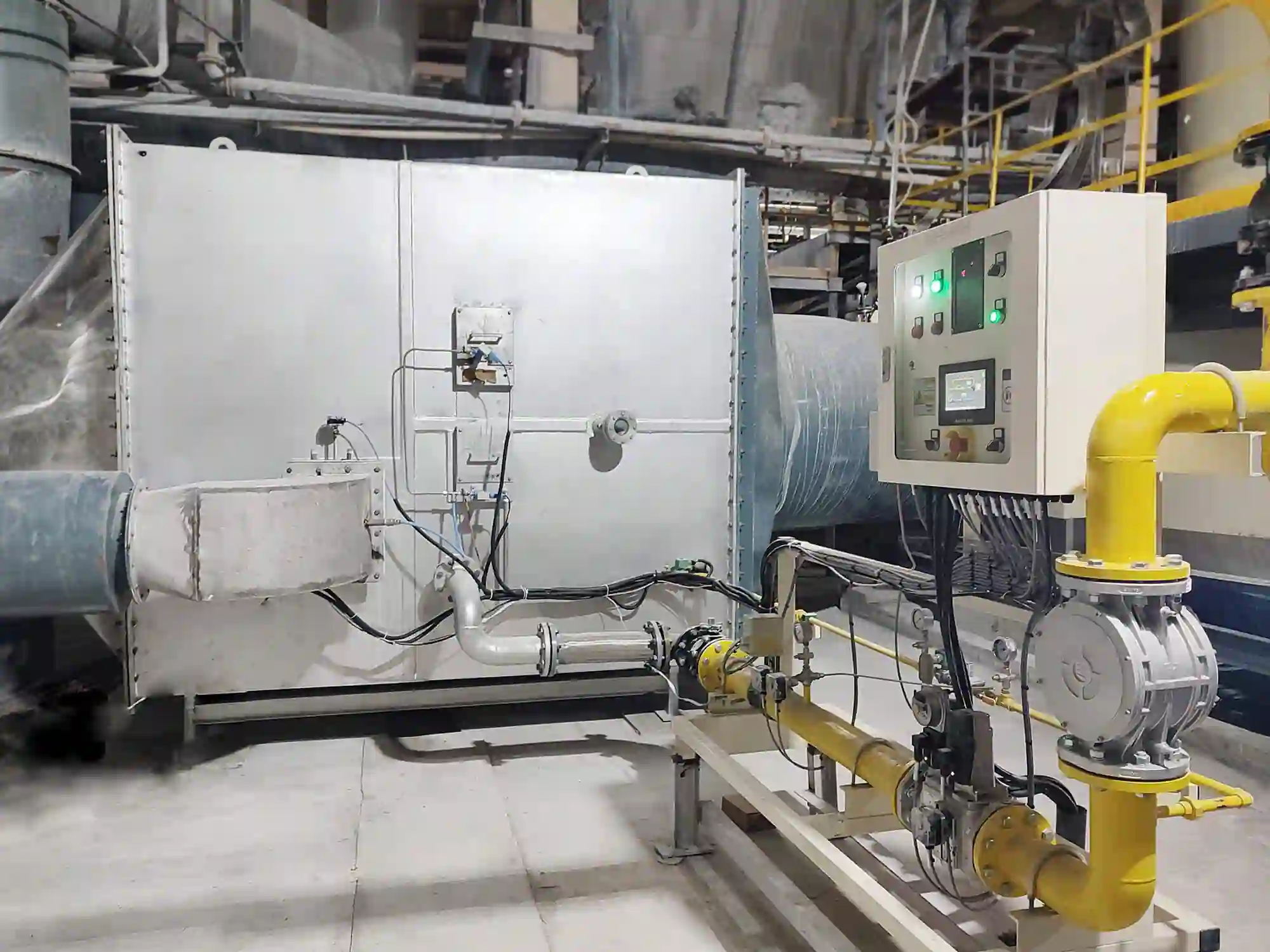
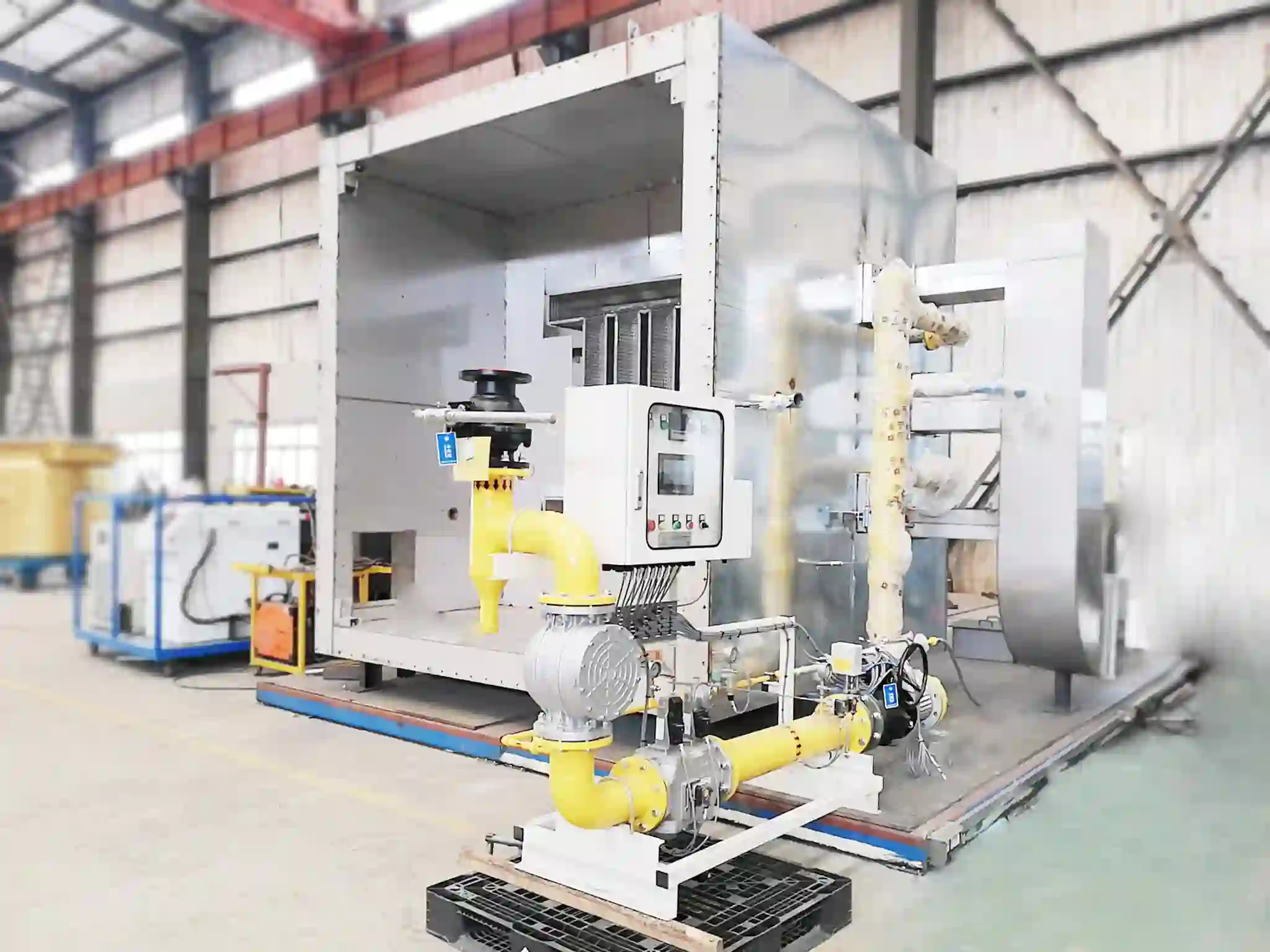
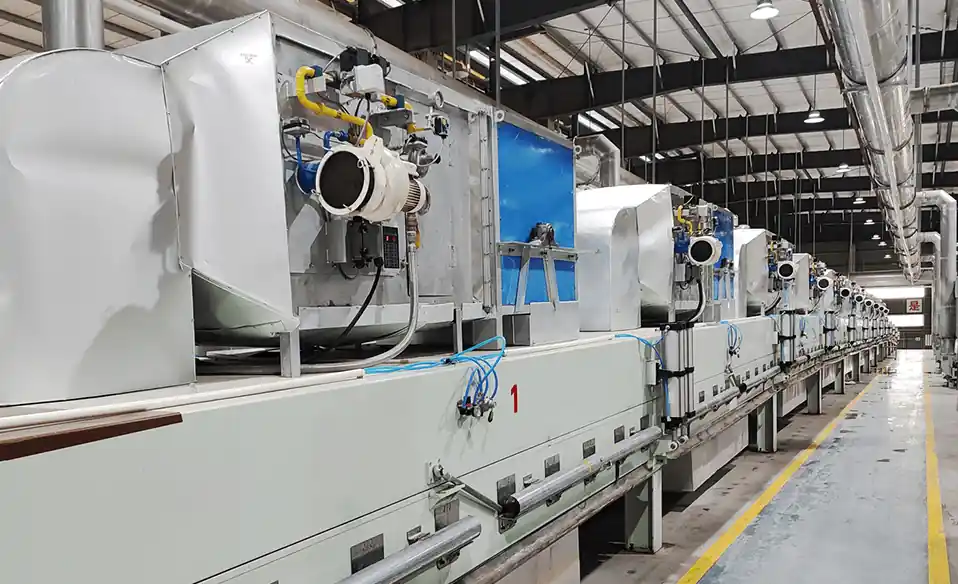
Direct-fired hot air furnaces use high-temperature combustion gases mixed with air to form process hot air. After fuel is fully combusted in the combustion chamber, high-temperature flue gas is mixed with an appropriate amount of cold air to form hot air meeting process temperature requirements, which is directly delivered to the drying equipment. Advantages include high thermal efficiency (no heat exchanger losses; almost all fuel heat is utilised), fast system response (hot air temperature tracks adjustments quickly), and compact structure (clean system layout, easy maintenance). Suitable for large-scale powder drying, spray drying systems, and industrial hot air equipment.
Indirect hot air furnaces provide clean hot air via heat exchange: the heat from combustion is transferred through tubular or plate heat exchangers to clean air, completely isolating the hot air from the flue gas and ensuring that the hot air entering the drying equipment contains no combustion products. Features include isolation of combustion flue gas from the material (avoiding contamination of powder by combustion products), stable hot air quality (high consistency of hot air cleanliness and temperature), and suitability for high-cleanliness applications (meeting the drying standards of high-purity battery materials). Suitable for high-end new energy materials, fine chemical powders, and production of contamination-sensitive materials.
DYDTEC can provide direct-fired or indirect hot air system solutions according to different process requirements, performing targeted matching for the different hot air cleanliness requirements of cathode materials such as ternary materials and lithium iron phosphate.
A professional manufacturer must understand powder material characteristics (the different drying process requirements of cathode materials, anode materials, and separator materials), drying temperature requirements (the optimal drying temperature window and allowable deviation for different materials), hot air circulation methods (flow paths and distribution of hot air within the drying equipment), and equipment operating conditions (continuous operation mode and load variation characteristics of drying equipment). The burner is not simply supplying heat but must be matched to the overall drying equipment; only by understanding new energy material drying processes can a truly suitable combustion system be designed.
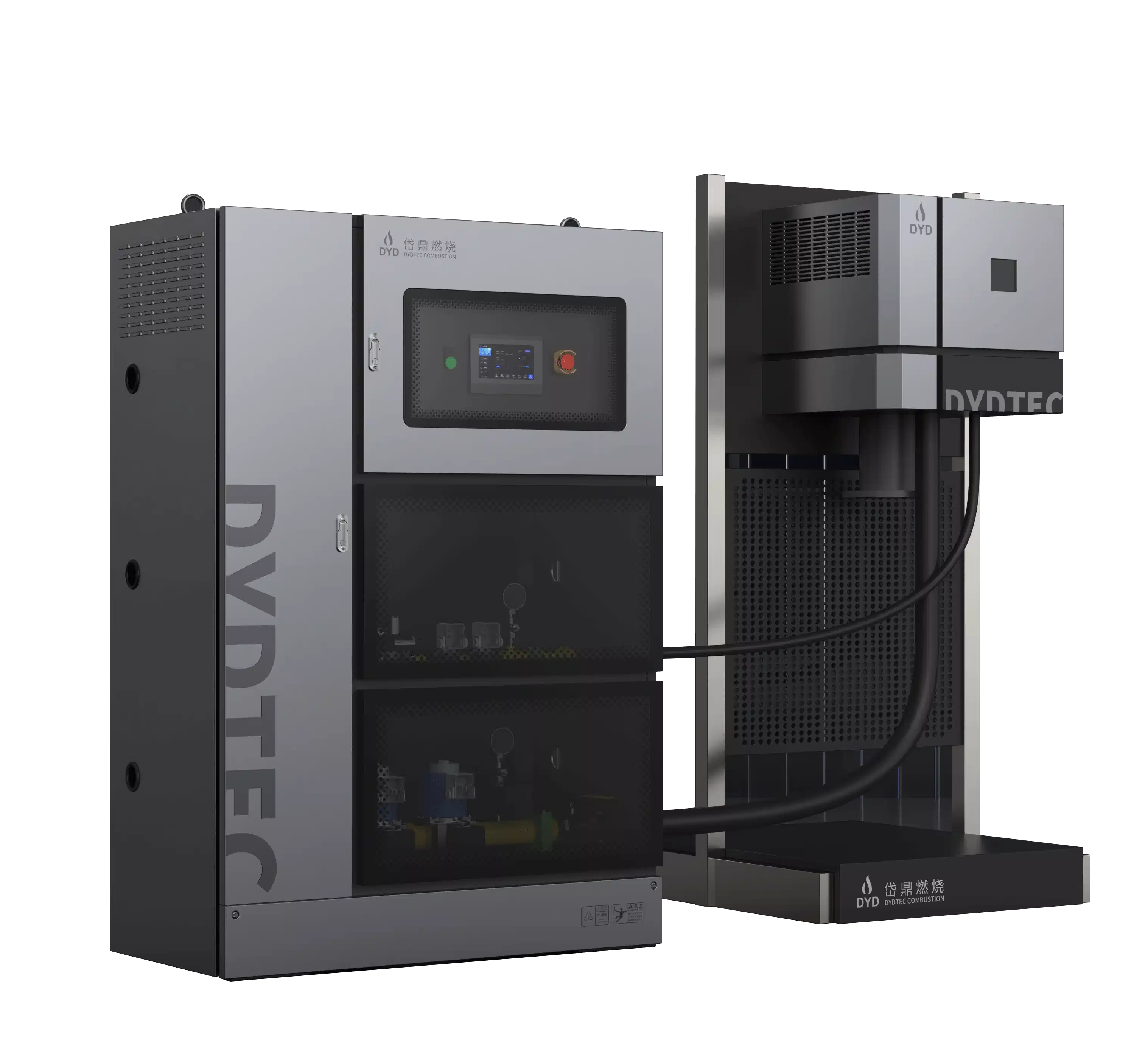
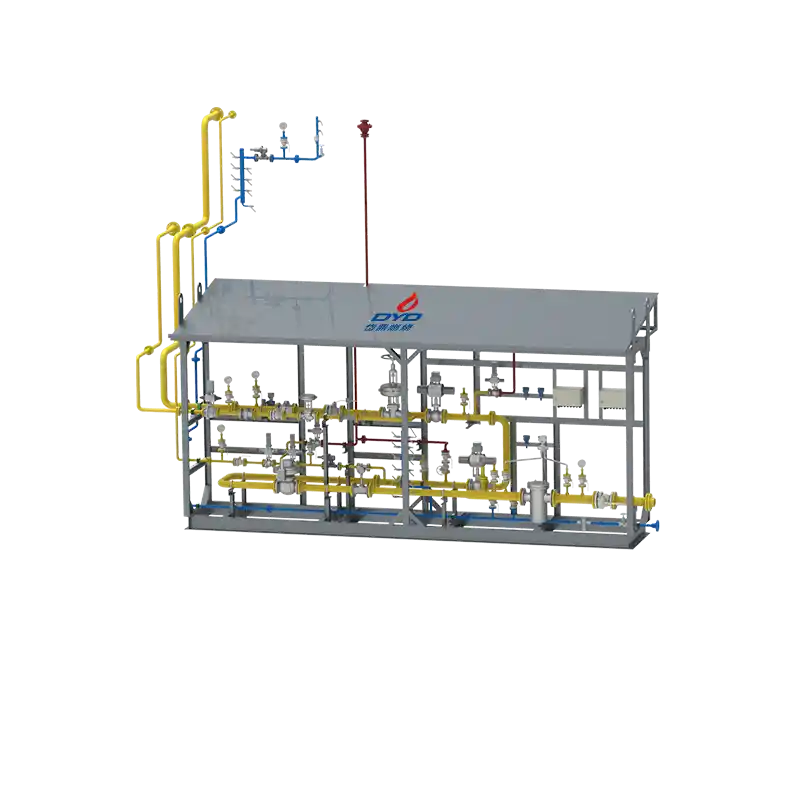
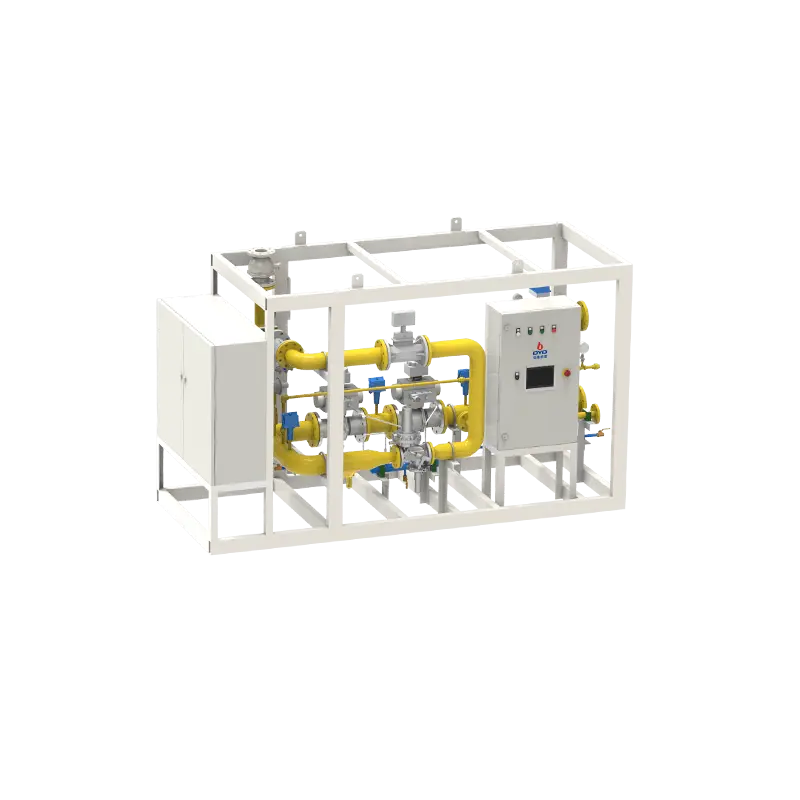
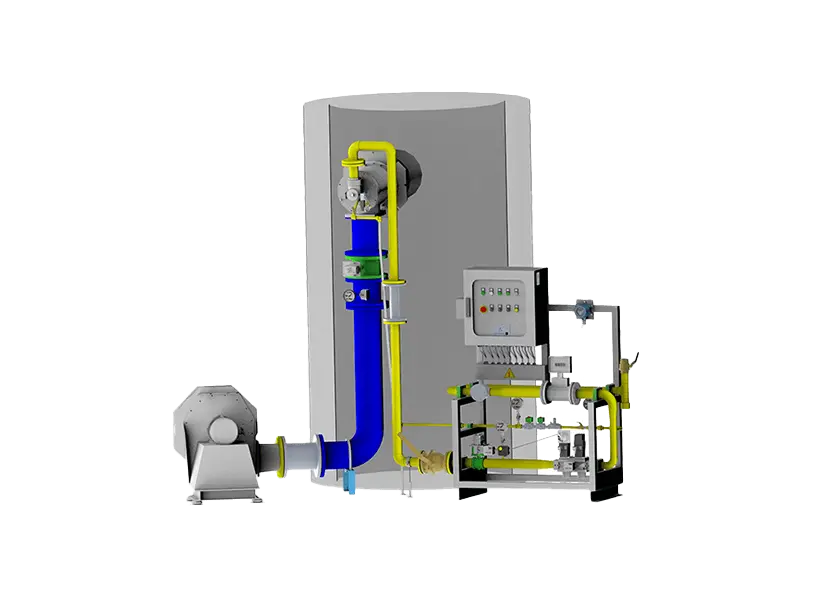
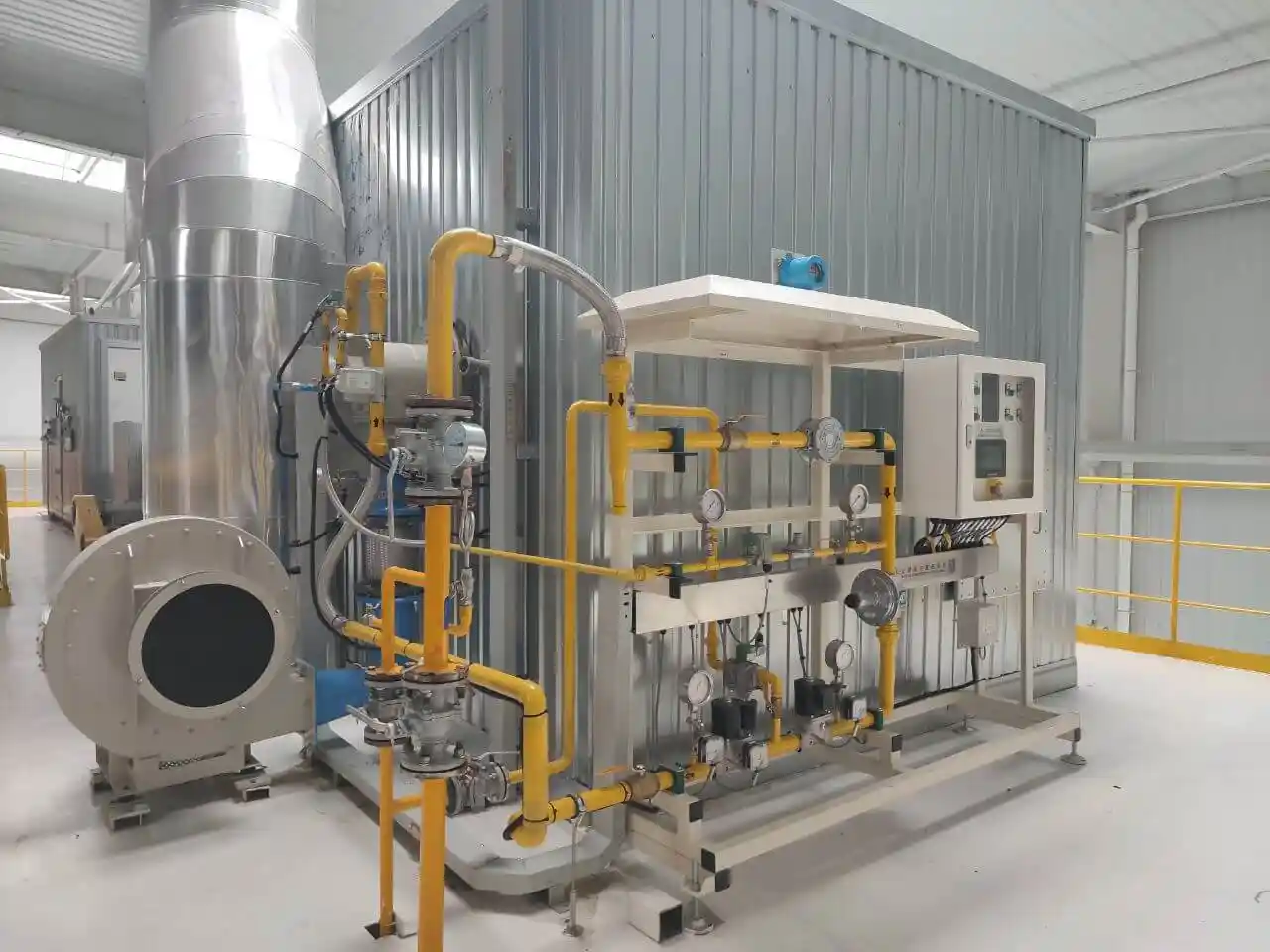
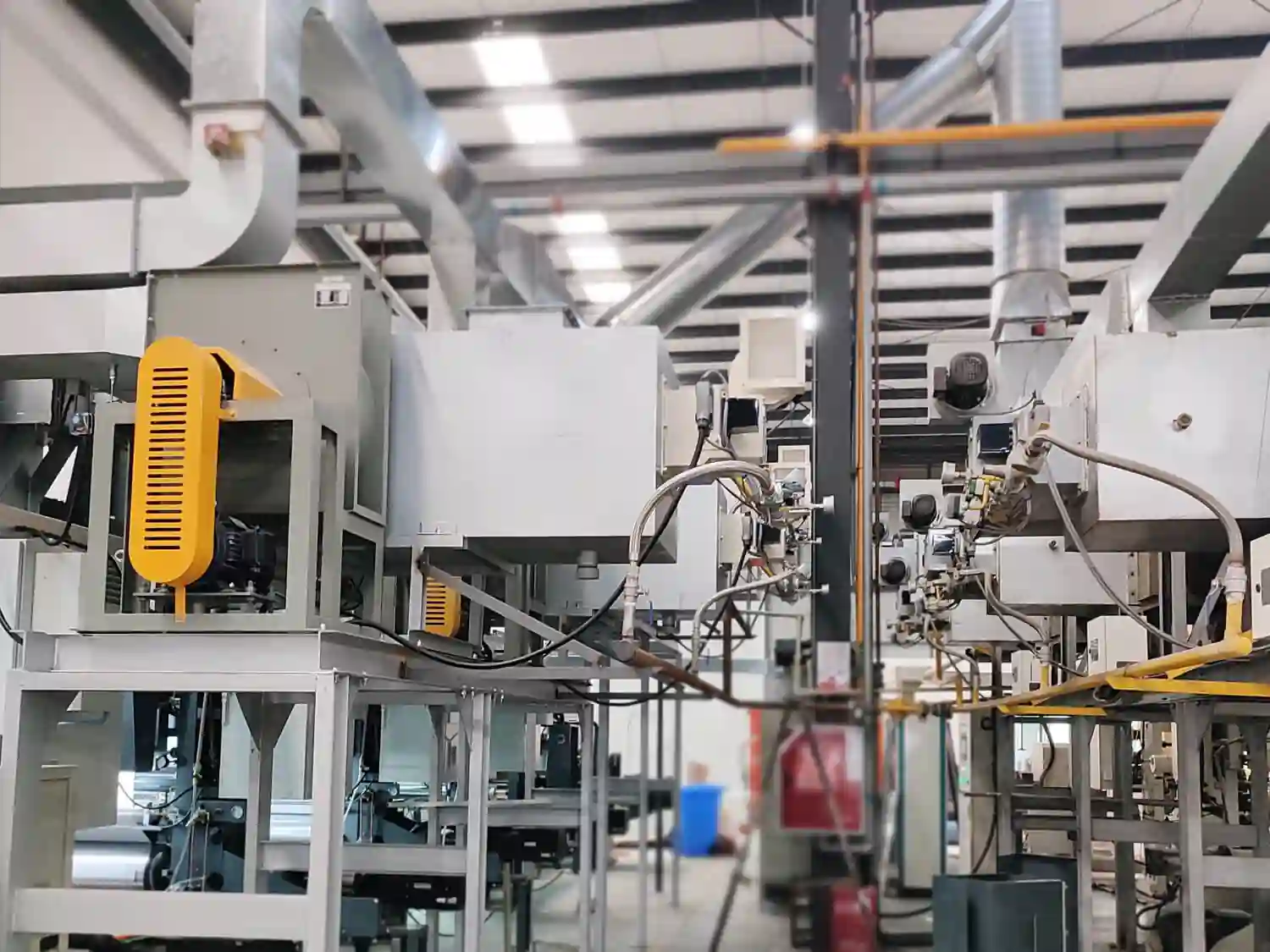
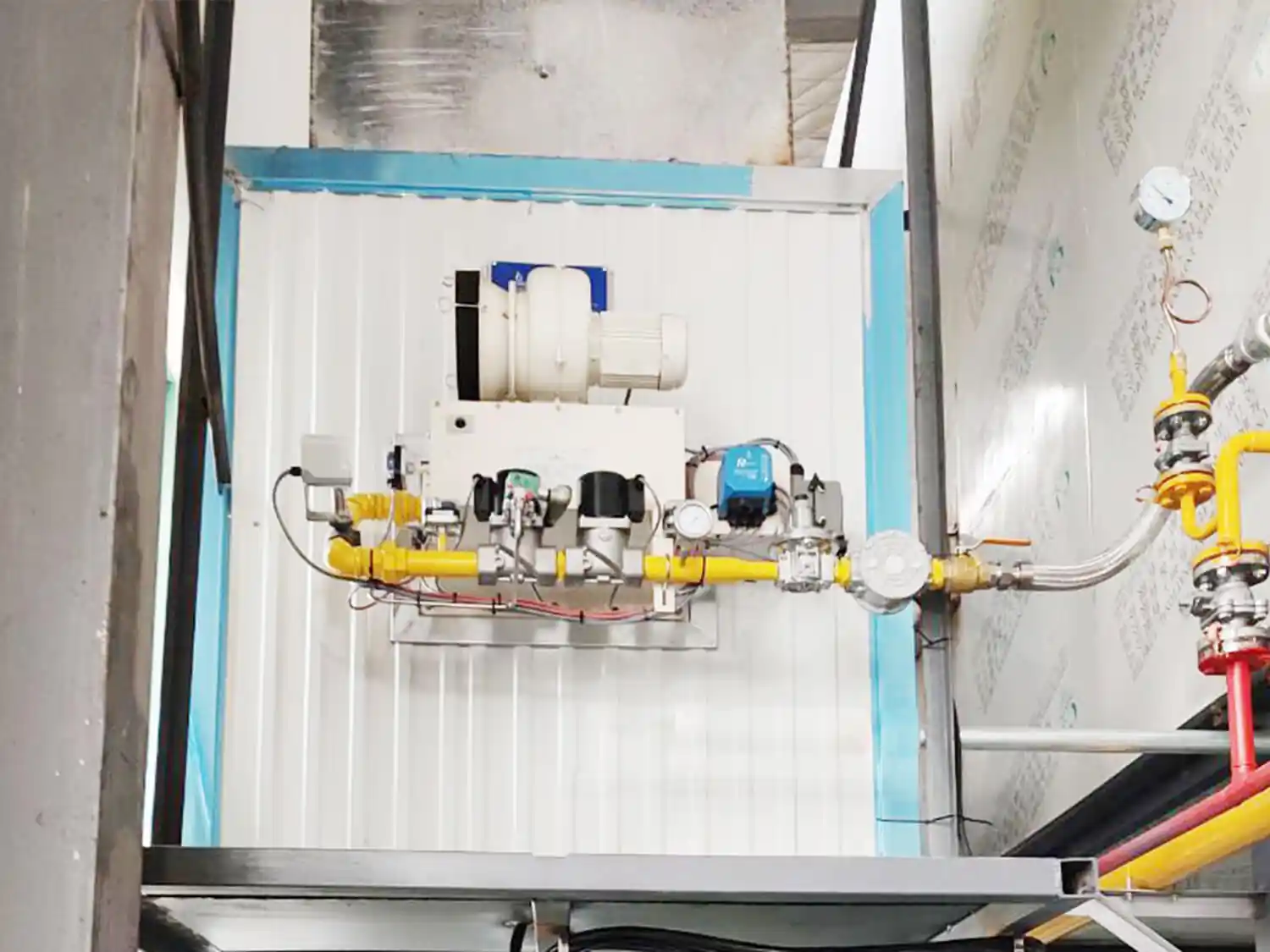
A complete new energy material heat source system includes the combustion section (burner, gas system, ignition device, flame detection), the hot air section (hot air furnace, heat exchange system, fan, ductwork), and the control section (temperature control, proportional regulation, safety protection). These subsystems must work in precise coordination to form a harmoniously operating whole. A manufacturer with clean hot air system capability can oversee the design and matching of all components from a system perspective, ensuring that hot air cleanliness and temperature control precision meet the production requirements of lithium battery materials.
Different lithium battery material production lines have different throughputs (from laboratory scale to industrial scale), temperatures (different materials have different drying temperature windows), air volumes (different drying equipment has different air volume requirements), and installation spaces (constraints from site layout and piping routing). The manufacturer must provide thermal load calculation (accurately determining heat demand for the drying process), burner matching (selecting the most suitable power and regulation range), hot air system design (optimising furnace structure, ductwork, and fan configuration), and control solutions (control strategies compatible with the DCS system), ensuring full compatibility between the combustion system and the material production line's structure and control logic.
DYDTEC is the industrial combustion brand of Shanghai DYDTEC Equipment Technology Group Co., Ltd., focusing on the R&D and manufacturing of industrial burners, low-NOx burners, linear burners, hot air furnaces, and combustion system integration. Through long-term service in the new energy material industry, DYDTEC has accumulated extensive project experience in lithium battery material drying and hot air systems.
Product applications cover lithium battery materials, industrial drying, chemical powders, new material processing, and environmental protection industries, forming a complete product range from standard products to non-standard customisation. Customised thermal energy solutions can be provided according to different material characteristics and drying process requirements.
1. Designed for new energy material processes
For lithium battery material drying requirements, DYDTEC can provide heat source solution design (designing hot air systems according to the drying characteristics of cathode and anode materials), burner selection (selecting the most suitable burner type and power rating), hot air system matching (optimising furnace structure, ductwork, and heat exchange configuration), and temperature control optimisation (temperature control strategies coordinated with the DCS system), ensuring tight integration between the heat source system and the new energy material drying equipment's process requirements.
2. High-efficiency energy-saving combustion technology
By optimising air-gas mixing (maintaining optimal air-fuel ratio across the full load range), improving combustion efficiency (maximising release of fuel chemical energy), and precise proportional regulation (automatically adjusting fuel supply and combustion air volume according to temperature deviation), DYDTEC helps reduce natural gas consumption, operating costs, and emission pressures.
DYDTEC linear burners, in lithium battery material industry applications, achieve precise heat matching through continuous proportional regulation and uniform flame distribution. In the high-volume air heating of spray drying systems, the uniform heat release of linear burners effectively reduces hot air temperature fluctuation amplitude, improving product consistency.
3. Support for new energy equipment manufacturer OEM integration
Serving lithium battery material equipment manufacturers, spray drying equipment manufacturers, powder equipment manufacturers, and hot air furnace manufacturers, DYDTEC can provide standard burners, custom combustion systems, and technical support, helping new energy equipment manufacturers enhance complete machine performance and market competitiveness.
Includes lithium iron phosphate (spray drying and post-treatment of LFP precursors), ternary materials (drying and crystallisation of NCM, NCA precursors), and lithium manganese oxide (drying of LMO materials). Cathode materials typically have narrow drying temperature windows, requiring higher hot air temperature uniformity and stability than ordinary chemical powders.
Includes synthetic graphite (drying and screening after graphitisation), natural graphite (drying after spheroidisation processing), and carbon-based materials (drying of hard carbon, soft carbon, and other new anode materials). Anode material drying typically requires avoiding high-temperature oxidation; the hot air system must control oxygen content and temperature upper limits.
Applied in separator hot air drying (drying of ceramic-coated separators), coating line drying (continuous drying of electrode slurries on current collectors), and solvent evaporation treatment (recovery of NMP and other solvents with hot air circulation). Separator and coating drying have the highest requirements for hot air cleanliness, typically requiring indirect hot air furnaces and high-efficiency filtration systems.
Includes solid-state battery materials (drying of sulfide and oxide solid electrolytes), composite materials (processing of cathode-electrolyte composites), and functional powders (drying of conductive agents, additives, and other functional materials). Hot air system design for new battery materials typically requires customised development according to the special physical properties of the materials.
Q1: Why do lithium battery materials require dedicated drying burners?
Because new energy materials demand high temperature stability, hot air cleanliness, and drying uniformity. The control precision and hot air quality of ordinary industrial burners may not meet the stringent standards for battery materials. Temperature deviations may directly affect the material's first-cycle efficiency and cycle life in batteries, while trace impurities in the hot air may pose battery safety risks.
Q2: What fuel is used for lithium battery material drying burners?
Common fuels include natural gas, LPG, and industrial clean gas. Most lithium battery material producers use natural gas, while some regions choose LPG or mixed gas depending on fuel supply conditions. Since battery materials are sensitive to impurities, fuel purity also needs to be considered.
Q3: Why are hot air furnaces commonly used for lithium battery material drying?
Hot air furnaces can provide stable hot air and conveniently control temperature, air volume, and cleanliness, meeting the multi-dimensional requirements of battery material drying for hot air parameters. Processes such as spray drying and pneumatic drying have clear requirements for hot air temperature, velocity, and distribution uniformity, and the hot air furnace system design must be matched to the specific drying equipment type.
Q4: Are linear burners suitable for lithium battery material drying?
Yes. They are particularly suitable for high-volume air heating, spray drying systems, and continuous drying equipment. Their uniform heat distribution and wide regulation range can meet the requirements of lithium battery material production for hot air stability and consistency. In the air heating section of spray drying, the application of linear burners helps reduce hot air temperature fluctuations and improve batch-to-batch consistency of powder products.
Q5: What should I look for when selecting a lithium battery material drying burner manufacturer?
Key focus areas include whether the manufacturer has new energy material application experience (understanding the specific heat source system requirements of cathode and anode materials), hot air system design capability (ability to complete overall clean hot air system design), support for non-standard customisation (ability to provide customised solutions according to different materials and process parameters), and proven long-term operation cases (successful implementation in similar material drying projects). DYDTEC can provide professional thermal energy solutions for lithium battery material drying equipment.
The lithium battery material drying burner affects not only drying efficiency but also material quality, product consistency, energy consumption, and production stability. In new energy material manufacturing, the performance difference of the combustion system is directly reflected in cathode material capacity utilisation, anode material first-cycle efficiency, and battery cycle life—these indicators together determine the market competitiveness of battery products.
An excellent lithium battery material drying burner manufacturer must simultaneously possess industrial combustion technology (mastering design methods for efficient and stable combustion), clean hot air system capability (understanding the stringent hot air cleanliness requirements of high-purity materials), new material process understanding (familiarity with the drying characteristics and quality standards of cathode and anode materials), and engineering customisation capability (customised design according to different materials and process conditions). Only by integrating these capabilities into lithium battery material drying equipment integration can seamless coordination between the combustion system, drying equipment, process requirements, and product quality standards be achieved, delivering stable, efficient, and clean new energy material drying.
Leveraging its industrial burner, linear burner, and hot air furnace system integration technology, DYDTEC provides efficient, stable, and clean thermal energy solutions for lithium battery materials, new energy powders, and chemical drying equipment manufacturers. It is a professional supplier worth considering when selecting a lithium battery material drying burner manufacturer.