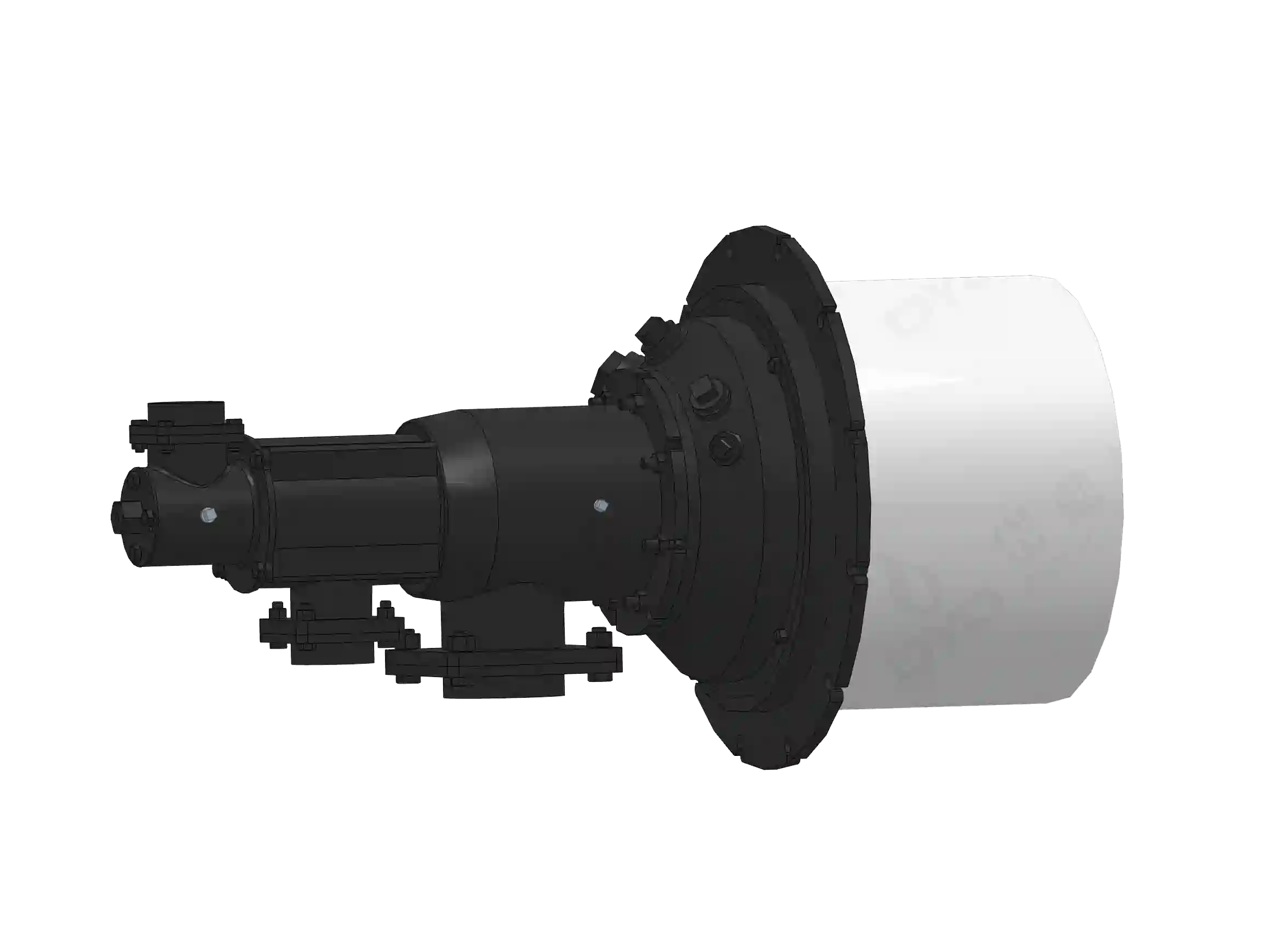
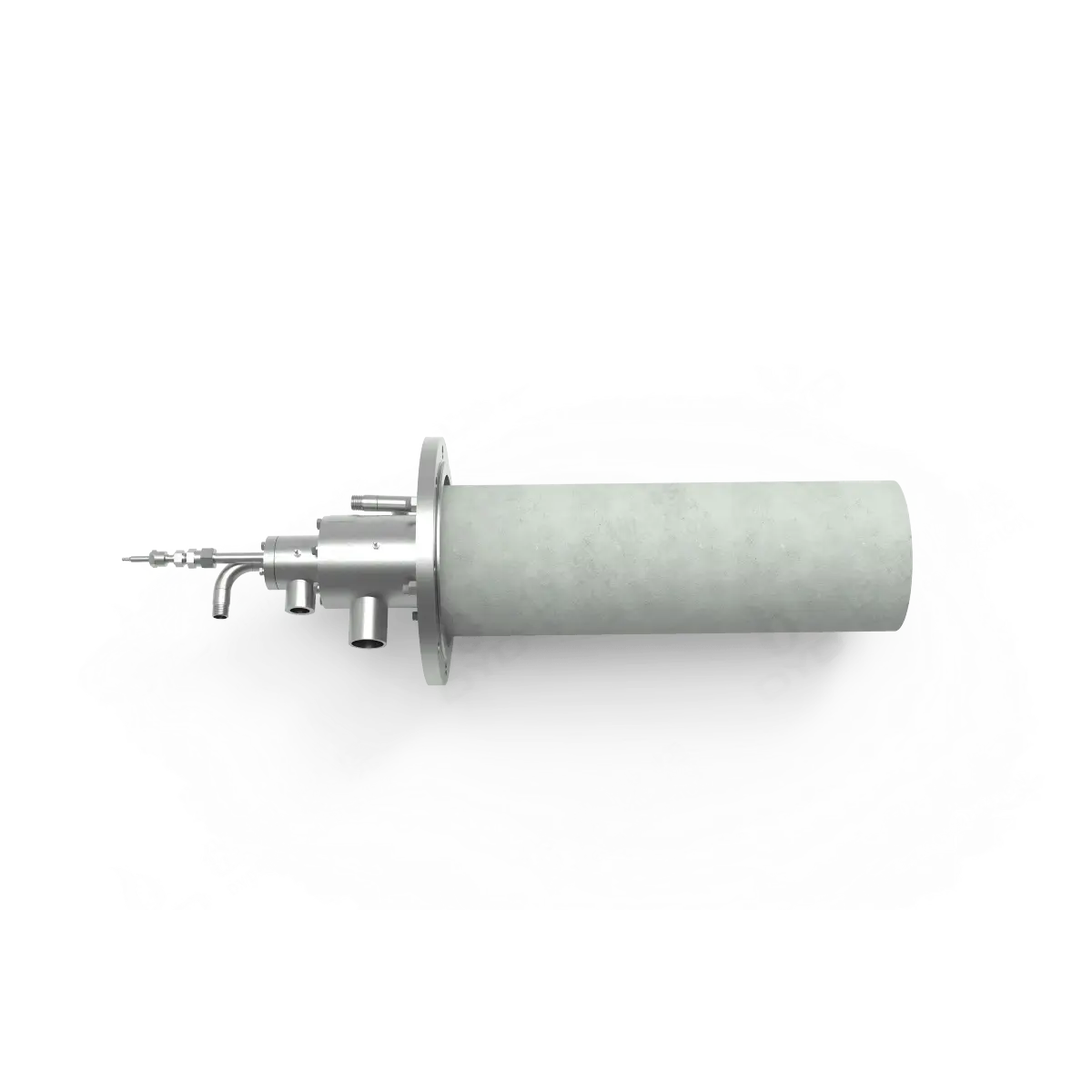
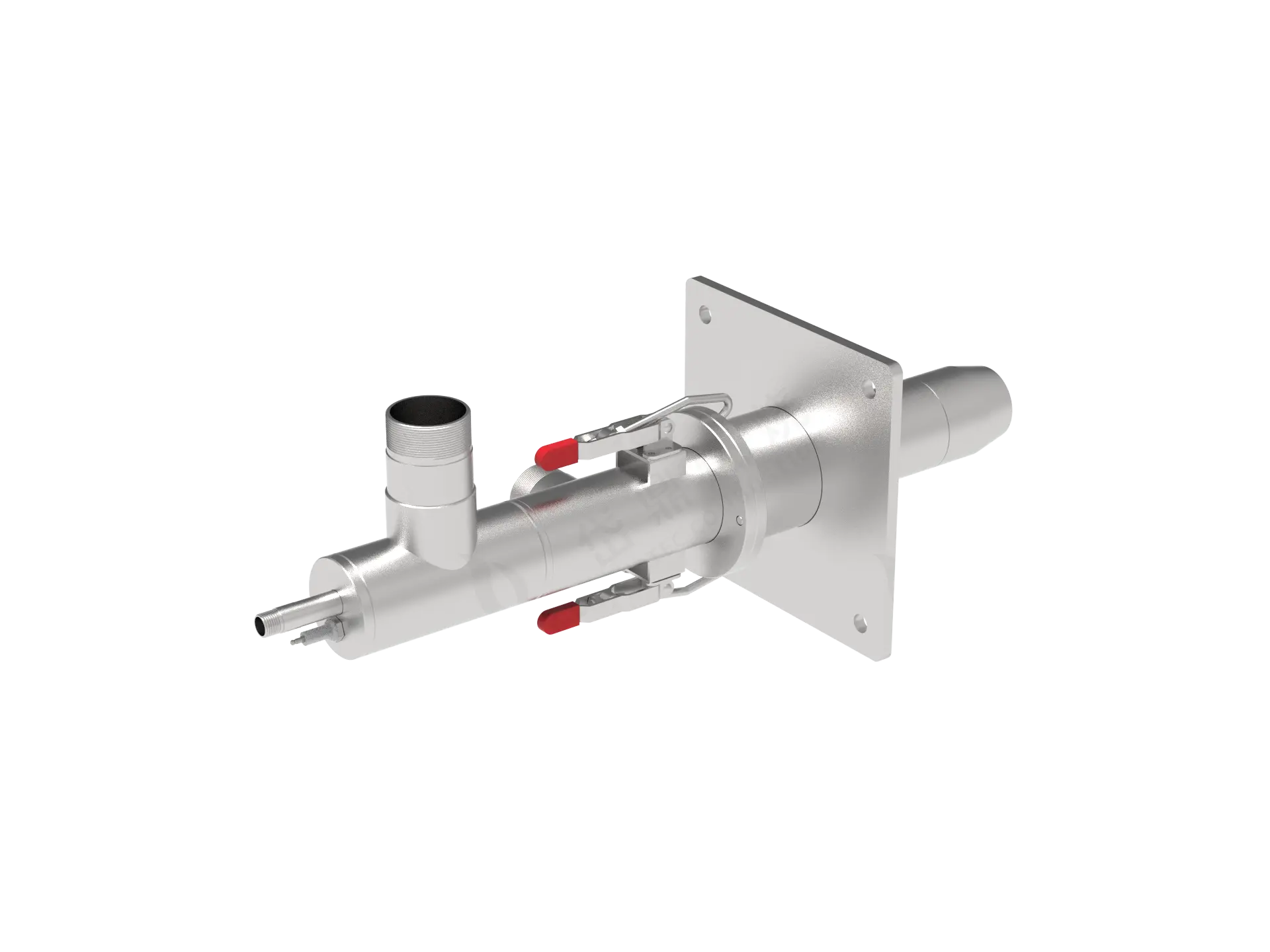
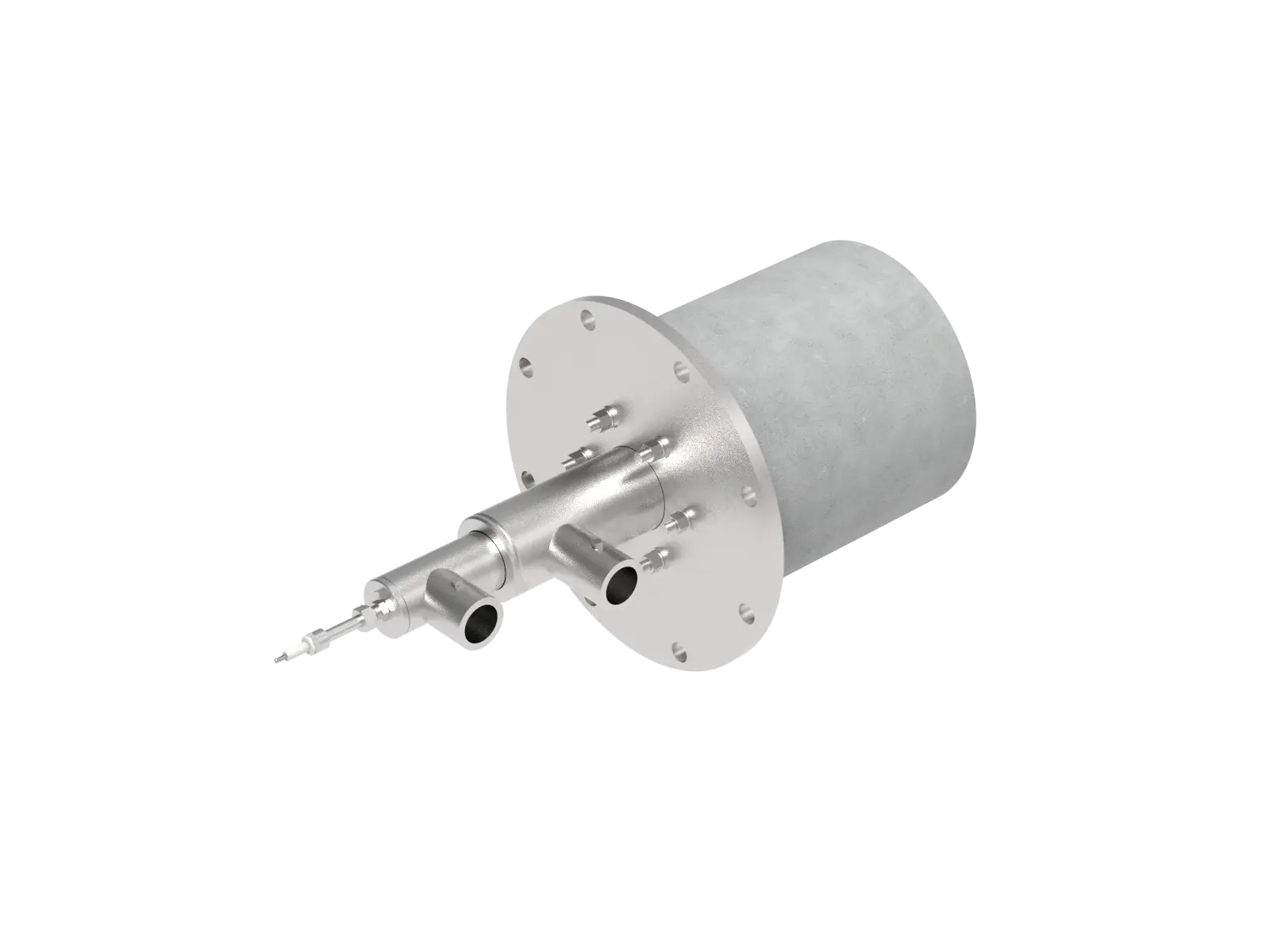
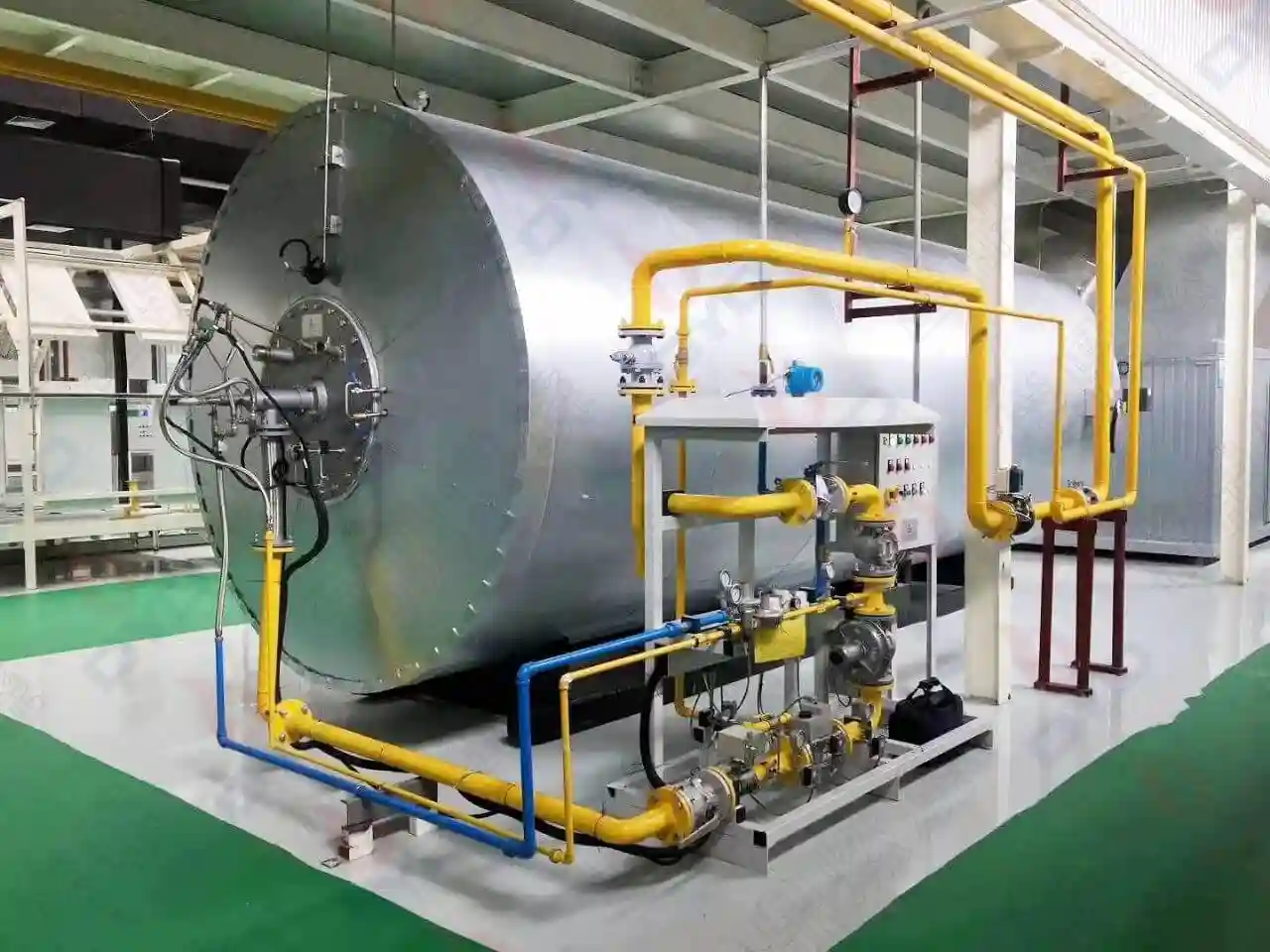
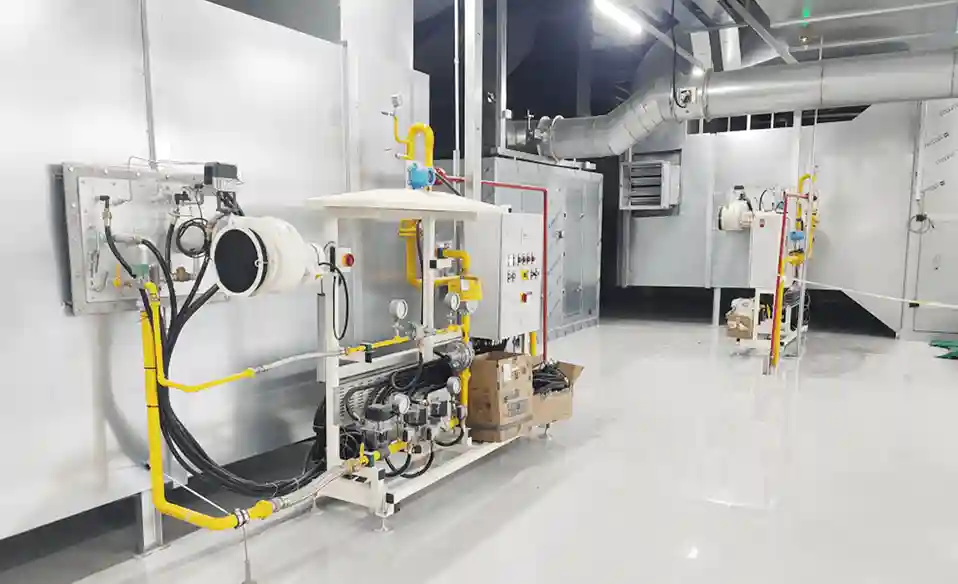
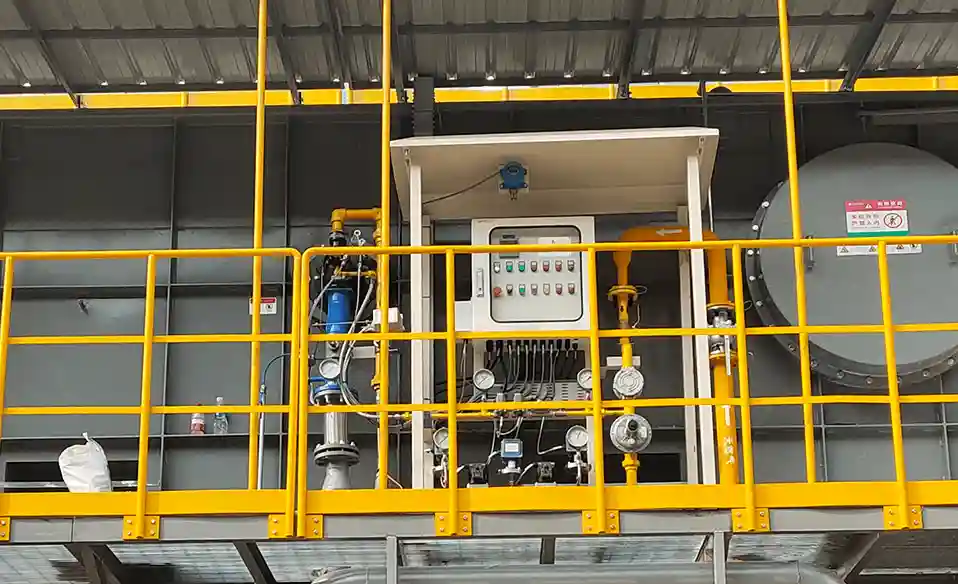
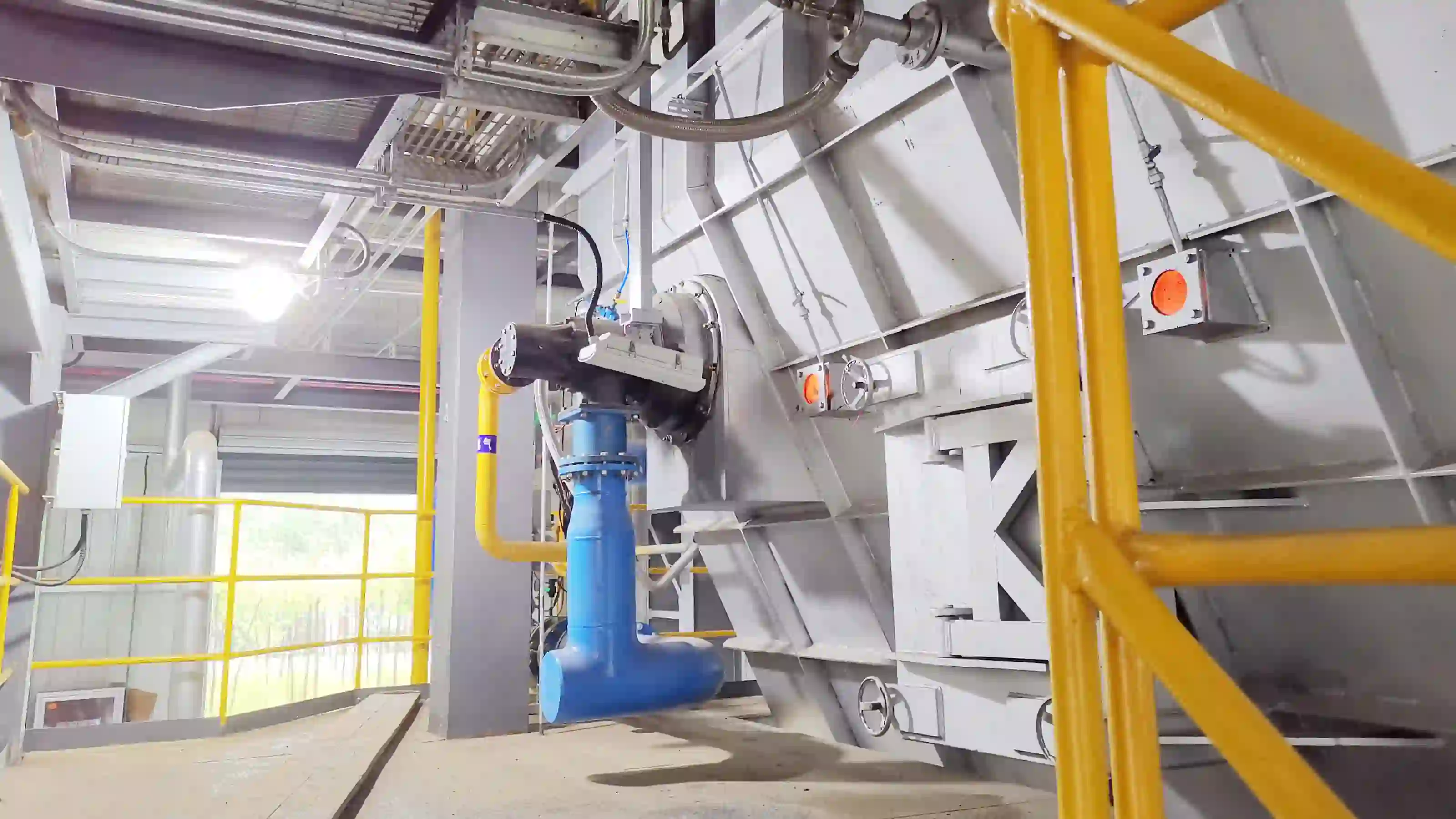
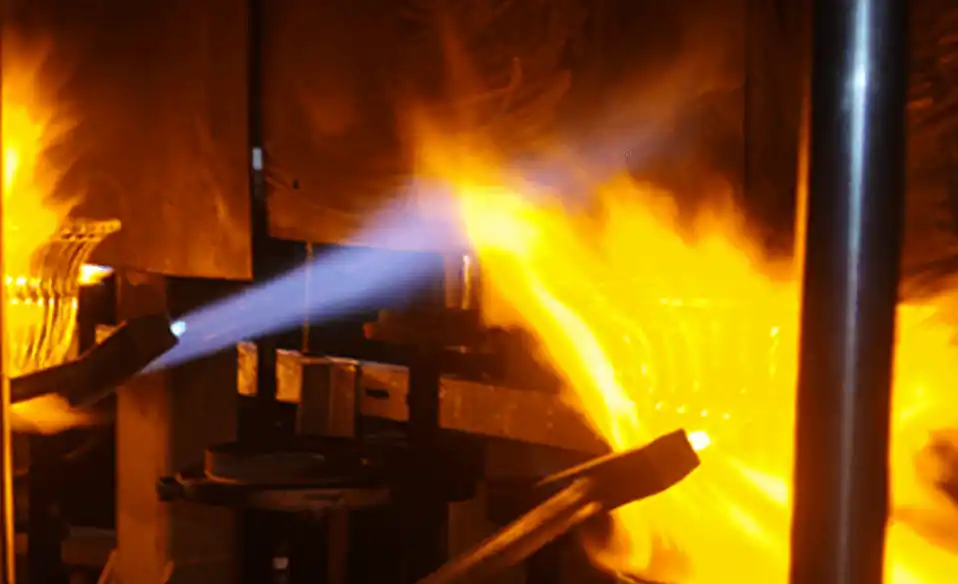
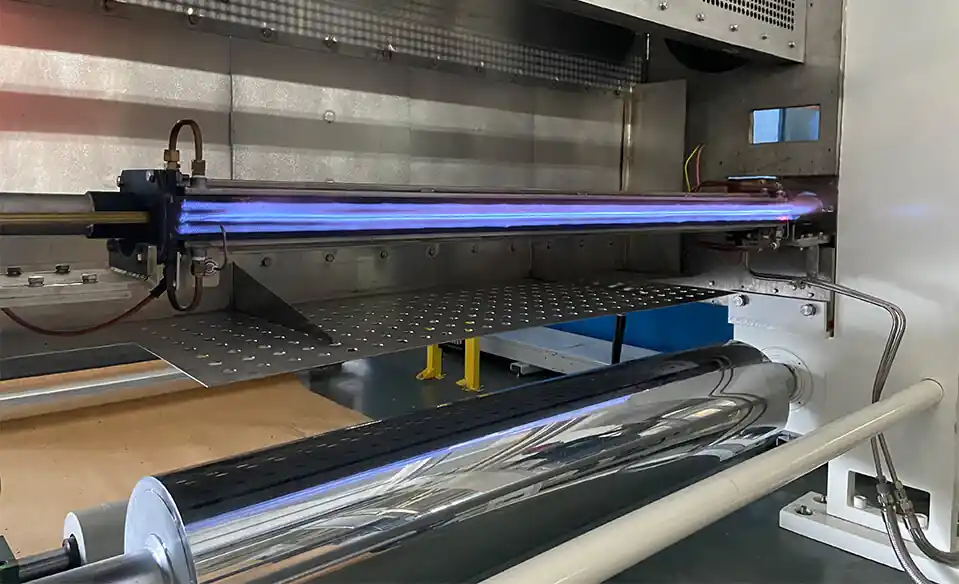
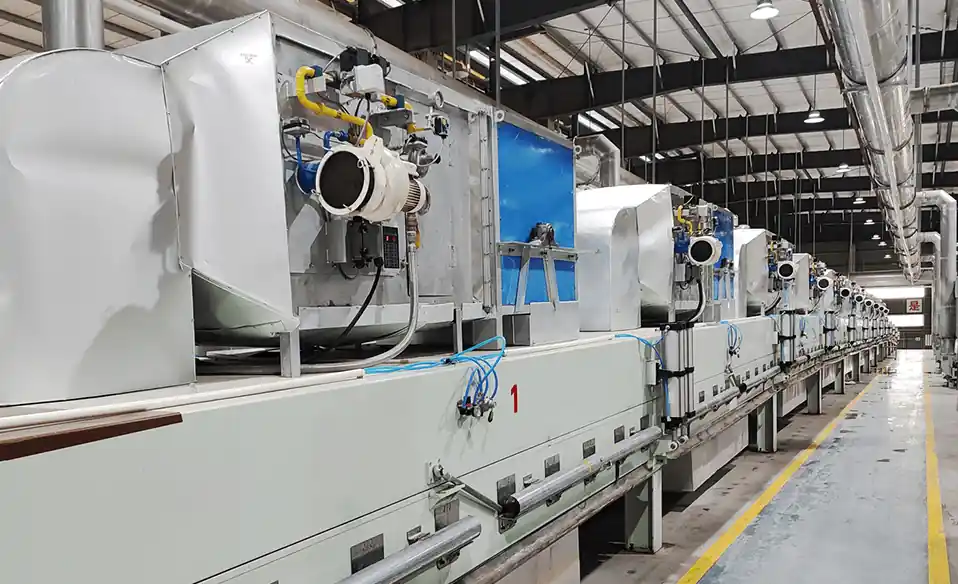
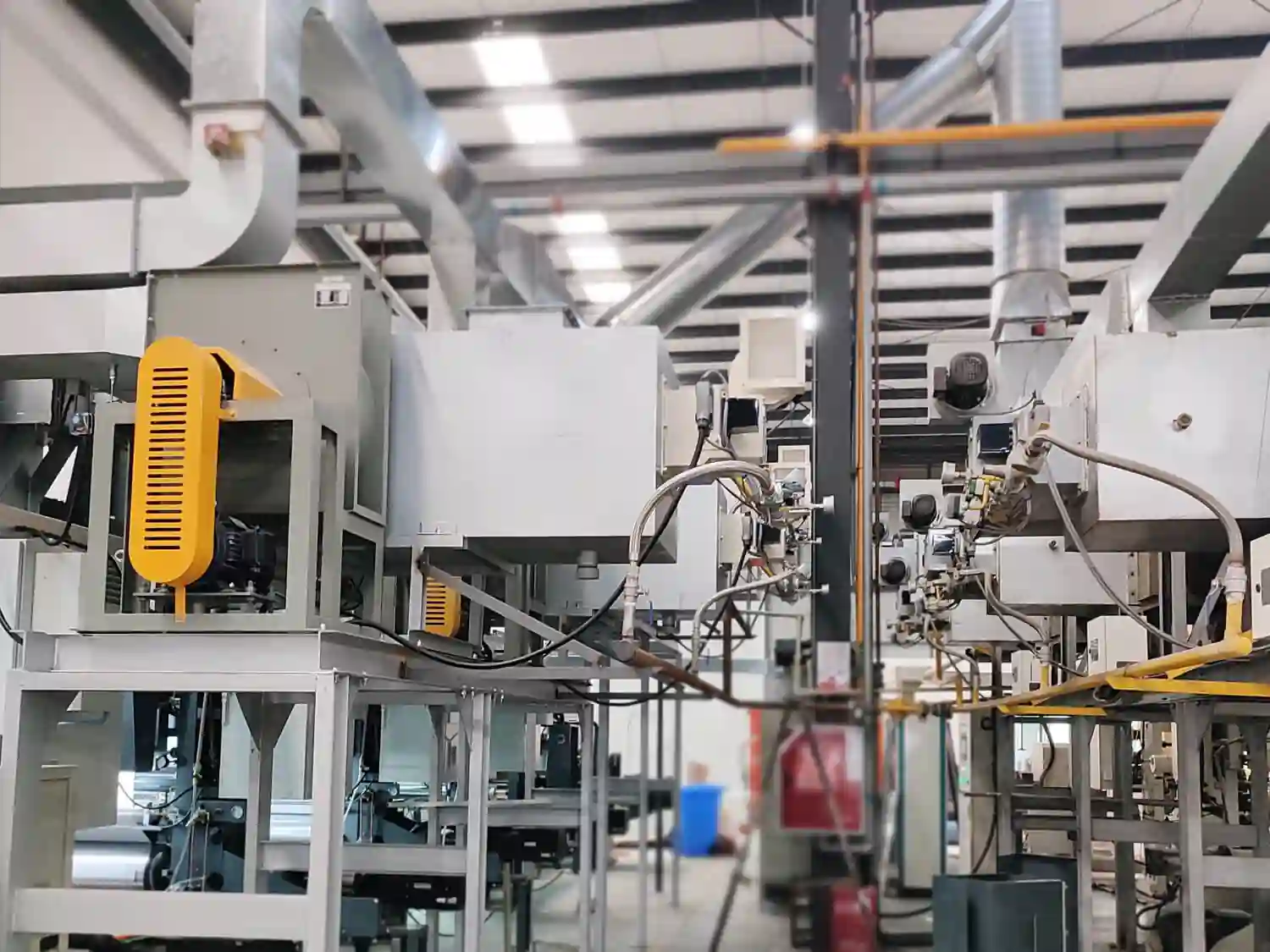
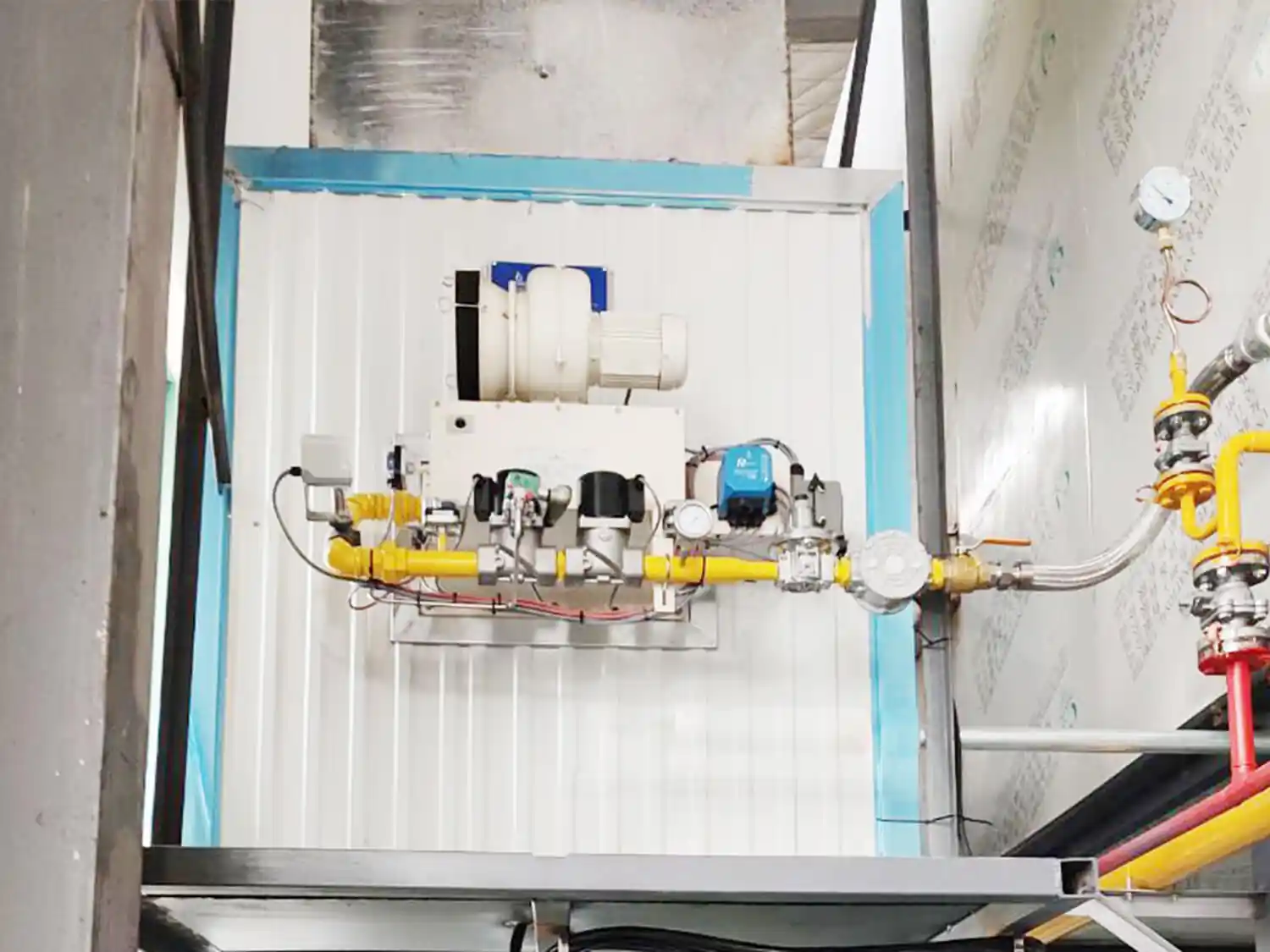
Flame momentum is the measure of the force and movement intensity carried by a flame jet as it exits an industrial burner. It describes how strongly the combustion gases move into the furnace and how effectively the flame can penetrate, mix, and transfer heat within the combustion chamber. In essence, it quantifies the kinetic energy and directional thrust imparted by the expanding hot gases as they transition from the burner nozzle into the confined space of the furnace.
In industrial burners, flame momentum is a critical parameter that affects:
Flame length and shape, determining the spatial footprint of the combustion zone.
Mixing efficiency, governing how thoroughly fuel and oxidizer combine before the reaction completes.
Furnace temperature uniformity, influencing the thermal gradients experienced by the load.
Heat transfer performance, dictating whether energy is delivered primarily by convection or radiation.
Combustion stability, ensuring the flame remains anchored and continuous under varying loads.
Emission control, as mixing intensity directly impacts the formation of pollutants such as CO and NOx.
A properly designed flame momentum allows the burner to deliver heat effectively throughout the furnace, ensuring that the thermal energy released is utilized where it is most needed. Too little momentum may result in poor mixing and weak furnace penetration, leaving the far end of the chamber cold and underutilized, while excessive momentum may cause flame impingement, refractory damage, or unstable combustion that disrupts process continuity.
In combustion engineering, momentum describes the quantity of motion carried by moving gases. It is a mechanical property that combines the mass flow rate and the velocity of the combustion stream, reflecting the overall “driving force” that pushes hot products of combustion into the furnace atmosphere.
For a burner flame, momentum mainly comes from:
Fuel jet velocity, which determines how forcefully the raw fuel enters the chamber.
Combustion air velocity, which provides the oxidizer stream and co-propels the reaction zone.
Gas mass flow rate, representing the total volume of material in motion per unit of time.
Burner nozzle design, which shapes and directs the combined flow at the point of injection.
In simple terms:
Flame momentum = How much “pushing force” the flame has as it enters the combustion chamber.
A high-momentum flame behaves like a strong jet:
Travels farther into the furnace, carrying thermal energy to distant zones.
Creates stronger circulation, entraining surrounding furnace gases into vigorous motion.
Enhances mixing, accelerating the molecular-level contact between fuel and oxygen.
A low-momentum flame behaves like a weak flow:
Has limited penetration, with the heat release concentrated near the burner face.
Mixes less effectively, leading to potential stratification of fuel-rich and fuel-lean pockets.
May create uneven heating, as the natural convection of hot gases is insufficient to distribute energy throughout the chamber.
Flame momentum determines how combustion gases interact with the furnace environment. It acts as the primary driver of gas dynamics within the chamber, influencing every stage of the thermal process from ignition to exhaust.
A suitable flame momentum helps achieve:
Better fuel-air mixing, which ensures that the stoichiometric conditions required for complete oxidation are met across the entire reaction zone.
More uniform temperature distribution, reducing the risk of local hot spots or dead zones that compromise product quality.
Higher heat transfer efficiency, enabling faster heating cycles and lower energy input for the same throughput.
Stable flame operation, maintaining reliable ignition and sustained combustion across varying process demands.
Lower emissions, as optimized mixing minimizes incomplete combustion products and controls peak thermal NOx formation.
The correct flame momentum depends on:
Furnace size, with larger chambers generally requiring higher momentum to overcome flow resistance over greater distances.
Burner type, as different burner families are designed to produce distinct momentum profiles.
Fuel characteristics, including density, viscosity, and flame speed, which all affect the required thrust.
Heating process, whether it demands rapid surface heating, gradual core warming, or uniform soaking.
Required flame shape, since momentum directly governs whether the flame is long and penetrating or short and broad.
One of the most important functions of flame momentum is controlling how far the flame extends into the furnace. The ability to deliver heat to a specific depth within the chamber is fundamental to matching the thermal input to the physical location of the workload.
A high-momentum flame can:
Penetrate deep into large combustion chambers, overcoming the resistance of the furnace atmosphere and the natural buoyancy of hot gases.
Push hot gases further into the furnace, ensuring that the far wall and the downstream portions of the load receive adequate thermal energy.
Improve circulation patterns, creating a large-scale flow loop that carries heat from the burner zone back toward the burner and throughout the entire volume.
Typical applications:
Large industrial furnaces where the ratio of chamber length to burner diameter is substantial.
Steel heating furnaces that require deep thermal input to raise heavy sections to rolling or forging temperatures.
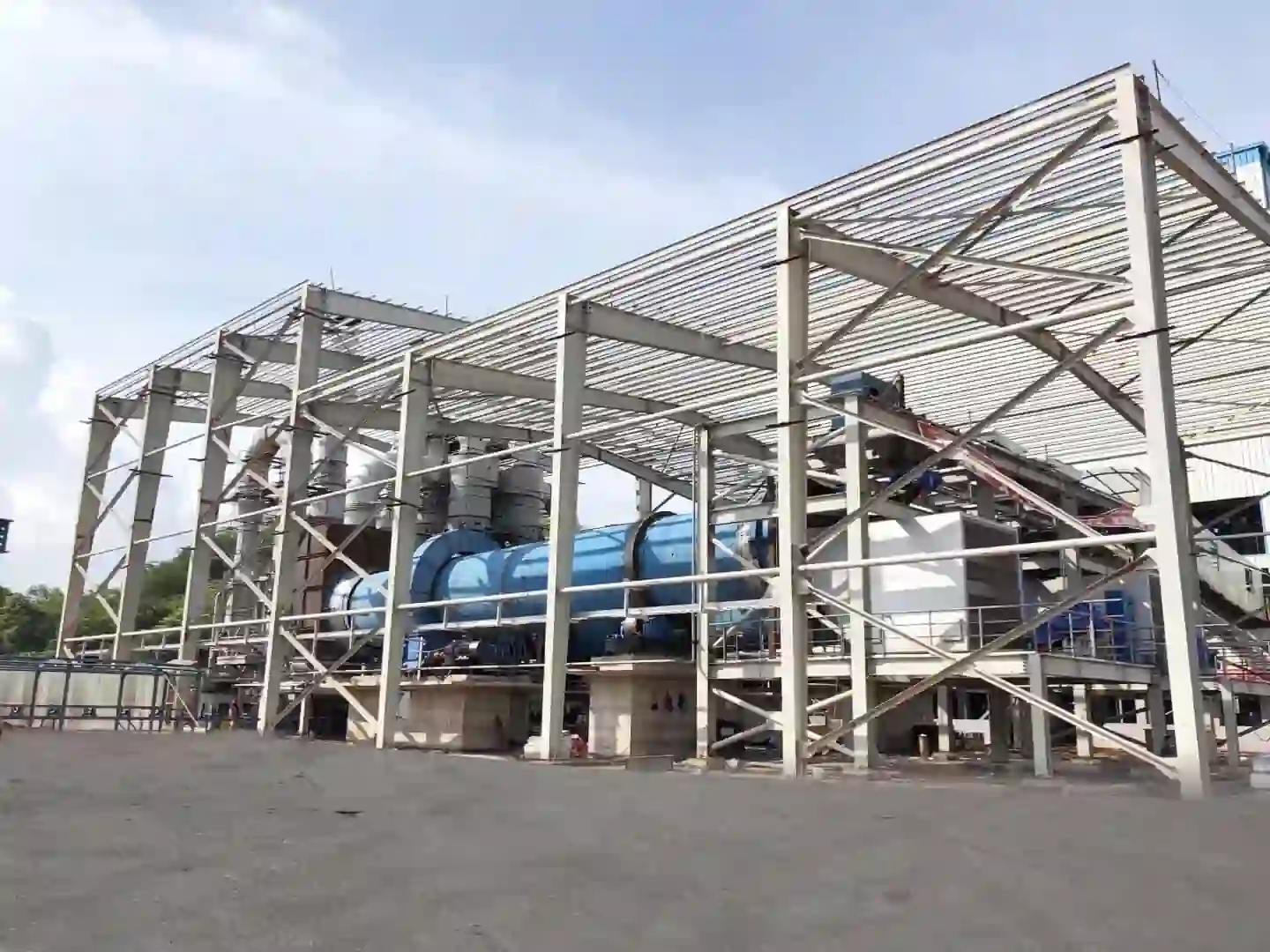
Rotary kilns where the flame must traverse a long rotating cylinder to maintain a consistent thermal profile along the material trajectory.
High-temperature processing equipment that demands sustained temperatures across an extended heating zone.
However, excessive momentum may cause:
Flame hitting furnace walls, leading to localized over-heating and potential structural compromise.
Local overheating of tube bundles or baffles, causing premature material degradation.
Refractory erosion due to the scouring effect of high-velocity gas streams carrying abrasive particulate matter.
A low-momentum flame may:
Remain close to the burner outlet, forming a compact reaction zone that does not extend into the deeper regions of the chamber.
Produce poor furnace circulation, as the weak jet lacks the energy to entrain and rotate the surrounding gas mass effectively.
Create uneven heating zones, with hot areas near the burner and cold, stagnant pockets farther away.
Possible results:
Longer heating time, as the extended thermal load must rely on slow natural convection and radiation to reach distant areas.
Lower thermal efficiency, since the furnace may need to be fired at higher rates to compensate for poor heat delivery.
Poor product quality, arising from inconsistent temperature exposure across different sections of the same batch.
Efficient combustion requires rapid and thorough mixing between fuel and oxygen at the molecular level. Without adequate mixing, the combustion reaction is incomplete, and the full energy content of the fuel cannot be released.
Flame momentum creates turbulence and circulation, helping:
Break up fuel jets into smaller eddies and filaments, increasing the surface area available for oxidizer contact.
Increase contact between fuel and air, promoting intimate blending of the two streams before the reaction front passes.
Improve combustion completeness, ensuring that carbon atoms find sufficient oxygen molecules to form CO₂ rather than CO or soot.
Better mixing reduces:
Unburned fuel that escapes the combustion zone and is lost in the exhaust stream.
Carbon monoxide (CO), a direct indicator of incomplete oxidation that also represents wasted chemical energy.
Local fuel-rich zones, which can generate soot, increase flame luminosity, and elevate the risk of fouling heat exchange surfaces.
This is especially important in industrial burners operating at high firing rates, where the short residence time available for mixing demands that the momentum field be intense enough to achieve near-instantaneous blending of fuel and air.
Flame momentum strongly influences flame geometry, acting as the primary mechanical driver that stretches or compresses the reaction zone within the chamber.
Higher momentum generally produces:
Longer flames, as the increased velocity carries the reaction front farther downstream before the combustion chemistry is complete.
Stronger furnace penetration, with the hot gases reaching the extremities of the chamber before losing their forward inertia.
Greater gas circulation, as the high-velocity jet entrains surrounding gases and creates a broad recirculation envelope.
Lower momentum generally produces:
Shorter flames, where the heat release is concentrated close to the burner face due to reduced forward thrust.
Reduced mixing, as the gentler flow limits the creation of fine-scale turbulence necessary for rapid molecular diffusion.
Less heat distribution, with energy tending to accumulate in the near-burner region rather than spreading across the chamber volume.
Burner designers adjust momentum to achieve the required flame shape for specific applications, using it as a primary tuning variable in the engineering process.
For example:
| Application | Required Flame Momentum |
|---|---|
| Large furnace heating | High momentum to cover long distances and overcome chamber drag |
| Compact heating chamber | Moderate momentum to provide adequate circulation without wall impact |
| Surface heating | Controlled lower momentum to maintain a broad, close-proximity heat source |
| Deep penetration heating | High momentum to deliver energy to the core of the load or far-end zones |
Heat transfer efficiency depends not only on flame temperature but also on how effectively hot gases move through the furnace. The mode and rate of energy delivery to the load are governed by both the temperature potential and the convective dynamics driven by momentum.
Flame momentum affects:
Gas circulation patterns, determining the path and velocity of hot combustion products as they flow around the load.
Convective heat transfer, as higher velocities increase the heat transfer coefficient at the gas-to-surface boundary.
Furnace temperature uniformity, reducing the likelihood of thermal stratification along the vertical or horizontal axes.
A properly designed high-momentum flame can:
Spread heat more evenly across the chamber cross-section, eliminating cold spots that would otherwise require extended soak times.
Reduce temperature differences between the burner end and the exhaust end, promoting a more isothermal furnace environment.
Improve process consistency, ensuring that every piece of the load receives the same thermal history regardless of its position.
However, excessive velocity can reduce residence time and may decrease heat absorption efficiency if not properly controlled. If the gases move too quickly past the load, the contact time may be insufficient for full thermal exchange, allowing a significant portion of the heat to escape with the exhaust before being transferred to the product.
Stable combustion requires a delicate balance between the fluid dynamics of the flow and the chemical kinetics of the reaction. The flame must remain anchored at the burner outlet while maintaining its integrity against the forces of the flowing gases.
Stable combustion requires a balance between:
Flame speed, the rate at which the chemical reaction propagates through the fresh fuel-air mixture.
Gas velocity, the speed at which the mixture is pushed away from the burner face.
Burner geometry, which provides physical stabilization features such as bluff bodies or swirl vanes.
Recirculation pattern, which establishes hot product recirculation zones that continuously re-ignite the incoming fuel-air mixture.
If momentum is too low:
Flame may become unstable, as the weak flow cannot sustain the recirculation zone needed for continuous ignition.
Mixing may deteriorate, leading to large-scale fluctuations in equivalence ratio that cause the flame to flutter.
Flame extinction may occur, particularly at low turndown ratios where the velocity falls below the critical threshold for stability.
If momentum is too high:
Flame may lift off, detaching from the burner face as the flow velocity exceeds the local flame speed.
Ignition stability may decrease, as the flame moves away from the stabilizing recirculation zone.
Flame may move away from the designed zone, altering the heat release pattern and potentially creating unintended thermal conditions elsewhere in the chamber.
The ideal condition is a stable flame anchored at the correct position, where the momentum is sufficient to drive mixing and penetration but not so strong as to overwhelm the anchoring forces that hold the flame in place.
Velocity is one of the biggest contributors to flame momentum, as the momentum flux scales directly with the product of mass flow and speed.
Increasing:
Fuel pressure raises the injection velocity and the kinetic energy of the fuel stream.
Air pressure increases the momentum of the oxidizer, contributing to the overall thrust of the combined jet.
Burner output automatically increases both flow rates and velocities, driving the momentum upward with firing rate.
generally increases flame momentum.
However, excessive velocity can create instability, as the flame may struggle to maintain attachment against the high-speed flow or may generate excessive aerodynamic noise and vibration.
The nozzle controls how fuel and air enter the furnace, acting as the final shaping element before the flow expands into the combustion space.
Important factors include:
Nozzle diameter, which determines the exit velocity for a given flow rate—smaller diameters produce higher velocities for the same mass flow.
Injection angle, which governs the axial and radial distribution of the jet and affects the spread angle of the flame.
Number of fuel ports, influencing how the fuel stream is divided and distributed within the air flow.
Air outlet geometry, including the use of slots, holes, or annular gaps, which shapes the velocity profile and turbulence intensity.
A well-designed nozzle creates the desired momentum profile, ensuring that the flame has the correct balance of axial thrust and spreading tendency for the intended application.
Different fuels produce different flame momentum characteristics due to variations in physical properties and stoichiometric requirements.
Factors include:
Density, which affects the momentum carried at a given volumetric velocity.
Heating value, which determines the required fuel flow rate to achieve a target heat release, thereby influencing mass throughput.
Required flow rate, as fuels with lower heating values typically require higher volumetric flows to deliver the same thermal input.
For example:
Natural gas burners and hydrogen-enriched burners may require different momentum control because fuel properties and flame speeds differ. Hydrogen's higher flame speed and lower density demand specific nozzle adjustments to maintain stability, while heavier hydrocarbon gases may require higher momentum to achieve the same penetration due to their different mixing behavior.
The combustion air system affects flame momentum through its ability to deliver oxidizer at controlled pressure and velocity.
Fan pressure determines the maximum air velocity achievable at the burner inlet.
Air velocity at the burner outlet directly contributes to the combined momentum of the fuel-air mixture.
Air distribution, including the split between primary and secondary air, influences the overall thrust and the mixing pattern.
High-pressure air systems are often used when strong flame penetration is required, as the elevated pressure translates into higher exit velocities and greater momentum, particularly in applications with high chamber backpressure.
Flame momentum changes with firing rate, creating a dynamic response that must be managed across the turndown range.
At higher load:
Fuel flow increases, adding mass to the jet stream.
Air flow increases in proportion, contributing additional momentum.
Flame momentum increases substantially, driving deeper penetration and stronger circulation.
At low load:
Flow decreases across both fuel and air lines.
Momentum decreases significantly, potentially affecting penetration and mixing performance.
Flame stability may become more challenging, as the lower velocity may not sustain the necessary recirculation for stable flame anchoring.
Flame momentum is also important in modern low-NOx burner design, where the objective is not simply to maximize mixing but to control the rate and spatial distribution of the reaction to suppress pollutant formation.
Low-NOx combustion strategies often require controlled mixing rather than simply maximizing mixing speed. The most intense mixing does not always produce the lowest NOx, as it may concentrate heat release in a narrow zone, raising peak temperatures and driving thermal NOx formation.
Technologies include:
Fuel and air are introduced gradually rather than being mixed all at once at the burner outlet. This spreads the reaction over a longer volume, reducing the intensity of the heat release at any single point and lowering peak flame temperature. Momentum control is used to maintain stable staging without compromising penetration.
Hot combustion gases are mixed back into the flame zone to reduce oxygen concentration and temperature. Momentum is harnessed to drive the recirculation jets that pull the cooled gases from the furnace atmosphere back into the reaction core, creating a self-diluting effect that moderates the reaction.
Strong jets improve mixing while controlling combustion intensity by positioning the mixing zones to occur after the initial high-temperature reaction has already dissipated some energy. The momentum of the jets is calibrated to delay full mixing until the flow has progressed far enough downstream to avoid a concentrated hot spot.
The goal is:
Stable combustion + Efficient heat transfer + Lower NOx emissions
A carefully optimized momentum field makes it possible to achieve all three objectives simultaneously, whereas poorly designed momentum sacrifices one or more of these outcomes.
Possible problems:
Flame impingement, as the high-velocity jet reaches the chamber walls before combustion is complete, depositing intense heat onto structural surfaces.
Furnace wall overheating, leading to accelerated oxidation, warping, or chemical attack on the lining materials.
Refractory damage resulting from both thermal overload and the erosive scouring action of high-speed gas streams.
Excessive noise, as turbulent shear layers generate high-frequency acoustic emissions that can be objectionable and may indicate inefficient energy dissipation.
Increased pressure loss, as the high-velocity flow encounters restrictions that require additional fan power and raise operating costs.
Possible problems:
Poor furnace circulation, allowing hot gases to stratify near the roof while colder gases remain near the hearth.
Incomplete combustion, as fuel and air fail to mix thoroughly before the reaction front passes.
Uneven heating, producing temperature differences that lead to inconsistent product properties or require extended cycle times.
Longer processing time, as the heat input must be maintained for a greater duration to achieve the target average temperature.
Higher fuel consumption, since the burner must operate at higher firing rates to compensate for the poor distribution of thermal energy.
Engineers consider the specific physical and thermal parameters of the installation before selecting or designing a burner system.
Furnace dimensions provide the length and cross-sectional area that the momentum must overcome.
Heating method, whether direct or indirect, imposes constraints on how the flame can be positioned and directed.
Required temperature dictates the intensity of heat release and the necessary penetration depth.
Product characteristics, including size, shape, and material sensitivity, influence the allowable momentum and velocity.
Operating parameters can be tuned to achieve the desired momentum profile without hardware changes.
Correct flame penetration is achieved by setting pressures to generate the required thrust for the chamber depth.
Stable combustion is maintained by ensuring that the velocity stays within the envelope of flame stability for the given fuel.
Efficient heat release results from balancing the momentum to provide optimal mixing without over-penetration.
Design adjustments provide the means to tailor momentum independently of operating conditions.
Nozzle size changes the exit velocity for a given flow rate, allowing the engineer to adjust penetration without changing fuel volume.
Air outlet structure modifies the distribution of oxidizer momentum, affecting the spread and shape of the flame.
Swirl intensity adds a tangential component to the flow, which can reduce axial momentum while enhancing mixing and recirculation.
Mixing arrangement, such as the placement of fuel ports relative to air passages, determines how quickly the two streams interact.
Ongoing monitoring provides the feedback needed to maintain optimal momentum settings as process conditions change.
Important measurements include:
Oxygen concentration in the exhaust, indicating whether the air-fuel ratio matches the desired stoichiometry.
CO emissions, which serve as a real-time indicator of mixing completeness and reaction efficiency.
Flame appearance, including color, shape, and brightness, which offers visual clues about momentum effects.
Furnace temperature distribution, measured through multiple thermocouples or scanning pyrometers, to confirm that heat is being delivered as intended.
Flame momentum describes the strength and movement of the combustion jet leaving the burner. It quantifies the force and directional energy carried by the hot gases as they enter the furnace. It determines how effectively the flame penetrates, mixes, and transfers heat inside the furnace.
No. Higher momentum improves penetration and mixing, but excessive momentum can cause flame impingement, refractory damage, and unstable operation. The optimal level depends on the specific furnace geometry, process requirements, and burner design; there is no universal value that applies to all applications.
Higher flame momentum usually creates a longer and more penetrating flame, as the increased velocity pushes the reaction front further downstream before combustion completes. Lower momentum produces a shorter flame with less furnace circulation and a more compact heat release zone.
Yes. Proper flame momentum improves mixing and heat transfer, helping achieve complete combustion and reducing fuel waste. When momentum is too low, incomplete combustion and stratification waste energy; when too high, shorter residence times and wall losses also reduce efficiency. The correct balance is essential for maximizing fuel utilization.
Industrial furnaces often require precise heat distribution across large volumes or complex load geometries. Proper flame momentum ensures that heat reaches the correct area while maintaining stable combustion and efficient operation. Without adequate momentum control, the furnace may exhibit poor temperature uniformity, excessive emissions, or reduced throughput.
Flame momentum is a key parameter that determines how a burner flame interacts with the combustion chamber. It controls flame penetration, mixing quality, heat transfer, and combustion stability, serving as the mechanical link between the burner's flow design and the thermal environment of the furnace.
A well-designed industrial burner must achieve the correct balance of flame momentum:
Too low → weak mixing and poor heating performance, resulting in cold zones, incomplete combustion, and extended cycle times.
Too high → flame impingement and instability, leading to refractory damage, thermal stress, and operational disruptions.
Properly optimized → efficient combustion, uniform heating, and reliable operation, delivering consistent product quality and low energy consumption.
For modern industrial combustion systems, controlling flame momentum is essential for improving energy efficiency, reducing emissions, and achieving consistent thermal performance. The careful selection and adjustment of momentum parameters enable plant engineers to adapt to changing fuel conditions, load requirements, and environmental regulations while maintaining the highest standards of process reliability.
DYDTEC Combustion specializes in industrial burner technology, combustion systems, and customized thermal solutions. The company provides industrial burner solutions for furnaces, drying equipment, thermal processing systems, and energy-efficient heating applications, focusing on optimized flame control, efficient fuel-air mixing, low emissions, and reliable long-term operation. With a strong foundation in combustion aerodynamics and thermal engineering, DYDTEC supports its customers in designing, commissioning, and maintaining burner systems that achieve the precise momentum balance required for each unique industrial process.