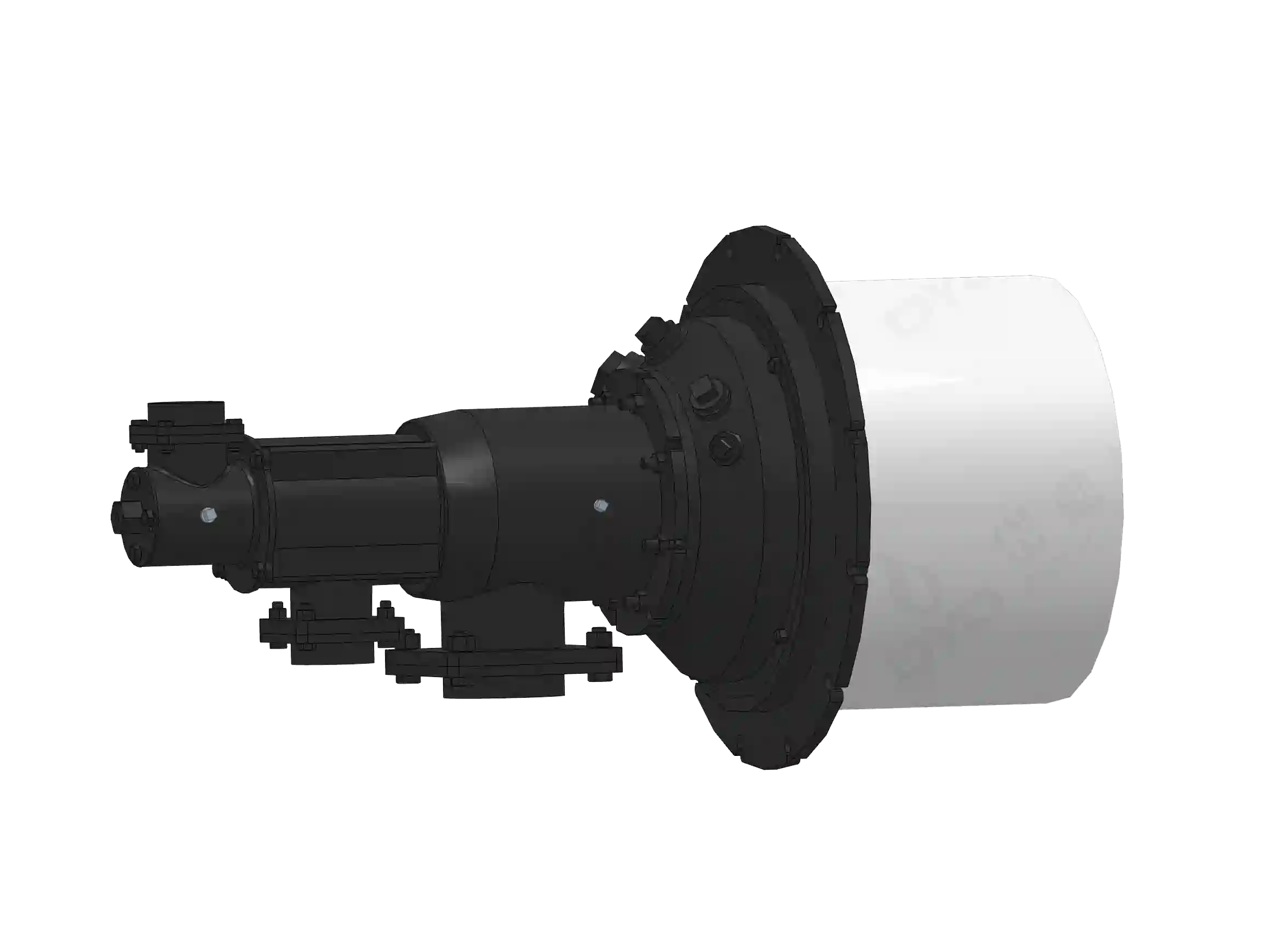
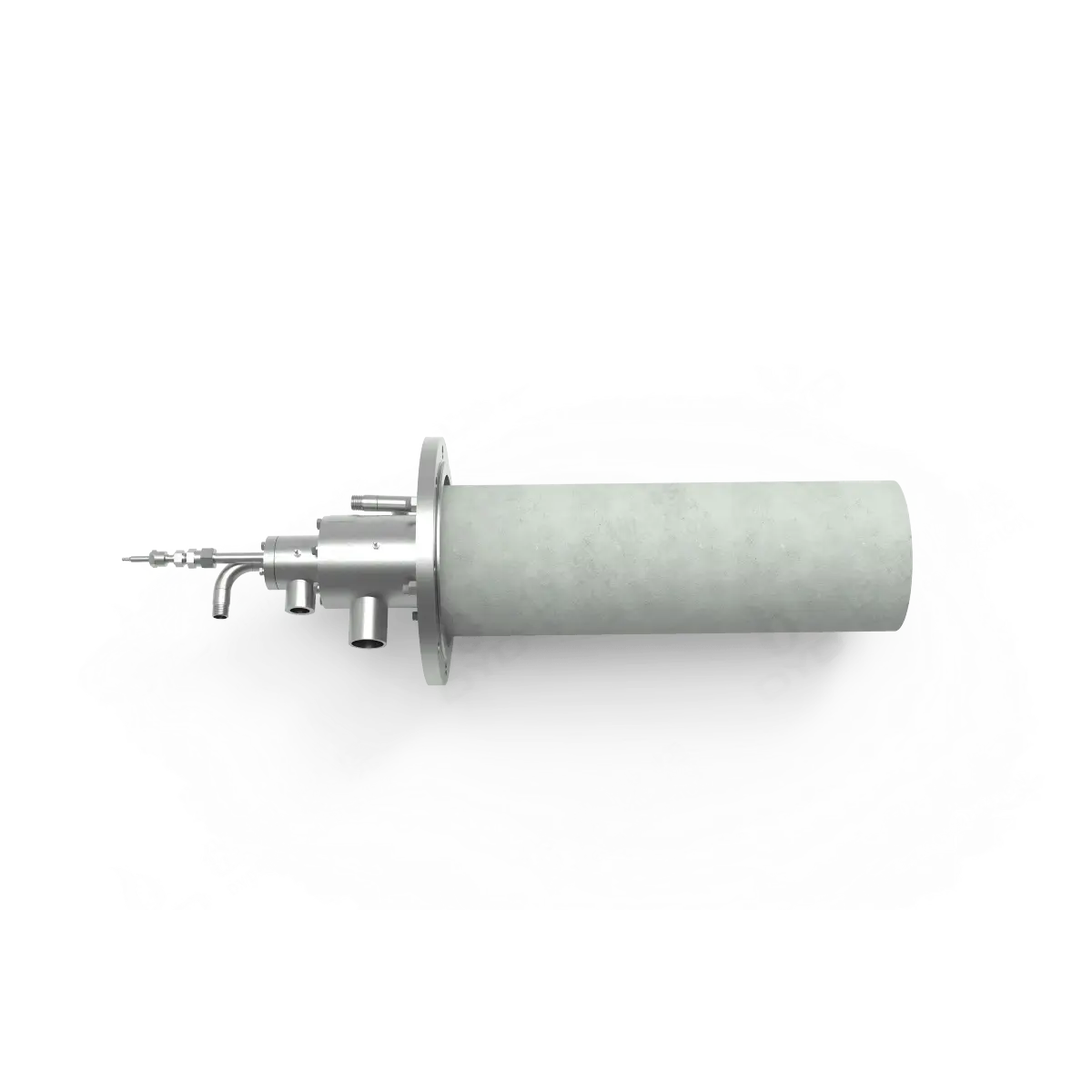
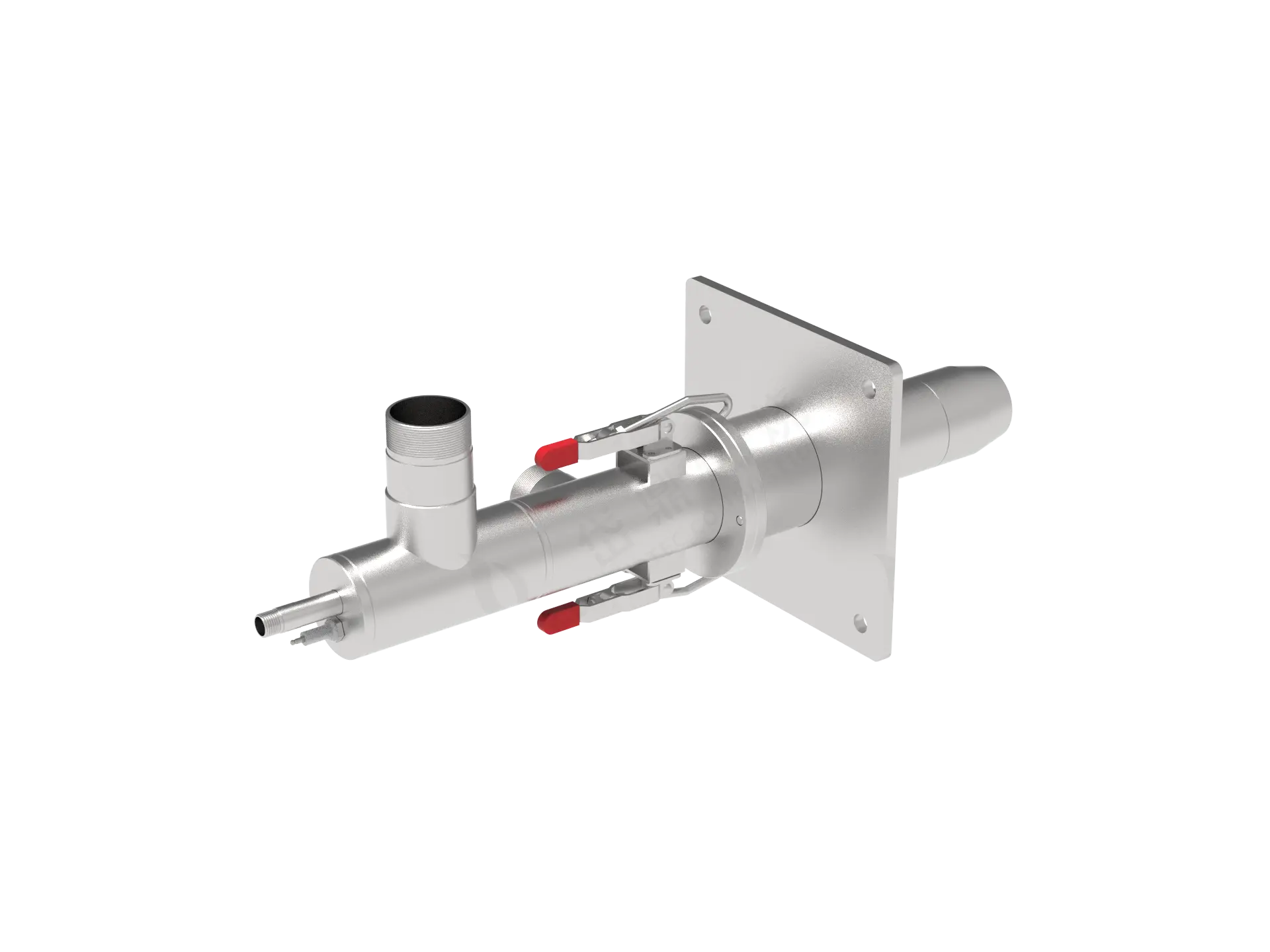
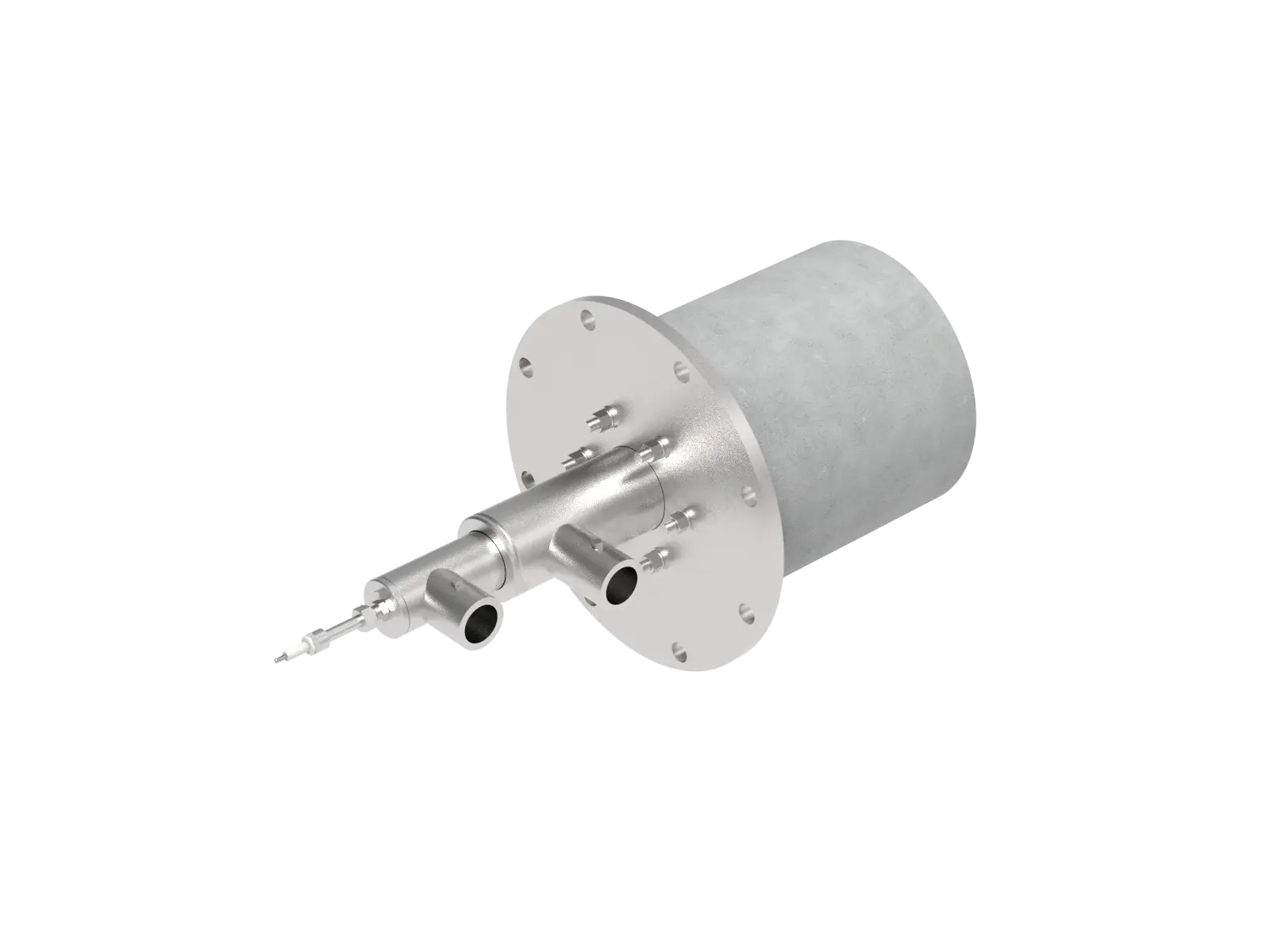
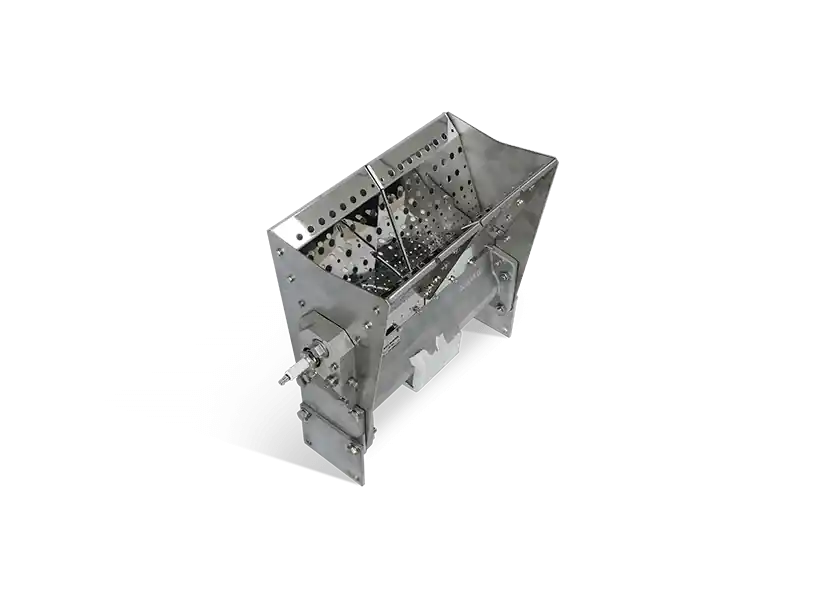
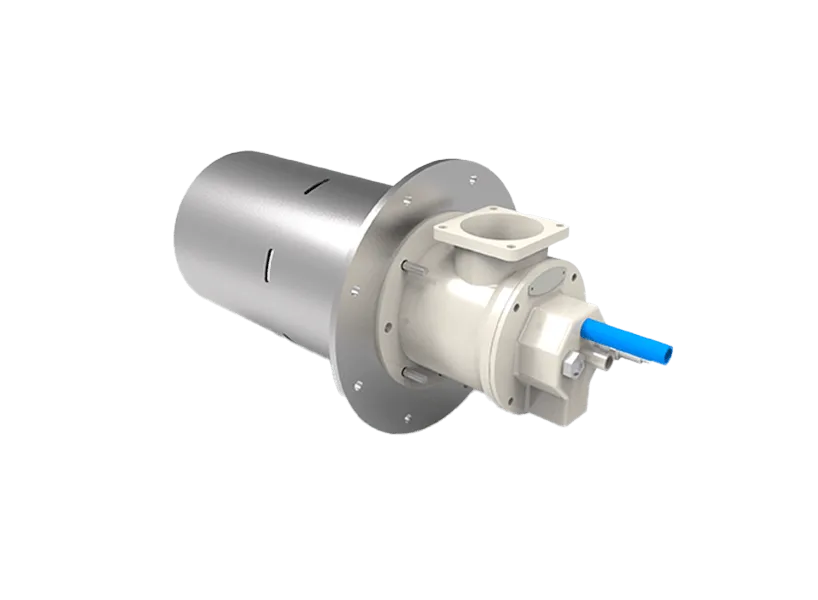
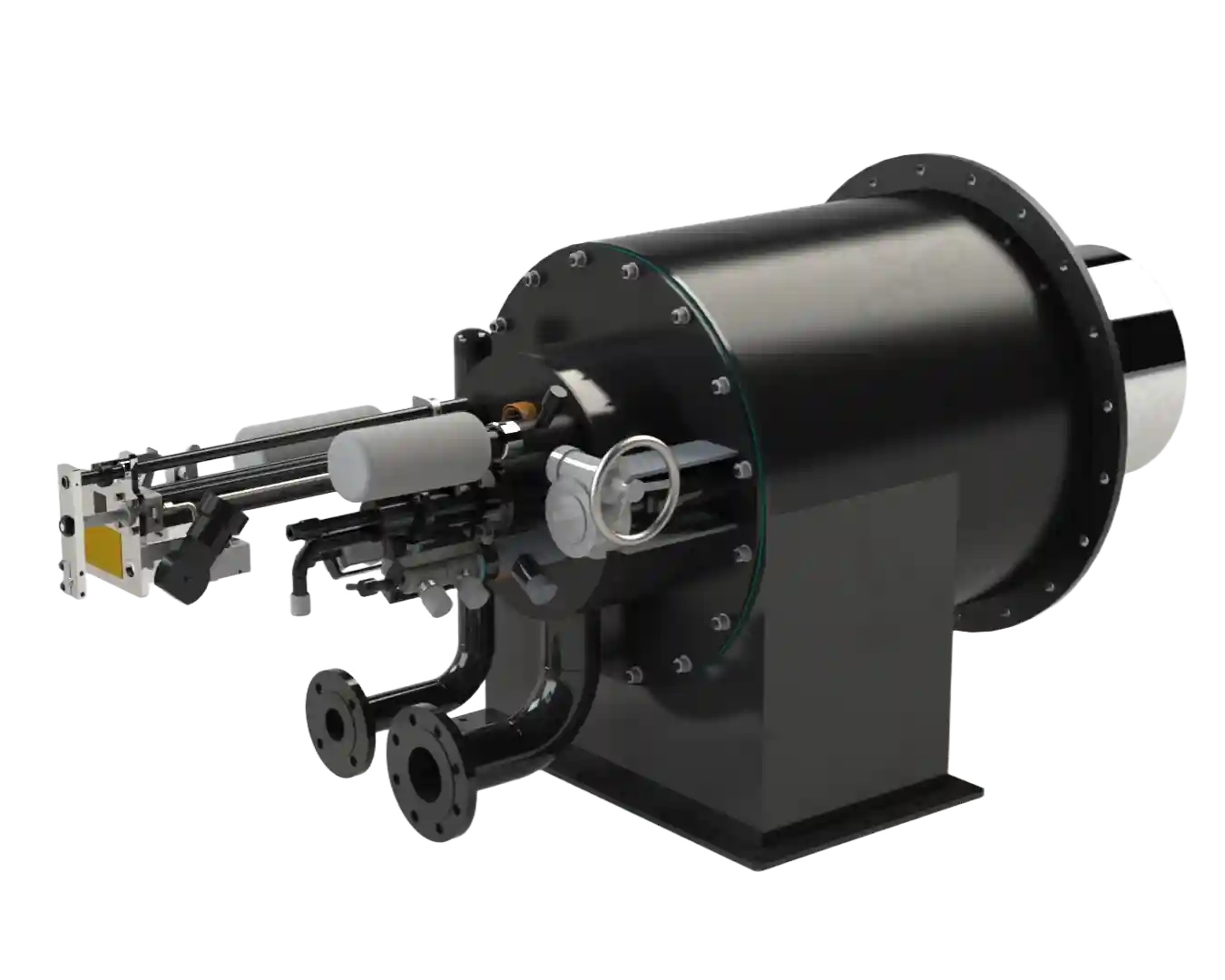
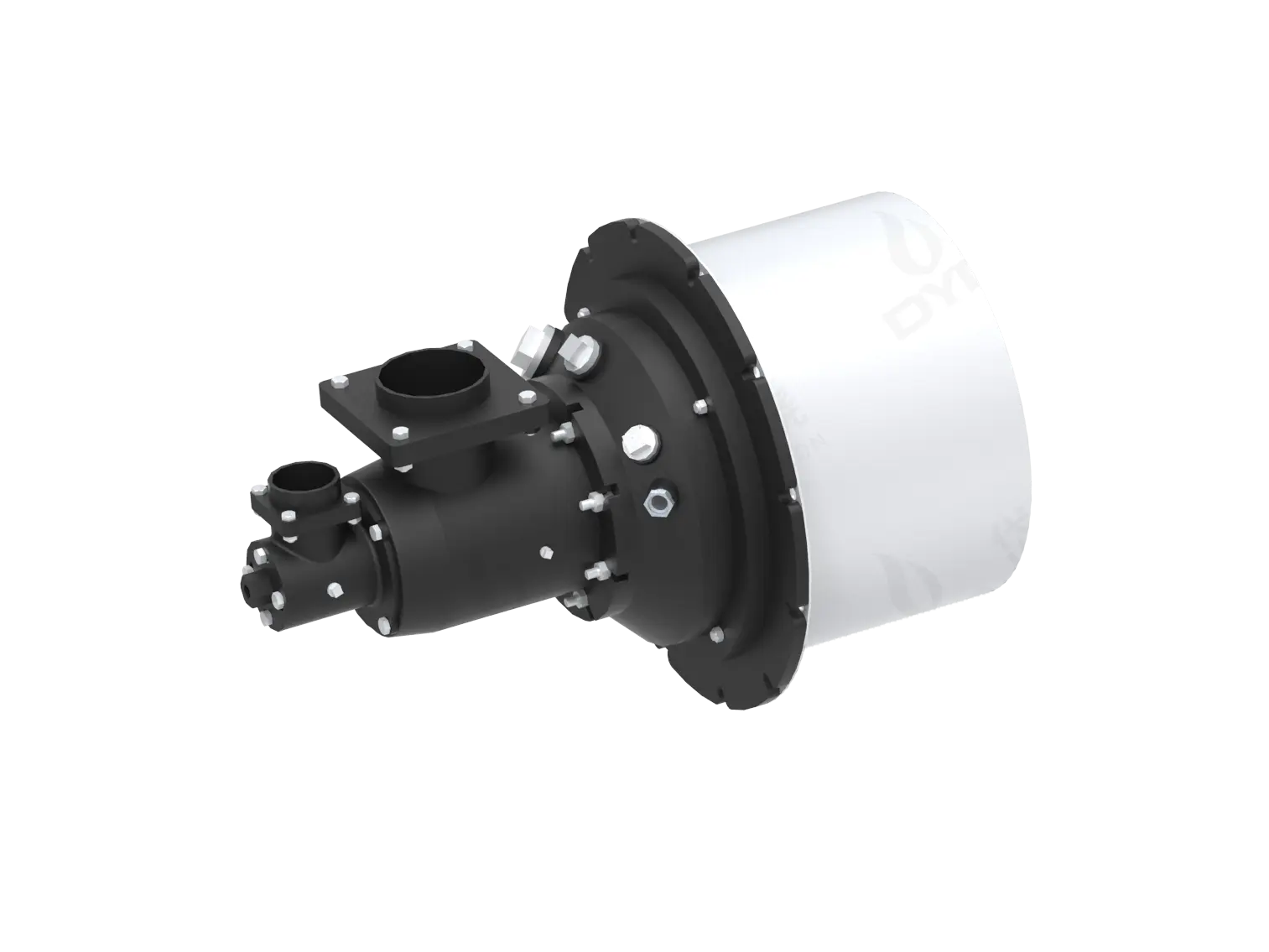
Properly sizing an industrial burner is essential for achieving efficient combustion, stable operation, and reliable heat delivery. An industrial burner that is incorrectly sized can create serious performance problems that compromise both the economics and the reliability of the entire thermal system. Sizing is not merely a matter of matching a power rating from a catalog; it is a fundamental engineering calculation that establishes the foundation for all subsequent combustion performance.
A burner that is undersized may fail to provide enough heat, causing:
Slow heating that extends cycle times and reduces production throughput.
Inability to reach target temperature, making the process impossible to complete.
Longer production cycles, increasing labor and energy costs per unit of output.
Continuous operation at maximum capacity, accelerating wear and reducing component life.
A burner that is oversized may cause:
Frequent cycling between on and off states, which stresses components and reduces efficiency.
Poor temperature control, with temperature swings that affect product quality.
Lower combustion efficiency, particularly at low fire where mixing and flame stability may be compromised.
Increased fuel consumption, as the burner operates outside its optimal efficiency range.
Therefore, industrial burner sizing is not simply about selecting a burner with the highest power rating. It requires evaluating the complete thermal system, including furnace design, process requirements, heat losses, fuel characteristics, and operating conditions. The goal is to identify a burner that delivers the required heat with the appropriate flame characteristics while operating efficiently across the expected load range.
Industrial burner sizing refers to determining the required heat input capacity of a burner to meet the heating demands of a specific application. It is the process of quantifying the thermal energy that must be released per unit of time to achieve and maintain the process conditions required for production.
The basic principle is:
Required Burner Capacity = Process Heat Demand + System Heat Losses
This fundamental equation states that the burner must supply enough energy to cover both the useful heat absorbed by the process and the unavoidable losses that occur through the furnace structure and exhaust stream. The selected burner must provide enough energy to:
Heat the product or material from its initial temperature to the process temperature.
Compensate for furnace heat losses through walls, openings, and other structural elements.
Maintain required operating temperature against ongoing losses during the holding or processing period.
Handle process variations, including changes in production rate, ambient conditions, or material properties.
Correct burner sizing affects multiple dimensions of combustion system performance, each of which contributes to the overall economics and reliability of the industrial process.
A properly sized burner operates closer to its optimal efficiency range, where the air-fuel ratio can be precisely controlled and heat losses are minimized.
Benefits:
Lower fuel consumption, reducing operating costs.
Reduced exhaust losses, as less heat is carried out of the stack.
Better heat utilization, with a higher fraction of fuel energy transferred to the process.
The burner must match the heating demand with sufficient precision to maintain the required thermal conditions. This is essential for processes where temperature directly affects product quality.
Correct sizing provides:
Stable furnace temperature, without excessive cycling or overshoot.
Accurate process control, enabling consistent product properties.
Improved product consistency, reducing reject rates and rework.
Oversized or undersized burners can increase stress on furnace lining, burner components, and control systems.
Proper sizing improves:
Service life, by avoiding thermal shock and excessive cycling.
Operating stability, with the burner operating within its design envelope.
Maintenance intervals, as components experience less stress.
The first step is calculating how much heat the process requires. This is the fundamental input to the sizing calculation and must be determined as accurately as possible.
The total heat requirement usually includes:
Energy required to raise the temperature of the material from its initial condition to the process temperature. This is the useful heat that must be absorbed by the product.
Formula:
Q = m × Cp × ΔT
Where:
Q = required heat energy (kJ or BTU)
m = material mass flow rate (kg/h or lb/h)
Cp = specific heat capacity (kJ/kg·°C or BTU/lb·°F)
ΔT = temperature increase (°C or °F)
The mass flow rate should reflect the actual production rate, and the specific heat capacity should be appropriate for the material over the temperature range of interest, as Cp can vary significantly with temperature for some materials.
Example applications:
Metal heating, where steel or aluminum must be raised to forging or heat treatment temperatures.
Ceramic firing, requiring precise temperature ramps for proper material transformation.
Chemical drying, where the product must be heated to drive off moisture.
For drying processes, additional energy is required to remove moisture from the product. This is a significant heat demand that is often overlooked or underestimated.
Includes:
Heating water from the initial temperature to the boiling point.
Vaporizing water at the boiling point, requiring the latent heat of vaporization.
Removing steam from the drying chamber, which may require additional energy to prevent condensation.
Applications:
Food drying, where moisture removal is essential for preservation and shelf life.
Biomass drying, to reduce moisture content for combustion or processing.
Chemical powder drying, where residual moisture affects product quality.
Heat losses occur through multiple pathways and must be included in the total heat balance.
Pathways include:
Furnace walls, through conduction through the refractory and insulation layers.
Doors and access openings, through radiation and convection.
Exhaust gases, carrying sensible heat out of the system.
Other openings, including inspection ports, burner mountings, and duct penetrations.
Factors affecting heat loss:
Furnace insulation quality, with better insulation reducing conduction losses.
Operating temperature, with higher temperatures increasing radiation and convection losses.
Furnace size, with larger surface areas generally having greater heat loss.
Ambient conditions, including temperature and airflow around the furnace.
The total heat requirement represents the sum of all energy demands that the burner must satisfy. This is the basis for determining the required burner capacity.
The total heat requirement can be expressed as:
Total Heat Input = Useful Heat Demand + Heat Losses
The burner capacity should include an appropriate operating margin to account for uncertainties and normal operating variations. This margin provides a buffer for startup conditions, production fluctuations, and environmental changes.
Typical considerations for operating margin:
Startup conditions, where the furnace must be heated from cold.
Production fluctuations, including changes in throughput or material properties.
Environmental changes, such as variations in ambient temperature or fuel quality.
However, excessive safety margins should be avoided because they can lead to oversizing. The margin should be sufficient for normal operational variations but not so large that the burner consistently operates at low fire where efficiency may suffer.
Industrial burners are usually rated by standard units of power, representing the rate at which they can release thermal energy from fuel.
Common rating units:
kW (kilowatts), the SI unit commonly used in Europe and many international applications.
MW (megawatts), used for larger industrial burners.
kcal/h (kilocalories per hour), commonly used in some regions.
BTU/h (British thermal units per hour), used in North American applications.
Common conversions:
1 kW ≈ 3,412 BTU/h
1 MW = 1,000 kW
The burner output must match the required heat input, accounting for the fact that not all fuel energy is converted into useful heat.
The fuel input required depends on burner efficiency, which is the fraction of fuel energy that is actually released as useful heat. The remaining energy is lost through exhaust gases, radiation, and other pathways.
Formula:
Fuel Input = Required Heat Output ÷ Burner Efficiency
For example, if the process requires 900 kW of useful heat and burner efficiency is 90%:
Fuel input requirement:
900 ÷ 0.9 = 1,000 kW
The burner should therefore be selected based on the required fuel input rather than only useful heat output. The efficiency value should be appropriate for the expected operating conditions, as efficiency can vary with firing rate, fuel type, and furnace pressure.
A burner should not only meet maximum load but also operate efficiently at lower loads. The operating range is a critical sizing parameter that is often overlooked.
The turndown ratio indicates the operating range, defined as the ratio of maximum stable output to minimum stable output.
Example:
A burner with a 10:1 turndown ratio and a maximum capacity of 1,000 kW can operate approximately down to 100 kW while maintaining stable combustion and acceptable emissions.
A suitable turndown ratio helps:
Maintain stable temperature across varying production rates.
Reduce fuel waste by avoiding excessive cycling.
Handle changing production conditions without switching burners.
The required turndown ratio depends on the expected variation in heat demand during normal operation.
Burner capacity alone is not enough. The burner must also be physically compatible with the furnace geometry to ensure proper flame development and heat distribution.
The burner must match:
Furnace volume, ensuring the flame fits within the available space.
Chamber length, providing sufficient distance for the flame to develop without impingement.
Burner mounting position, determining the direction and orientation of the flame.
Heat distribution requirements, ensuring the flame delivers heat where it is needed.
A high-capacity burner in a small furnace may cause:
Excessive flame intensity, leading to local overheating and hot spots.
Wall overheating, potentially damaging refractory and structural components.
Product damage, from uneven or excessive heat exposure.
A low-capacity burner in a large furnace may cause:
Poor temperature uniformity, with cold spots in the far sections of the chamber.
Long heating time, reducing production throughput and increasing costs.
Different burner capacities require different flame designs. The flame characteristics must be matched to both the heat output and the furnace geometry.
Important parameters include:
Determines where heat is released along the furnace axis. The length must be compatible with the chamber dimensions to avoid impingement while ensuring adequate penetration.
Determines how deeply the flame penetrates into the furnace and how effectively it circulates the furnace gases. Higher momentum provides better penetration but may increase impingement risk.
Determines heat distribution and must match the furnace geometry and load configuration. The flame shape influences the radiant and convective heat transfer to the product.
A burner must provide the correct combination of heat output, flame length, flame velocity, and heat release pattern to achieve the required thermal performance.
Fuel selection affects burner sizing through its heating value, flow requirements, and combustion characteristics. The fuel type determines the volume of fuel that must be supplied to achieve a given heat release.
Different fuels have different:
Heating values, affecting the flow rate required for a given capacity.
Flow requirements, influencing fuel line sizing and pressure requirements.
Flame speeds, affecting burner geometry and flame stability characteristics.
Combustion characteristics, including emissions profile and responsiveness to load changes.
Common fuels:
Advantages:
High controllability, with fast response to load changes.
Clean combustion, producing minimal soot or ash.
Widely used across all industrial sectors.
Requires consideration of higher energy density and different gas flow rates compared to natural gas. The higher heating value means less volumetric flow is required for the same heat release.
Require atomization capacity, fuel viscosity control, and combustion air adjustment. The sizing must account for the fuel preparation system as well as the burner itself.
Require attention to flame speed, ignition characteristics, and flashback protection. The higher flame speed of hydrogen may require burner design modifications to maintain stable operation.
Burner sizing also affects emissions performance through its influence on combustion conditions and operating range.
An oversized burner operating at low load may experience:
Poor mixing, as the fuel-air flow velocities may be outside the optimal range.
Increased CO emissions, from incomplete combustion at low fire conditions.
Lower efficiency, as the burner operates outside its design envelope.
Modern low-NOx systems require careful matching of burner capacity, air staging, flame temperature, and operating range. The sizing must ensure that the burner can meet emission limits across its intended operating range, not just at the maximum firing rate.
Furnace volume alone does not determine heat demand. The process requirements, including temperature, material throughput, and cycle time, are equally important and must be included in the calculation.
Oversizing creates poor control, inefficient operation, and increased cycling. While some margin is necessary, excessive oversizing reduces turndown performance and may compromise combustion stability at low fire.
Some processes require additional capacity during startup to bring the furnace up to temperature within an acceptable time. Startup and normal operation should both be considered in the sizing calculation, with attention to the start-up heat demand.
Two burners with the same power rating may perform differently because of different flame shapes, momentum, and mixing methods. Capacity alone is not a sufficient selection criterion; flame characteristics must also be matched.
Before selecting a burner, collect comprehensive information about the application, process, furnace, fuel, and control requirements.
✅ Required temperature for the specific process.
✅ Material type and properties, including specific heat capacity.
✅ Heating cycle, including ramp rates and soak times.
✅ Production capacity, in terms of throughput or batch size.
✅ Furnace dimensions, including length, width, height, and volume.
✅ Insulation condition, including thickness and type of refractory.
✅ Operating pressure, indicating the pressure regime of the furnace.
✅ Exhaust arrangement, including stack position and draft conditions.
✅ Fuel type and its heating value.
✅ Fuel pressure available at the burner inlet.
✅ Heating value of the specific fuel supply.
✅ Availability and reliability of the fuel supply.
✅ Required capacity based on heat load calculation.
✅ Turndown ratio needed for the expected load variation.
✅ Flame length and shape required for the furnace geometry.
✅ Emission limits that must be met.
✅ Control method needed for process precision.
Industrial burner size is calculated based on the total heat demand of the process, including product heating, moisture evaporation, furnace heat losses, and operating requirements. A heat balance calculation provides the basis for determining the required burner capacity.
No. A larger burner does not always improve performance. Oversized burners may cause unstable operation at low fire, poor temperature control, and wasted fuel. The goal is to match the burner to the thermal demand, not to maximize capacity.
Important information includes furnace dimensions, required temperature, fuel type, heating load, operating cycle, and emission requirements. The more complete the input data, the more accurate the sizing will be.
Burner capacity usually refers to fuel energy input (the total chemical energy supplied to the burner), while heat output refers to the useful heat transferred to the process. The difference is accounted for by burner efficiency.
A suitable turndown ratio allows the burner to adjust output according to changing process demand while maintaining stable combustion. Without adequate turndown, the burner may cycle excessively or operate inefficiently at partial load.
Industrial burner sizing is a comprehensive engineering process that combines heat load calculation, furnace analysis, fuel characteristics, flame design, and operating requirements. It is the foundational step that determines whether the combustion system will achieve its performance objectives for efficiency, control, and reliability.
The correct burner size should provide:
Sufficient heating capacity to meet the maximum process demand.
Stable combustion across the required operating range.
Efficient fuel utilization at the expected average load.
Proper temperature control for consistent product quality.
Low emissions that meet environmental requirements.
The goal is not to select the largest burner available, but to select the burner that provides the right amount of heat, with the right flame characteristics, for the specific industrial process. A properly sized industrial burner becomes the foundation for efficient, reliable, and long-lasting combustion system performance, enabling consistent production with lower operating costs and reduced environmental impact.
DYDTEC Combustion specializes in industrial burner technology, combustion systems, and customized thermal solutions. The company provides industrial burner solutions for furnaces, drying equipment, thermal processing systems, and energy-efficient heating applications, focusing on optimized burner sizing, advanced combustion technology, efficient fuel utilization, low emissions, and reliable industrial operation. With deep expertise in thermal system engineering and combustion calculations, DYDTEC supports customers in accurately sizing burners for a wide range of industrial applications, ensuring that each system delivers the performance, efficiency, and reliability required for successful operation.