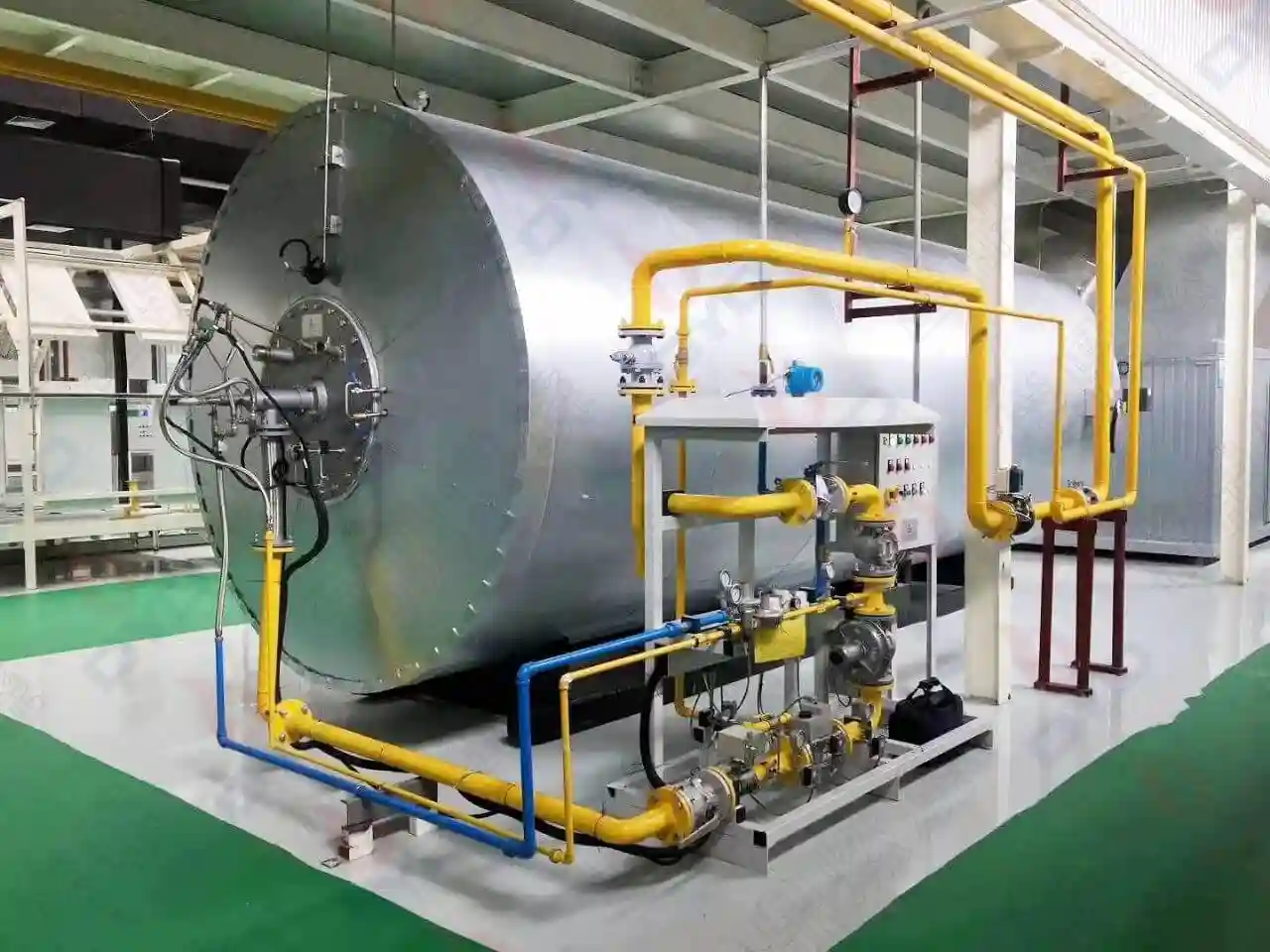
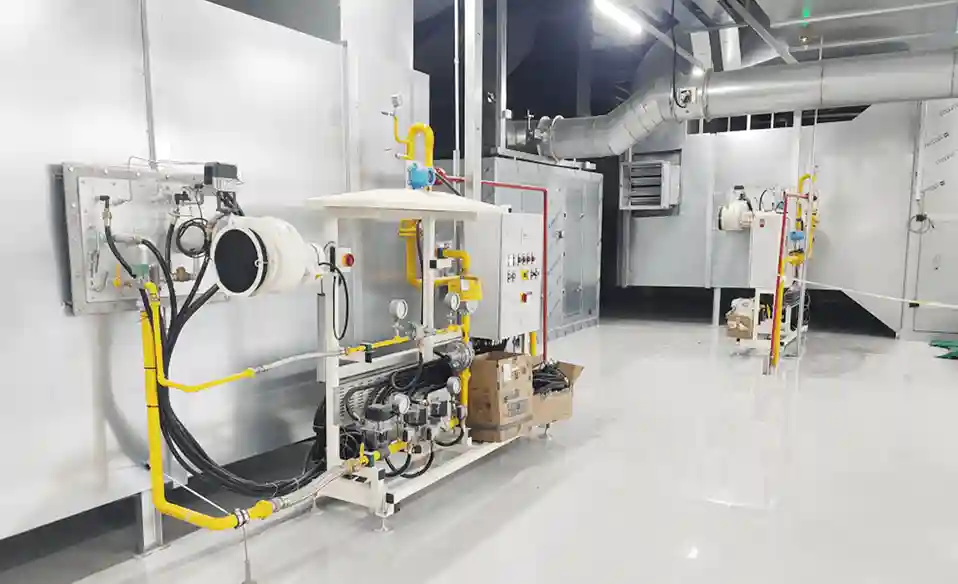
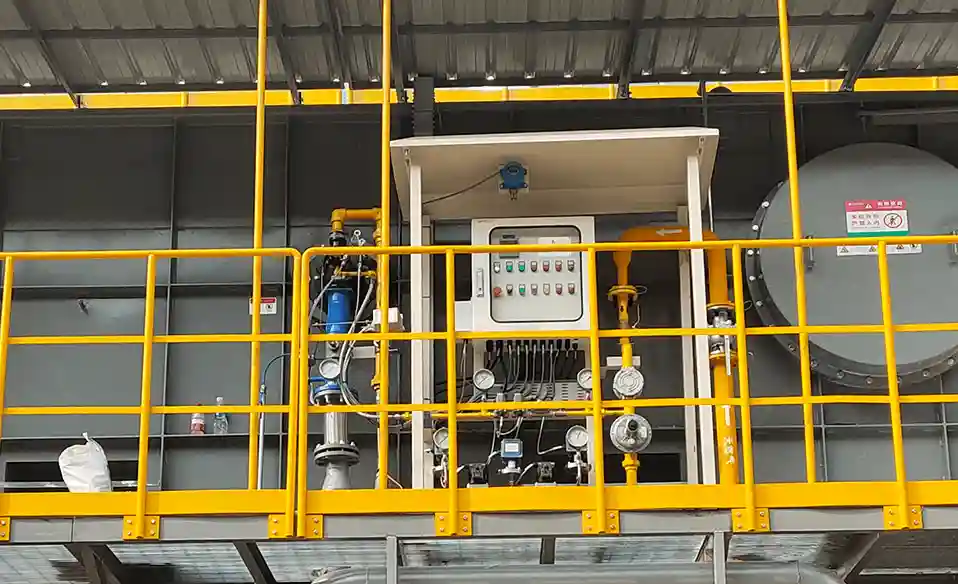
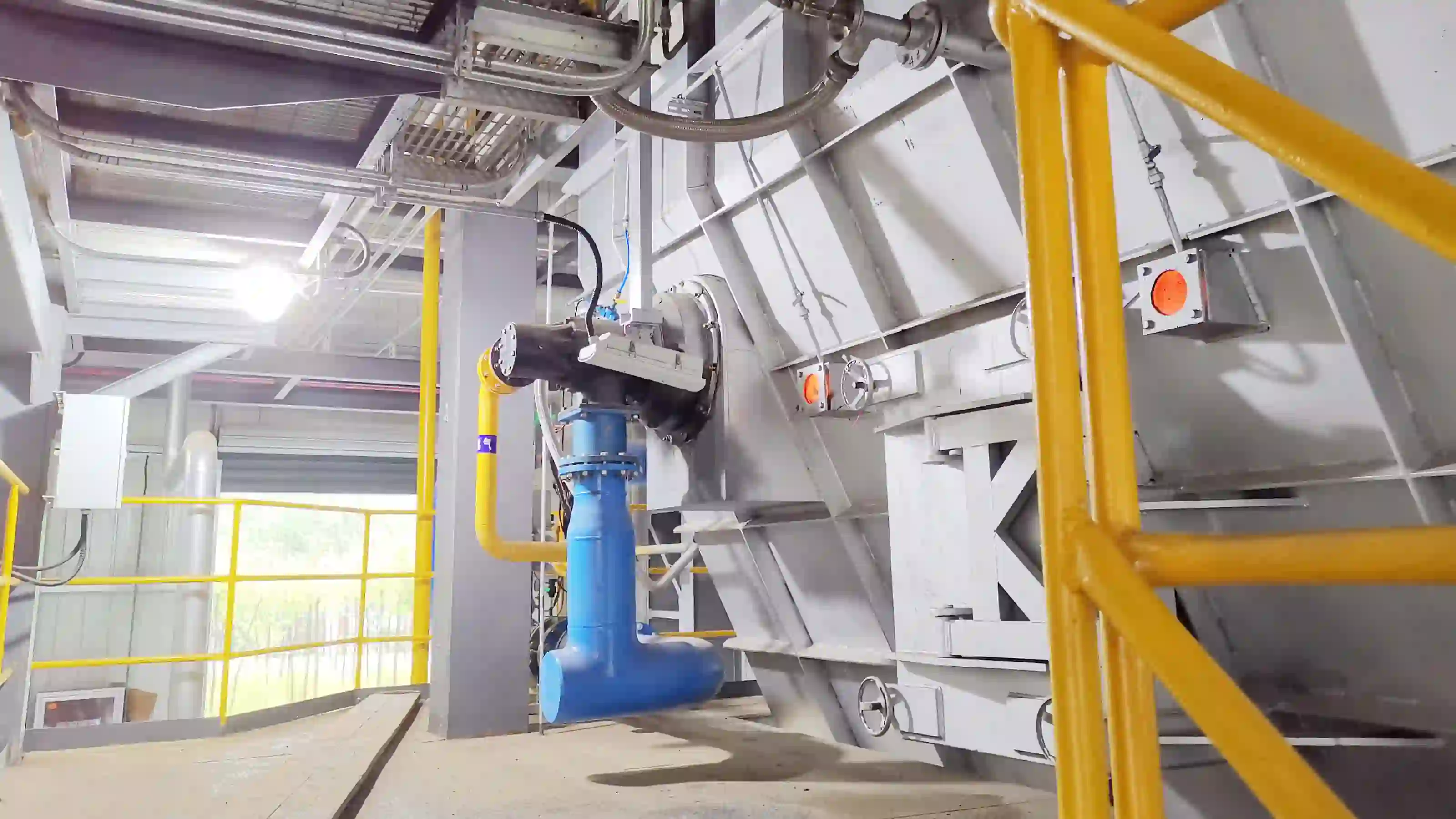
Furnace heat load is the amount of thermal energy that a furnace or heating system needs to supply to achieve its required operating conditions.
It is one of the most important parameters in industrial furnace and burner selection.
A burner should not be selected simply because its maximum capacity appears large enough. The combustion system needs to match the actual heat demand of the process, including product heating, moisture evaporation, furnace heat loss, exhaust losses, startup requirements, and other thermal loads.
A useful way to understand furnace heat load is:
Furnace heat load is the thermal demand that the combustion system must satisfy under a defined operating condition.
This concept is particularly important for OEM equipment because an incorrect heat-load estimation can lead to an undersized burner, an oversized burner, poor temperature control, excessive fuel consumption, or inadequate production capacity.
Furnace heat load is rarely just the heat required to raise the furnace temperature.
Depending on the application, the total thermal demand may include:
Product heating
Moisture evaporation
Material phase changes
Furnace-wall heat losses
Exhaust-gas heat losses
Heat losses through openings
Heat losses through mechanical structures
Heat required during startup
Heat required to maintain operating temperature
A simplified relationship is:
Total Furnace Heat Load = Useful Process Heat + Furnace Heat Losses + Exhaust Heat Losses + Other Thermal Loads
The exact calculation method depends on the furnace type and process.
Burner capacity needs to be matched to the actual furnace heat demand.
If the burner is undersized, the furnace may struggle to:
Reach the required temperature
Maintain the setpoint
Achieve the required production rate
Recover from temperature disturbances
Complete heating cycles within the required time
If the burner is oversized, other problems can appear:
Excessive cycling
Poor low-load control
Difficult temperature regulation
Localized overheating
Higher thermal stress
Inefficient operation at low load
Therefore:
The correct burner is not necessarily the largest burner that can fit the furnace.
The objective is to provide sufficient thermal capacity while maintaining stable and controllable operation across the expected load range.
These two concepts are closely related but not identical.
The amount of heat the process requires.
The maximum or operating thermal output that the burner can provide under specified conditions.
For example, an industrial furnace may have a normal heat demand of 600 kW but require 800 kW during heat-up.
In this case, the burner system needs to be evaluated against both:
Normal operating load
Maximum required load
The burner also needs sufficient turndown to operate effectively when the furnace demand falls.
Maximum furnace heat load is the highest thermal demand expected during the defined operating cycle.
It may occur during:
Startup
Heat-up
Maximum production
Maximum material throughput
High moisture loading
Low ambient temperature
Recovery after opening the furnace
Maximum heat load is important because it determines whether the combustion system has enough capacity to satisfy the most demanding operating condition.
However, the maximum load should not be the only number considered.
Minimum heat load is the lowest thermal demand during normal operation.
This value is important for burner control.
Suppose a furnace operates between:
150 kW and 800 kW
A burner rated at 800 kW may technically provide enough maximum capacity.
But the real question is:
Can the burner operate stably and controllably at 150 kW?
This is where turndown ratio becomes important.
A burner with a suitable operating range can follow changing furnace demand more effectively.
For many industrial heating processes, the useful heat required to raise the temperature of a material can be approximated by:
Q = m × Cp × ΔT
Where:
Q = required sensible heat
m = material mass
Cp = specific heat capacity
ΔT = temperature increase
If the process operates continuously, the mass should be considered as a mass flow rate.
For example:
Heat Load = Mass Flow × Specific Heat × Temperature Rise
This is only one part of a complete furnace heat-load calculation.
Other thermal loads need to be added when applicable.
Production throughput can have a major influence on heat demand.
If more material enters the furnace every hour, more thermal energy may be required to raise that material to the target temperature.
In general:
Higher Throughput → Higher Useful Heat Demand
For OEM equipment, this is why burner selection should consider the actual production capacity rather than furnace dimensions alone.
A large furnace operating at low throughput may require less thermal input than a smaller furnace processing a large quantity of material continuously.
The required temperature increase directly influences sensible heat demand.
For example, heating a product from:
25°C → 150°C
requires significantly less sensible heat than heating the same product from:
25°C → 600°C
assuming other conditions remain comparable.
Therefore, burner selection should consider:
Initial product temperature
Target product temperature
Furnace operating temperature
Heating rate
The difference between furnace temperature and product temperature should also be understood because heat transfer takes time.
Moisture can significantly increase thermal demand.
In drying applications, the furnace or hot-air system may need to:
Heat the wet material
Heat the moisture
Evaporate the moisture
Remove the resulting vapor
The energy required for evaporation can become a major component of total heat load.
This is why drying equipment should not estimate burner capacity only from chamber temperature.
Important parameters include:
Initial moisture content
Final moisture content
Water evaporation rate
Product throughput
Inlet temperature
Drying temperature
Exhaust conditions
When water changes from liquid to vapor, energy is required even though the temperature may remain near the boiling or evaporation condition.
This is called latent heat.
For drying systems, the total heat requirement therefore includes both:
Sensible Heat + Latent Heat
This can make moisture removal one of the largest components of furnace heat load.
The exact thermal calculation should account for the actual process conditions rather than relying on a generic evaporation value.
Not all burner energy reaches the product.
Some heat is lost through:
Furnace walls
Roof
Floor
Doors
Inspection openings
Structural components
Gaps and leakage
The amount of heat loss depends on:
Furnace dimensions
Insulation thickness
Insulation material
Surface temperature
Ambient temperature
Openings
Furnace construction
A well-insulated furnace generally requires less additional heat to maintain a given operating condition than a poorly insulated furnace.
Heat loss is related to the exposed surface area of the furnace.
A furnace with a larger surface area can potentially lose more heat to the surroundings if insulation and operating conditions are comparable.
This is one reason why furnace volume alone is not sufficient for calculating heat load.
Two furnaces can have similar internal volumes but different:
Surface areas
Shapes
Insulation systems
Door configurations
Their heat losses can therefore be different.
Hot gases leaving the furnace carry thermal energy away.
This can represent a significant part of the overall energy balance.
A simplified relationship is:
Exhaust Heat Loss ≈ Exhaust Mass Flow × Specific Heat × Temperature Difference
The actual calculation can be more detailed because exhaust composition and other factors influence the result.
Higher exhaust temperature and higher exhaust flow generally increase the amount of sensible heat leaving the system.
Therefore, exhaust conditions should be included when evaluating furnace heat load.
Combustion requires an appropriate amount of air.
If significantly more air than necessary enters the furnace, that additional air must be heated.
Some of this heated air may then leave through the exhaust.
This creates an additional thermal loss.
Therefore:
Excess Air → More Gas to Heat → Potentially Higher Exhaust Heat Loss
However, reducing air below the required level is not a solution.
Insufficient combustion air can cause incomplete combustion, unstable flames, and increased CO.
The objective is to operate within an appropriate combustion range.
No.
Furnace volume can influence the thermal environment, but it does not directly determine the required heat load.
Heat load depends more directly on:
Product throughput
Material properties
Temperature increase
Moisture
Heating rate
Furnace heat loss
Exhaust losses
Process requirements
For example, a large empty furnace may require relatively little process heat during steady operation, while a smaller furnace processing a high mass flow of material may require much more heat.
Therefore:
Furnace volume and furnace heat load should not be treated as the same parameter.
Not by itself.
A furnace operating at 800°C does not automatically require more heat than every furnace operating at 500°C.
The required burner capacity also depends on:
Product mass
Product specific heat
Production rate
Heat loss
Heating time
Furnace construction
Exhaust flow
Operating temperature is important, but it is only one input to the overall thermal calculation.
Heating rate can significantly influence the required thermal capacity.
Suppose two furnaces heat the same product to the same final temperature.
Requires the target temperature in 30 minutes.
Requires the target temperature in 2 hours.
Furnace A needs a much higher rate of heat input during the heat-up stage.
This does not necessarily mean that Furnace A consumes proportionally more total energy.
It means the required instantaneous thermal capacity is higher.
This distinction is important when selecting burner capacity.
This distinction is particularly important in industrial furnaces.
The energy required to bring the furnace, product, and other components from their initial temperature to operating conditions.
The energy required to maintain the required temperature after the furnace reaches steady operation.
The heat-up load can be much higher than the steady-state holding load.
Therefore, burner capacity may need to be selected based on the maximum heat-up requirement while still maintaining good control at the lower holding load.
Heat load is rarely constant.
It can change because of:
Product loading
Production speed
Product temperature
Ambient conditions
Moisture content
Door opening
Furnace startup
Process changes
A control system should therefore be able to adjust burner output according to actual thermal demand.
This is one reason why burner turndown and modulation capability are important.
Suppose the furnace requires:
100–1,000 kW
The theoretical load range is:
10:1
A burner or burner system that cannot operate effectively across this range may require:
Multiple burners
Multiple heating stages
Different control strategies
Additional heat-storage or circulation methods
The appropriate solution depends on the process.
A burner with a high turndown ratio can sometimes provide smoother operation across a wider load range.
An undersized burner may struggle to meet the required thermal load.
Typical symptoms include:
Slow heating
Failure to reach setpoint
Long recovery time
Reduced production capacity
Continuous operation at maximum firing
Insufficient heating during peak load
In a continuous process, insufficient burner capacity can become a production bottleneck.
An oversized burner has the opposite problem.
If the minimum burner output is too high compared with the furnace's normal heat demand, the control system may have difficulty maintaining temperature smoothly.
Potential problems include:
Frequent cycling
Temperature overshoot
Localized overheating
Poor low-load efficiency
Unstable temperature control
Therefore:
Oversizing a burner is not always a safety margin.
The maximum capacity and minimum controllable capacity should both be evaluated.
Large furnaces often use multiple burners instead of one very large burner.
This can provide:
Distributed heat input
Better temperature uniformity
Multiple heating zones
Greater control flexibility
Better adaptation to changing thermal loads
For example, a furnace may use four burners with independent control instead of one large burner.
The actual configuration depends on:
Furnace geometry
Heat load distribution
Process requirements
Temperature uniformity
Control strategy
If the furnace has multiple zones, the heat load may differ from one zone to another.
For example:
Zone 1: Preheating
Zone 2: Main Heating
Zone 3: Holding
Zone 4: Final Treatment
Each zone may require a different burner capacity and control range.
This is why total furnace heat load should not always be divided equally among the burners.
The thermal requirement of each zone should be evaluated separately.
Drying equipment has a particularly complex heat load because moisture removal can dominate the thermal balance.
The system may need to supply energy for:
Heating the product
Heating the moisture
Evaporating moisture
Heating process air
Compensating for exhaust losses
Compensating for equipment heat loss
A simplified concept is:
Total Drying Heat Load = Product Heating + Moisture Evaporation + Air Heating + Heat Losses
The actual calculation should reflect the specific drying process.
Heat-treatment furnaces may have relatively stable product loads, but the thermal requirements can still vary significantly during:
Startup
Loading
Heating
Soaking
Door opening
Production changes
For these systems, temperature uniformity and controlled heat input can be just as important as maximum burner capacity.
Melting processes can have very high thermal requirements because energy may be required for:
Heating the material
Reaching melting temperature
Phase change
Compensating for furnace losses
Maintaining molten material temperature
The thermal calculation should therefore consider the entire material cycle.
The burner must also be matched to the furnace geometry and required heat-transfer method.
Heat load represents the thermal demand.
Fuel consumption depends on how efficiently the combustion system converts fuel energy into useful process heat.
A simplified relationship is:
Fuel Energy Input = Useful Heat Load ÷ Overall Thermal Efficiency
Therefore, if useful heat demand increases, fuel consumption generally increases unless efficiency or other operating conditions change.
However, actual fuel consumption also depends on:
Burner efficiency
Excess air
Exhaust temperature
Furnace insulation
Operating conditions
Heat recovery
Control strategy
A correct heat-load calculation can help avoid two common problems:
The furnace cannot meet the process demand.
The burner operates inefficiently at low load or requires excessive cycling.
A properly matched combustion system can operate closer to the actual thermal demand over a wider portion of the production cycle.
This is one reason heat-load calculation should be completed before final burner selection.
For a new OEM furnace, useful information includes:
Product type
Product throughput
Initial temperature
Target temperature
Heating time
Production cycle
Mass
Specific heat
Moisture content
Final moisture content
Phase-change requirements
Internal dimensions
Wall construction
Insulation
Operating temperature
Openings
Exhaust temperature
Exhaust flow
Exhaust pressure
Ambient temperature
Installation conditions
Fuel type
Fuel pressure
Required operating range
The more complete these parameters are, the more accurately the thermal requirement can be evaluated.
A practical sequence is:
What needs to be heated, dried, treated, or melted?
How much material must be processed per hour or per batch?
Determine the energy required for the product and process.
Consider furnace walls, openings, exhaust, and other losses.
Identify both peak and steady-state requirements.
Choose a burner system that can meet the required load range.
Confirm that the burner flame characteristics suit the furnace geometry.
Make sure the burner can modulate or stage appropriately.
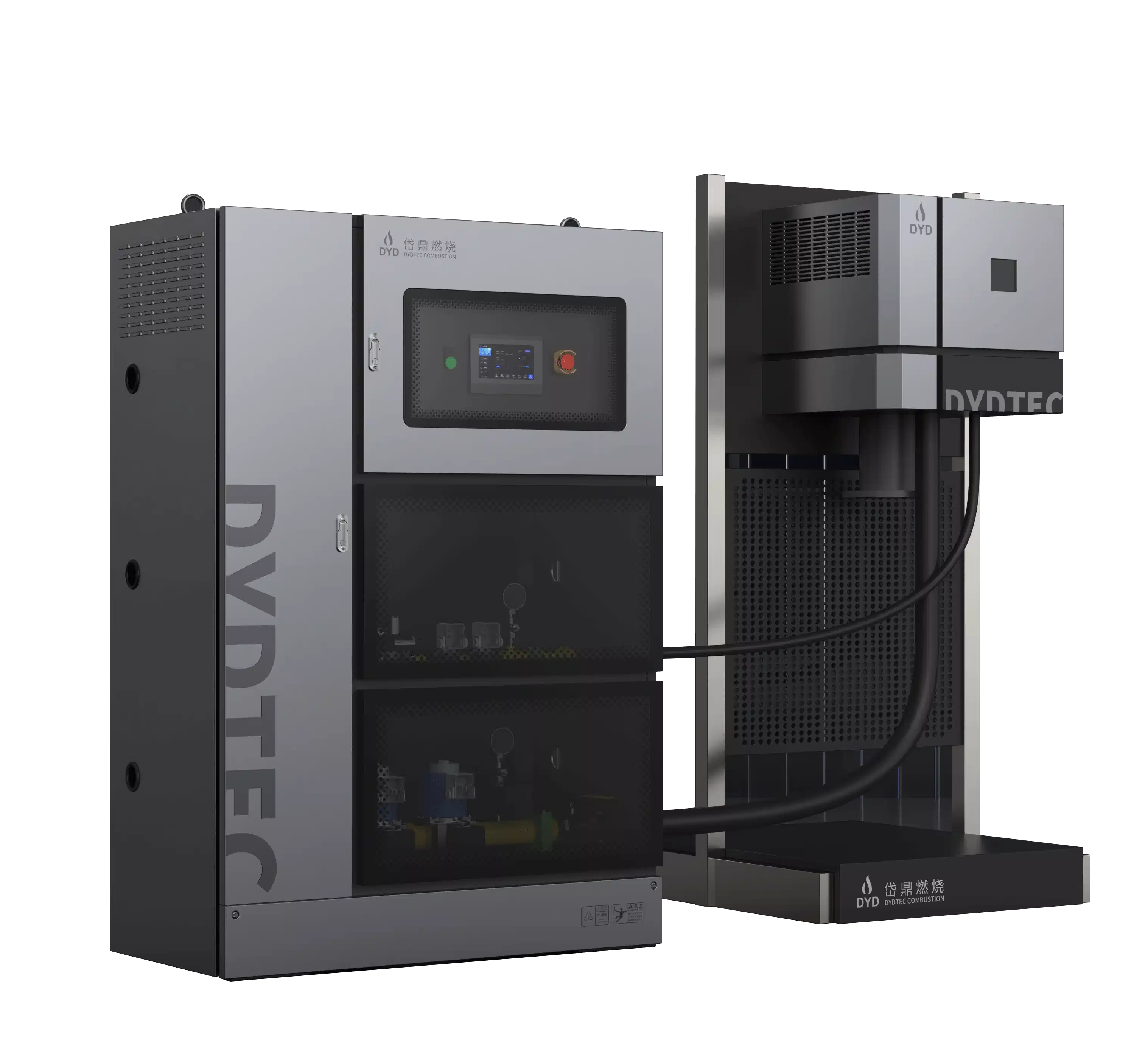
DYDTEC Combustion develops industrial burners and combustion-system solutions for different industrial heating applications.
Its product portfolio includes 100+ burner models and covers 200+ application scenarios, allowing burner configurations to be matched to different thermal loads, fuels, furnace structures, and operating conditions.
For OEM projects, heat-load evaluation can be considered together with:
Furnace geometry
Burner capacity
Flame characteristics
Fuel conditions
Combustion-air conditions
Exhaust conditions
Temperature requirements
Control strategy
DYDTEC Combustion was established in 2012 and has developed its combustion-system business across a range of industrial applications. Its manufacturing and R&D bases are located in Shanghai and Yangzhou, with a factory area of approximately 11,000 m².
These capabilities are particularly relevant when an OEM requires more than a standard burner and needs the combustion system to be matched to the actual thermal characteristics of its equipment.
For OEM manufacturers, the burner is part of the machine rather than a standalone component.
The thermal load affects:
Burner capacity
Burner quantity
Heating zones
Fuel-system sizing
Combustion-air requirements
Exhaust-system requirements
Control architecture
Furnace dimensions
If the heat load is underestimated, the equipment may fail to achieve its intended production performance.
If it is significantly overestimated, the combustion system may become unnecessarily large and difficult to control at normal operating conditions.
This is why heat-load evaluation should be performed during equipment development rather than after the burner has already been selected.
Ignoring furnace and exhaust heat losses can underestimate the required burner capacity.
Furnace volume does not directly determine thermal demand.
Production rate, material properties, and heating time can be equally important.
For drying processes, evaporation can represent a major part of the total heat requirement.
The heat-up stage may require much more thermal capacity than steady-state operation.
Maximum capacity is only one part of burner selection. Minimum controllable output is also important.
Hot gases leaving the furnace can carry significant thermal energy.
A furnace designed for one throughput may require a very different burner capacity when production is increased.
Furnace heat load is the amount of thermal energy that the furnace and process require under a defined operating condition.
No. Heat load is the process's thermal demand, while burner capacity is the thermal output that the burner can provide.
A basic product-heating calculation can use Q = m × Cp × ΔT, but a complete furnace calculation should also consider moisture, heat losses, exhaust losses, startup requirements, and other process-specific loads.
No. Furnace volume affects the thermal environment, but heat load is more directly related to the product, process, heat losses, and operating requirements.
Not by itself. Production rate, material properties, heating time, insulation, exhaust conditions, and other factors also affect heat demand.
It determines how low the burner needs to operate while maintaining stable combustion and temperature control.
The furnace may heat too slowly, fail to reach the required temperature, or be unable to maintain production capacity.
The system may experience poor low-load control, cycling, temperature overshoot, or localized overheating.
Yes. Moisture requires energy to be heated and evaporated, making it particularly important in drying applications.
Startup requires energy to heat the furnace structure and product from a lower initial temperature. Holding load is primarily the energy required to compensate for ongoing thermal losses and process demand.
A larger or more spatially distributed heat load may require multiple burners or heating zones rather than one large burner.
Provide product throughput, temperatures, heating time, furnace dimensions, material properties, moisture content when applicable, fuel conditions, air conditions, exhaust conditions, and control requirements.
Yes, provided sufficient process and equipment information is available. The accuracy depends on the quality of the available operating data.
Furnace heat load is the foundation for determining how much thermal capacity a combustion system actually needs.
It is not simply the furnace temperature or burner rating.
A complete evaluation considers:
Product Heat
Moisture Heat
Furnace Heat Loss
Exhaust Heat Loss
Startup Requirements
Other Process Loads
→ Total Furnace Heat Load
The next step is to match this demand with a burner system that provides sufficient maximum capacity while maintaining stable operation at the minimum expected load.
For OEM equipment, the most reliable approach is to evaluate:
Process → Heat Load → Burner → Air → Furnace Geometry → Exhaust → Control
as one integrated system.
When furnace heat load is accurately understood at the equipment-design stage, burner selection becomes more predictable, temperature control becomes easier to optimize, and the combustion system can be designed around the actual requirements of the industrial process rather than an assumed burner size.