There is no single burner that is best for every batch furnace.
The right burner depends on the furnace size, process temperature, batch material, heat load, heating rate, temperature-uniformity requirements, fuel, furnace atmosphere, and operating cycle.
Unlike continuous furnaces, batch furnaces heat a defined load that is charged, heated, held, and then removed. The thermal demand can therefore change significantly throughout one cycle.
A typical batch-furnace cycle may include:
Loading → Preheating → Heating → Soaking → Cooling → Unloading
The burner system needs to respond to these changing conditions while maintaining the required furnace temperature and heat distribution.
The best burner is therefore not simply the burner with the highest heat capacity. It is the burner that can provide stable heat input, appropriate turndown, suitable flame characteristics, and controllable temperature throughout the entire batch cycle.
A batch furnace processes a fixed quantity of material during each heating cycle.
Unlike a continuous furnace, the material normally remains inside the furnace until the required thermal process is completed.
Batch furnaces are used for applications such as:
Heat treatment
Annealing
Forging
Preheating
Metal heating
Ceramic processing
Drying
Stress relieving
Other industrial thermal processes
The specific burner requirements vary significantly between these applications.
A suitable batch-furnace burner should generally provide:
Stable combustion
Appropriate heat capacity
Good turndown
Reliable ignition
Suitable flame length
Appropriate flame shape
Accurate heat-output control
Good temperature distribution
Reliable operation during repeated heating cycles
The burner should also be compatible with the furnace geometry and process atmosphere.
For many batch furnaces, controllability is particularly important.
A batch furnace may require high heat input during the initial heating stage and much less heat once the target temperature has been reached.
For example:
Cold Furnace + Cold Product
→ High Heat Demand
↓
Temperature Rising
→ Moderate Heat Demand
↓
Target Temperature
→ Low Heat Demand
↓
Soaking
→ Precise Heat Maintenance
A burner that can modulate across this range can provide better temperature control than a burner designed primarily around maximum capacity.
Turndown describes the range over which a burner can reduce its heat output while maintaining stable combustion.
For batch furnaces, a suitable turndown ratio is important because the difference between startup heat demand and holding heat demand can be substantial.
Without sufficient turndown, an oversized burner may cause:
Temperature overshoot
Frequent cycling
Uneven heating
Difficult temperature control
Increased thermal stress
A burner with appropriate turndown can operate at lower firing rates once the furnace approaches its target temperature.
Both approaches can work.
The decision depends primarily on furnace geometry and the required heat distribution.
A single burner can be appropriate for:
Smaller furnaces
Compact heating chambers
Applications where one heat source can distribute heat adequately
However, the burner must be positioned carefully.
Multiple burners may be more appropriate for larger chambers where distributed heating is required.
They can provide:
Better heat distribution
Multiple heating zones
More flexible control
Lower local heat concentration
The correct solution depends on the actual thermal pattern required by the batch process.
Furnace geometry strongly influences burner performance.
Important parameters include:
Furnace length
Furnace width
Furnace height
Chamber volume
Burner position
Product position
Exhaust location
Roof and wall structure
A burner with adequate capacity may still perform poorly if its flame characteristics are incompatible with the chamber.
The burner should therefore be selected according to the complete furnace geometry, not just the rated thermal capacity.
Furnace volume affects how combustion gases circulate and how heat is distributed.
A large chamber may require:
Longer flame development
Greater gas circulation
Multiple burners
Higher heat-release capacity
A compact furnace may require a shorter or more controlled flame.
The objective is to create a suitable thermal environment throughout the chamber rather than simply maximize flame temperature.
Flame length determines where the main heat-release region develops.
If the flame is too short, heat can become concentrated near the burner.
If the flame is too long, it may:
Impinge on the product
Contact furnace walls
Create local hot spots
Increase refractory loading
The appropriate flame length depends on:
Burner capacity
Furnace dimensions
Burner position
Fuel
Combustion-air conditions
Flame shape determines how heat is distributed around the furnace.
Depending on the process, a batch furnace may require:
Long flames
Short flames
Broad flames
Narrow flames
High-momentum flames
Distributed heat-release patterns
The correct flame configuration should be selected according to the furnace's heating objective.
Burner angle affects flame direction and combustion-gas circulation.
It can influence:
Heat distribution
Flame trajectory
Product heating
Furnace-wall temperature
Gas circulation
Interaction between adjacent burners
The burner angle should therefore be determined according to the furnace geometry and desired heat-flow pattern.
For heat-treatment applications, the priority is often temperature uniformity and precise control, rather than simply achieving the highest possible heat-release rate.
The burner system should be evaluated for:
Temperature stability
Heat distribution
Turndown
Zone control
Flame characteristics
Furnace atmosphere
Repeatability between cycles
A multi-burner system with independent control may be useful for larger heat-treatment furnaces.
Batch forging furnaces can require substantial heat input during the heating stage.
Important burner characteristics include:
High heat-release capacity
Stable combustion
Suitable flame momentum
Appropriate flame length
Good heat distribution
Reliable repeated startup
The burner should provide enough heat to achieve the required heating rate without creating excessive local temperatures.
Annealing often requires controlled and relatively uniform heating.
Burner selection should consider:
Temperature uniformity
Stable modulation
Heat distribution
Furnace atmosphere
Soaking requirements
Repeated thermal cycles
The burner should be capable of reducing its heat input after the furnace reaches the required temperature.
Batch size directly affects the thermal load.
A larger batch generally requires more energy to reach the target temperature.
The thermal requirement depends on:
Batch mass
Material specific heat
Initial temperature
Target temperature
Required heating time
A simplified relationship is:
Product Heat Requirement ≈ Mass × Specific Heat × Temperature Increase
The furnace's own heat losses must also be considered.
The required heating rate is a major factor in burner sizing.
If a process requires the batch to reach the target temperature quickly, the burner needs sufficient heat-release capacity.
However, maximum burner capacity should not be selected without considering the later holding stage.
The burner must be able to operate effectively across both:
High Heat Demand
and
Low Heat Demand
A batch furnace may have the correct average temperature while the product itself experiences significant temperature differences.
Uneven heating can result from:
Poor burner arrangement
Incorrect flame length
Inadequate gas circulation
Furnace geometry
Product loading
Poor airflow distribution
Temperature differences can affect:
Material properties
Surface quality
Dimensional stability
Metallurgical results
Product consistency
Therefore, burner arrangement should be designed around the required temperature distribution.
The position and arrangement of the batch can influence gas circulation.
A densely loaded furnace may restrict the movement of hot gases.
This can create:
Hot zones
Cold zones
Uneven heating
Longer heating times
Burner arrangement and airflow should therefore be evaluated together with the actual product-loading configuration.
Furnace pressure affects airflow and heat distribution.
Excessive negative pressure can draw cold ambient air into the furnace through:
Doors
Seals
Openings
Other leakage points
This can increase heat loss and disturb temperature uniformity.
Pressure control should therefore be coordinated with:
Burner operation
Combustion air
Exhaust
Furnace openings
Combustion air affects:
Flame stability
Flame temperature
Combustion efficiency
Flame shape
Exhaust volume
Too much combustion air can increase heat loss.
Too little air can result in incomplete combustion or unstable flame behavior.
The combustion-air system should therefore remain properly matched to the burner throughout its firing range.
Both approaches are possible.
The combustion gases enter the furnace chamber.
Advantages may include:
High heat-transfer efficiency
Fast thermal response
Direct heat transfer
This configuration is appropriate when the product and process can tolerate combustion gases.
Combustion occurs separately and heat is transferred through a heat exchanger or radiant system.
This can be appropriate when:
The process atmosphere must be controlled
Combustion products cannot contact the product
Product contamination must be minimized
The correct approach depends on the process requirements.
Low-NOx burners can be considered when emissions requirements are important.
The appropriate technology depends on:
Furnace temperature
Fuel
Excess-air level
Required emissions performance
Furnace geometry
Burner operating range
Possible combustion approaches include:
Staged combustion
Flue-gas recirculation
Premixed combustion
Other low-emission burner designs
However, emissions performance should be evaluated together with flame stability, temperature distribution, and process requirements.
Yes.
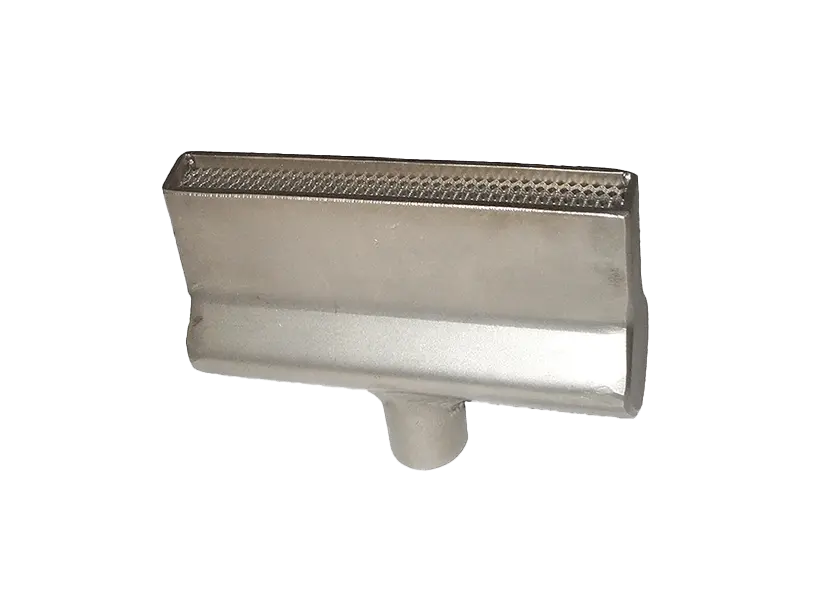
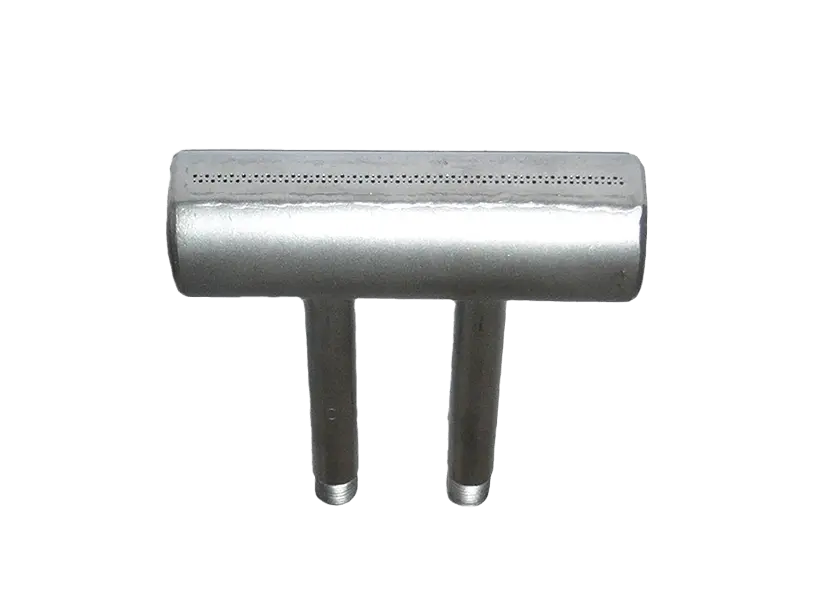
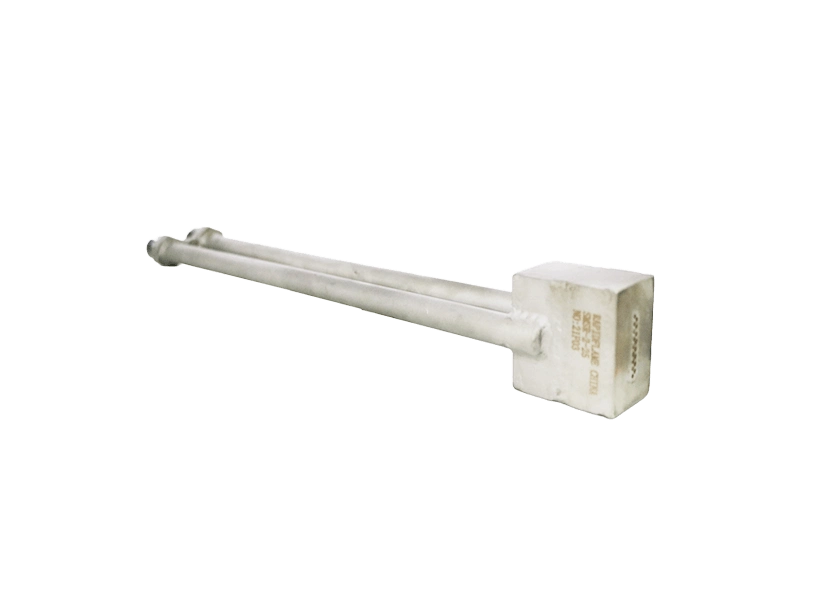
Linear burners may be suitable when a long or distributed heat-release pattern is required.
They can be considered for furnaces where heating must be distributed across a relatively wide section.
The selection should still consider:
Furnace dimensions
Required heat load
Airflow
Installation space
Temperature uniformity
Burner control requirements
The burner must also operate properly at low firing rates.
Excessive capacity can make temperature control difficult.
The flame must fit the chamber.
The batch can affect gas circulation and heat distribution.
A flame that is too long or short can create temperature differences.
Burner spacing and orientation influence temperature uniformity.
Cold-air infiltration can increase heat losses.
The burner must be capable of stable low-load operation after the furnace reaches temperature.
The burner should be considered during furnace design.
A practical selection process can follow these steps.
Determine:
Material
Batch mass
Product dimensions
Loading arrangement
Initial temperature
Target temperature
Determine:
Required heating rate
Target temperature
Soaking time
Cooling requirements
Cycle time
Consider:
Product heating
Furnace heat losses
Exhaust losses
Openings
Refractory heat-up
Startup requirements
Determine:
Chamber dimensions
Burner locations
Product location
Exhaust location
Available flame-development space
Choose between:
Direct-fired heating
Indirect heating
based on the process requirements.
Evaluate:
Maximum capacity
Minimum firing rate
Turndown
Flame length
Flame shape
Flame momentum
Fuel type
Consider:
Number of burners
Burner spacing
Burner angle
Burner elevation
Heating zones
Coordinate:
Combustion air
Furnace airflow
Exhaust
Furnace pressure
Coordinate:
Temperature sensors
Fuel modulation
Air control
Flame detection
Safety interlocks
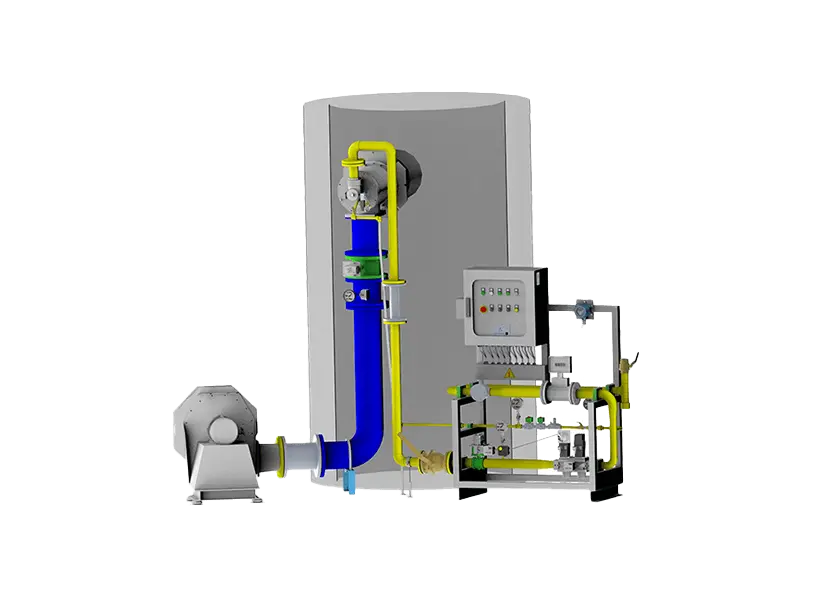
DYDTEC Combustion develops industrial burners, linear burners, thermal air furnaces, and combustion-system integration solutions for industrial thermal processes.
For batch furnaces, burner-system design can be considered around:
Batch size
Heating rate
Furnace heat load
Furnace geometry
Burner arrangement
Flame characteristics
Temperature uniformity
Turndown
Fuel type
Furnace atmosphere
Temperature-control requirements
DYDTEC Combustion was established in 2012 and has R&D and manufacturing bases in Shanghai and Yangzhou.
The company has developed 100+ burner models covering 200+ application scenarios, supporting different combustion configurations for industrial heating processes.
For OEM furnace manufacturers, the burner can be integrated with the furnace chamber, airflow, exhaust, and control system during the equipment-design stage.
The burner can influence the overall furnace design.
It may affect:
Burner openings
Chamber dimensions
Burner spacing
Flame-development space
Air piping
Exhaust arrangement
Temperature measurement
Control architecture
Early coordination allows:
Furnace Geometry + Burner + Heat Load + Airflow + Product Loading + Control
to be optimized together.
This is particularly important for customized batch furnaces where the product, cycle, and heating requirements vary from one project to another.
An OEM should ideally provide:
Furnace dimensions
Chamber volume
Burner installation locations
Exhaust locations
Furnace insulation
Furnace pressure
Product material
Product dimensions
Batch weight
Initial temperature
Target temperature
Loading arrangement
Heating rate
Target temperature
Soaking time
Cycle time
Temperature uniformity
Furnace atmosphere
Fuel type
Fuel pressure
Fuel availability
Startup conditions
Normal operating conditions
Minimum heat demand
Maximum heat demand
Daily operating cycle
This information provides the basis for selecting burner capacity, turndown, flame characteristics, burner arrangement, and control strategy.
There is no universal best burner. The correct choice depends on furnace geometry, batch size, heat load, process temperature, heating rate, atmosphere, and temperature-uniformity requirements.
Not necessarily. Excessive capacity can make low-load temperature control difficult.
Because heat demand can change significantly between startup, heating, and soaking.
Multiple burners can provide better heat distribution and zone control in larger furnaces, but the appropriate configuration depends on the furnace geometry.
Larger batches generally require more energy and may require greater burner capacity, depending on the material and required heating rate.
Burner angle influences flame trajectory, gas circulation, and heat distribution inside the chamber.
A burner with stable modulation, good temperature control, suitable flame characteristics, and appropriate compatibility with the furnace atmosphere is generally more important than simply having maximum heat output.
Yes. Linear burners can be useful when distributed heating is required across a wider furnace section.
Ideally, yes. Early selection allows the burner, chamber, airflow, exhaust, and controls to be designed as an integrated system.
The best burner for a batch furnace is not simply the burner with the greatest heat capacity.
It is the burner system that can respond effectively to the changing thermal requirements of the entire batch cycle.
The key factors are:
Batch Size
Heating Rate
Furnace Heat Load
Furnace Geometry
Burner Arrangement
Flame Characteristics
Temperature Uniformity
Turndown
Furnace Atmosphere
Control Strategy
For OEMs, burner selection should therefore be considered during the furnace-design stage rather than treated as a component to be added after the furnace structure has been finalized.
The best burner for a batch furnace is the one that provides sufficient heat during the heating stage while remaining stable and controllable during low-load and soaking conditions, with flame characteristics and burner arrangement matched to the furnace geometry and process requirements.