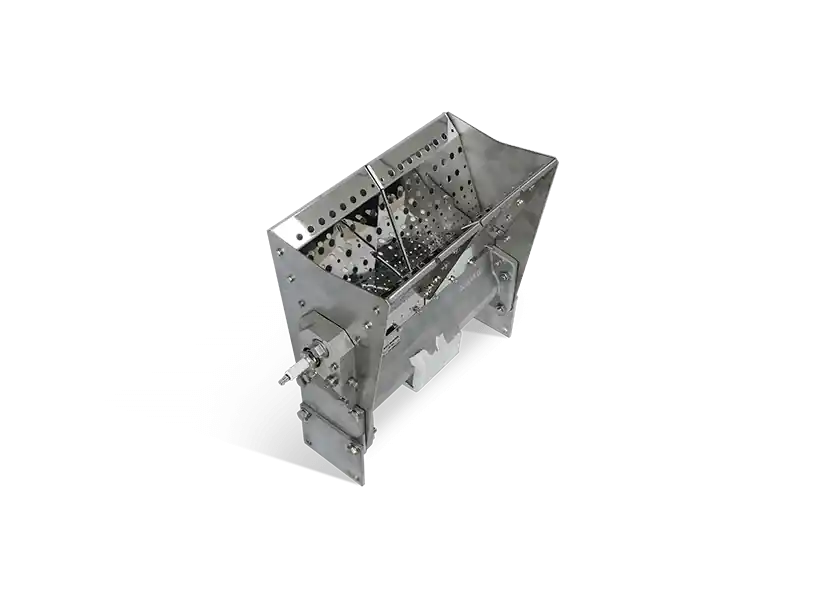
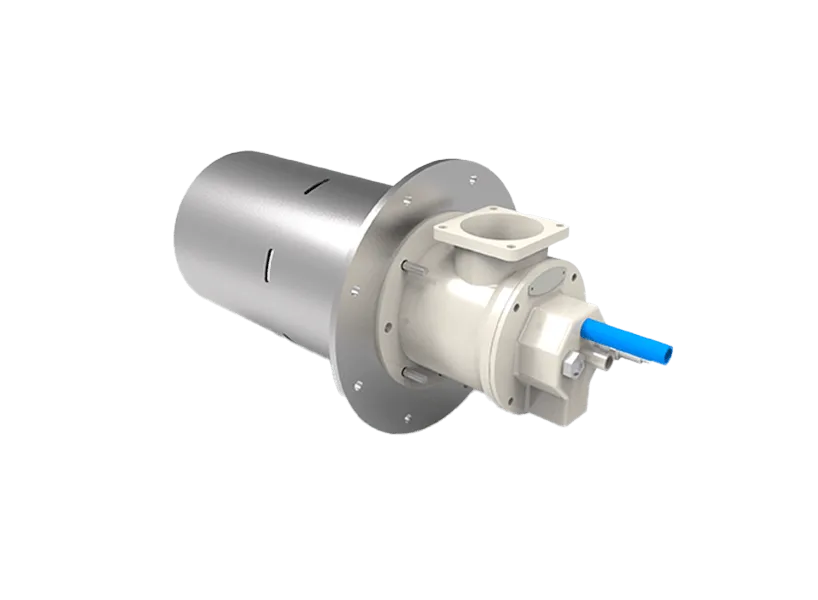
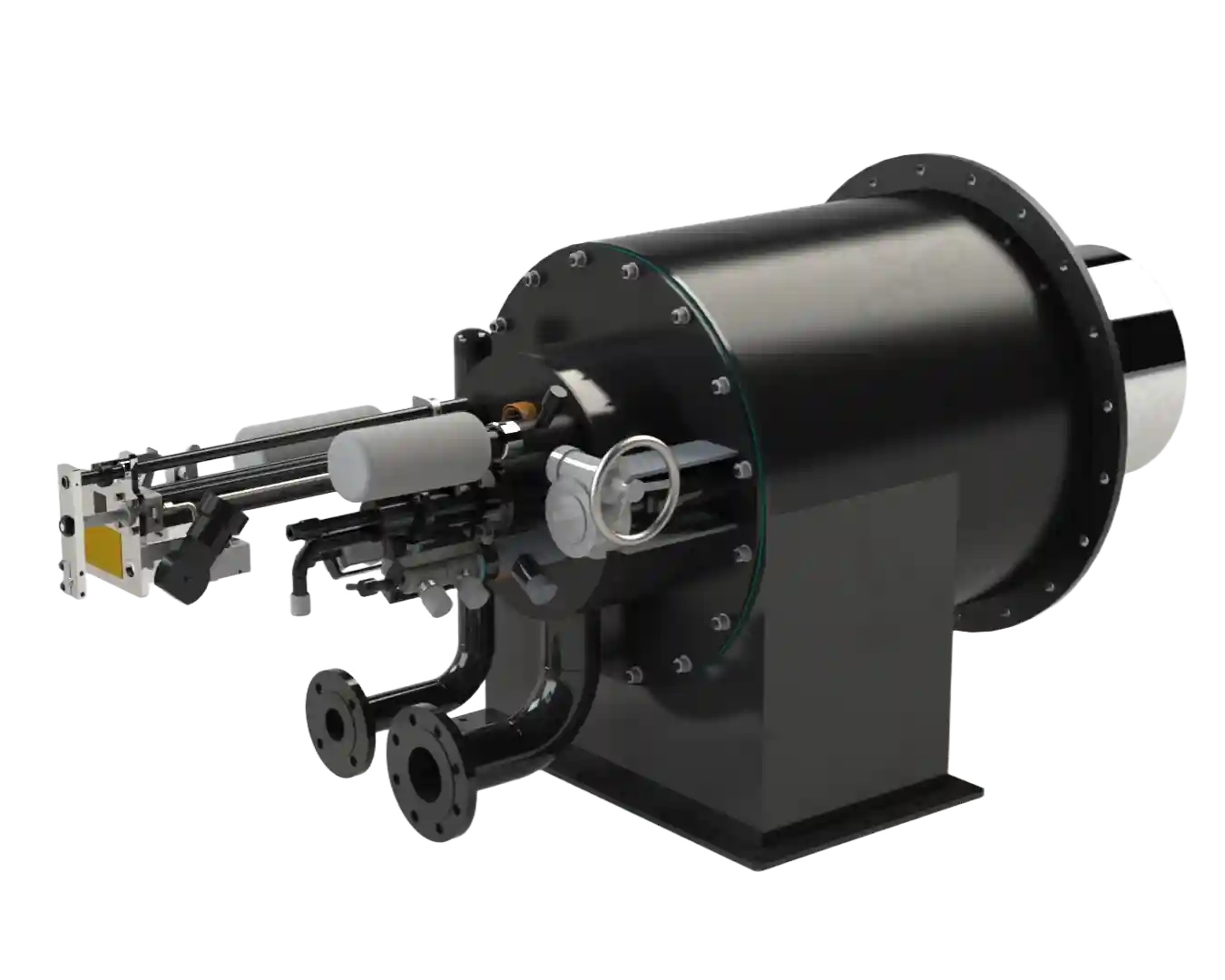
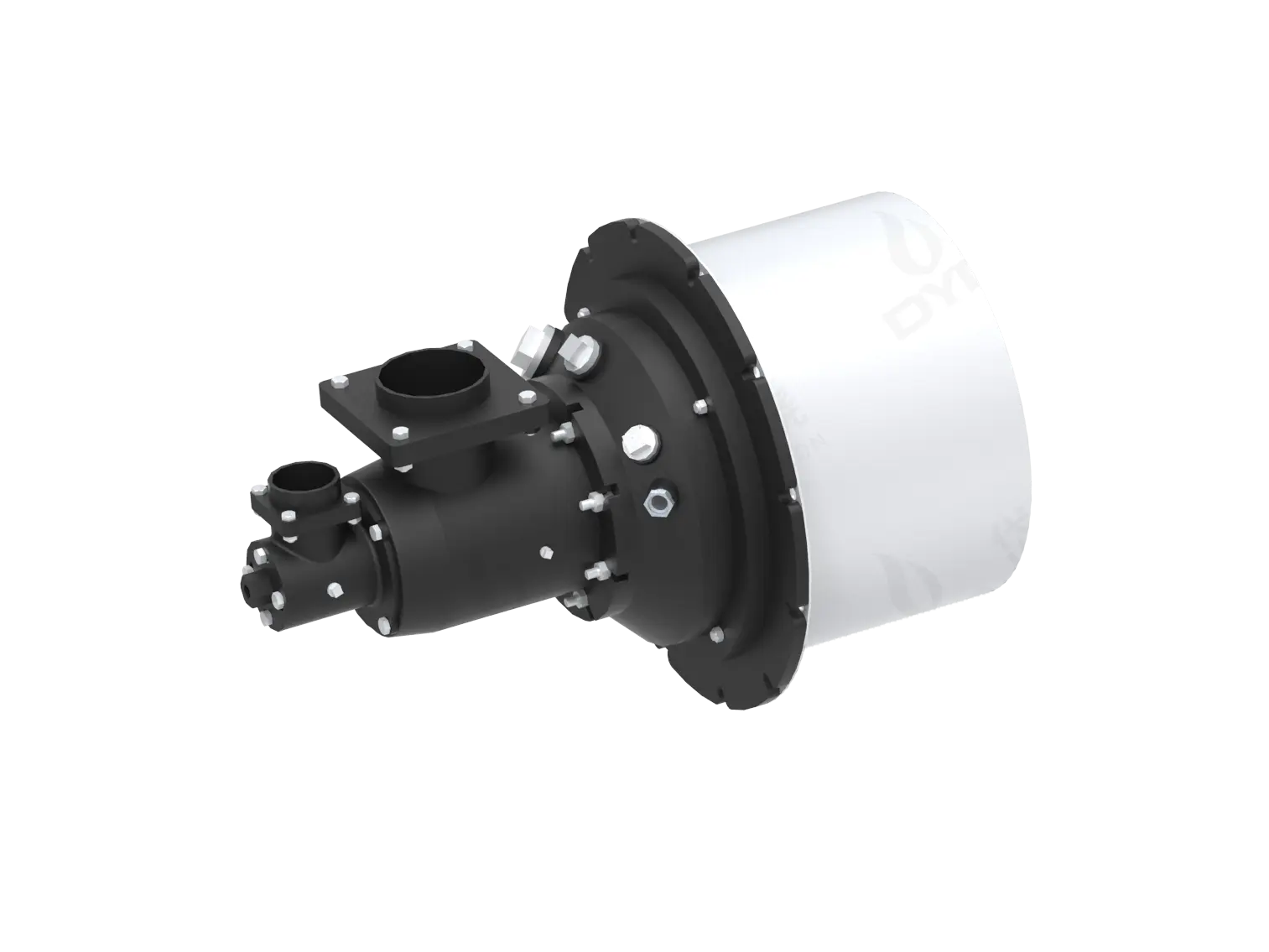
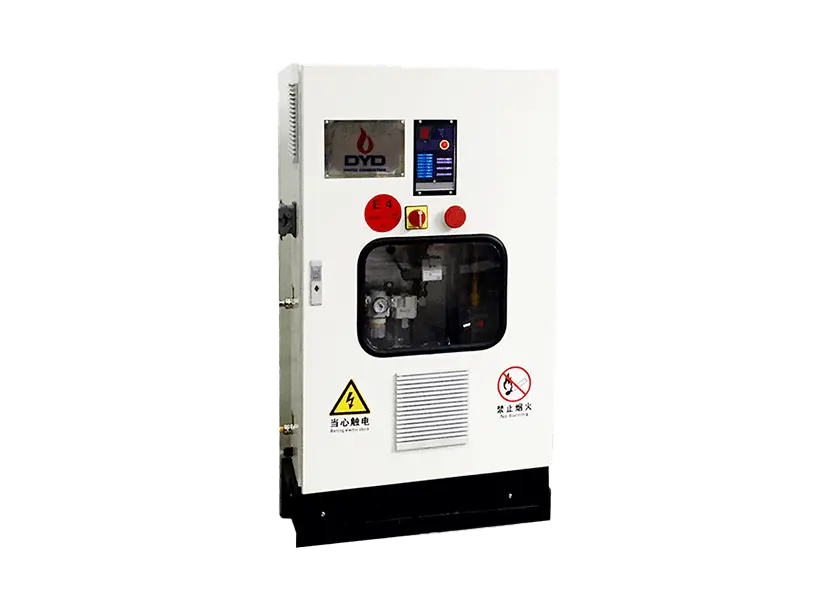
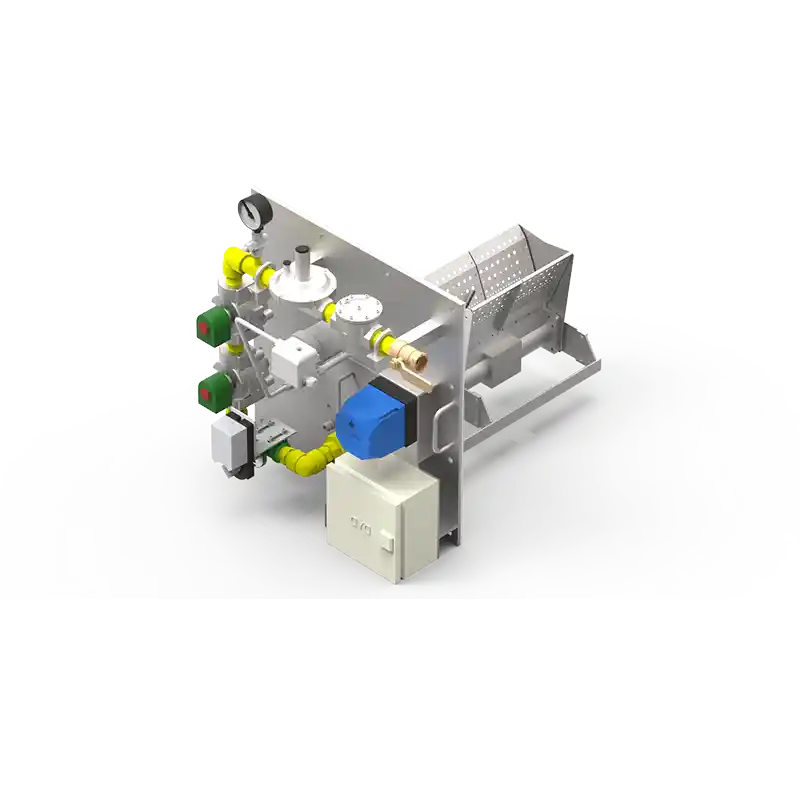
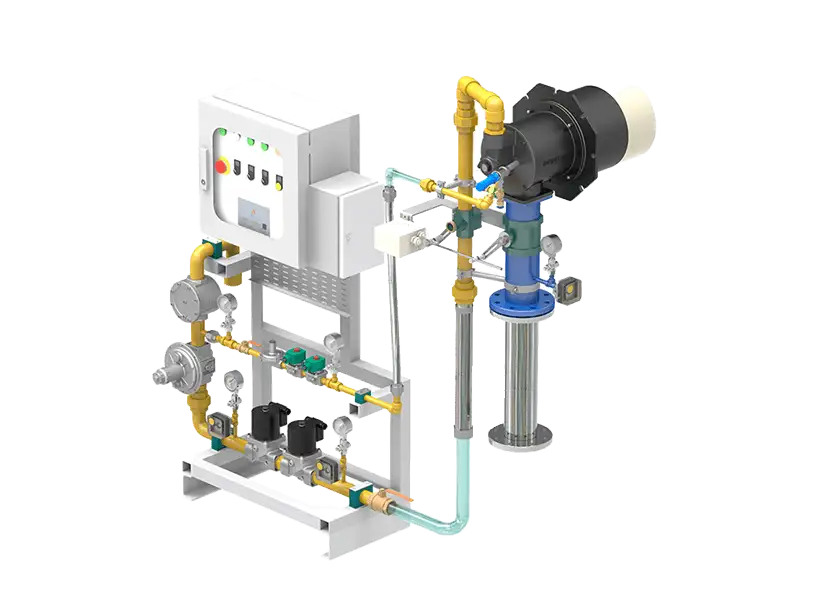
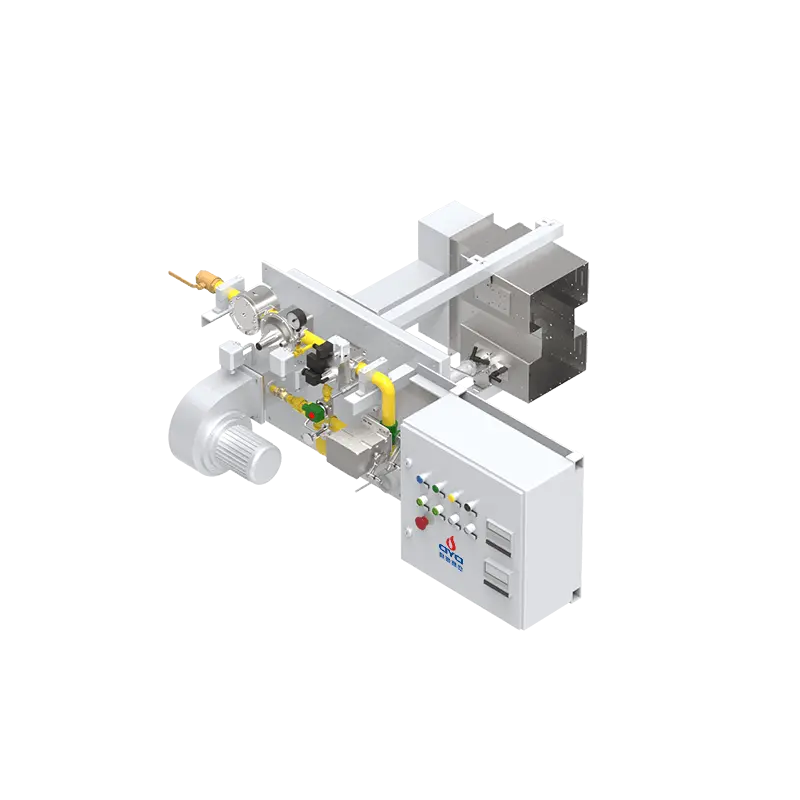
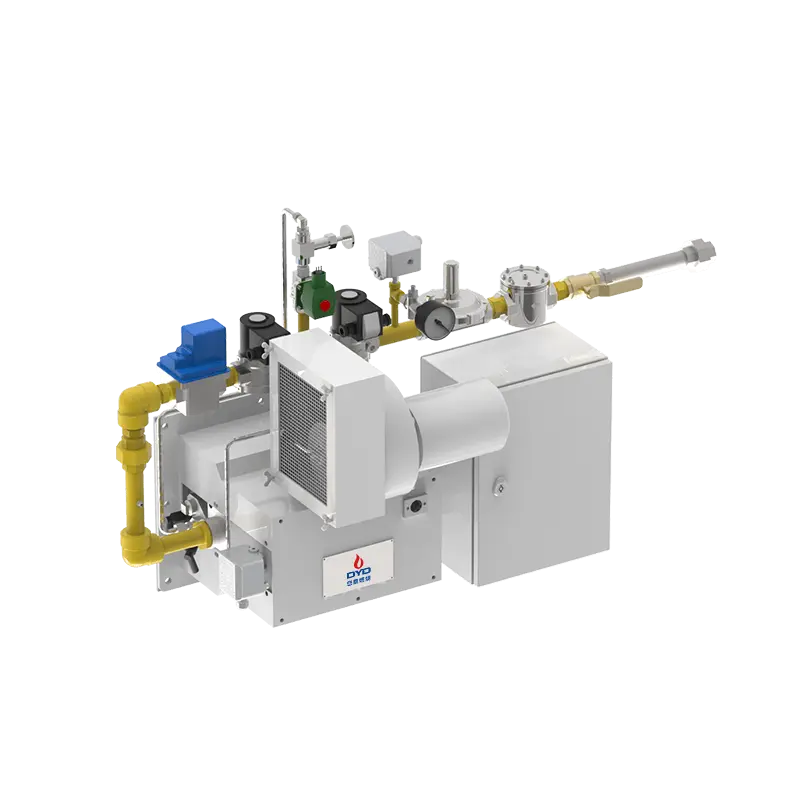
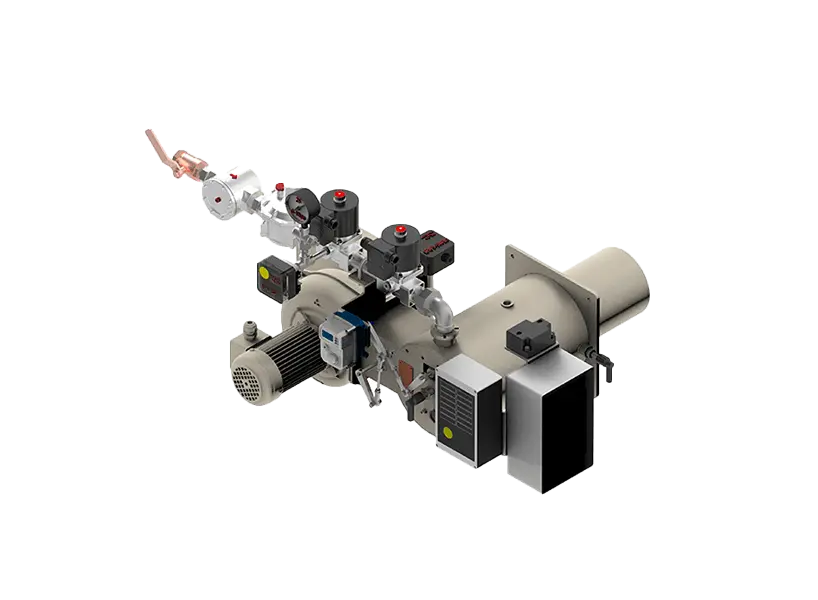
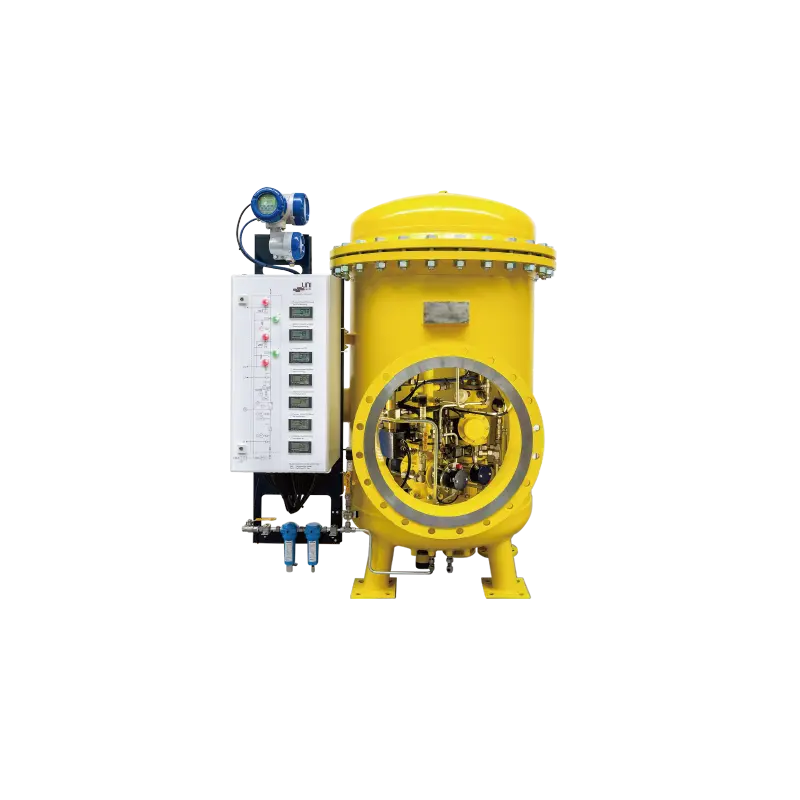
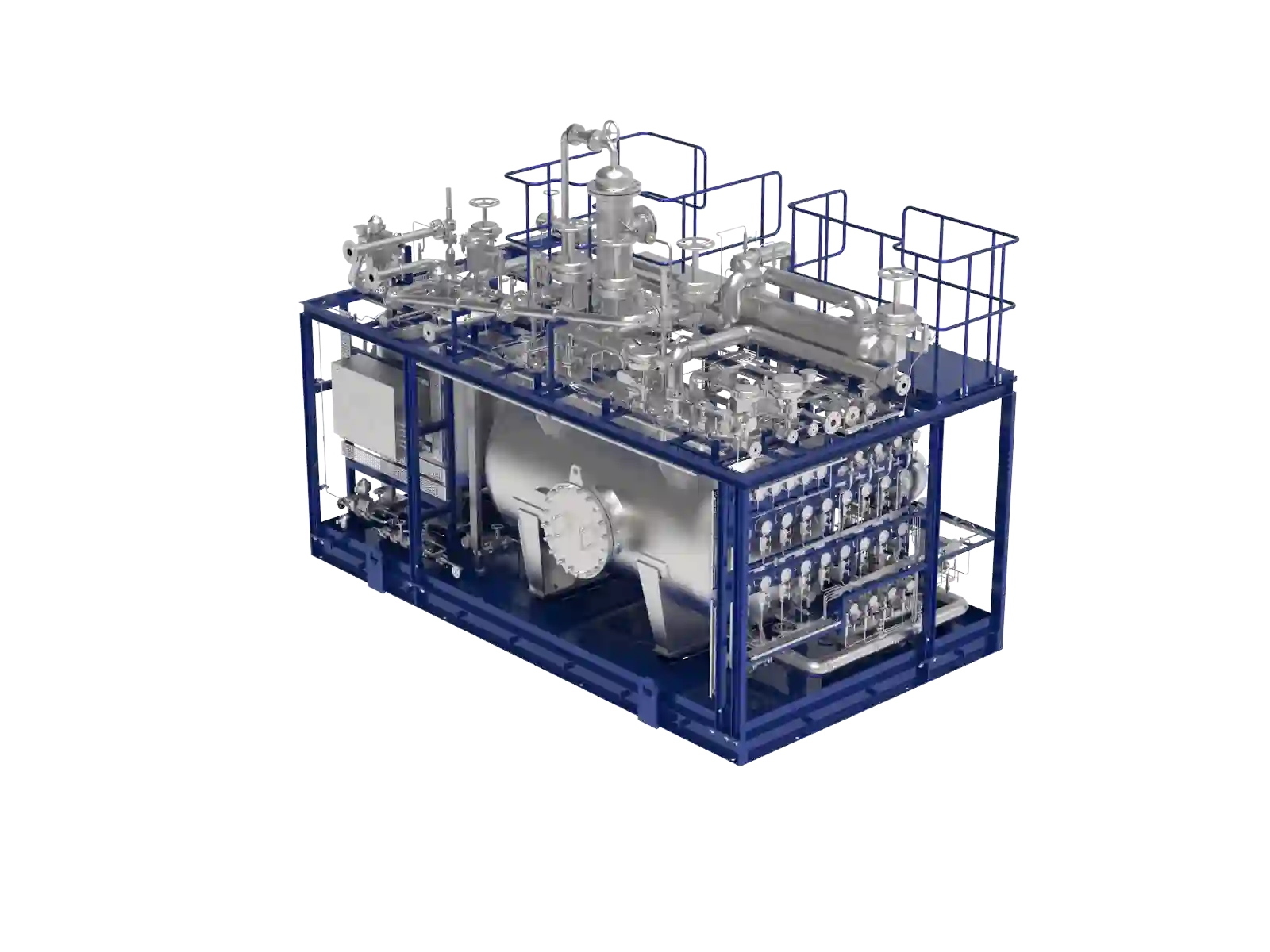
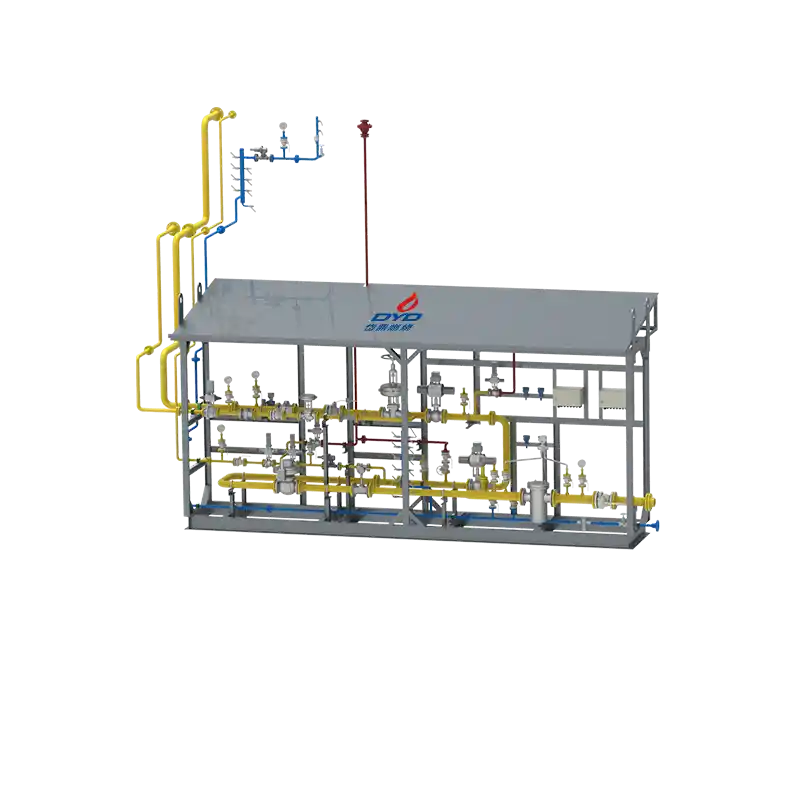
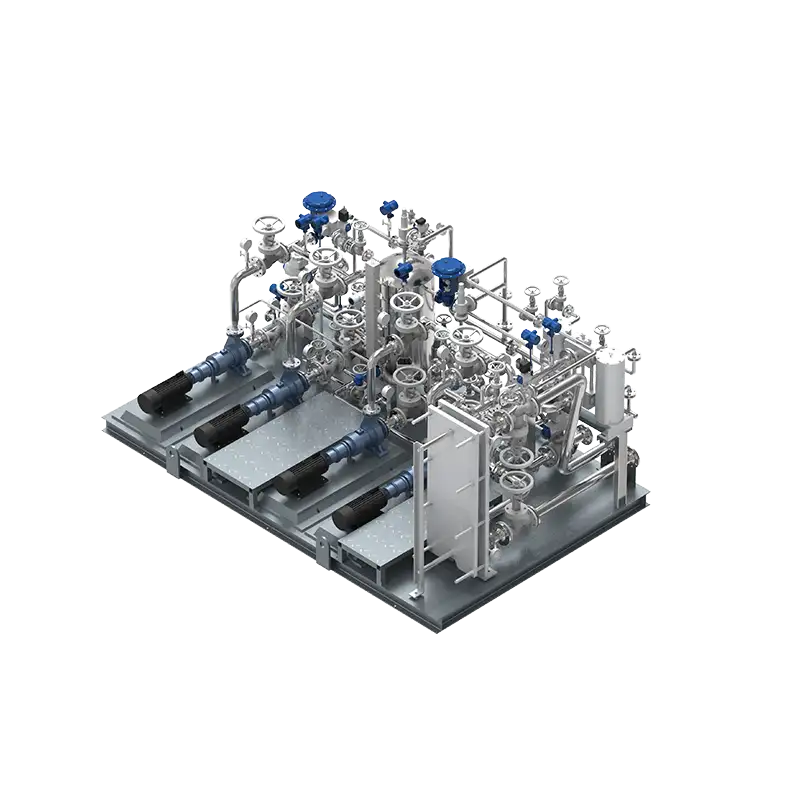
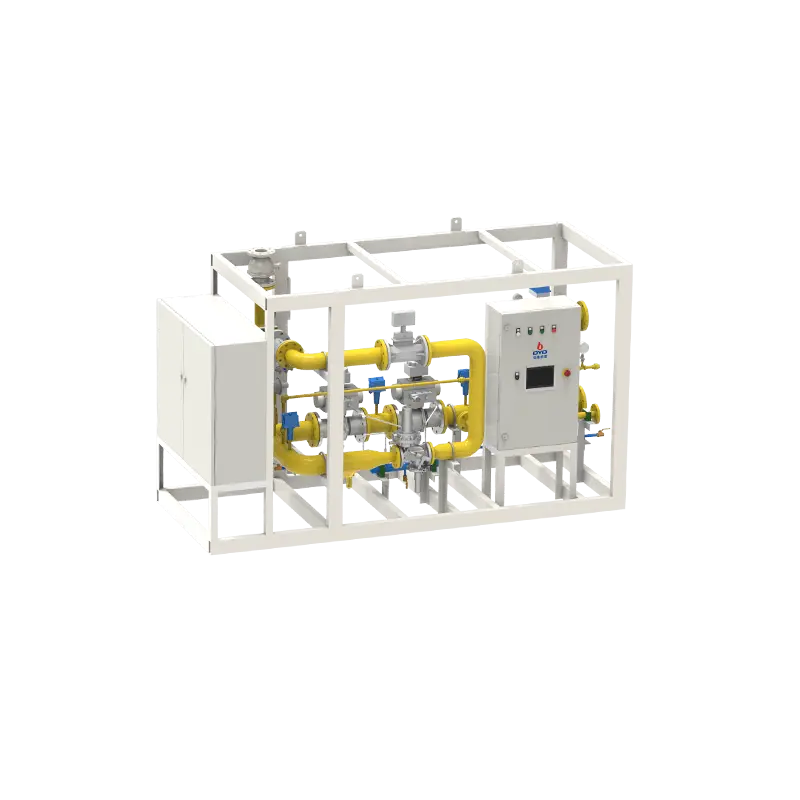
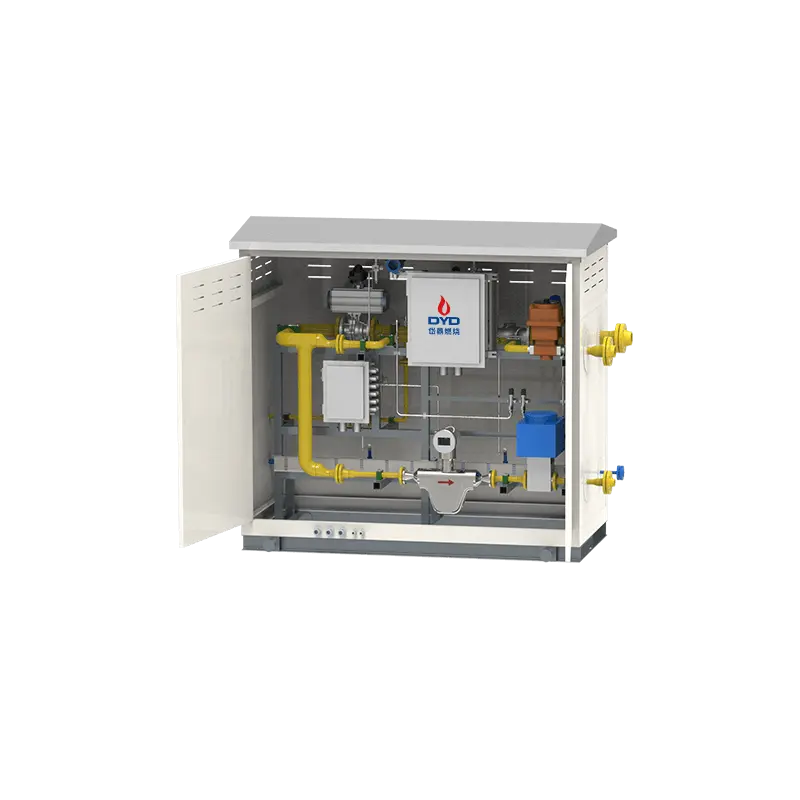
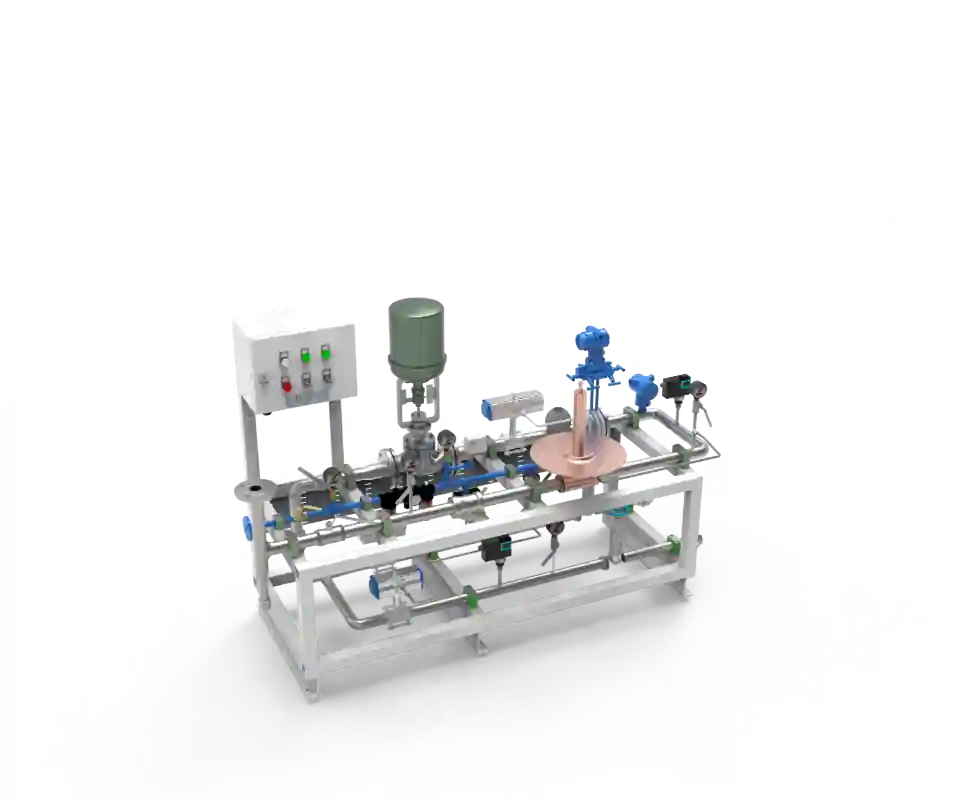
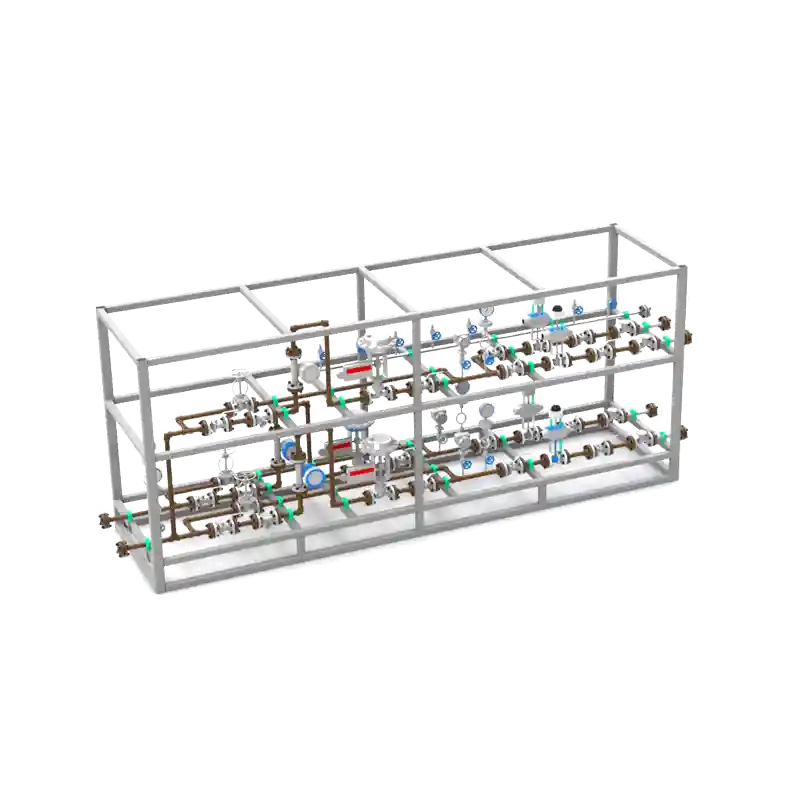
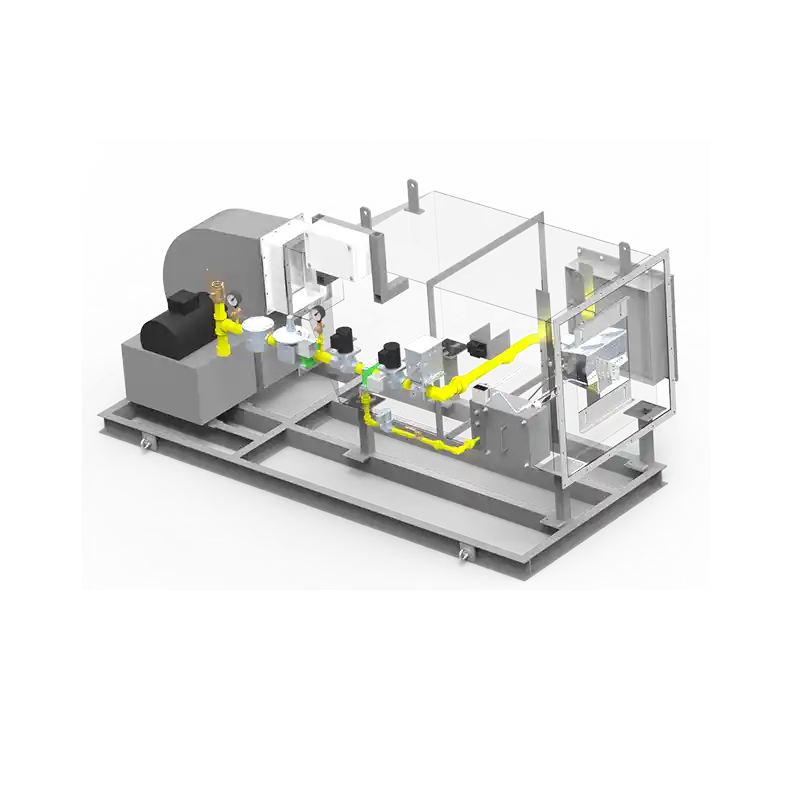
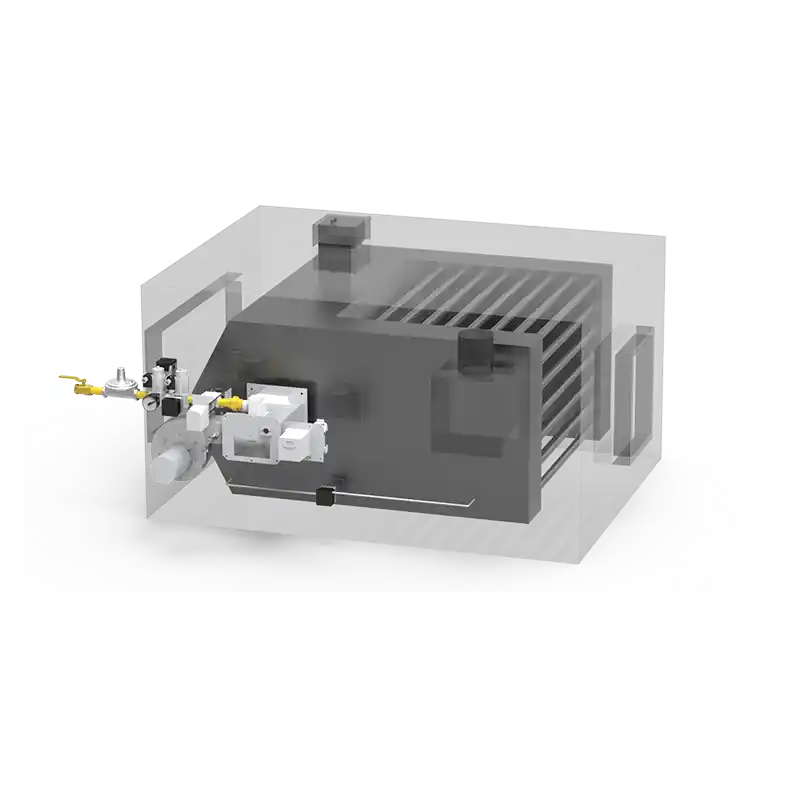
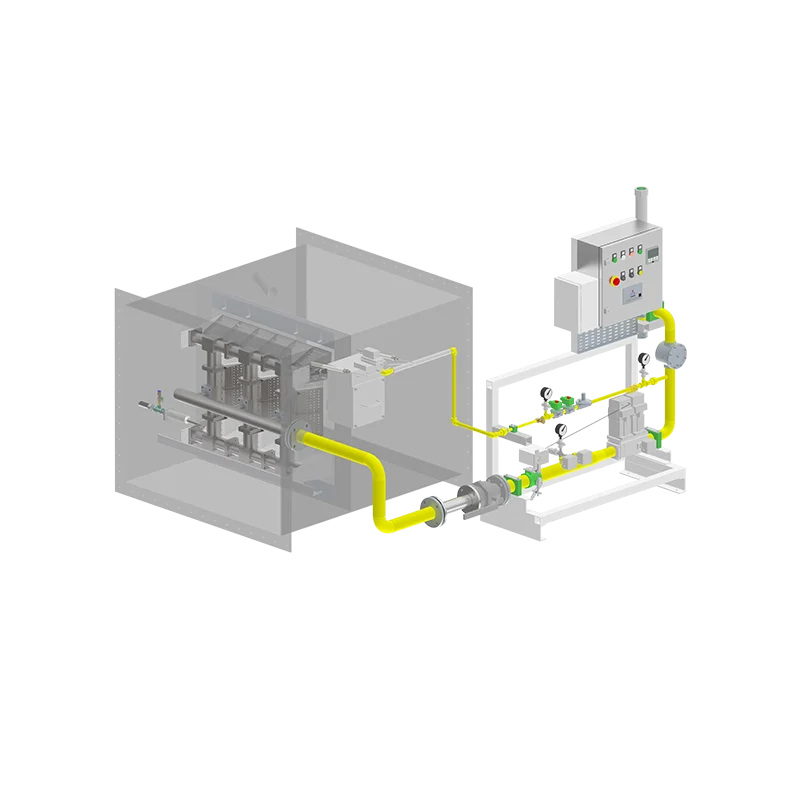
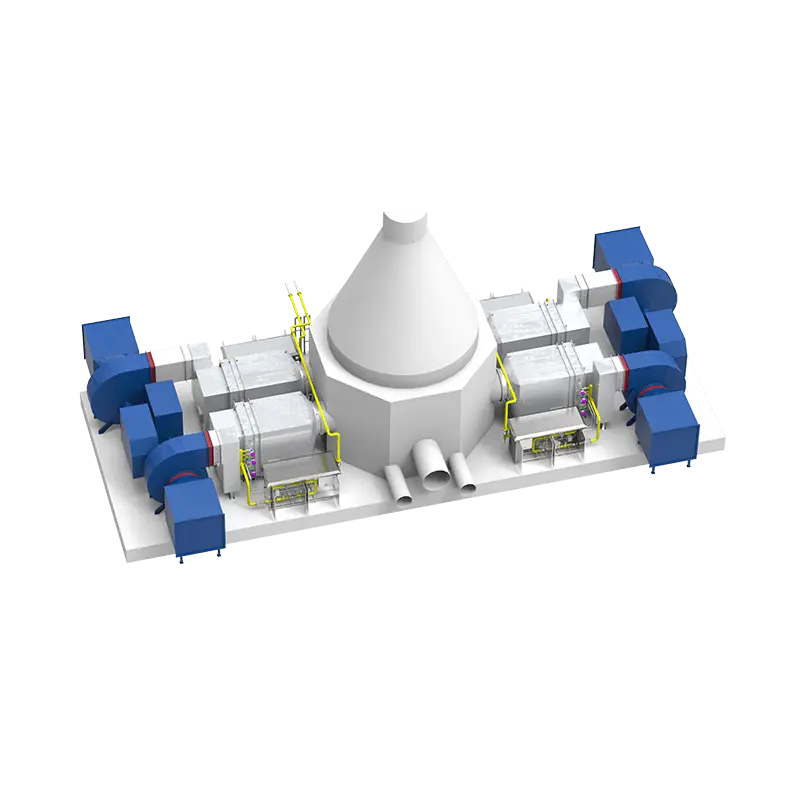
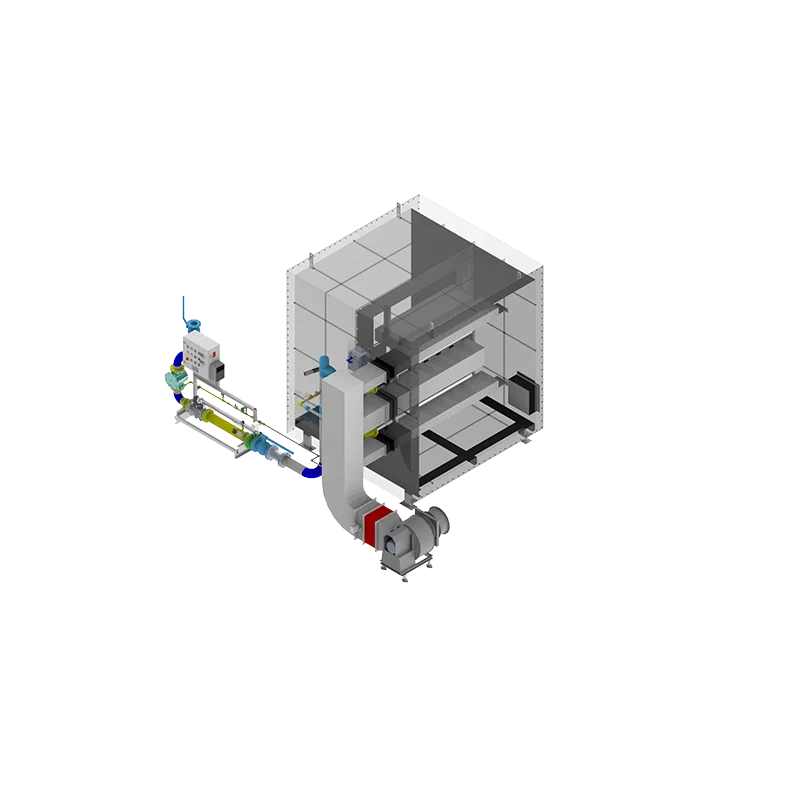
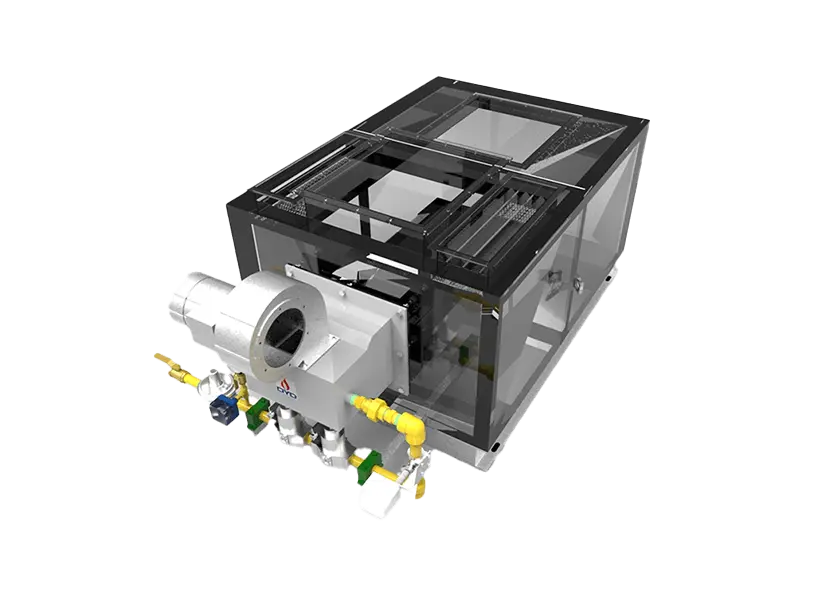
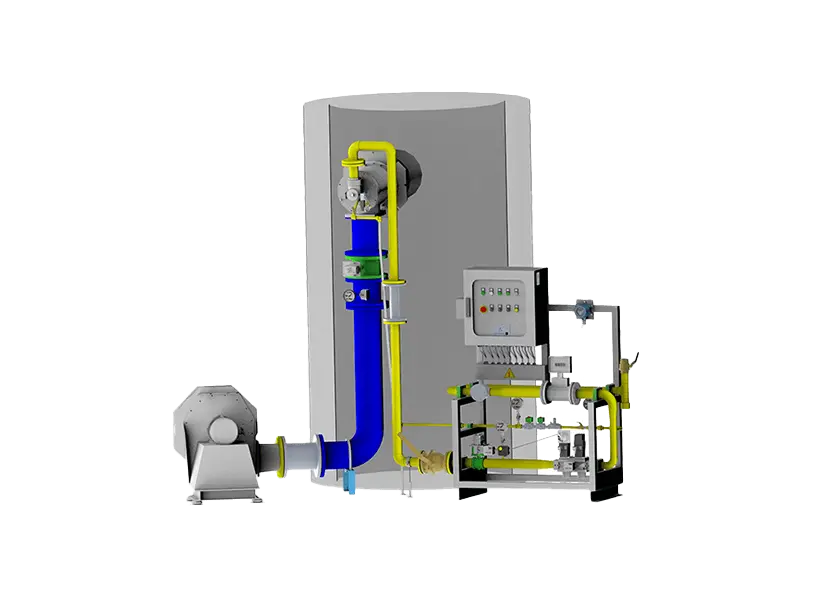
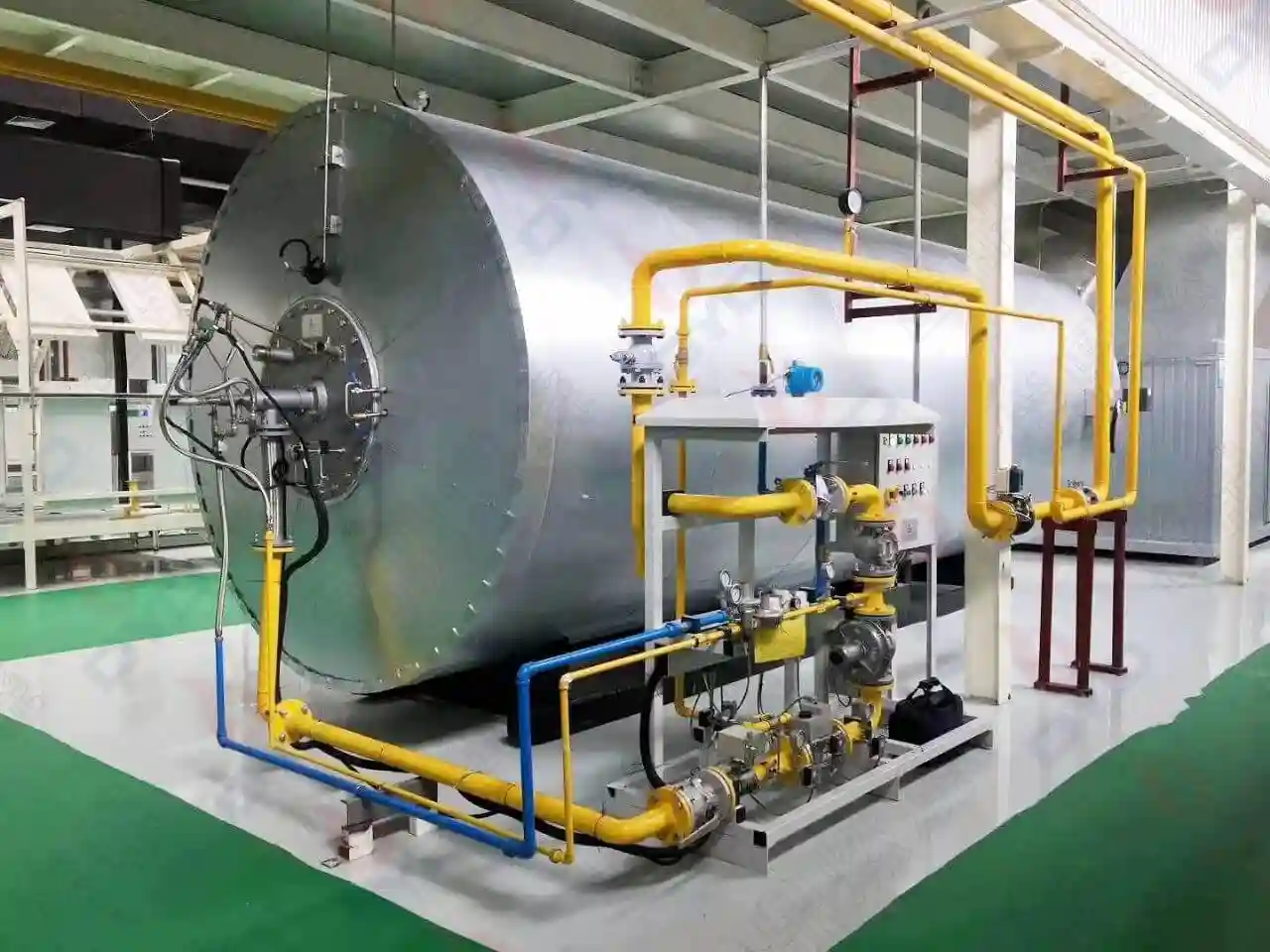
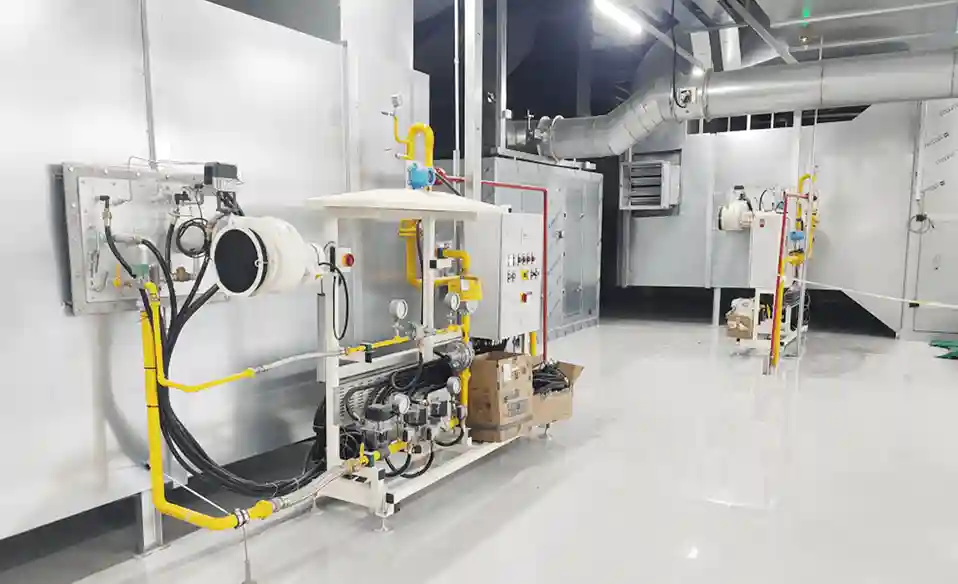
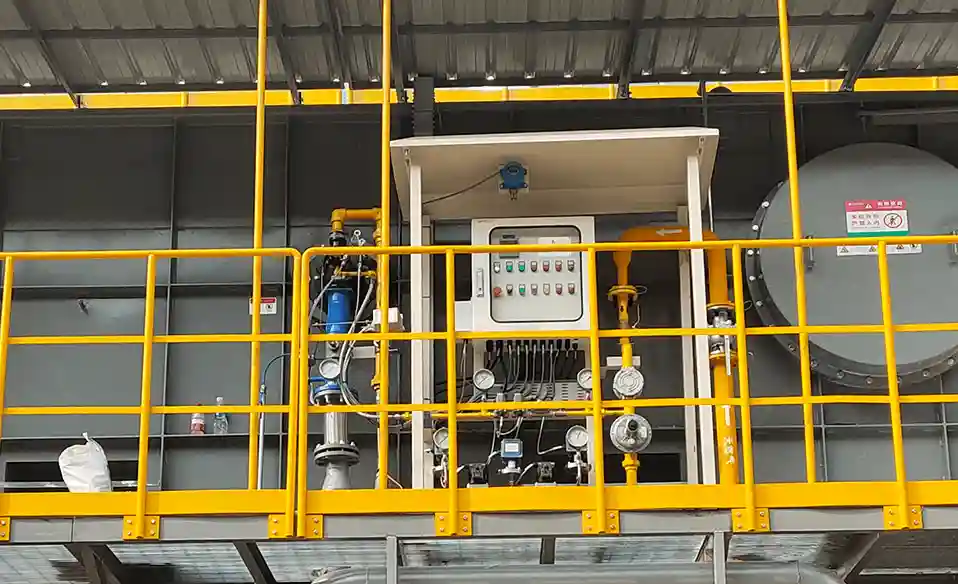
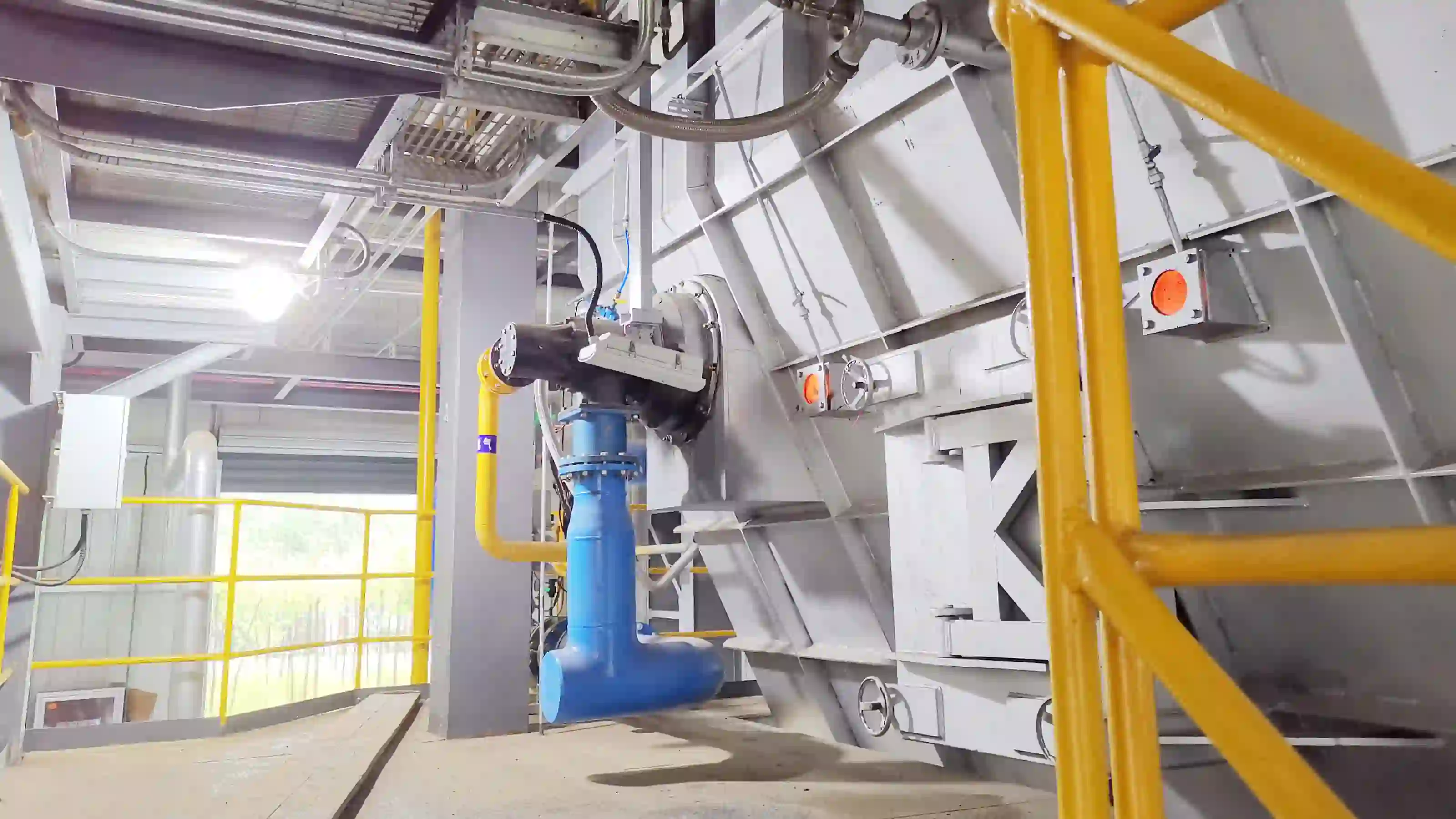
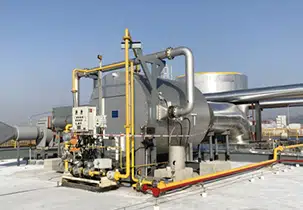
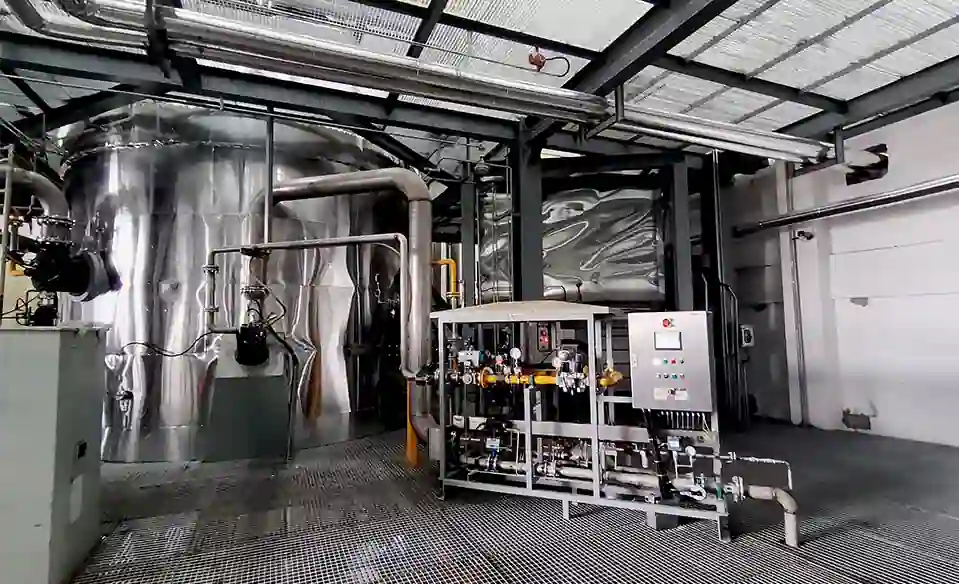
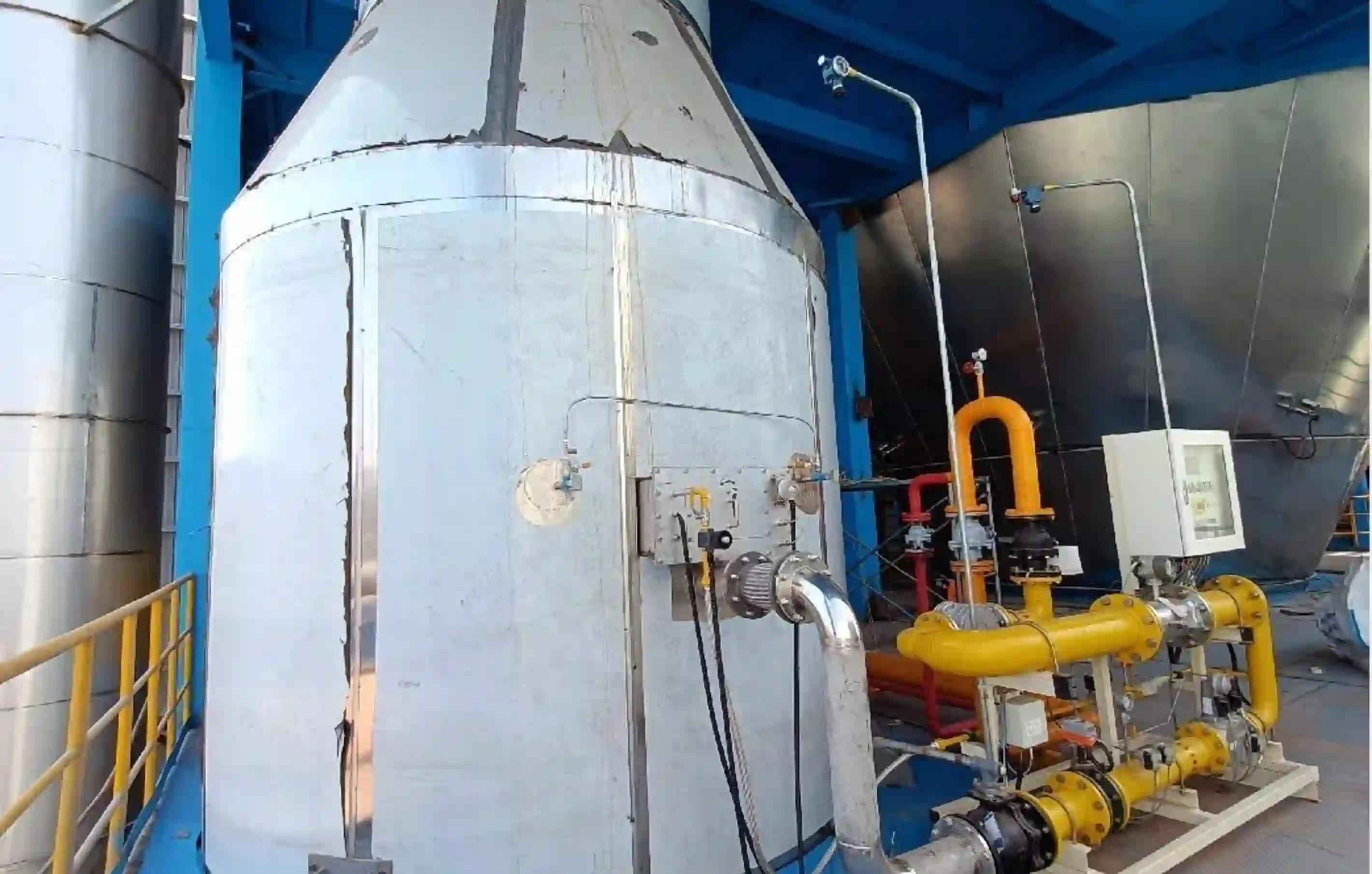
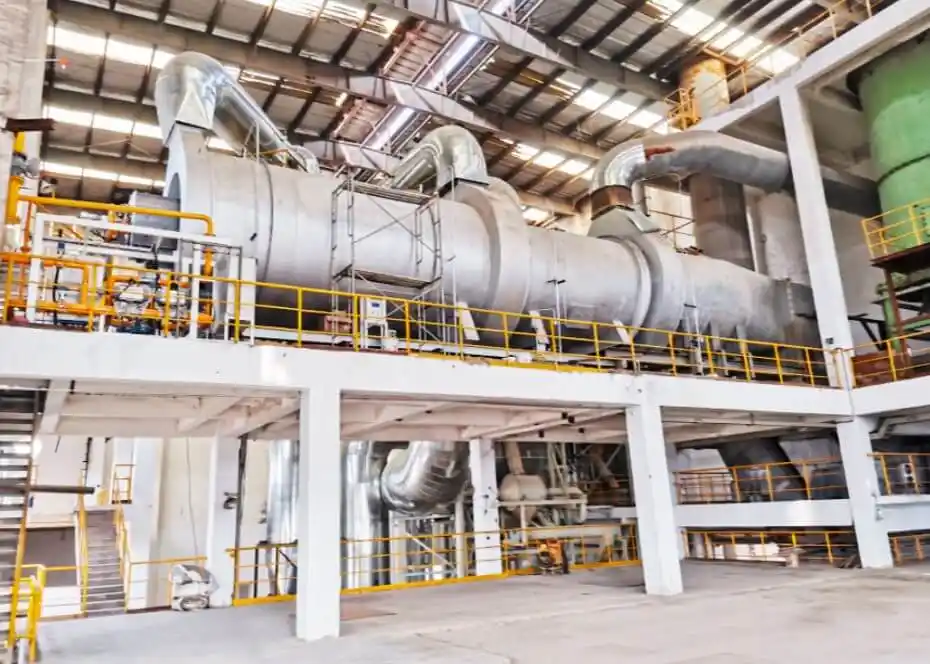
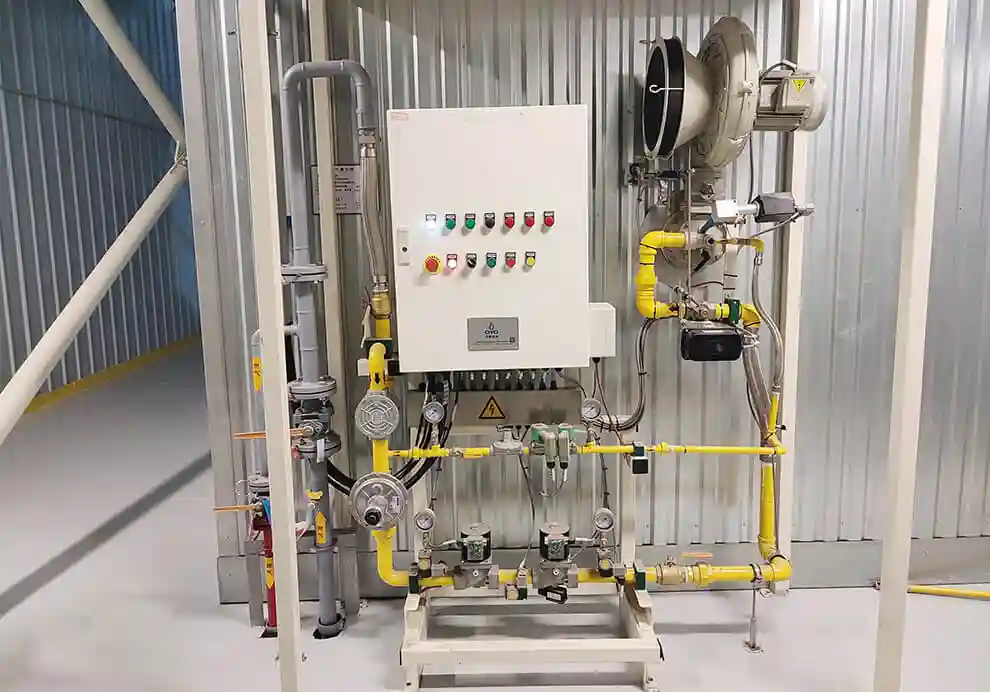
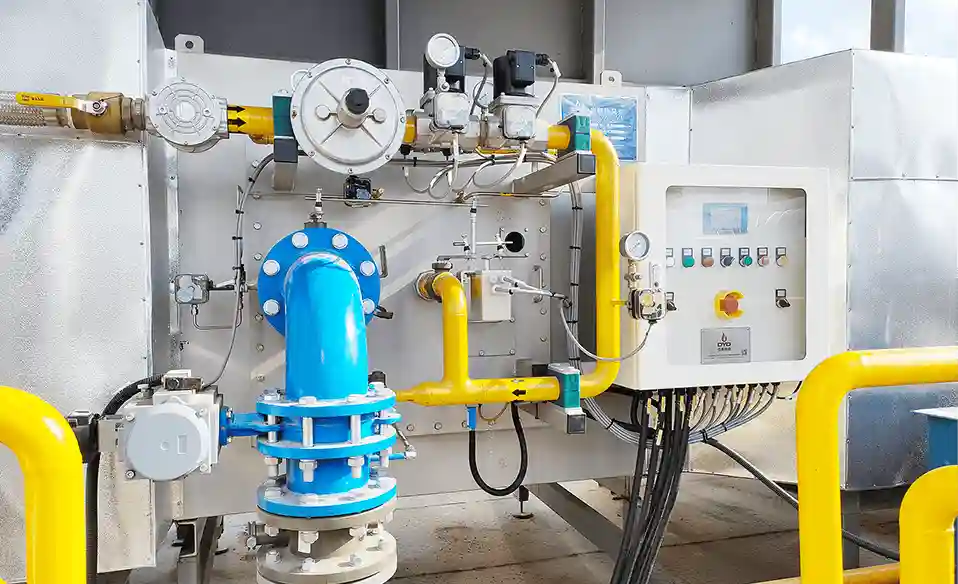
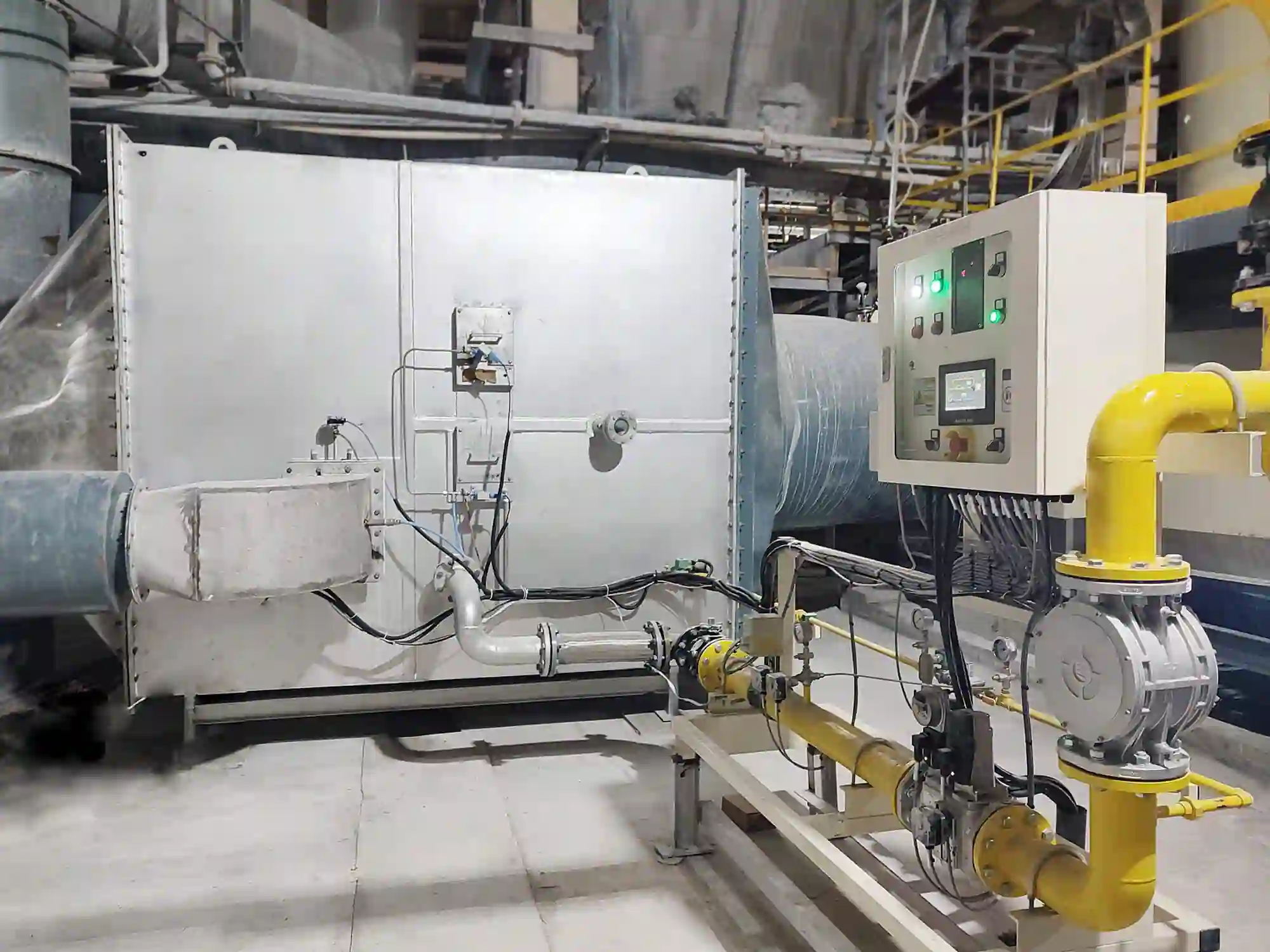
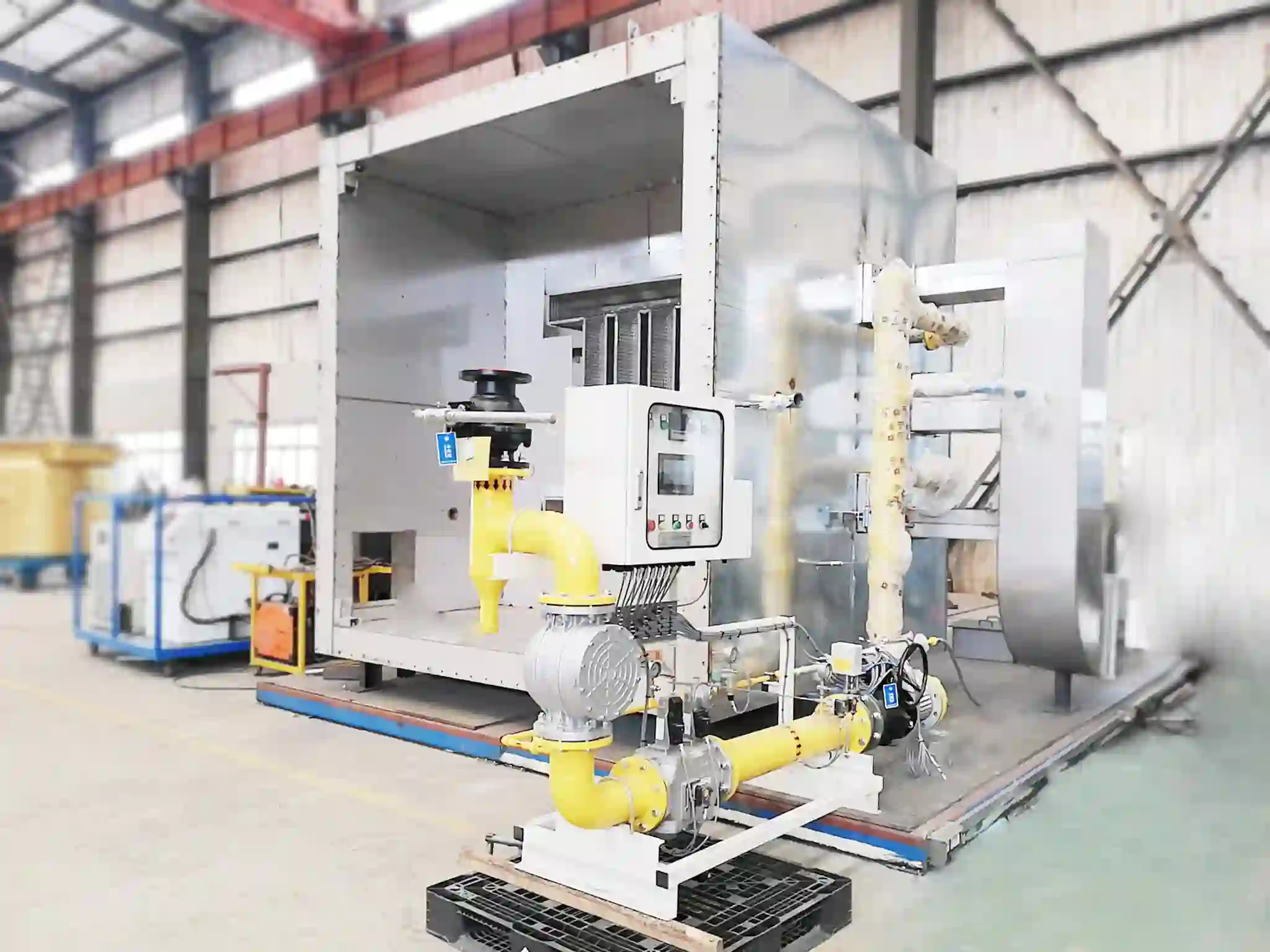
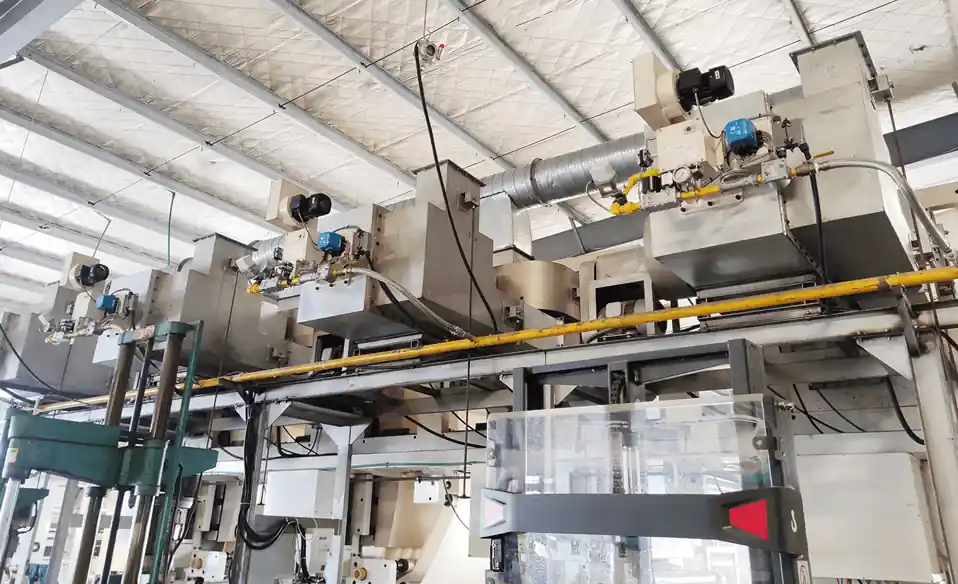
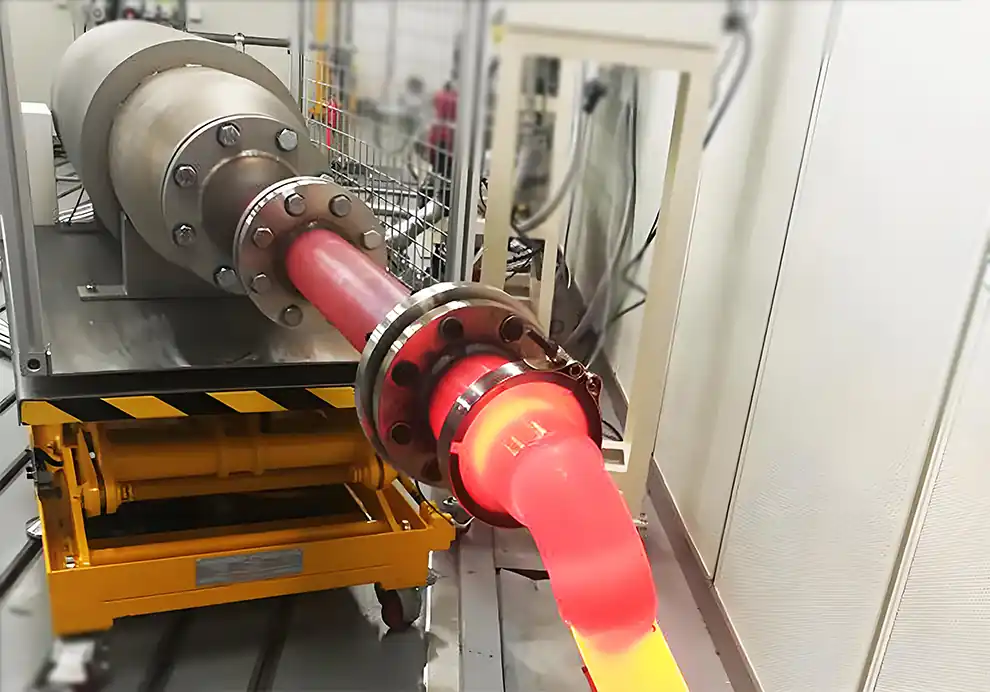
An industrial combustion system is an integrated system that safely converts the chemical energy of a fuel into controlled thermal energy for industrial processes. It typically combines a burner with fuel supply, combustion air, ignition, flame detection, control, safety, and process-monitoring components. Rather than being a single piece of equipment, it is a coordinated thermal-energy management system in which each component plays a specific role in achieving stable, efficient, and safe operation.
Industrial combustion systems are widely used in furnaces, kilns, ovens, dryers, hot air generators, heat-treatment equipment, RTOs, and other thermal processing equipment. They are found in industries such as metal processing, ceramics, glass, chemicals, building materials, food processing, and environmental control. In each application, the combustion system must be matched to the process requirements, including heat load, temperature, atmosphere, emissions limits, and control strategy.
Unlike a standalone burner, an industrial combustion system is designed to work as part of the complete thermal process. Its performance depends not only on combustion efficiency, but also on heat distribution, temperature control, furnace pressure, fuel consumption, emissions, and operational safety. A burner that performs well on a test stand may deliver poor results if the surrounding system—fuel train, air supply, controls, exhaust, and furnace—is not properly integrated.
This article explains what an industrial combustion system is, how it works, its main components, the different types available, where it is used, and how to select and optimize it for industrial heating applications.
The basic operating principle is relatively straightforward:
Fuel supply → fuel regulation → air supply → fuel-air mixing → ignition → flame formation → heat transfer → exhaust
A control system coordinates these processes to ensure that the burner operates within the required conditions. The control system continuously monitors process variables such as furnace temperature, fuel pressure, air pressure, flame status, and exhaust conditions. When demand changes, it adjusts the fuel and air flows to maintain the desired heat output.
During startup, the system normally performs a sequence that can include combustion-air purging, pressure verification, ignition, flame detection, and main fuel release. The pre-purge step is important because it removes any unburned fuel or combustible gases from the combustion chamber before ignition. Pressure verification ensures that the fuel and air supplies are within safe operating limits. Once these conditions are confirmed, the ignition system is energized, and the main fuel valve is opened.
During normal operation, the controller adjusts the fuel and air supply according to the required thermal load. In a modulating system, the burner firing rate changes smoothly in response to temperature feedback. In a two-stage or on/off system, the burner switches between preset firing rates. The control strategy depends on the process requirements, the burner design, and the desired level of temperature accuracy.
If an unsafe condition occurs—such as flame failure, abnormal fuel pressure, or insufficient combustion air—the safety system can interrupt fuel supply. This is typically achieved through safety shut-off valves that close automatically when a fault is detected. The system may also initiate an alarm, lockout, or controlled shutdown sequence.
This combination of combustion, control, monitoring, and safety distinguishes an industrial combustion system from a simple heating device. A simple heater may produce heat, but an industrial combustion system is designed to produce heat reliably, efficiently, and safely under a wide range of operating conditions.
Although configurations vary by application, most industrial combustion systems contain several major functional groups. Each group includes components that work together to support the combustion process.
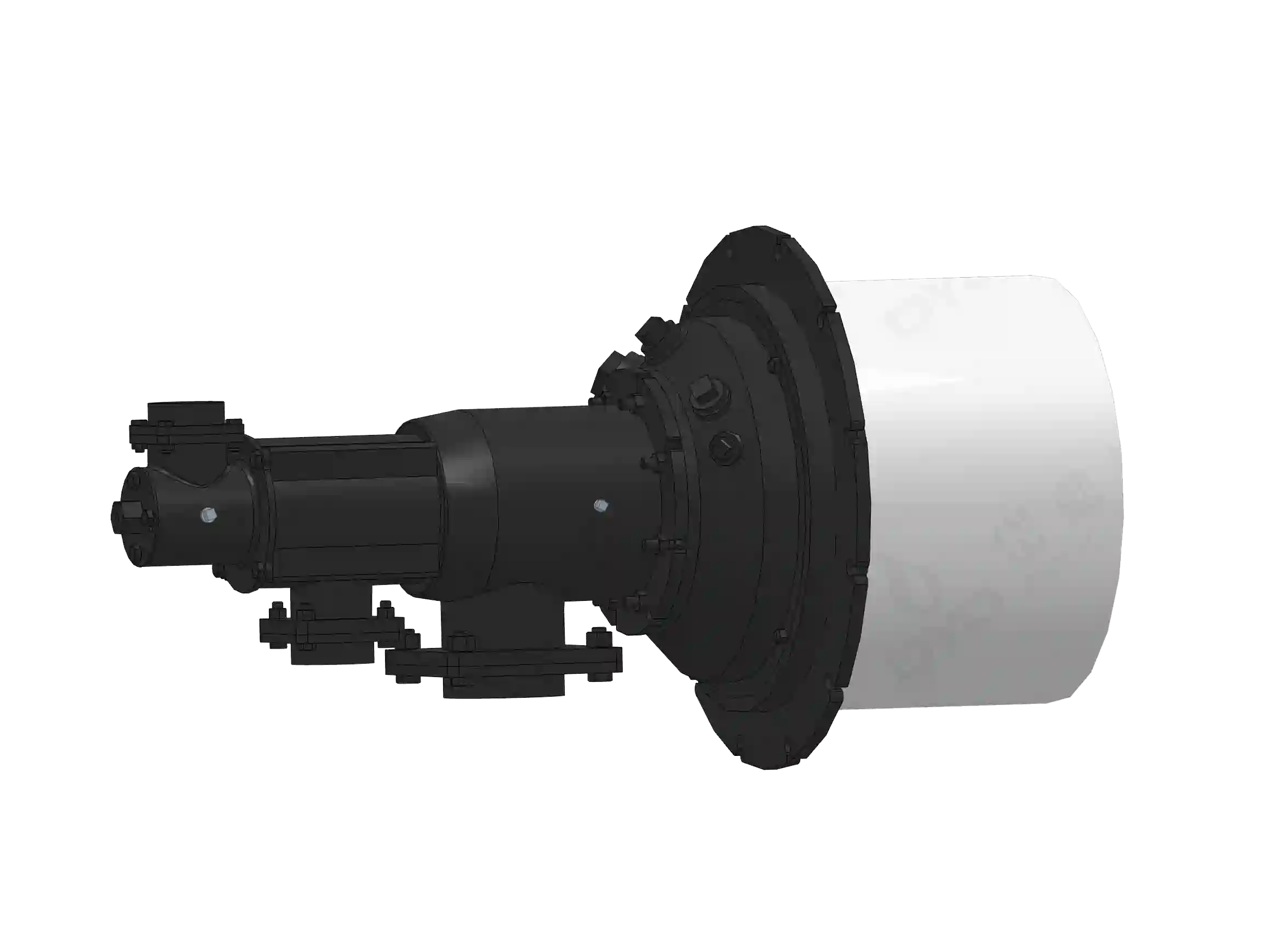
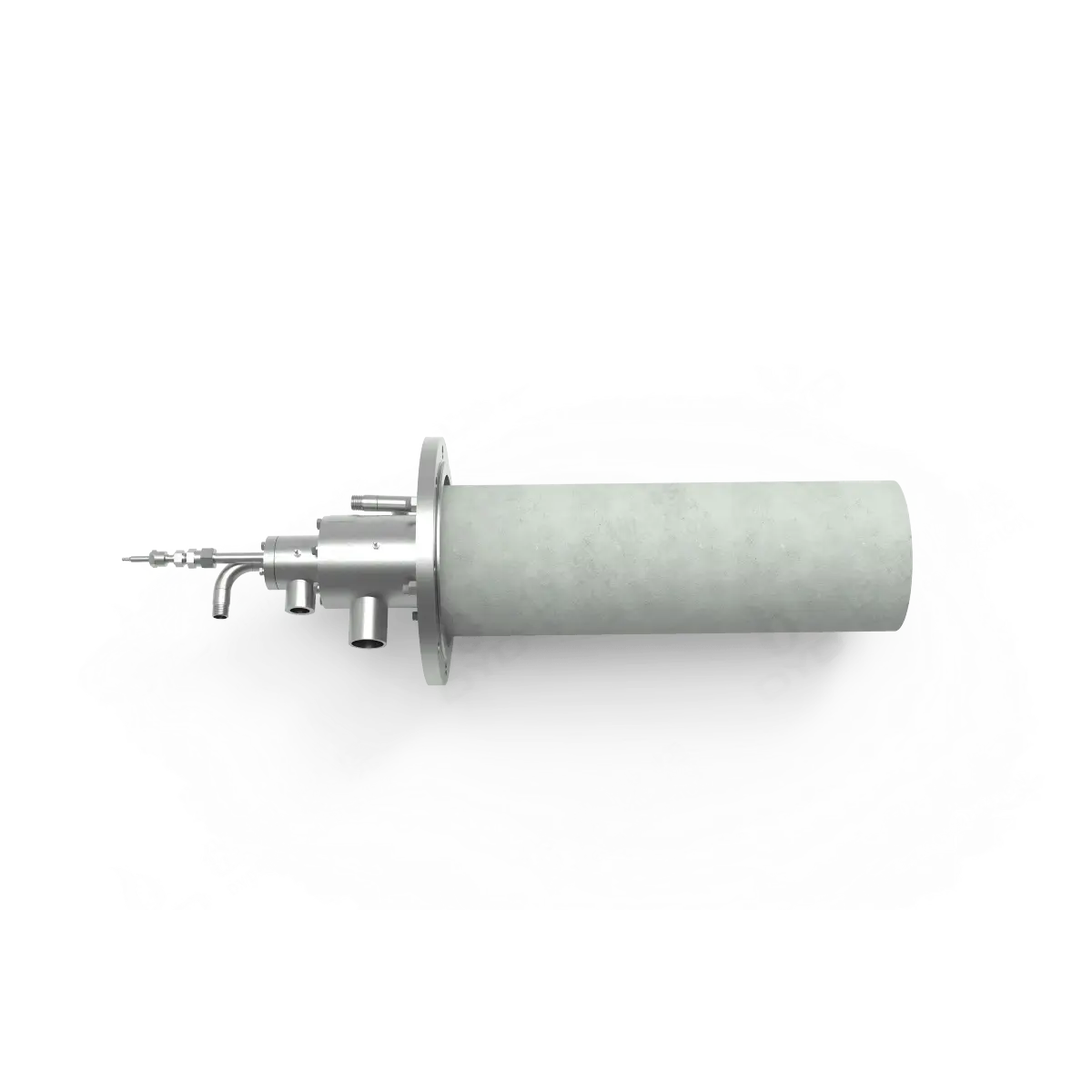
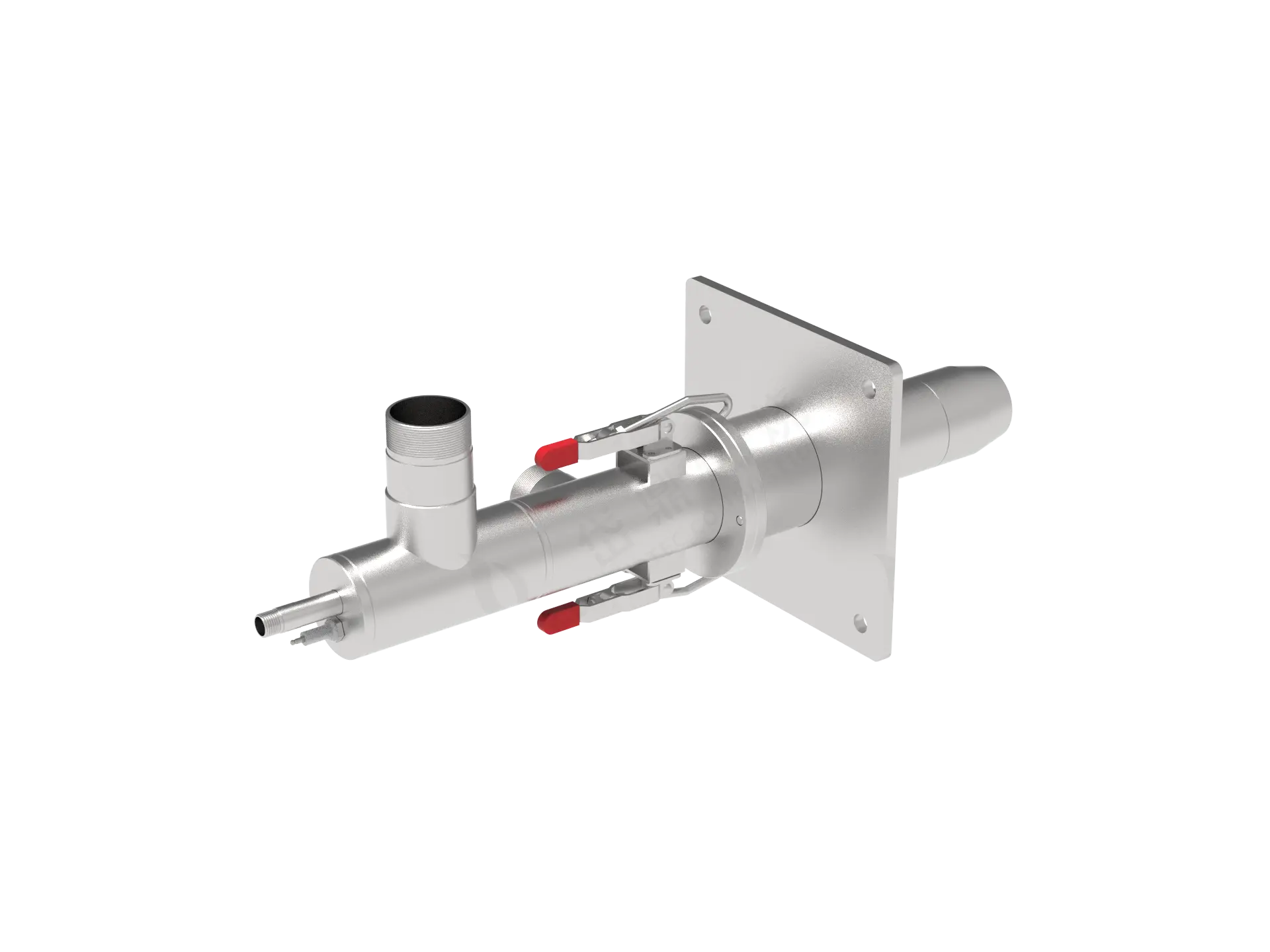
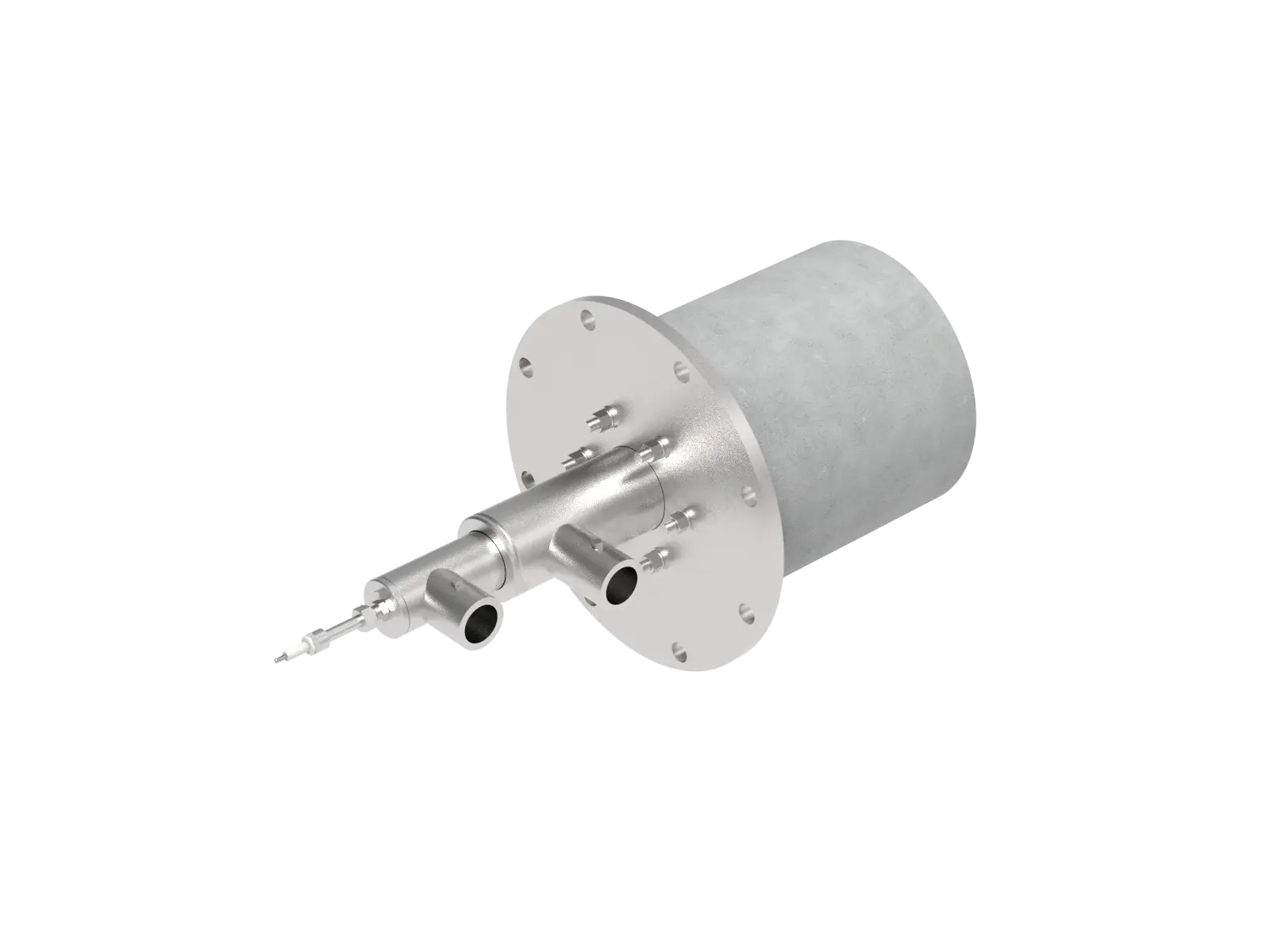
The burner is the core component that introduces fuel and combustion air into the combustion zone. It is where the flame is established and where the chemical energy of the fuel is converted into thermal energy. Its design determines important characteristics such as:
Heat release
Flame shape
Flame velocity
Turndown range
Fuel-air mixing
Ignition characteristics
Heat distribution
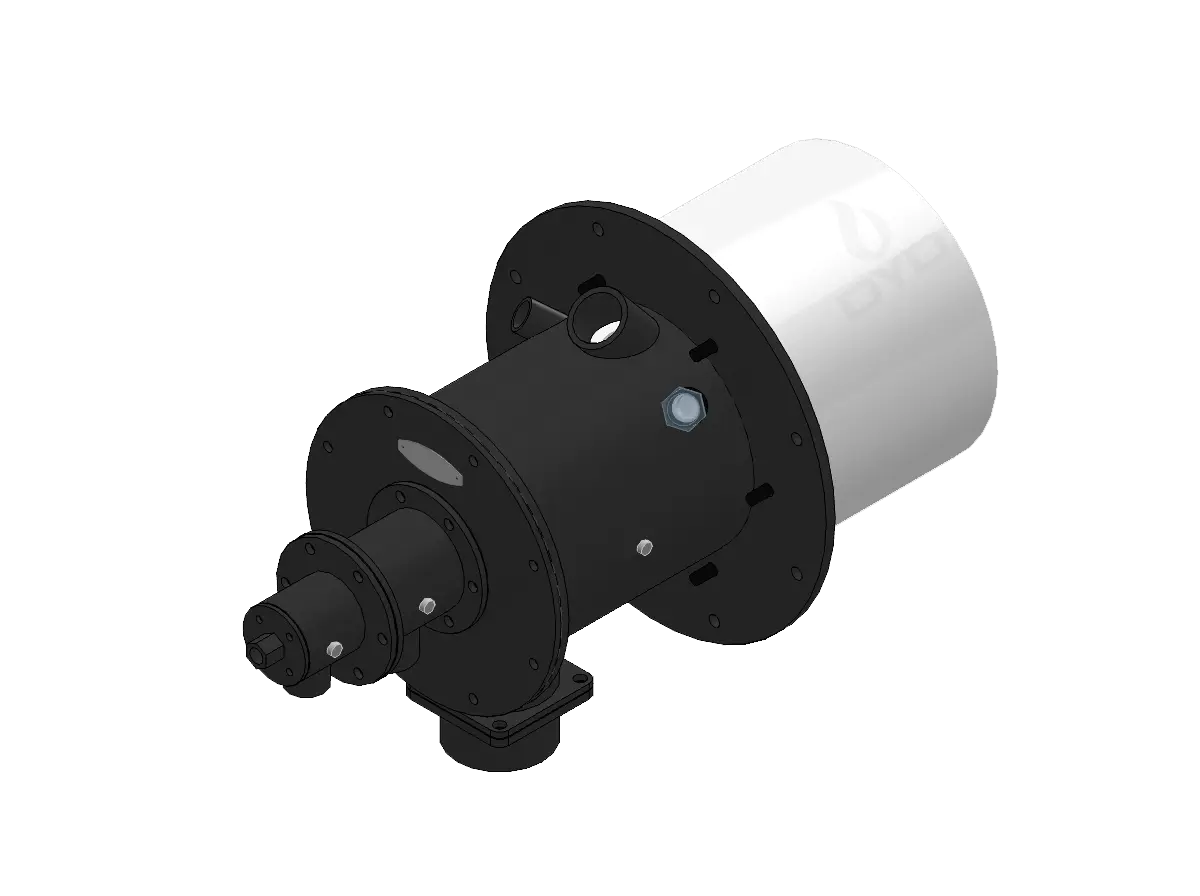
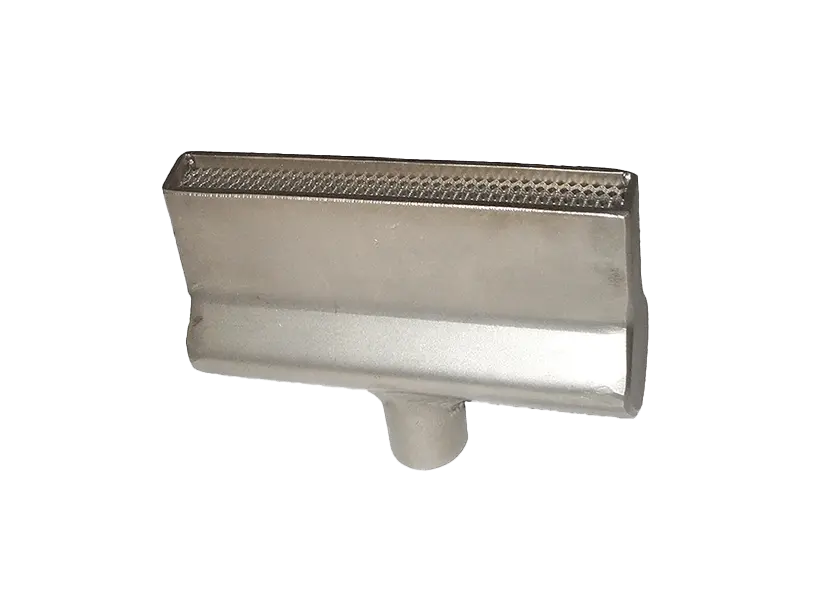
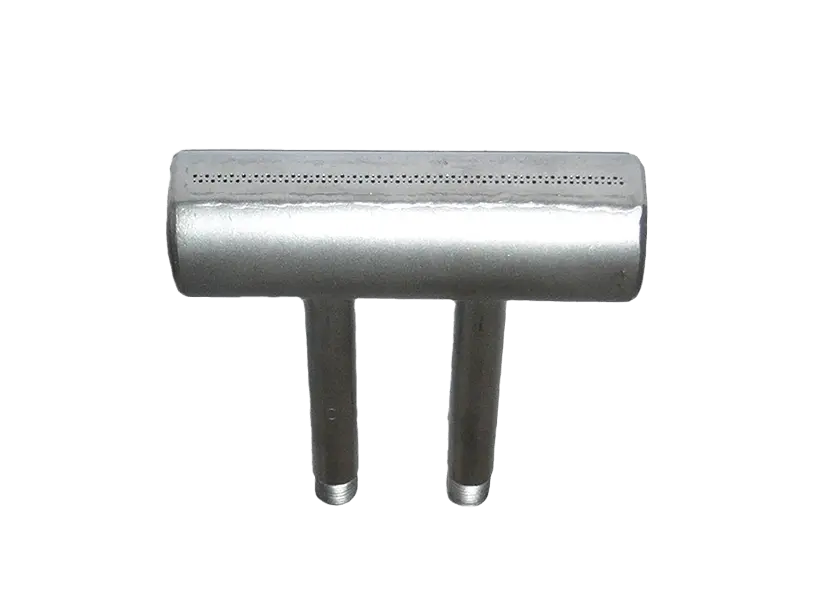
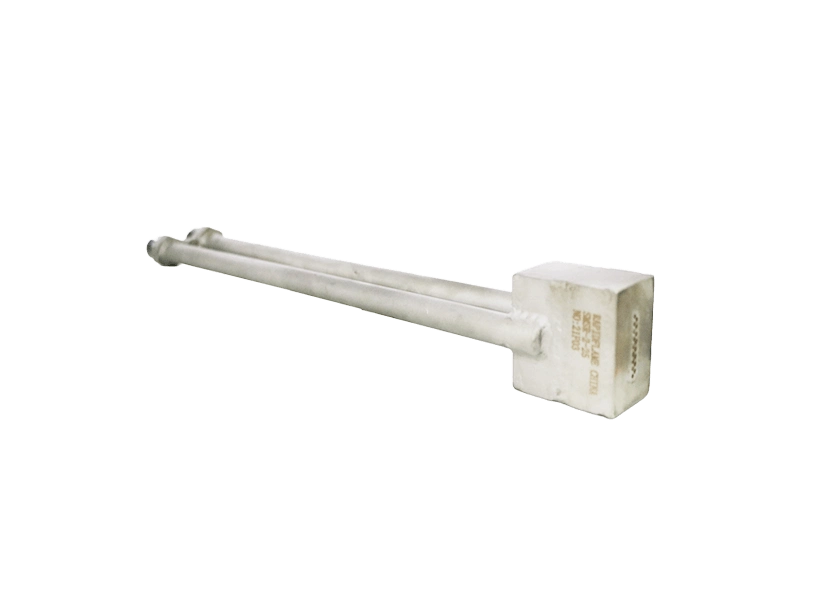
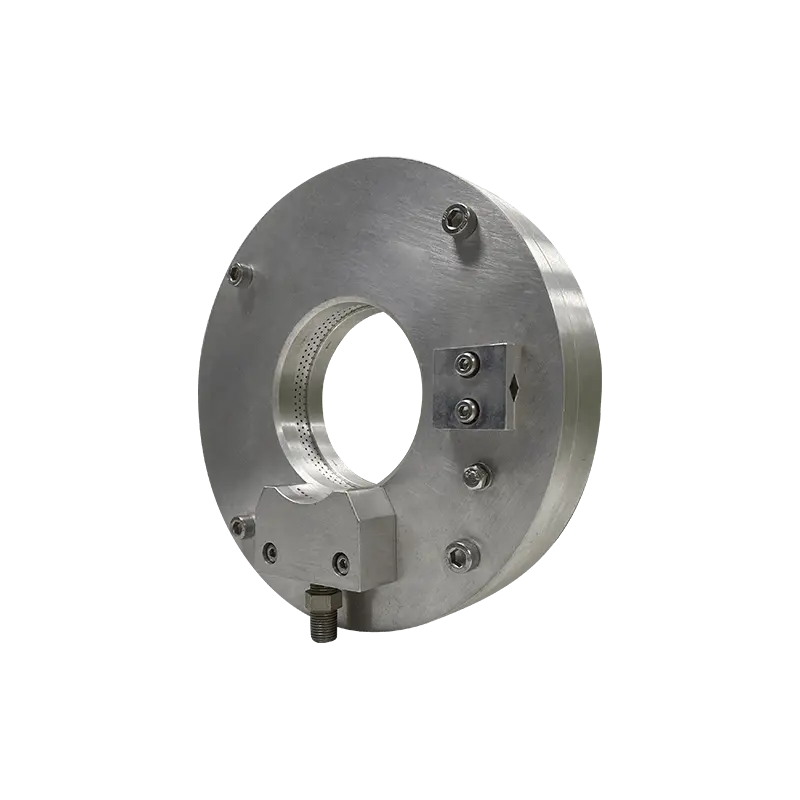
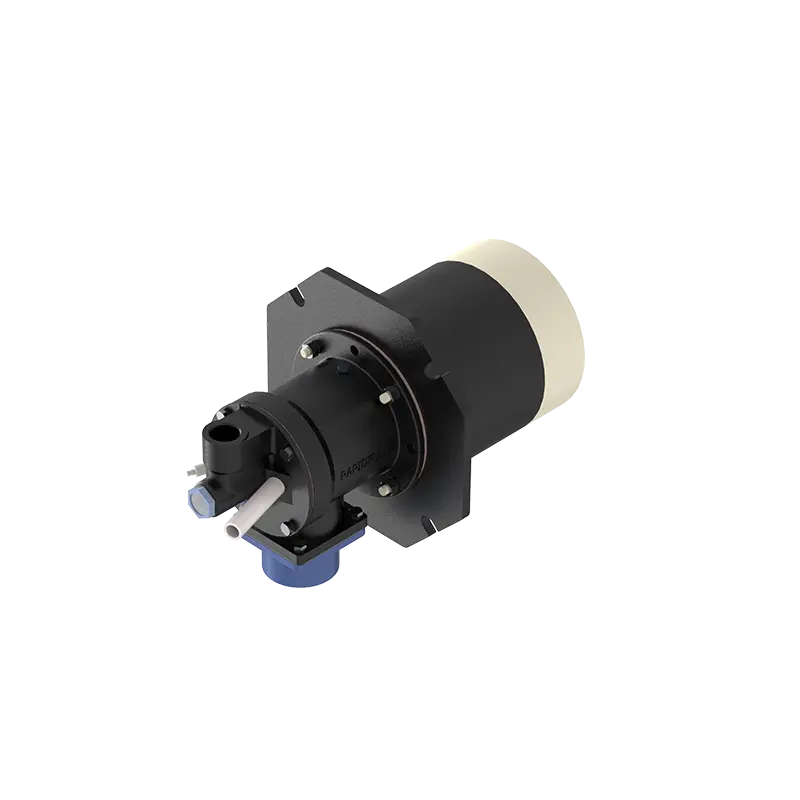
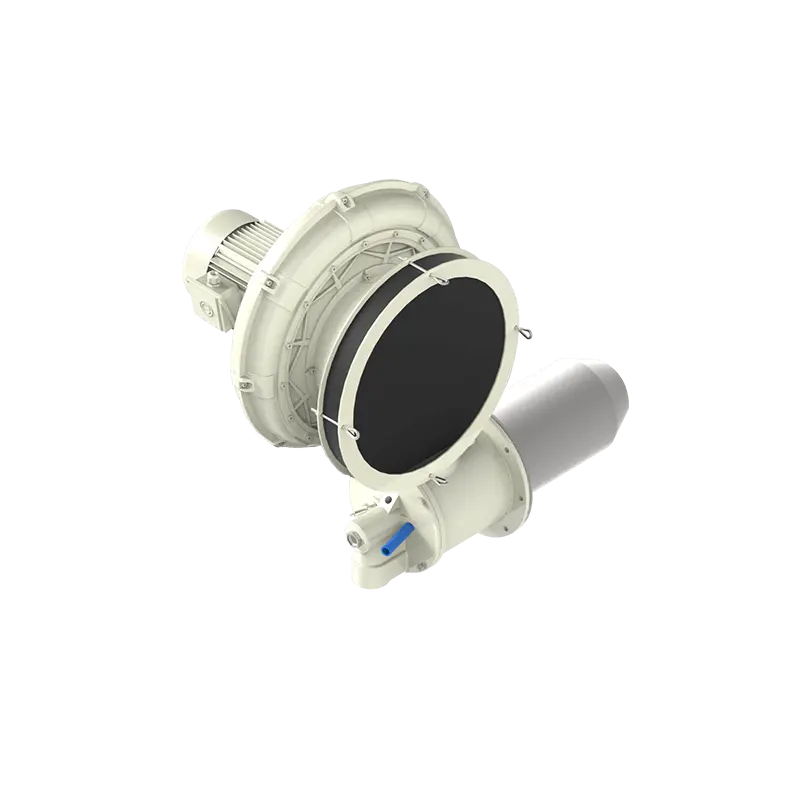
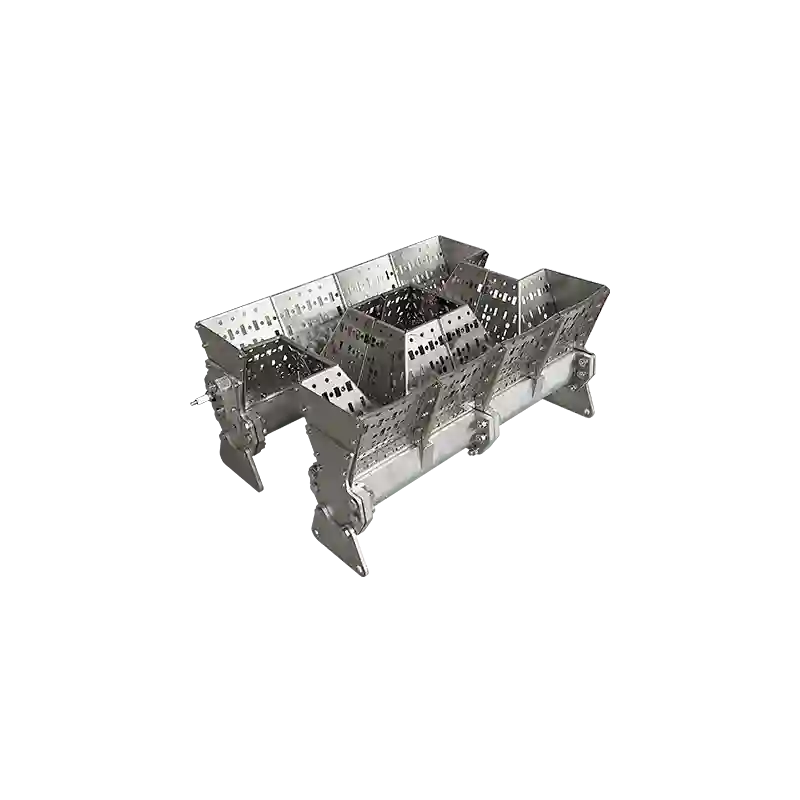
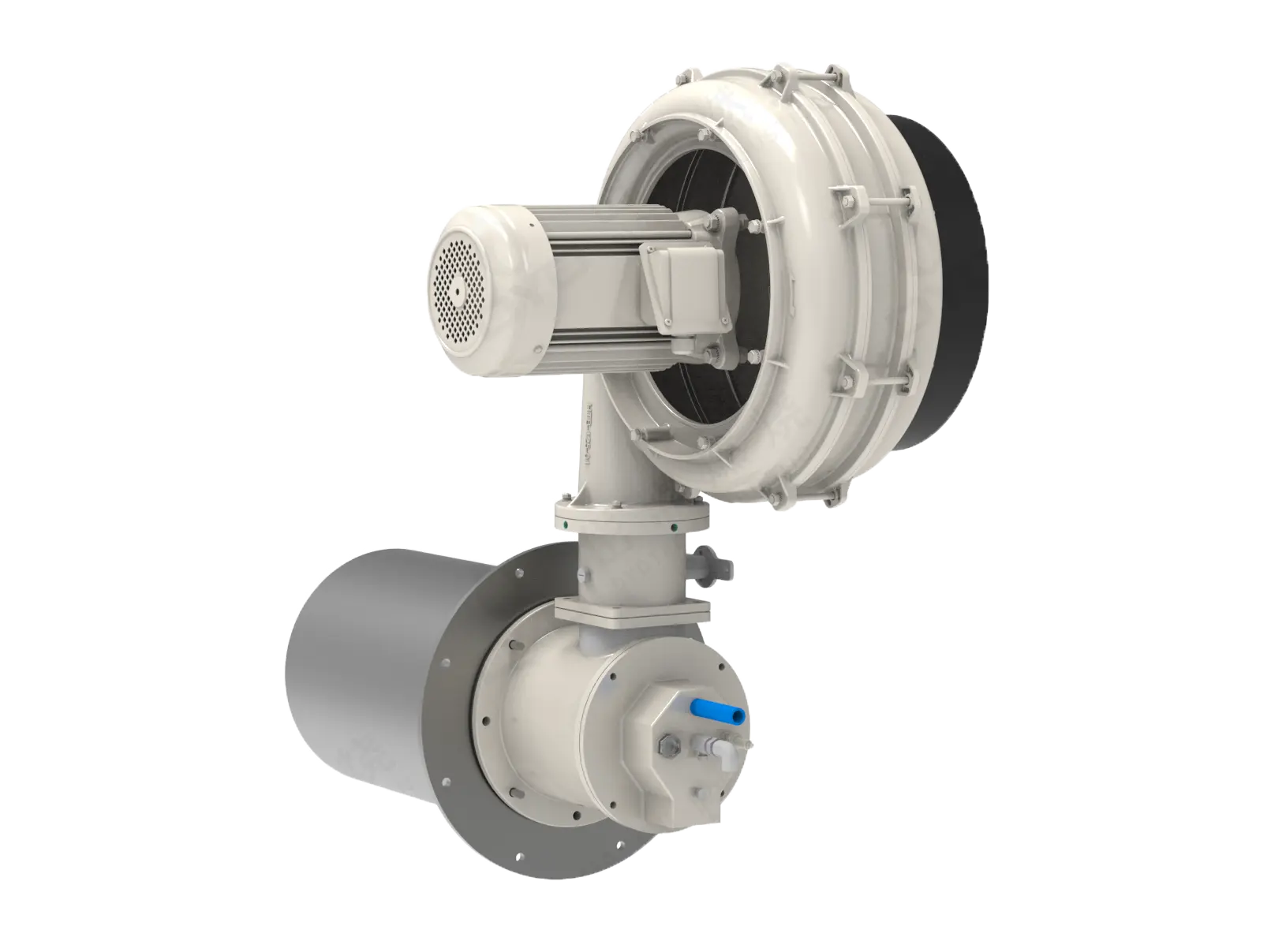
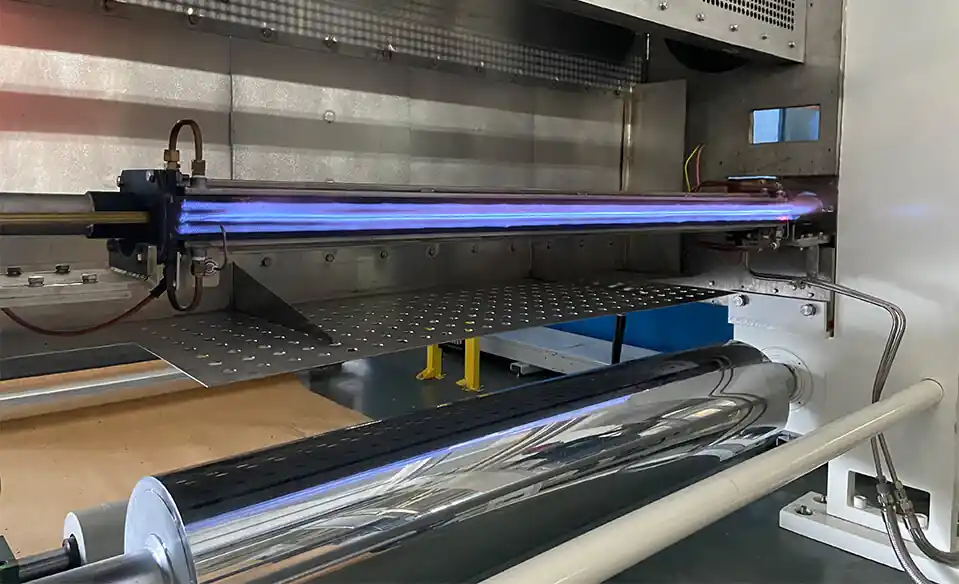
Different applications may require different burner designs, including gun-type burners, low-NOx burners, linear burners, and other specialized configurations. A burner for a high-temperature furnace may be designed to produce a long, luminous flame, while a burner for a drying oven may be designed to produce a shorter, high-velocity flame for convective heat transfer. The burner must be selected not only for its thermal capacity but also for its ability to match the furnace geometry and process requirements.
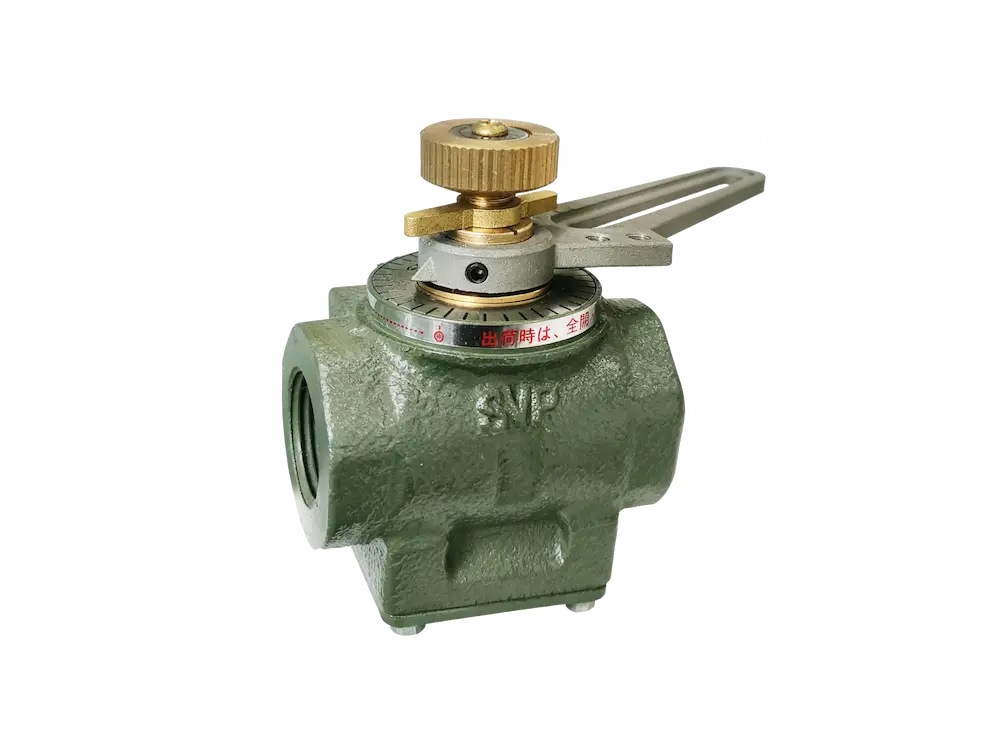
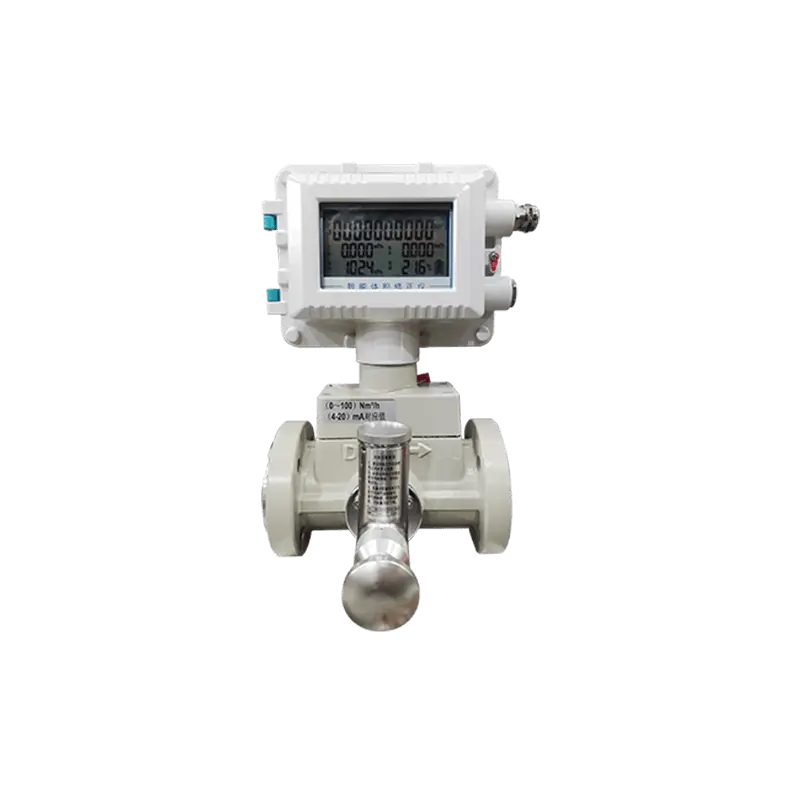
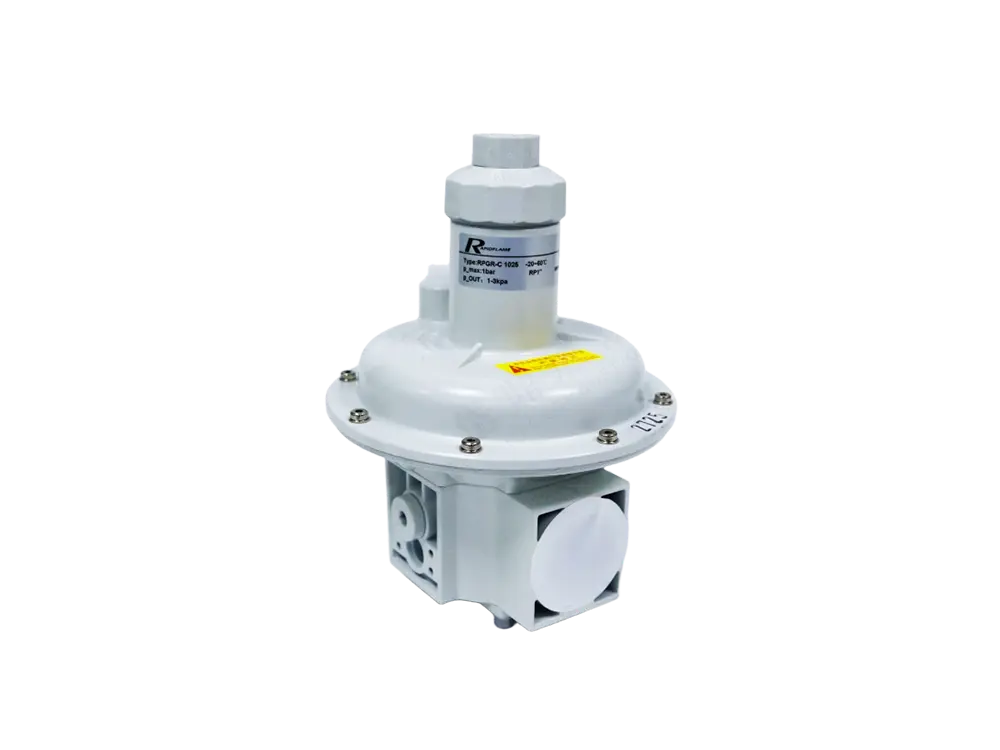
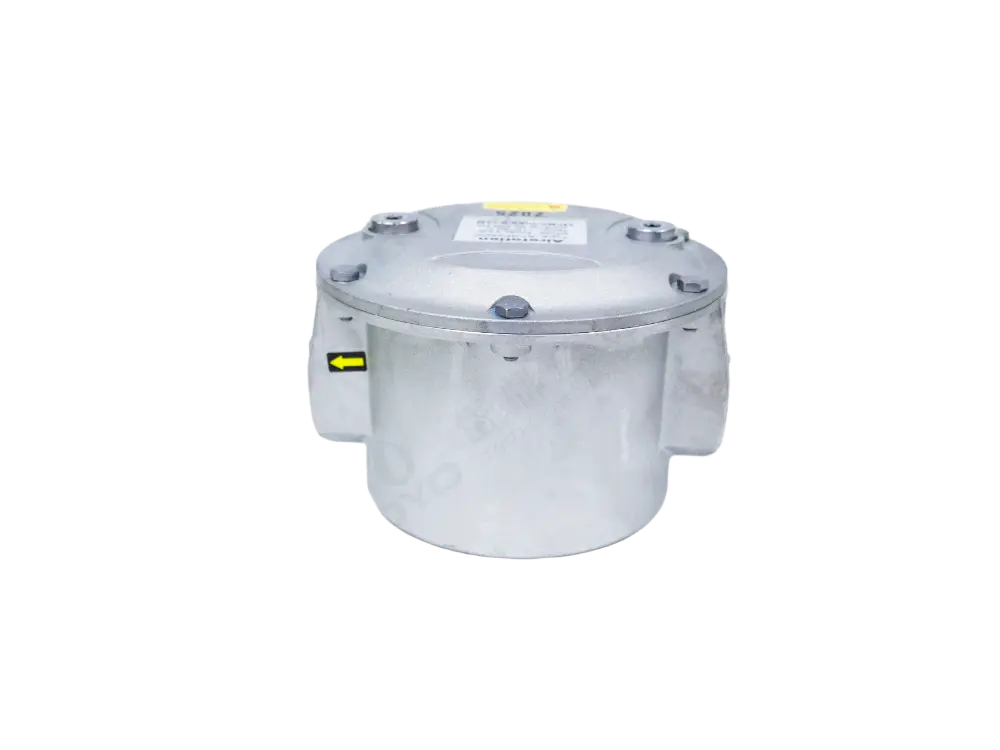
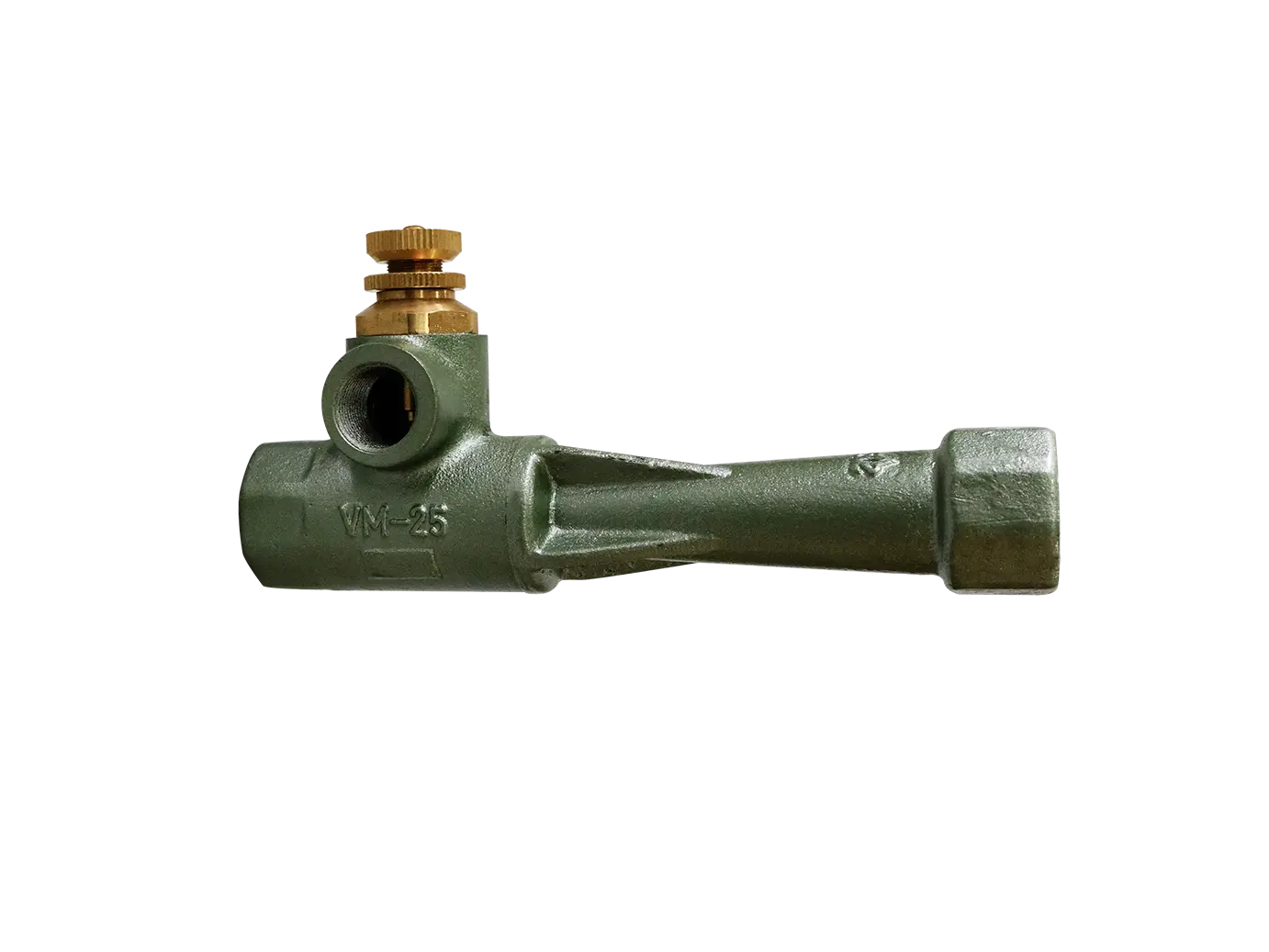
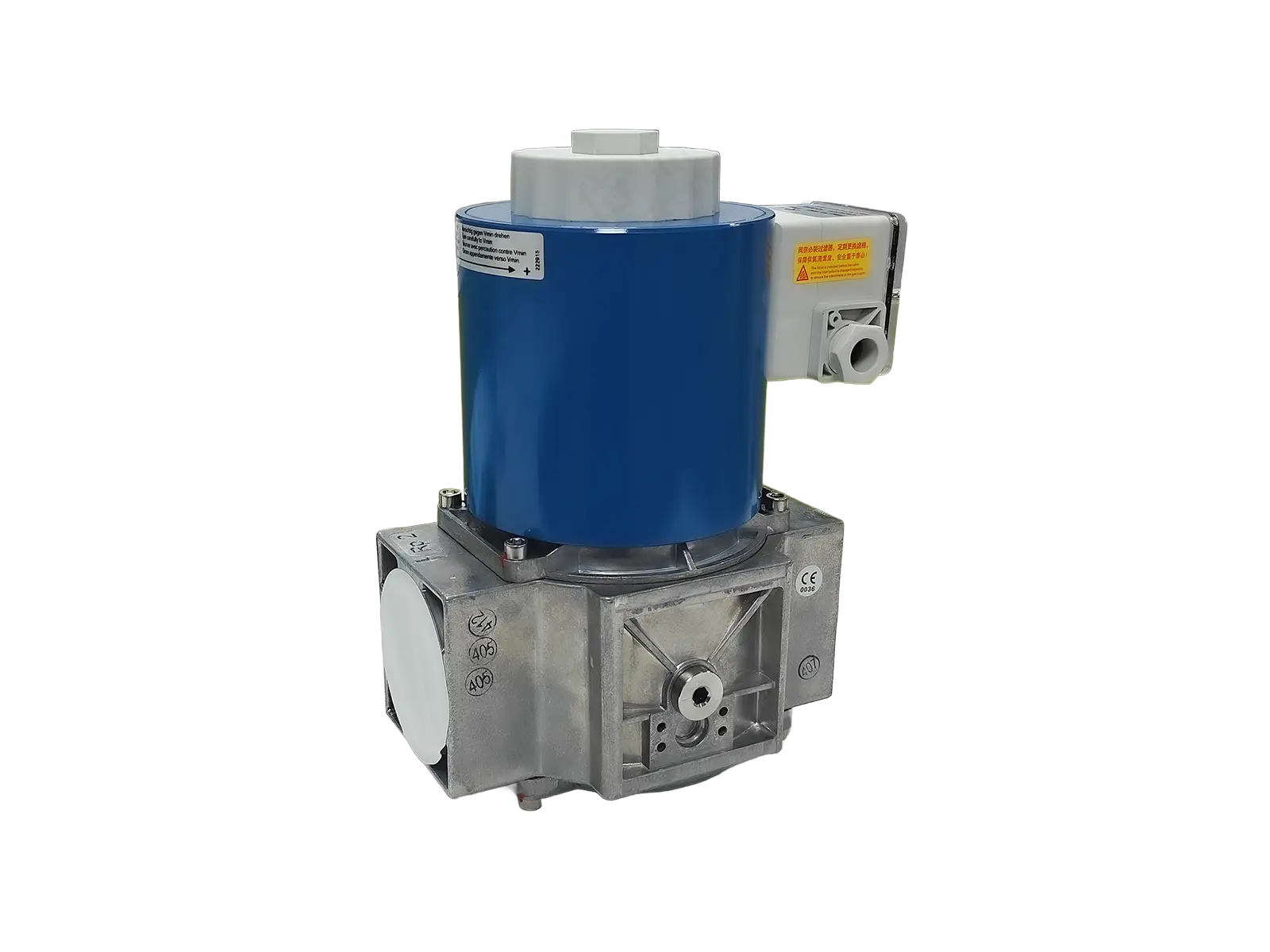
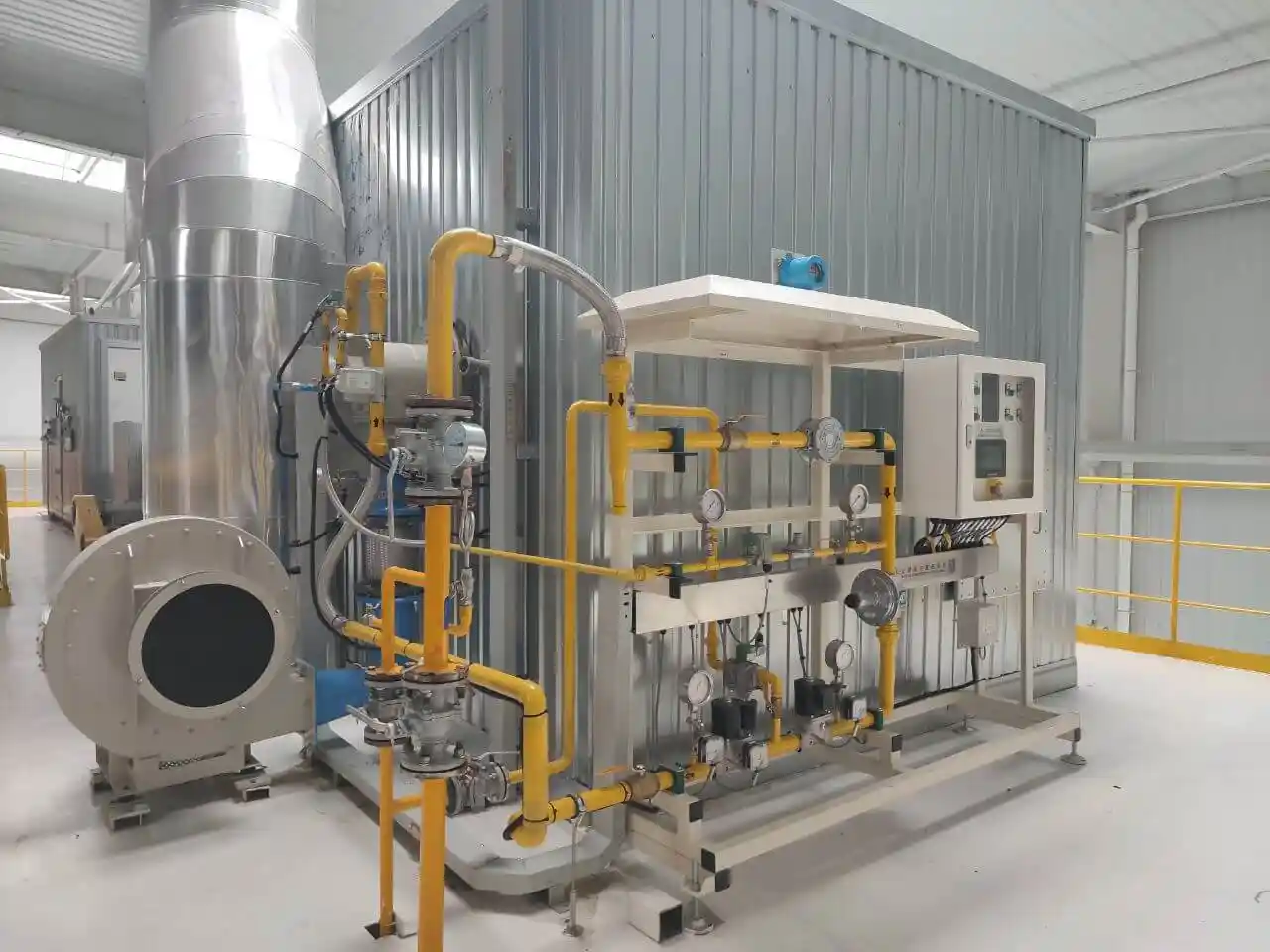
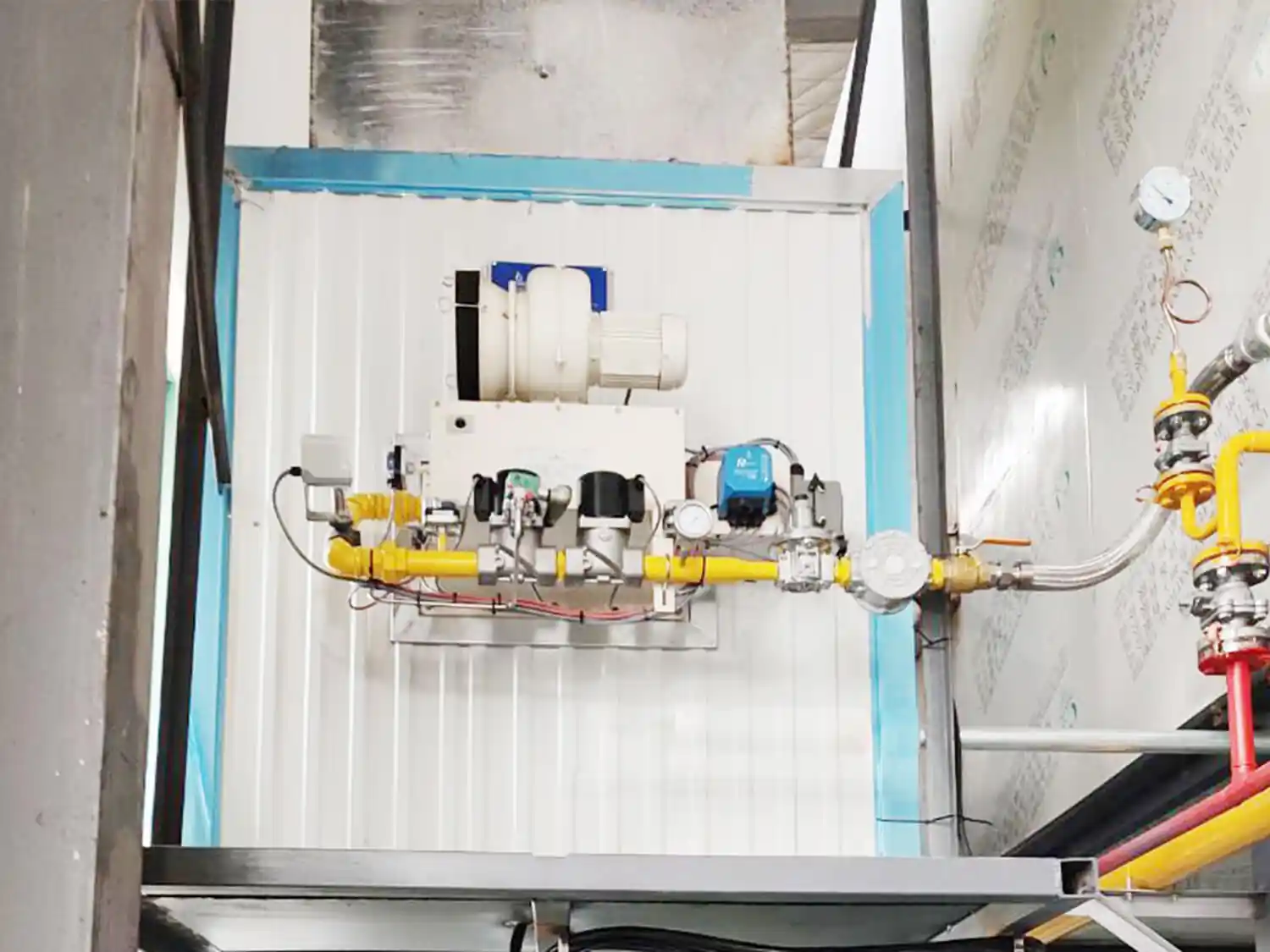
The fuel system delivers fuel to the burner at the required pressure and flow rate. It ensures that the burner receives a stable and controlled supply of fuel, which is essential for stable combustion. For gas-fired systems, it may include:
Gas filter
Pressure regulator
Pressure gauge
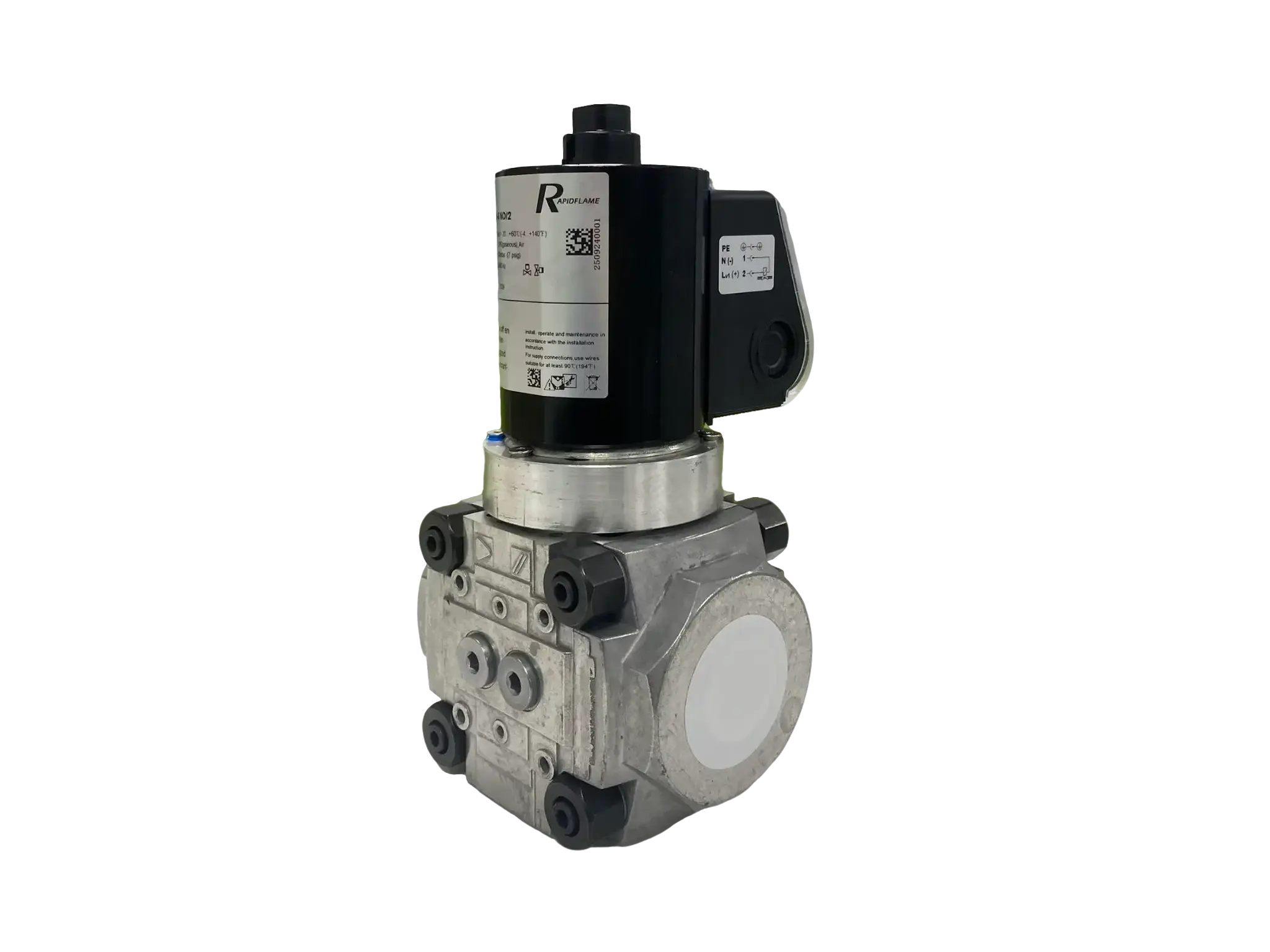
Solenoid safety valve
Gas control valve
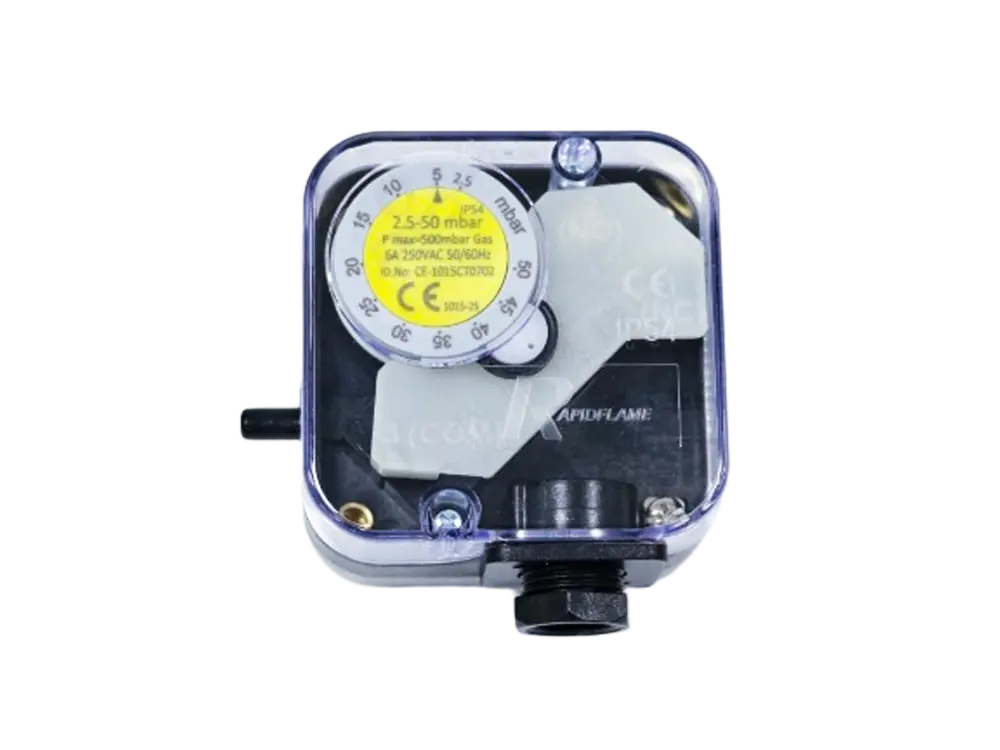
Pressure switch
Piping and fittings
The configuration depends on the fuel type, supply pressure, burner capacity, and applicable safety requirements. In many industrial systems, the gas train must comply with specific standards such as EN 746-2, NFPA 86, or ISO 13577. These standards define the required safety shut-off valves, pressure switches, leak testing, and purge procedures. The fuel supply system is not simply a pipe; it is a safety-critical subsystem that prevents uncontrolled fuel release.
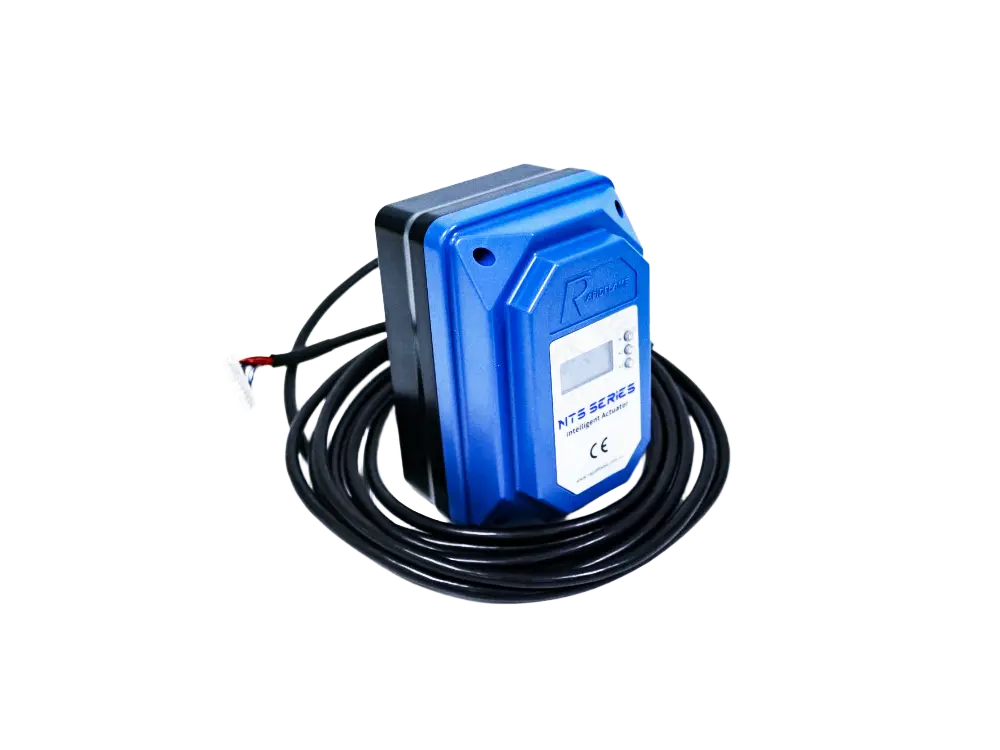
Combustion air provides the oxygen needed for the combustion reaction. Without sufficient air, the fuel cannot burn completely, and the system will produce carbon monoxide and unburned hydrocarbons. With too much air, the exhaust volume increases, and heat loss rises. A typical system may include a combustion-air fan or blower, air duct, damper, actuator, and related pressure-monitoring components.
Airflow must be controlled appropriately across the burner operating range. Too little air can cause incomplete combustion, while excessive air can increase exhaust heat losses. The air system must also be designed to provide enough pressure to overcome the resistance of the burner, ductwork, and furnace. In some applications, the combustion air is preheated by a heat recovery system, which changes the air density and requires the burner and control system to be designed accordingly.
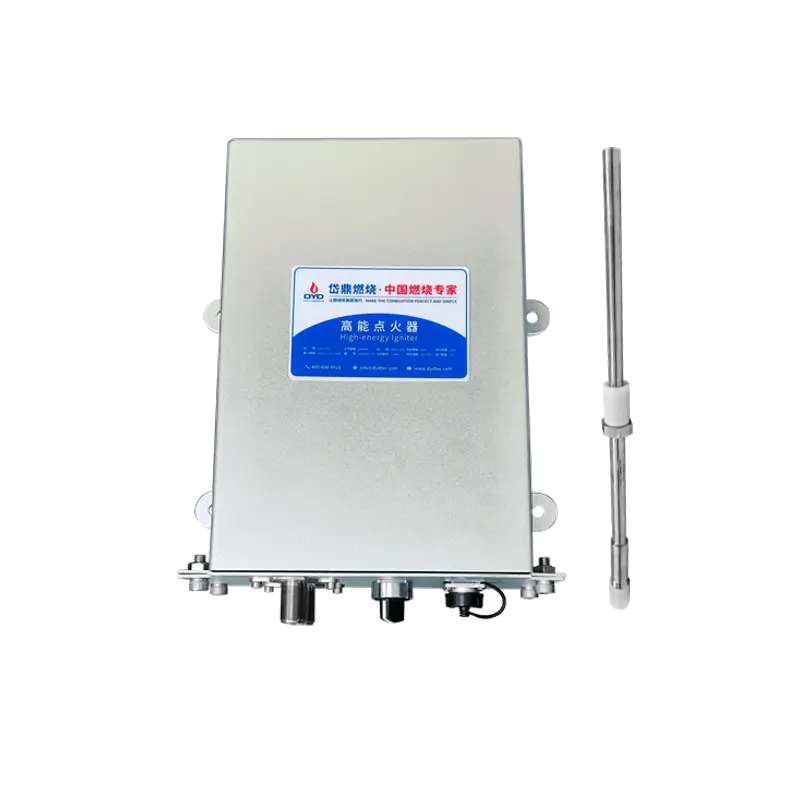
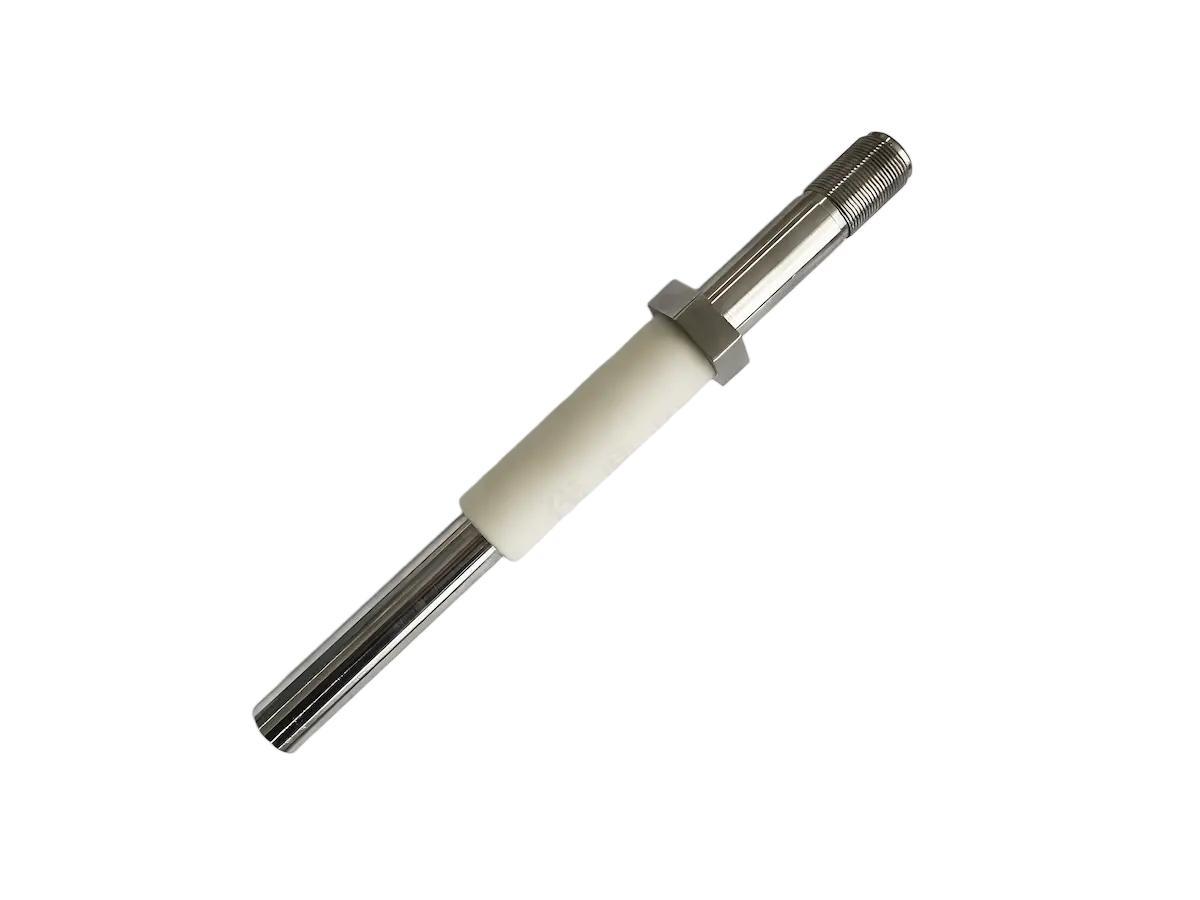
The ignition system initiates combustion. It provides the initial energy needed to ignite the fuel-air mixture. It may include:
Ignition transformer
Ignition electrode
Ignition cable
Pilot burner
Ignition controller
Reliable ignition is particularly important in automated industrial processes where burners must start repeatedly and safely. A weak spark, fouled electrode, or incorrect gap can cause ignition failures, leading to repeated purge cycles, wasted fuel, and potential safety hazards. In some systems, a pilot burner provides a small stable flame that ignites the main burner. In others, direct spark ignition is used. The ignition system must be designed for the fuel type, burner capacity, and operating environment.
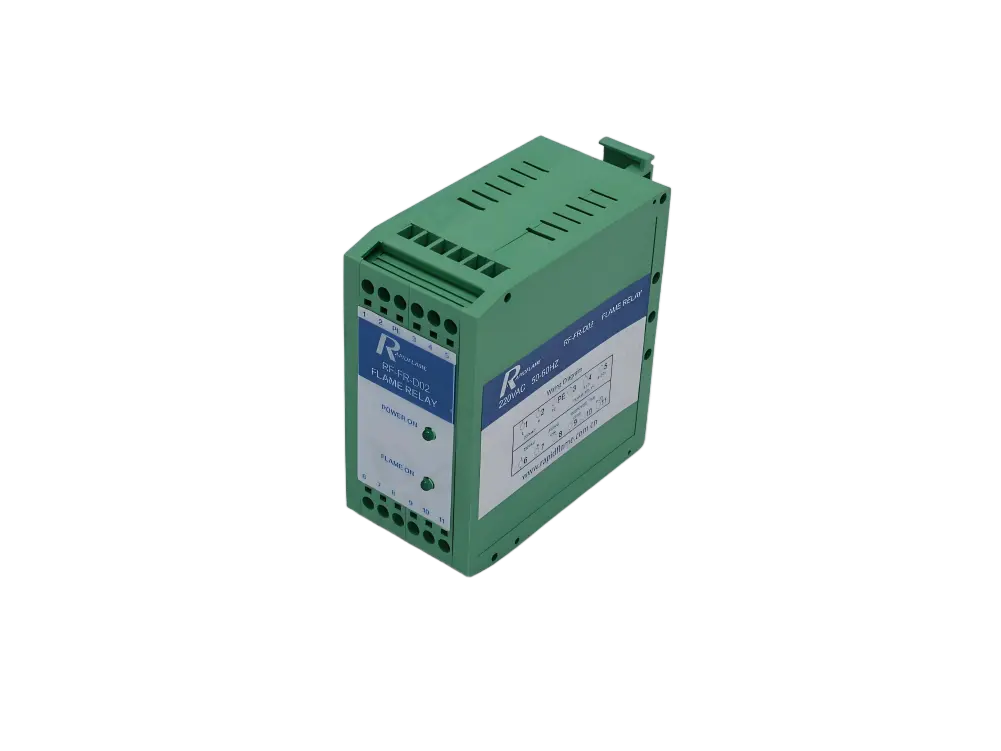
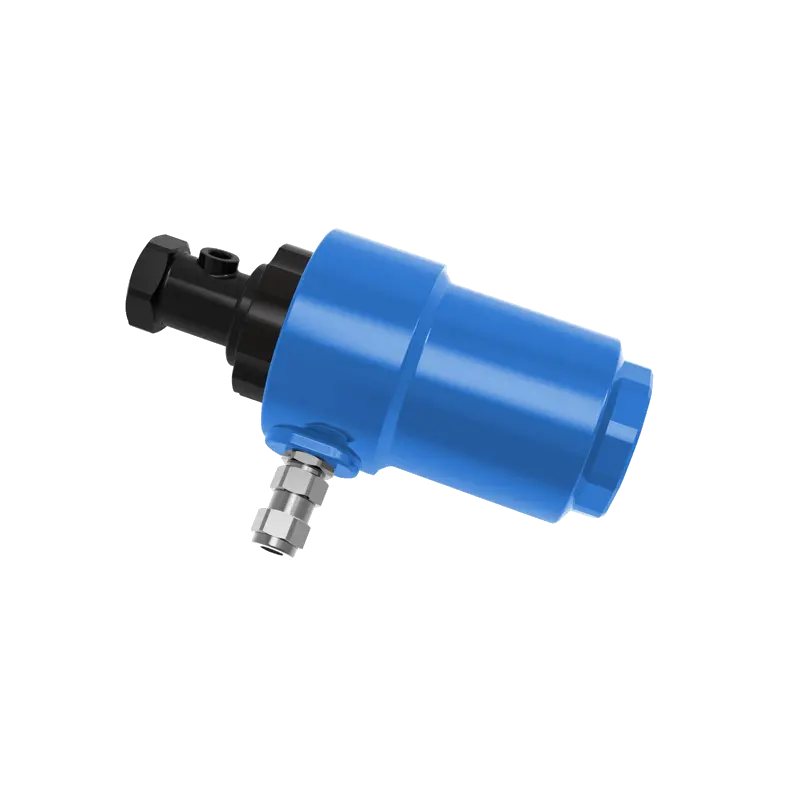
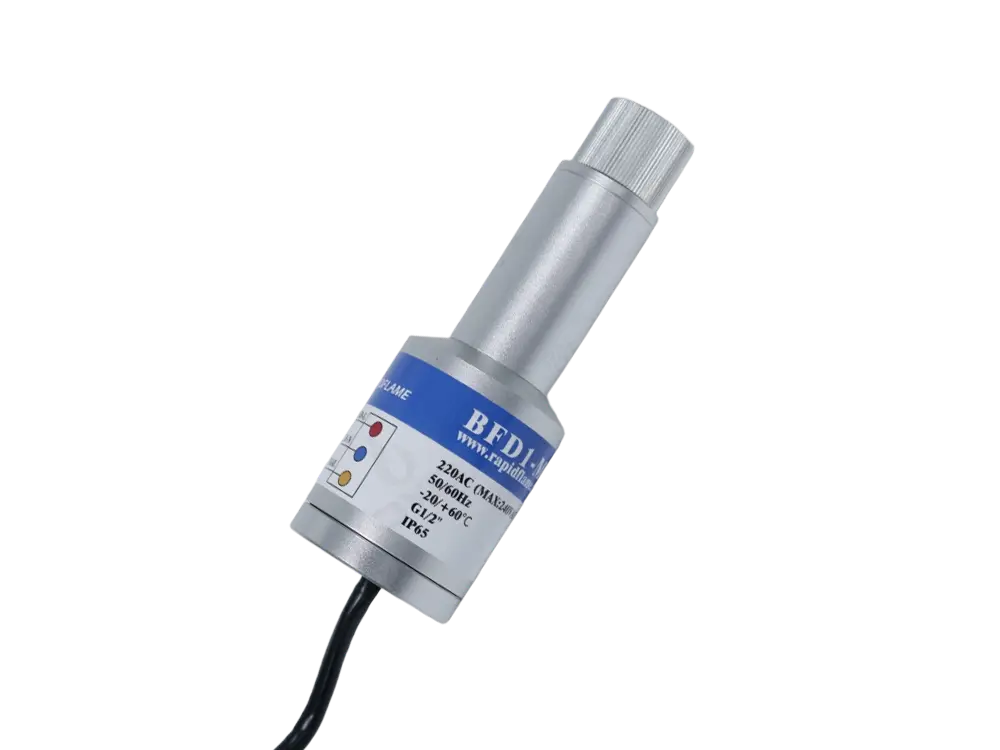
A flame detector confirms whether the burner has established and maintained a flame. It is a critical safety component. Common technologies include UV and infrared flame detection. Some systems use a combination of UV and IR to reduce the risk of false signals. Ionization-based flame detection is also used in some applications.
If the expected flame signal disappears, the burner control system can initiate a safety shutdown and close the fuel valves. This prevents unburned fuel from accumulating in the furnace, which could cause an explosion. The flame detector must be positioned correctly so that it can “see” the flame without being affected by background radiation or hot surfaces. Regular cleaning and testing are necessary to maintain reliable operation.
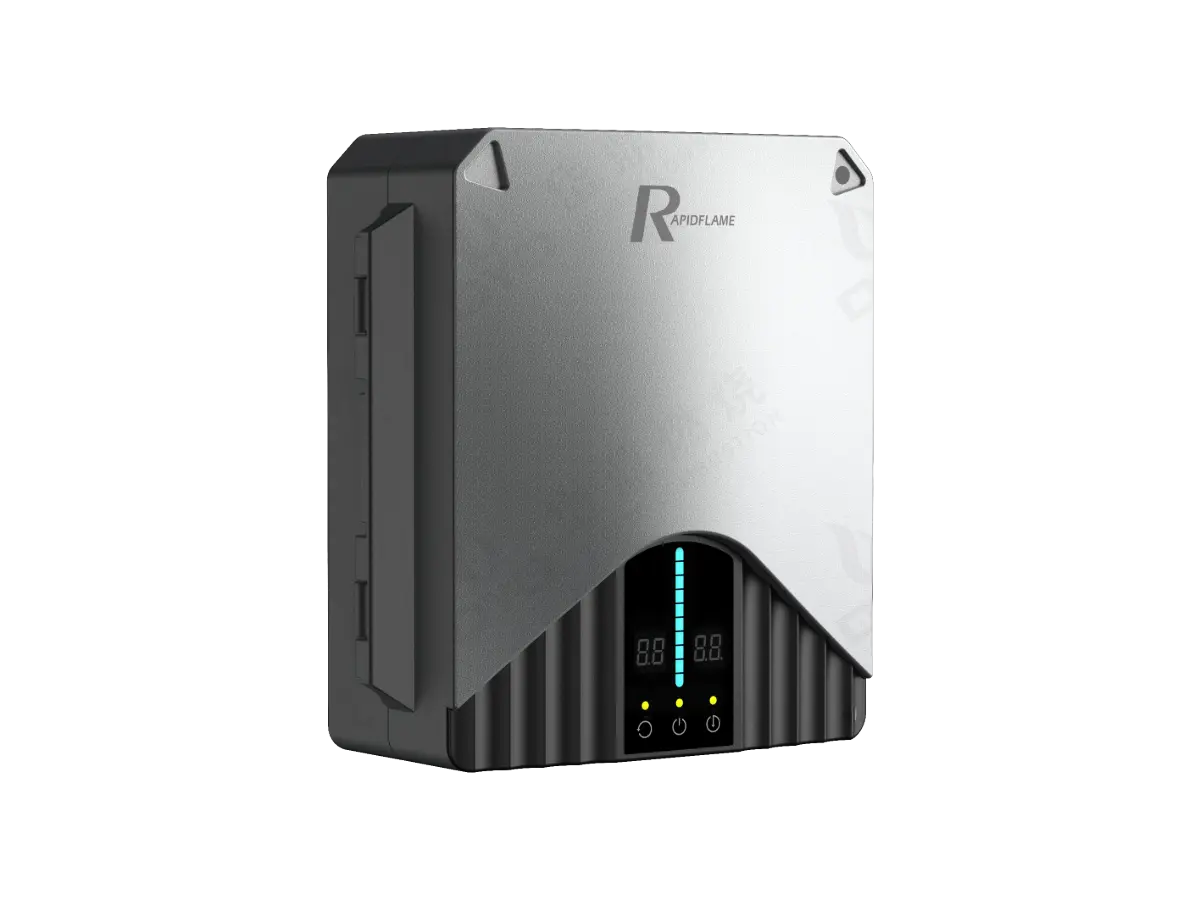
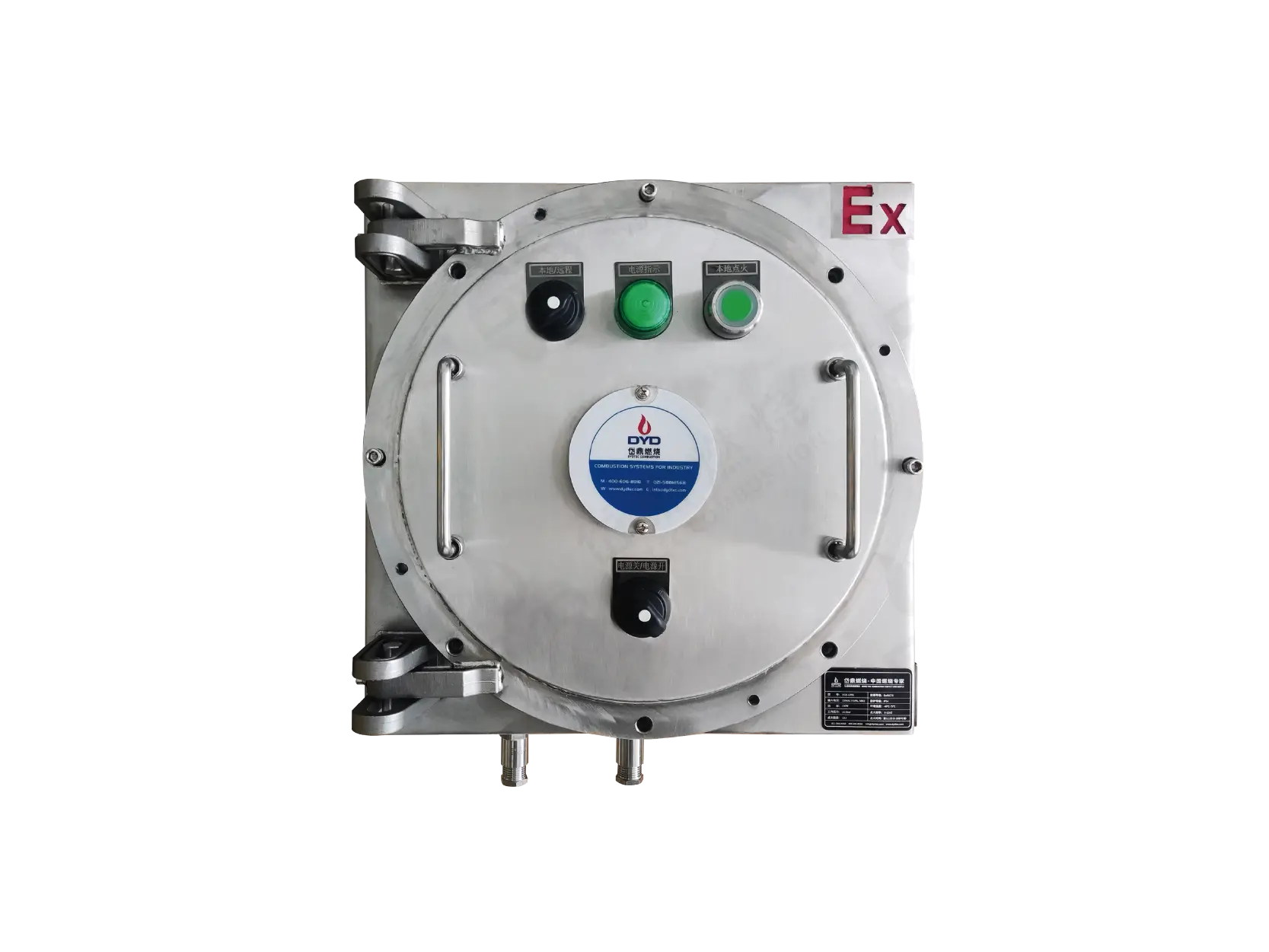
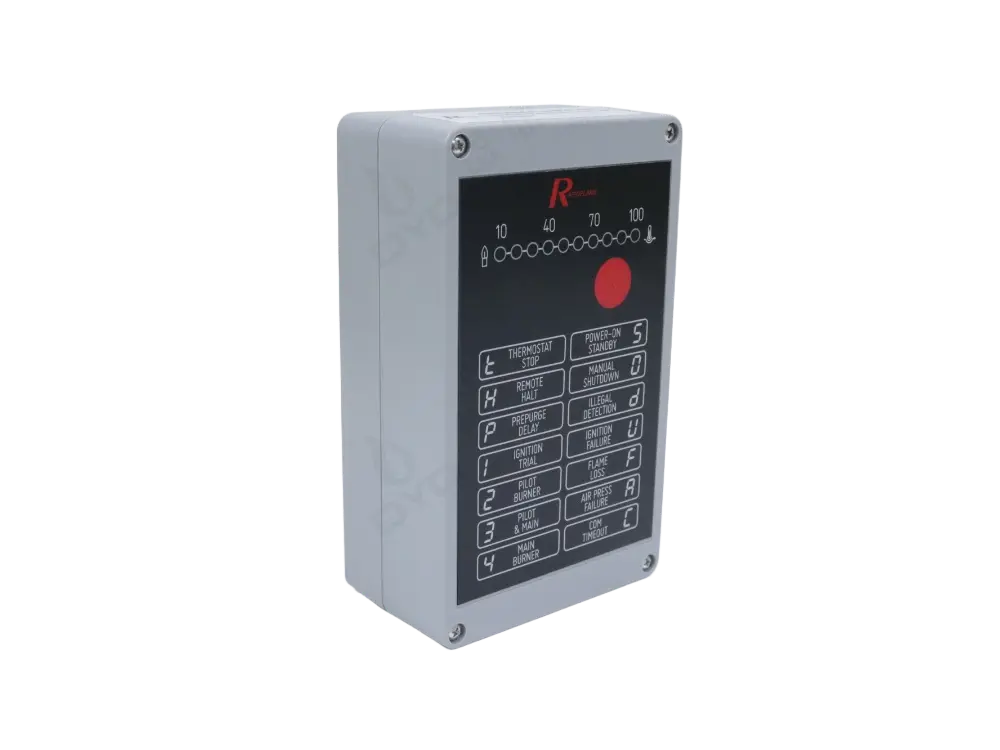
The burner controller manages the operating sequence and coordinates the different components. It is sometimes called a burner management system (BMS) or flame safeguard control. Depending on the application, it can control:
Pre-purge
Ignition
Fuel valves
Airflow
Flame detection
Burner modulation
Safety interlocks
Fault handling
More advanced systems may communicate with the plant PLC or distributed control system. The controller ensures that the burner starts, operates, and shuts down in a safe and repeatable sequence. It also monitors critical parameters and initiates a safe shutdown if any condition falls outside the acceptable range. The controller should be selected according to burner capacity, safety requirements, control philosophy, and applicable standards.
The combustion system ultimately needs to respond to the thermal process. Temperature sensors, pressure sensors, oxygen sensors, flow meters, and other instruments can provide feedback to the control system. For example, if the furnace temperature falls below its setpoint, the controller can increase burner firing rate. When the required temperature is reached, the firing rate can be reduced.
This closed-loop control helps maintain stable process conditions. In multi-zone furnaces, each zone may have its own temperature sensor and control loop. In processes with strict atmosphere requirements, oxygen or CO sensors may be used to trim the air-fuel ratio. The process control system is the link between the combustion equipment and the production process, ensuring that the burner delivers the right amount of heat at the right time.
The terms industrial burner and industrial combustion system are sometimes used interchangeably, but they are not exactly the same. Understanding the difference is important when specifying, purchasing, or upgrading equipment.
An industrial burner is primarily the equipment that generates the flame. It includes the components directly involved in fuel-air mixing, ignition, and flame stabilization.
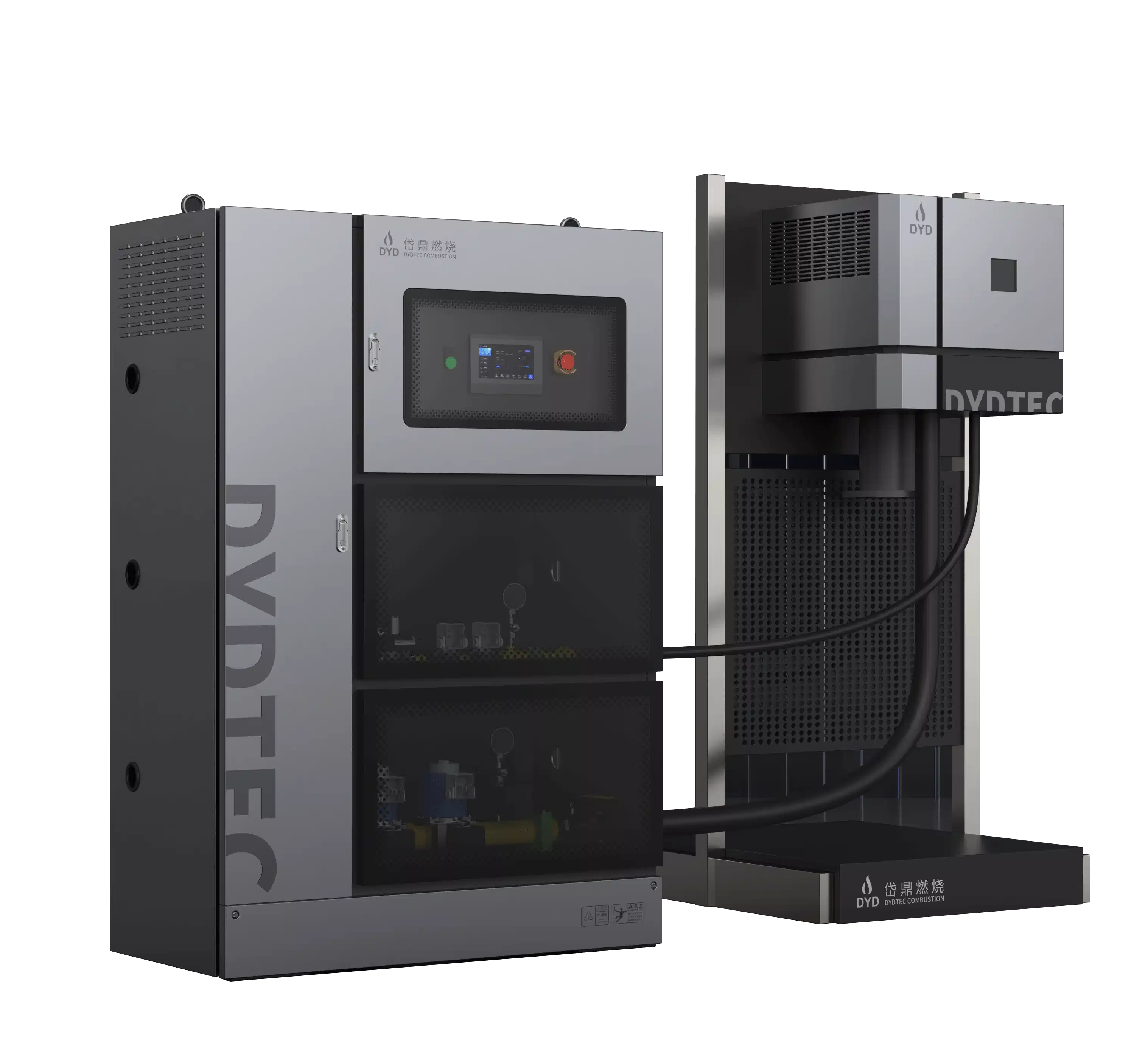
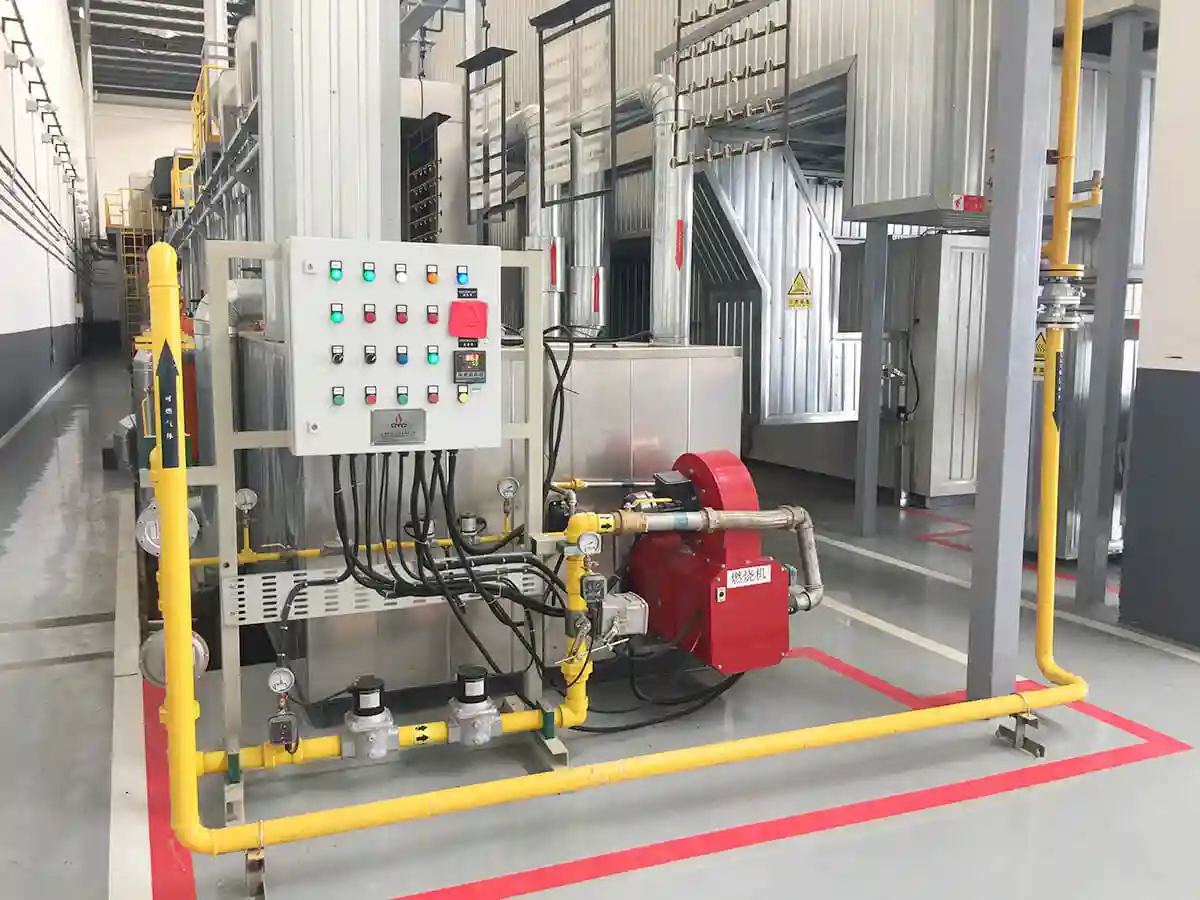
An industrial combustion system includes the burner and the supporting systems required to supply fuel and air, ignite and monitor the flame, control heat output, and maintain safe operation. It also includes the control panel, safety interlocks, sensors, and often the exhaust and heat-recovery equipment.
A simplified comparison is:
| Industrial Burner | Industrial Combustion System |
|---|---|
| Produces the flame | Manages the complete combustion process |
| Fuel and air mixing | Fuel and air supply + mixing |
| Ignition | Ignition + sequencing |
| Flame formation | Flame monitoring and control |
| Burner-level operation | Process-level integration |
| Individual equipment | Integrated thermal system |
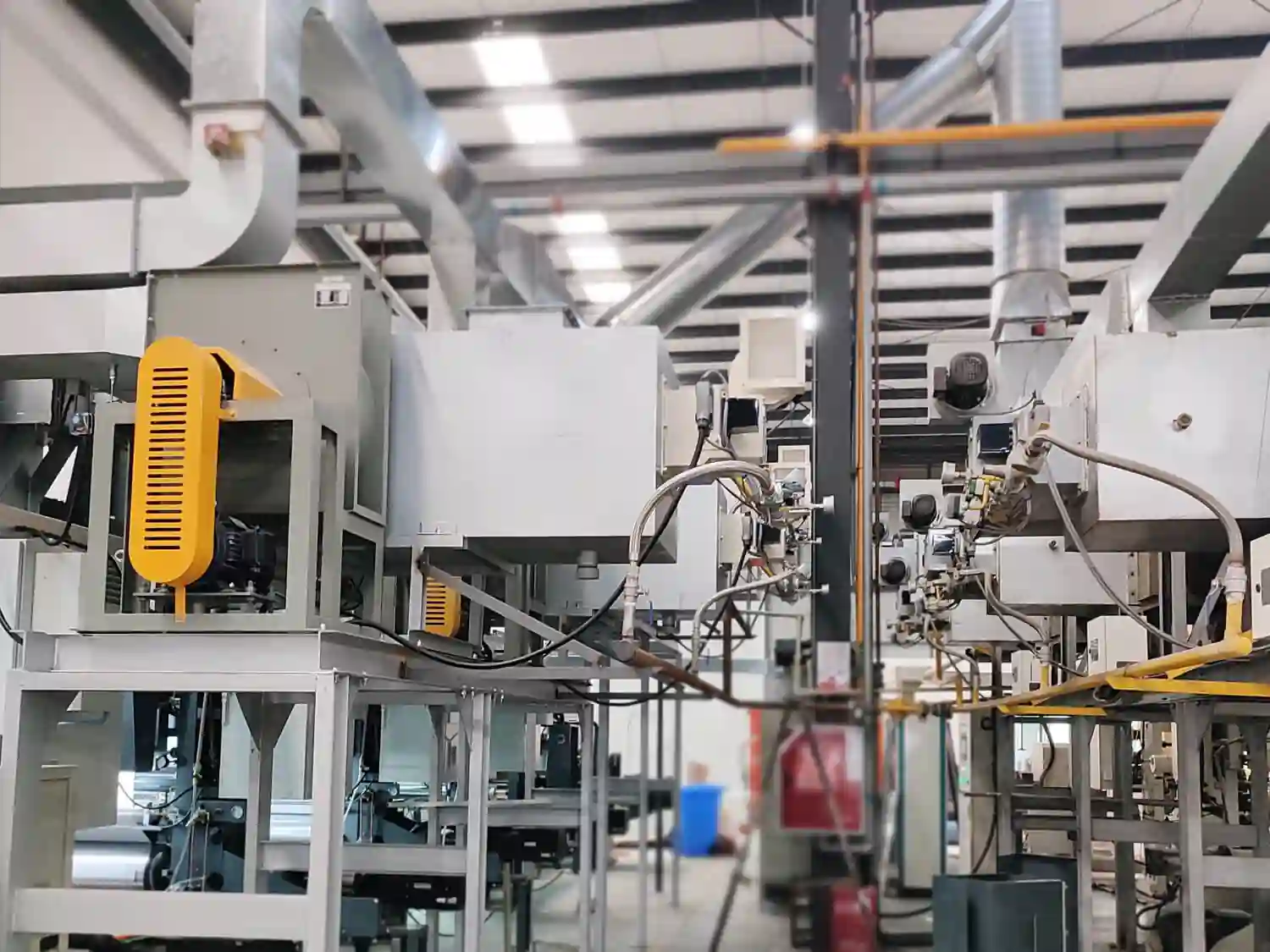
For a simple application, a burner may represent most of the combustion equipment. For a large industrial furnace, however, the combustion system can involve multiple burners, fuel trains, fans, control cabinets, sensors, PLCs, and heat-recovery equipment. The combustion system is therefore a broader concept that encompasses the burner and all the supporting functions needed for reliable operation.
Industrial combustion systems can be classified in several ways. The classification may be based on fuel type, combustion technology, firing method, or heat-transfer configuration.
Natural gas and other gaseous fuels are widely used in industrial heating. Gas-fired systems can provide precise control and are commonly used in:
Industrial furnaces
Drying equipment
Heat-treatment systems
Hot air generators
Ceramic kilns
Glass furnaces
Gas-fired systems typically include a gas train with pressure regulation, safety shut-off valves, and flow control. They are favored for their clean combustion, ease of control, and relatively low emissions compared with other fossil fuels. However, the gas supply pressure and composition must be stable to maintain consistent combustion.
Liquid fuels such as diesel or other industrial fuels can also be used where appropriate. These systems generally require additional fuel-handling and atomization components. The burner must convert the liquid fuel into a form that can mix effectively with combustion air. This is usually achieved by pressure atomization, air atomization, or rotary atomization.
Liquid-fuel systems may include storage tanks, pumps, filters, heaters, and atomizing nozzles. They are often used in applications where natural gas is not available or where the process requires a specific flame characteristic. Maintenance requirements are generally higher than for gas systems because of nozzle wear and fuel quality variations.
Low-NOx systems are designed to reduce nitrogen oxide formation while maintaining stable combustion. Technologies may include staged combustion, internal flue-gas recirculation, optimized fuel-air mixing, and other flame-temperature-control methods. The appropriate approach depends on the application, fuel, furnace temperature, and emissions requirements.
Low-NOx combustion often involves a trade-off between NOx reduction and CO emissions. The control system must be designed to keep both within acceptable limits. In some cases, flue-gas recirculation or water/steam injection may be used to reduce flame temperature. In other cases, the burner is designed with a staged air or fuel introduction to control the local oxygen concentration.
In a direct-fired system, combustion products enter the process space or directly contact the material being heated. This configuration can provide efficient heat transfer but is suitable only where the process permits contact with combustion products. Examples include direct-fired dryers, kilns, and some furnaces.
Direct-fired systems are generally simpler and more efficient because the hot combustion gases transfer heat directly to the load. However, the product may be affected by the combustion products, so the fuel must be clean, and the atmosphere must be compatible with the material.
In an indirect system, combustion is separated from the process material. Heat can be transferred through a heat exchanger, combustion chamber, radiant tube, or other intermediate structure. This configuration is useful when the product must be protected from direct contact with combustion gases.
Indirect-fired systems are common in heat treatment, where a controlled atmosphere is required, and in applications where the product must not be contaminated. They may have lower thermal efficiency than direct-fired systems because of the additional heat-transfer step, but they offer greater process control and product protection.
Industrial combustion systems are used wherever controlled thermal energy is required. The specific configuration depends on the process, but the fundamental purpose is the same: to convert fuel into useful heat safely and efficiently.
Furnaces for heat treatment, annealing, forging, aluminum processing, and other metal applications require precise control of heat input and temperature distribution. Combustion systems for these applications must often provide high heat output, uniform temperature, and reliable operation at high temperatures.
Industrial dryers use combustion systems to generate hot air for removing moisture or solvents from materials. Applications can include chemical materials, grain and seeds, building materials, and various powders. The combustion system must be designed to provide the required air temperature and flow rate without contaminating the product.
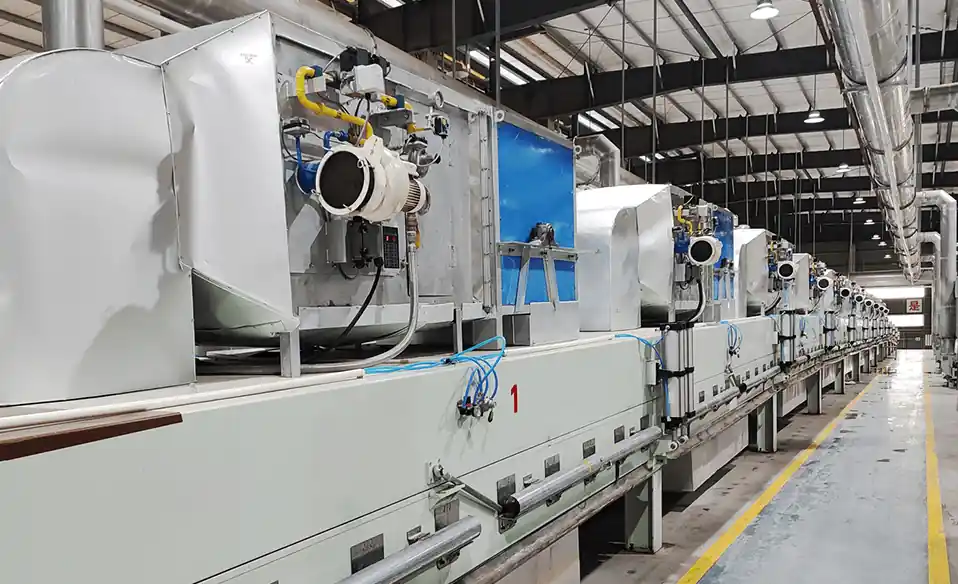
Ceramic, refractory, glass, and other high-temperature processes often require burners capable of maintaining stable temperature profiles. Kilns may use multiple burners arranged along the length of the kiln to create a specific temperature curve. The combustion system must be able to handle high temperatures and often corrosive atmospheres.
A combustion system can generate controlled hot air for industrial heating and drying processes. Hot air generators are used in applications where direct contact with combustion gases is acceptable or where a heat exchanger separates the combustion products from the process air.
Regenerative thermal oxidizers use combustion systems to maintain the high temperatures required to oxidize volatile organic compounds. The burner must work together with the RTO's regenerative heat-recovery system and control architecture. RTO burners are often designed for high turndown and low NOx emissions.
Other applications include coating ovens, heat-treatment equipment, thermal processing lines, and specialized industrial heating systems. In each case, the combustion system must be matched to the process requirements, including temperature, atmosphere, control accuracy, and emissions.
Combustion control directly affects the performance of the entire thermal process. A well-designed system should maintain an appropriate relationship between fuel input and combustion air. This relationship determines the completeness of combustion, the flame temperature, the exhaust volume, and the overall efficiency.
If the fuel-air ratio is poorly controlled, several problems can occur:
Incomplete combustion
Flame instability
Excessive fuel consumption
Increased emissions
Temperature fluctuations
Poor heat distribution
Increased equipment stress
Modern combustion systems therefore commonly use automatic control rather than relying entirely on manual adjustment. Automatic control can respond to changes in load, fuel pressure, and ambient conditions. It can maintain the correct air-fuel ratio across the operating range, reducing the risk of both incomplete combustion and excessive excess air.
A properly controlled combustion system can also improve safety by ensuring that the burner operates within safe limits. If a fault occurs, the control system can initiate a safe shutdown before the condition becomes hazardous.
Energy efficiency depends on more than burner combustion efficiency. An efficient combustion system should consider the complete energy path:
Fuel → combustion → heat transfer → process → exhaust
Several factors can improve overall efficiency. These factors should be considered together, because improving one area may affect another.
A burner should be sized according to the actual process heat load. Oversized or undersized burners can make control more difficult. An oversized burner may cycle frequently or operate at low fire, where efficiency and stability can suffer. An undersized burner may not reach the required temperature or may operate continuously at maximum capacity, leaving no margin for process variations.
Excess air is necessary for reliable combustion, but excessive air increases the amount of gas that must be heated and exhausted. Reducing excess air to the lowest level that still maintains complete combustion and flame stability can save fuel. The optimum level should be determined by measuring oxygen and carbon monoxide in the flue gas.
The flame must deliver heat where it is required. Burner position, flame geometry, and airflow all influence temperature uniformity. If the furnace has hot spots and cold zones, operators may increase the overall temperature to ensure the coldest area reaches the setpoint. This increases fuel consumption. Improving heat distribution can reduce the required average temperature and save energy.
Waste heat from exhaust gases may be recovered to preheat combustion air or process air, depending on the application. Combustion-air preheating is one of the most common methods. It reduces the amount of fuel needed to reach the target furnace temperature. Heat recovery is particularly effective in high-temperature, continuous processes.
Reducing heat loss through furnace walls, doors, openings, and seals can significantly reduce the amount of fuel required. Insulation improvements are often cost-effective and can be combined with other efficiency measures. In older furnaces, wall losses can account for a significant portion of total energy input.
Modulating burner output according to actual process demand can reduce unnecessary fuel consumption compared with simple full-load operation. A modulating burner can match the heat input to the load, avoiding the inefficiency of frequent on/off cycling. The turndown ratio of the burner determines how low it can modulate while maintaining stable combustion.
Safety is a fundamental part of industrial combustion-system design. A typical system may use multiple layers of protection, including:
Fuel shut-off valves
Flame detectors
Gas-pressure switches
Combustion-air pressure switches
Emergency stops
Pre-purge sequences
Ignition monitoring
Temperature protection
Furnace-pressure monitoring
Burner management logic
The purpose of these components is to prevent fuel from continuing to flow when the required combustion conditions are not present. For example, if the flame detector does not confirm a flame within the safety time, the fuel valves must close. If the combustion-air pressure drops below the safe limit, the burner must shut down. If the furnace temperature exceeds the safe limit, the fuel supply must be interrupted.
Safety design should be appropriate to the specific fuel, burner, equipment, and applicable standards. In many regions, industrial combustion systems must comply with standards such as EN 746-2, NFPA 86, or ISO 13577. These standards define the required safety functions, testing procedures, and maintenance requirements. Compliance is not optional; it is essential for protecting personnel, equipment, and the environment.
Selecting a combustion system should start with the thermal process rather than the burner catalog. The process requirements determine the burner type, capacity, control strategy, and safety architecture. Engineers should evaluate:
Determine both normal and peak thermal demand. The burner should be sized to meet the peak demand while operating efficiently at normal load. A heat balance should be performed to account for heat losses through walls, openings, and exhaust.
Identify the fuel type, composition, pressure, temperature, and availability. Fuel properties affect burner design, nozzle selection, and control requirements. For example, hydrogen-containing fuels have different combustion characteristics than natural gas.
Determine the required operating temperature and temperature-control accuracy. High-temperature processes may require special materials, refractory components, or cooling arrangements.
Consider chamber dimensions, burner mounting position, airflow, exhaust location, and required flame coverage. The burner must be matched to the furnace to ensure proper heat distribution and avoid flame impingement.
Determine whether the process requires a concentrated flame, distributed heating, indirect heating, or highly uniform temperature distribution. The burner arrangement and flame shape should be selected accordingly.
Identify applicable NOx, CO, and other emissions requirements. The burner and control system must be designed to meet these limits while maintaining stable combustion and efficient operation.
Determine whether the application requires on/off, two-stage, multi-stage, or fully modulating control. The control strategy should match the process requirements and the desired level of automation.
Define the required flame detection, fuel shut-off, pressure monitoring, interlocks, and burner-management functions. The safety architecture must comply with the applicable standards and the specific risks of the application.
Consider accessibility, replacement parts, inspection requirements, and expected operating conditions. A system that is difficult to maintain may suffer from declining performance over time.
DYDTEC Combustion develops industrial burners and combustion-system solutions for a range of thermal processes. Founded in 2012, DYDTEC Combustion has developed more than 100 burner models covering over 200 application scenarios. Its solutions are designed around factors such as heat load, fuel characteristics, furnace geometry, airflow, flame characteristics, temperature requirements, and control needs.
This system-level approach allows burner configuration and combustion-system components to be considered together rather than treating the burner as an isolated piece of equipment. For OEM equipment manufacturers and industrial heating-system integrators, this approach can help ensure that the burner, furnace, fuel system, air system, exhaust system, and controls work together efficiently and safely.
DYDTEC Combustion has production and R&D bases in Shanghai and Yangzhou and serves customers across more than 50 countries and regions. Its experience across different industries and applications allows it to support customers in selecting and integrating combustion systems that meet specific process requirements.
An industrial combustion system is an integrated system that converts fuel into controlled thermal energy for industrial processes. It generally includes a burner, fuel supply, combustion-air system, ignition, flame detection, control, and safety components. It is designed to provide stable, efficient, and safe heat for furnaces, kilns, dryers, ovens, and other thermal equipment.
A burner generates the flame, while a combustion system includes the burner and the supporting fuel, air, control, monitoring, and safety equipment needed for complete operation. The combustion system also includes the process control and safety architecture that ensures the burner operates correctly within the thermal process.
Depending on the system design, industrial combustion systems can use natural gas, LPG, biogas, hydrogen-containing fuels, diesel, and other suitable gaseous or liquid fuels. The fuel type affects the burner design, fuel train configuration, and emissions performance.
They are used in metal processing, chemical processing, ceramics, glass, building materials, food and agricultural drying, coating, waste-gas treatment, and many other industries requiring controlled thermal energy. Any industry that needs reliable, controllable heat can benefit from an industrial combustion system.
Common approaches include appropriate burner sizing, optimized fuel-air ratios, reduced unnecessary excess air, automatic modulation, effective heat distribution, heat recovery, and regular maintenance. Combustion efficiency should be evaluated at the system level, not just at the burner.
Yes. Combustion systems can be engineered and integrated into OEM furnaces, dryers, ovens, hot-air generators, kilns, RTOs, and other thermal equipment according to the equipment's heat load and control requirements. Early involvement of the combustion supplier can help optimize the overall design.
There is no single most important feature. Safety is achieved through multiple layers of protection, including fuel shut-off valves, flame detection, pressure switches, pre-purge sequences, and burner management logic. All must work together to prevent unsafe conditions.
Inspection frequency depends on the application and operating conditions. High-temperature, continuous, or dusty applications may require more frequent inspections. As a general guide, combustion systems should be inspected at least annually, with more frequent checks for critical components such as flame detectors, ignition systems, and safety valves.
An industrial combustion system is a complete thermal-energy management system, not simply a burner. Its core functions include supplying fuel and combustion air, creating and monitoring the flame, controlling heat output, maintaining process conditions, and protecting the equipment through multiple safety mechanisms.
The most suitable system depends on the fuel, heat load, furnace geometry, operating temperature, heat-distribution requirements, emissions targets, control strategy, and safety requirements. A system that is properly matched to the process can deliver stable operation, high efficiency, low emissions, and long equipment life.
For industrial users and OEM equipment manufacturers, treating combustion as an integrated system from the beginning can make burner selection, control integration, energy efficiency, and long-term operation much easier to manage. When the burner, fuel system, air system, exhaust system, controls, and safety devices are designed and maintained as one coordinated system, industrial combustion becomes a reliable foundation for efficient and sustainable thermal processing.