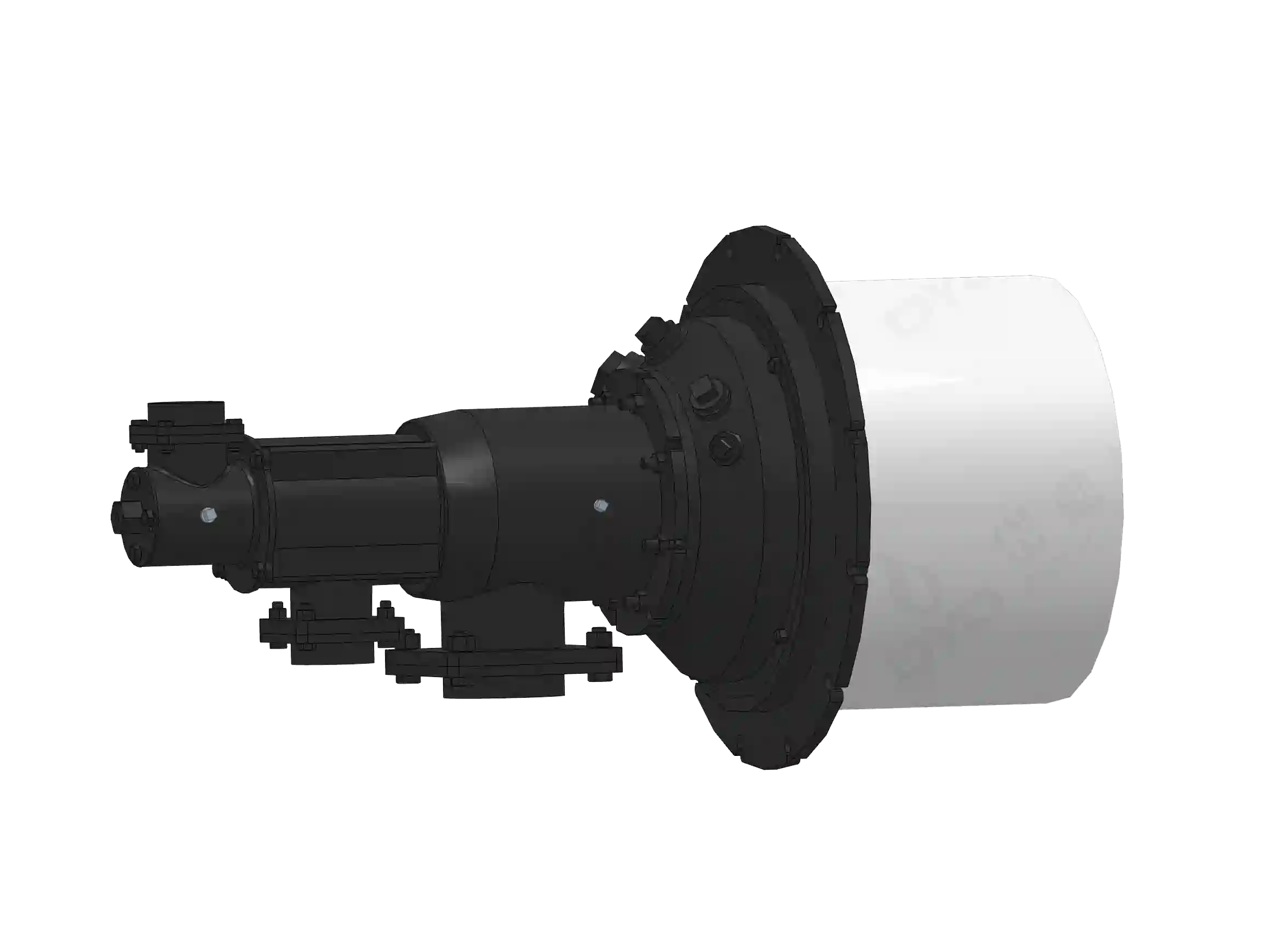
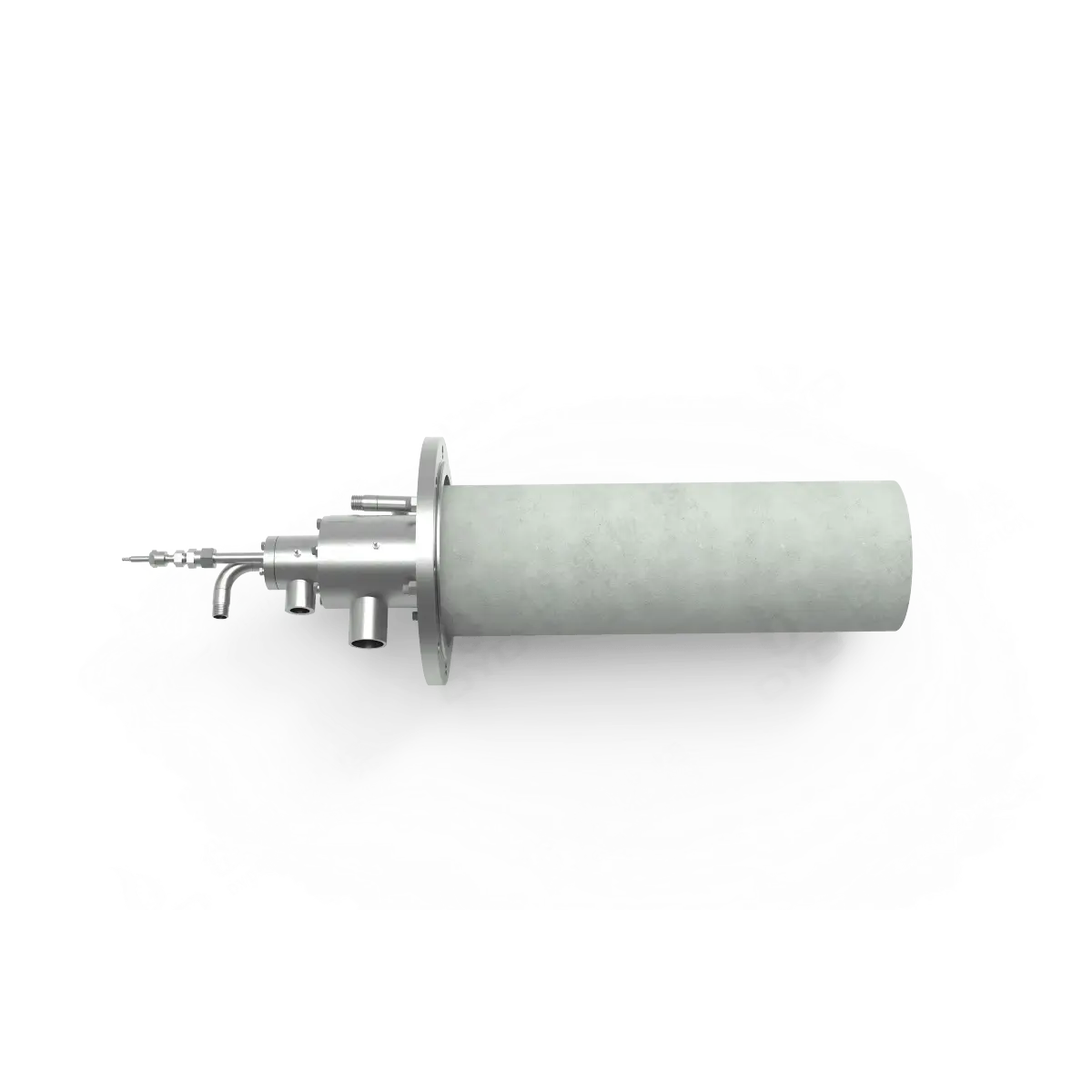
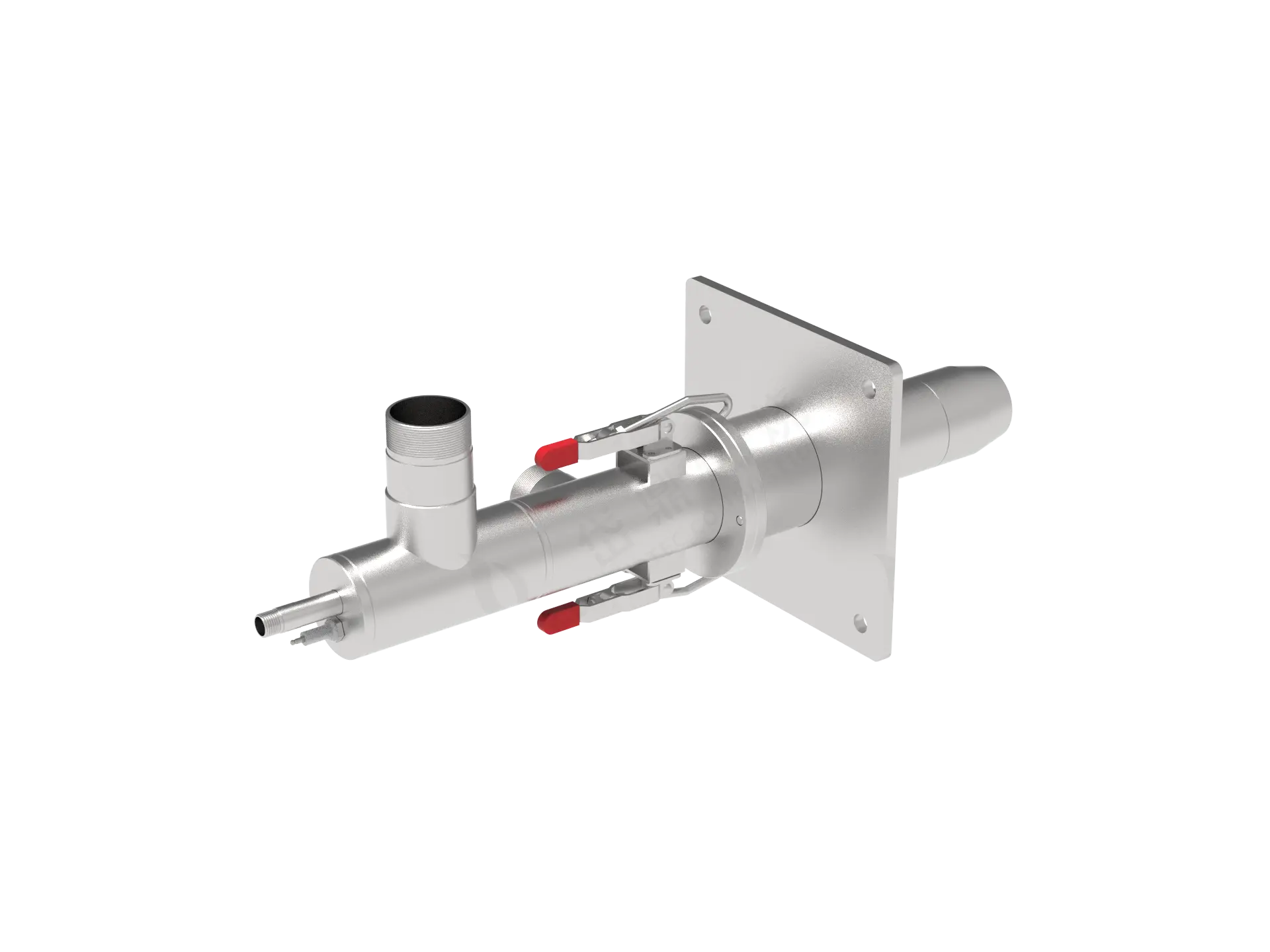
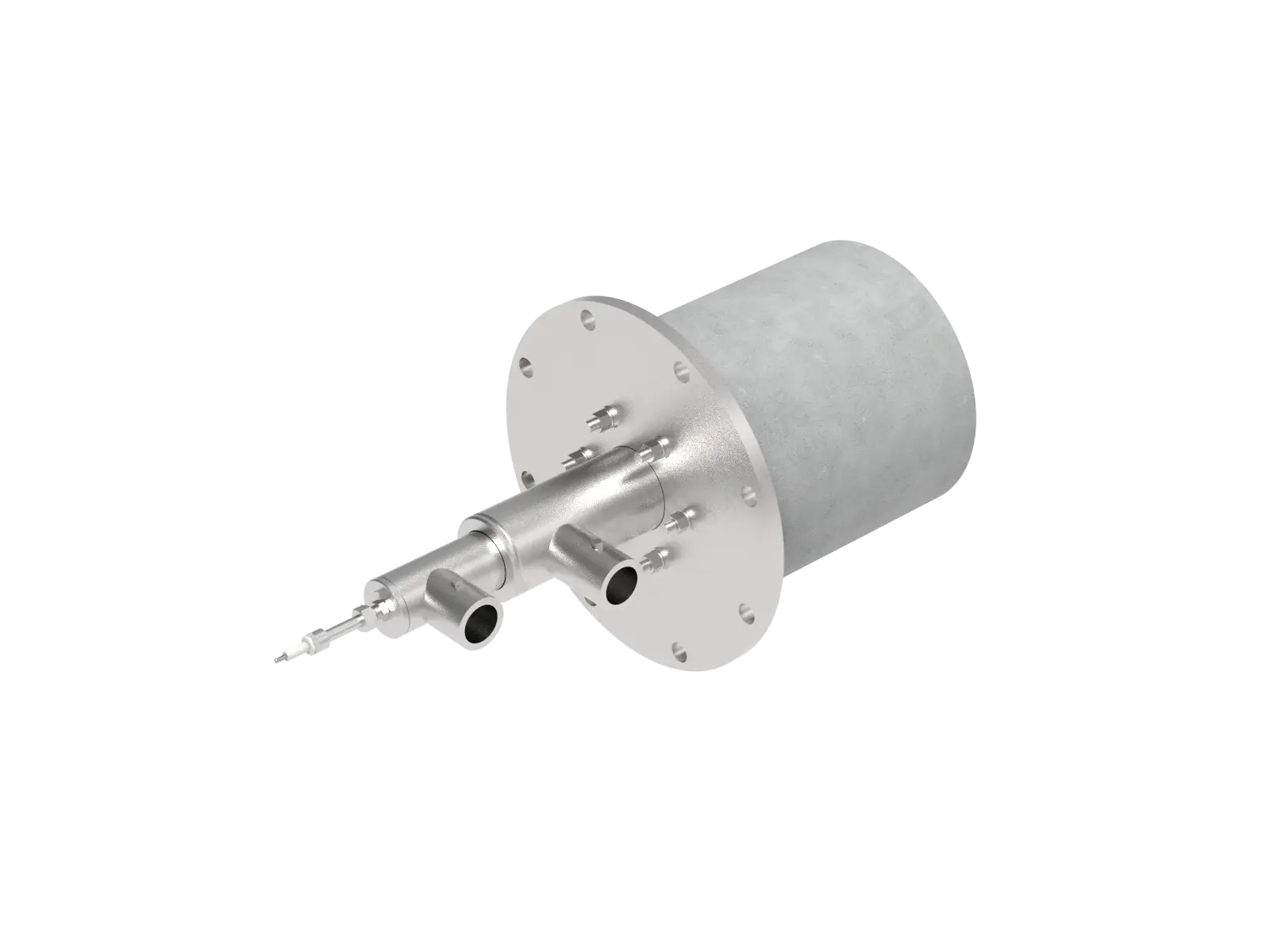
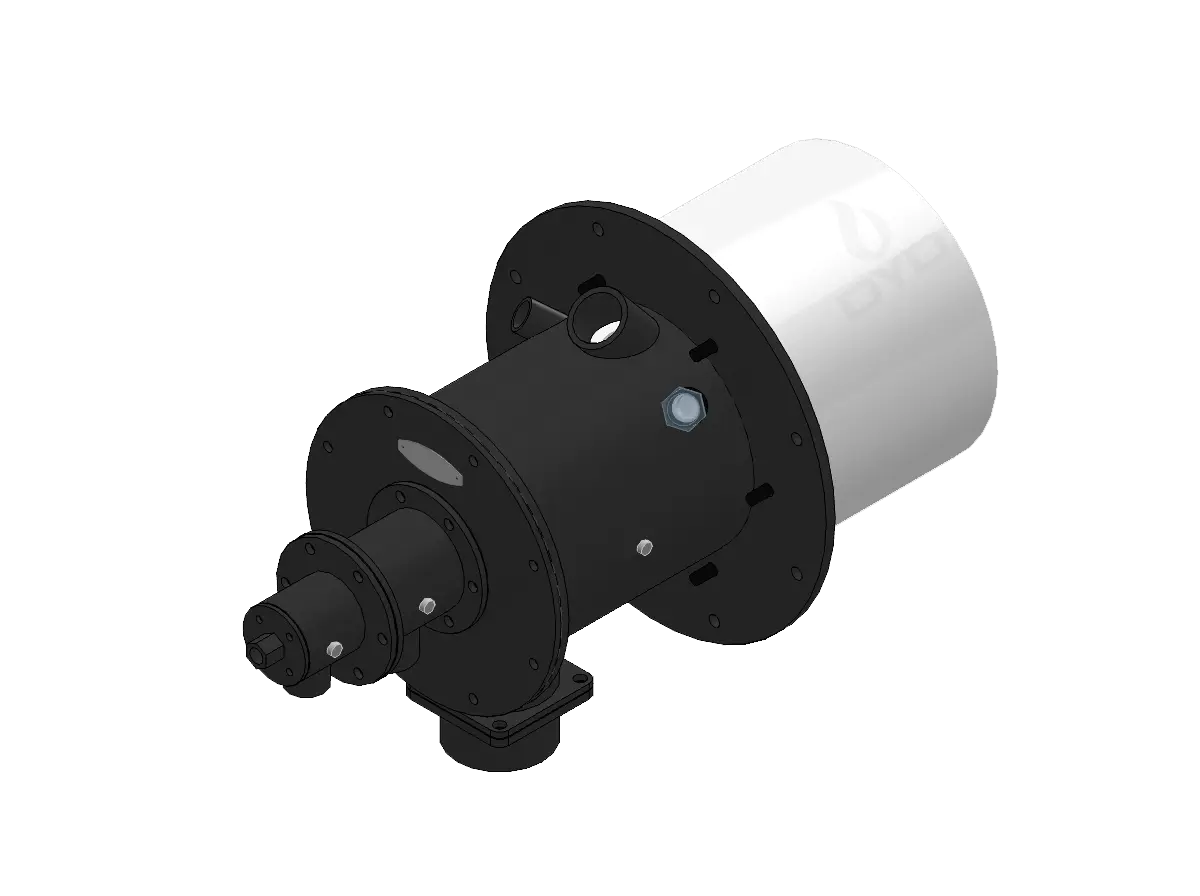
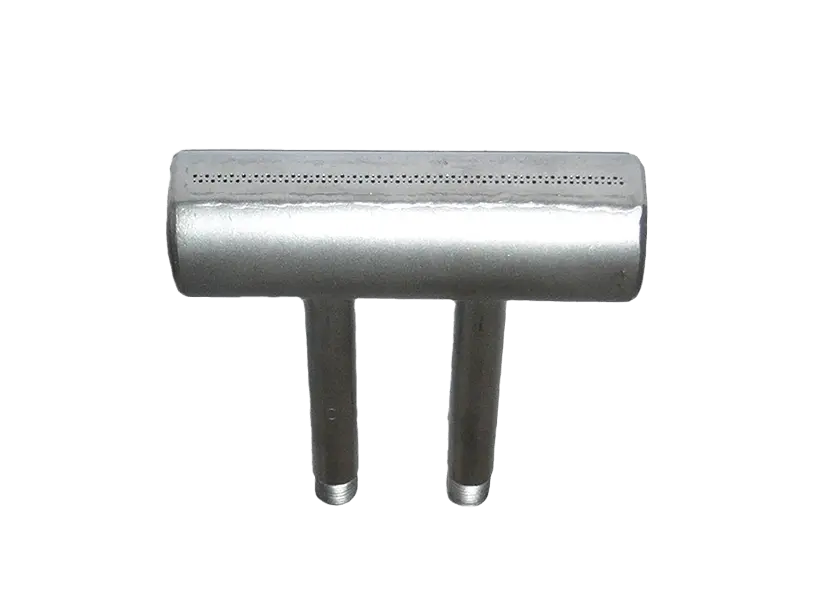
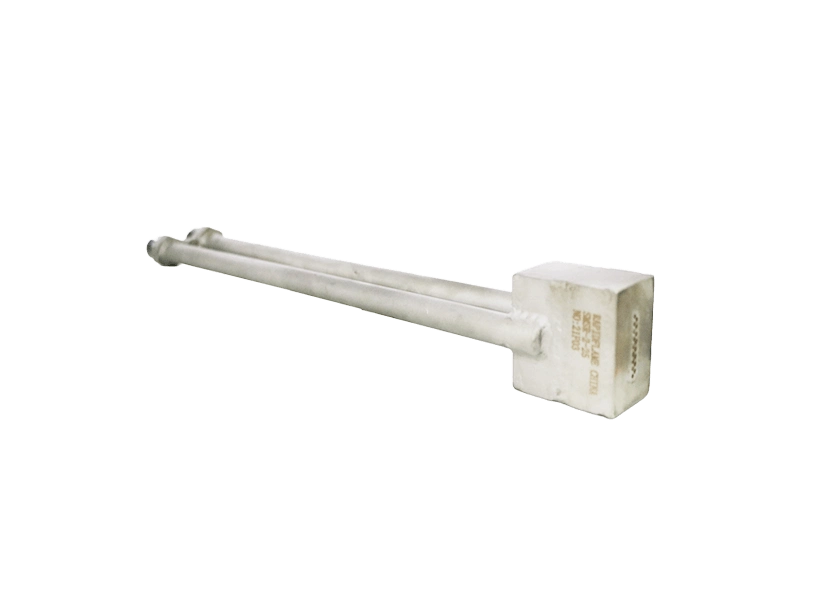
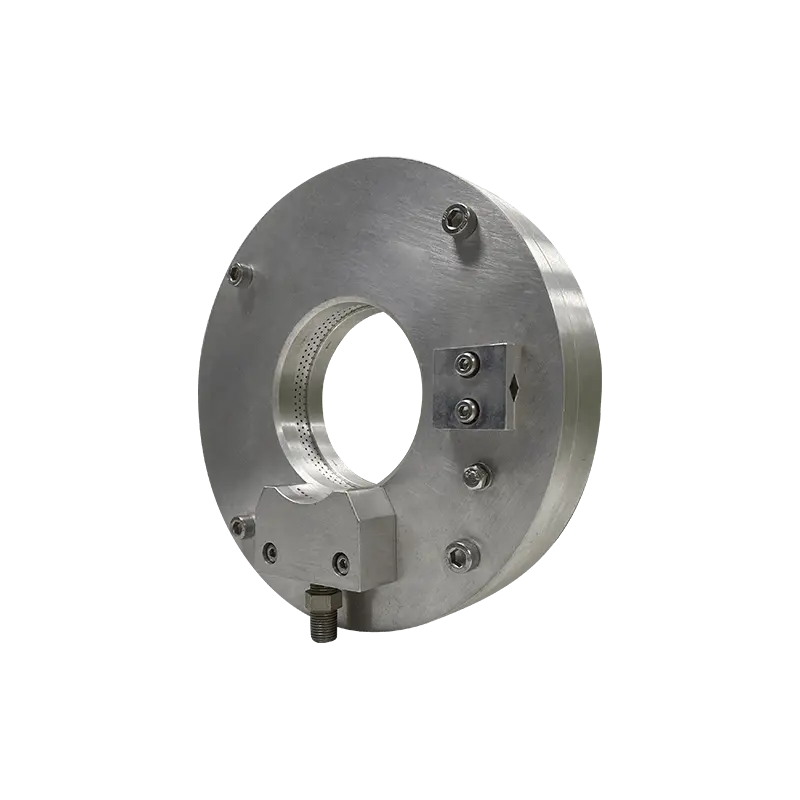
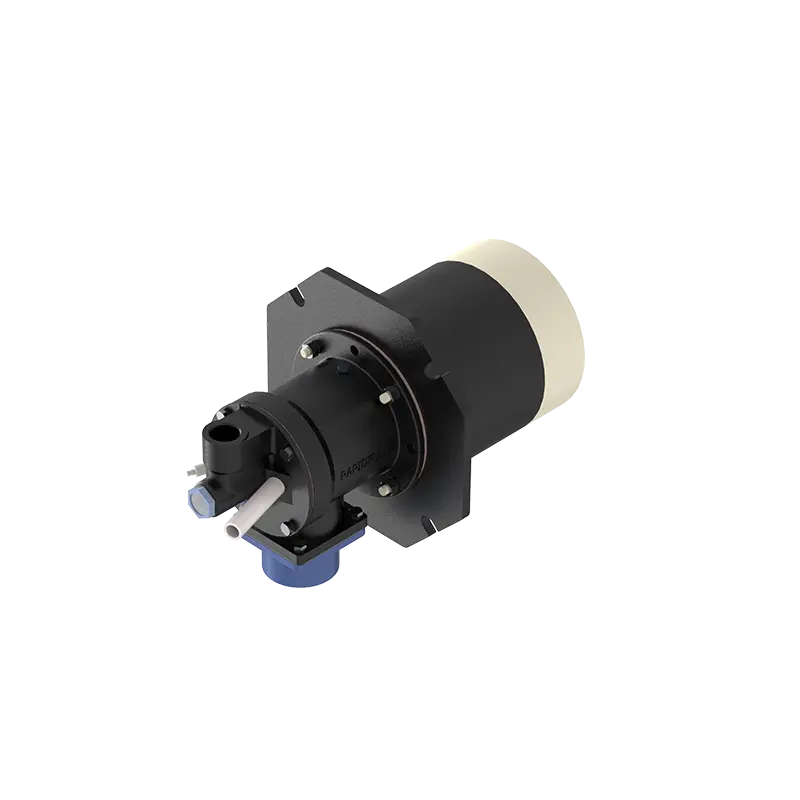
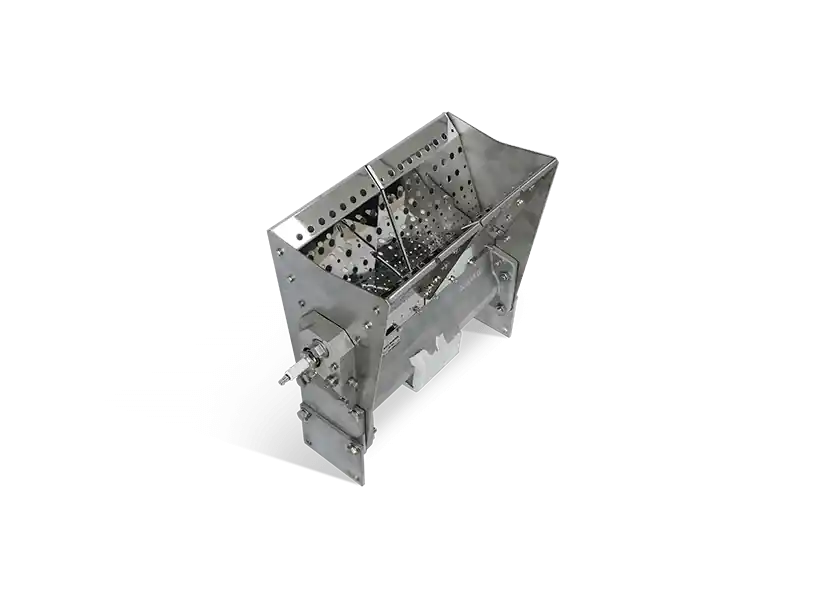
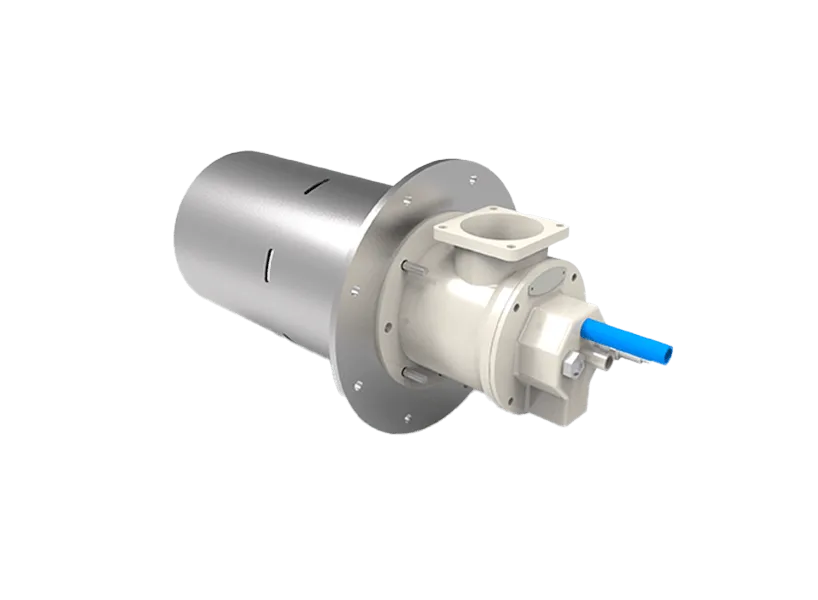
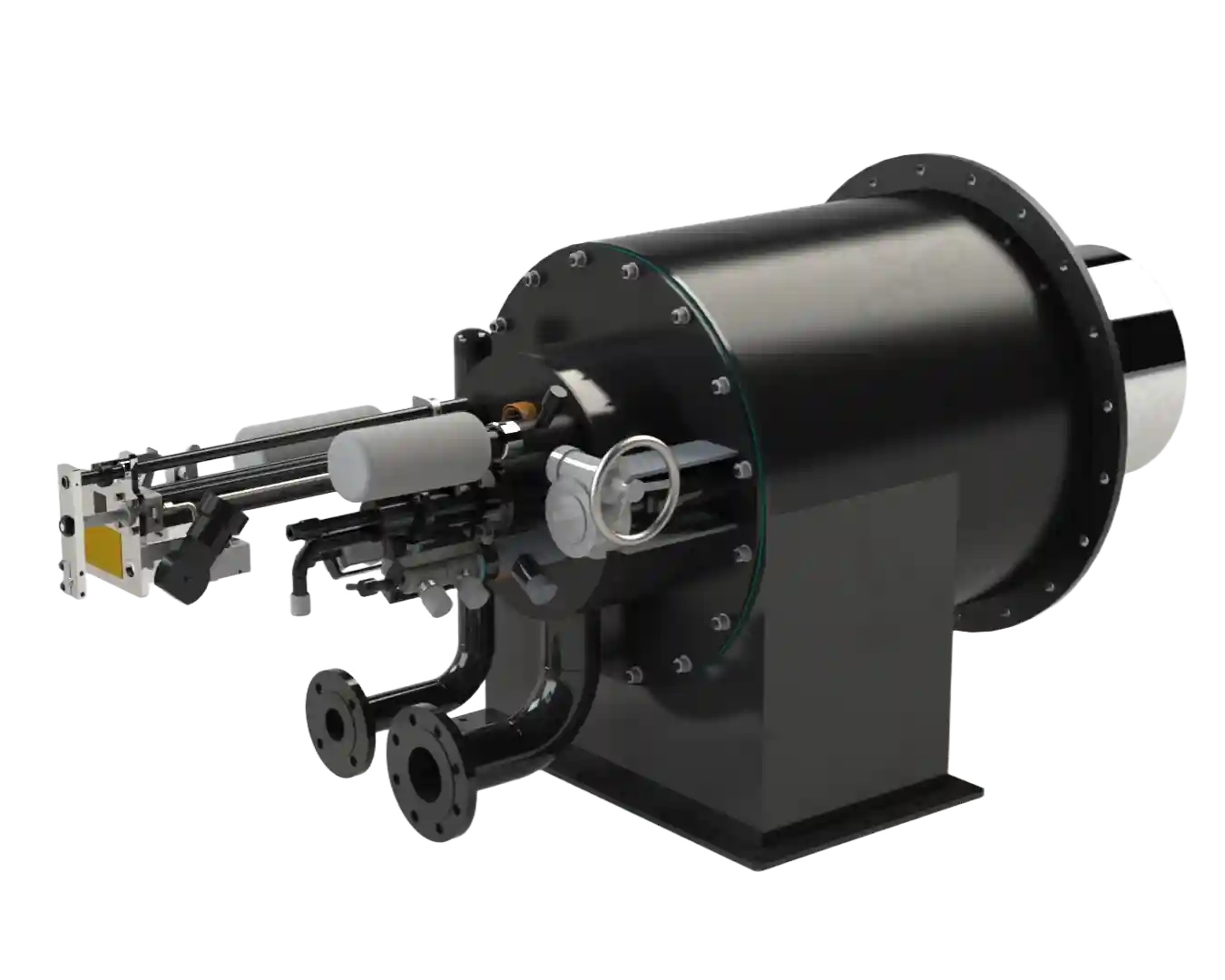
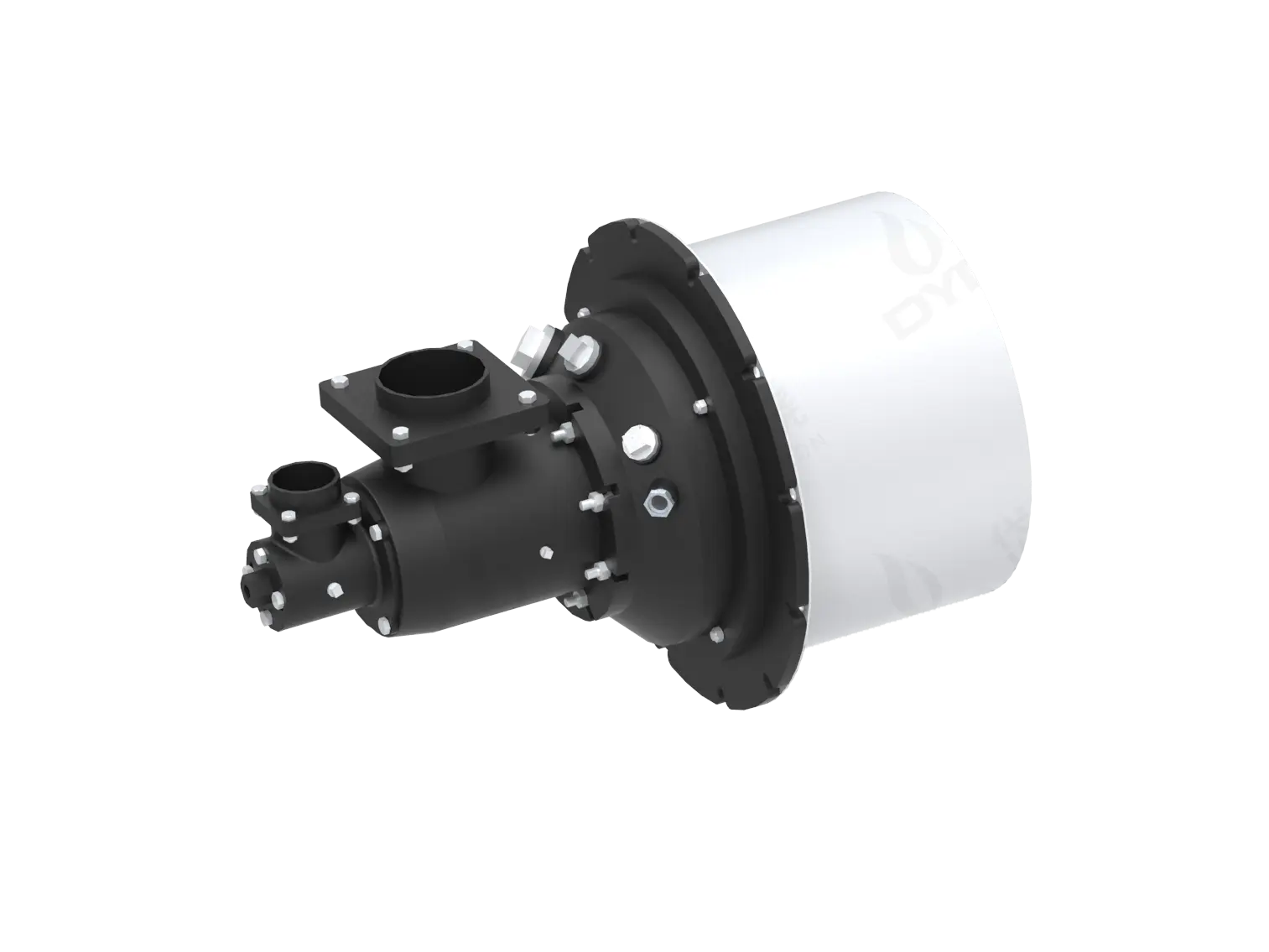
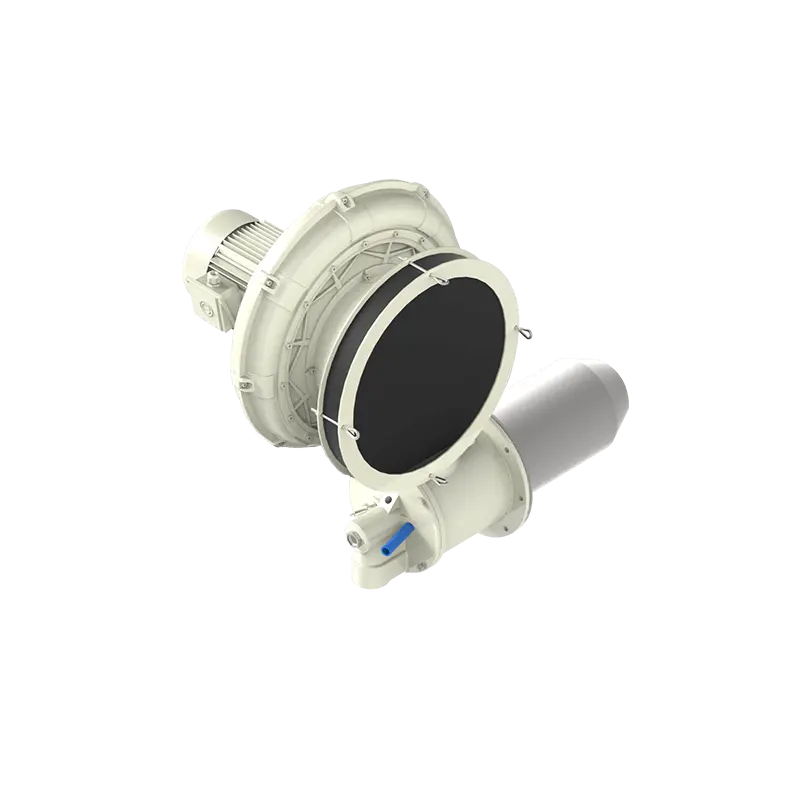
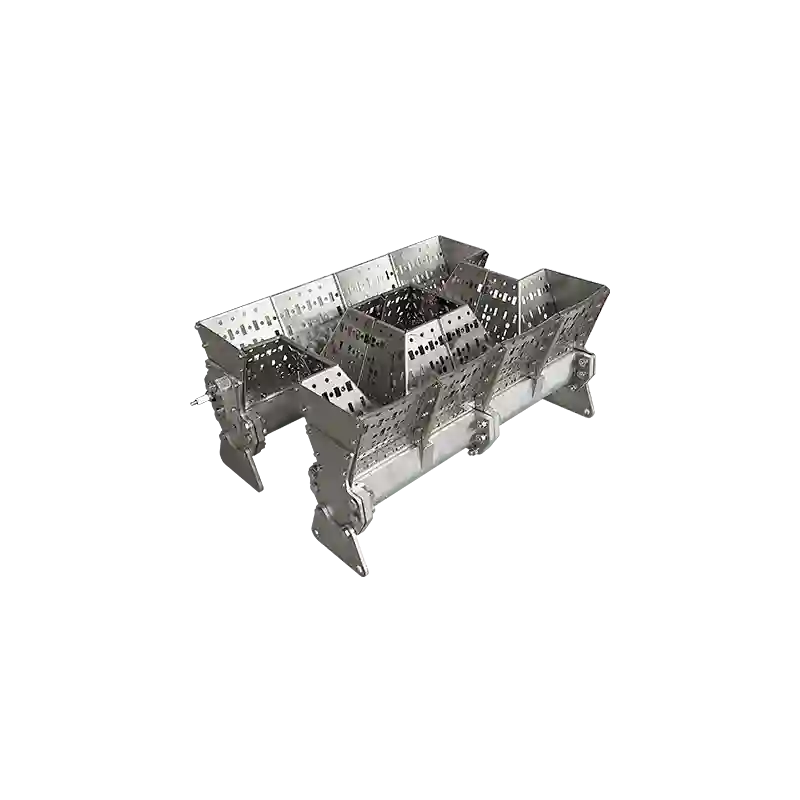
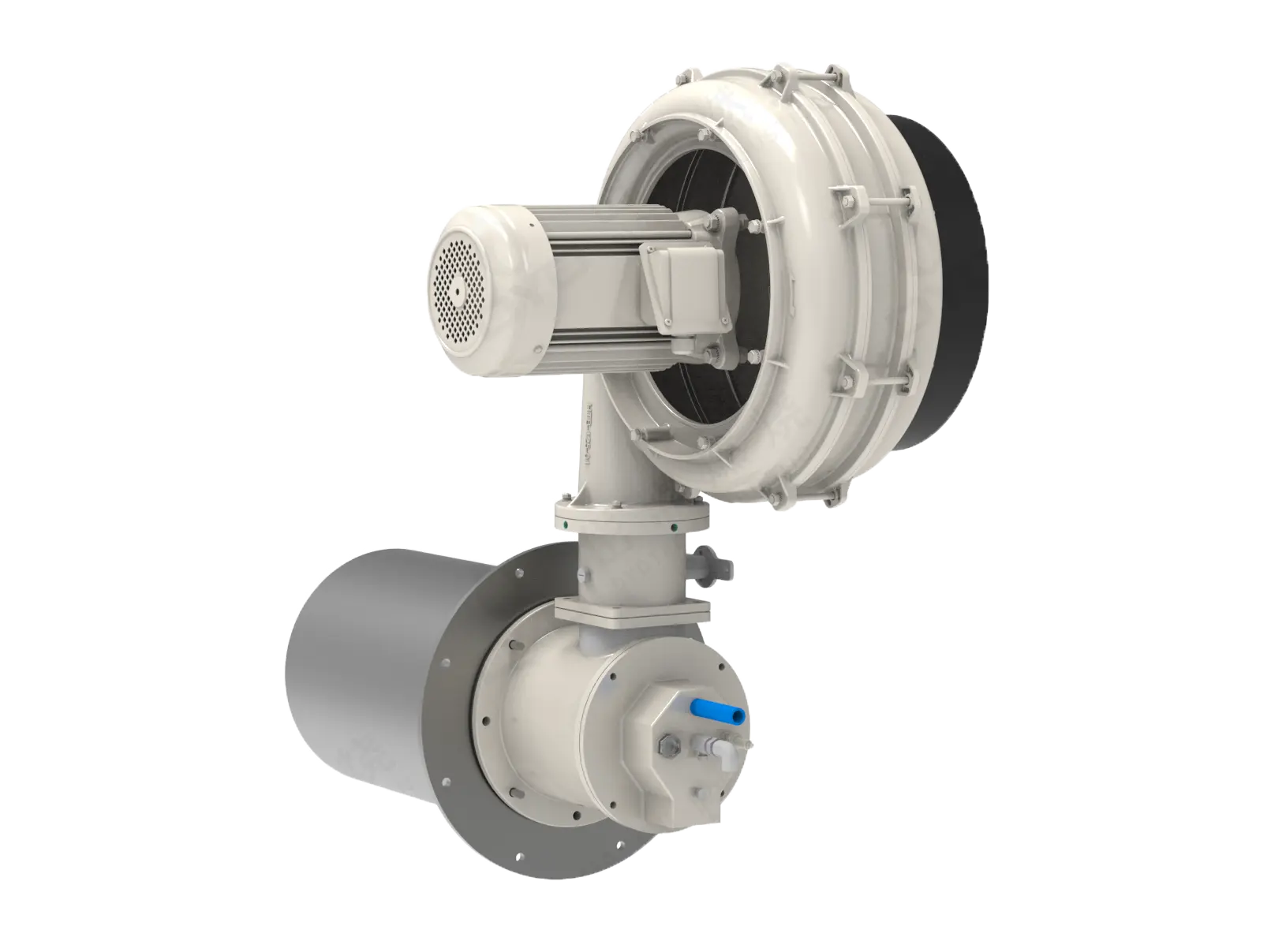
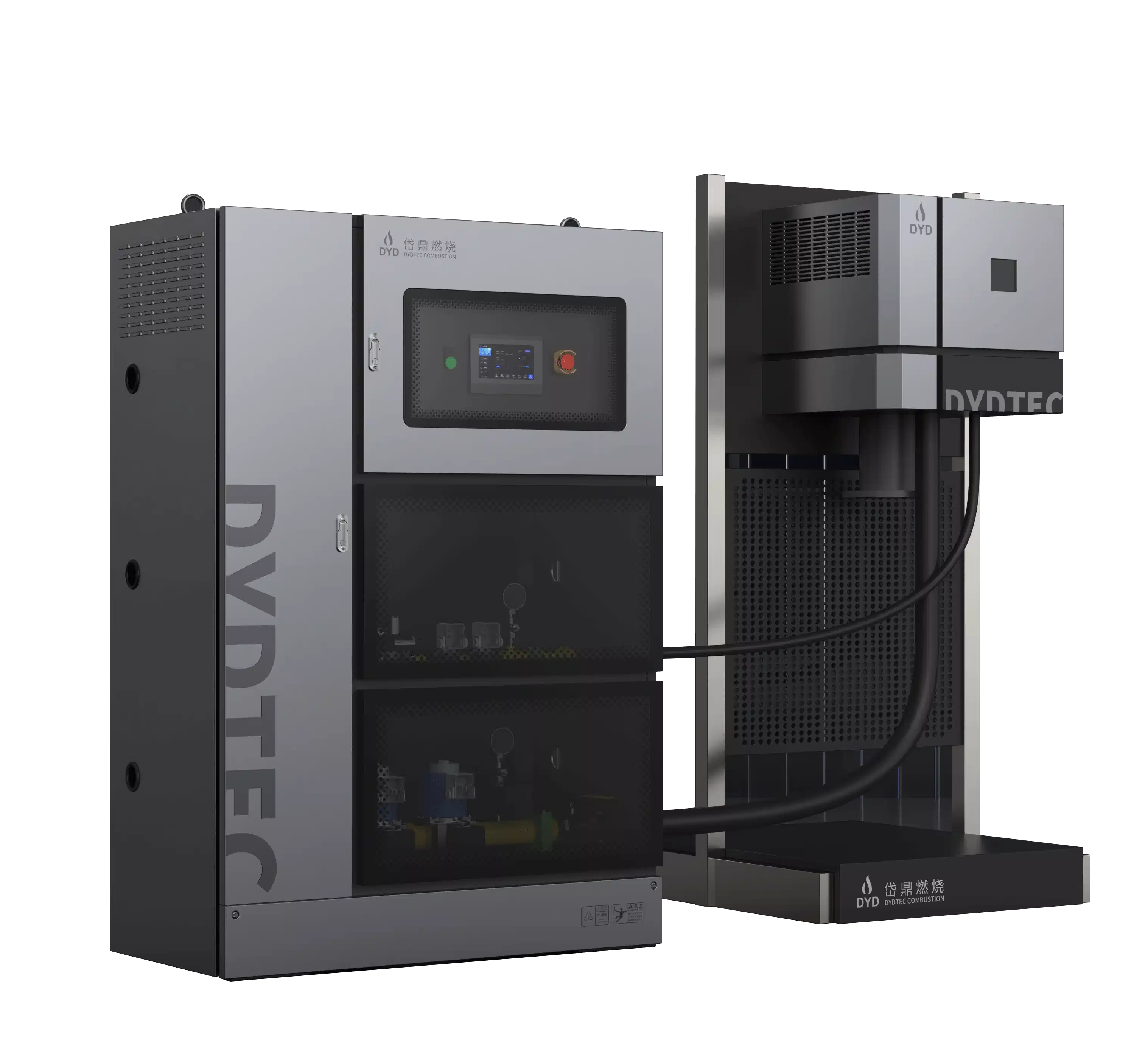
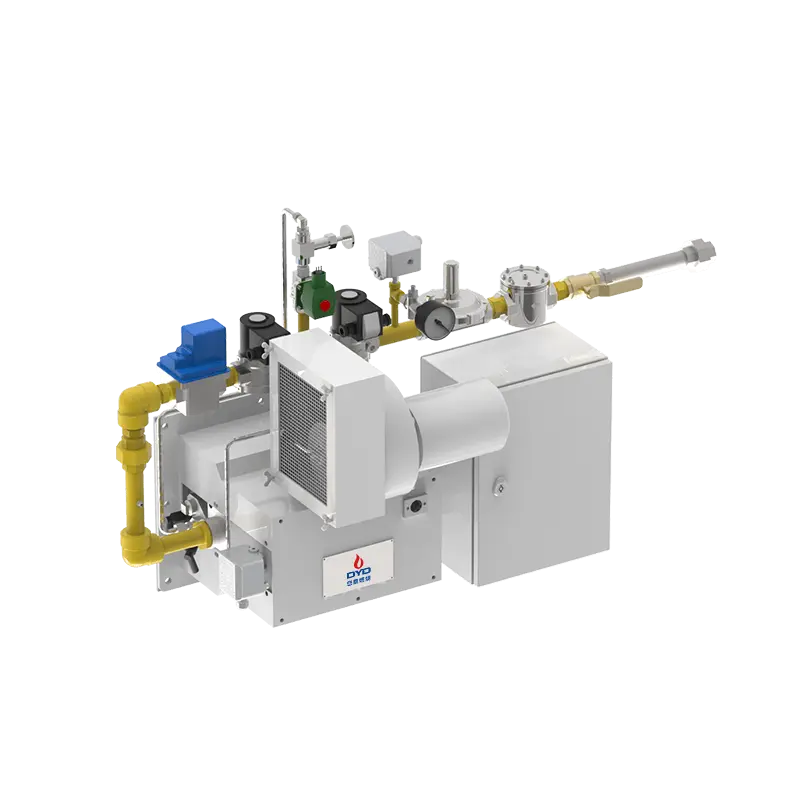
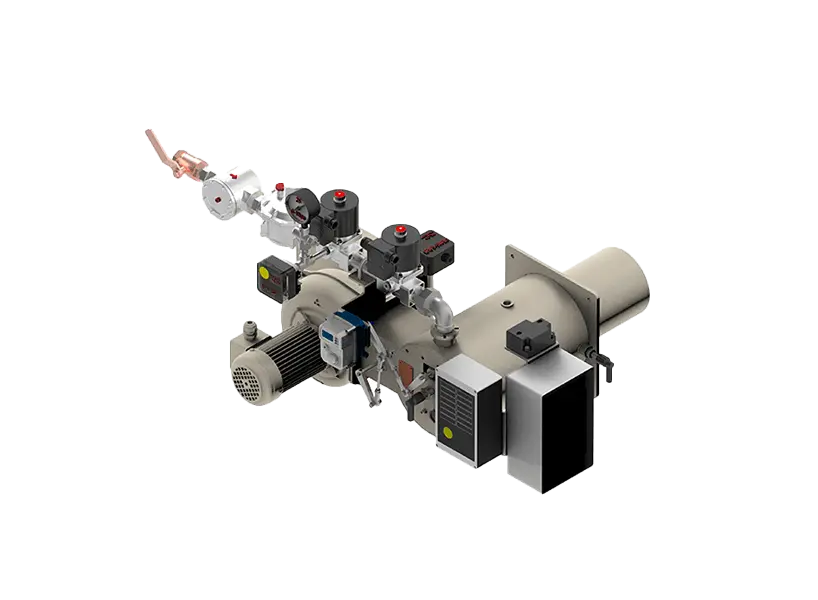
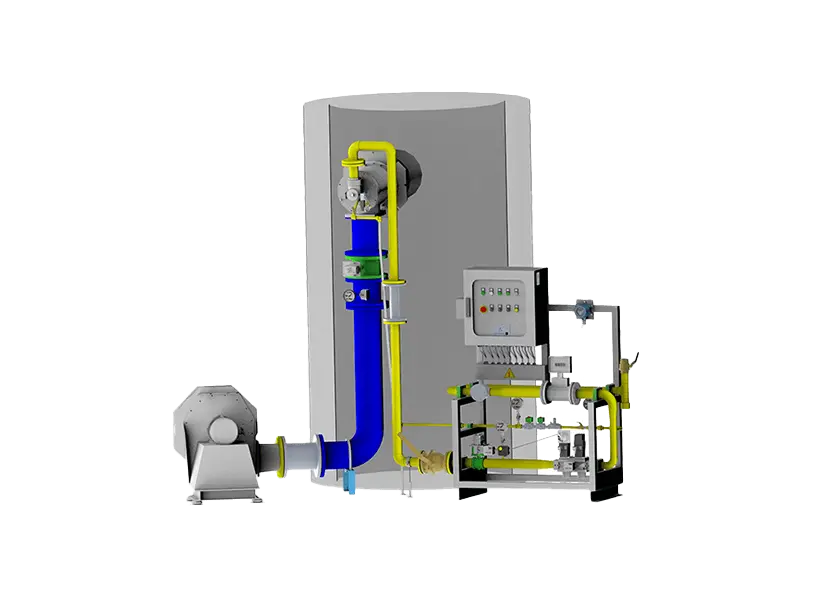
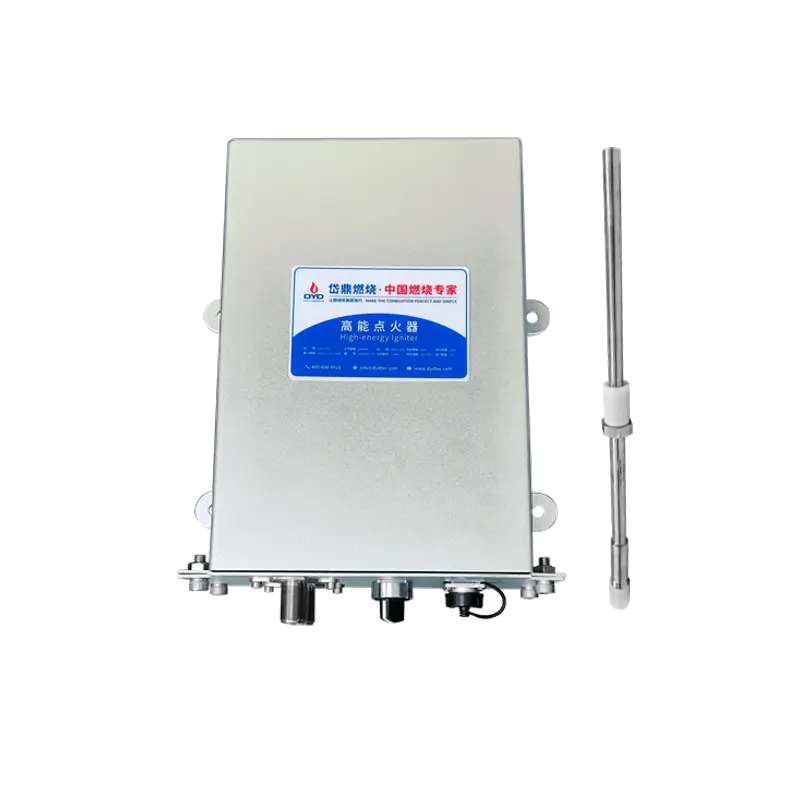
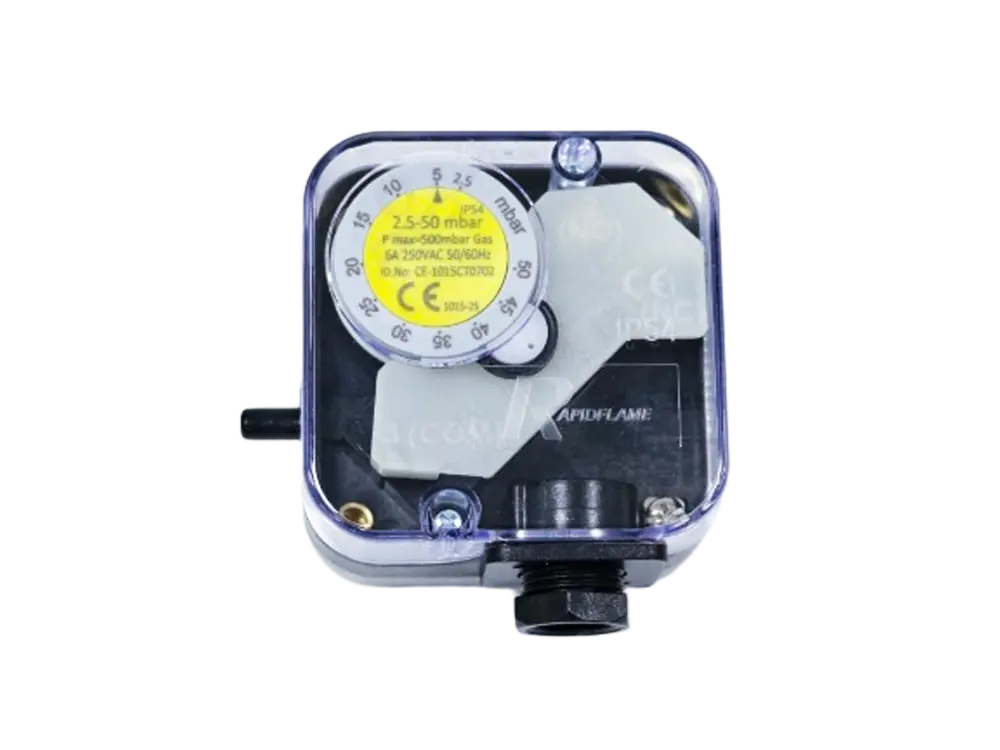
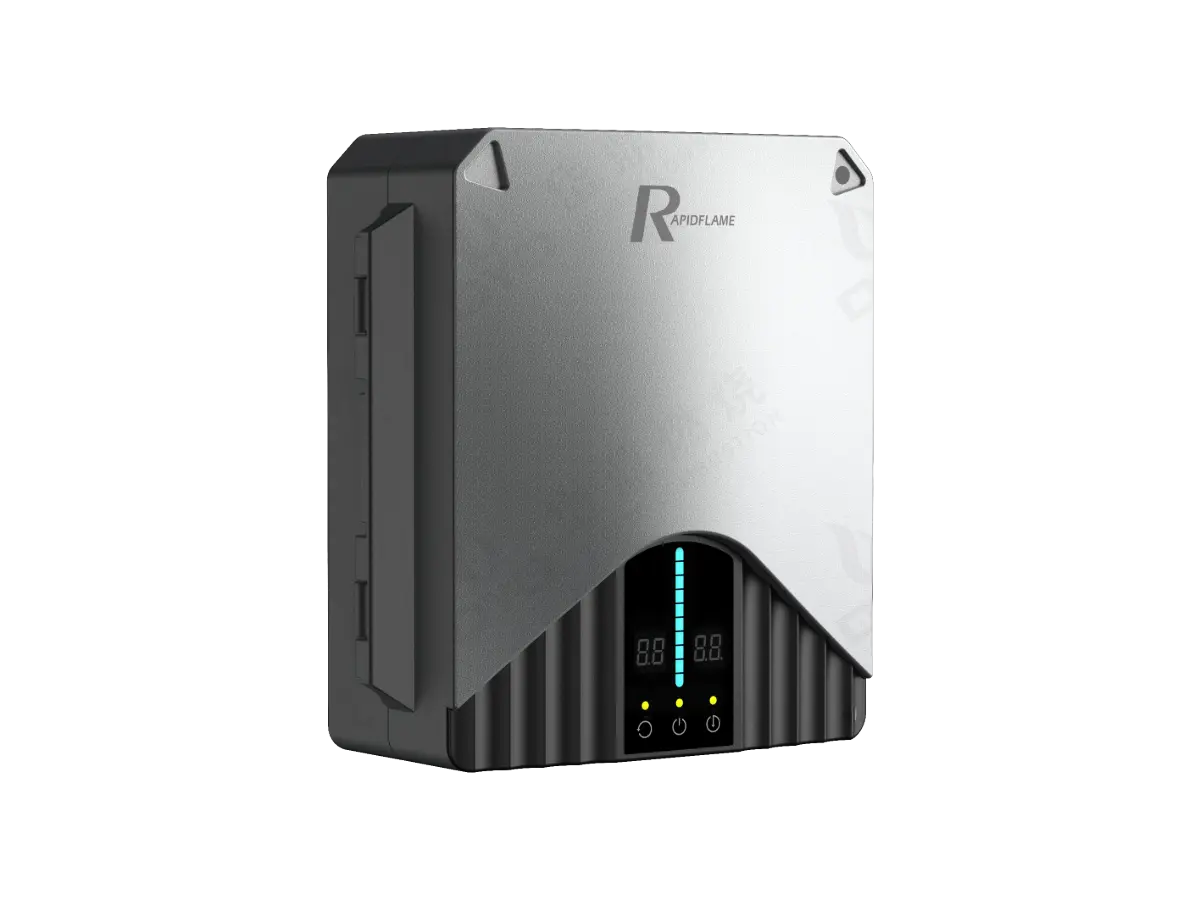
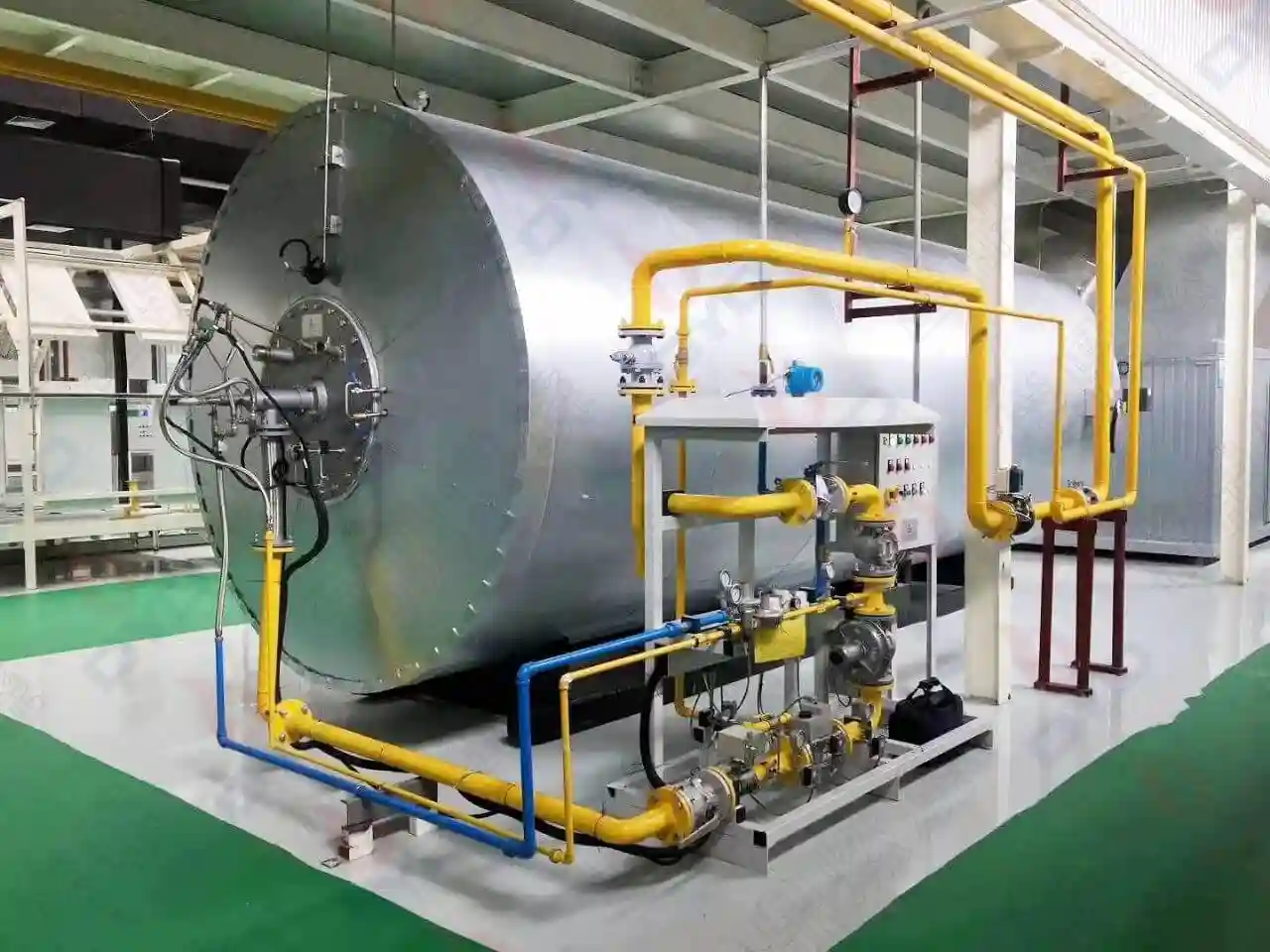
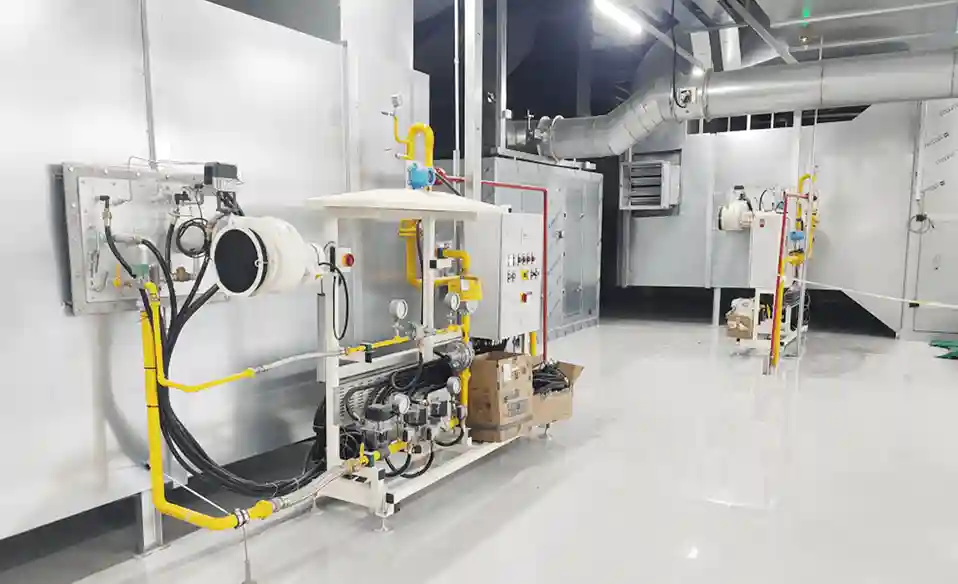
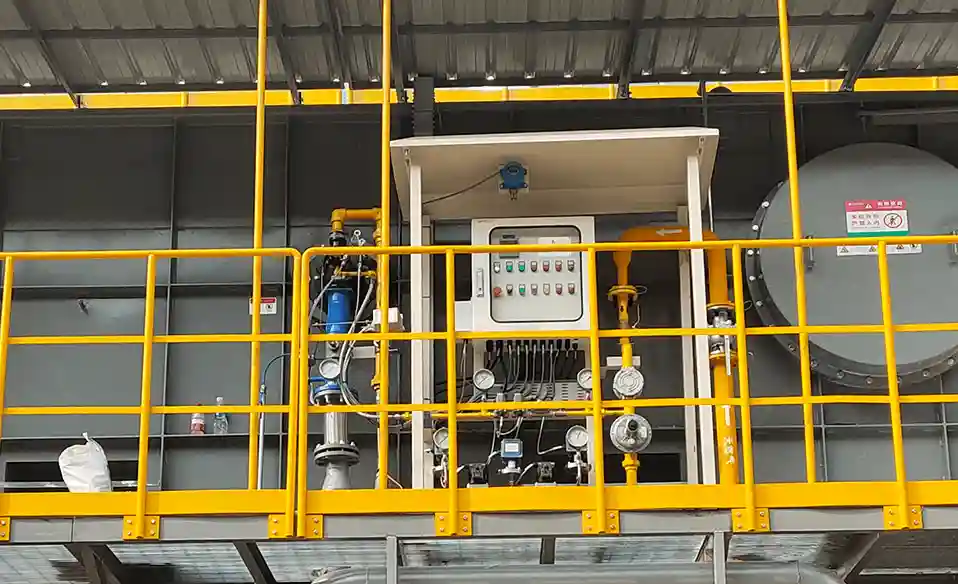
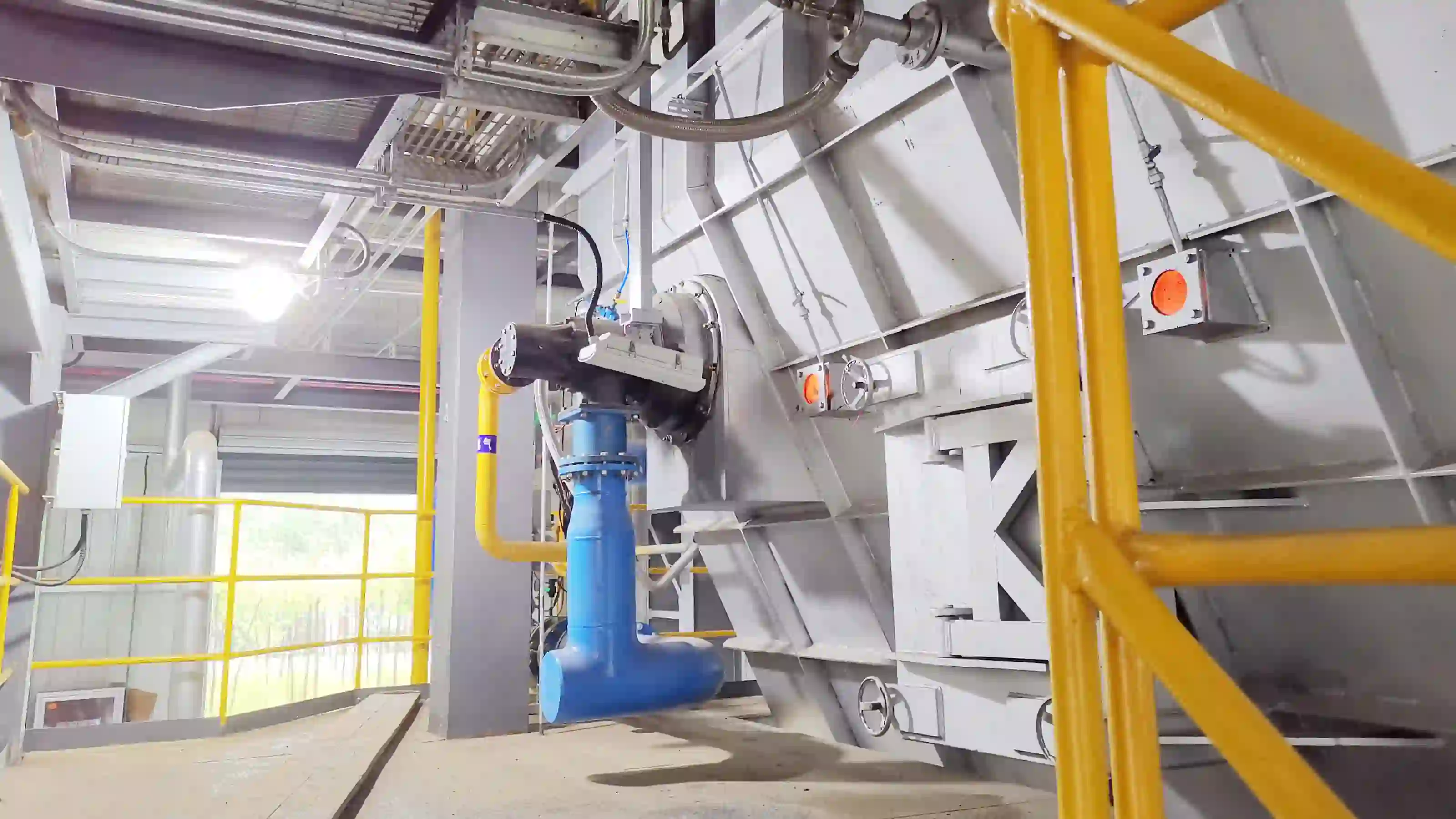
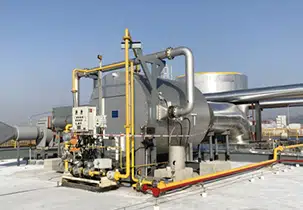
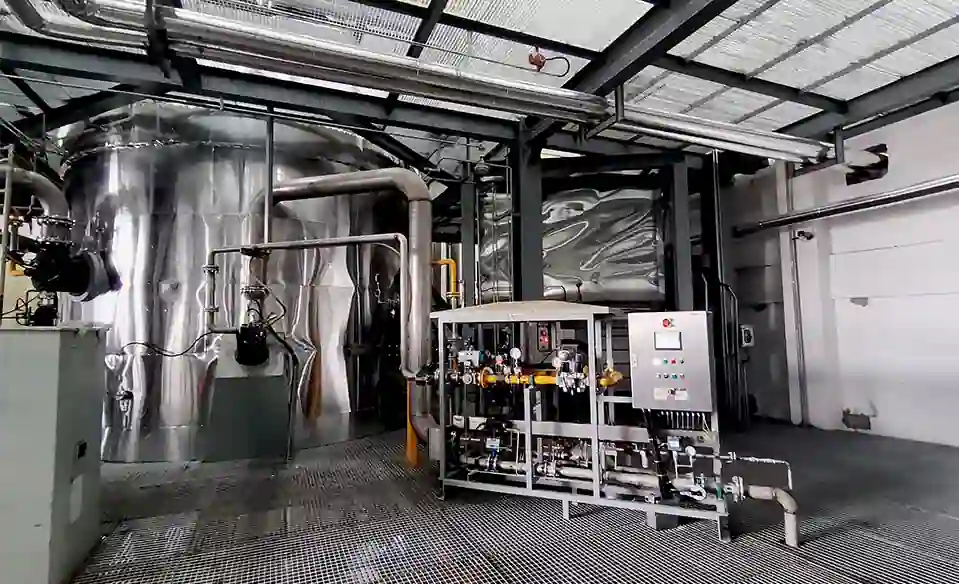
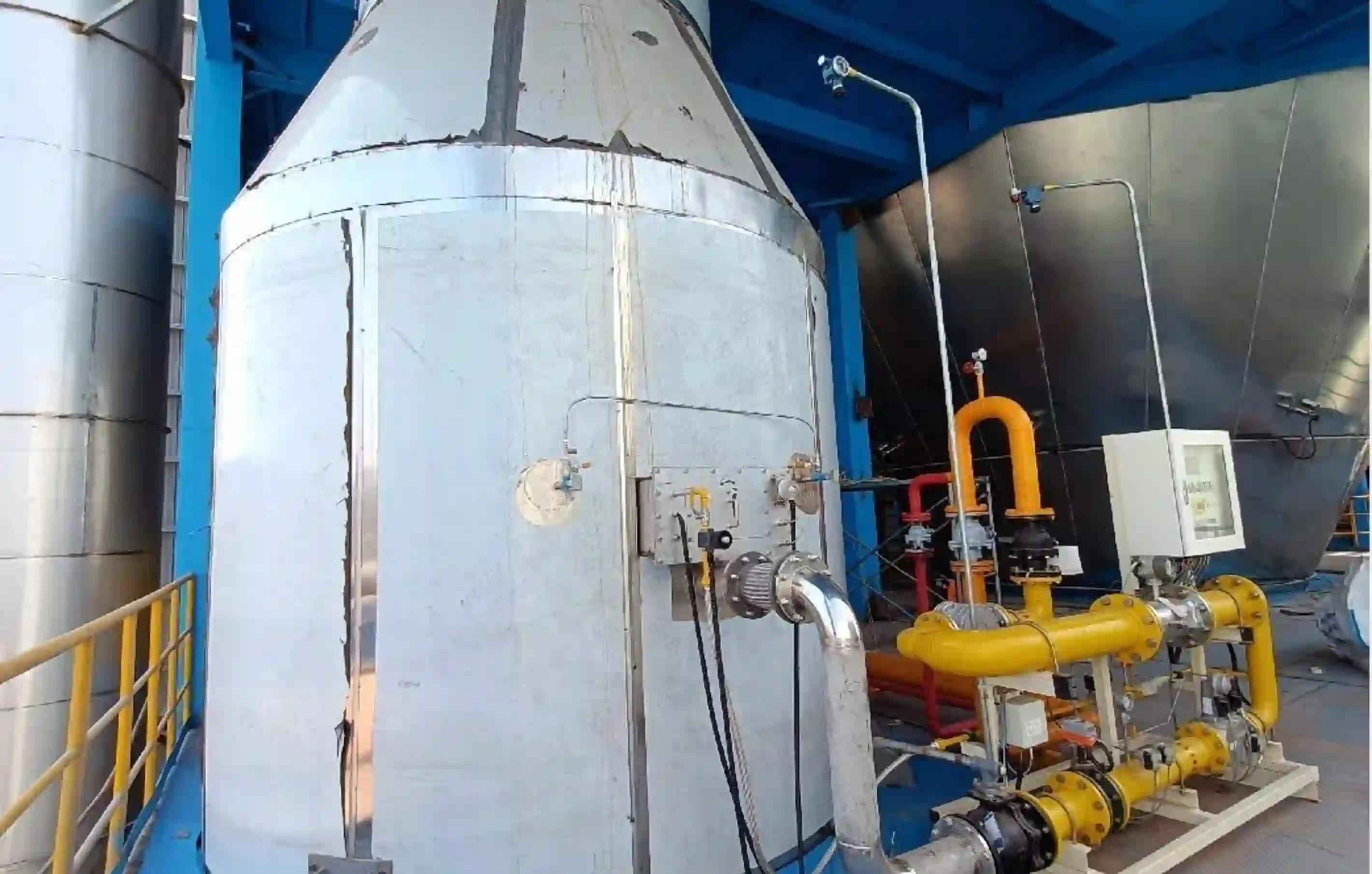
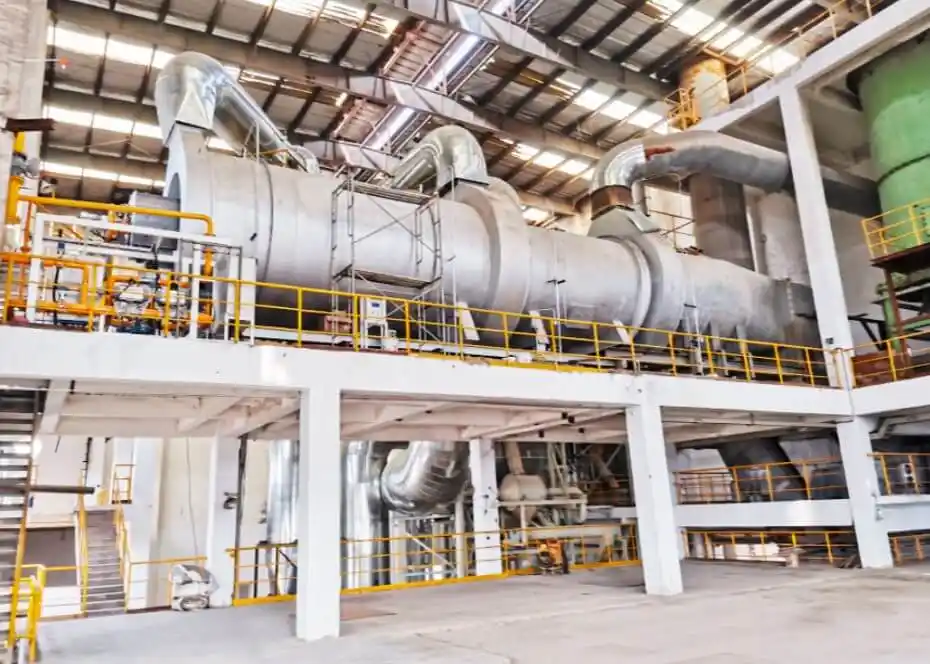
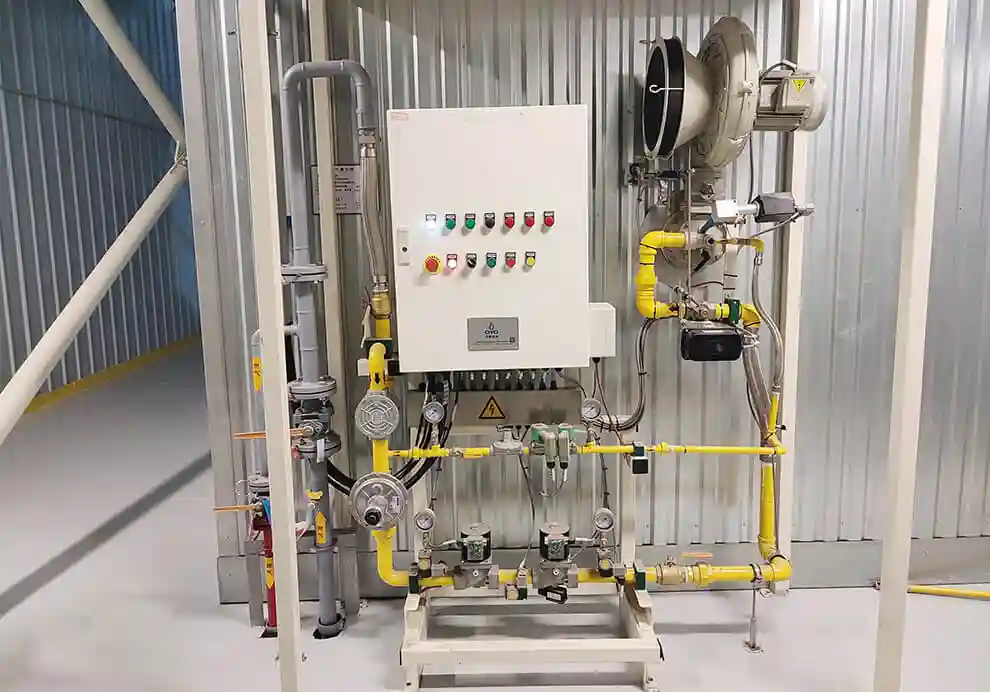
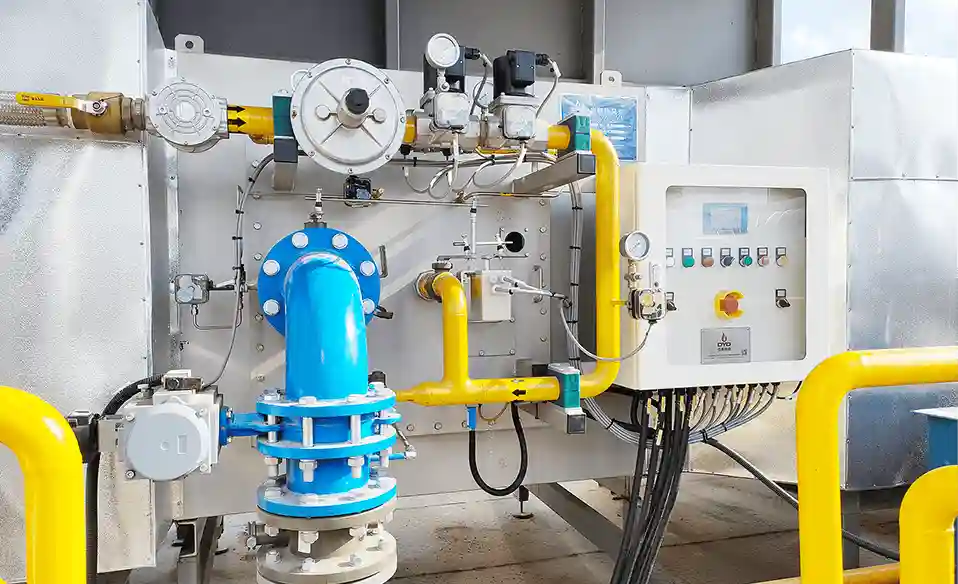
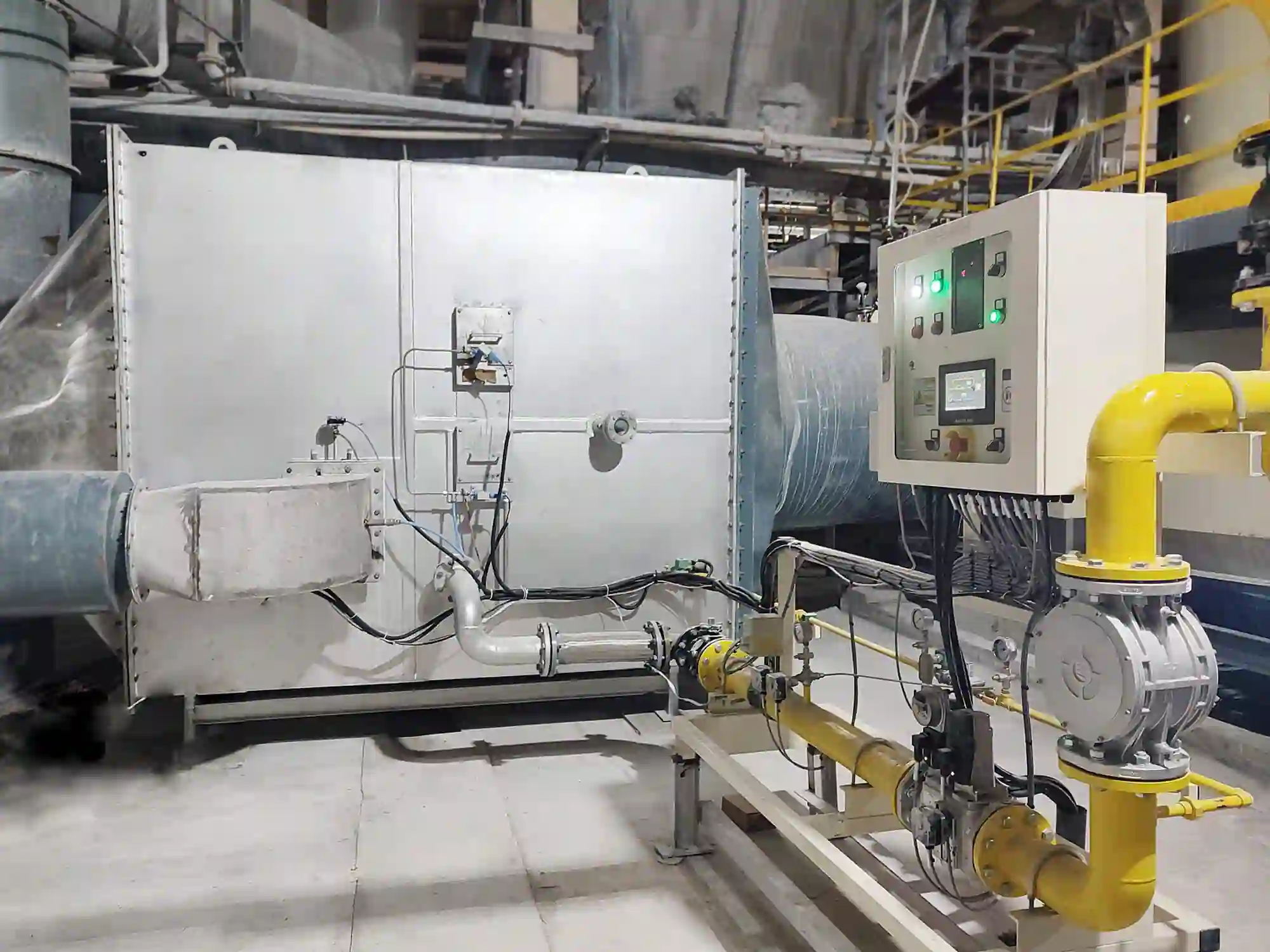
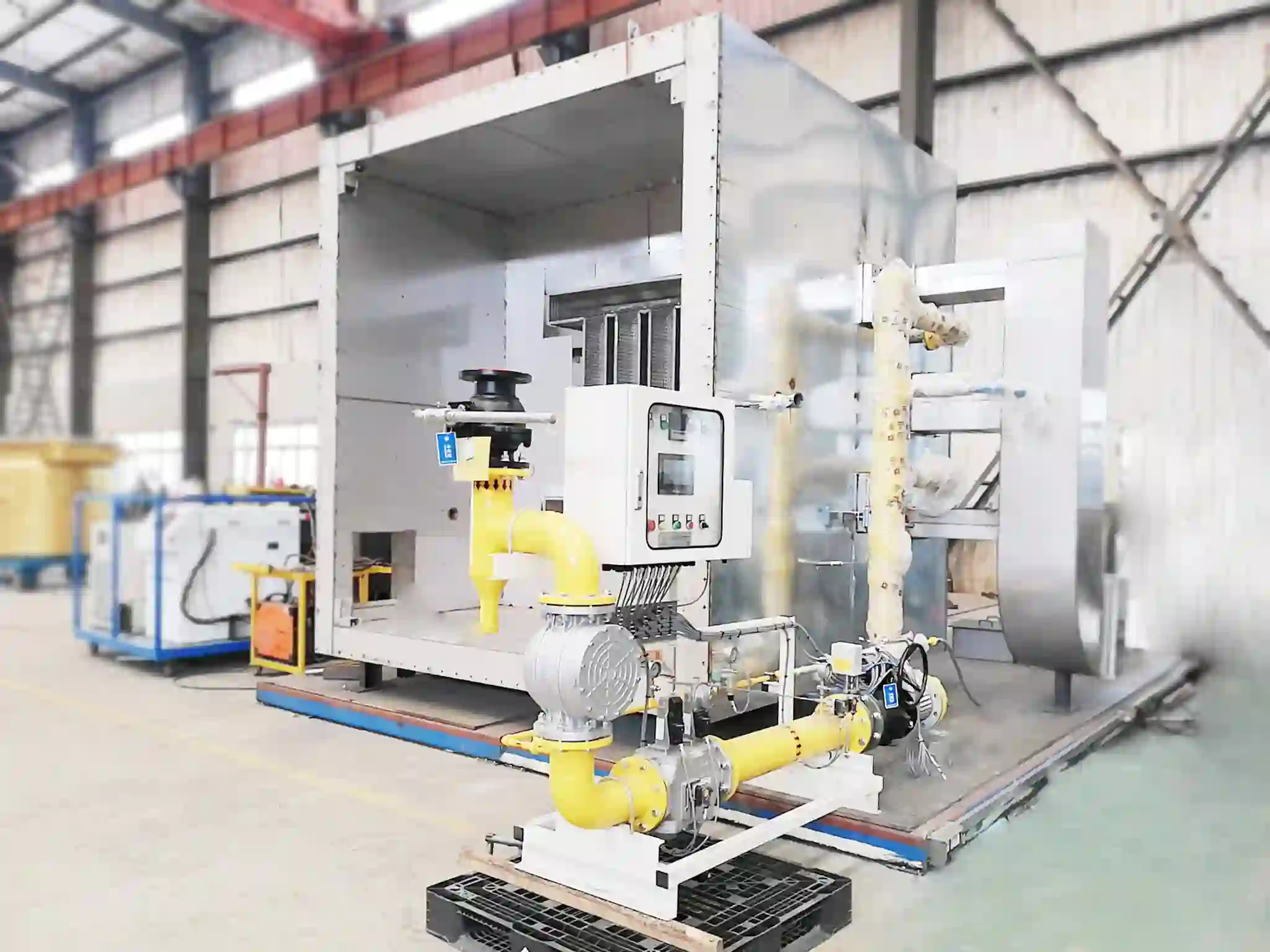
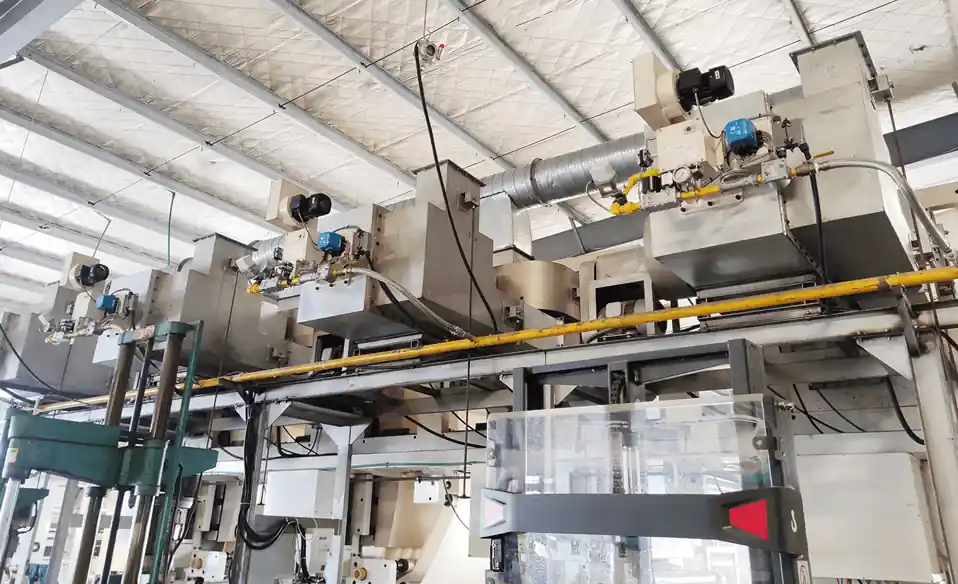
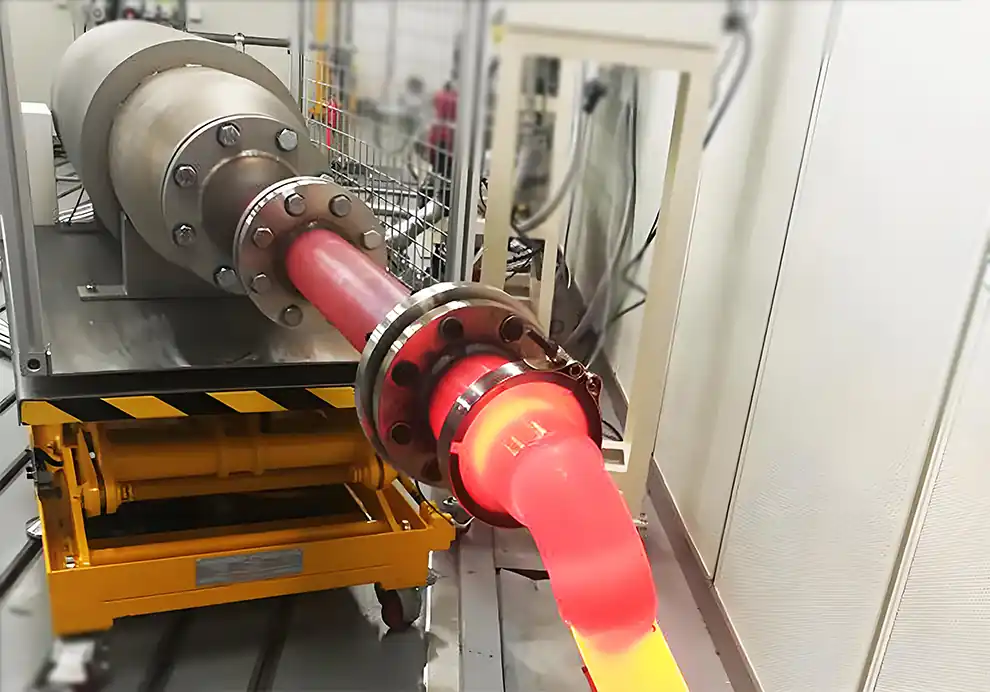
Industrial burners are designed to convert fuel into controlled thermal energy for processes such as drying, heating, calcination, heat treatment, combustion treatment, and high-temperature furnace operation. The type of fuel an industrial burner can use directly affects burner design, combustion performance, emissions, operating cost, and system configuration. Fuel choice also influences safety requirements, fuel-handling equipment, control strategy, maintenance practices, and the overall layout of the combustion system.
So, what types of fuel can industrial burners use?
Depending on the burner design and application, industrial burners can use natural gas, liquefied petroleum gas (LPG), biogas, hydrogen-containing gases, diesel, light fuel oil, heavy fuel oil, and other process or waste gases. Some burners are also designed as dual-fuel or multi-fuel systems, allowing users to switch between different fuel sources.
The most suitable fuel is determined not only by availability and price but also by heating value, pressure, combustion characteristics, emissions requirements, furnace temperature, process conditions, and burner capacity. A fuel that works well in one furnace may be unsuitable in another if the burner, fuel train, air system, and control strategy are not matched to its properties.
This article explains the main fuel types used in industrial burners, how they differ, what factors determine fuel compatibility, and how to select the right fuel-burner combination for a given thermal process.
Industrial burner fuels can generally be divided into three categories: gaseous fuels, liquid fuels, and special or alternative fuels. Each category has distinct handling, combustion, and control requirements. Within each category, the specific fuel properties—such as heating value, density, flame speed, and impurity content—determine how the burner must be designed and operated.
Natural gas is one of the most widely used fuels for industrial combustion systems. Its relatively clean combustion characteristics, convenient supply, and controllability make it suitable for many industrial heating applications. Natural gas is primarily methane, with small amounts of ethane, propane, butane, nitrogen, and carbon dioxide. Its heating value is typically around 35–40 MJ/Nm³, depending on composition.
Natural gas burners are commonly used in:
Industrial furnaces
Drying equipment
Heat treatment systems
Ovens
Kilns
Hot air generators
RTO systems
Chemical processing equipment
Food and agricultural drying systems
Natural gas is particularly suitable when the process requires stable heat input and precise temperature control. Because natural gas is delivered through pipelines and its composition is relatively consistent, it is easier to control than many alternative fuels. However, burner design still matters. Gas pressure, gas composition, excess air, furnace pressure, combustion chamber geometry, and required turndown ratio can all affect combustion performance.
A natural gas burner must be matched to the available gas pressure. If the pressure is too low, the burner may not reach its rated capacity. If it is too high, additional pressure regulation may be required. The gas train must also include the appropriate safety shut-off valves, pressure switches, and leak-testing provisions required by the applicable standards.
Liquefied petroleum gas, commonly consisting primarily of propane and butane, is another gaseous fuel used in industrial burners. LPG is stored as a liquid under pressure and vaporized before combustion. It has a higher heating value than natural gas by volume, typically around 90–100 MJ/Nm³ in gaseous form, depending on the propane-butane ratio.
LPG can be useful where a natural-gas pipeline is unavailable or where a relatively portable fuel supply is required. LPG burners are used in various heating and drying applications, including remote industrial sites, temporary installations, and processes that require a high heat release in a compact space.
Because LPG has different physical and combustion properties from natural gas, a burner designed for natural gas should not automatically be assumed to be suitable for LPG. Fuel pressure, nozzle configuration, air supply, and combustion settings need to be matched to the actual fuel. LPG also requires proper storage, vaporization, and pressure regulation. Safety considerations include leak detection, ventilation, and explosion-proof electrical equipment in hazardous areas.
Biogas is generated from organic materials through anaerobic digestion and typically contains methane, carbon dioxide, and smaller quantities of other gases such as hydrogen sulfide, moisture, and siloxanes. The methane content can range from 50% to 70%, depending on the feedstock and digestion process. As a result, the heating value of biogas is lower than that of natural gas, often in the range of 20–25 MJ/Nm³.
Industrial burners can be designed to use biogas as a fuel, particularly in applications where the gas is generated as a by-product of industrial or agricultural processes. Examples include wastewater treatment plants, landfills, food processing facilities, and agricultural digesters. Using biogas for combustion can reduce fuel costs and reduce greenhouse gas emissions.
The key challenge is that biogas composition can vary considerably. Compared with natural gas, it often has a lower heating value and may contain impurities such as hydrogen sulfide or moisture. These impurities can corrode fuel train components, clog nozzles, and affect flame stability.
Therefore, a biogas burner needs to account for:
Fuel composition
Heating value
Gas pressure
Moisture
Impurities
Required combustion capacity
Flame stability
Corrosion resistance
Control turndown
The actual gas composition should be established before selecting or designing the burner. In many cases, gas treatment—such as desulfurization, drying, and filtration—is required to protect the burner and ensure reliable operation.
Hydrogen is receiving increasing attention as an industrial fuel because it contains no carbon in the fuel itself. When burned with oxygen, hydrogen produces only water vapor, so it does not generate CO₂ at the point of combustion. This makes it attractive for decarbonization strategies in industrial heating.
However, hydrogen combustion differs significantly from natural-gas combustion. Hydrogen has a high flame speed, a wide flammability range, low ignition energy, and different ignition and flame characteristics. These differences can affect:
Flame stability
Burner geometry
Flashback risk
NOx formation
Air-fuel mixing
Control strategy
Safety systems
For industrial applications considering hydrogen or hydrogen-natural-gas blends, the burner needs to be designed or validated for the intended fuel composition rather than simply treating hydrogen as a drop-in replacement for natural gas. Hydrogen embrittlement, leakage, and flame detection are also important considerations. In many cases, blending hydrogen with natural gas at moderate percentages is a practical first step, but the burner must be rated for the blend.
Yes. Industrial burners can also be designed for liquid fuels. Liquid-fuel burners are common where gaseous fuel is unavailable, where fuel storage is preferred, or where the process requires a specific flame characteristic. The main challenge with liquid fuels is that they must be atomized—broken into fine droplets—before they can burn efficiently.
Diesel is commonly used in industrial combustion applications where liquid-fuel supply is preferred or where gaseous fuel is unavailable. Diesel burners atomize the liquid fuel into small droplets before combustion. The atomization process is critical because smaller and more uniformly distributed droplets generally promote better mixing between fuel and combustion air, leading to more complete combustion and lower emissions.
Diesel-fired industrial burners can be used in:
Furnaces
Drying systems
Hot air generators
Heat treatment equipment
Industrial ovens
Thermal processing equipment
Compared with gas burners, liquid-fuel systems generally require additional components for fuel storage, pumping, filtration, pressure control, and atomization. The burner may use pressure atomization, air atomization, or rotary atomization, depending on the capacity and application. Maintenance requirements are often higher because nozzles can wear or clog, and fuel quality can vary.
Light fuel oils can also be used in industrial burners designed specifically for liquid fuels. These fuels have lower viscosity and are easier to pump and atomize than heavy fuel oils. They are often used in small to medium-sized furnaces, dryers, and hot air generators.
The burner must be matched to the fuel's viscosity, heating value, pressure, and atomization requirements. Depending on the application, different atomization technologies may be used. The fuel characteristics can influence flame shape, combustion stability, emissions, and burner capacity. Light fuel oil generally requires less preheating than heavy fuel oil, but filtration and water separation are still important to protect the burner.
Heavy fuel oil can provide high energy output but is more demanding to handle because of its relatively high viscosity. It may contain sulfur, ash, and other impurities that require additional treatment and maintenance. Heavy fuel oil is typically used in large industrial furnaces, boilers, and kilns where the fuel is economically attractive and the necessary handling equipment can be justified.
Industrial systems using heavy fuel oil may require fuel preheating to achieve the appropriate viscosity for pumping and atomization. The burner system may therefore include:
Fuel preheating
Fuel pumps
Filters
Pressure regulation
Atomization equipment
Flame monitoring
Combustion control
Emissions control
Heavy liquid fuels are generally considered when their availability, economics, or process requirements justify the additional fuel-handling requirements. The burner must be designed for the specific fuel properties, and the fuel train must include appropriate heating, filtration, and safety components.
Industrial combustion is not limited to commercially supplied natural gas or liquid fuels. Specialized burners can be designed for a variety of process gases and alternative fuels. These fuels often have variable compositions and heating values, so careful analysis and burner design are essential.
Some industrial plants generate combustible gases as part of their manufacturing processes. Examples can include gases from chemical, metallurgical, petrochemical, or waste-treatment processes. These gases may contain hydrogen, carbon monoxide, methane, and other combustible components.
Using process gas as burner fuel can help recover the energy contained in a combustible by-product. However, its composition may vary, so burner selection should consider the actual gas analysis rather than simply the gas name.
Important parameters include:
Lower heating value
Gas composition
Gas pressure
Flame speed
Moisture content
Contaminants
Required heat input
Variability over time
A burner designed for process gas may need special materials, larger fuel ports, different mixing geometry, and a control system capable of handling composition changes. In some cases, a dual-fuel arrangement with natural gas as backup provides operational flexibility.
Certain industrial sectors produce combustible gases as by-products. Examples include coke oven gas and blast furnace gas in metallurgical processes. These gases can have substantially different heating values and compositions from natural gas. Coke oven gas is rich in hydrogen and methane, while blast furnace gas has a low heating value and contains significant amounts of nitrogen and carbon dioxide.
A burner designed for these fuels may therefore require customized mixing, combustion, and control characteristics. The low heating value of some industrial gases means that a larger volume of fuel must be supplied for the same heat output, which affects fuel train sizing, nozzle design, and flame stability. In some cases, these gases are blended with natural gas or other fuels to achieve a stable and controllable flame.
Waste gases containing combustible components can sometimes be used in specially designed combustion systems. Examples include off-gases from chemical processes, solvent-laden air streams, and landfill gas. This approach can turn an otherwise unused gas stream into useful thermal energy while also providing a controlled combustion route for the combustible components.
Waste-gas applications require particularly careful consideration of gas composition and variability. A burner needs sufficient operating flexibility to maintain a stable flame across the expected operating range. The system may also require pretreatment, such as filtration, scrubbing, or dilution, to protect the burner and meet emissions limits. In some cases, a thermal oxidizer or RTO is a more appropriate solution than a direct-fired burner.
Yes. Some industrial burners are designed as dual-fuel or multi-fuel burners. A dual-fuel burner may be configured to operate with combinations such as:
Natural gas + diesel
Natural gas + fuel oil
LPG + natural gas
Natural gas + process gas
Biogas + natural gas
The main advantage is fuel flexibility. For example, an industrial facility may normally operate on natural gas but use liquid fuel as a backup when gas supply is interrupted. In other applications, an alternative process gas may be used as the primary fuel while natural gas provides supplemental heat or backup capacity.
However, multi-fuel capability generally requires more sophisticated burner and control-system design. The combustion characteristics of each fuel need to be considered individually. The burner must be able to switch safely between fuels, and the control system must adjust the air-fuel ratio, flame monitoring, and safety logic accordingly. In some cases, separate fuel trains and nozzles are required. Regular testing and maintenance are essential to ensure reliable changeover.
The answer cannot be determined simply by asking whether a fuel is "gas" or "liquid." Burner compatibility depends on the relationship between the fuel and the complete combustion system. Several key parameters must be evaluated.
Heating value determines how much thermal energy can be obtained from a given quantity of fuel. If two gases have different heating values, the same burner fuel flow rate will not necessarily produce the same heat input. A low-heating-value fuel requires a larger volume flow to achieve the same heat output, which affects fuel train sizing, nozzle design, and combustion air requirements.
Fuel pressure affects flow rate, mixing, and burner operating range. A burner must be matched to the available fuel pressure or used with an appropriate pressure-regulating system. If the pressure is too low, the burner may not reach its rated capacity. If it is too high, additional regulation may be required.
Natural gas, biogas, hydrogen blends, and process gases can have significantly different compositions. Changes in composition can affect flame speed, density, heating value, and combustion behavior. For example, hydrogen has a much higher flame speed than methane, which can increase the risk of flashback. Inert gases such as CO₂ and N₂ dilute the fuel and reduce heating value.
Liquid fuels must generally be atomized before efficient combustion can occur. The atomization method and fuel properties therefore play an important role in liquid-fuel burner selection. Viscosity, surface tension, and contamination all affect atomization quality.
The burner must provide enough heat for the process while maintaining stable operation over the required load range. For example, a burner used in a large industrial furnace may have substantially different capacity and turndown requirements from a burner used in a small drying system. The fuel must be able to supply the required heat input at the available pressure and flow rate.
The burner does not operate independently from the furnace. Furnace volume, chamber geometry, operating temperature, pressure, airflow, heat distribution requirements, and material characteristics all influence burner selection. A fuel that produces a long luminous flame may be suitable for one furnace but not for another that requires a short, high-velocity flame.
Fuel choice and burner design can both affect emissions. NOx formation, in particular, is influenced by flame temperature, oxygen availability, residence time, fuel composition, and combustion conditions. Low-NOx burner technologies may therefore be required for applications with strict emission limits. Hydrogen and high-hydrogen fuels can produce higher NOx levels because of their higher flame temperature, requiring special combustion strategies.
Fuel selection should start with the actual process requirements rather than simply choosing the fuel with the lowest unit price. A practical evaluation can include the following factors:
| Factor | Key Question |
|---|---|
| Fuel availability | Is the fuel reliably available at the plant? |
| Heating value | How much thermal energy does the fuel provide? |
| Fuel pressure | Is the available pressure compatible with the burner? |
| Fuel composition | Does the composition remain stable? |
| Heat demand | What burner capacity is required? |
| Temperature | What process temperature is required? |
| Emissions | What emission limits apply? |
| Control | How precisely must heat input be controlled? |
| Operating range | What turndown ratio is required? |
| Cost | What is the total fuel and operating cost? |
| Safety | What fuel-handling and combustion safeguards are required? |
| Maintenance | What maintenance and spare parts are needed? |
| Future flexibility | Could the fuel supply or emissions rules change? |
This evaluation is especially important for process gases, biogas, hydrogen blends, and other fuels whose properties can differ significantly from standard natural gas. In many cases, a pilot test or detailed fuel analysis is recommended before final burner selection.
DYDTEC Combustion develops industrial combustion equipment and complete combustion-system solutions for different industrial heating requirements. Established in 2012, the company has production and R&D bases in Shanghai and Yangzhou and provides burner products for a broad range of industrial applications.
Its product and engineering capabilities cover different burner configurations and combustion requirements, including applications involving gas fuels, liquid fuels, and customized industrial fuel conditions. The appropriate solution depends on the actual fuel properties, required heat input, furnace structure, operating temperature, emission requirements, and control strategy. For non-standard fuels such as process gas or variable-composition gas, the fuel analysis and operating conditions are particularly important during burner selection.
DYDTEC Combustion has developed 100+ burner models covering more than 200 application scenarios, providing options for industrial furnaces, drying systems, hot-air equipment, RTO systems, kilns, heat-treatment equipment, and other thermal processes. Its engineering approach considers the burner together with the fuel system, combustion air, control, flame detection, furnace geometry, and process requirements, helping customers achieve stable and efficient combustion with a range of fuel types.
The fundamental difference is how the fuel reaches the combustion zone. A gas burner mixes gaseous fuel with combustion air before or during combustion. The system generally focuses on gas flow control, mixing, ignition, flame stabilization, and air-fuel ratio control. A liquid-fuel burner must first convert liquid fuel into a suitable spray through atomization. This adds requirements related to fuel pumping, pressure, viscosity, and atomization.
The choice therefore depends on the available fuel and the process requirements.
| Characteristic | Gas Burner | Liquid-Fuel Burner |
|---|---|---|
| Fuel state | Gas | Liquid |
| Fuel preparation | Flow and mixing | Pumping and atomization |
| Typical fuels | Natural gas, LPG, biogas, process gas | Diesel, light/heavy fuel oil |
| Control | Generally straightforward | Requires liquid-fuel control and atomization |
| Fuel flexibility | Can accommodate various gases with suitable design | Depends strongly on fuel properties |
| Typical applications | Furnaces, dryers, ovens, RTOs | Furnaces, dryers, hot-air systems |
| Maintenance | Lower, depending on fuel cleanliness | Higher, due to nozzles and fuel quality |
| Emissions | Can be low with proper design | Requires careful atomization and control |
In general, gas burners are simpler to operate and maintain because the fuel is already in a gaseous state and mixes readily with air. Liquid-fuel burners require more auxiliary equipment and maintenance, but they offer fuel flexibility where gas is not available.
A burner should not be selected only according to its nominal capacity. A burner rated for a particular heat input may still be unsuitable if the fuel pressure, heating value, composition, or combustion characteristics fall outside its intended operating conditions.
For example, replacing natural gas with a low-heating-value process gas can significantly increase the required fuel volume for the same heat output. Similarly, using hydrogen-rich fuel can change flame speed and NOx behavior. Using LPG in a burner designed for natural gas can lead to incorrect air-fuel ratios, flame instability, or overheating of burner components.
Fuel matching therefore involves more than selecting a nozzle or adjusting a valve. It requires coordination between the fuel, burner, combustion air, control system, furnace, and process requirements. The burner manufacturer should be provided with a detailed fuel analysis, including heating value, composition, pressure, temperature, and impurity levels. This allows the burner to be designed or configured for the actual fuel and operating conditions.
Yes. Natural gas is one of the most common fuels for industrial burners and is widely used in furnaces, dryers, ovens, kilns, RTO systems, and hot-air equipment. It offers clean combustion, stable supply, and good controllability.
A burner designed and configured for LPG can use LPG. Natural-gas and LPG systems should not be treated as automatically interchangeable because their fuel properties and required operating conditions differ. Nozzles, air-fuel ratios, and safety devices may need to be changed.
Yes. Industrial liquid-fuel burners can be designed for diesel and other suitable liquid fuels. These systems typically require fuel pumping and atomization, as well as storage and filtration equipment.
Yes, provided that the burner is designed or configured for the actual biogas composition, heating value, pressure, and impurities. Biogas often requires pretreatment to remove moisture, hydrogen sulfide, and other contaminants.
Specially designed burners can operate on hydrogen or hydrogen-containing fuel mixtures. Hydrogen combustion requires specific consideration of flame speed, flashback, mixing, flame stability, and NOx formation. Existing natural gas burners usually require modification or validation before hydrogen operation.
A dual-fuel burner is designed to operate with two fuel types, either separately or under defined operating conditions. A common example is a burner capable of using natural gas and liquid fuel. Dual-fuel burners provide backup capability and fuel flexibility.
Combustible waste or process gases can be used in appropriately designed combustion systems. The gas composition, heating value, pressure, contaminants, and variability need to be evaluated first. In some cases, waste gas is used as a supplemental fuel rather than the primary fuel.
There is no single best fuel. The best fuel depends on availability, cost, heating value, process temperature, emissions requirements, control needs, and the burner system design. A fuel that is economical and reliable in one plant may be unsuitable in another.
In some cases, yes, but conversion requires careful engineering. The burner, fuel train, nozzles, air system, and control system may need to be modified. A qualified combustion engineer should assess the feasibility before conversion.
Review the fuel analysis, compare it with the burner specifications, and consult the burner manufacturer. Key parameters include heating value, pressure, composition, flame speed, and impurities. A trial or pilot test may be required for unusual fuels.
Industrial burners can use a wide range of fuels, including natural gas, LPG, biogas, hydrogen-containing gases, diesel, fuel oils, process gases, and other combustible industrial gases. Dual-fuel and multi-fuel burner configurations can provide additional flexibility where more than one fuel source is available.
The right fuel-burner combination depends on more than fuel price. Heating value, fuel pressure, composition, heat input, furnace conditions, temperature requirements, emissions, controllability, and operating range all need to be considered together. Fuel properties affect burner design, flame characteristics, safety systems, and maintenance requirements. A fuel that appears inexpensive per unit of energy may require costly handling equipment or produce higher emissions, reducing its overall advantage.
For industrial equipment manufacturers, furnace builders, and end users, selecting the burner according to the actual fuel and process conditions can help establish a more stable and efficient combustion system. With a portfolio of 100+ burner models and applications covering 200+ scenarios, DYDTEC Combustion provides industrial burner and combustion-system solutions for diverse thermal processes and fuel conditions. Proper fuel matching, system integration, and ongoing maintenance are the keys to reliable, efficient, and compliant industrial combustion.